Artwork
Saint Bartholomew
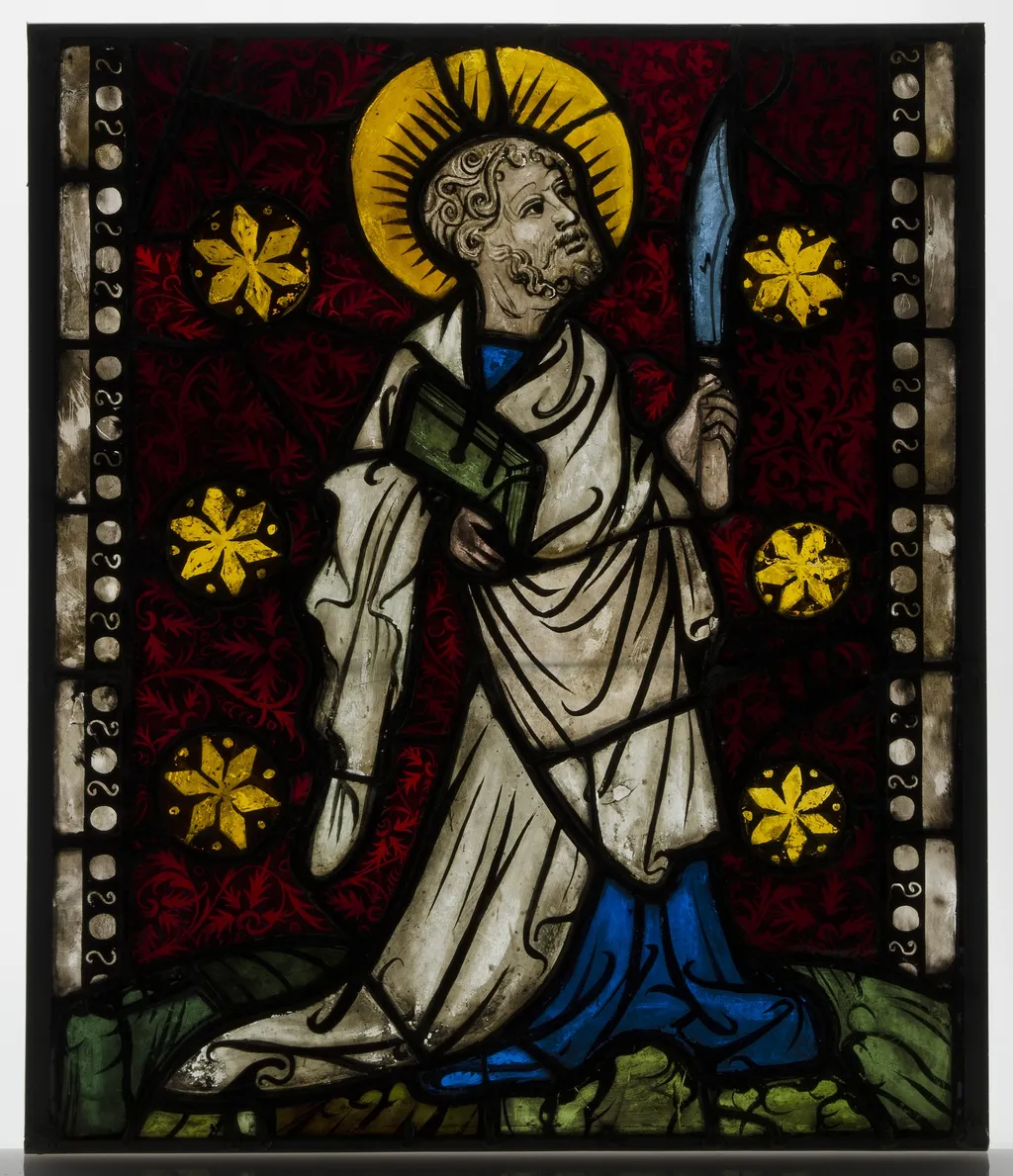
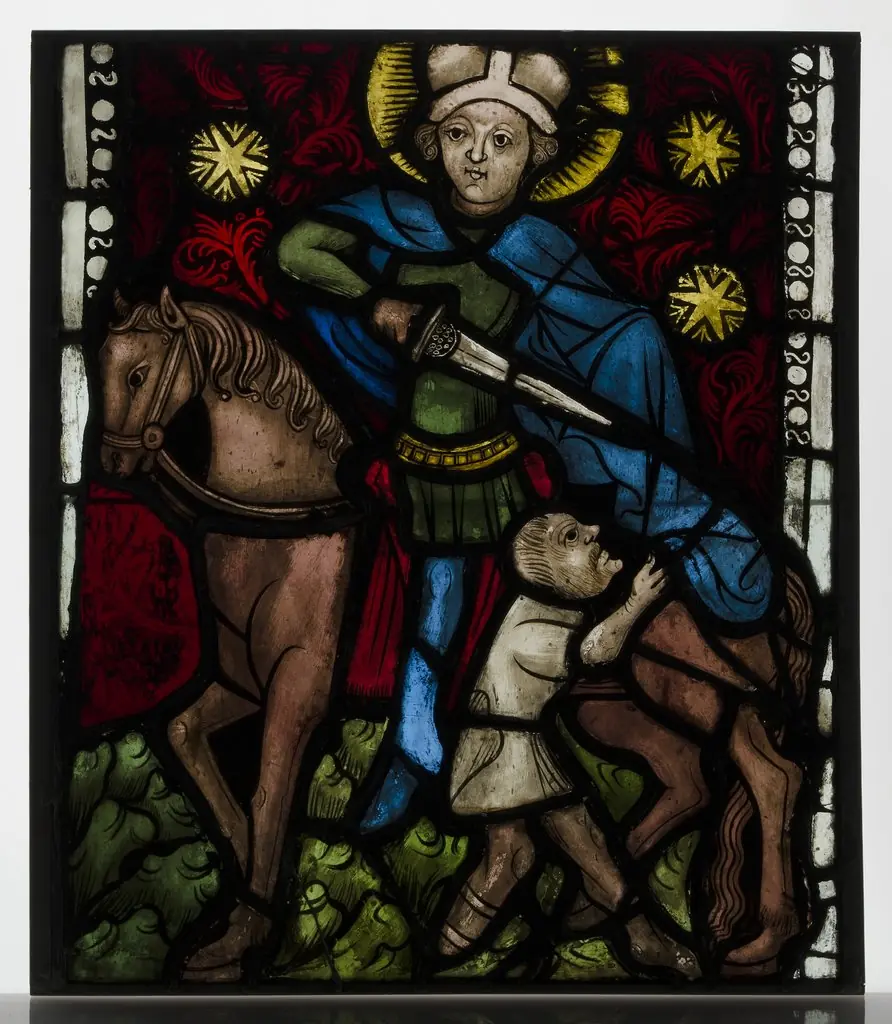
Saint Bartholomew is an unspecified painting. It dates from 1410 and is held in the collection of the Metropolitan Museum of Art.
About this work
Overview
The composition is bordered by a simple frame, enclosing the saint amidst decorative yellow flowers and green vines.
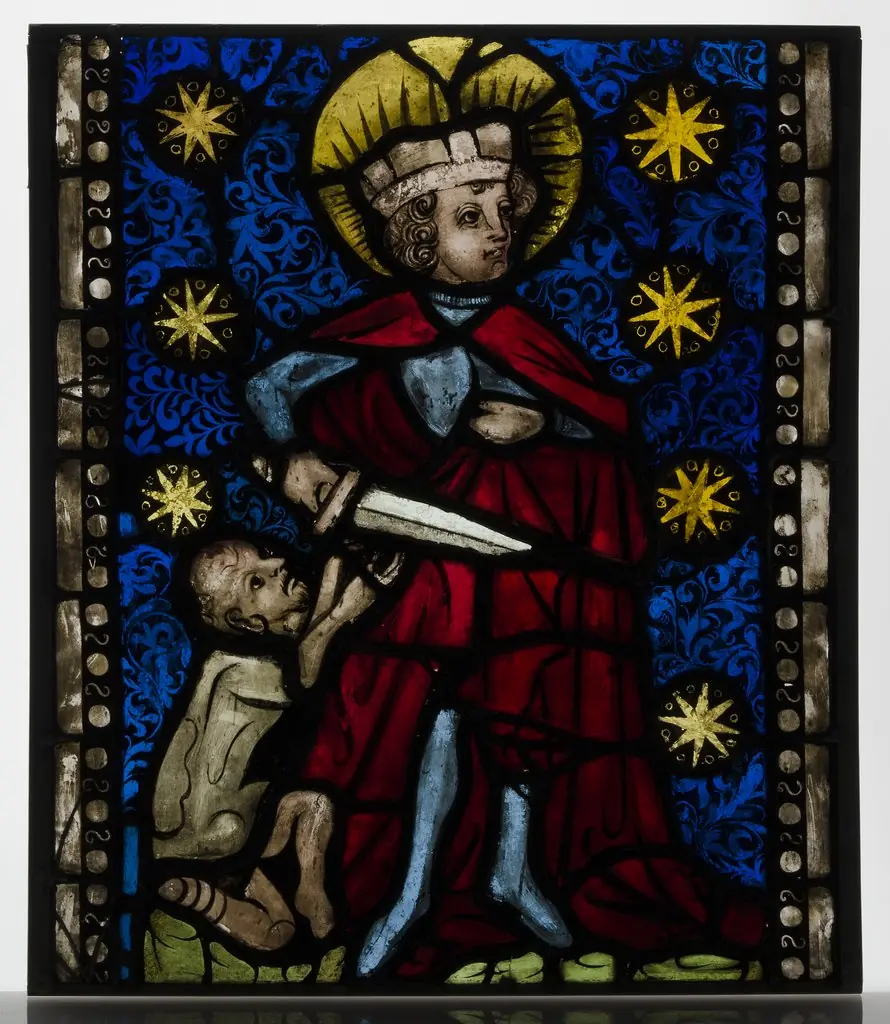
This painting presents Saint Bartholomew as a rigid, upright figure set against a deep red ground. The composition is bordered by a simple frame, enclosing the saint amidst decorative yellow flowers and green vines. His serene yet solemn expression, combined with the work's vibrant palette and distinct outlines, evokes the visual qualities of medieval stained glass, creating a striking devotional image.
Subject & Meaning
The figure is identified as Saint Bartholomew, one of the twelve apostles. He is traditionally depicted with a knife, an attribute referencing his martyrdom by flaying. The book held in his other hand symbolizes his role as an evangelist and a bearer of scripture. His golden halo signifies his sanctity, marking him as a revered figure within Christian tradition.
Technique & Style
The artist employs a distinctive style characterized by sharp, defined lines and minimal tonal variation, contributing to a flattened, two-dimensional effect. Bold, saturated hues—such as bright yellows, deep reds, and cool blues—dominate the palette, creating strong visual contrasts. This approach, combined with the figure's static pose and clear outlines, lends the painting a visual resonance with the luminosity and graphic clarity of stained-glass artistry.
Artist & collection