Artwork
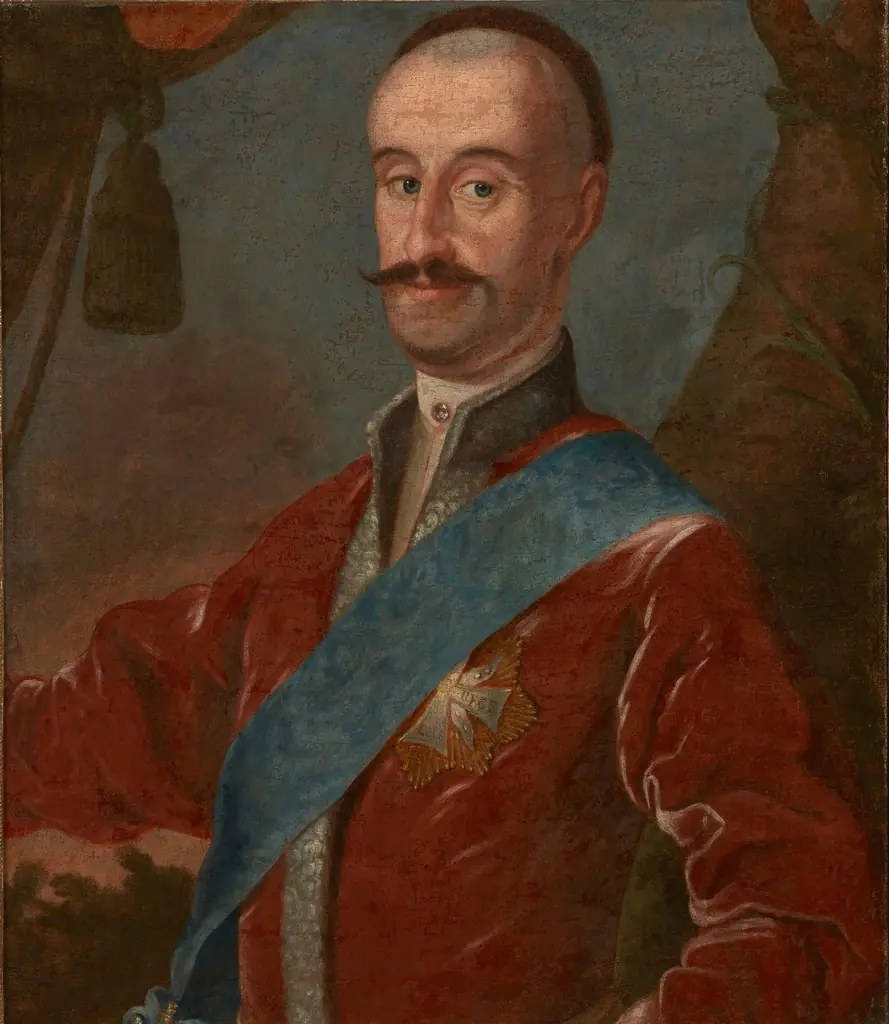
Portret Karola Radziwiłła "Panie Kochanku", wojewody wileńskiego (1734-1790) (uproszczona kopia portretu wykonanego przez K. Aleksandrowicza)
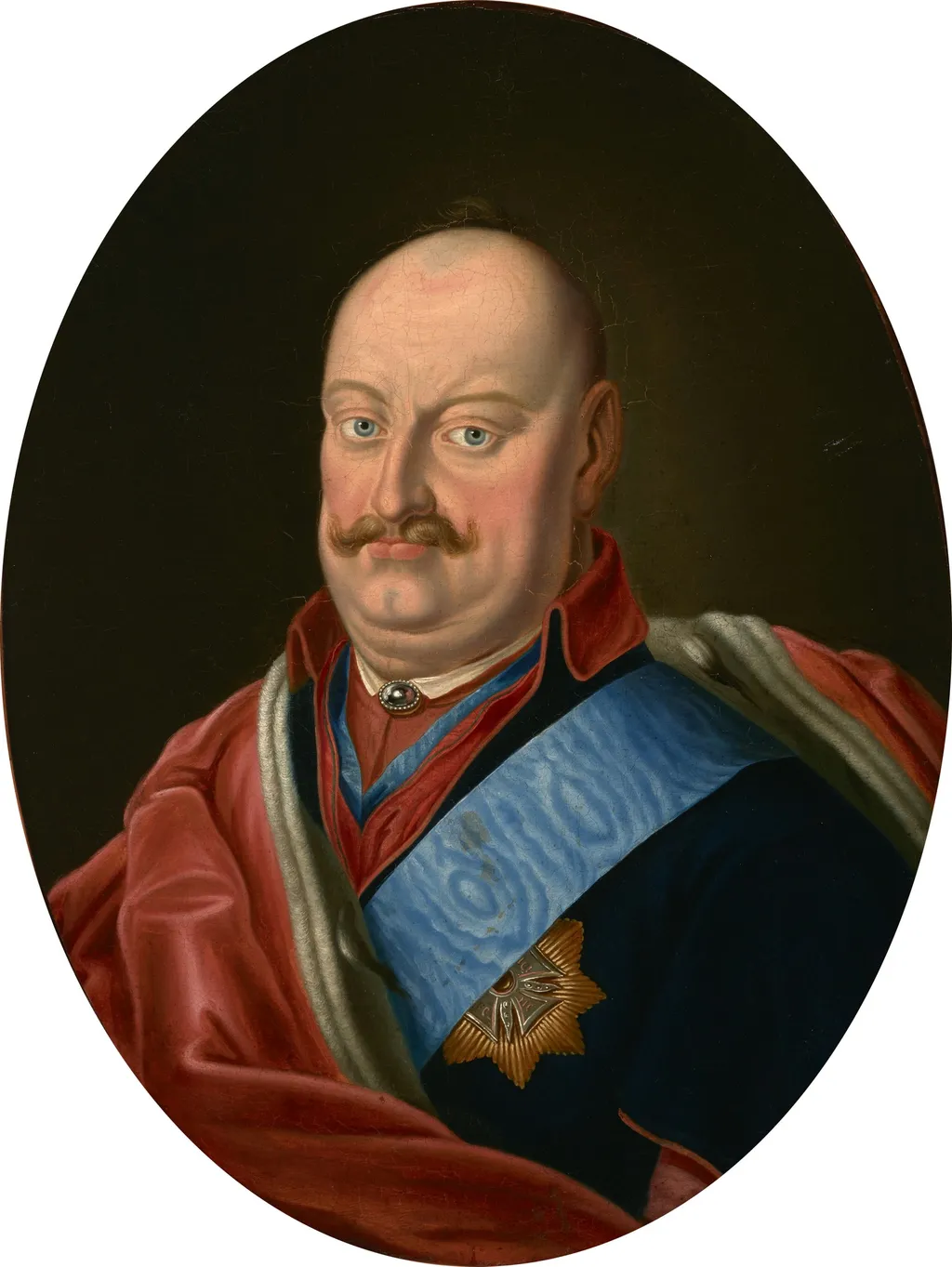
Portret Karola Radziwiłła "Panie Kochanku", wojewody wileńskiego (1734-1790) (uproszczona kopia portretu wykonanego przez K. Aleksandrowicza) is an oil painting by Unknown. It dates from 1875 and is held in the collection of the National Museum in Kraków. The work is an oil painting that presents a portrait of Karol Radziwiłł, a 18th‑century voivode of Vilnius.
About this work
Overview
The work is an oil painting that presents a portrait of Karol Radziwiłł, a 18th‑century voivode of Vilnius. Rendered in a simplified copy after an original by K. Aleksandrowicz, the canvas shows the sitter in a red coat, blue sash and gold brooch against a dark backdrop, emphasizing his dignified presence.
Subject & Meaning
Karol Radziwiłł (1734‑1790) is depicted with a shaved head, high‑collared white shirt and a prominent pearl button at the neck. His serious expression and direct gaze convey authority, while the neatly trimmed mustache adds a touch of personal distinction, reflecting the status of a high‑ranking noble.
Technique & Style
The painter employs chiaroscuro, using strong contrasts between the illuminated figure and the surrounding darkness to model volume and give the portrait a three‑dimensional quality. The limited colour palette—rich reds, deep blues and gold accents—focuses attention on the sitter’s face and upper torso.
History & Provenance
This piece is a simplified copy of an earlier portrait executed by K. Aleksandrowicz. While the original’s date is not specified, the copy preserves the visual conventions of late‑Baroque portraiture in the Polish‑Lithuanian Commonwealth, serving as a later record of Radziwiłł’s likeness.
Context
Portraits of high officials in the 18th century often highlighted rank through costume and accessories such as sashes, brooches and elaborate collars. The dark background aligns with contemporary practices that isolated the subject, reinforcing the individual’s prominence within the aristocratic hierarchy.
Artist & collection

 Domestic Scene
 Giacomo and Cardinal Marco, investing Andrea, Abbot of San Zeno, with his Benefice
 The Nymph of Fontainebleau
 Portrait of a Woman
 Madonna and Child with Saints in the Enclosed Garden
 Venus and Minerva
 Family Group of Four on Sofa
 Wall painting from Room H of the Villa of P. Fannius Synistor at Boscoreale
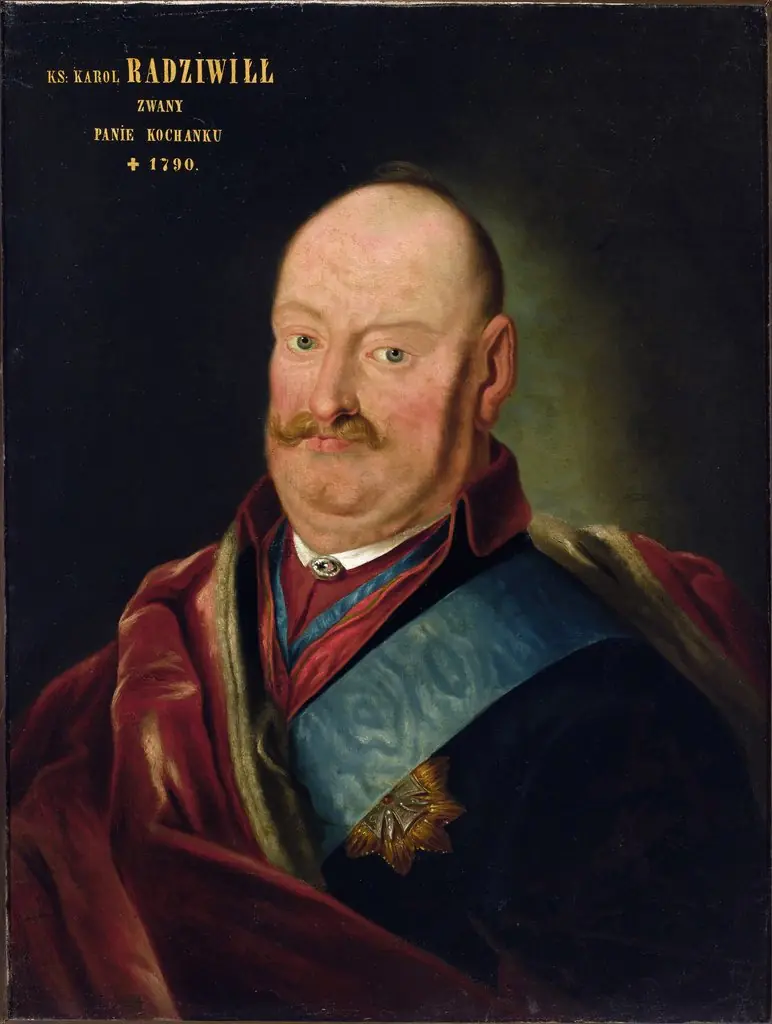 Portrait of Karol II Stanisław Radziwiłł (1734–1790) nicknamed “Panie Kochanku”
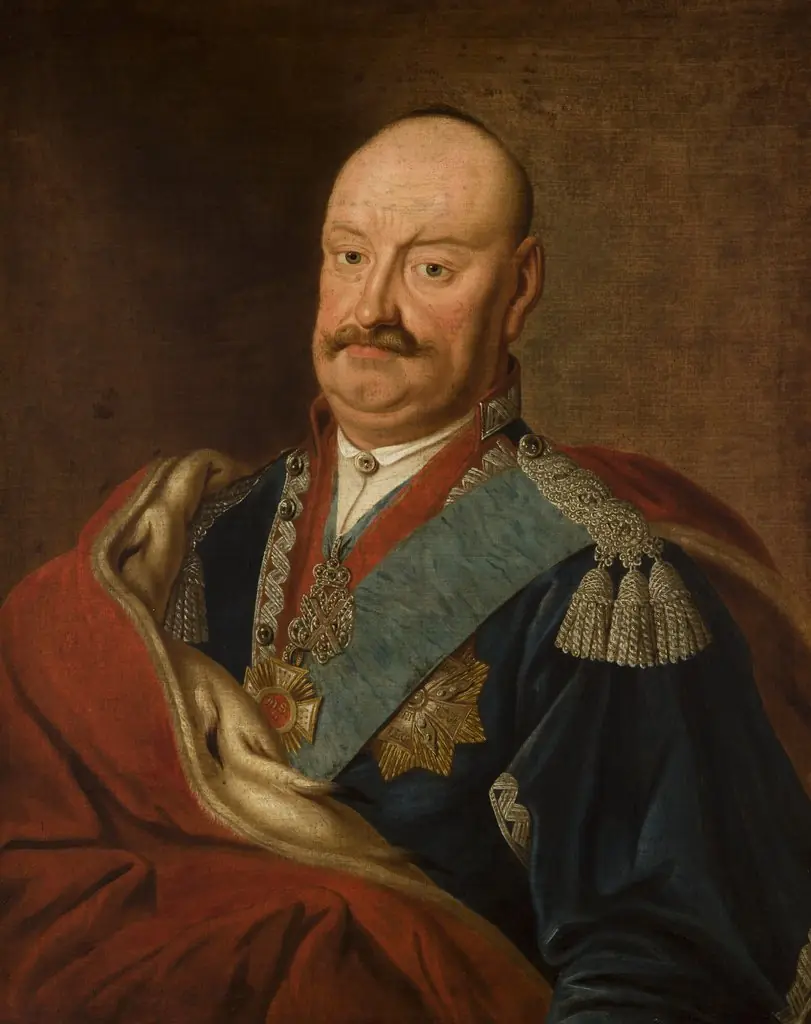 Portrait of Karol Stanisław Radziwiłł "Panie Kochanku" (1734–1790), Voivode of Vilnius
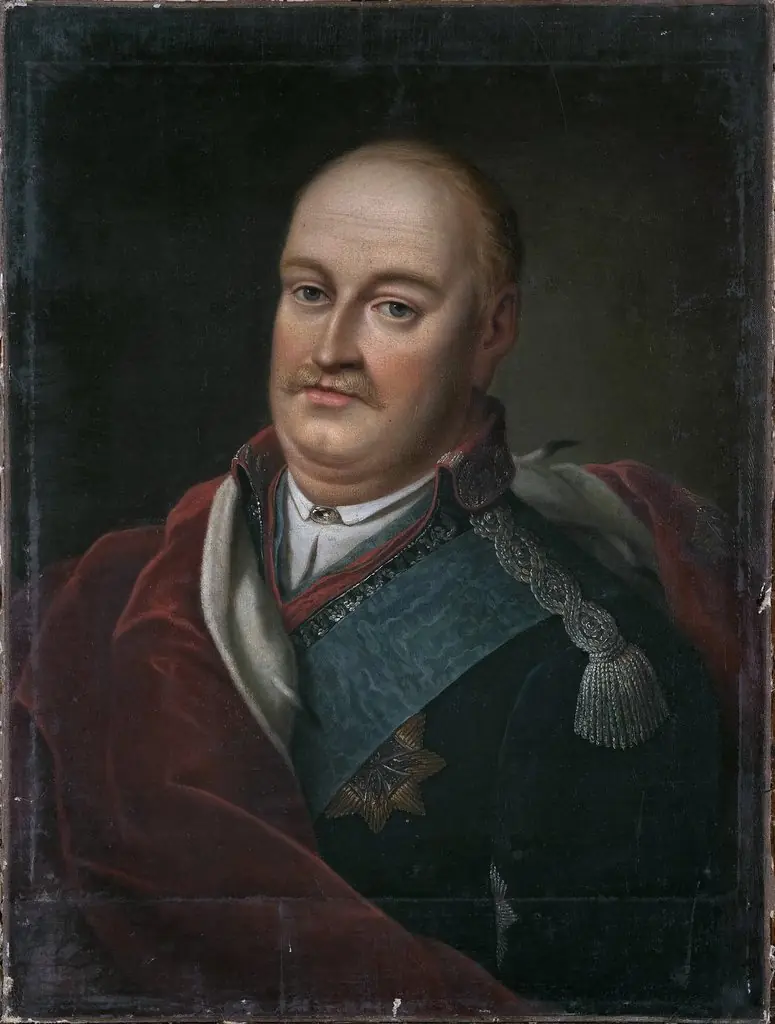 Portrait of Karol II Stanisław Radziwiłł (1734–1790) nicknamed “Panie Kochanku”
 Portret Jana Wodzickiego (ok. 1670-1726), starosty ujskiego
 Portret Jana III Sobieskiego (1629-1696), króla Polski
 Portret Jana III Sobieskiego (1629-1696), króla Polski