Artwork
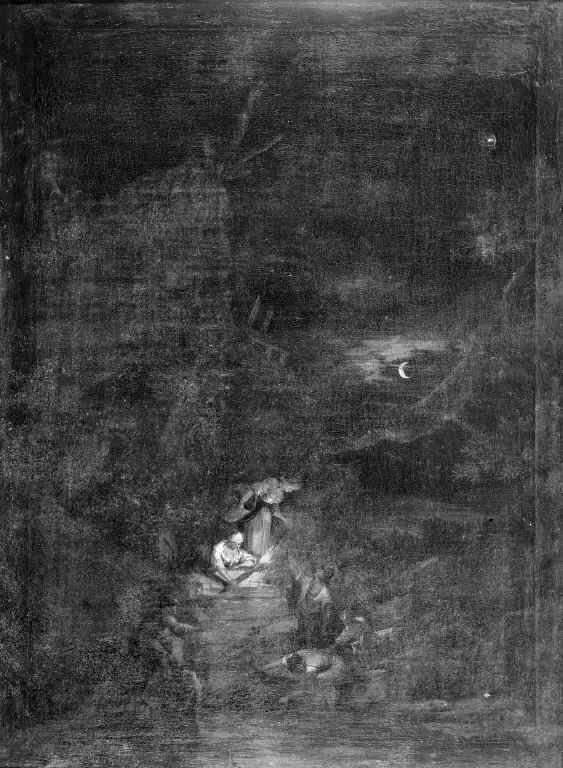
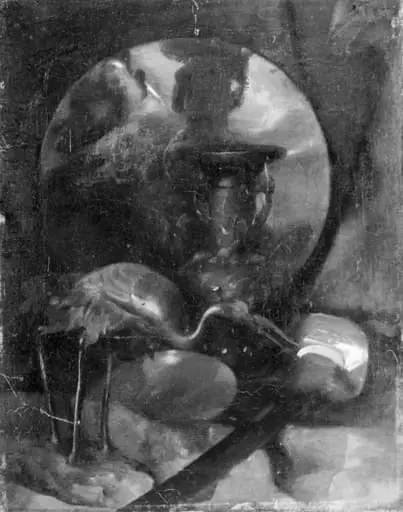
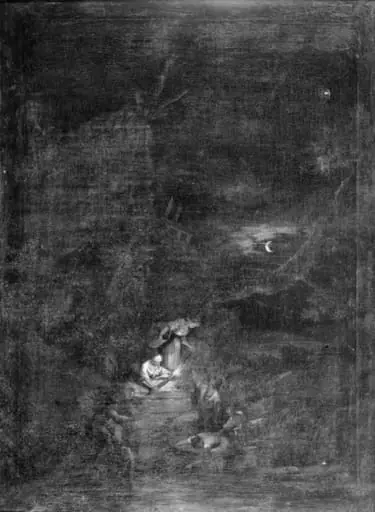
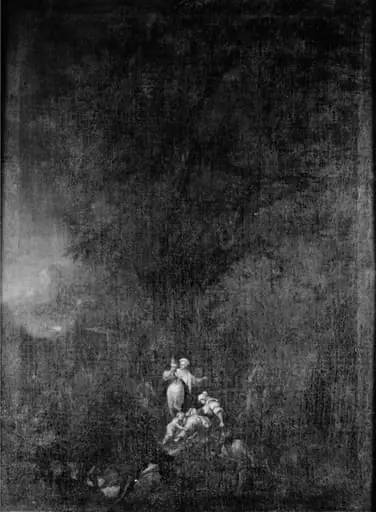
Tod des hl. Franziskus (Kopie nach)
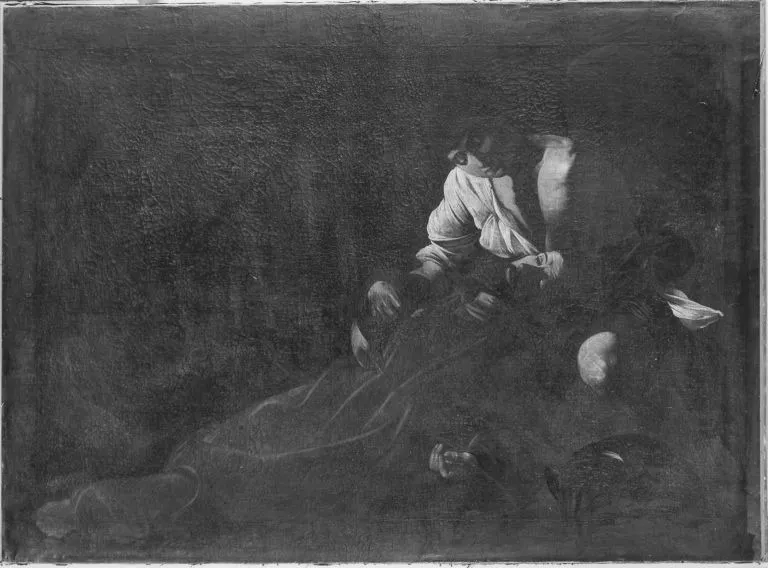
Tod des hl. Franziskus (Kopie nach) is an unspecified painting by the Early Baroque Italian artist Unknown. It dates from 1596 and is held in the collection of the Bavarian State Painting Collections. The work, titled *Tod des hl.
About this work
Overview
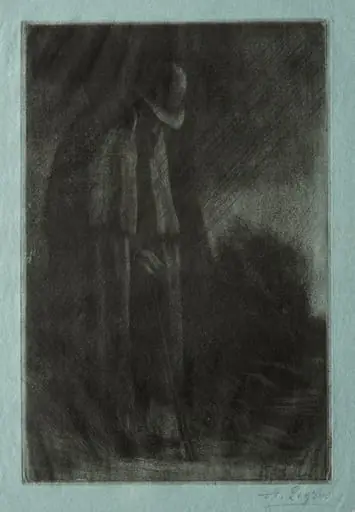
The work, titled *Tod des hl. Franziskus (Kopie nach)*, is a painted image that presents a solitary female figure seated within a dimly lit interior. She is draped in a white cloth, her head turned slightly to the right, and her hands rest calmly on her lap. The composition is dominated by deep shadows, with a faint illumination emerging from the right side of the picture plane.
Subject & Meaning
The central figure appears absorbed in quiet contemplation, her blurred facial features rendering her identity ambiguous and inviting reflection on themes of solitude and inner meditation. The lack of explicit narrative elements suggests an emphasis on the psychological state of the sitter rather than a specific historical or religious episode.
Technique & Style
The painting employs a pronounced chiaroscuro, juxtaposing stark light against enveloping darkness to generate a three‑dimensional effect and to heighten emotional tension. The soft modeling of the white drapery against the dark background demonstrates careful handling of tonal gradations, while the indistinct rendering of the face contributes to the overall sense of mystery.
History & Provenance
Identified as a copy after an original depiction of Saint Francis’s death, the piece reflects a tradition of reproducing revered compositions for devotional or instructional purposes. Details regarding the artist, date of execution, and ownership lineage remain undocumented, limiting precise attribution.
Context
Works that explore solitary figures in subdued settings were common in periods when religious contemplation was visualized through intimate, inward‑looking portrayals. The use of chiaroscuro aligns the painting with broader Baroque tendencies toward dramatic lighting to convey spiritual depth.
Legacy
Although the copy does not occupy a prominent place in major collections, it illustrates the enduring practice of replicating canonical religious imagery for broader audiences, offering insight into the transmission of visual motifs across time and locale.
Artist & collection

 Domestic Scene
 Giacomo and Cardinal Marco, investing Andrea, Abbot of San Zeno, with his Benefice
 The Nymph of Fontainebleau
 Portrait of a Woman
 Madonna and Child with Saints in the Enclosed Garden
 Venus and Minerva
 Family Group of Four on Sofa
 Wall painting from Room H of the Villa of P. Fannius Synistor at Boscoreale