Artwork
Avalokiteshvara (Guanyin), the Bodhisattva of Compassion
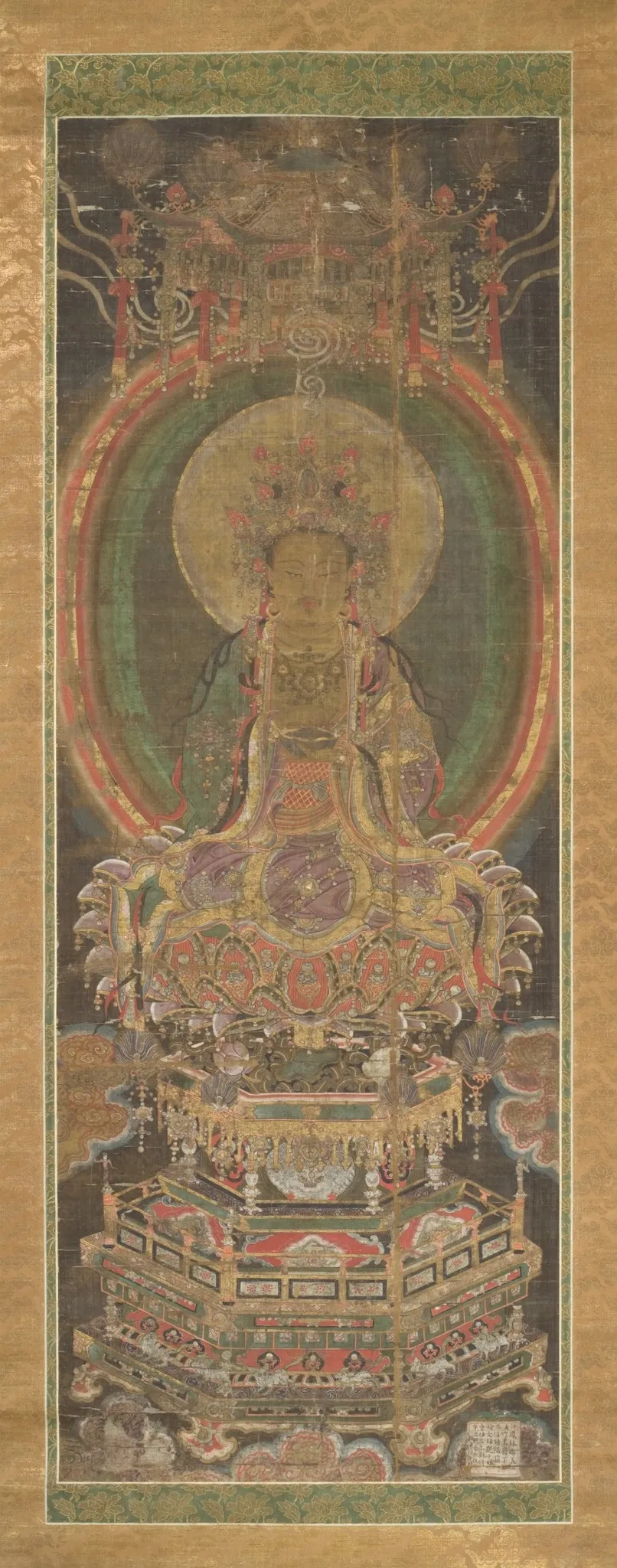
Avalokiteshvara (Guanyin), the Bodhisattva of Compassion is an unspecified painting by Unknown. It is held in the collection of the Los Angeles County Museum of Art.
About this work
Overview
Avalokiteshvara (Guanyin), the Bodhisattva of Compassion is a painting depicting the Buddhist deity of compassion in a serene and contemplative pose, embodying the principles of Mahayana Buddhism.
Subject & Meaning
The subject, Avalokiteshvara (known as Guanyin in Chinese), represents universal compassion and the aspiration to achieve enlightenment for the benefit of all sentient beings. The painting symbolizes the deity's role in hearing the cries of the suffering and offering solace.
Technique & Style
Executed with delicate brushstrokes and subtle color palette, the painting reflects the harmonious blend of Chinese artistic traditions with Buddhist iconography, characteristic of the period's religious art. Intricate details and the deity's gentle expression convey a sense of profound serenity.
History & Provenance
While specific dates and the artist's name are not provided, the painting's style suggests it originates from the Ming dynasty (1368-1644), a period of flourishing Buddhist art in China. Its provenance details are not disclosed in the provided facts.
Context
Created within the cultural and religious landscape of Ming China, the painting would have served both as a devotional object for worshippers seeking compassion and as an artistic expression of Buddhist philosophical ideals.
Legacy
As a representation of Guanyin, the painting contributes to the enduring legacy of Avalokiteshvara's iconography in East Asian art, symbolizing compassion and inspiring spiritual practice across centuries.
Artist & collection

 Domestic Scene
 Giacomo and Cardinal Marco, investing Andrea, Abbot of San Zeno, with his Benefice
 The Nymph of Fontainebleau
 Portrait of a Woman
 Madonna and Child with Saints in the Enclosed Garden
 Venus and Minerva
 Family Group of Four on Sofa
 Wall painting from Room H of the Villa of P. Fannius Synistor at Boscoreale
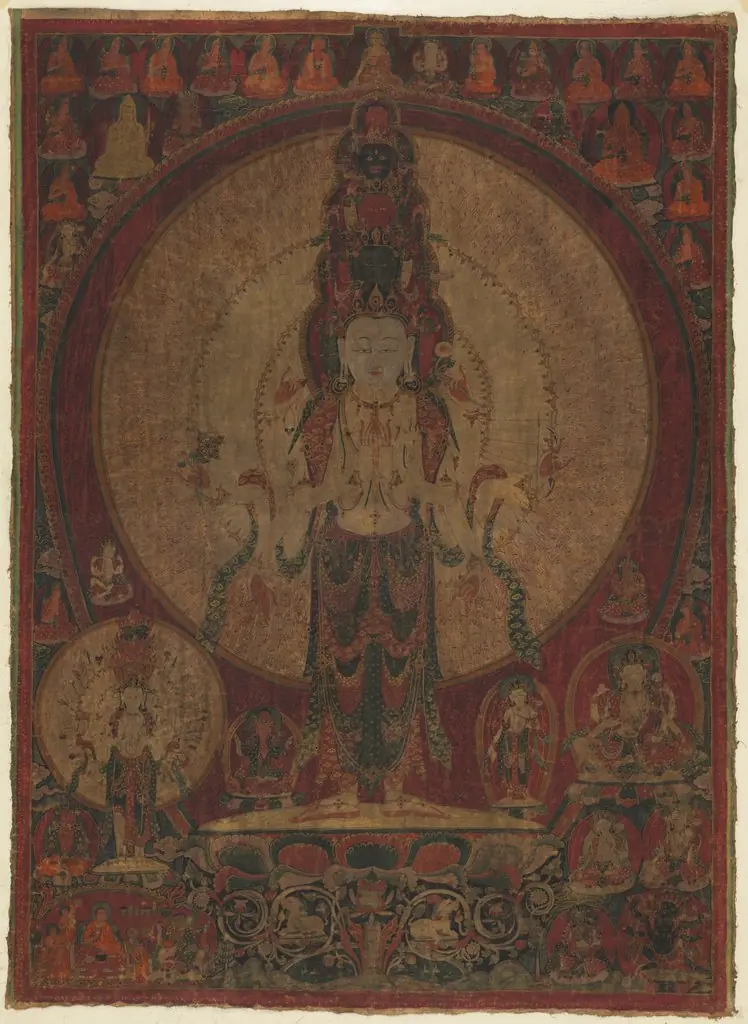 Eleven-Headed, Thousand-Armed Bodhisattva of Compassion (Avalokiteshvara)
 Eleven-Headed, Thousand-Armed Bodhisattva of Compassion (Avalokiteshvara)
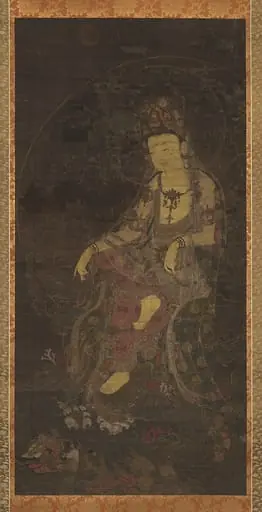 수월관음도 고려|水月觀音圖 高麗|Water-moon Avalokiteshvara
 阿弥陀聖衆来迎図 |Welcoming Descent of Amida and Bodhisattvas
 Cundi Bodhisattva
 地蔵菩薩来迎図|Welcoming Descent of the Bodhisattva Jizō
 般若菩薩曼荼羅図|Mandala of the Bodhisattva Hannya (Prajnaparamita)