Artwork
Eleven-Headed, Thousand-Armed Bodhisattva of Compassion (Avalokiteshvara)
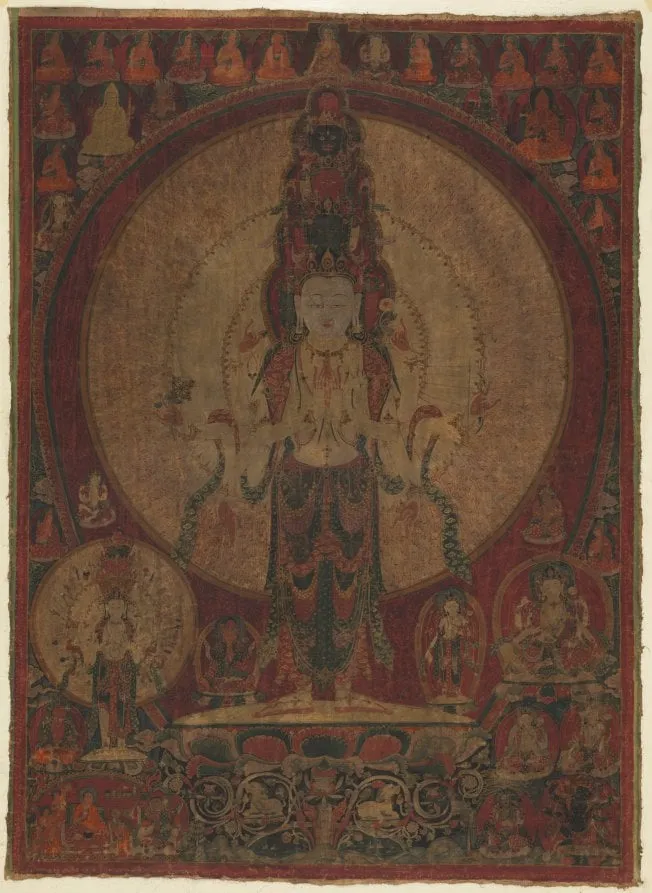
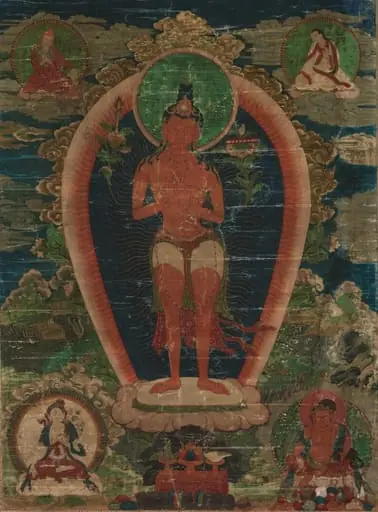
Eleven-Headed, Thousand-Armed Bodhisattva of Compassion (Avalokiteshvara) is an unspecified painting by the Renaissance artist Unknown. It dates from 1500 and is held in the collection of the Cleveland Museum of Art.
About this work
Overview
This painting depicts the Bodhisattva of Compassion, Avalokiteshvara, in a distinctive form characterized by eleven heads and one thousand arms. This multifaceted representation embodies the bodhisattva's role in perceiving and alleviating the suffering of all sentient beings.
Subject & Meaning
The central figure, Avalokiteshvara, is revered for compassion.
The central figure, Avalokiteshvara, is revered for compassion. The thousand arms, each bearing an eye in the palm, symbolize the ability to see and respond to universal suffering, while the eleven heads signify omniscient awareness. This form is rooted in the visionary experience of Gelongma Palmo, a Kashmiri princess-turned-nun who, through meditation, envisioned this manifestation as a path to enlightenment and healing.
Technique & Style
The painting features a golden figure with arms radiating outward like sun rays and heads stacked vertically. The incorporation of eyes in each palm highlights the artist's emphasis on Avalokiteshvara's compassionate omnipresence. The style is characteristic of western Tibetan art.
History & Provenance
The painting's origins are tied to the legend of Gelongma Palmo, whose spiritual vision in a cave inspired this specific depiction of Avalokiteshvara. Historical details about the painting's creation and ownership are not provided.
Context
This artwork is contextualized within western Tibetan Buddhist traditions, reflecting the region's unique artistic and spiritual practices. The figure's depiction aligns with the mystical and compassionate themes prevalent in Tibetan Buddhism.
Artist & collection

 Domestic Scene
 Giacomo and Cardinal Marco, investing Andrea, Abbot of San Zeno, with his Benefice
 The Nymph of Fontainebleau
 Portrait of a Woman
 Madonna and Child with Saints in the Enclosed Garden
 Venus and Minerva
 Family Group of Four on Sofa
 Wall painting from Room H of the Villa of P. Fannius Synistor at Boscoreale
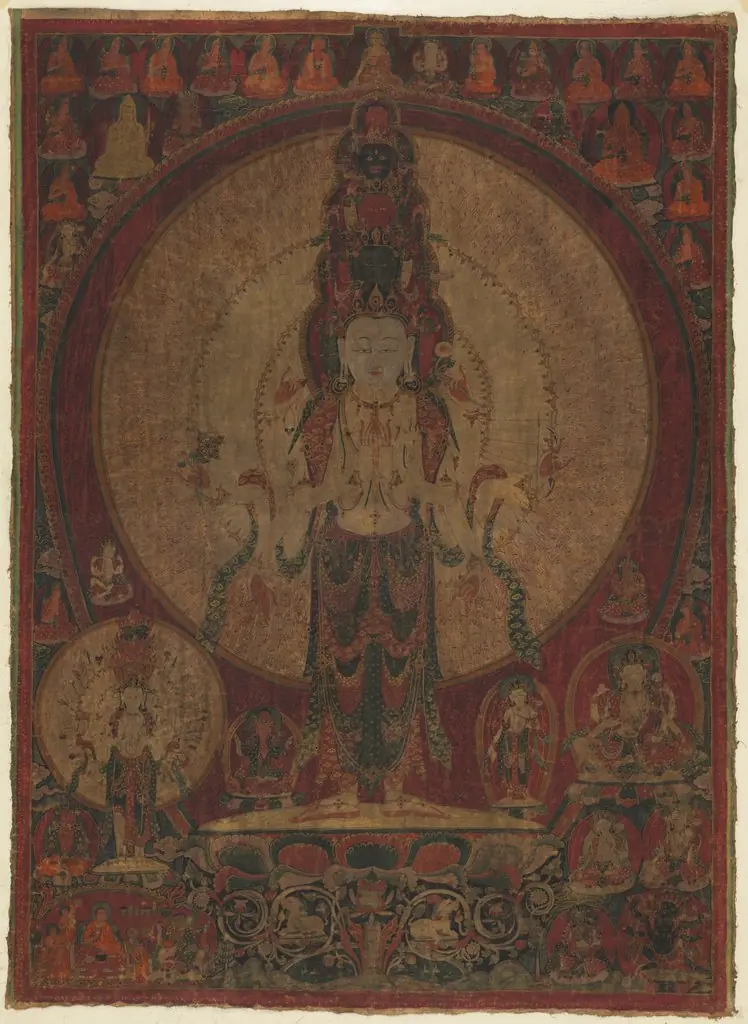 Eleven-Headed, Thousand-Armed Bodhisattva of Compassion (Avalokiteshvara)
 The Bodhisattva Avalokiteshvara and Four Taras
 Avalokiteshvara (Guanyin), the Bodhisattva of Compassion
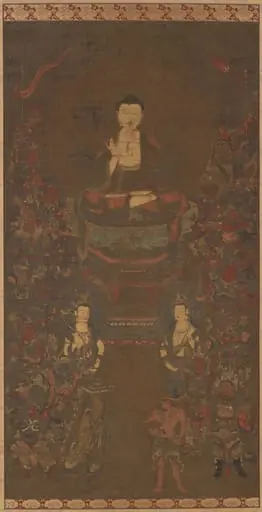 Shakyamuni with the Sixteen Benevolent Deities
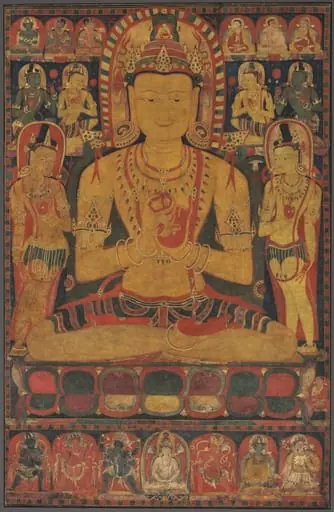 Tantric Buddha Vairochana as Vajrasattva
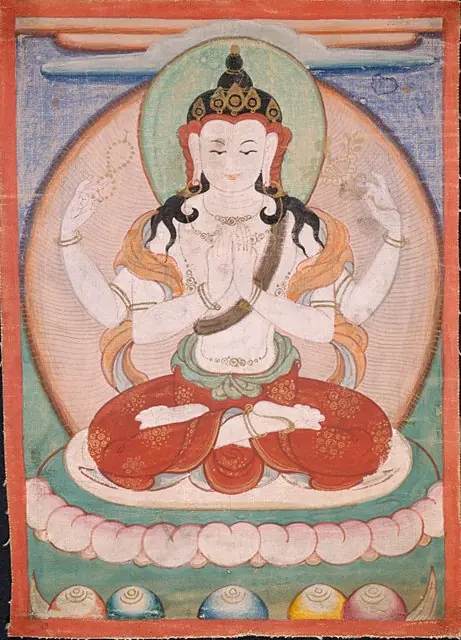 The Bodhisattva Shadakshari Lokeshvara
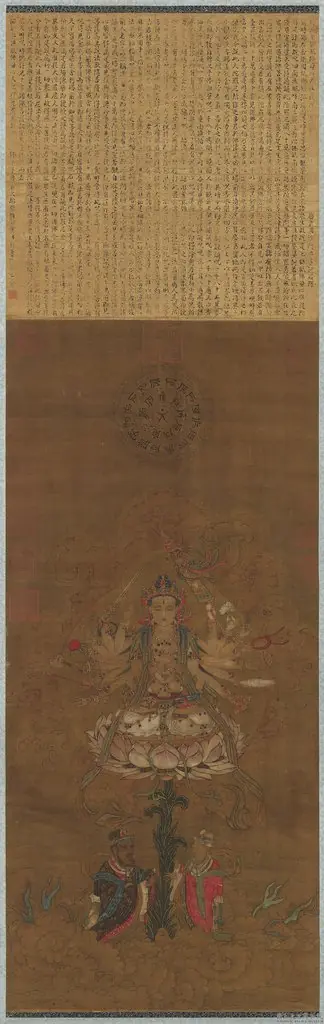 Cundi Bodhisattva
 Bodhisattva Padmapani