Artwork
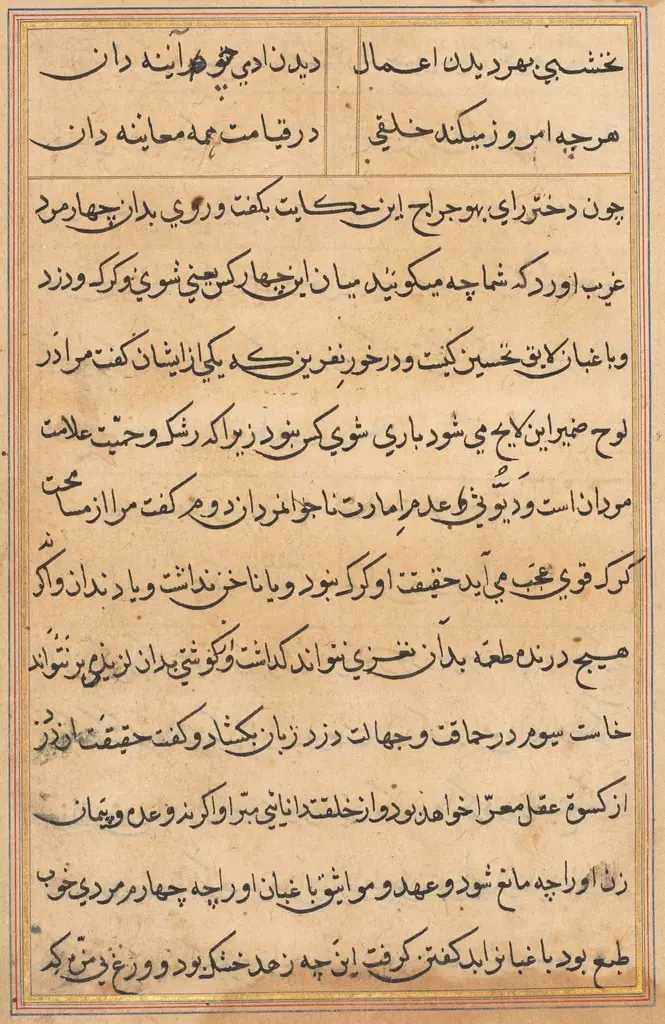
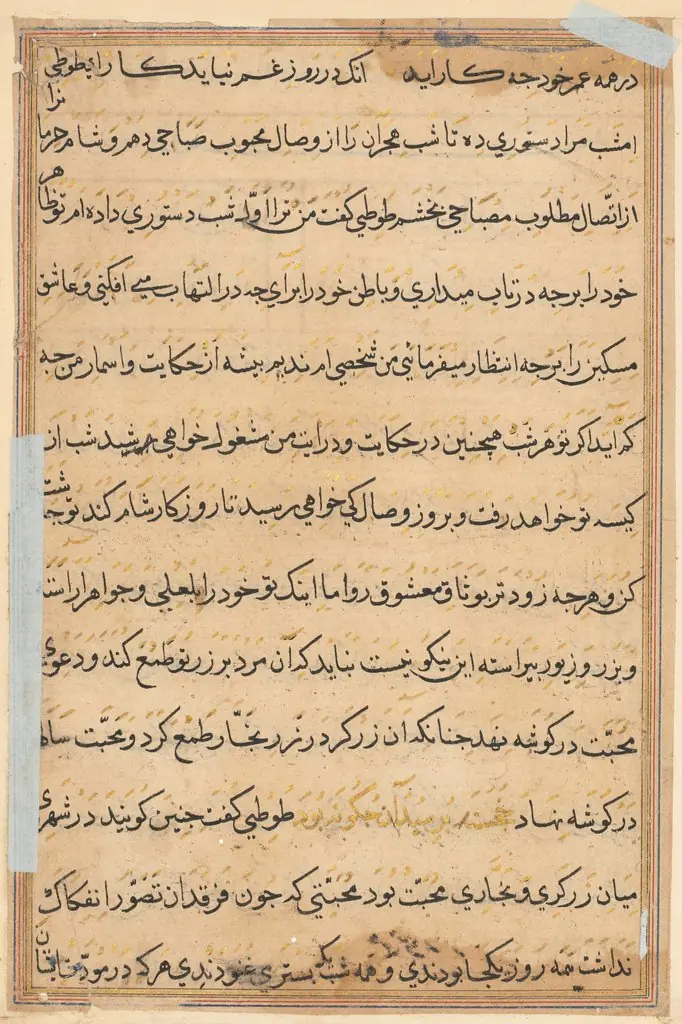
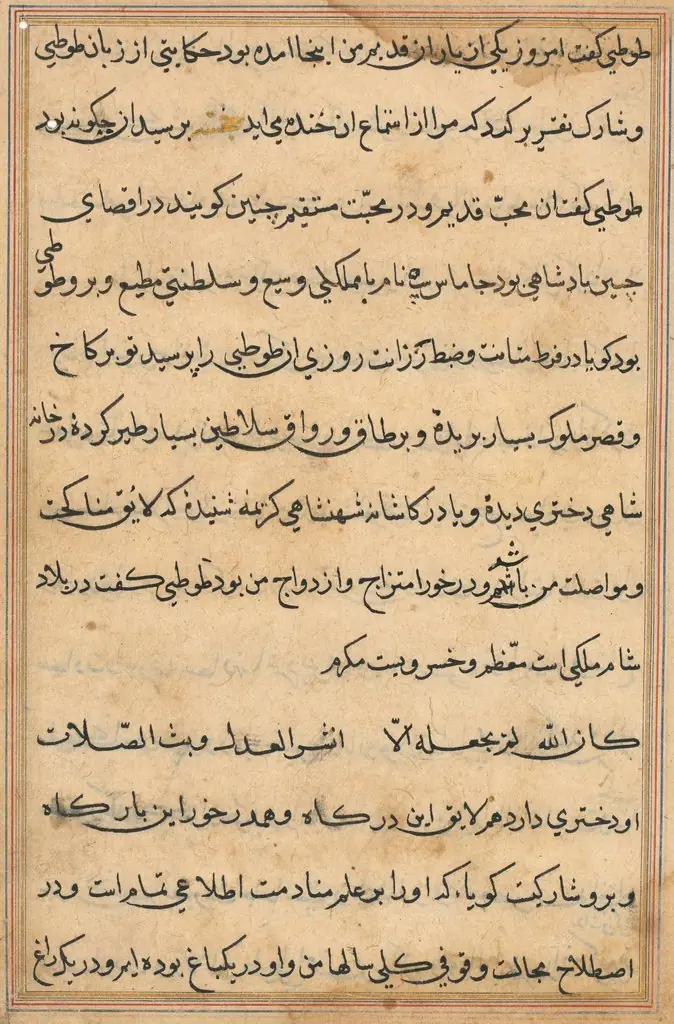
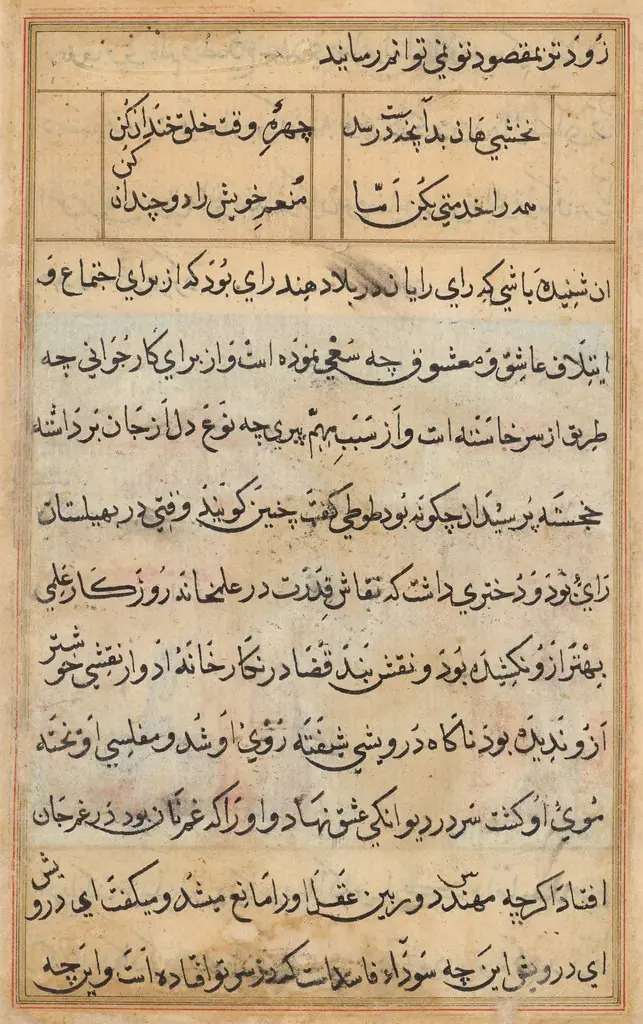
Page from Tales of a Parrot (Tuti-nama): text page
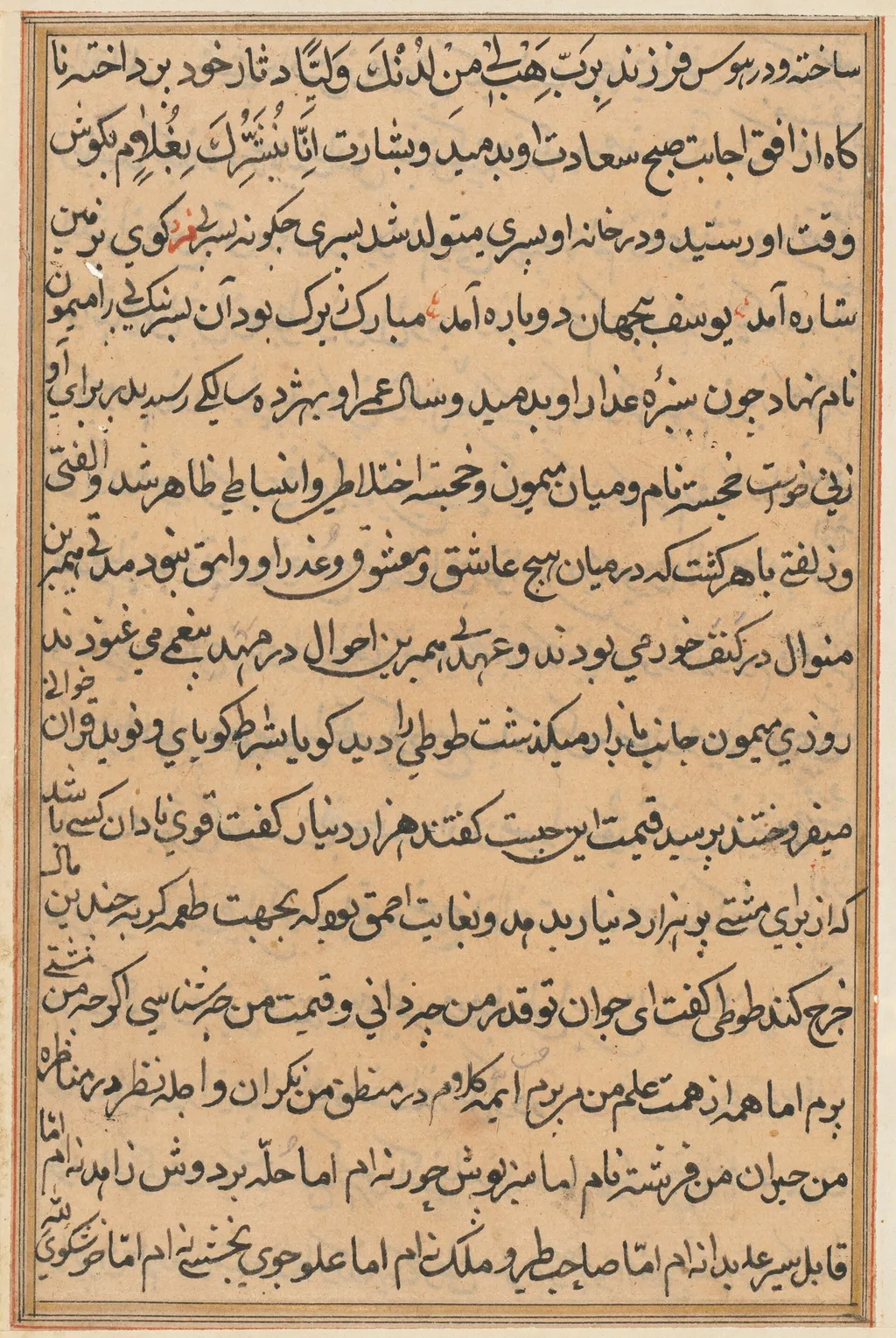
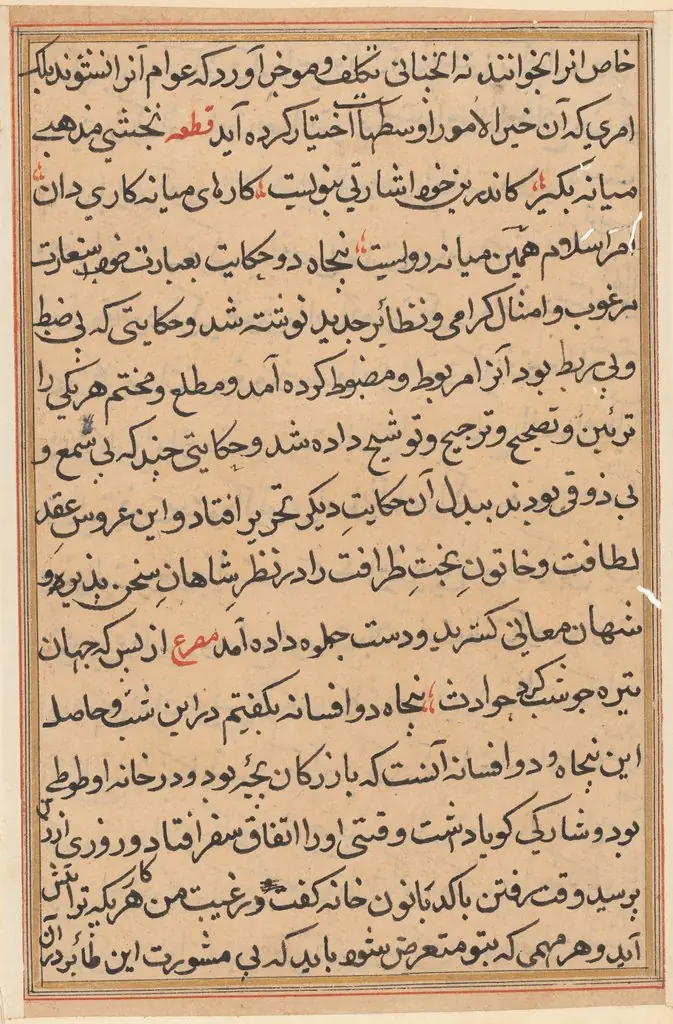
Page from Tales of a Parrot (Tuti-nama): text page is an unspecified painting. It dates from 1560 and is held in the collection of the Cleveland Museum of Art. This leaf belongs to a 16th‑century Indian manuscript titled *Tales of a Parrot* (Tuti‑nama).
About this work
Overview
This leaf belongs to a 16th‑century Indian manuscript titled *Tales of a Parrot* (Tuti‑nama). The sheet contains only text, arranged in a continuous flowing hand, with occasional words highlighted in red ink. No pictorial decoration accompanies the script, allowing the written narrative to dominate the page.
Subject & Meaning
The manuscript records a narrative or poetic composition, typical of the Tuti‑nama tradition, which presents moral stories through the voice of a parrot. Though the specific passage is illegible here, the work as a whole conveys ethical teachings and cultural values through allegorical storytelling.
Technique & Style
The scribe employed a fine brush or pen to render a cursive script characteristic of Persian‑influenced Indian calligraphy. Red pigment, likely derived from vermilion or a similar mineral, was applied selectively to emphasize key terms or phrases, adding visual hierarchy without breaking the page’s textual uniformity.
History & Provenance
Produced in the 1500s, the page reflects the flourishing of literary production under Mughal patronage, when Persian literary forms were adapted into local languages. The manuscript’s later ownership trail is undocumented, but similar Tuti‑nama codices have circulated among royal libraries and private collections across the subcontinent.
Context
*Tales of a Parrot* belongs to a broader genre of didactic literature that blended Persian poetic conventions with Indian moral instruction. Such works were often read aloud in courtly or domestic settings, serving both entertainment and ethical instruction for elite audiences.
Legacy
Although this particular leaf contains no illustrations, the Tuti‑nama tradition influenced later Indian prose and poetry, inspiring adaptations in regional languages. The manuscript’s preservation offers insight into the textual aesthetics and cultural exchange of early modern South Asia.
Artist & collection

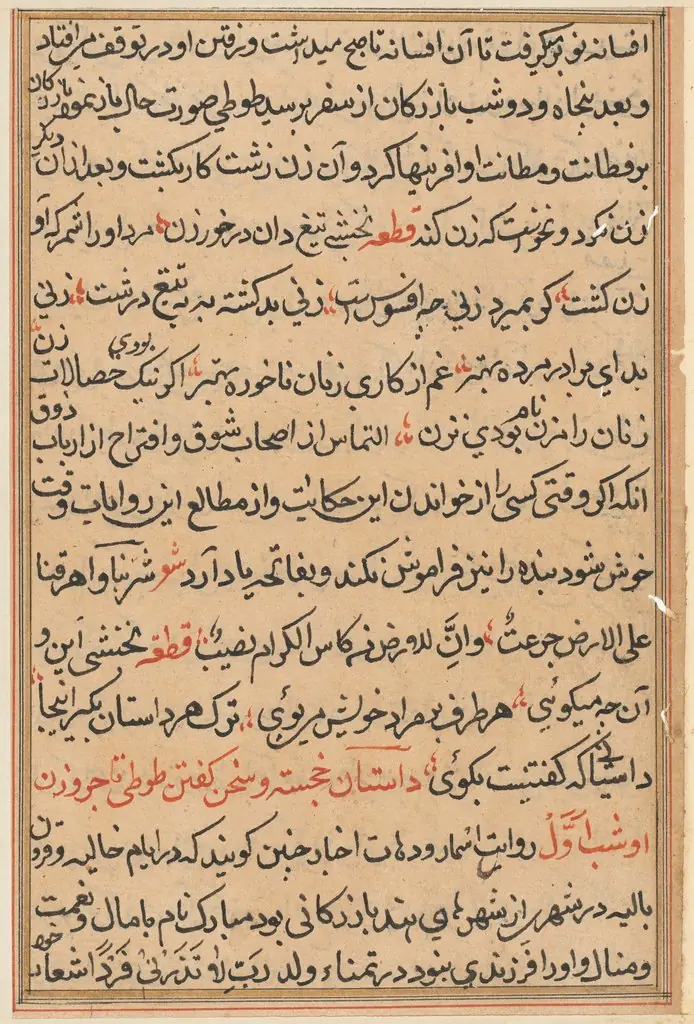 Page from Tales of a Parrot (Tuti-nama): text page
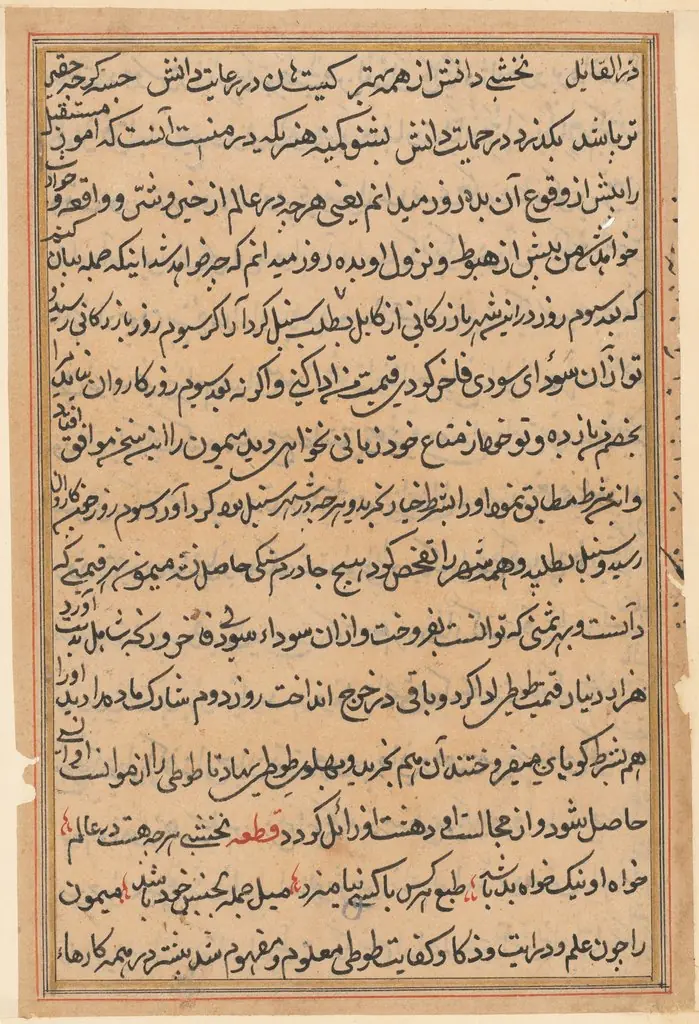 Page from Tales of a Parrot (Tuti-nama): text page
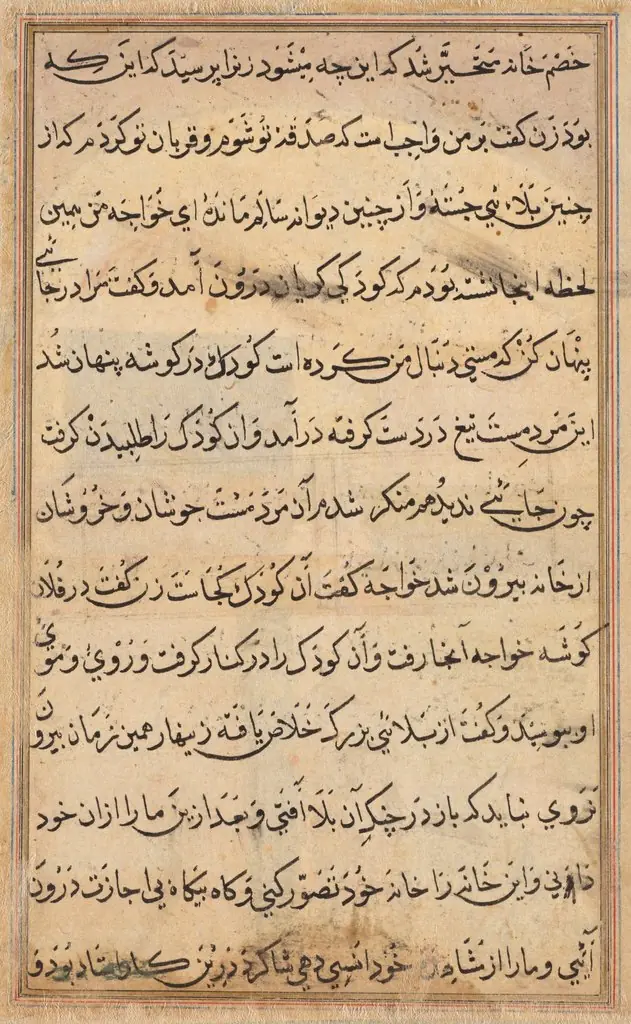 Page from Tales of a Parrot (Tuti-nama): text page
 Page from Tales of a Parrot (Tuti-nama): text page
 Page from Tales of a Parrot (Tuti-nama): text page
 Page from Tales of a Parrot (Tuti-nama): text page
 Page from Tales of a Parrot (Tuti-nama): text page
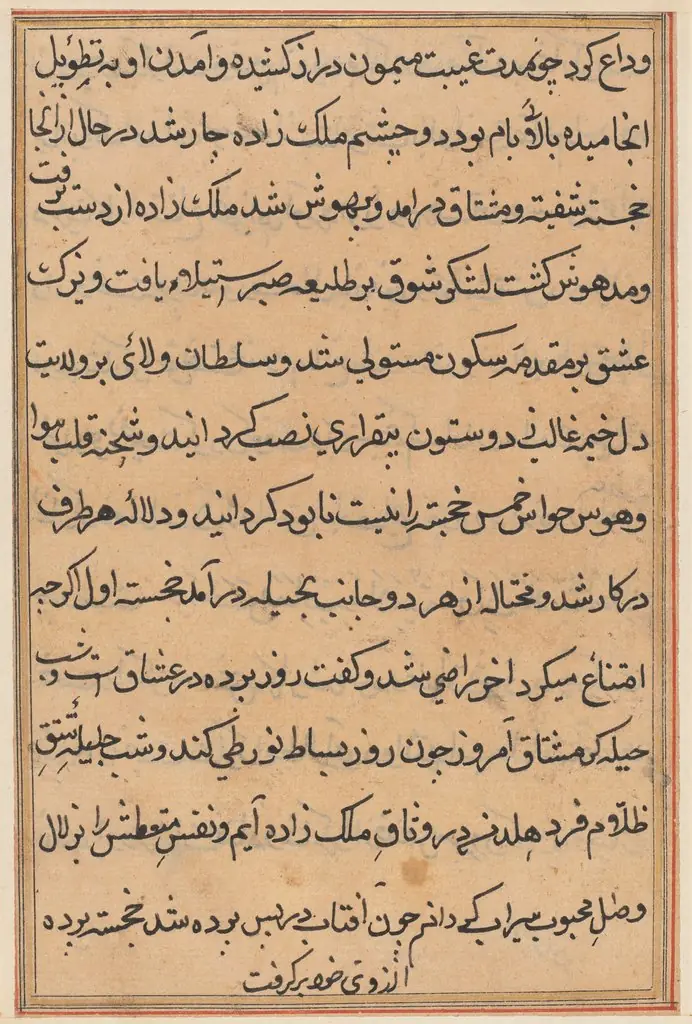 Page from Tales of a Parrot (Tuti-nama): text page
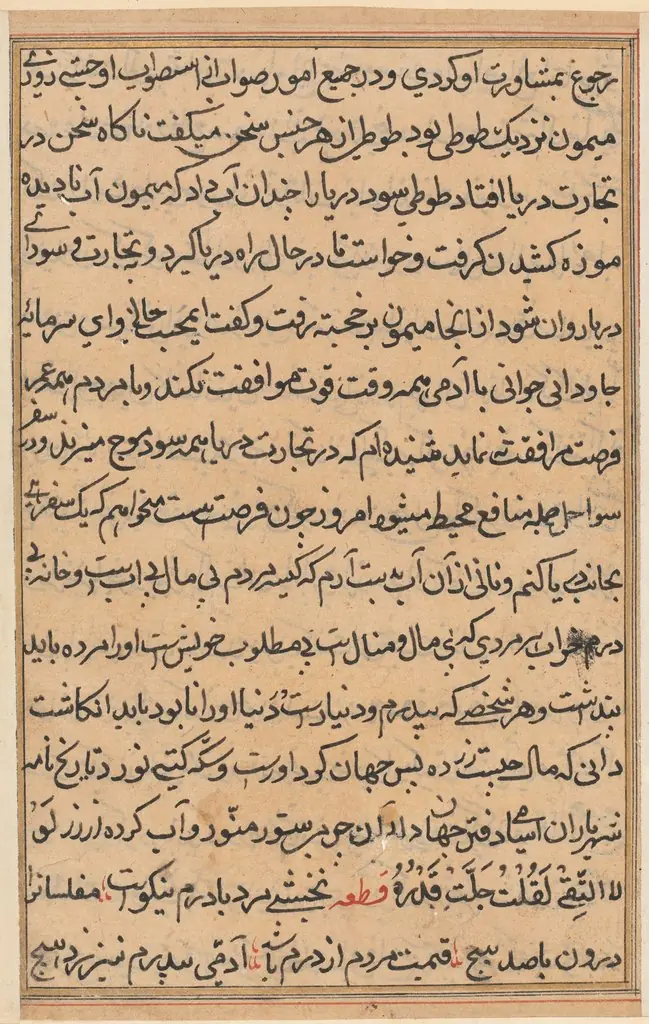 Page from Tales of a Parrot (Tuti-nama): text page
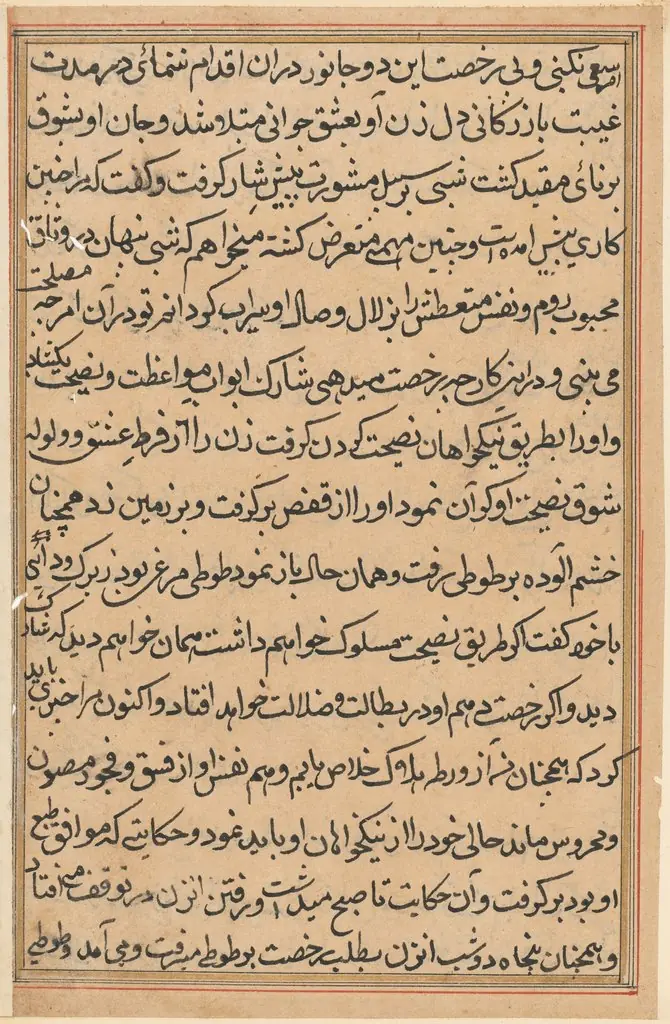 Page from Tales of a Parrot (Tuti-nama): text page
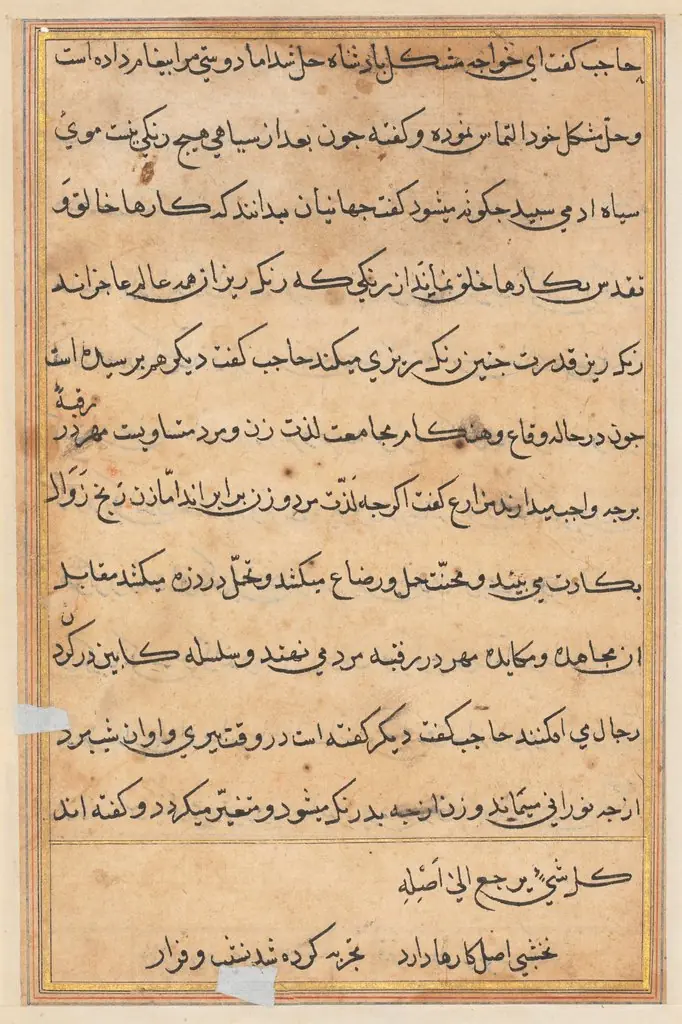 Page from Tales of a Parrot (Tuti-nama): text page
 Page from Tales of a Parrot (Tuti-nama): text page