Artwork
Page from Tales of a Parrot (Tuti-nama): text page
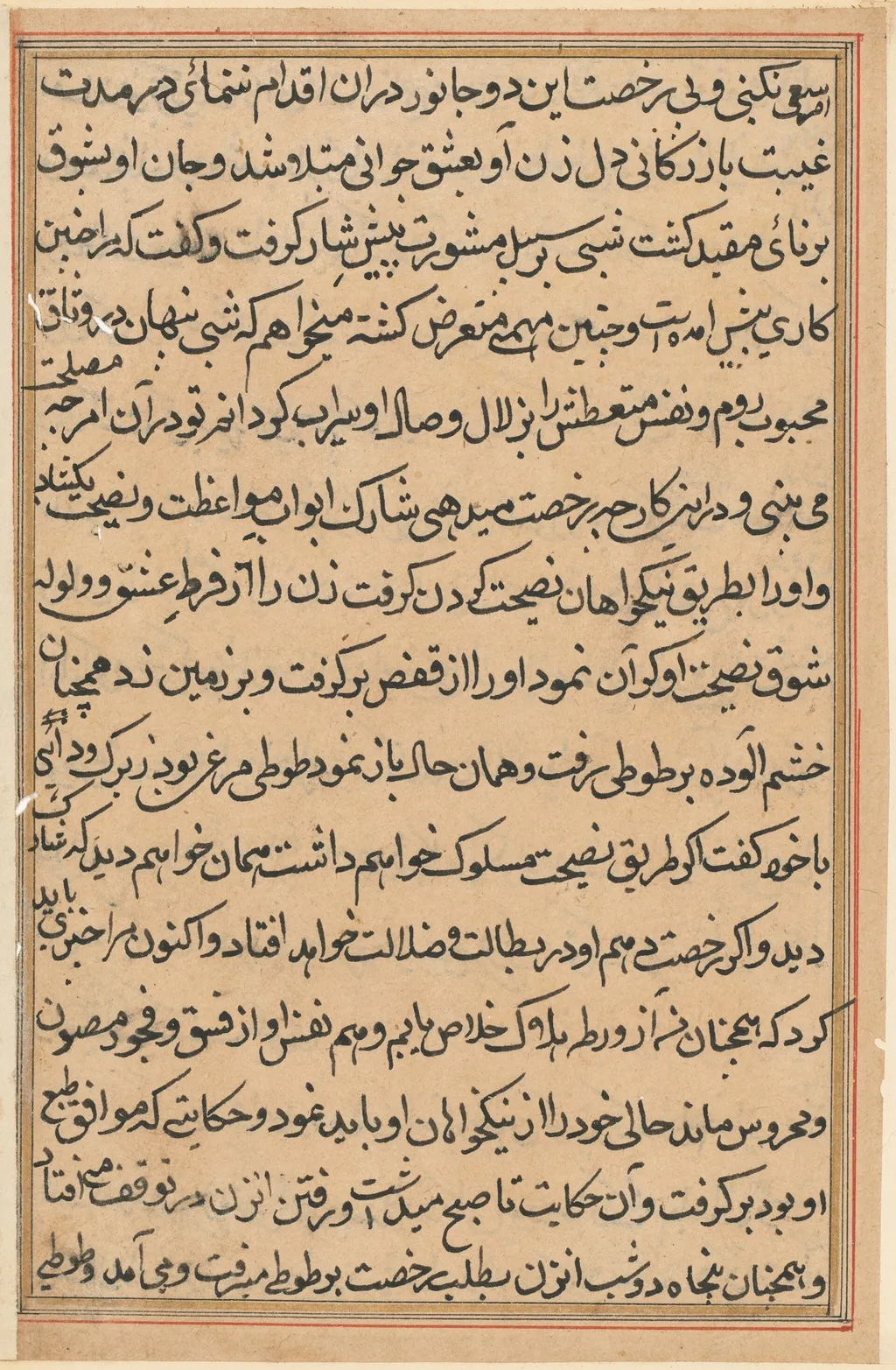
Page from Tales of a Parrot (Tuti-nama): text page is an unspecified painting. It dates from 1560 and is held in the collection of the Cleveland Museum of Art. This object is a painted page from the Persian manuscript known as Tales of a Parrot, or Tuti‑nama.
About this work
Overview
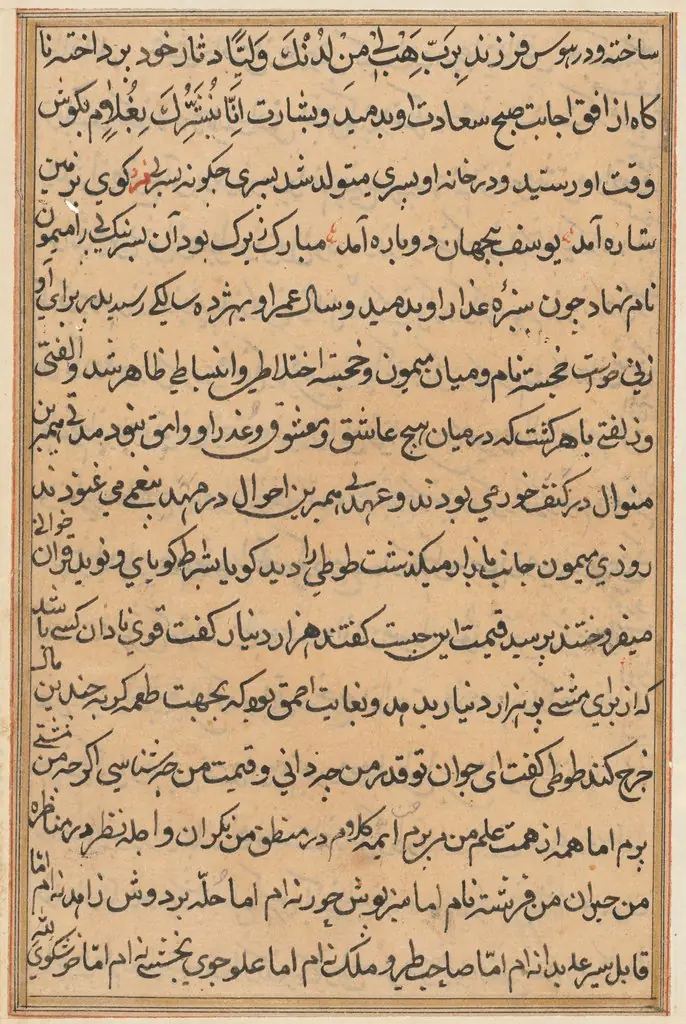
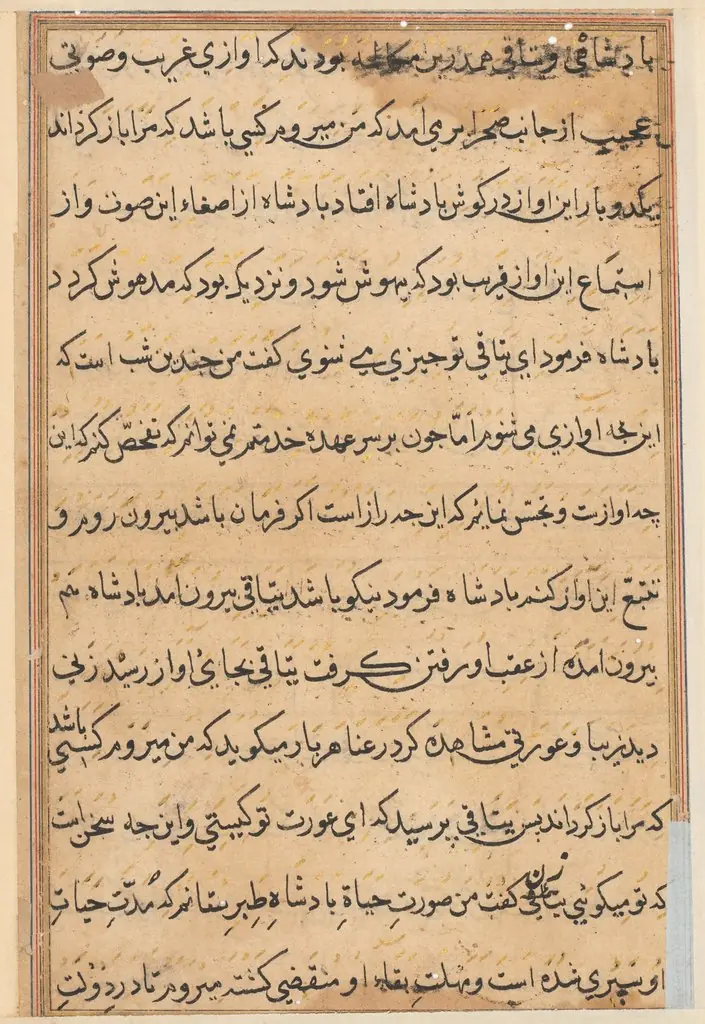
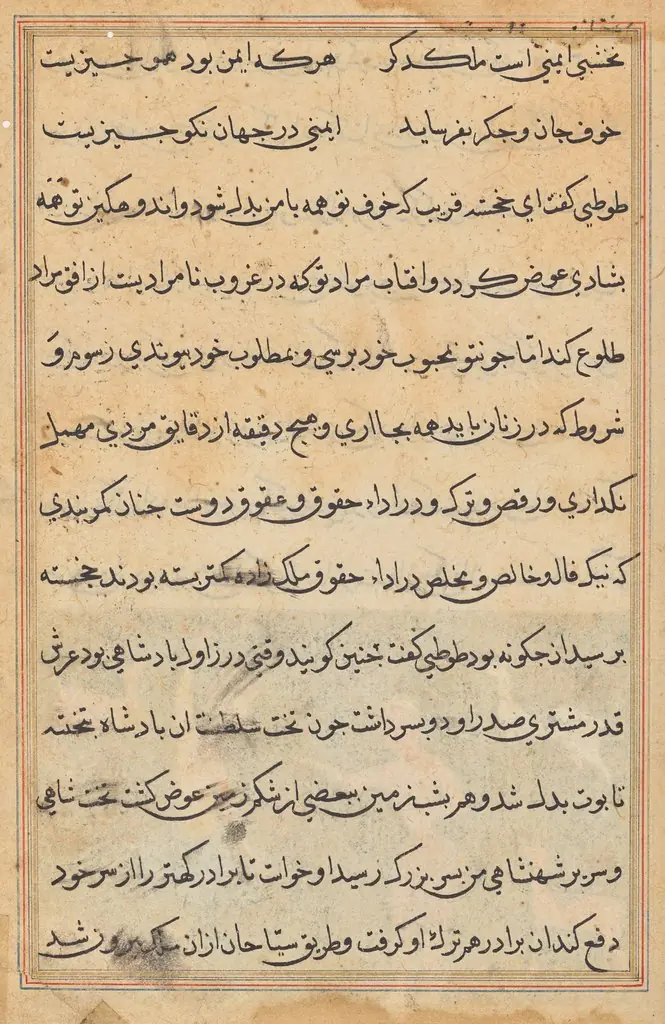
This object is a painted page from the Persian manuscript known as Tales of a Parrot, or Tuti‑nama. Executed as a text page rather than an illustrated spread, it presents a continuous block of black calligraphy framed by a narrow red margin. The page measures the full width of the folio, with the script filling the surface in orderly, rhythmic lines.
Subject & Meaning
The calligraphic text contains a segment of the narrative that recounts the legendary adventures of a talking parrot, a popular motif in medieval Persian literature. Though the visual element is limited to script, the story’s moral and entertainment value are conveyed through the lyrical language and its structured presentation.
Technique & Style
The script was rendered by hand, evident in subtle irregularities of each letter that betray a skilled scribe’s touch. The black ink is applied in fluid strokes that vary in thickness, creating a sense of movement across the page. A thin red border, painted with a fine brush, delineates the text area and adds a modest decorative accent.
History & Provenance
Originally part of a larger codex, this page was separated from its companion illustrations and now resides in the collection of the Cleveland Museum of Art. The manuscript dates to the Safavid period, reflecting the era’s flourishing of Persian literary production and manuscript illumination.
Context
Tuti‑nama belongs to a tradition of animal fable collections that blended moral instruction with entertainment. In the Safavid court, such works were prized for their linguistic elegance and the skill of their calligraphers, serving both as literary entertainment and as objects of cultural prestige.
Legacy
Although lacking pictorial decoration, the page exemplifies the high level of calligraphic artistry achieved in Persian manuscript culture. Its preservation allows scholars to study the script’s form, the material qualities of Safavid book production, and the transmission of popular narrative texts across centuries.
Artist & collection

 Page from Tales of a Parrot (Tuti-nama): text page
 Page from Tales of a Parrot (Tuti-nama): text page
 Page from Tales of a Parrot (Tuti-nama): text page
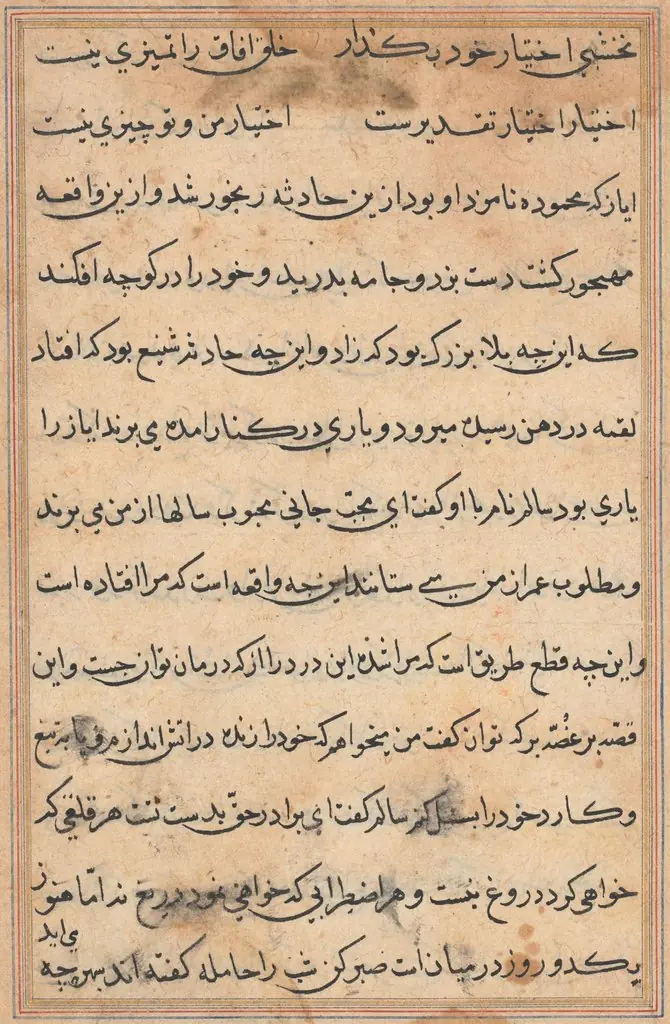 Page from Tales of a Parrot (Tuti-nama): text page
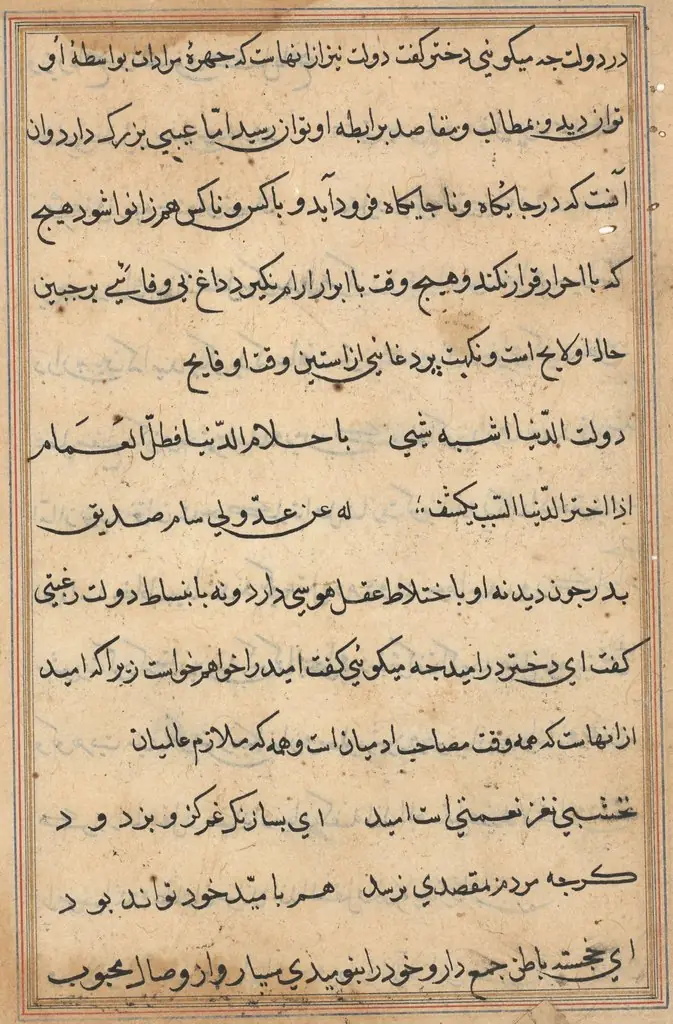 Page from Tales of a Parrot (Tuti-nama): text page
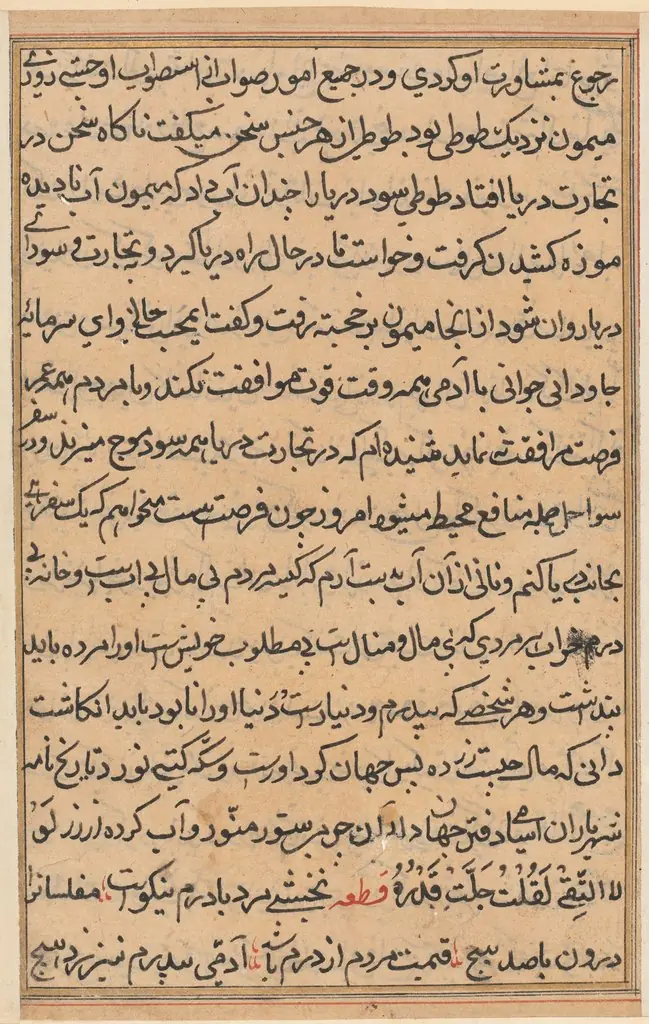 Page from Tales of a Parrot (Tuti-nama): text page
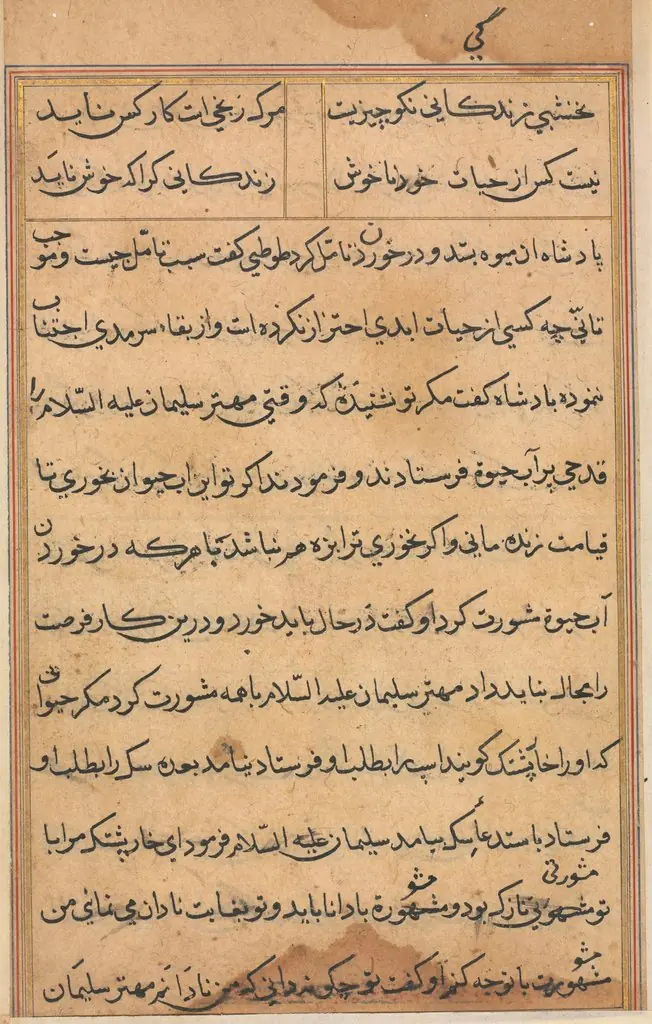 Page from Tales of a Parrot (Tuti-nama): text page
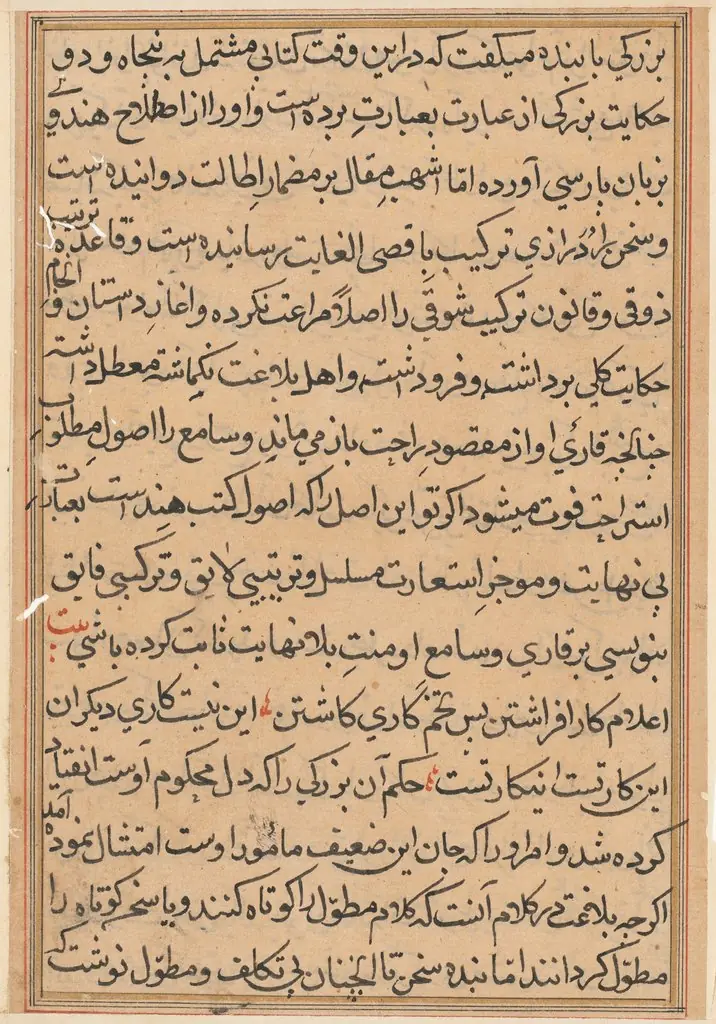 Page from Tales of a Parrot (Tuti-nama): text page
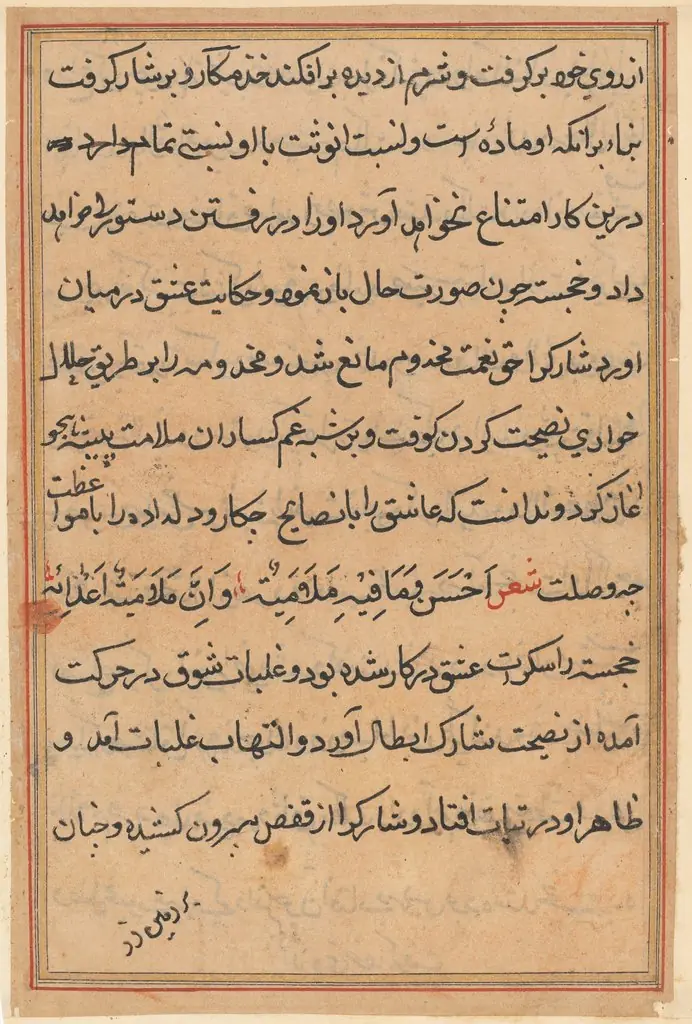 Page from Tales of a Parrot (Tuti-nama): text page
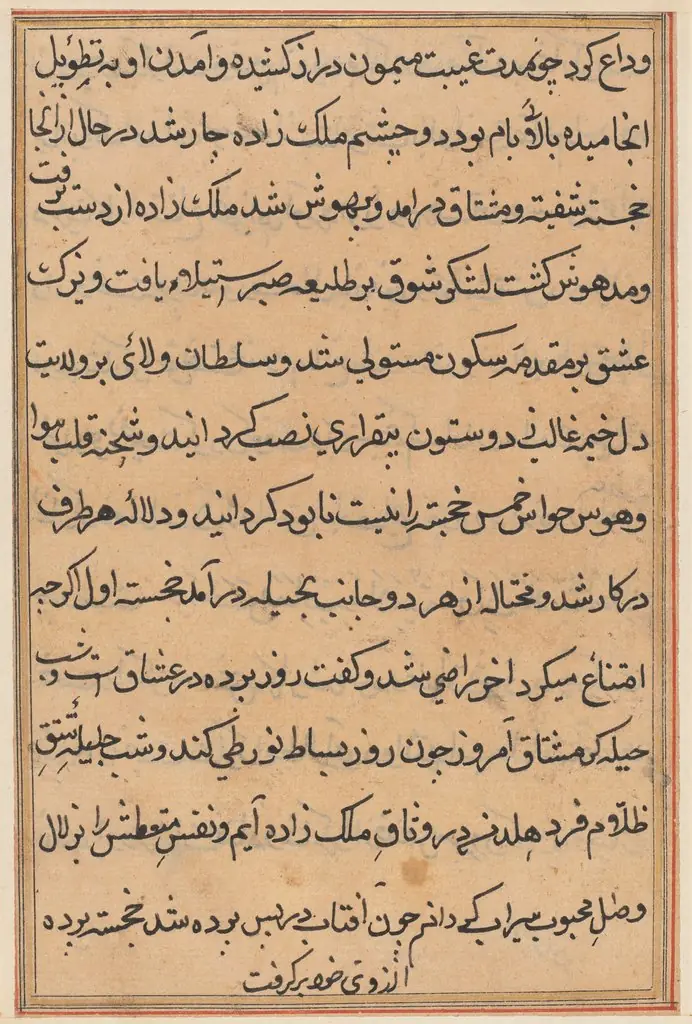 Page from Tales of a Parrot (Tuti-nama): text page