Artwork
Bird and Lilies
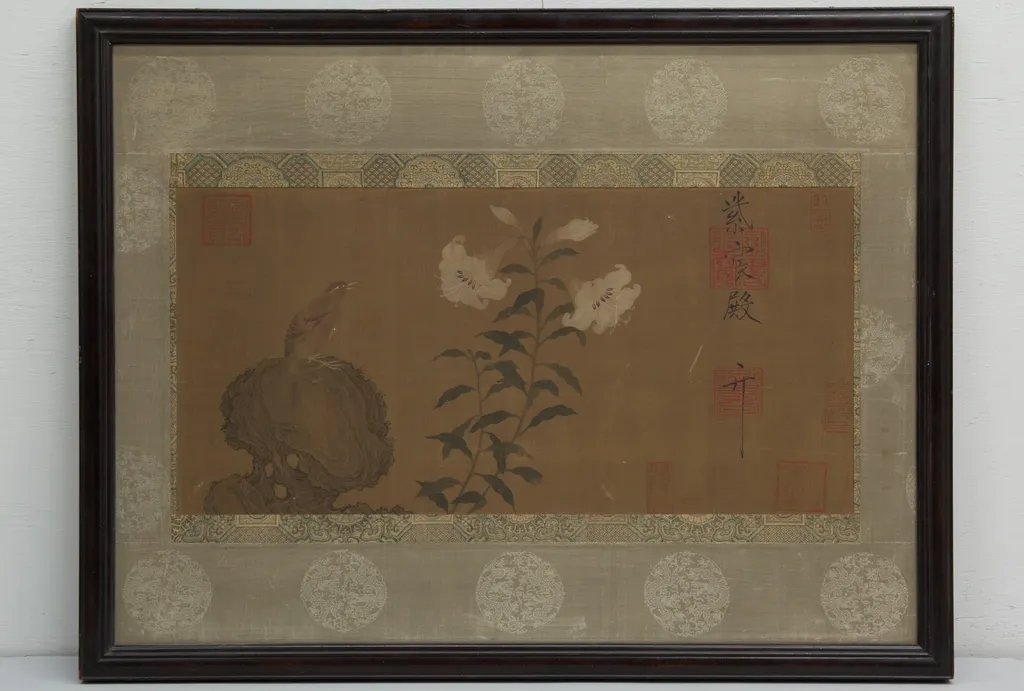
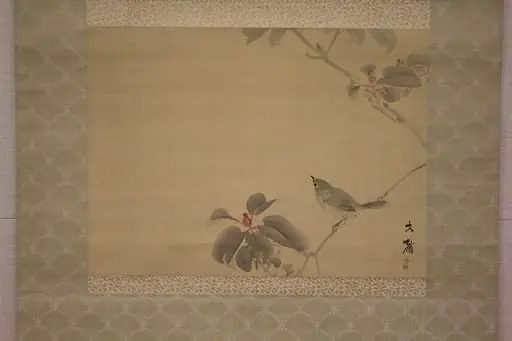
Bird and Lilies is an unspecified painting by the Dutch Golden Age artist Unknown. It dates from 1644 and is held in the collection of the Detroit Institute of Arts. This painting presents a quiet, intimate scene centered on a bird resting in its nest beside a tall plant bearing white blossoms.
About this work
Overview
Rendered in muted earth tones, the composition avoids complexity, focusing instead on the gentle relationship between the creature and its natural surroundings.
This painting presents a quiet, intimate scene centered on a bird resting in its nest beside a tall plant bearing white blossoms. Rendered in muted earth tones, the composition avoids complexity, focusing instead on the gentle relationship between the creature and its natural surroundings. The warm brown background enhances the soft contrast of the bird’s fur and the pale flowers, creating a sense of stillness and calm.
Subject & Meaning
The bird and lilies together suggest themes of nesting, renewal, and quiet domesticity. The bird, neither exotic nor dramatic, is depicted in a moment of repose, reinforcing a sense of natural order. The white flowers, often associated with purity or fragility, complement the bird’s presence without overt symbolism. The scene invites contemplation rather than narrative, emphasizing harmony between life and environment.
Technique & Style
The artist employs soft, blended brushwork to render the bird’s feathers and the petals of the lilies, avoiding sharp outlines. Earth pigments dominate the palette, with subtle variations in brown and muted green creating depth without contrast. The background is uniformly warm, allowing the central forms to emerge organically. The composition is deliberately balanced, with the bird and plant forming a vertical axis that anchors the quiet scene.
History & Provenance
The painting’s origin remains undocumented in public records, with no known exhibition history or collector lineage prior to recent cataloging. Its style suggests a late 19th- or early 20th-century origin, possibly from a regional artist working in a naturalist tradition. No signatures or inscriptions are visible, and its early ownership is unverified, leaving its journey to current possession unclear.
Context
This work aligns with a broader trend in late 19th-century art that favored intimate natural scenes over grand narratives. Similar depictions of birds and flora appeared in domestic interiors and botanical studies, often reflecting a growing interest in everyday nature. The absence of human figures and the emphasis on quiet observation reflect a shift toward personal, meditative subjects in response to industrialization and urban expansion.
Legacy
Though not widely reproduced or studied, the painting contributes to a quieter strand of nature-focused art that values observation over spectacle. Its restrained palette and composition resonate with later movements that prioritized simplicity and emotional resonance. It remains a modest but thoughtful example of how everyday natural moments were rendered with dignity in an era increasingly detached from rural life.
Artist & collection

 Domestic Scene
 Giacomo and Cardinal Marco, investing Andrea, Abbot of San Zeno, with his Benefice
 The Nymph of Fontainebleau
 Portrait of a Woman
 Madonna and Child with Saints in the Enclosed Garden
 Venus and Minerva
 Family Group of Four on Sofa
 Wall painting from Room H of the Villa of P. Fannius Synistor at Boscoreale