Artwork
작자미상 포도 조선|作者未詳 墨葡萄圖 朝鮮|Grapevine in the Wind
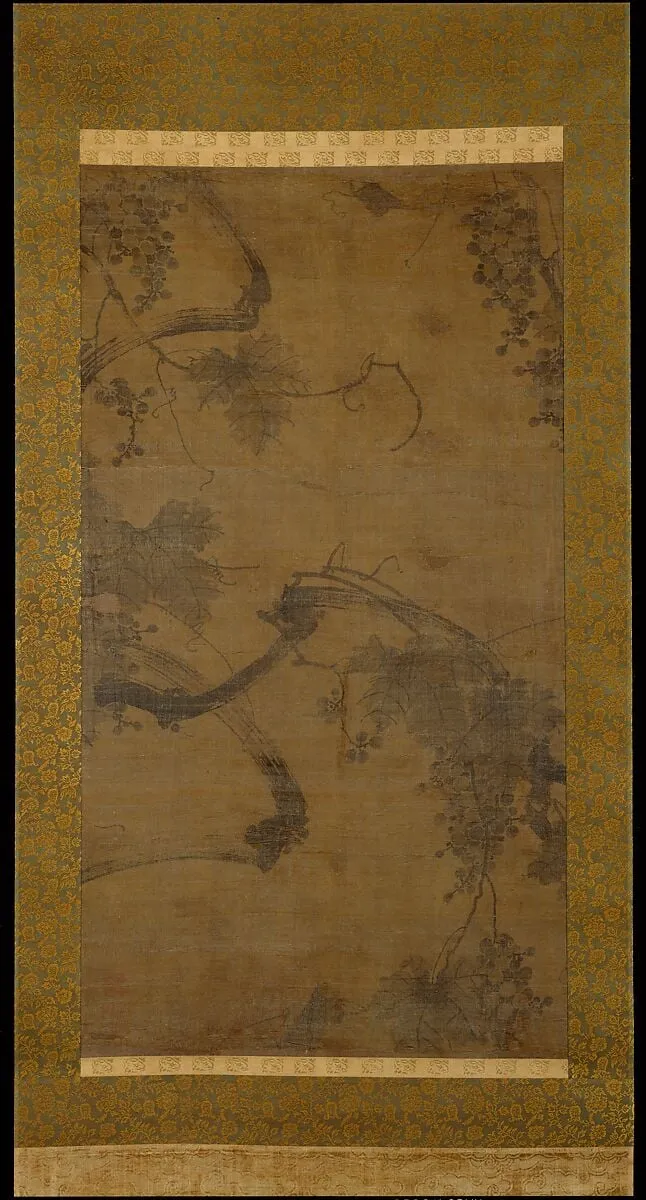
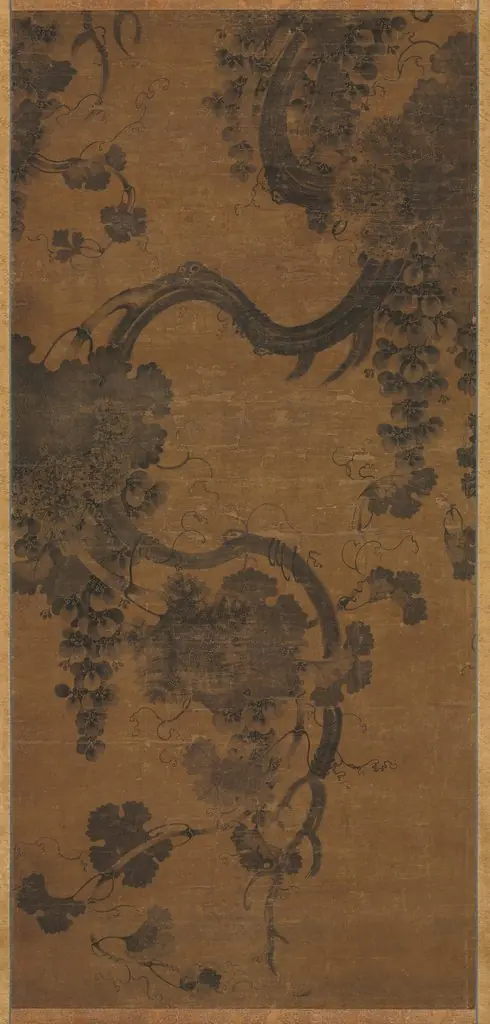
작자미상 포도 조선|作者未詳 墨葡萄圖 朝鮮|Grapevine in the Wind is an ink painting. It dates from 1549 and is held in the collection of the Metropolitan Museum of Art. This hanging scroll, rendered in black ink on pale silk, depicts a solitary grapevine that winds across the surface.
About this work
Overview
This hanging scroll, rendered in black ink on pale silk, depicts a solitary grapevine that winds across the surface. The composition is stark, with the vine, leaves, and clusters of fruit occupying only a fraction of the paper, while the surrounding emptiness suggests a sense of wind and space.
Subject & Meaning
The work focuses on a single grapevine, a motif that can symbolize abundance, cultivation, or the transience of nature. By isolating the plant against a vast blank field, the artist invites contemplation of the vine’s form and the quiet vitality it represents.
Technique & Style
Executed with brushwork characteristic of Joseon‑period ink painting, the piece employs a restrained, minimalist approach. The artist uses varied ink tones and swift, confident strokes to render the twisting stems, foliage, and fruit, while leaving large areas of the silk untouched to convey atmosphere.
History & Provenance
The scroll’s creator remains unidentified, and its exact date is uncertain, though its style aligns with Korean painting traditions of the Joseon dynasty. By the early 16th century the piece had entered a collection in Mexico, though the route it took from Korea to the Americas is undocumented.
Context
During the Joseon era, Korean painters often emphasized simplicity and the expressive potential of empty space, a principle reflected in this work’s sparse composition. Such ink paintings were typically used for scholarly or devotional purposes, aligning with the period’s aesthetic values.
Legacy
The scroll exemplifies the cross‑cultural journeys of East Asian art objects, illustrating how Korean artistic practices reached distant audiences long before modern globalization. Its presence in a Mexican collection highlights the historical networks that moved artworks across continents.
Artist & collection