Artwork
Legend of Durga
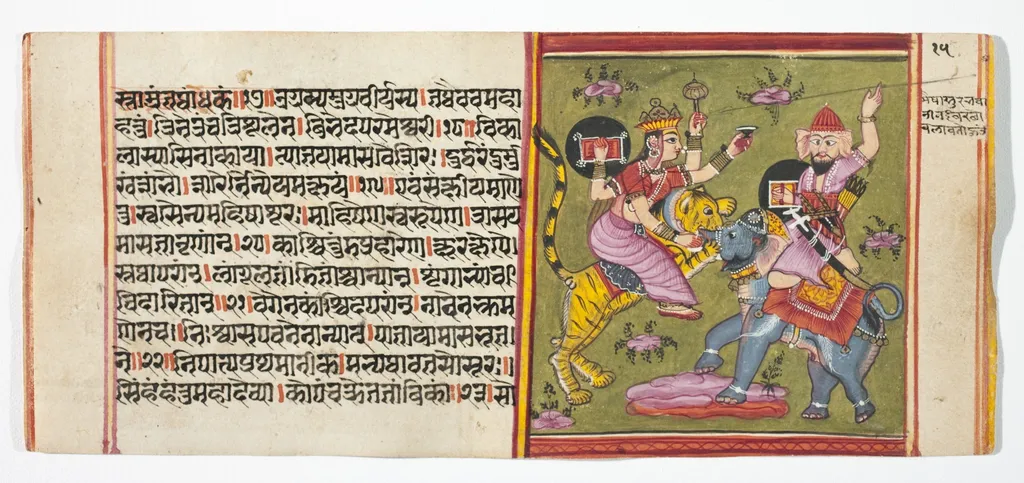
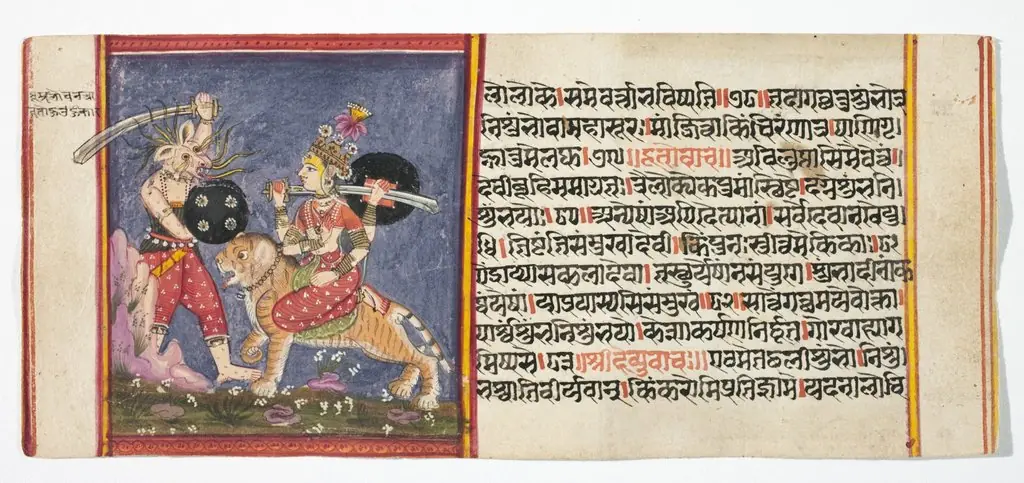
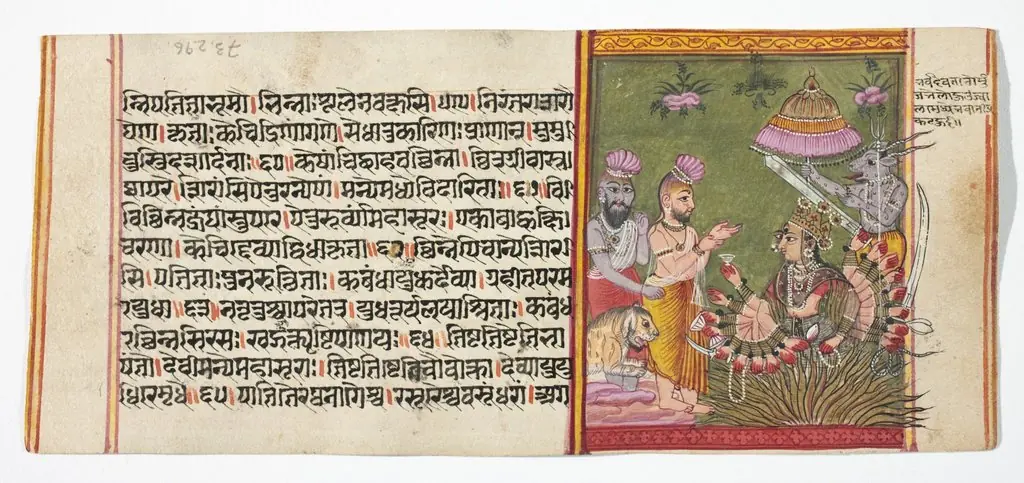
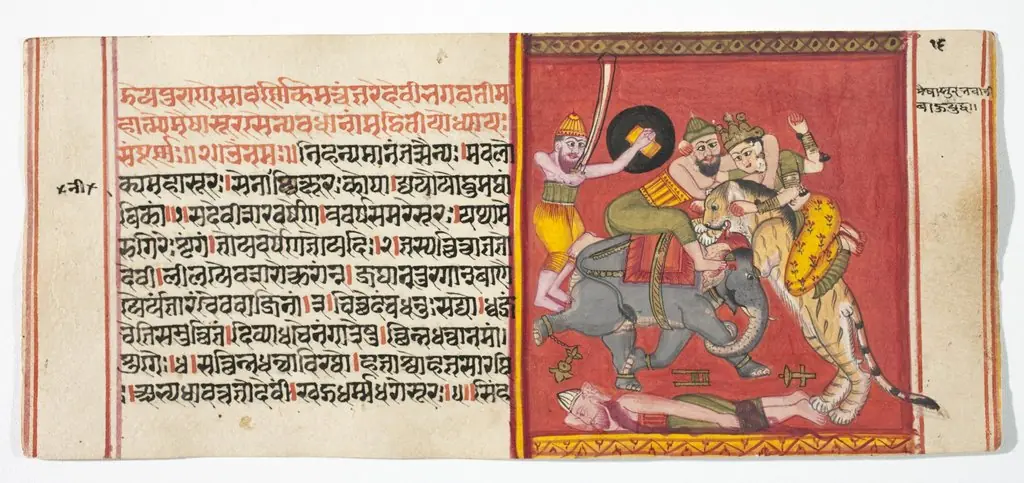
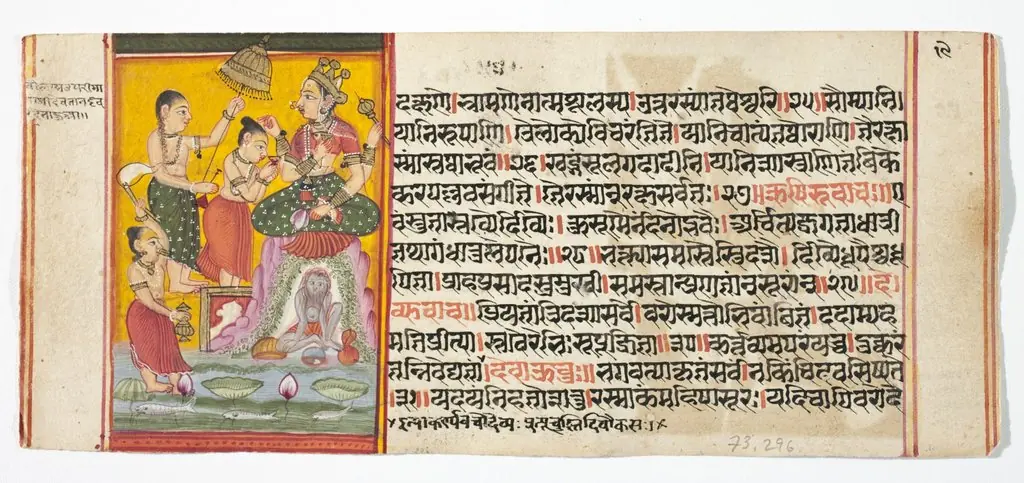
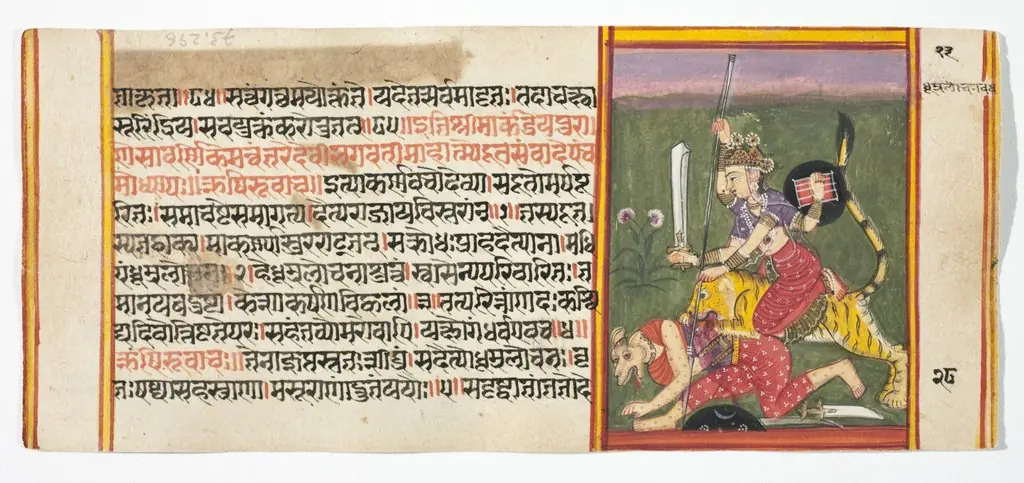
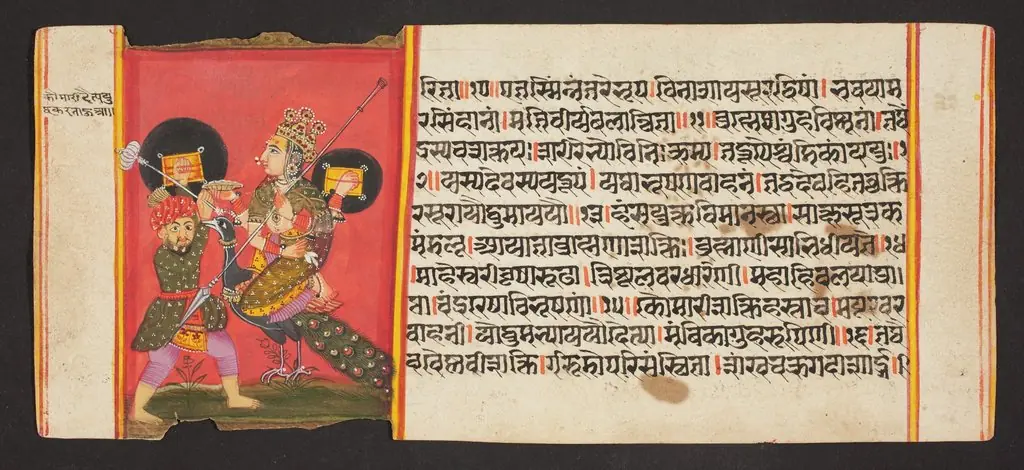
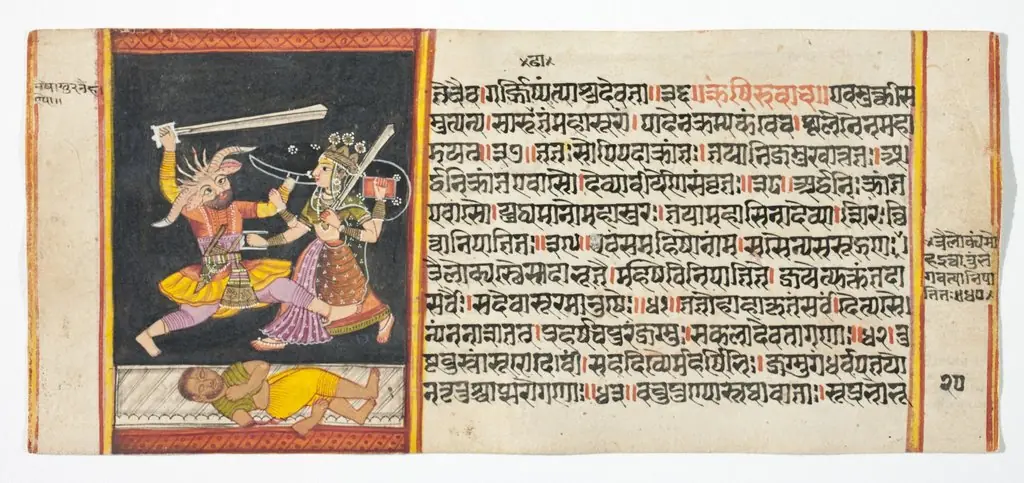
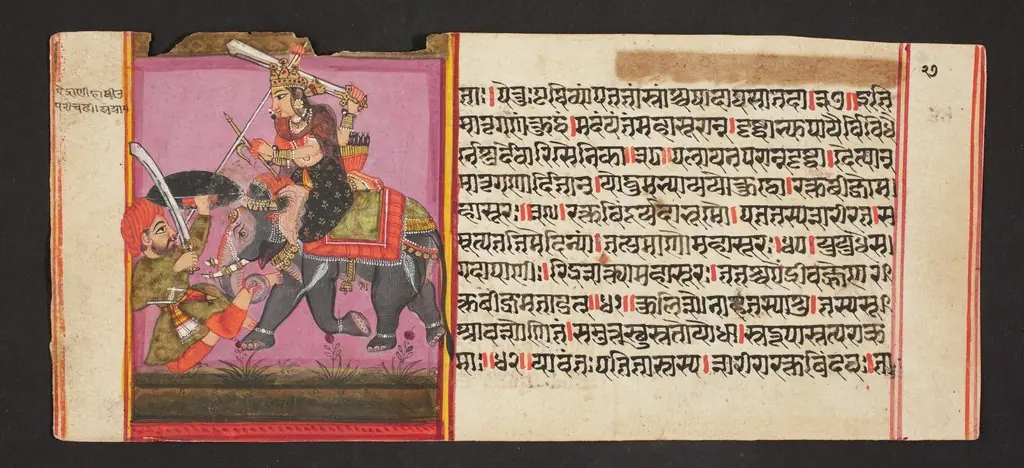
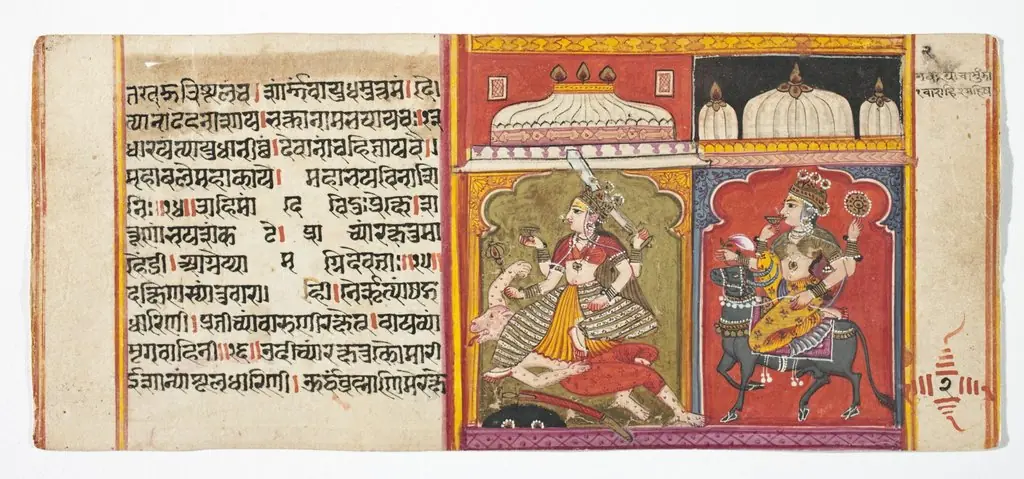
Legend of Durga is an unspecified painting by Unknown. It is held in the collection of the Detroit Institute of Arts. This painting depicts a scene from Hindu mythology, illustrating the goddess Durga in combat with a demon king.
About this work
Overview
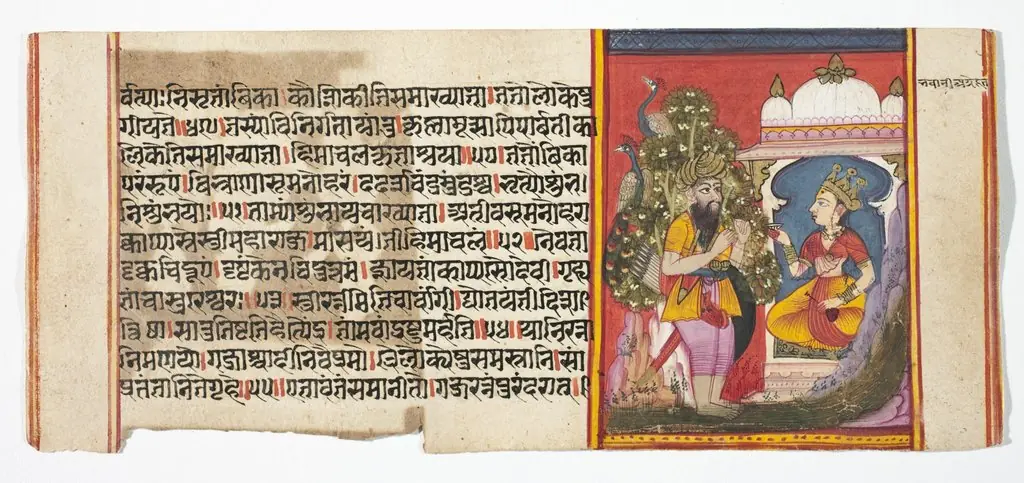
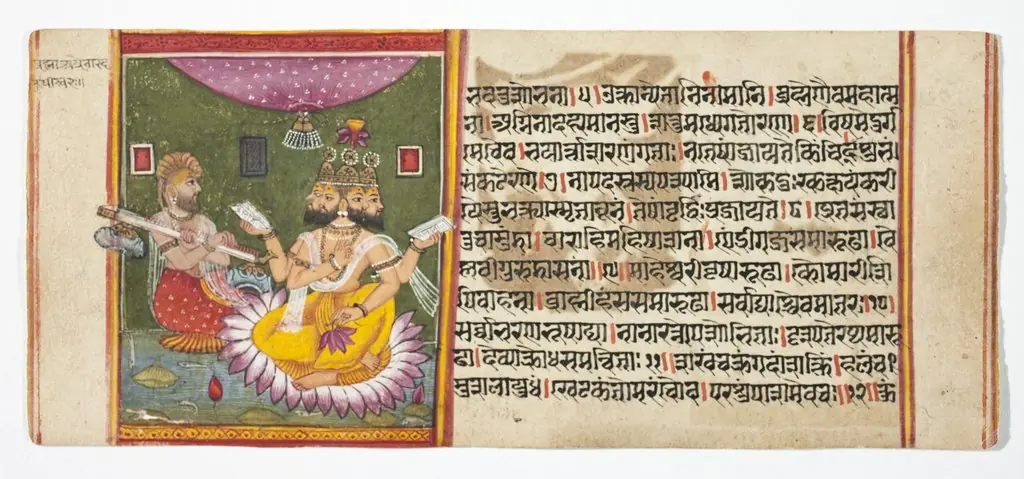
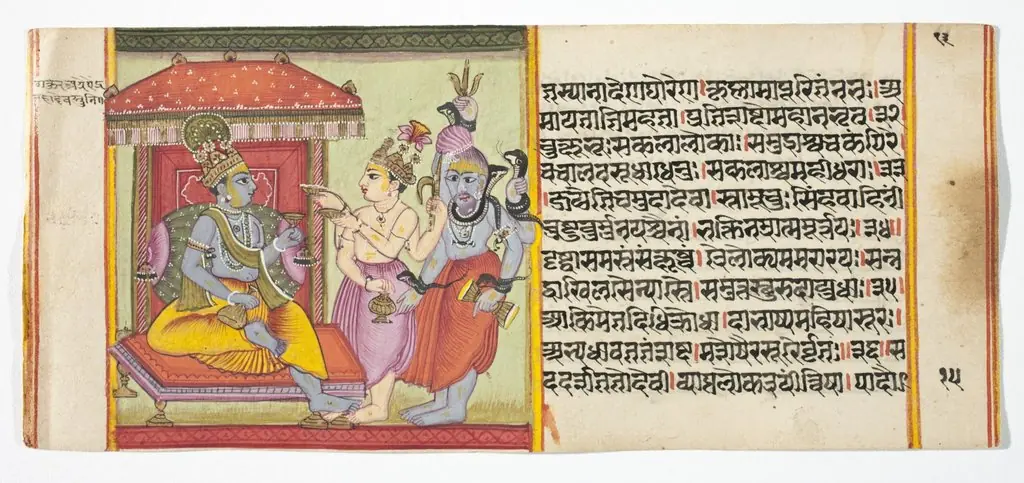
This painting depicts a scene from Hindu mythology, illustrating the goddess Durga in combat with a demon king. The composition centers on the two figures, mounted on their respective animals, set against a lush, floral background. The work is rendered in a vibrant, decorative style typical of Indian miniature traditions, emphasizing symbolic color and dynamic posture over naturalistic depth.
Subject & Meaning
The scene represents Durga’s triumph over the buffalo demon Mahishasura, though the elephant and male figure may reflect regional or artistic reinterpretation.
The scene represents Durga’s triumph over the buffalo demon Mahishasura, though the elephant and male figure may reflect regional or artistic reinterpretation. Durga, as the divine warrior, embodies cosmic order defeating chaos. Her crown and flowing attire signify sovereignty and divine energy, while her adversary’s regal attire suggests his fallen power. The tiger and elephant serve as symbols of primal forces under divine control.
Technique & Style
The painting employs rich, flat areas of color—crimson, purple, and green—with fine linear detail in clothing and ornamentation. Hair, fabric folds, and floral patterns are rendered with precision, characteristic of Indian miniature painting. The background’s pink blossoms and green foliage create a stylized, non-representational space, focusing attention on the central figures and their symbolic confrontation.
History & Provenance
The work is part of the collection at the Detroit Institute of Arts, acquired through documented provenance likely tied to early 20th-century collections of South Asian art. Its origin is attributed to a North Indian or Rajasthani atelier, possibly from the 18th or 19th century, though exact dates and artists remain unrecorded. It reflects the enduring tradition of illustrating Puranic narratives in courtly painting.
Context
During the 18th and 19th centuries, Hindu devotional themes were commonly illustrated in regional courts across India, especially in Rajasthan and the Punjab hills. Artists adapted mythological stories to local aesthetics, blending textual sources with visual conventions. This painting aligns with a broader trend of patronage supporting religious narratives through portable, finely detailed works intended for private devotion or courtly display.
Legacy
The painting contributes to the preservation of visual interpretations of Durga’s mythology outside canonical texts. Its presence in a major Western institution underscores the global interest in Indian artistic traditions. While not widely reproduced, it remains a tangible example of how regional styles sustained religious iconography through centuries of cultural exchange and artistic adaptation.
Artist & collection

 Domestic Scene
 Giacomo and Cardinal Marco, investing Andrea, Abbot of San Zeno, with his Benefice
 The Nymph of Fontainebleau
 Portrait of a Woman
 Madonna and Child with Saints in the Enclosed Garden
 Venus and Minerva
 Family Group of Four on Sofa
 Wall painting from Room H of the Villa of P. Fannius Synistor at Boscoreale