Artwork
Legend of Durga
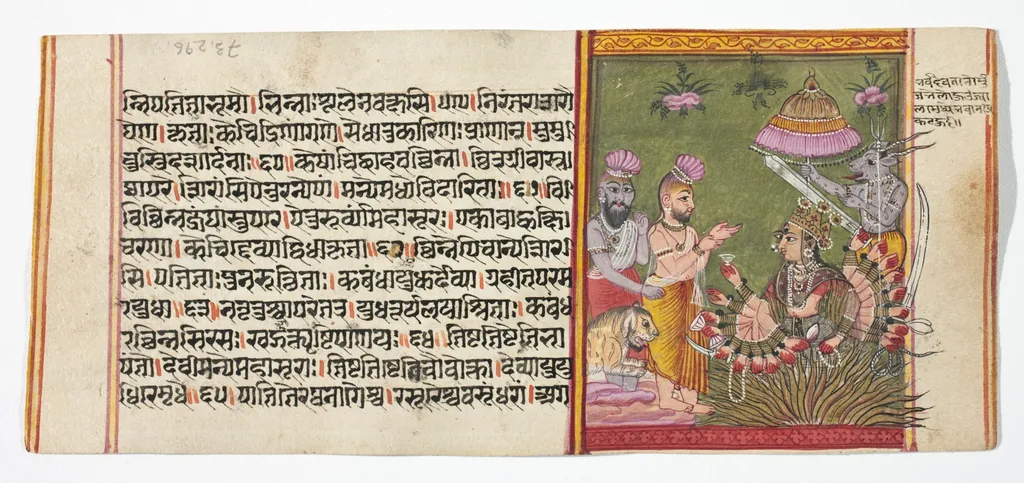
Legend of Durga is an unspecified painting by Unknown. It is held in the collection of the Detroit Institute of Arts.
About this work
Overview
The visual elements are framed within a yellow border, contrasting with a green background.
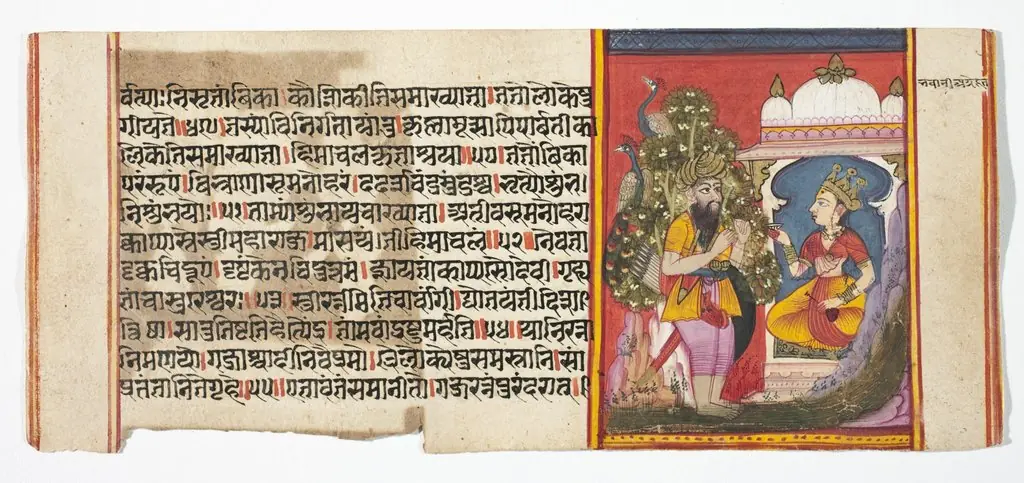
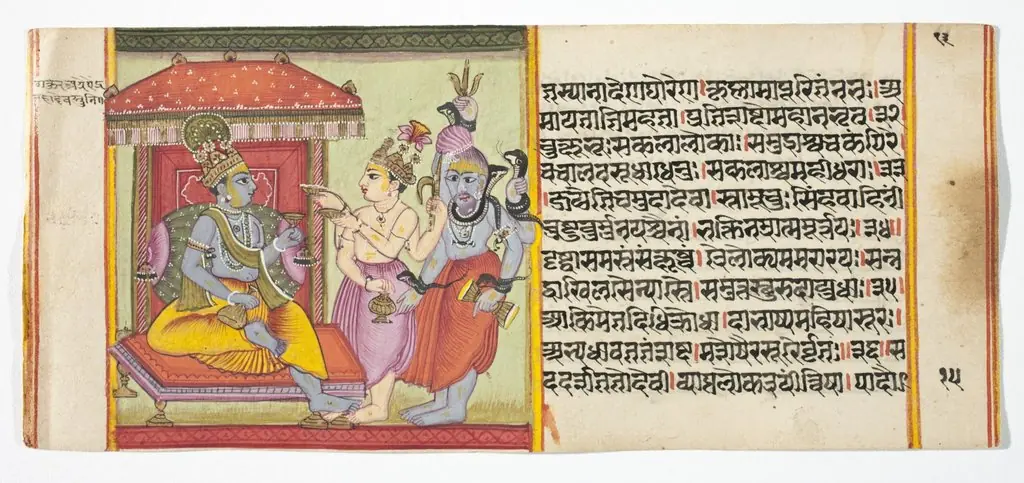
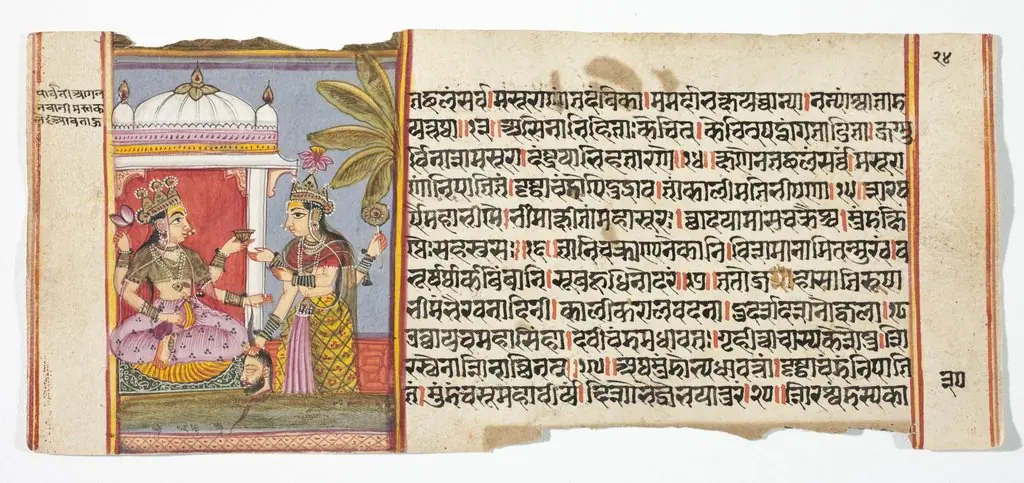
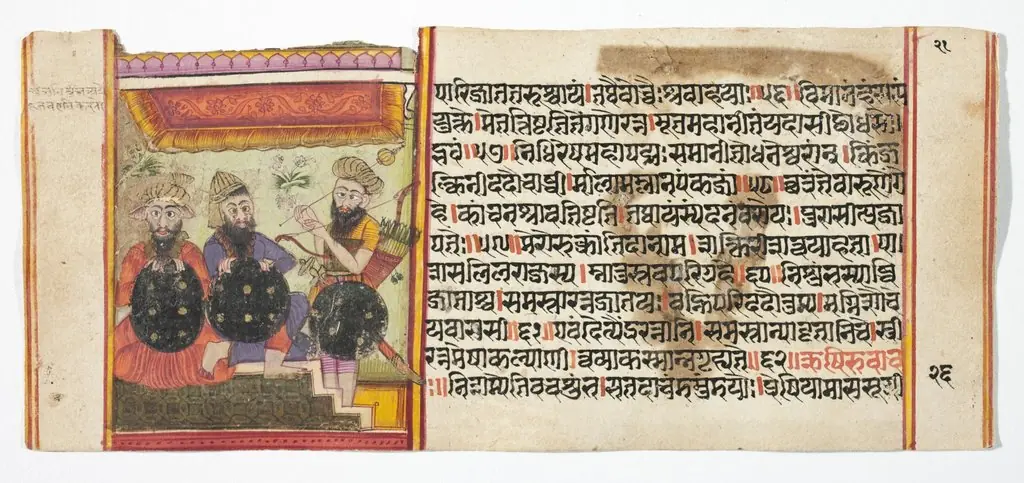
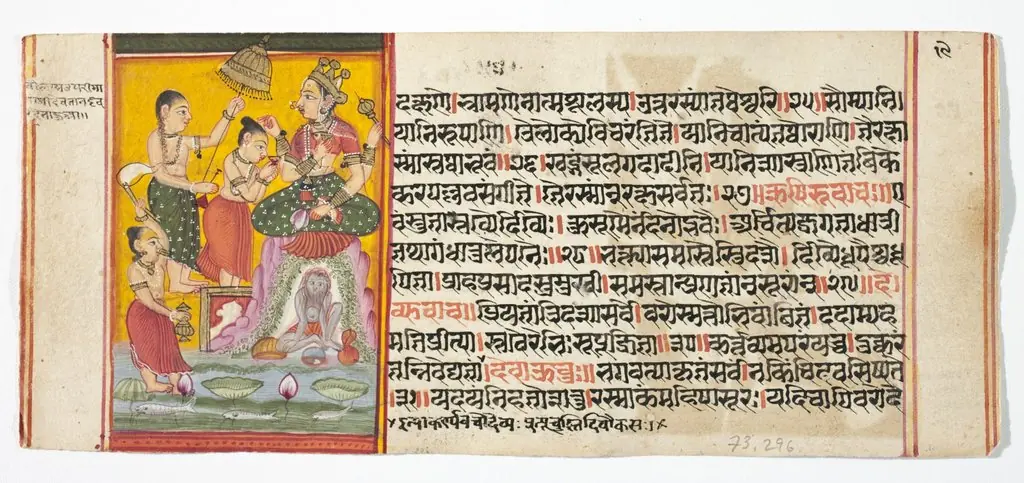
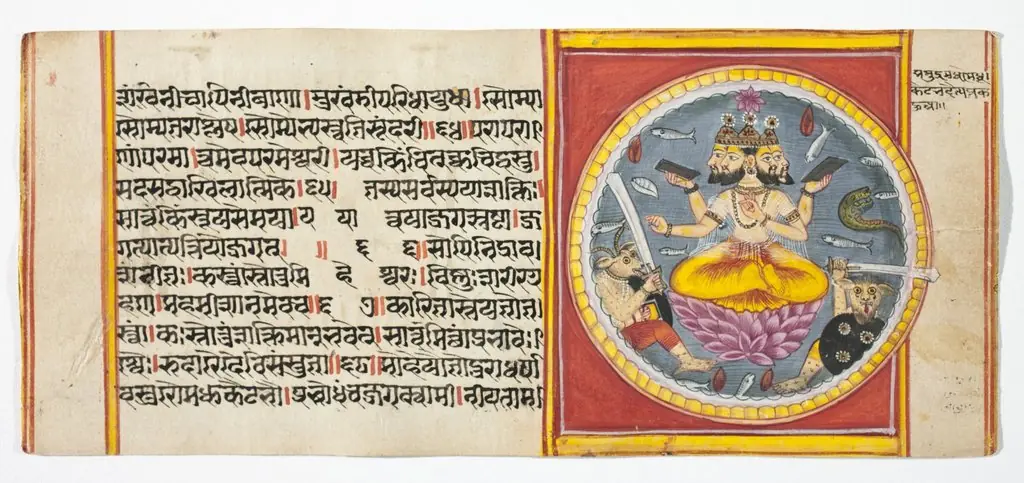
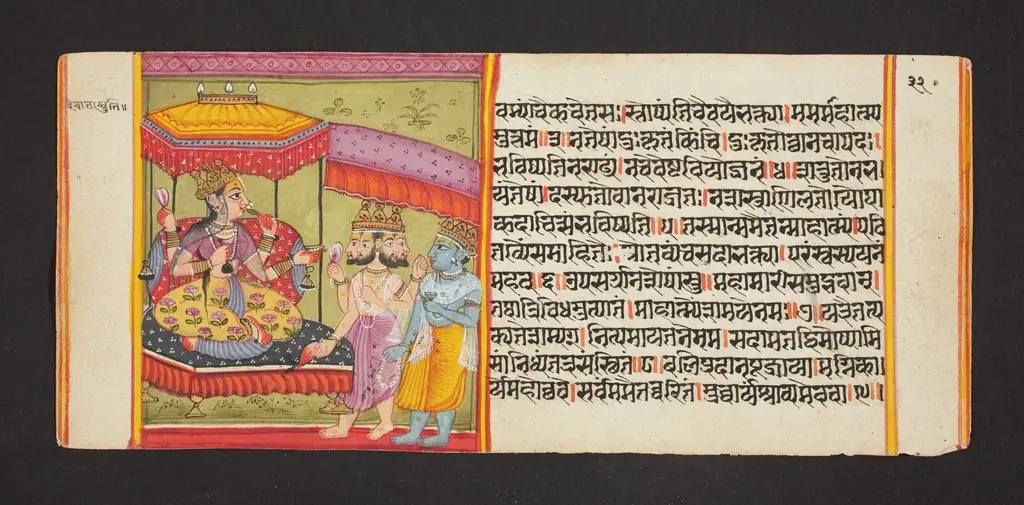
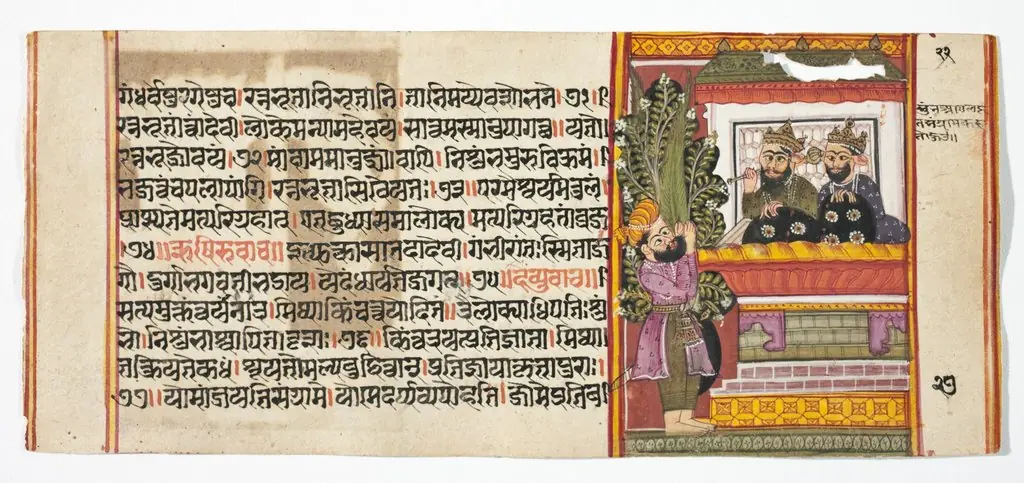
This painting presents a bifurcated composition: a left panel containing handwritten text in an unidentified script, and a right panel illustrating a mythological scene. The visual elements are framed within a yellow border, contrasting with a green background. The text and image appear to function as complementary components, suggesting a manuscript page designed for ritual or storytelling purposes rather than standalone display.
Subject & Meaning
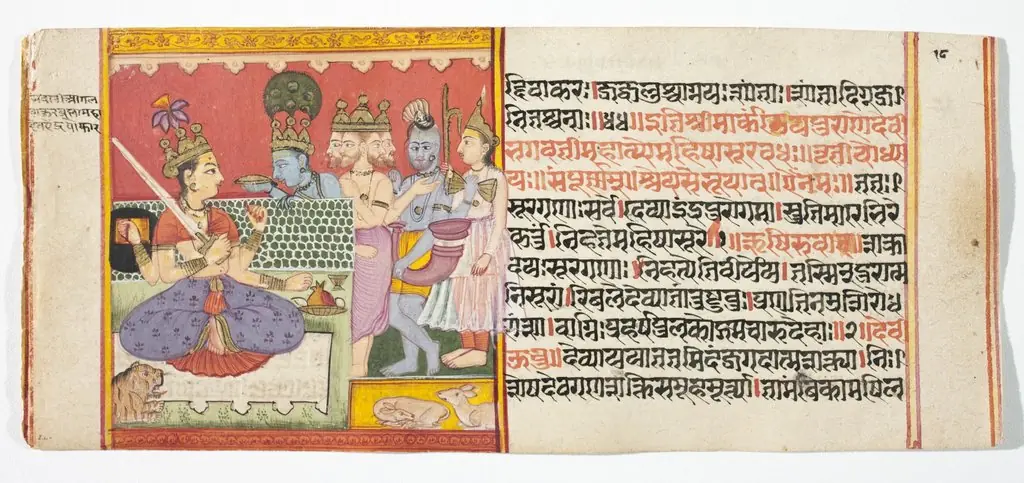
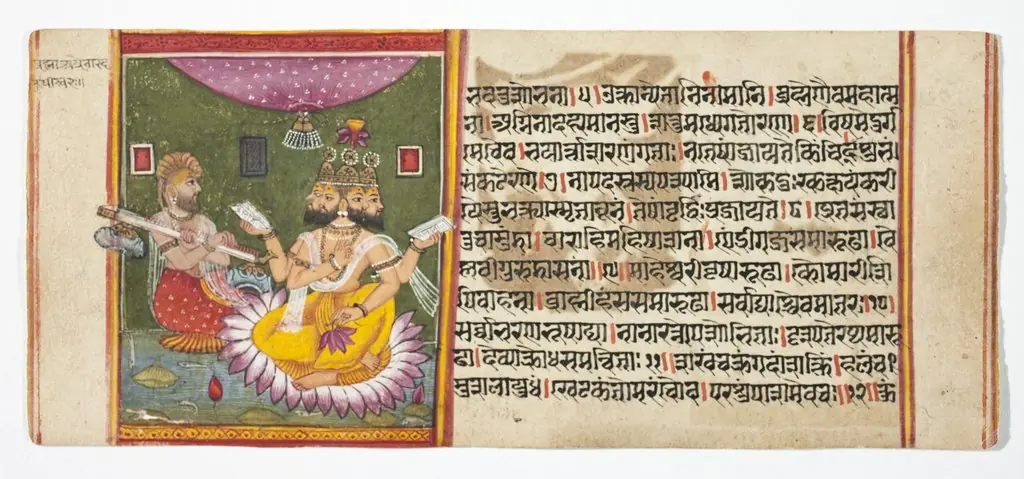
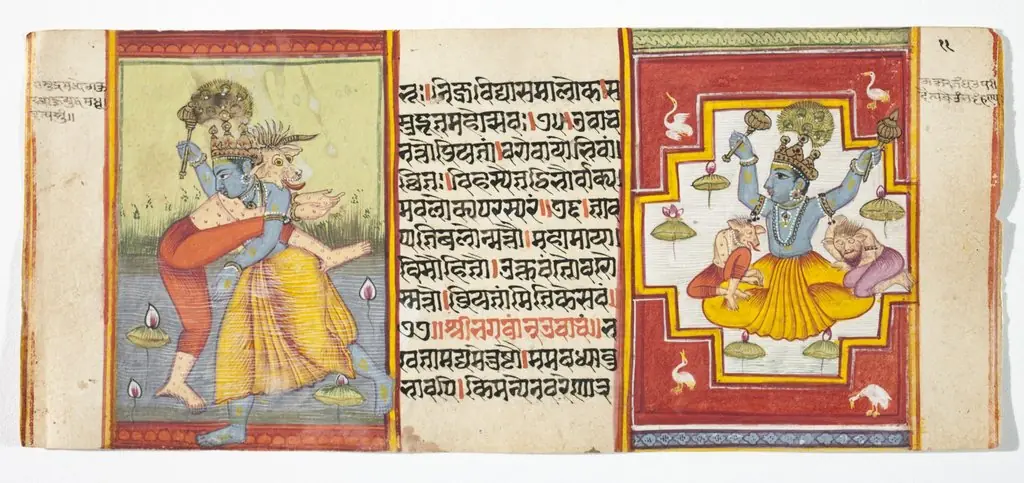
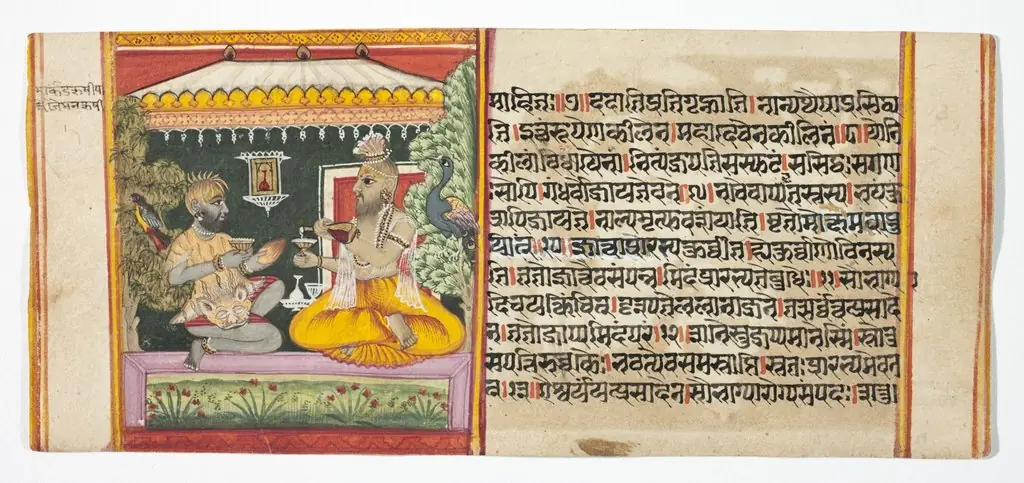
The central figure, dressed in red and green, is likely Durga, depicted seated on grass with a tiger and a man in a yellow dhoti, possibly her consort or attendant. A figure above holds a pink umbrella and a sword, symbolizing protection and divine authority. The scene conveys a moment of divine presence or triumph, consistent with Hindu narratives of Durga’s role as a protector against evil forces.
Technique & Style
The illustration employs flat, saturated colors with minimal shading, typical of regional manuscript traditions. Figures are outlined clearly, and spatial depth is suggested through layered placement rather than perspective. The text is rendered in black ink, with selective red highlights to emphasize key terms, indicating a deliberate hierarchy of visual and linguistic importance within the composition.
History & Provenance
The painting likely originates from a devotional manuscript produced in eastern India, possibly Bengal or Odisha, during the 18th or early 19th century. Its format suggests it was part of a larger illustrated text, perhaps a regional version of the Devi Mahatmya. The presence of handwritten script implies it was created for liturgical use or private devotion within a religious community.
Context
This work reflects the tradition of illustrated religious manuscripts in pre-colonial India, where textual and visual elements were integrated to aid memory and devotion. The depiction of Durga aligns with regional worship practices that emphasized her martial and nurturing aspects. Such manuscripts were often commissioned by patrons or monastic institutions to preserve and transmit sacred narratives.
Legacy
Though not widely known outside specialized collections, this painting exemplifies the enduring link between text and image in South Asian devotional culture. It preserves a localized interpretation of Durga’s legend, offering insight into how regional communities visualized divine narratives before the advent of mass printing. Its survival underscores the resilience of manuscript traditions amid changing artistic landscapes.
Artist & collection

 Domestic Scene
 Giacomo and Cardinal Marco, investing Andrea, Abbot of San Zeno, with his Benefice
 The Nymph of Fontainebleau
 Portrait of a Woman
 Madonna and Child with Saints in the Enclosed Garden
 Venus and Minerva
 Family Group of Four on Sofa
 Wall painting from Room H of the Villa of P. Fannius Synistor at Boscoreale