Artwork
Legend of Durga
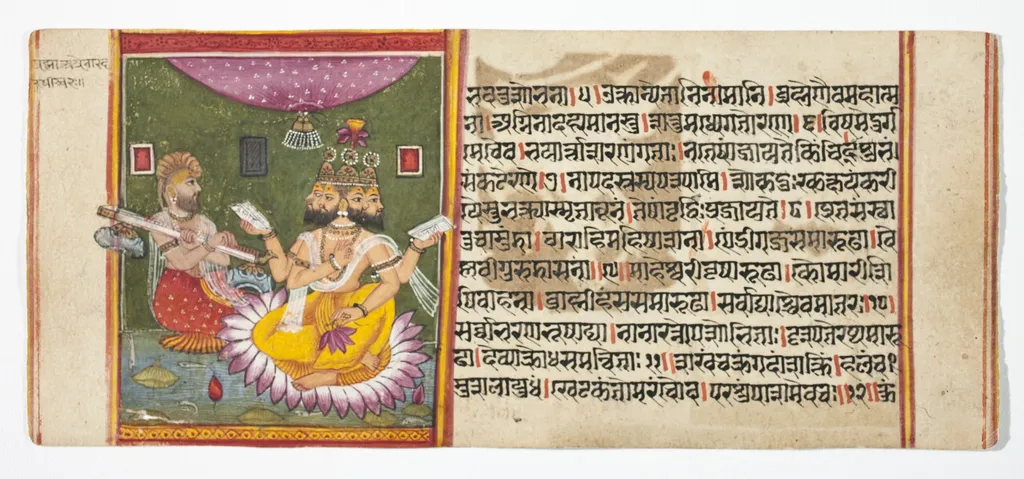
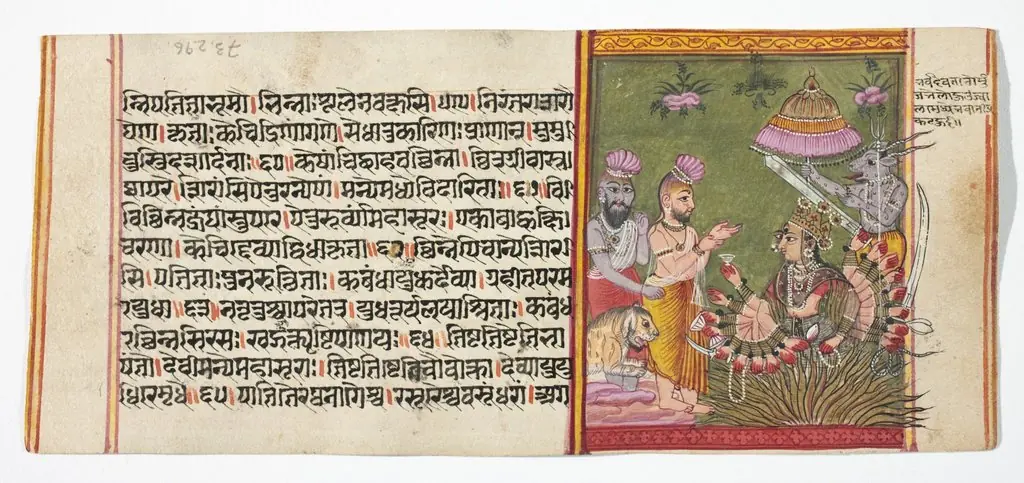
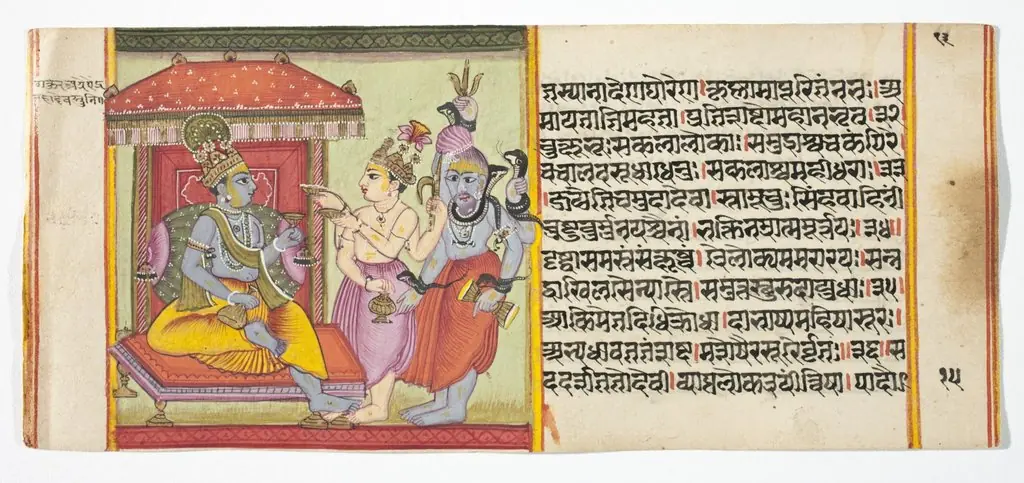
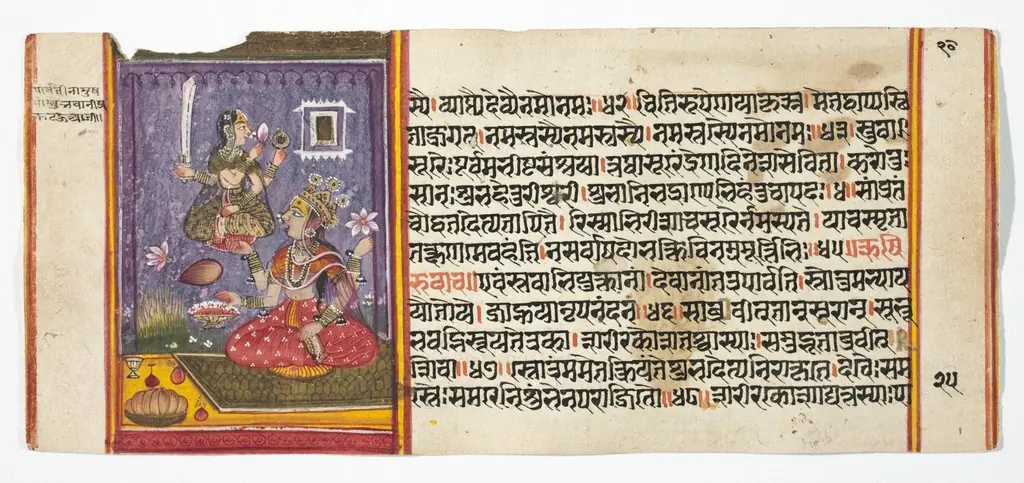
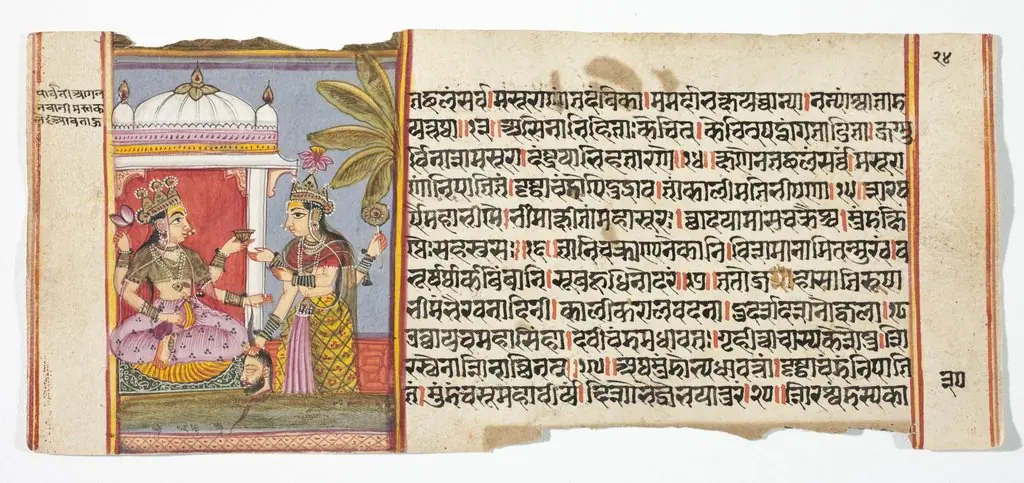
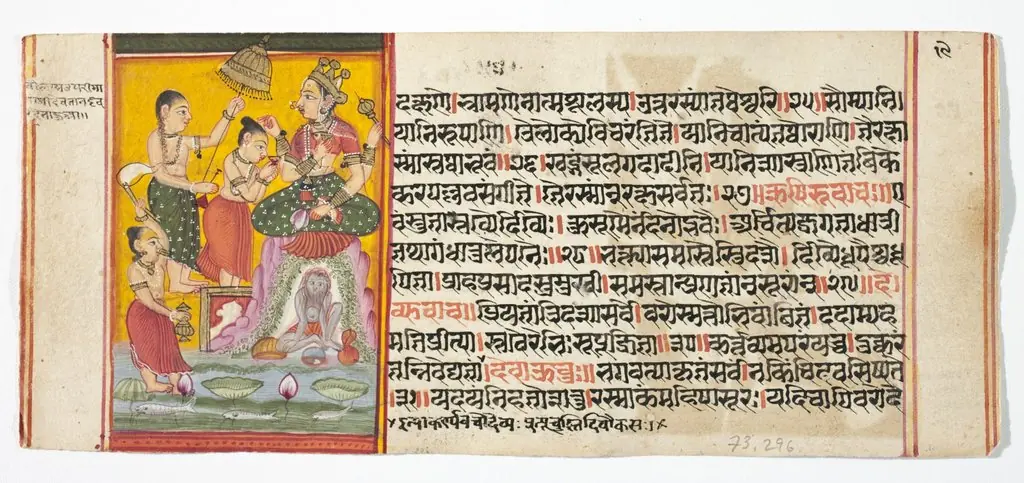
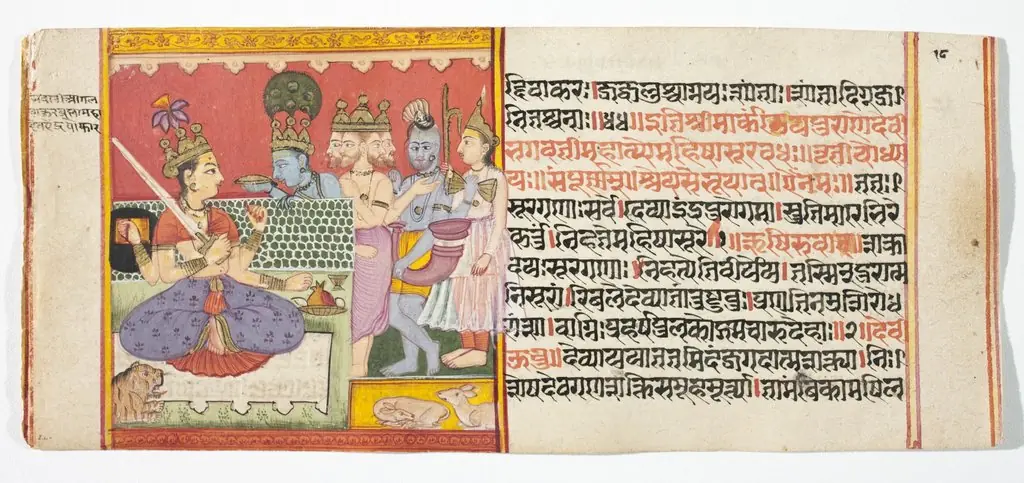
Legend of Durga is an unspecified painting by Unknown. It is held in the collection of the Detroit Institute of Arts. This painting depicts a multi-armed, four-headed figure seated in meditation atop a lotus, surrounded by symbolic attendants.
About this work
Overview
This painting depicts a multi-armed, four-headed figure seated in meditation atop a lotus, surrounded by symbolic attendants.
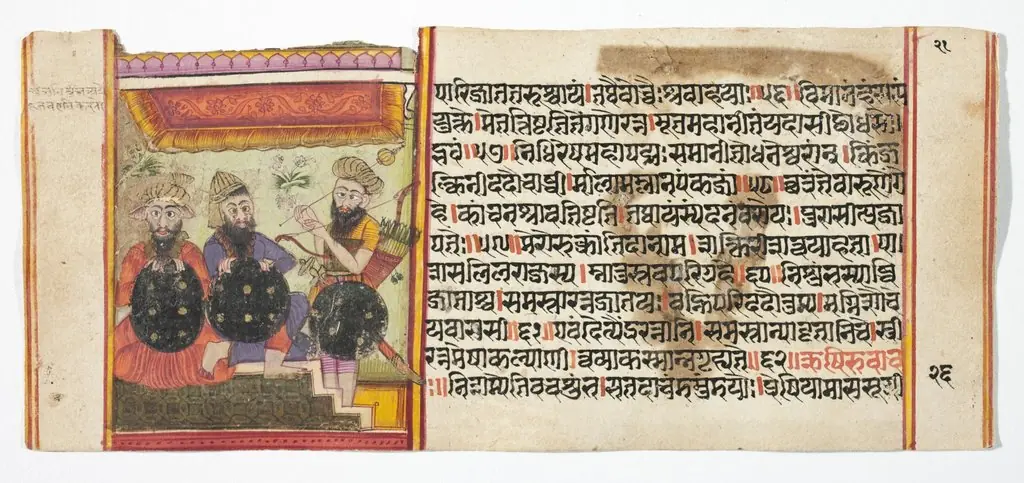
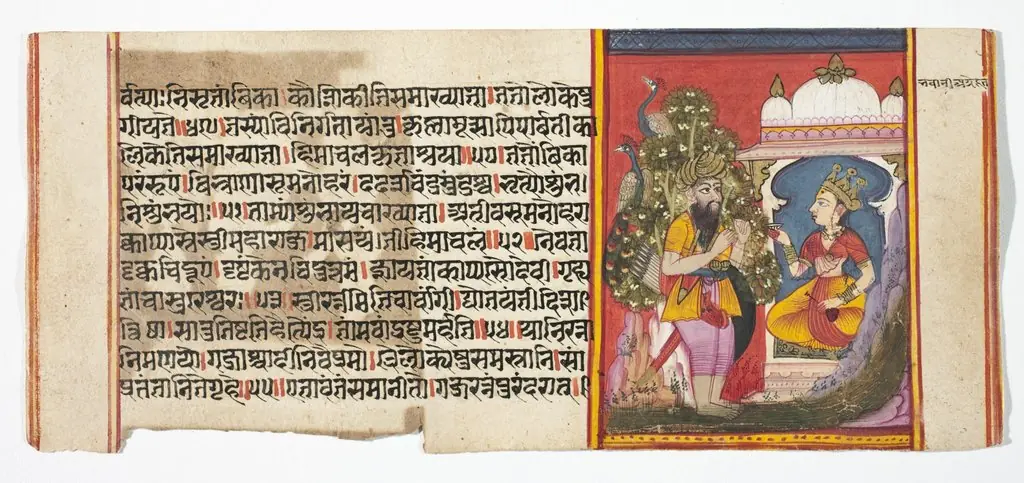
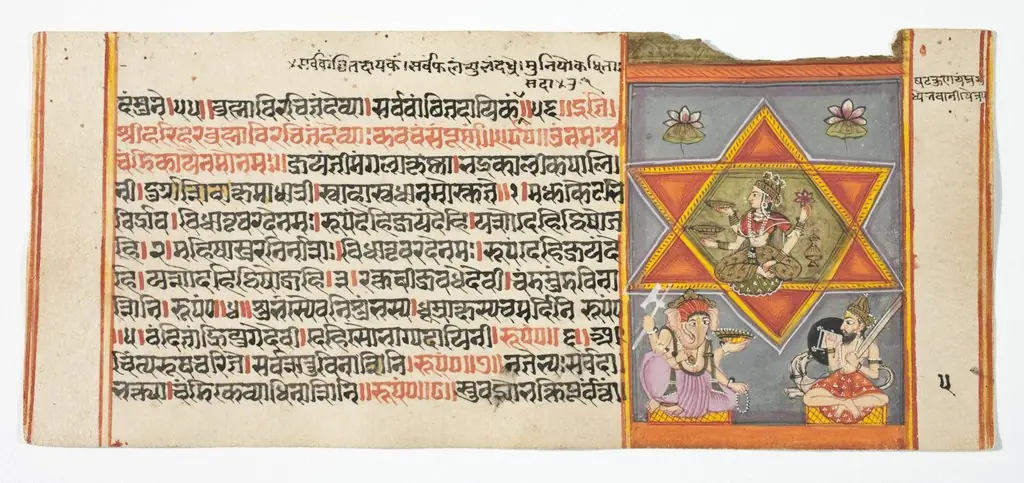
This painting depicts a multi-armed, four-headed figure seated in meditation atop a lotus, surrounded by symbolic attendants. The central figure, adorned with a crown, yellow dhoti, and white shawl, radiates stillness. A musician plays before him, while a female figure holds a bow and arrow behind. The muted green background and intricate script to the right frame the scene with quiet solemnity, suggesting a devotional or cosmological narrative rooted in Indic traditions.
Subject & Meaning
The central figure, though labeled as Durga in the title, presents attributes more commonly associated with Brahma or a cosmic deity: four heads and multiple arms signify omniscience and divine power. The presence of a musician and archer may represent the harmonious balance of sound and action, or celestial attendants in service to the divine. The lotus underscores spiritual purity, while the serene expressions across the four faces suggest contemplative awareness beyond human emotion.
Technique & Style
The painting employs fine brushwork and restrained color, emphasizing calm through soft contrasts: the white shawl against the yellow dhoti, the black ink script with red highlights. Figures are rendered with elongated proportions and minimal shading, typical of regional manuscript traditions. The background’s uniform green creates a meditative void, focusing attention on the central group. The script, though undeciphered, is carefully integrated as a visual and ritual element, not merely decorative.
History & Provenance
The work likely originates from a manuscript tradition in northern or eastern India, possibly from the 17th to 19th century, where illustrated religious texts were produced for courtly or monastic use. The presence of an undeciphered script suggests a localized or esoteric textual tradition, possibly linked to tantric or Puranic literature. Its preservation indicates it was valued as a sacred object, not merely an artistic piece, though its exact origin remains undocumented.
Context
This image reflects a syncretic devotional culture where deities were depicted with multiple forms to convey metaphysical concepts. While Durga is typically shown in warrior form, this representation aligns with broader Hindu iconographic flexibility, where divine figures assume roles beyond mythic narratives. The inclusion of music and archery points to a ritual context—perhaps a scene from a liturgical text meant for contemplative recitation or temple worship.
Legacy
The painting contributes to a lesser-known branch of Indian visual theology, where abstract, meditative depictions of deities coexisted with more dynamic mythological scenes. Its quiet composition and symbolic precision offer insight into regional practices that prioritized inner spiritual states over dramatic storytelling. Though not widely reproduced, it remains a valuable artifact for understanding the diversity of devotional imagery in pre-modern South Asia.
Artist & collection

 Domestic Scene
 Giacomo and Cardinal Marco, investing Andrea, Abbot of San Zeno, with his Benefice
 The Nymph of Fontainebleau
 Portrait of a Woman
 Madonna and Child with Saints in the Enclosed Garden
 Venus and Minerva
 Family Group of Four on Sofa
 Wall painting from Room H of the Villa of P. Fannius Synistor at Boscoreale