Artwork
Miracle of the Dragon
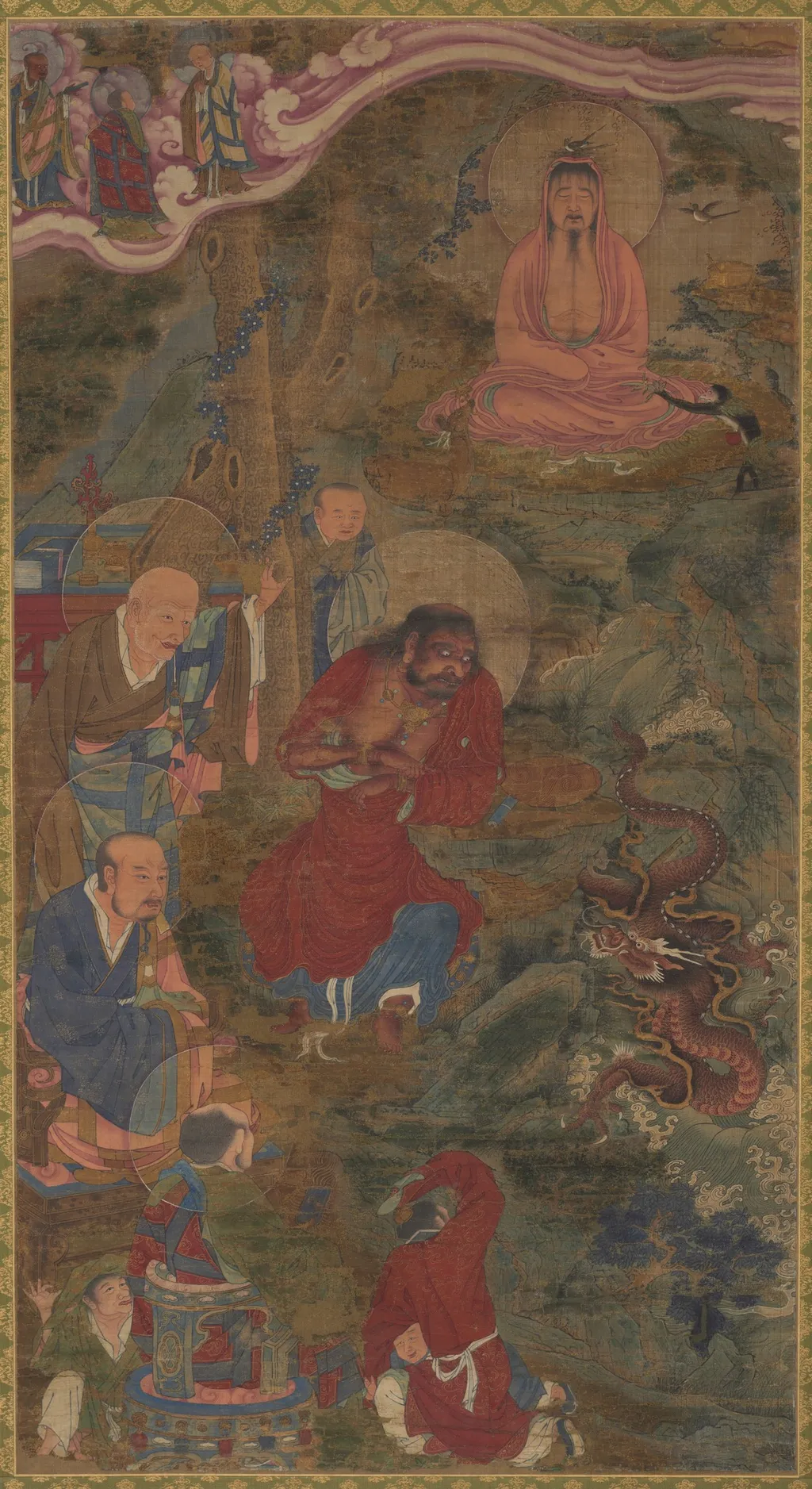
Miracle of the Dragon is an unspecified painting. It dates from 1600 and is held in the collection of the Cleveland Museum of Art.
About this work
Overview
A man with a darkened face and red garment cradles an infant, while other participants kneel or gesture toward the seated, serene figure.
The work titled “Miracle of the Dragon” presents a vivid assembly of figures dressed in saturated reds, blues and golds surrounding a luminous, halo‑encircled presence that hovers above a cloud‑filled sky. A man with a darkened face and red garment cradles an infant, while other participants kneel or gesture toward the seated, serene figure. Dragons coil among the swirling clouds, and a child stands beside a golden chest, adding narrative detail to the composition.
Subject & Meaning
The central, haloed figure suggests a sanctified being—potentially a saint or a Buddhist deity—offering a focal point of reverence. The black‑faced man’s dramatic posture and the infant he holds imply an active role in a miraculous event, perhaps a protective or salvific act. The surrounding dragons and celestial motifs reinforce a mythic or spiritual intervention, inviting viewers to contemplate the interplay between the divine and the mortal participants.
Technique & Style
The painting employs strong chiaroscuro, contrasting illuminated areas around the halo and golden chest with deeper shadows that model the figures and draconic forms. The bright palette of reds, blues and golds heightens the ceremonial atmosphere, while the fluid brushwork in the clouds and dragons creates a sense of movement. The composition balances a centralized vertical axis with dynamic diagonal gestures, guiding the eye across the narrative scene.
Context
Although specific dates and origins are not supplied, the iconography of halos, dragons, and richly colored ceremonial robes aligns with East Asian religious art traditions, where celestial beings and mythic creatures often accompany miraculous narratives. The inclusion of a black‑faced figure may reflect theatrical or ritual conventions within that cultural milieu, indicating a synthesis of devotional and performative elements.
Legacy
The painting’s vivid synthesis of sacred symbolism and dramatic visual effects exemplifies how artists have historically used color, light and mythic creatures to convey extraordinary events. Its striking composition continues to inform discussions of cross‑cultural visual language in religious art, illustrating the enduring appeal of narrative tableaux that merge the earthly and the divine.
Artist & collection