Artwork
Shakyamuni with two attendants
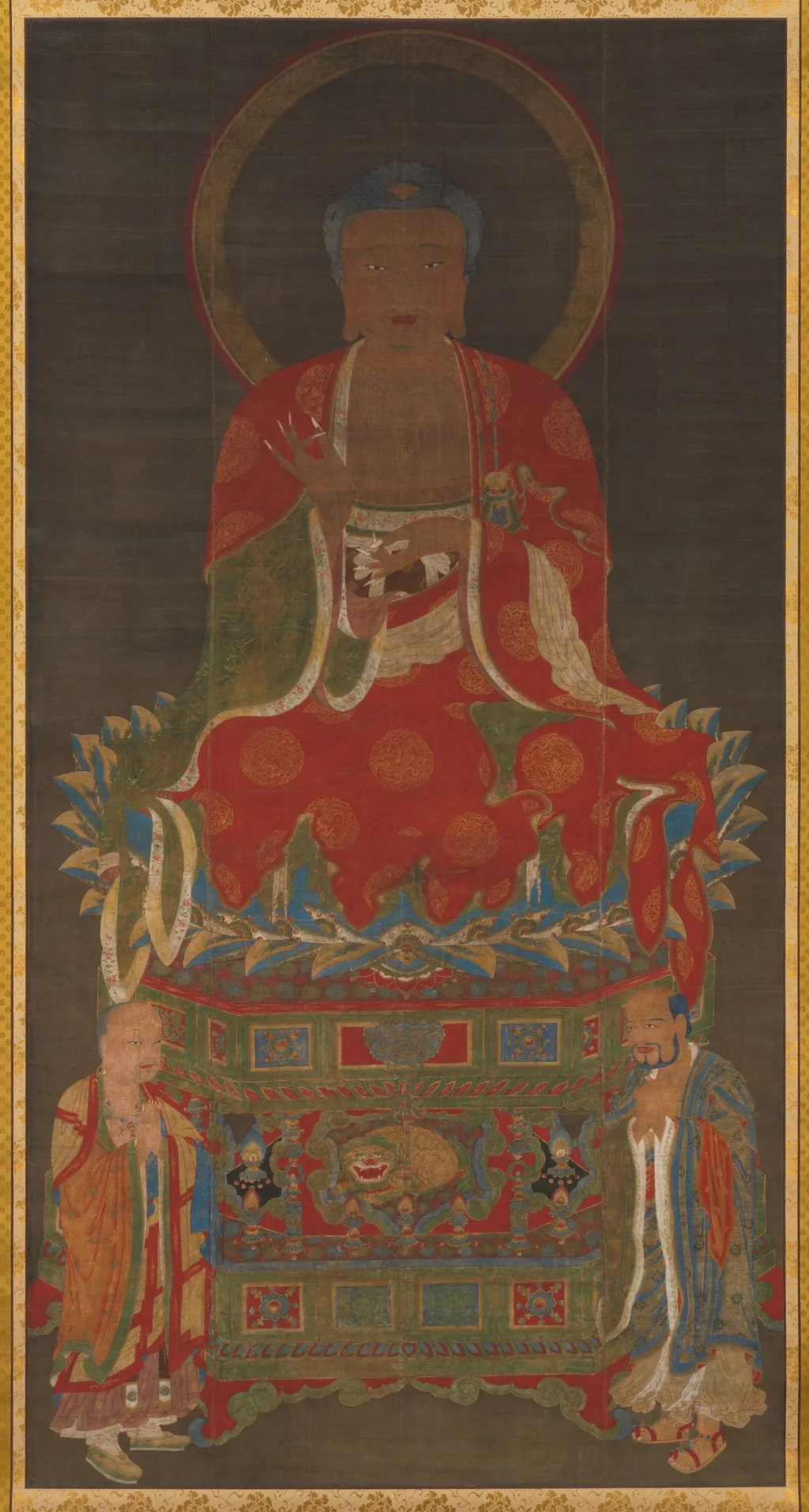
Shakyamuni with two attendants is an unspecified painting. It dates from 1349 and is held in the collection of the Cleveland Museum of Art.
About this work
Overview
The central figure is characterized by dark skin and a serene expression, draped in a simple white cloth that contrasts with the deep, dark background.
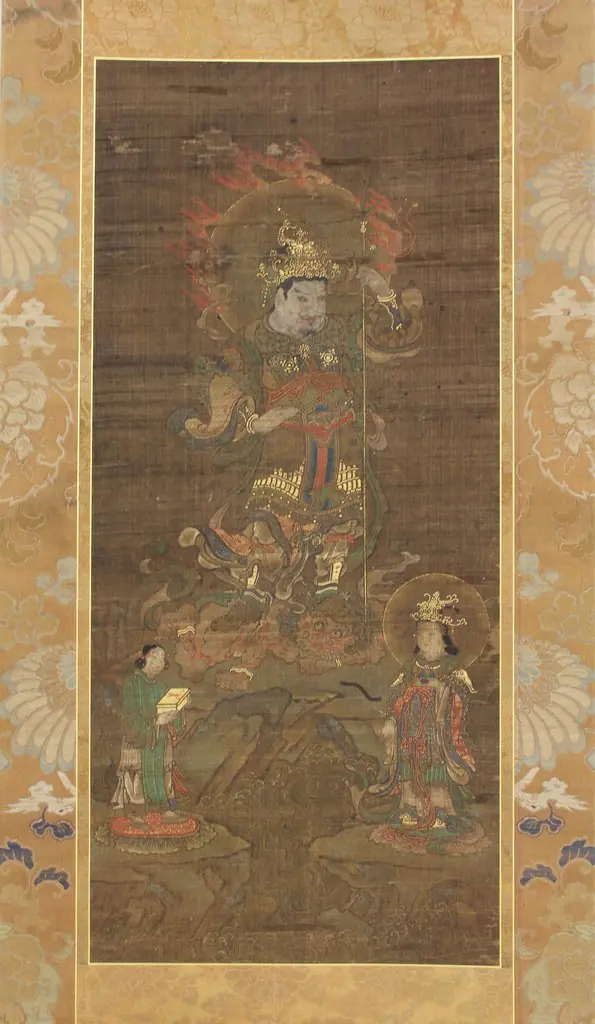
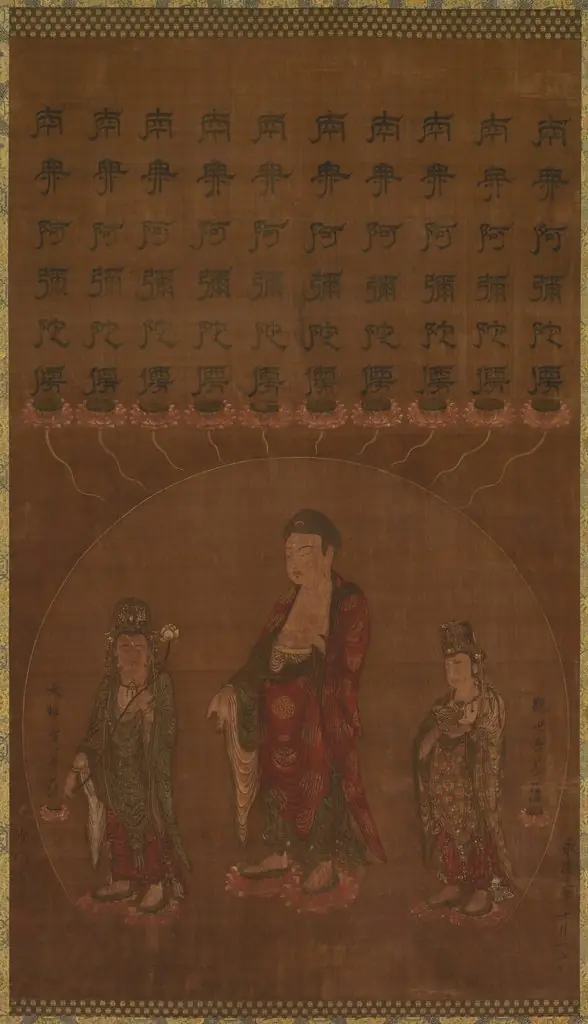
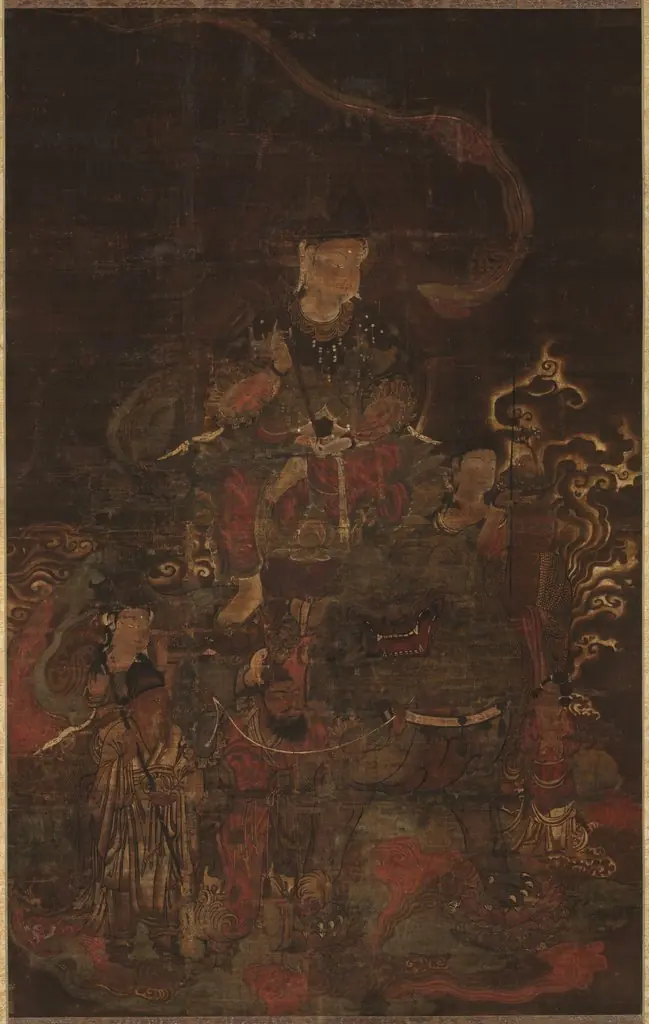
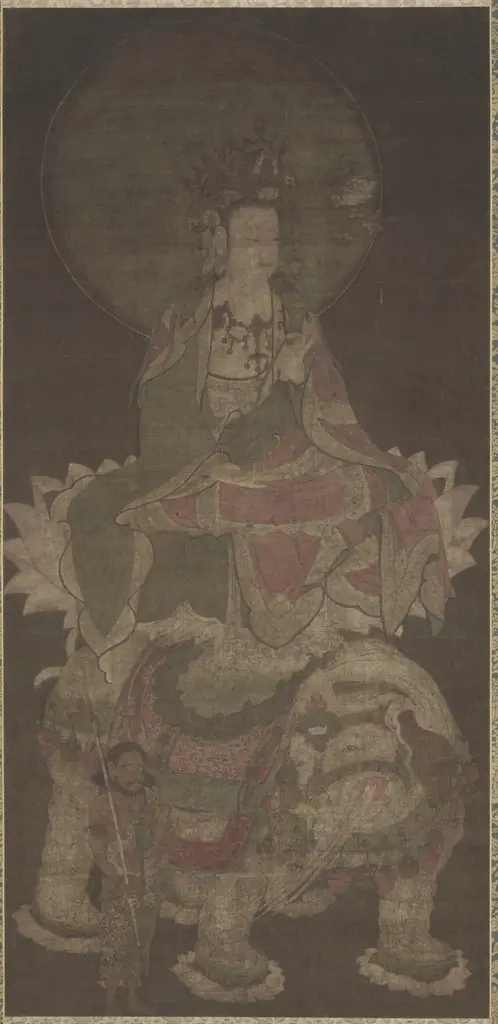
Created in 1349, Shakyamuni with two attendants is a religious painting depicting the historical Buddha, Shakyamuni, seated in a meditative posture upon a red throne. The central figure is characterized by dark skin and a serene expression, draped in a simple white cloth that contrasts with the deep, dark background. He holds small objects in each hand, likely symbolic attributes associated with his teaching or enlightenment. Flanking the Buddha are two smaller attendant figures, standing in reverence and dressed in long, brightly colored robes that add visual balance to the composition. The work exemplifies the devotional art of the mid-14th century, focusing on the spiritual authority and calm demeanor of the Buddha. While the specific artist remains unidentified in the provided metadata, the painting reflects the stylistic conventions of its era, emphasizing hierarchical scale and symbolic color to convey religious significance. The dark background isolates the figures, directing the viewer's attention to the sacred interaction between the central deity and his followers. This piece serves as an important example of religious iconography from the period, illustrating the visual language used to represent Buddhist teachings and the veneration of the Buddha.
Subject & Meaning
At the heart of the composition, Shakyamuni Buddha is depicted in a cross-legged posture upon an elaborate red throne. He wears a plain white garment, his face serene, and his skin dark. He holds a small item in each hand. Two lesser figures stand symmetrically at his sides, distinguished by their brightly colored, long robes, emphasizing the central figure's importance.
Technique & Style
The piece utilizes a striking palette, where strong reds, greens, and blues sharply contrast with the largely dark background. A golden disc frames the central figure's head, highlighting his presence. The throne itself is intricately decorated with patterns and small narrative vignettes, including a peculiar, grinning visage at its base, which contributes a unique stylistic detail to the overall work.
Artist & collection