Artwork
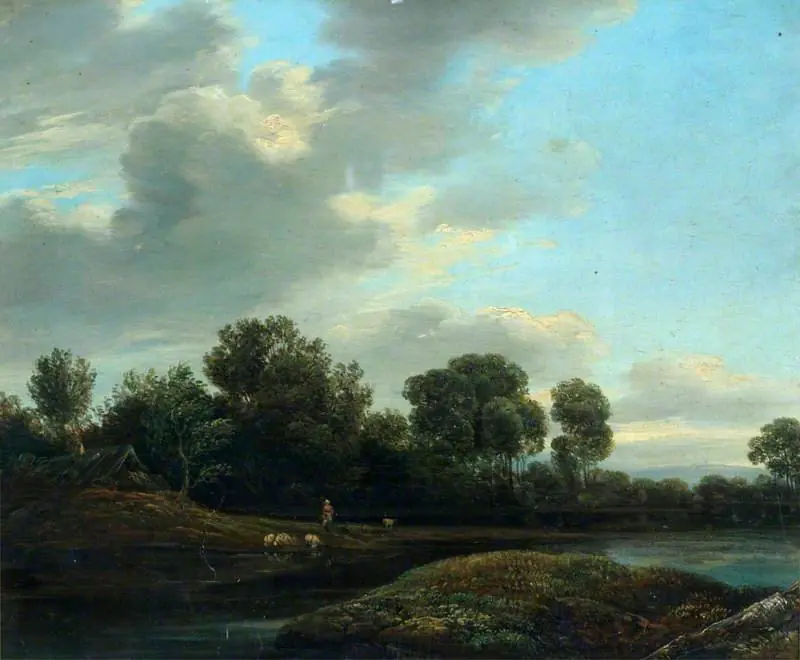
Dedham Vale
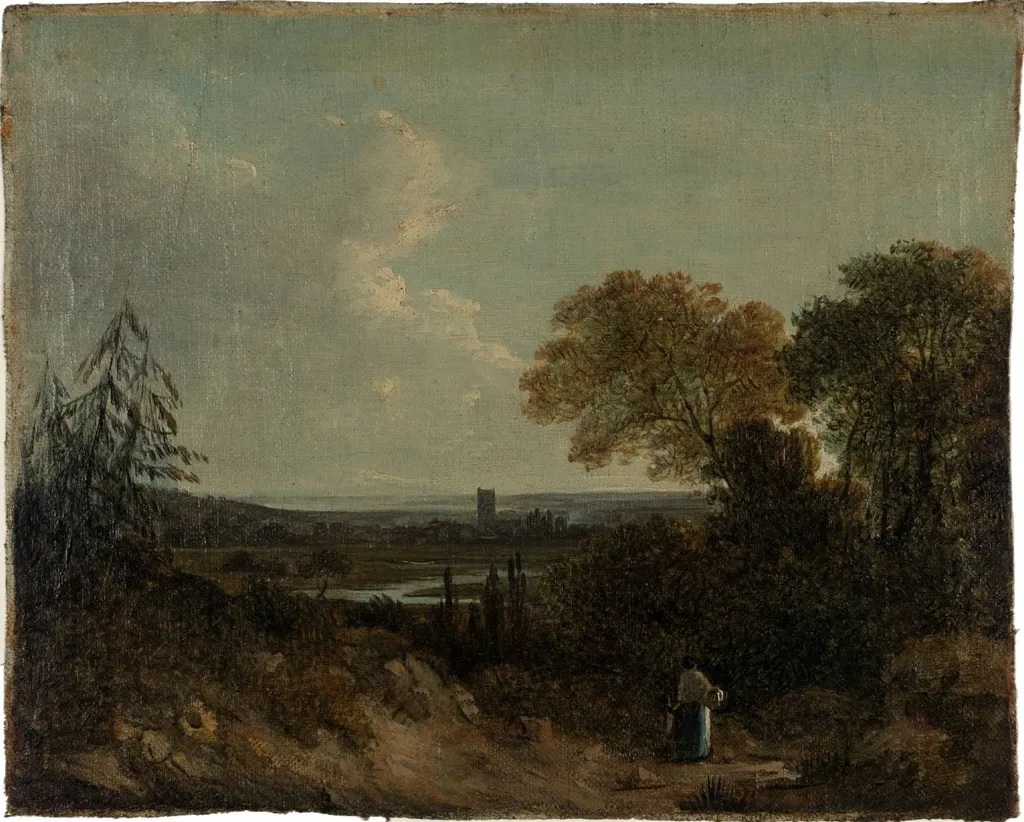
Dedham Vale is an oil painting by the Northern Renaissance artist Unknown. It dates from 1500 and is held in the collection of the Tate Britain.
About this work
Overview
The composition invites contemplation through its balanced arrangement of foreground, midground, and distant horizon, emphasizing stillness rather than action.
This oil painting captures a quiet stretch of the Dedham Vale in Essex, England, rendered with subtle attention to natural light and spatial depth. The composition invites contemplation through its balanced arrangement of foreground, midground, and distant horizon, emphasizing stillness rather than action. The scene avoids dramatic elements, instead favoring a muted harmony between earth, sky, and water.
Subject & Meaning
A solitary figure stands along a winding path, small in scale against the expansive landscape, suggesting introspection or quiet communion with nature. The absence of human activity beyond this single presence reinforces a theme of solitude and peace. The still water and gently rolling hills evoke a sense of timelessness, reflecting a 19th-century ideal of nature as a refuge from industrialization.
Technique & Style
The artist employs soft gradations of tone and delicate brushwork to model forms, enhancing the illusion of atmospheric perspective. Colors are restrained—earthy greens, pale blues, and warm browns—creating cohesion across the scene. Light is diffused rather than sharply defined, avoiding strong contrasts in favor of a unified, hazy luminosity that unites land and sky.
History & Provenance
Painted in the early 19th century, the work originates from the tradition of English landscape painting associated with the Suffolk and Essex countryside. It was likely created during a period when artists increasingly sought inspiration in rural England, away from urban centers. The painting remained in private collections until entering a public institution in the late 20th century.
Context
This work emerged alongside a growing cultural interest in the English countryside as a site of national identity and aesthetic value. Artists like Constable and his contemporaries documented local scenery with scientific precision and emotional restraint, countering the romanticized landscapes popular on the continent. Dedham Vale, a recurring subject, symbolized a pastoral ideal rooted in regional observation.
Legacy
The painting contributes to a broader movement that elevated landscape painting to serious artistic status in Britain. Its quiet realism influenced later generations of artists who valued direct observation over idealization. Though not widely exhibited, it remains a representative example of regional English painting from the early 1800s, valued for its sincerity and compositional restraint.
Artist & collection

 Domestic Scene
 Giacomo and Cardinal Marco, investing Andrea, Abbot of San Zeno, with his Benefice
 The Nymph of Fontainebleau
 Portrait of a Woman
 Madonna and Child with Saints in the Enclosed Garden
 Venus and Minerva
 Family Group of Four on Sofa
 Wall painting from Room H of the Villa of P. Fannius Synistor at Boscoreale
 Waldeingang
 Landscape with two Figures walking along a Track
 Mountain landscape with a lake and buildings
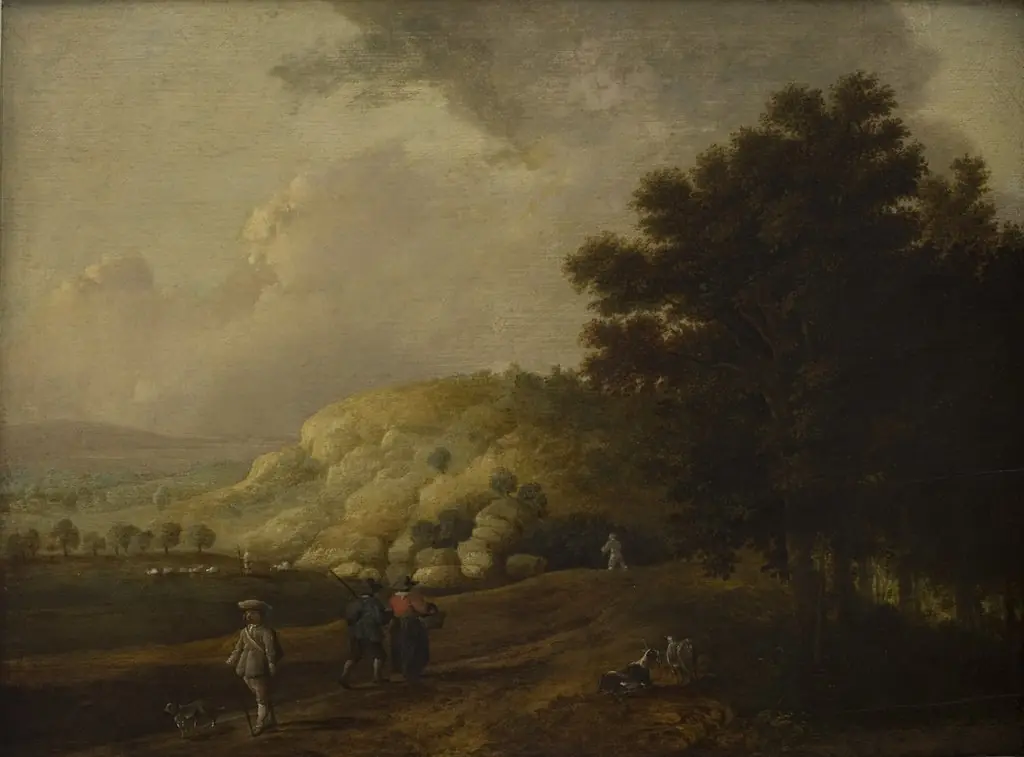 Landscape
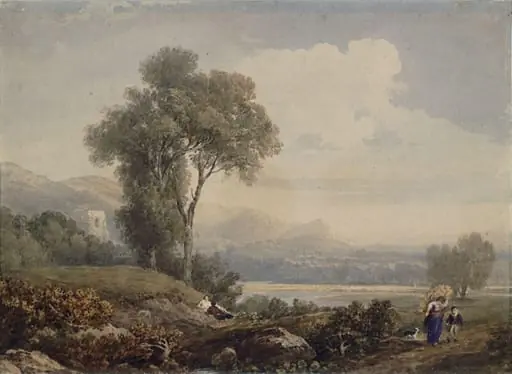 Landscape
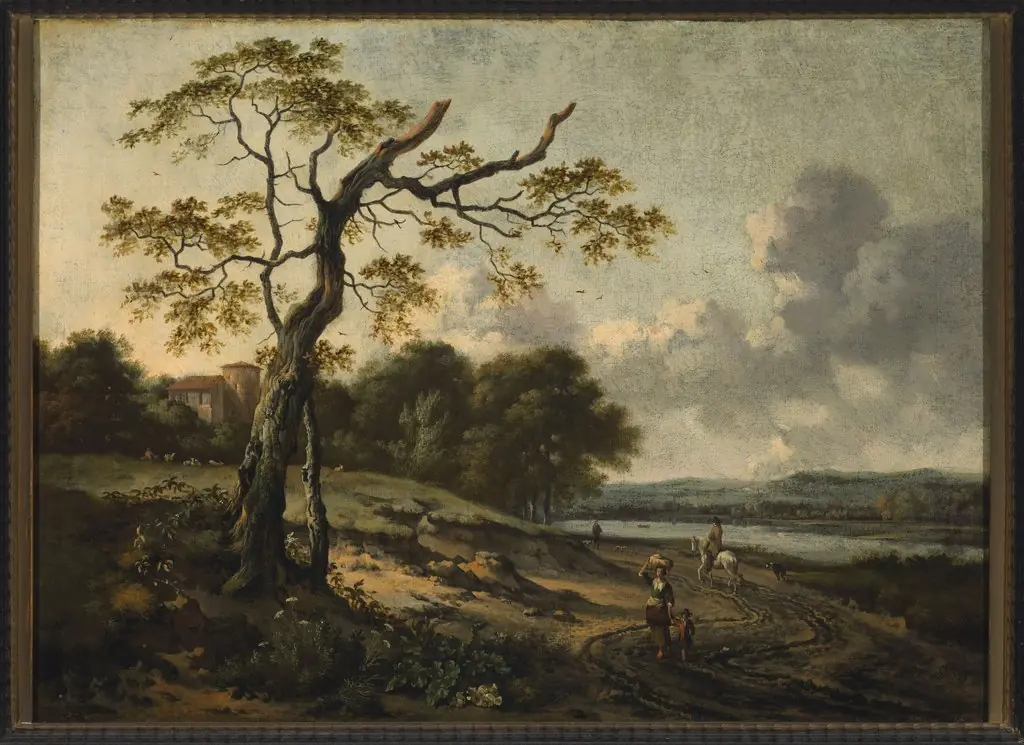 Landscape
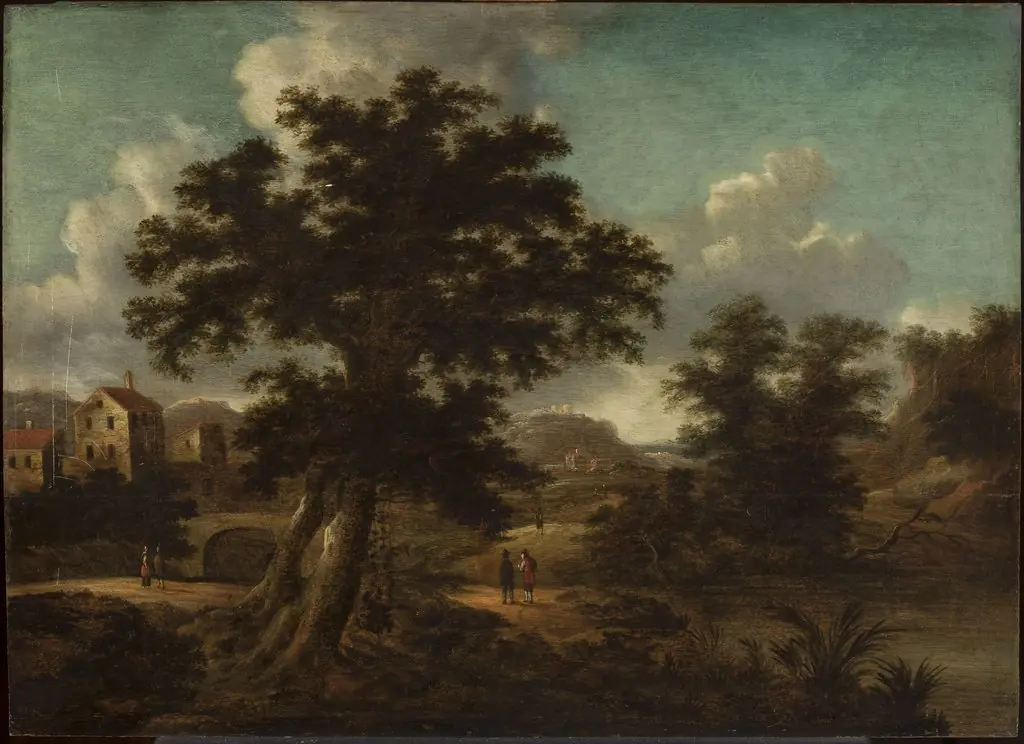 Landscape with a bridge, a large tree and travellers
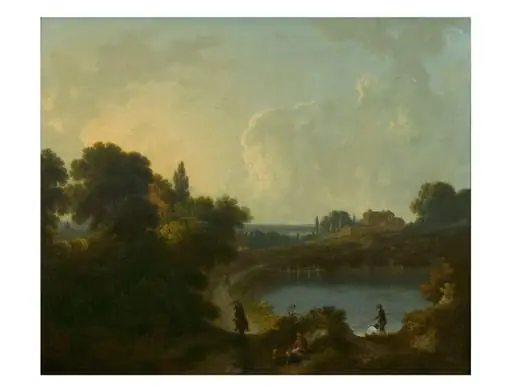 View at Hampstead
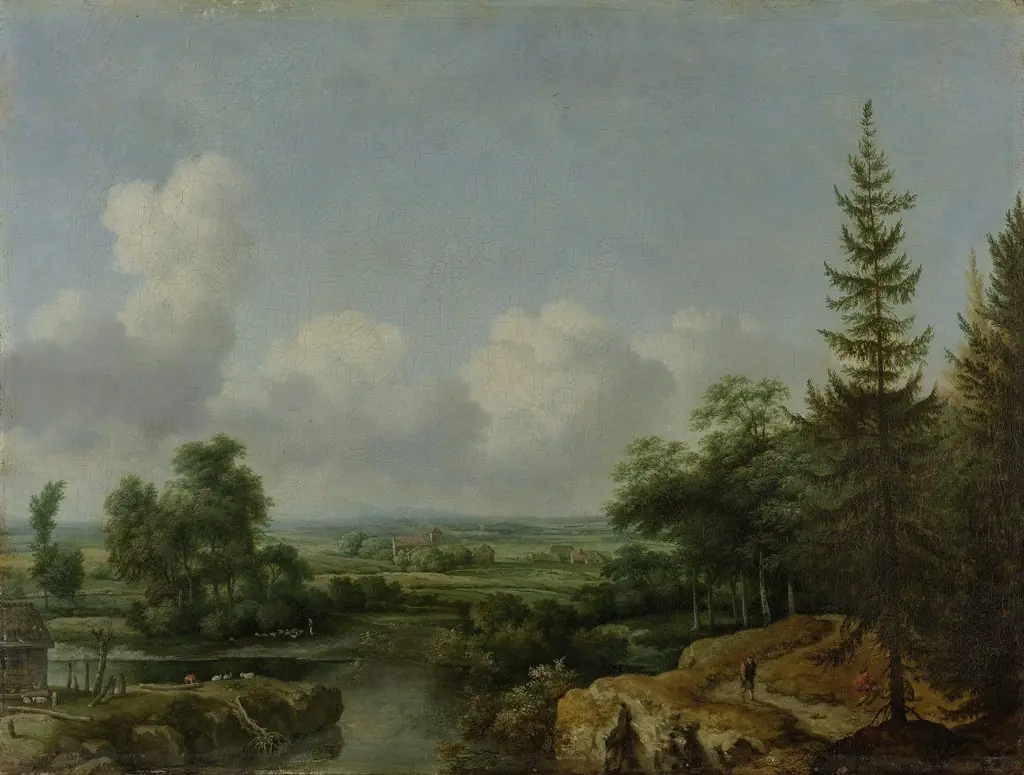 Swedish landscape
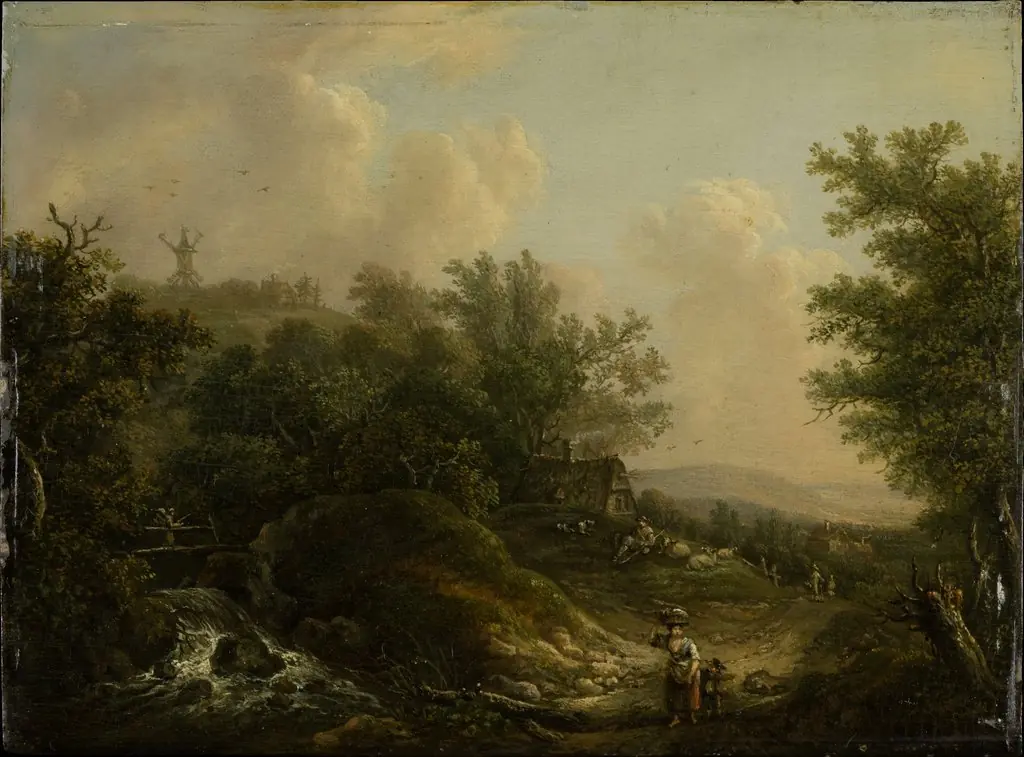 Landscape with a Brook and Hikers
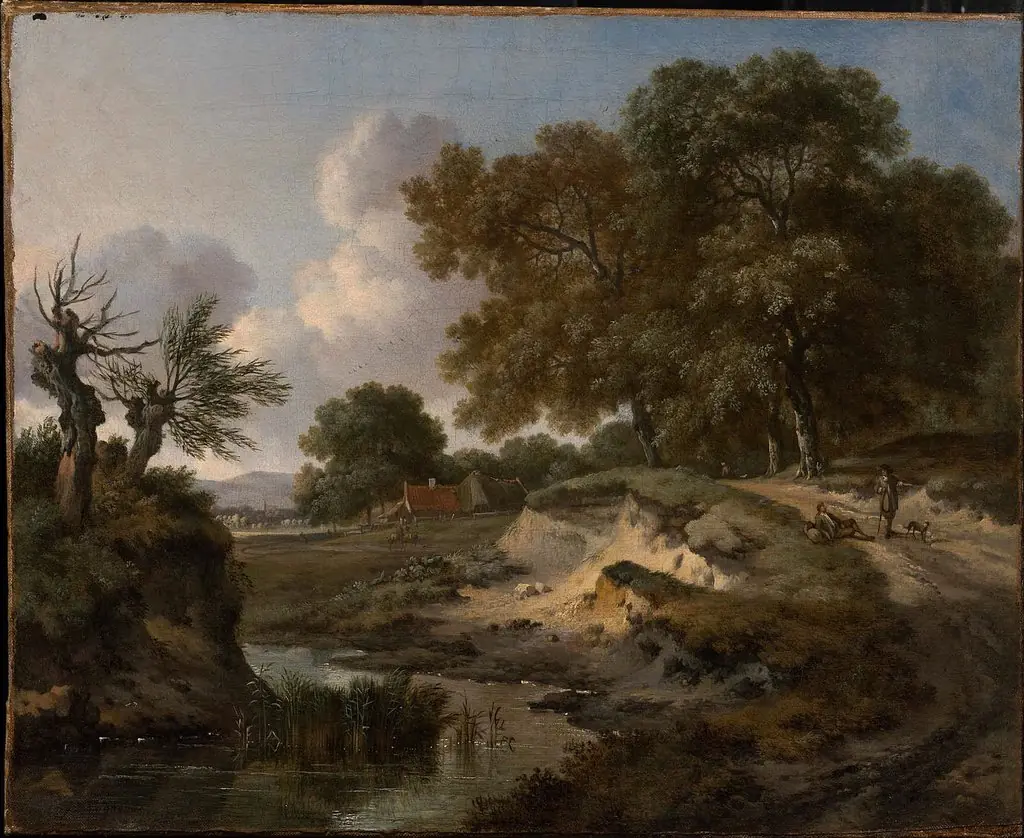 A Wooded Landscape with Travelers and a Dog on a Path
 Landscape: The River Bank