Artwork
Johann Ernst, Duke of Saxe-Coburg
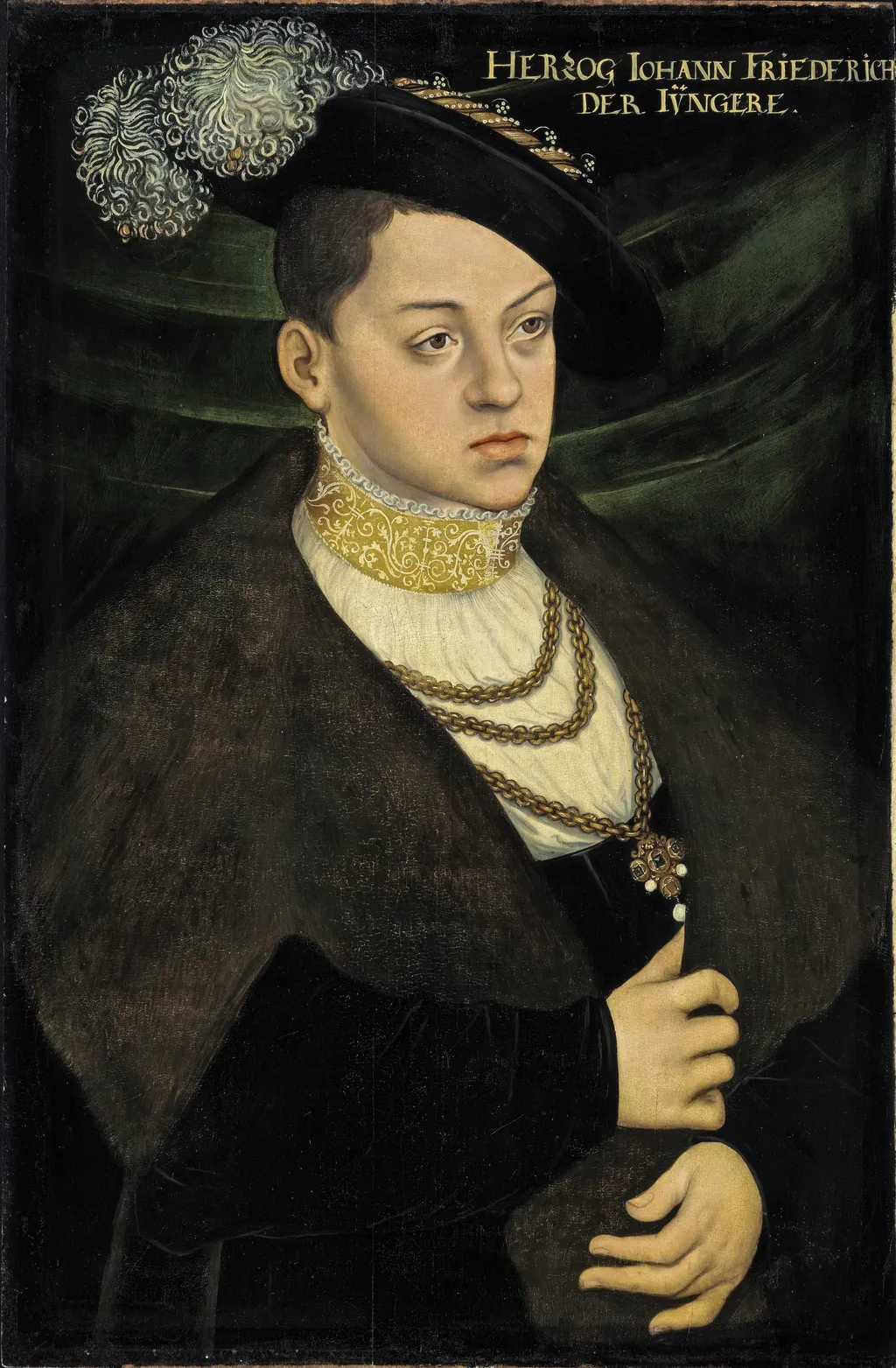
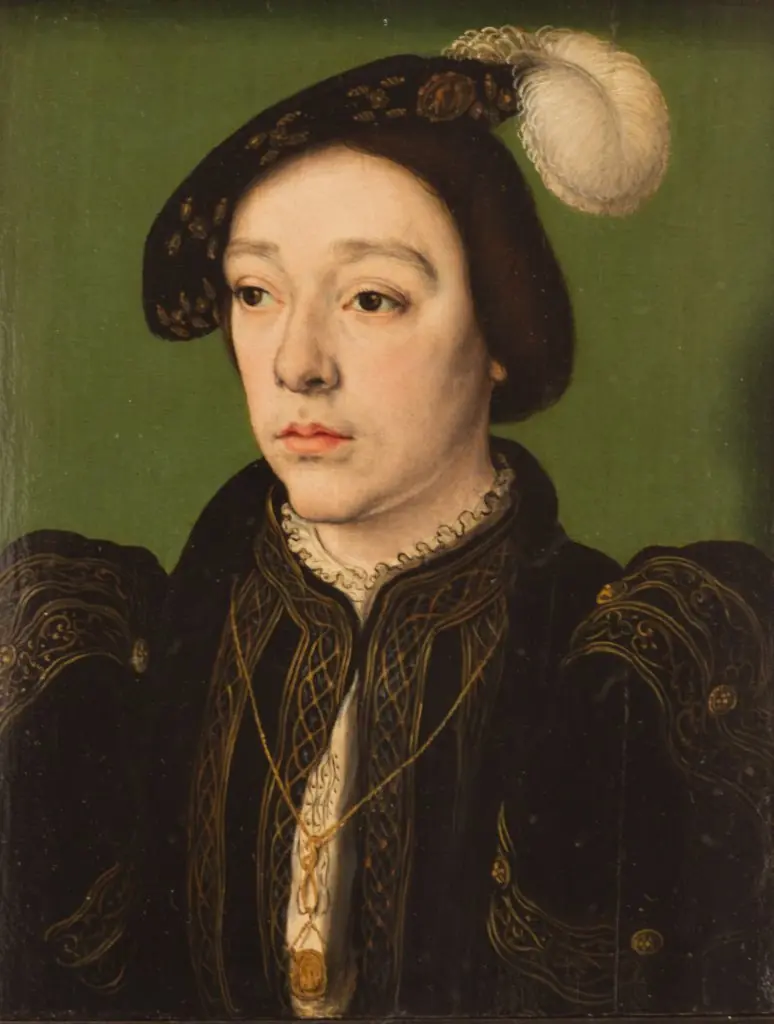
Johann Ernst, Duke of Saxe-Coburg is a paint painting by the Early Baroque Italian artist Unknown. It dates from 1550 and is held in the collection of the Gemäldegalerie Berlin. The work is a portrait of a youthful aristocrat, rendered in oil on canvas.
About this work
This painting shows a young man with short dark hair, wearing a black hat with a large white feather on the side.
This painting shows a young man with short dark hair, wearing a black hat with a large white feather on the side. He is dressed in a black coat with a white ruffled collar and a gold chain around his neck. The background is dark green with some lighter green folds. The man's face is serious, and he is looking straight ahead. His right hand is resting on his stomach, and his left hand is not visible. The overall atmosphere of the painting is formal and dignified. The painting is a portrait of a young nobleman, likely from the 16th century.
Overview
The work is a portrait of a youthful aristocrat, rendered in oil on canvas. He is depicted in a formal pose, gazing directly at the viewer with a composed expression. The composition is dominated by a dark green backdrop that recedes in subtle tonal folds, lending a sober atmosphere to the figure’s attire and bearing.
Subject & Meaning
The sitter is identified as Johann Ernst, Duke of Saxe‑Coburg, a member of the German ducal house in the early modern period. His attire—a black coat with a white ruffled collar, a gold chain, and a black hat adorned with a prominent white feather—signals his noble rank and the ceremonial dress expected of a young duke preparing for public duties.
Technique & Style
Executed with careful brushwork, the portrait balances fine detail in the facial features and textiles with broader, more atmospheric handling of the background. The dark palette, punctuated by the white feather and the gleam of the gold chain, reflects the Baroque sensibility for contrast and the emphasis on the sitter’s dignified presence.
History & Provenance
The painting originates from the mid‑16th century, a time when portraiture served both personal commemoration and dynastic propaganda. It has remained within collections associated with the Saxe‑Coburg lineage before entering a public museum, where it is displayed as part of the region’s noble heritage.
Context
During the period of its creation, German principalities frequently commissioned portraits to assert legitimacy and display the education and refinement of their heirs. The formal attire and restrained pose align with contemporary conventions that linked visual representation to political authority and familial continuity.
Artist & collection

 Domestic Scene
 Giacomo and Cardinal Marco, investing Andrea, Abbot of San Zeno, with his Benefice
 The Nymph of Fontainebleau
 Portrait of a Woman
 Madonna and Child with Saints in the Enclosed Garden
 Venus and Minerva
 Family Group of Four on Sofa
 Wall painting from Room H of the Villa of P. Fannius Synistor at Boscoreale
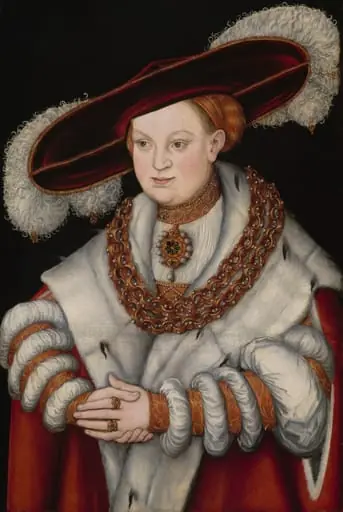 Portrait of Magdalena of Saxony, Wife of Elector Joachim II of Brandenburg
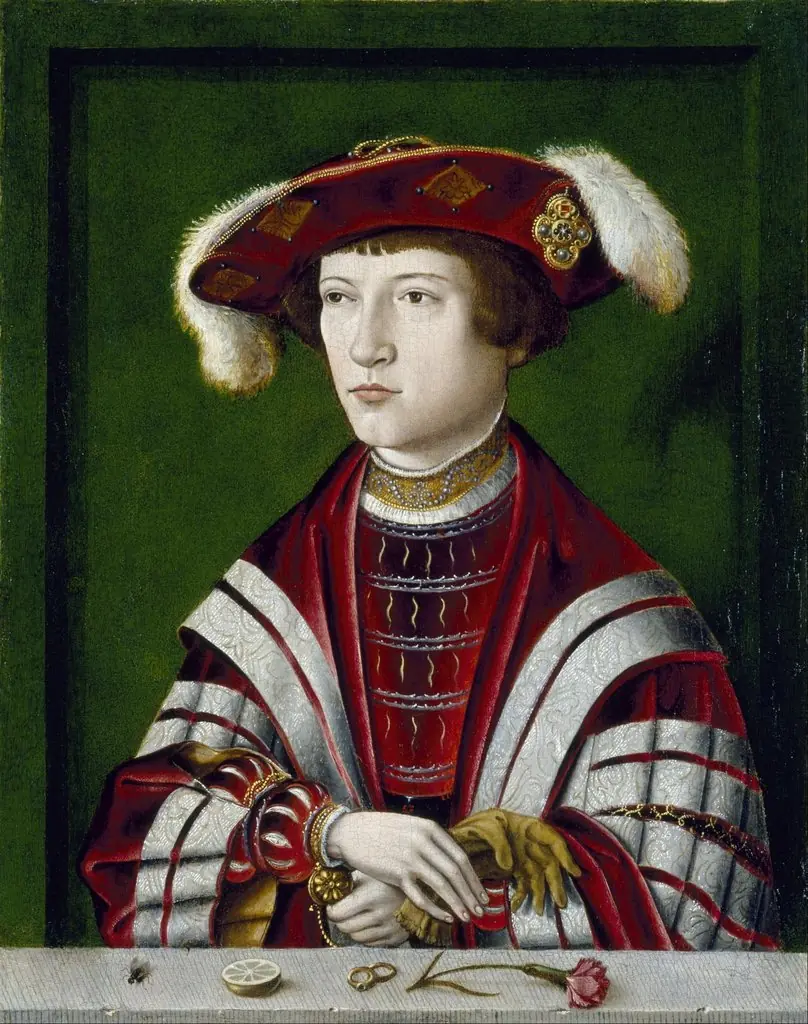 Portrait of a Nobleman
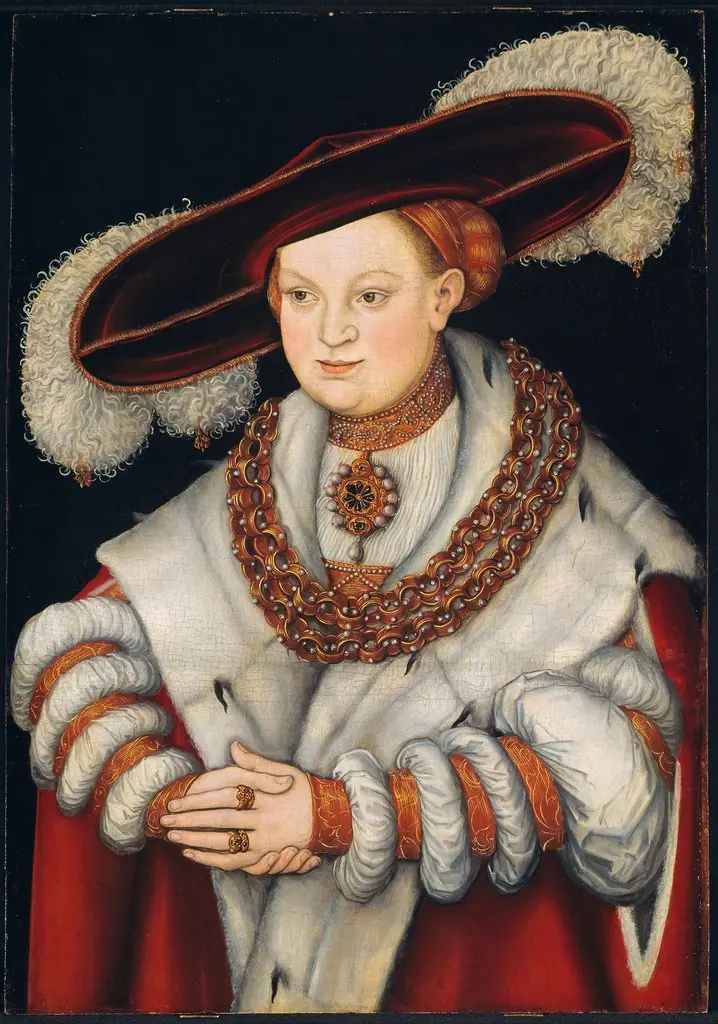 Portrait of Magdalena of Saxony, first Wife of Elector Joachim II of Brandenburg
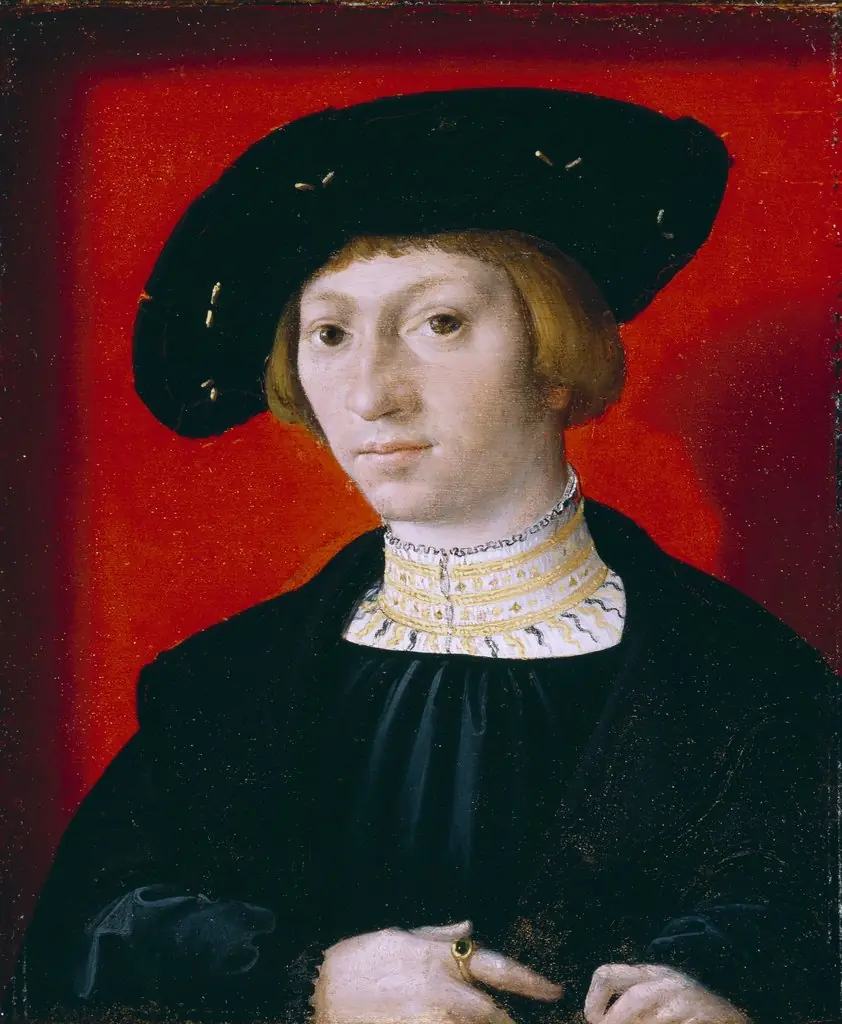 A Young Man
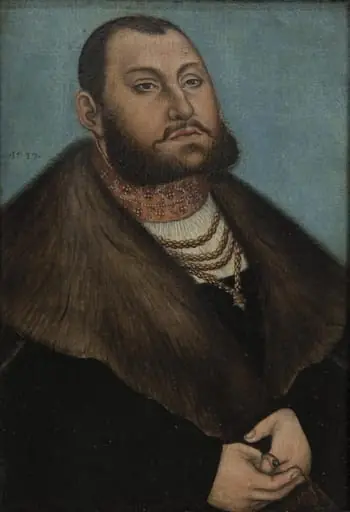 Portrait of the Elector John Frederic the Magnanimous of Saxony (1503-1554)
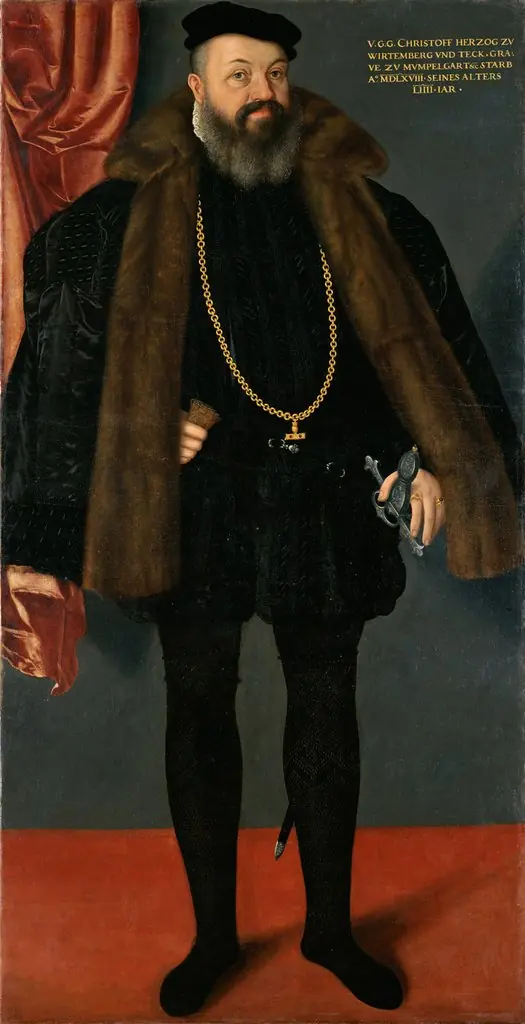 Herzog Christoph von Württemberg (1515-1568) in spanischer Tracht
 Portrait of Duke Christoph von Württemberg (1515-1568) in Spanish costume
 Portrait of Duke Charles of Angoulême
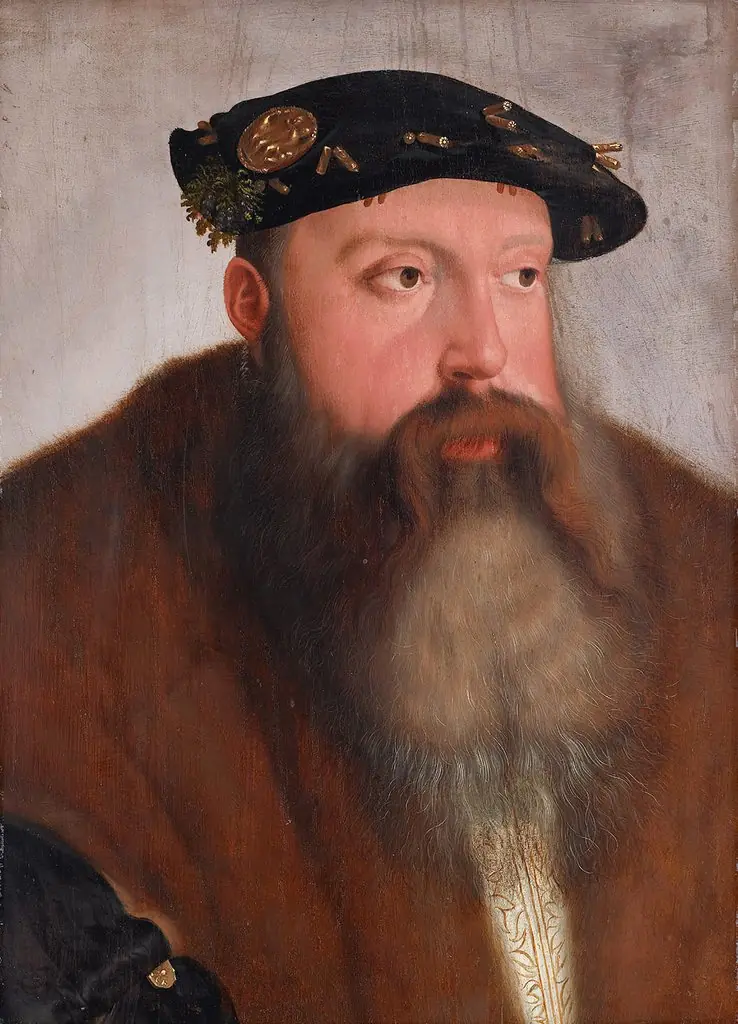 Louis X, Duke of Bavaria
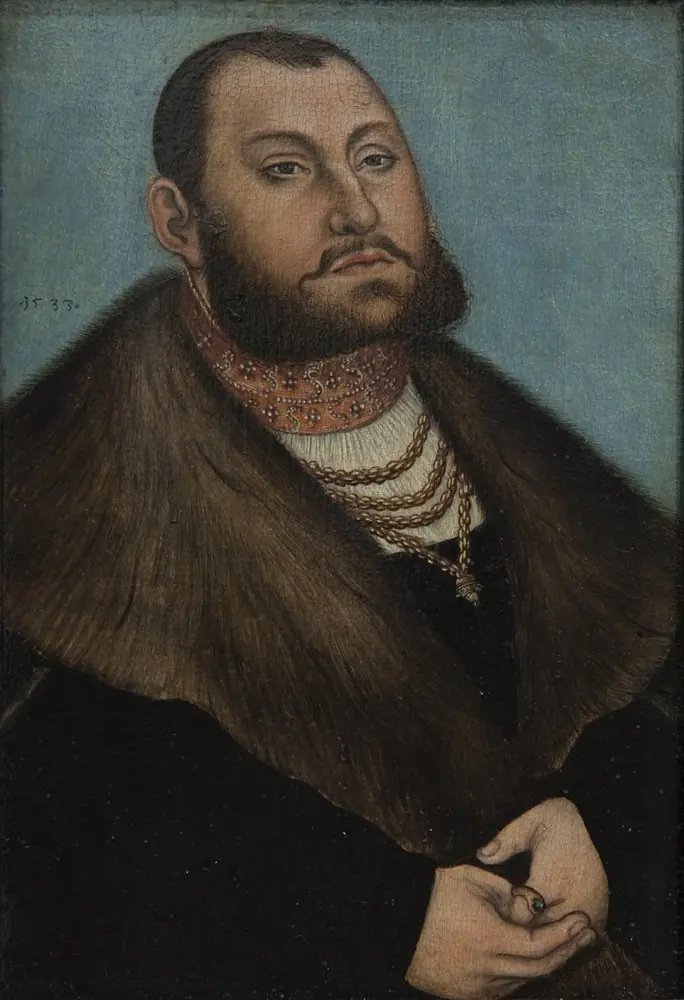 Portrait of the Elector John Frederic the Magnanimous of Saxony (1503-1554)