Artwork
Dans i det frie
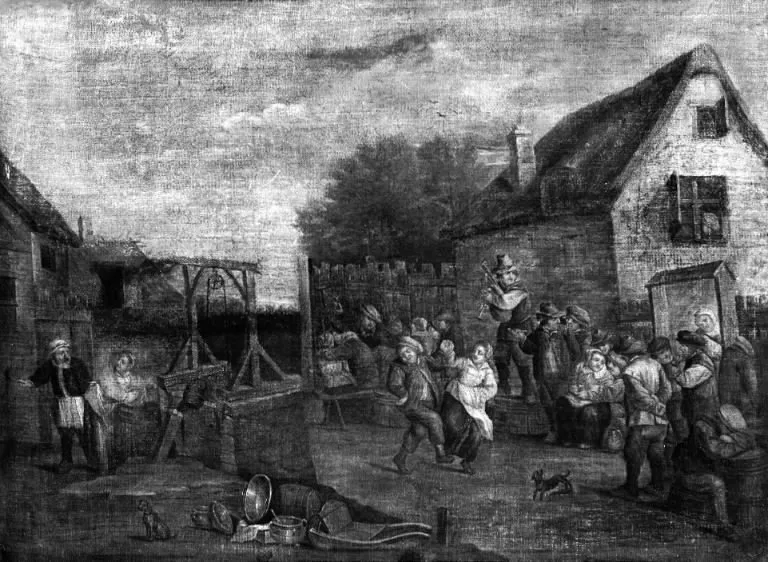
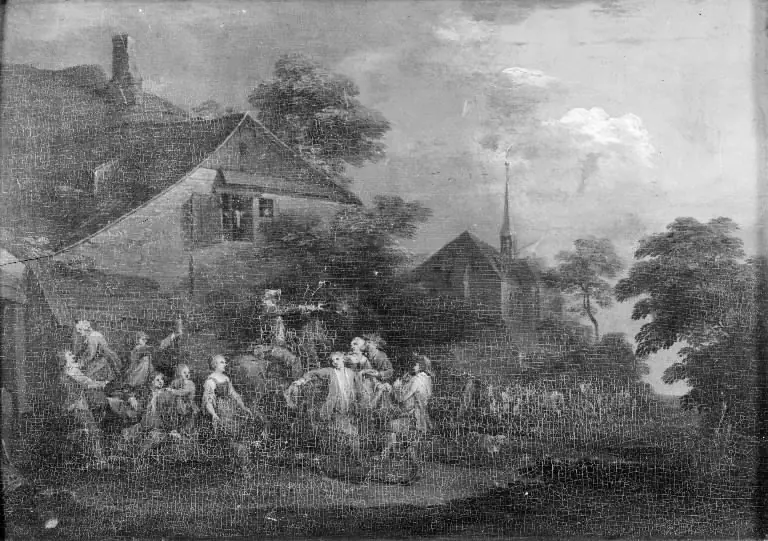
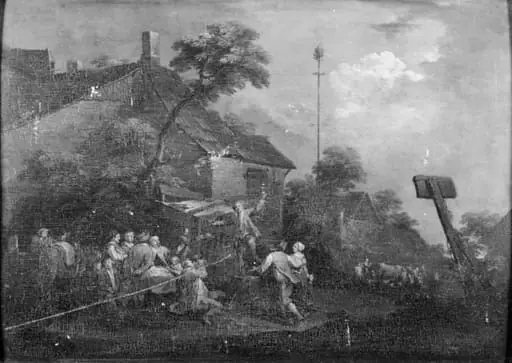
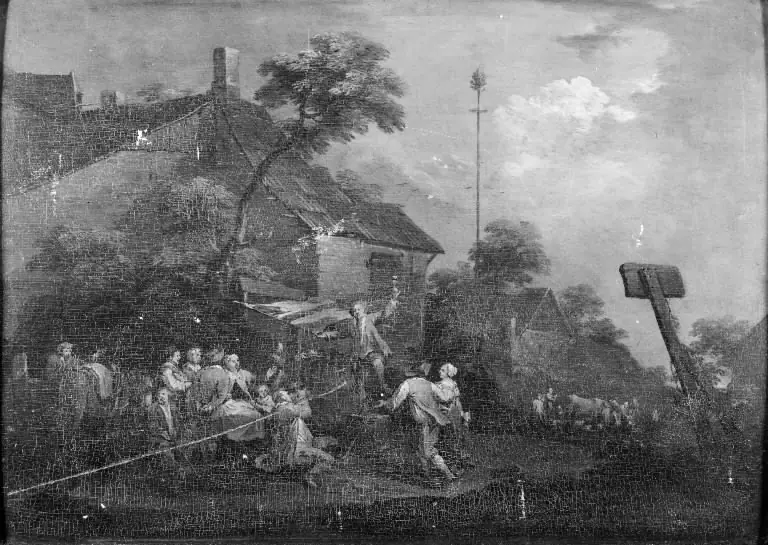
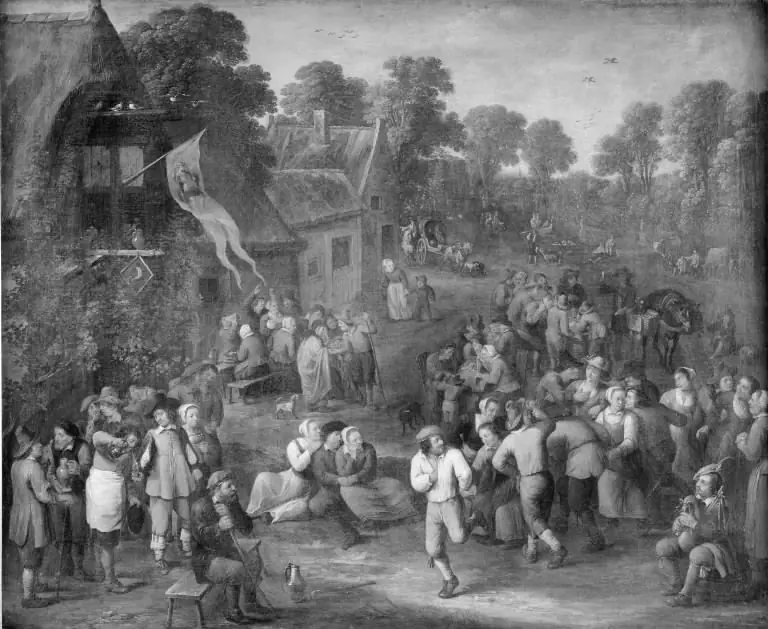
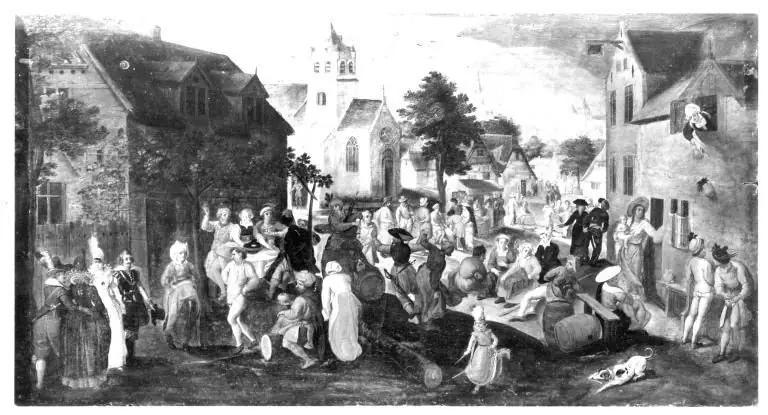
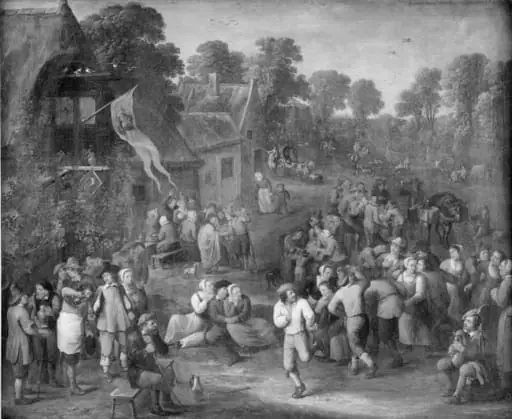
Dans i det frie is an oil painting by Unknown. It dates from 1700 and is held in the collection of the Statens Museum for Kunst.
About this work
Overview
This oil painting captures a vibrant outdoor gathering in a rural setting, where individuals of varying ages engage in music, dance, and casual interaction.
This oil painting captures a vibrant outdoor gathering in a rural setting, where individuals of varying ages engage in music, dance, and casual interaction. The composition centers on a flute player surrounded by dancers, with architectural elements and a wooden fence framing the scene. The artist employs dynamic arrangement and warm tones to convey motion and communal joy, avoiding rigid symmetry in favor of organic flow.
Subject & Meaning
The scene depicts a spontaneous village celebration, likely tied to a seasonal or local festival. Figures are shown in relaxed, unposed postures, suggesting authenticity rather than staged performance. The inclusion of instruments and mixed-age participants implies a tradition rooted in community life, where music and movement serve as shared cultural expressions rather than formal entertainment.
Technique & Style
Brushwork is loose yet deliberate, with layered pigments suggesting movement through directional strokes. Color contrasts between sunlit figures and shaded backgrounds enhance spatial depth. While chiaroscuro is subtly present, the emphasis lies in atmospheric lighting rather than dramatic contrasts, creating a luminous, open-air effect that supports the scene’s buoyant mood.
History & Provenance
The painting’s origin is tied to a 19th-century regional tradition of documenting rural life, though its exact date and early ownership remain undocumented. It was likely produced for a local patron or as part of a series capturing everyday festivities. No record of exhibition or sale prior to the 20th century has been verified, and its current location reflects later institutional acquisition.
Context
This work aligns with broader 19th-century European trends that valued depictions of peasant life as culturally significant, distinct from aristocratic subjects. Similar scenes appear in the work of contemporaries who sought to portray authentic social rituals, often influenced by Romantic ideals of simplicity and communal harmony, though without overt political or moral commentary.
Legacy
The painting contributes to a visual archive of vernacular celebrations, preserving details of costume, instrument design, and spatial organization in rural gatherings. While not widely reproduced, it remains a reference for scholars studying regional customs and the evolution of genre painting outside major urban centers.
Artist & collection

 Domestic Scene
 Giacomo and Cardinal Marco, investing Andrea, Abbot of San Zeno, with his Benefice
 The Nymph of Fontainebleau
 Portrait of a Woman
 Madonna and Child with Saints in the Enclosed Garden
 Venus and Minerva
 Family Group of Four on Sofa
 Wall painting from Room H of the Villa of P. Fannius Synistor at Boscoreale