Artwork
The Last Supper
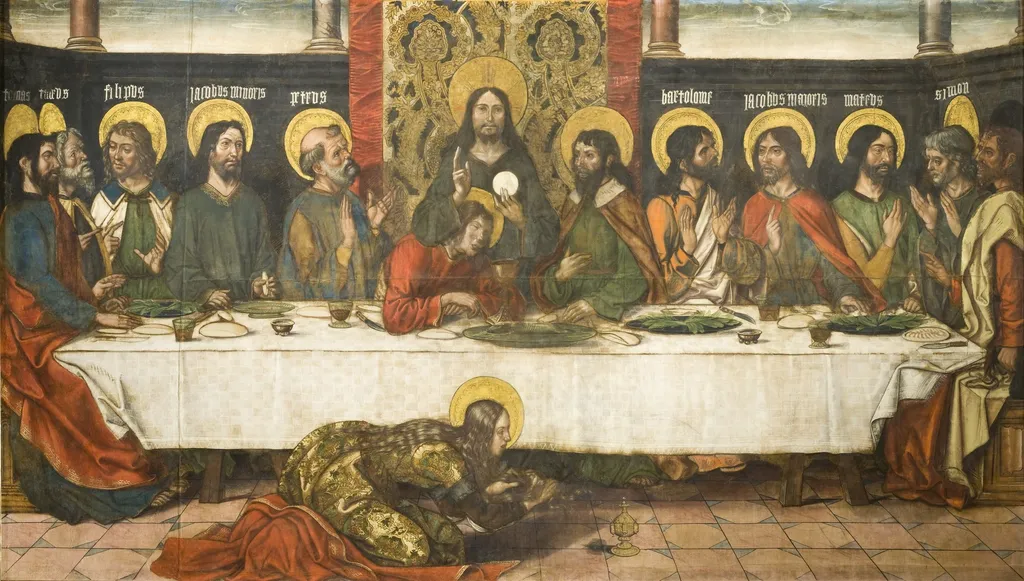
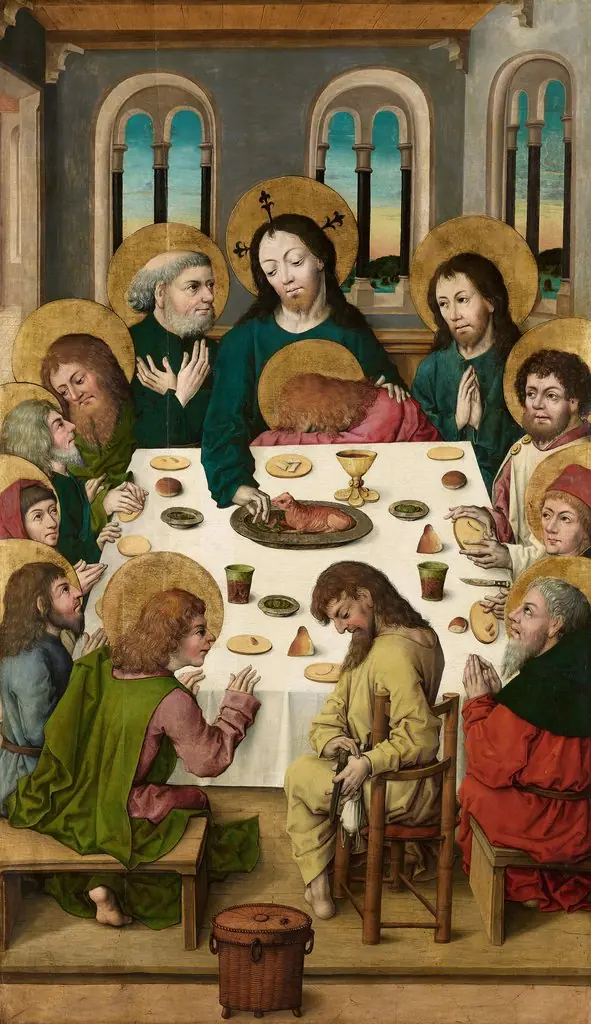
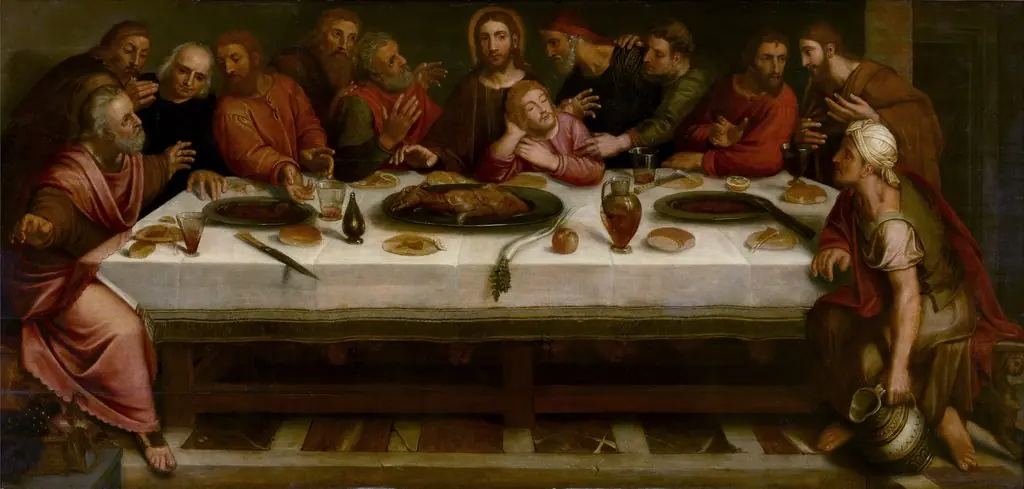
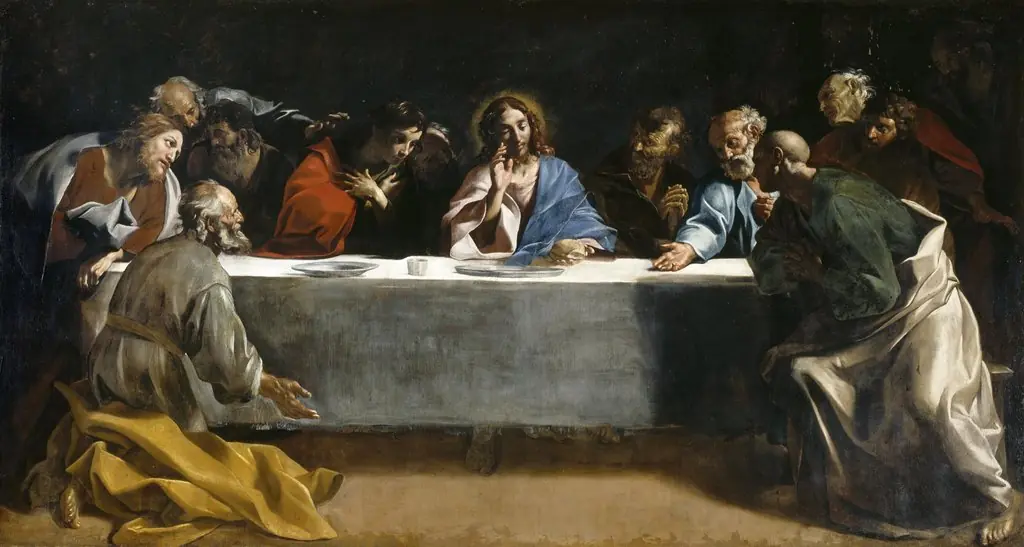
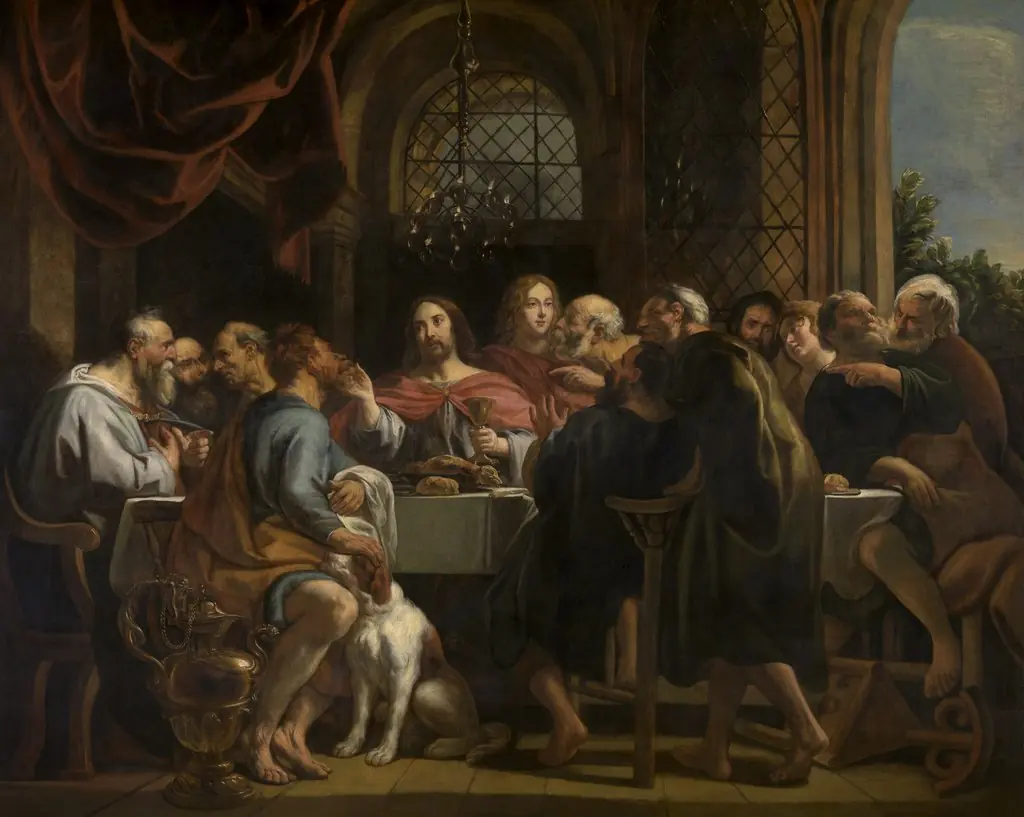
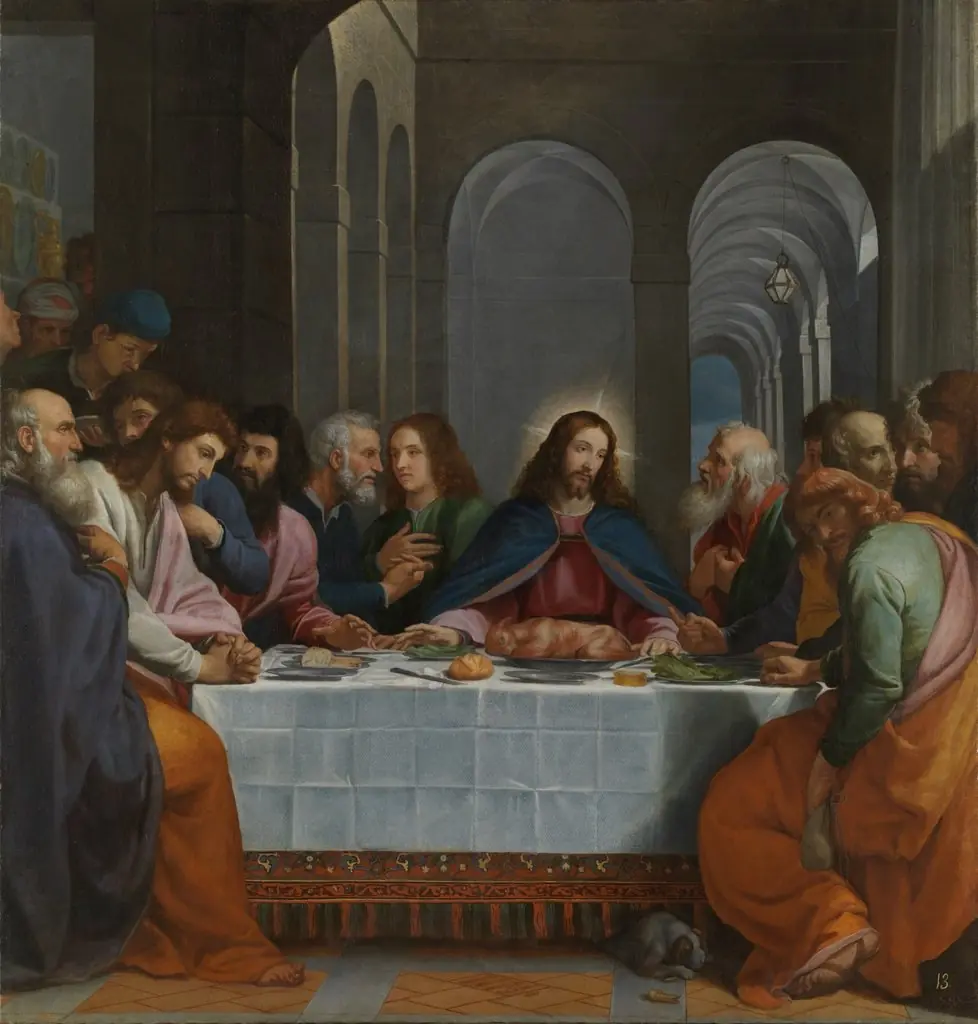
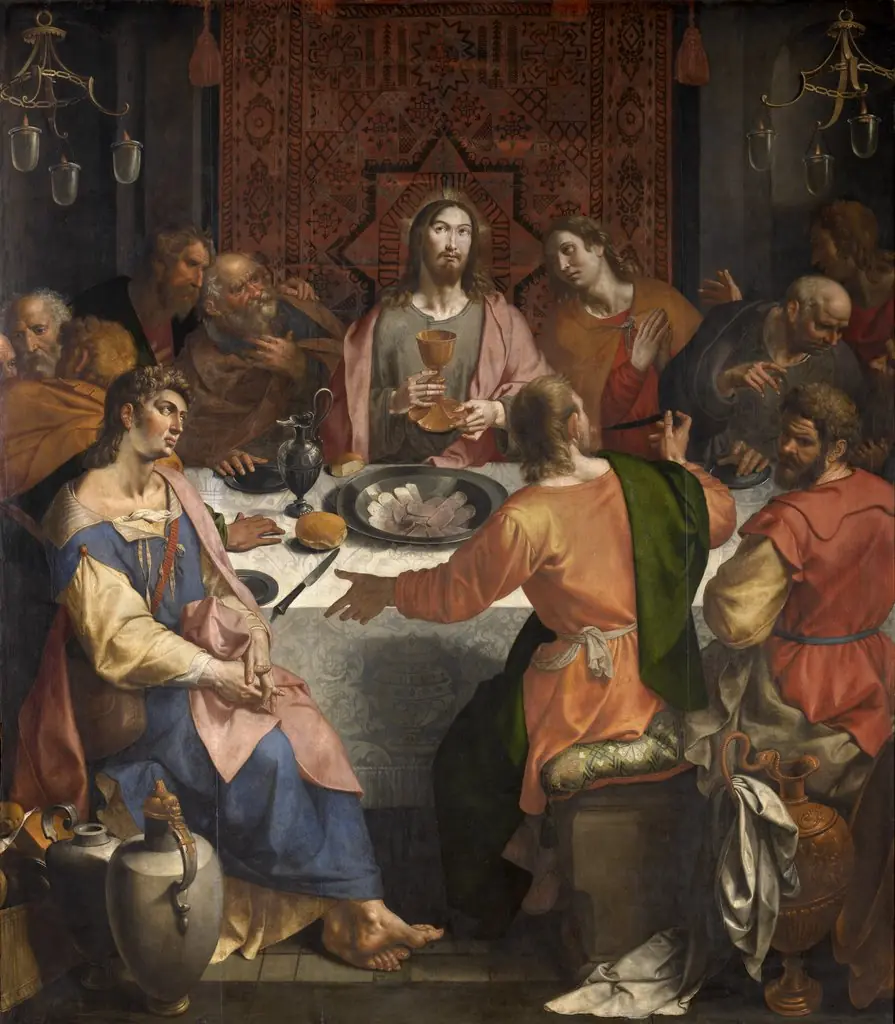
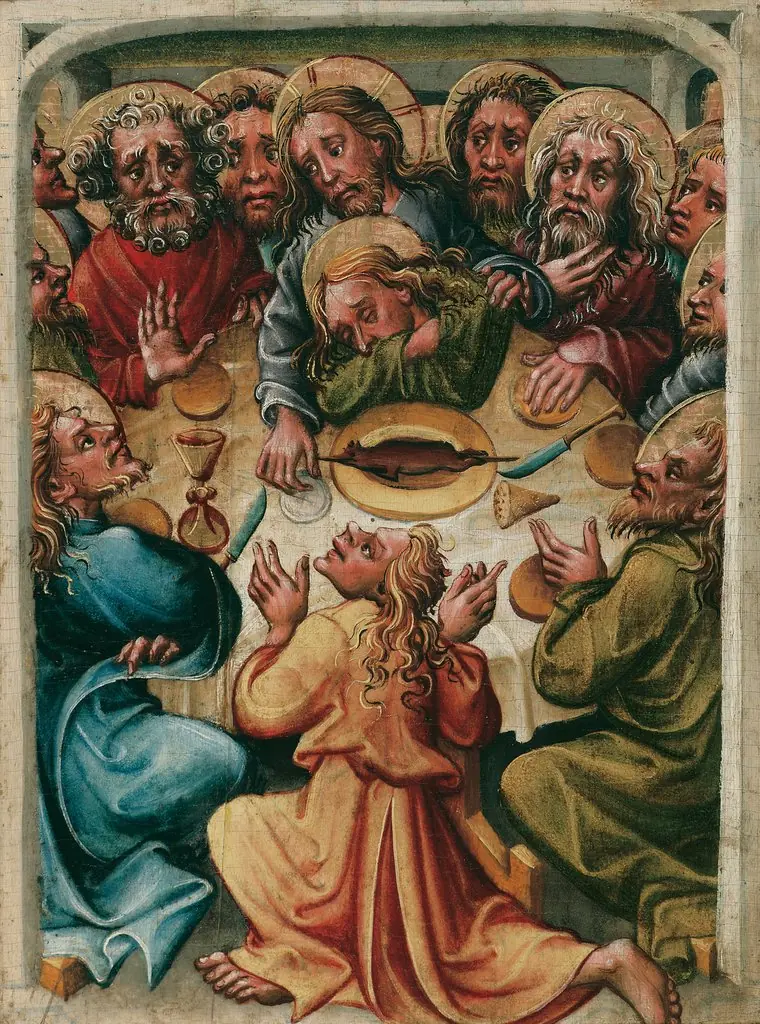
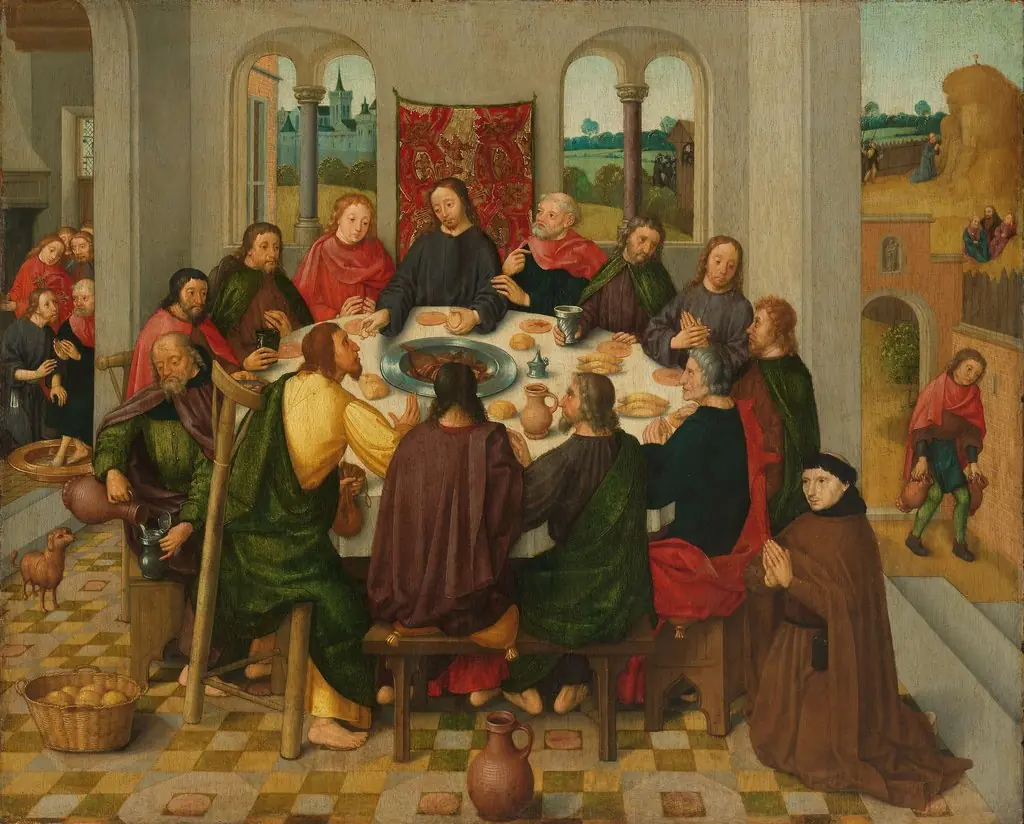
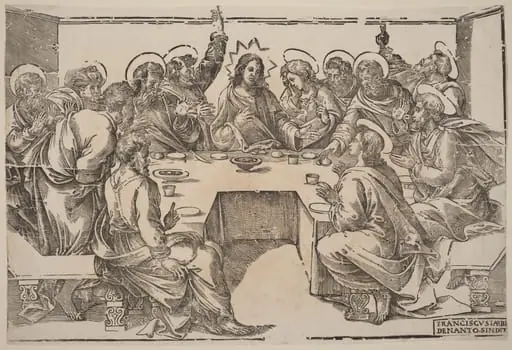
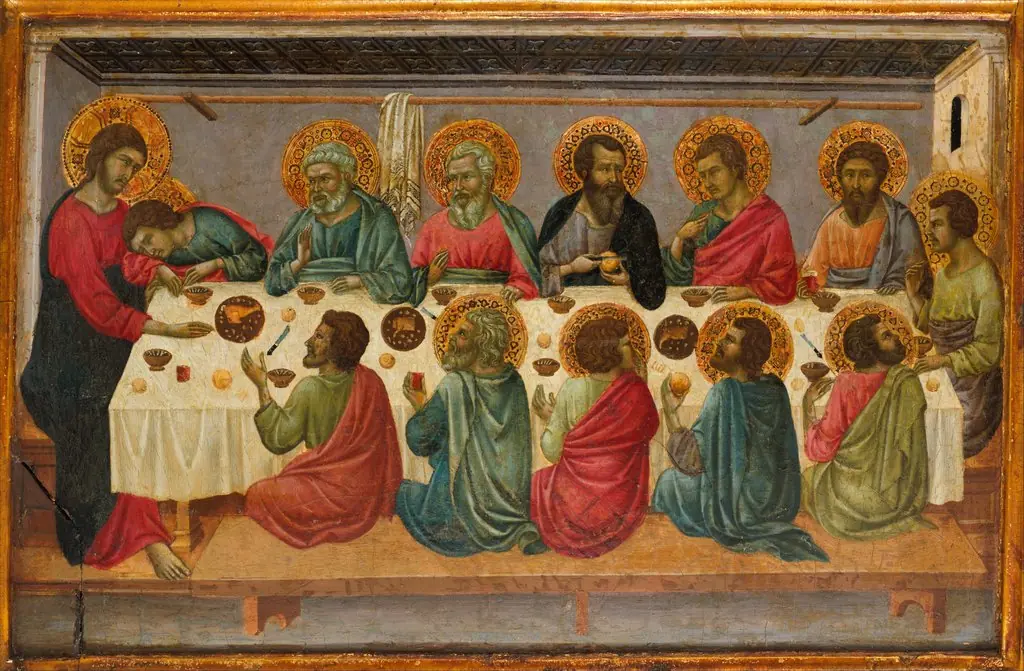
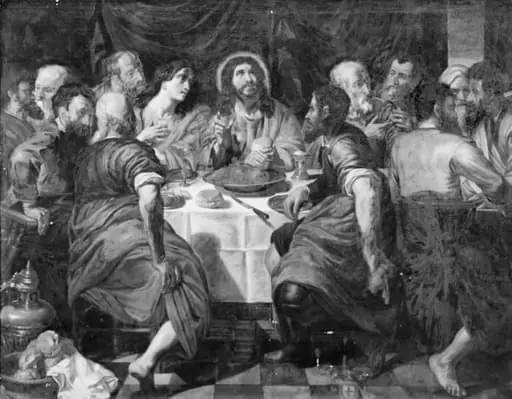
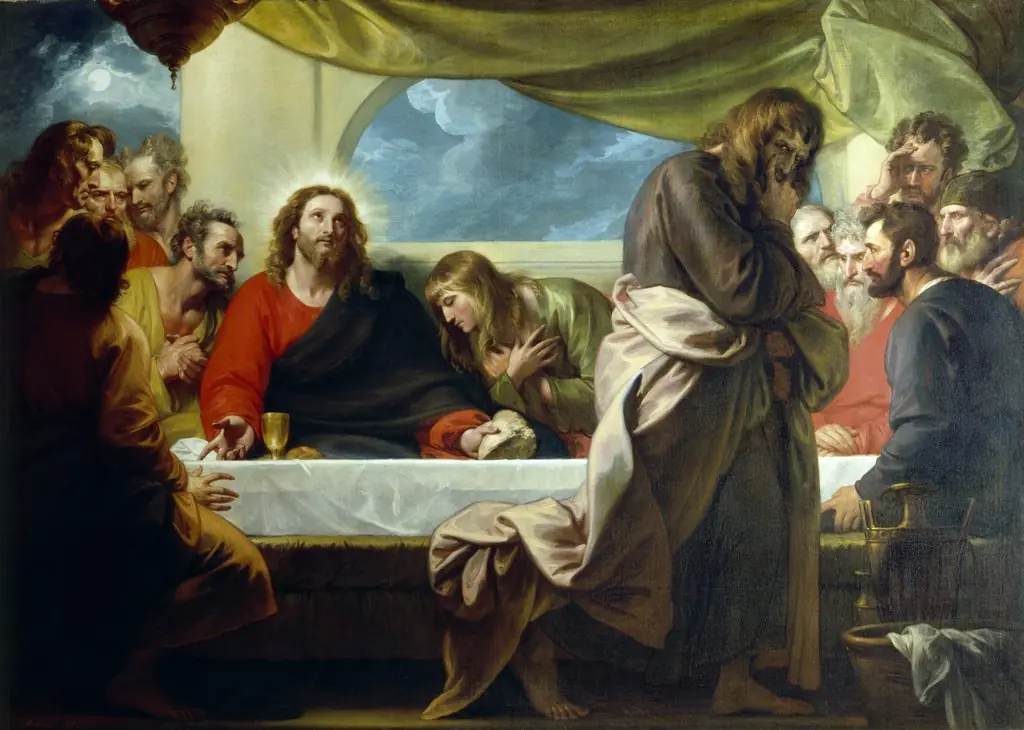
The Last Supper is an unspecified painting by the High Renaissance artist Unknown. It dates from 1500 and is held in the collection of the Los Angeles County Museum of Art. This mural depicts the moment after Jesus announces that one of his disciples will betray him.
About this work
Overview
The use of light and shadow suggests depth and psychological tension, aligning with Renaissance conventions of narrative painting.
This mural depicts the moment after Jesus announces that one of his disciples will betray him. Twelve figures are arranged around a long table, each reacting with distinct emotion. The setting includes architectural elements like columns and a central window, framing the scene in a receding space. A figure lies prone on the floor, while another gestures emphatically. The use of light and shadow suggests depth and psychological tension, aligning with Renaissance conventions of narrative painting.
Subject & Meaning
The scene captures the biblical account from the Gospel of John, where Jesus reveals his impending betrayal. Each apostle responds with individualized expressions—shock, denial, or confusion—emphasizing human vulnerability. The figure on the floor may represent Judas in a state of spiritual collapse, while the central figure holds bread, symbolizing the Eucharist. The composition invites contemplation of loyalty, guilt, and divine foreknowledge.
Technique & Style
The painting employs chiaroscuro to model forms and direct attention toward the central figure. Soft transitions between light and shadow create volume, while linear perspective organizes the architectural backdrop. Robes are rendered with subtle folds, and halos are rendered as faint rings, avoiding overt symbolism. The palette is restrained, dominated by earth tones and muted hues, enhancing the solemnity of the moment.
History & Provenance
Created in the late 15th century, the work was commissioned for a monastic refectory, where it would serve as a devotional aid during meals. It remained in its original location for centuries, though exposure to humidity and poor restoration efforts caused significant deterioration. Later conservation attempts sought to stabilize the surface and recover lost details, though much of the original pigment has faded or flaked away.
Context
Produced during the High Renaissance, the painting reflects contemporary interests in human emotion, anatomical accuracy, and spatial coherence. It aligns with the broader trend of religious scenes rendered with psychological realism, influenced by humanist thought. Similar compositions appeared in other monastic settings, but this version distinguishes itself through its unified perspective and restrained emotional tone.
Legacy
Though not by Leonardo da Vinci, the painting was widely copied and studied for its compositional clarity and emotional nuance. It influenced later religious murals in Italy and beyond, particularly in how individual reactions were rendered within a single narrative moment. Its condition today serves as a reminder of the fragility of fresco techniques and the challenges of preserving early Renaissance art.
Artist & collection

 Domestic Scene
 Giacomo and Cardinal Marco, investing Andrea, Abbot of San Zeno, with his Benefice
 The Nymph of Fontainebleau
 Portrait of a Woman
 Madonna and Child with Saints in the Enclosed Garden
 Venus and Minerva
 Family Group of Four on Sofa
 Wall painting from Room H of the Villa of P. Fannius Synistor at Boscoreale