Artwork
The Last Supper
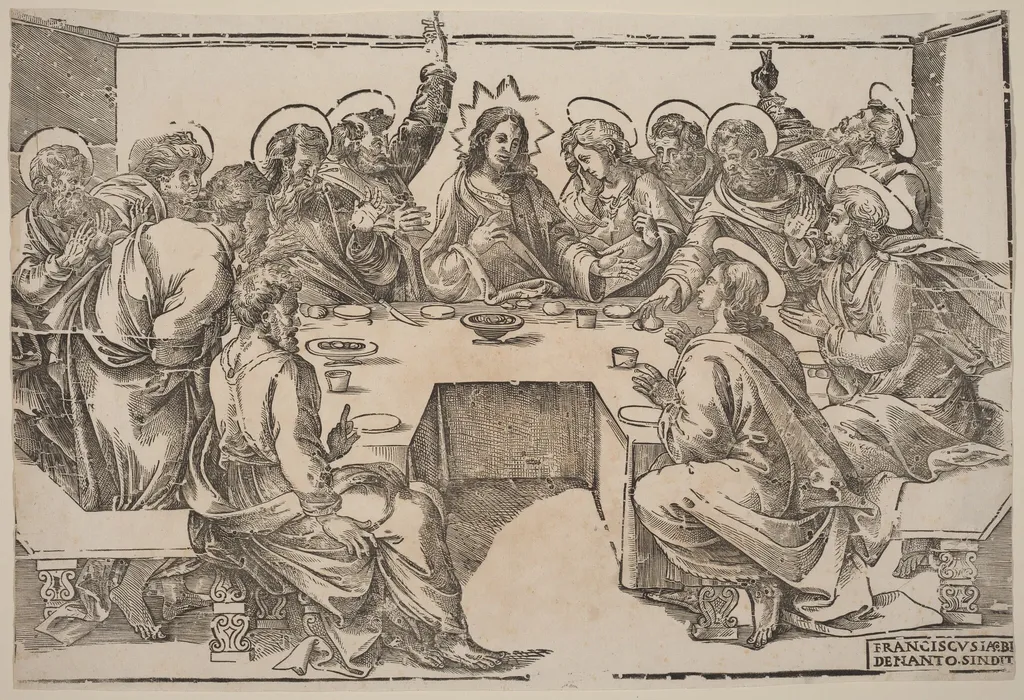
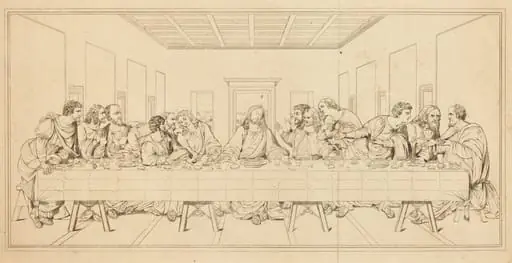
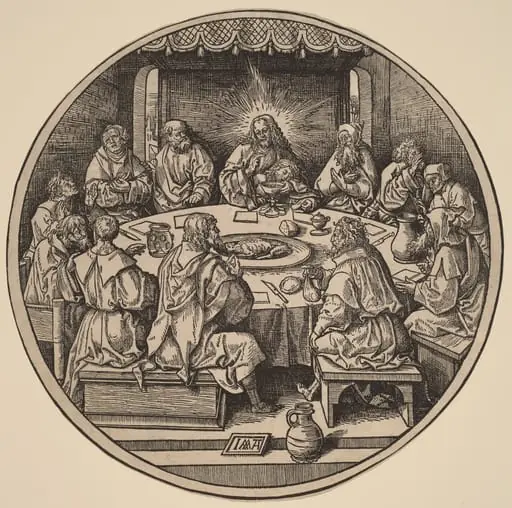
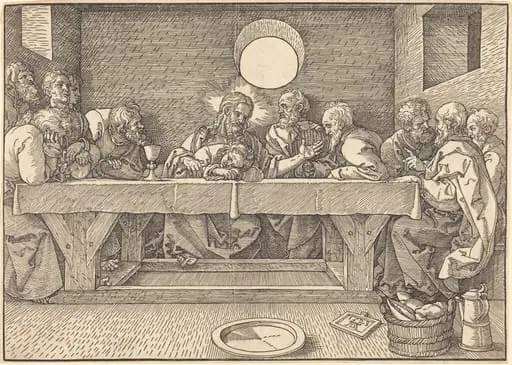
The Last Supper is an ink print by the Renaissance artist Francesco Denanto. It dates from 1522 and is held in the collection of the National Gallery of Art.
About this work
Overview
Created in 1522 by Francesco Denanto, this woodcut depicts the biblical scene of the Last Supper. As a print made by carving an image into a wooden block and pressing it onto paper, it reflects the technical precision and widespread reach of Renaissance printmaking. The work is rendered entirely in monochrome, emphasizing line and texture over color, characteristic of the medium.
Subject & Meaning
Their gestures and glances suggest varied emotional responses—shock, inquiry, and unease—reflecting the narrative tension of the Gospel account.
The scene captures the moment Jesus announces that one of his apostles will betray him. Christ is centrally positioned, flanked by twelve apostles arranged symmetrically on either side. Each figure wears a halo and long robes, signaling their sacred status. Their gestures and glances suggest varied emotional responses—shock, inquiry, and unease—reflecting the narrative tension of the Gospel account.
Technique & Style
Denanto employed fine, controlled lines typical of Northern Renaissance woodcutting to render texture in fabric, facial features, and architectural details. The background is minimal—a plain wall with a single window—directing focus to the figures. The absence of color and the use of hatching and cross-hatching create depth and volume, demonstrating mastery of the woodcut process despite its limitations.
History & Provenance
The woodcut was produced in Venice during a period of flourishing print culture. Denanto, active in the early 16th century, was part of a network of artists and publishers who disseminated religious imagery through affordable prints. While specific early ownership records are scarce, the work survives in several institutional collections, indicating its circulation among educated and devotional audiences.
Context
In early 16th-century Italy, religious imagery was widely reproduced in print to support personal piety and catechesis. Woodcuts like this one responded to the demand for accessible devotional art, especially as the Reformation began to reshape religious practice. Denanto’s composition aligns with established iconographic traditions, yet his linear clarity reflects the influence of Dürer and other Northern engravers.
Legacy
Though not as widely known as later depictions by Leonardo or other painters, Denanto’s woodcut exemplifies how printmaking extended the reach of sacred narratives beyond elite patrons. Its survival in museum collections underscores its role in the broader dissemination of Renaissance religious imagery, contributing to the visual literacy of a wider public in early modern Europe.
Artist & collection