Artwork
Page from Tales of a Parrot (Tuti-nama): text page
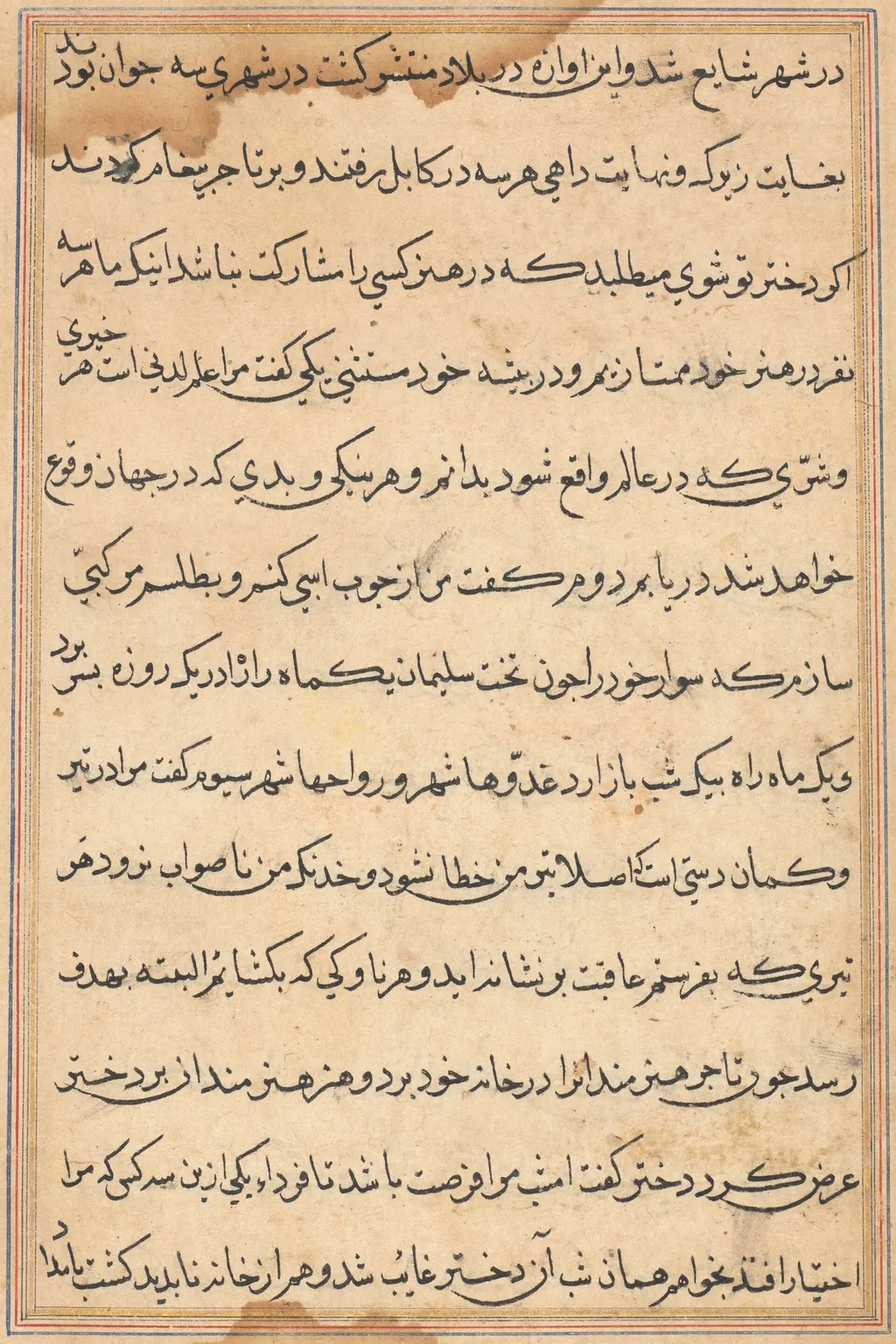
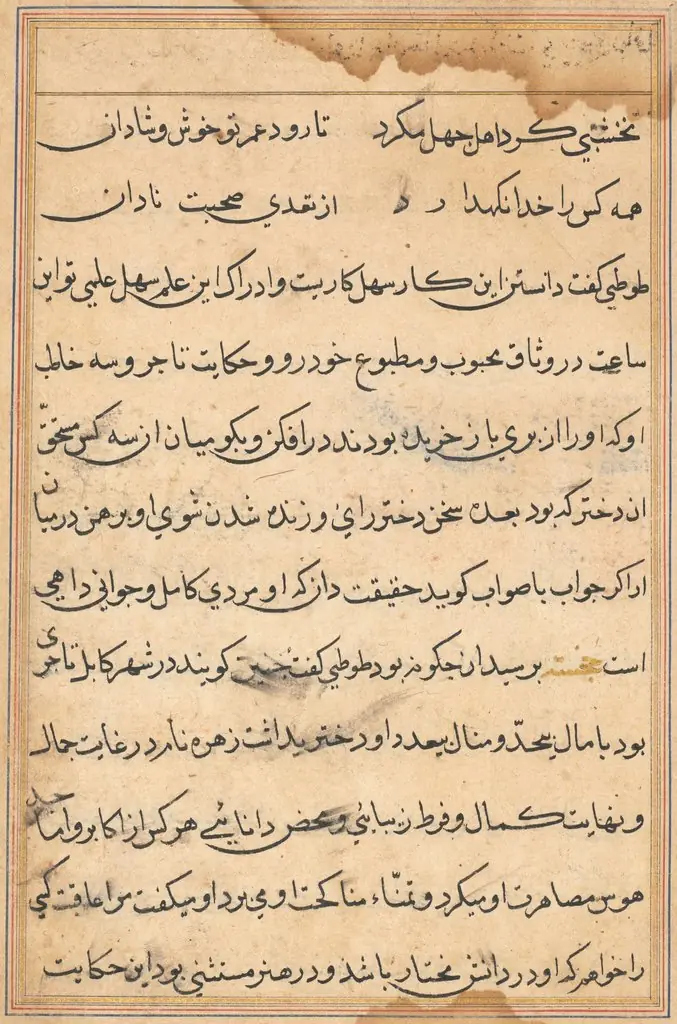
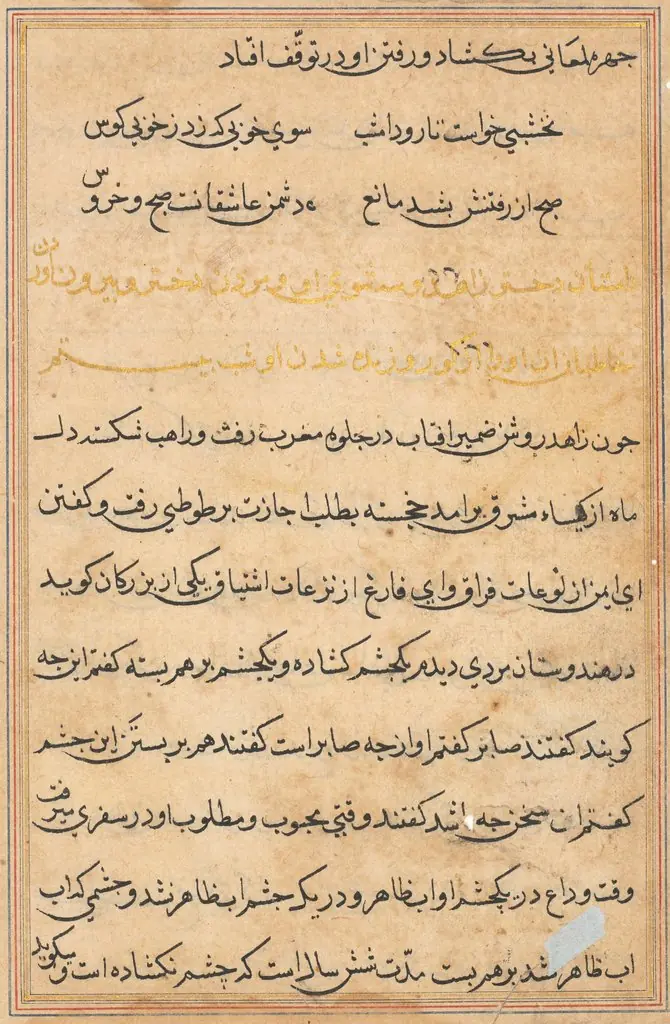
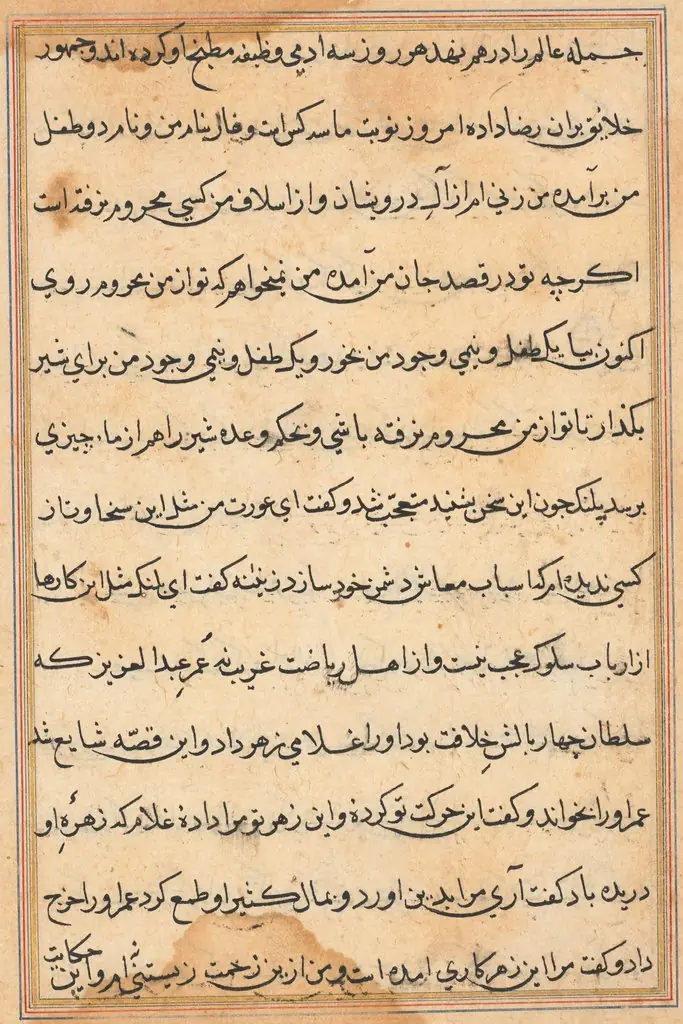
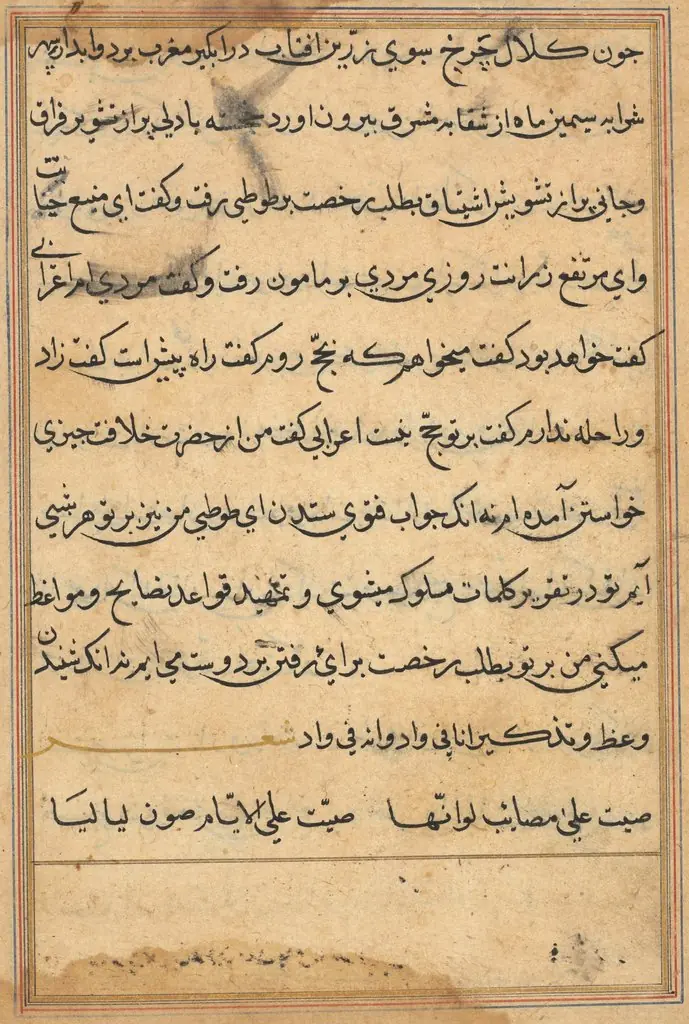
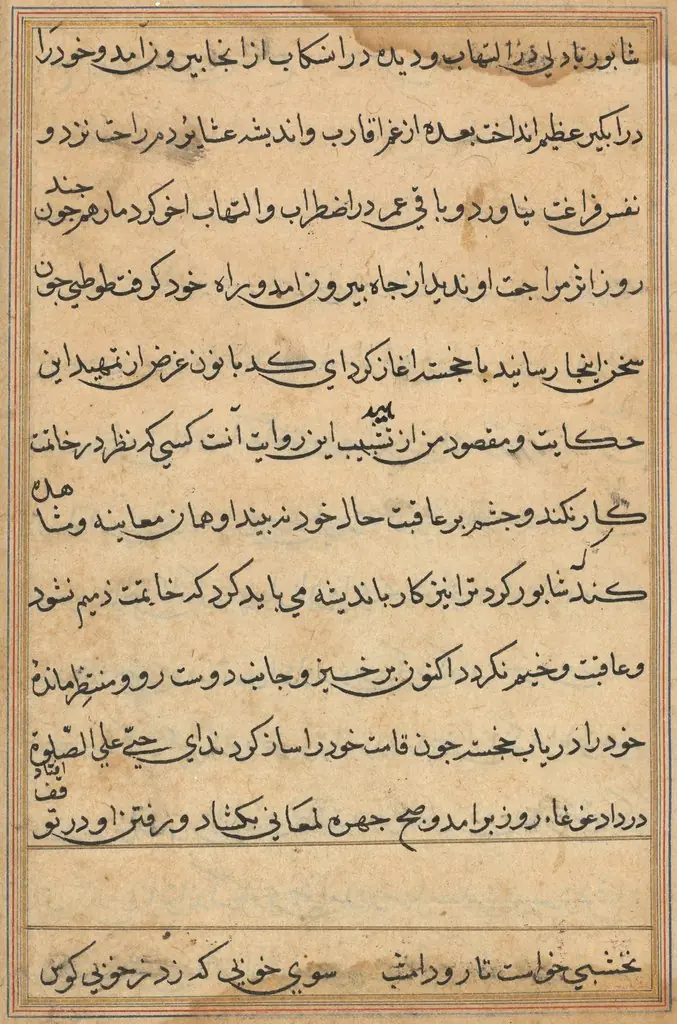
Page from Tales of a Parrot (Tuti-nama): text page is an unspecified painting. It dates from 1560 and is held in the collection of the Cleveland Museum of Art. This illuminated page originates from the Persian manuscript known as the *Tuti‑nama* (Tales of a Parrot).
About this work
Overview
The paper’s warm tone and subtle brown specks reveal its age, while the tightly arranged script creates a rhythmic visual flow across the entire surface.
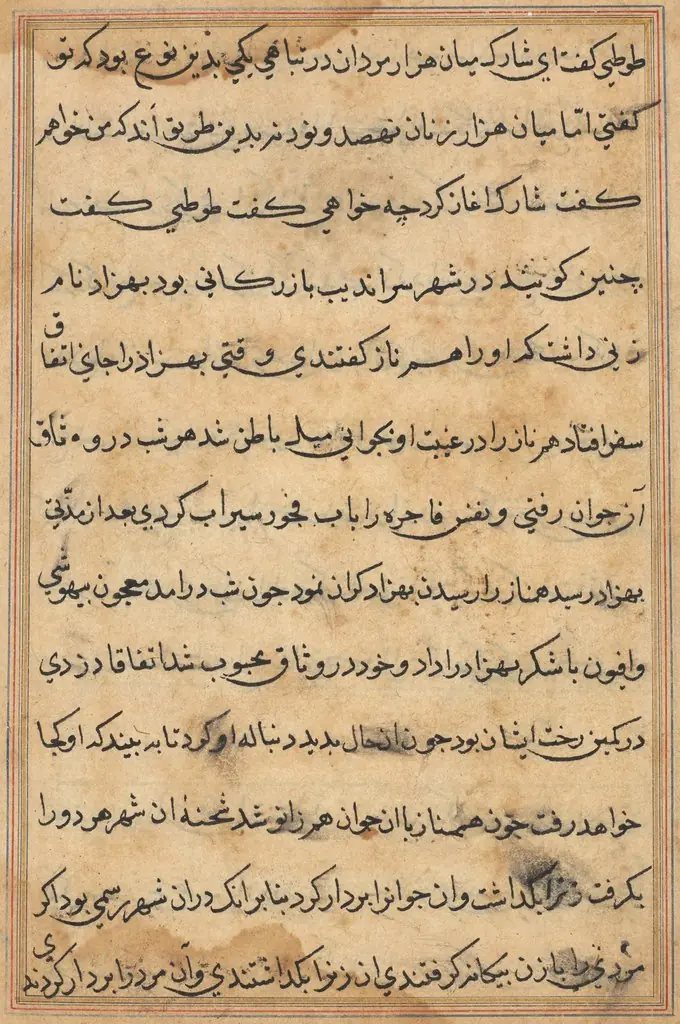
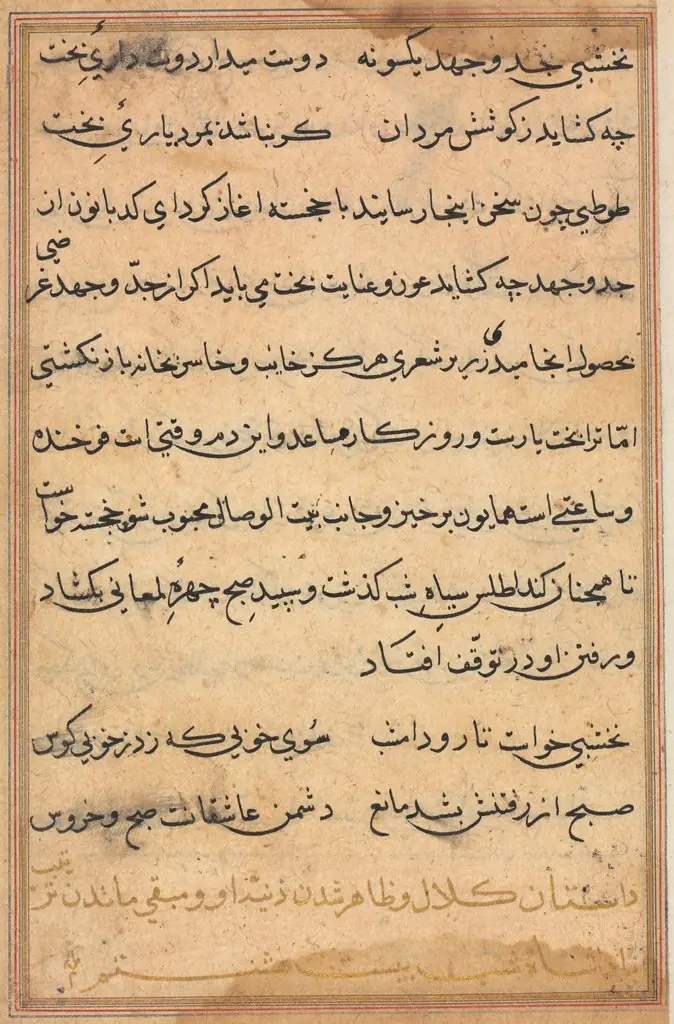
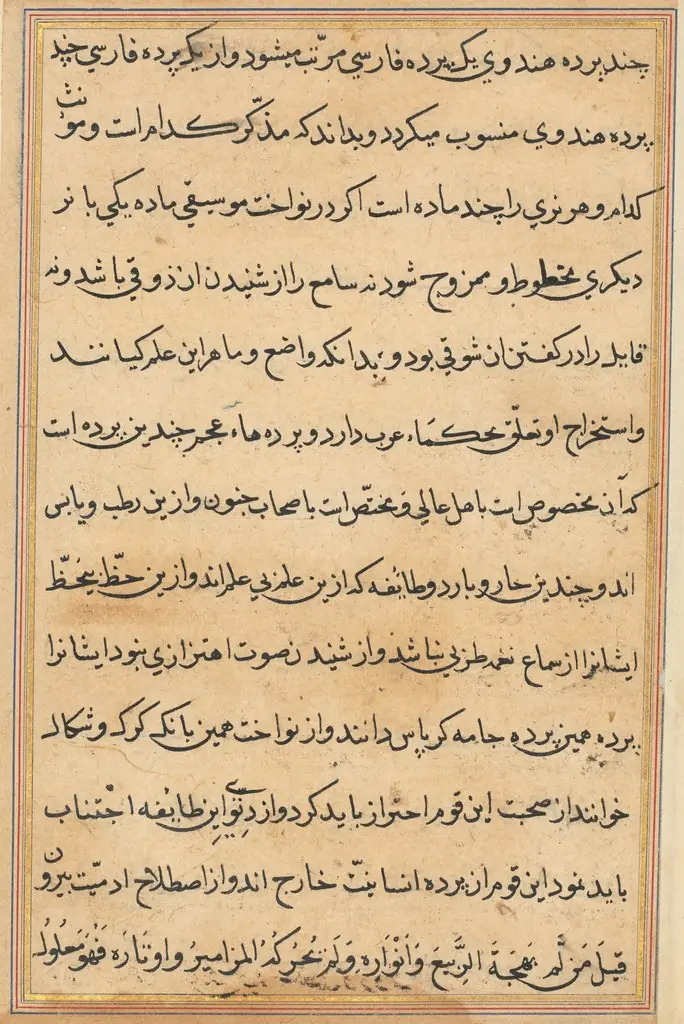
This illuminated page originates from the Persian manuscript known as the *Tuti‑nama* (Tales of a Parrot). Executed on a single sheet of paper, the surface bears dense black calligraphy framed by a slender red line, giving the page a defined margin. The paper’s warm tone and subtle brown specks reveal its age, while the tightly arranged script creates a rhythmic visual flow across the entire surface.
Subject & Meaning
The text presents a collection of moral anecdotes traditionally attributed to a talking parrot, a popular didactic genre in Mughal court culture. Such stories were intended to convey ethical guidance and entertain elite audiences, reflecting the ruler’s interest in literature and moral philosophy.
Technique & Style
The calligraphy is rendered in a precise, flowing hand characteristic of early 17th‑century Persian script, with each letter carefully formed and connected. The thin red border, likely applied with a fine brush, delineates the text block and adds a subtle decorative element without detracting from the script’s clarity.
History & Provenance
The page was commissioned for Prince Salim, the heir apparent who would ascend the throne as Emperor Jahangir in 1605. Its creation aligns with Jahangir’s known patronage of the arts and his personal involvement in manuscript production, underscoring the work’s original courtly context.
Context
During the Mughal period, illuminated manuscripts served both as objects of devotion and as symbols of royal authority. The *Tuti‑nama* was among the texts favored by the court for its blend of literary elegance and moral instruction, fitting the cultural milieu of early 17th‑century Delhi.
Artist & collection

 Page from Tales of a Parrot (Tuti-nama): text page
 Page from Tales of a Parrot (Tuti-nama): text page
 Page from Tales of a Parrot (Tuti-nama): text page
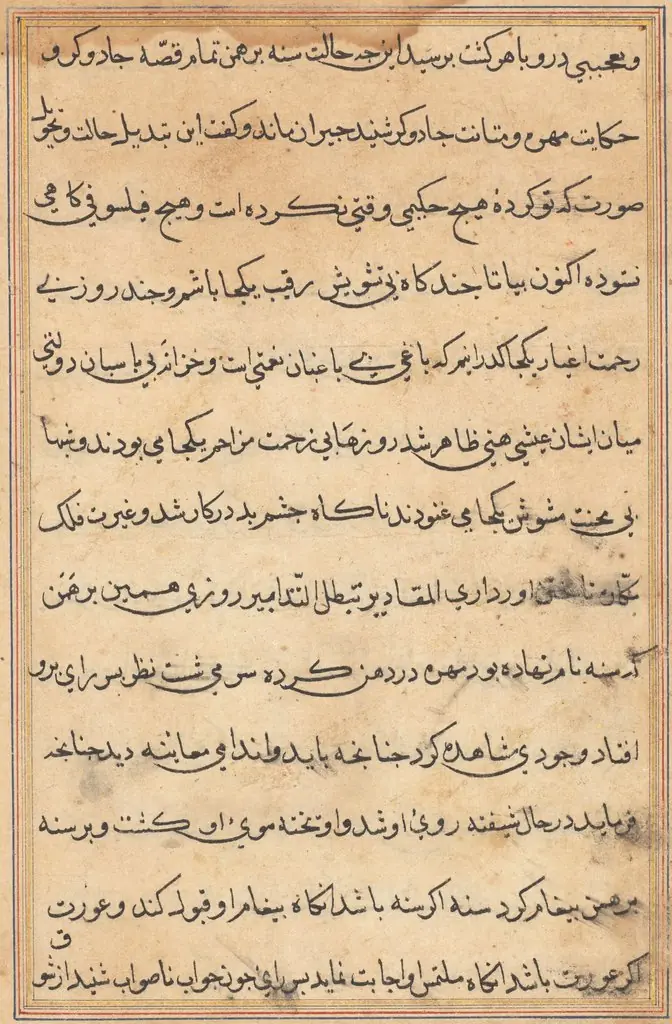 Page from Tales of a Parrot (Tuti-nama): text page
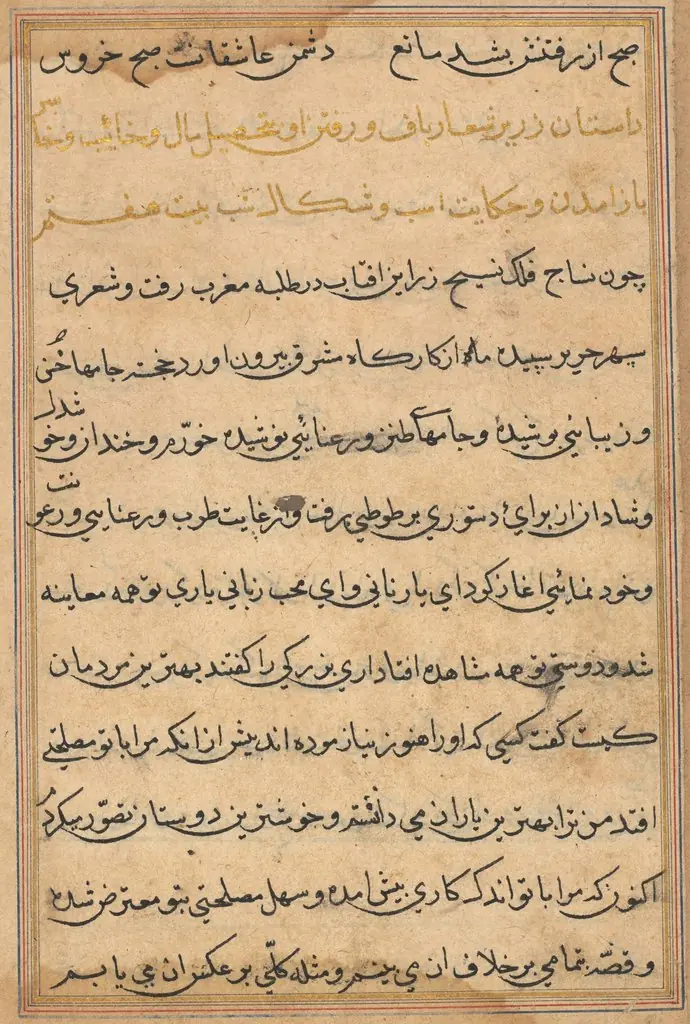 Page from Tales of a Parrot (Tuti-nama): text page
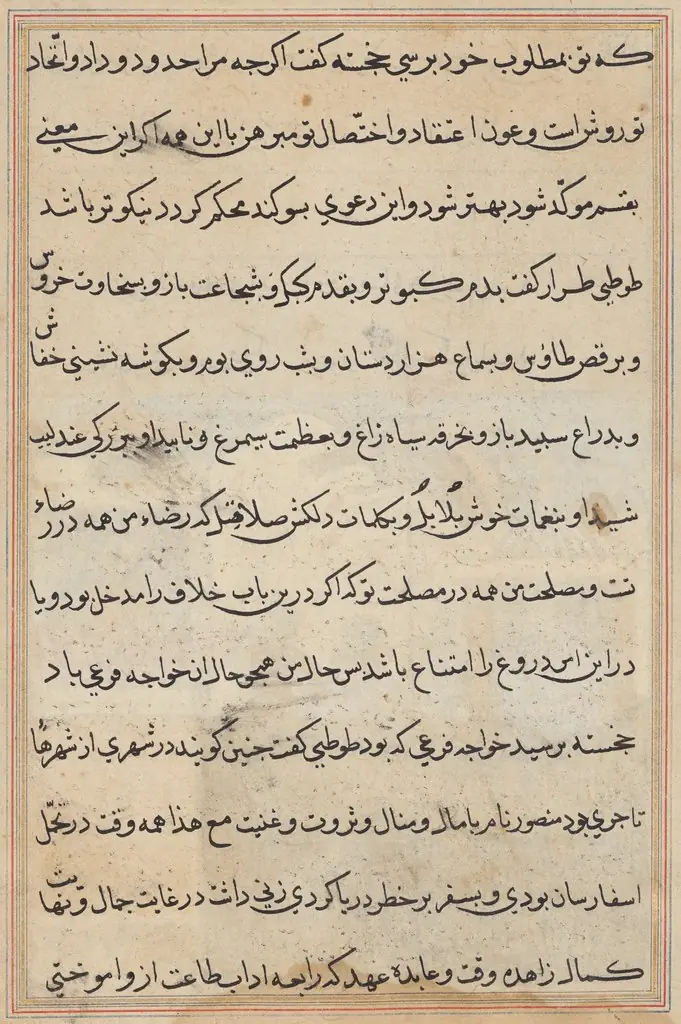 Page from Tales of a Parrot (Tuti-nama): text page
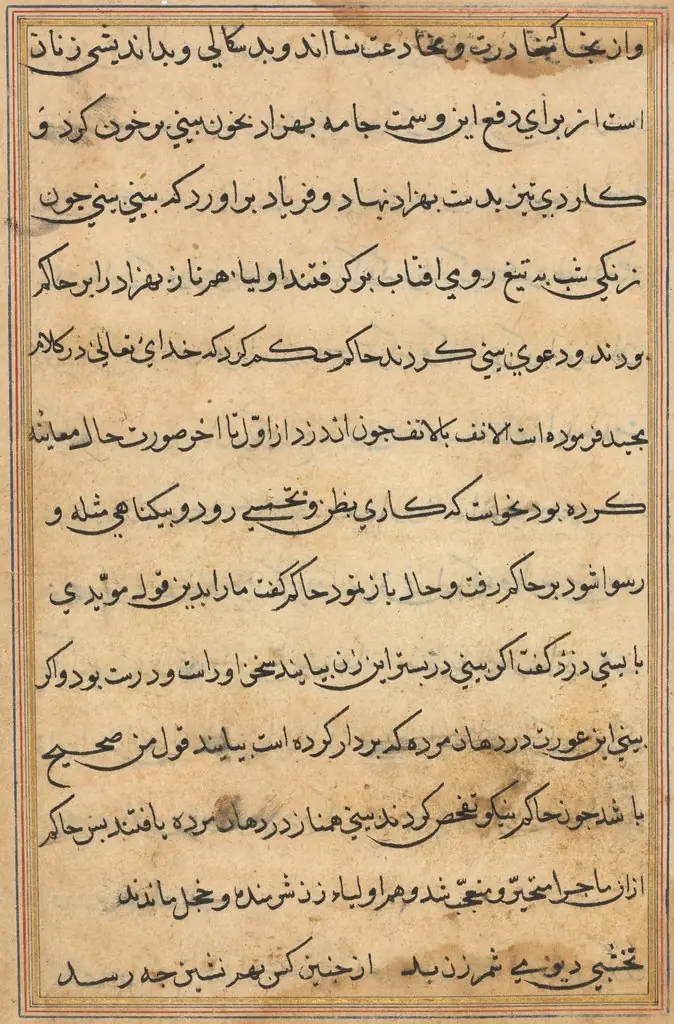 Page from Tales of a Parrot (Tuti-nama): text page
 Page from Tales of a Parrot (Tuti-nama): text page
 Page from Tales of a Parrot (Tuti-nama): text page
 Page from Tales of a Parrot (Tuti-nama): text page
 Page from Tales of a Parrot (Tuti-nama): text page
 Page from Tales of a Parrot (Tuti-nama): text page