Artwork
Page from Tales of a Parrot (Tuti-nama): text page
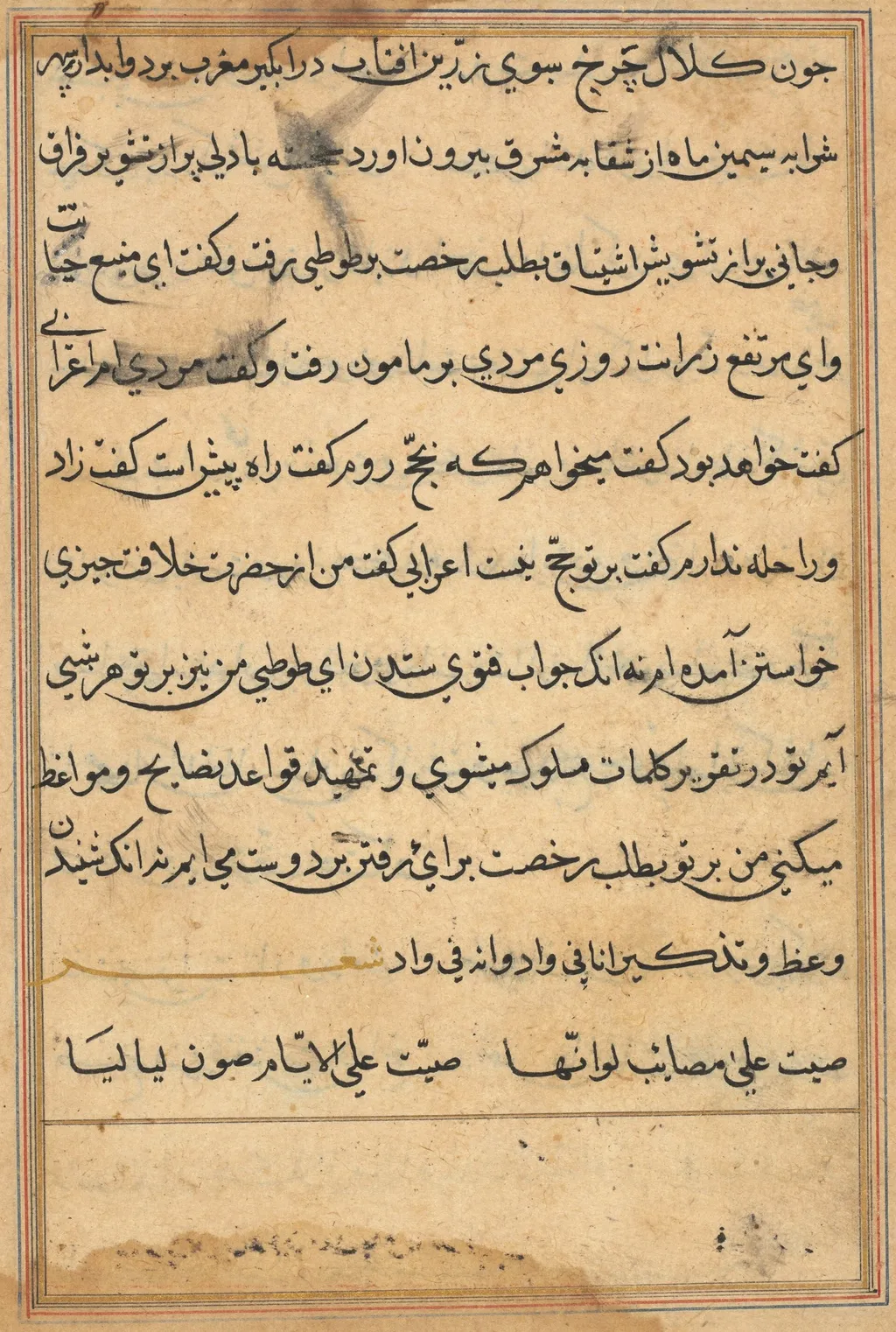
Page from Tales of a Parrot (Tuti-nama): text page is an unspecified painting. It dates from 1560 and is held in the collection of the Cleveland Museum of Art. This object is a single leaf from the illustrated manuscript *Tales of a Parrot* (Tuti‑nama).
About this work
Overview
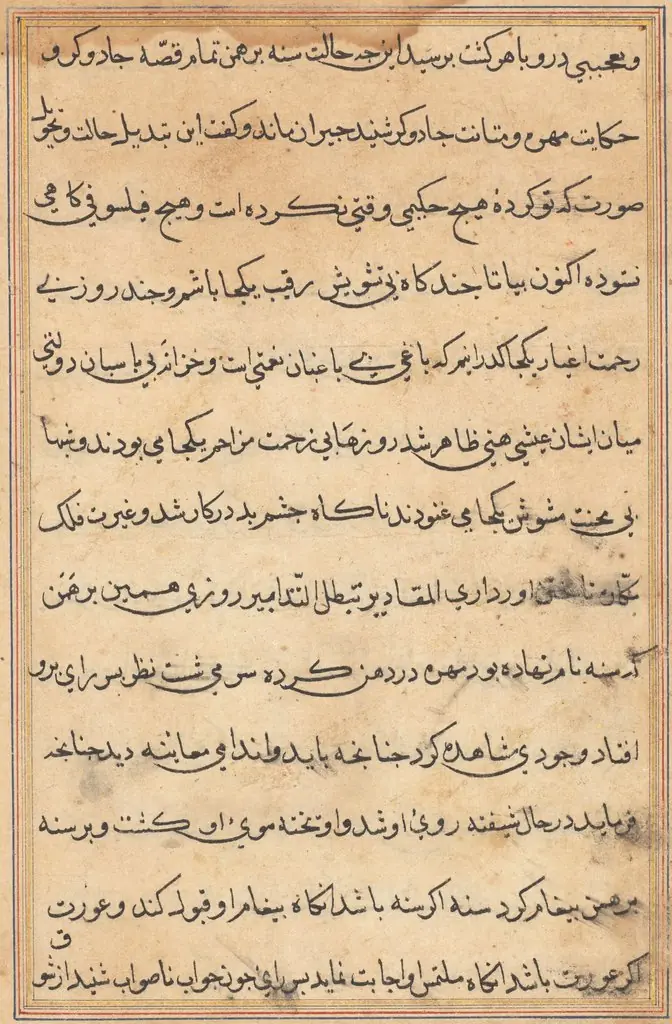
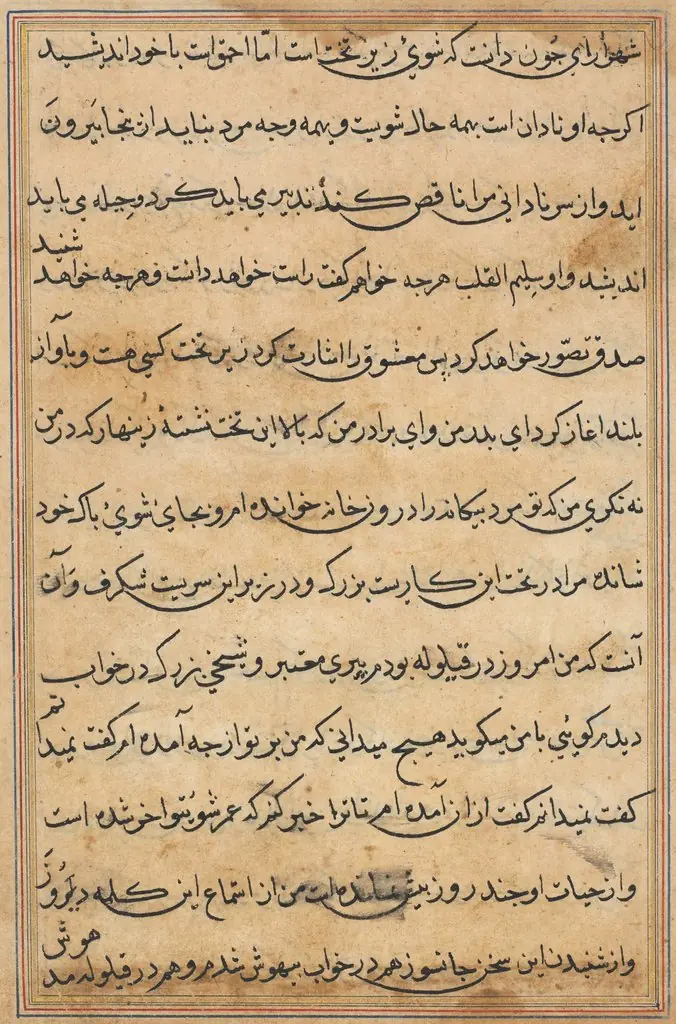
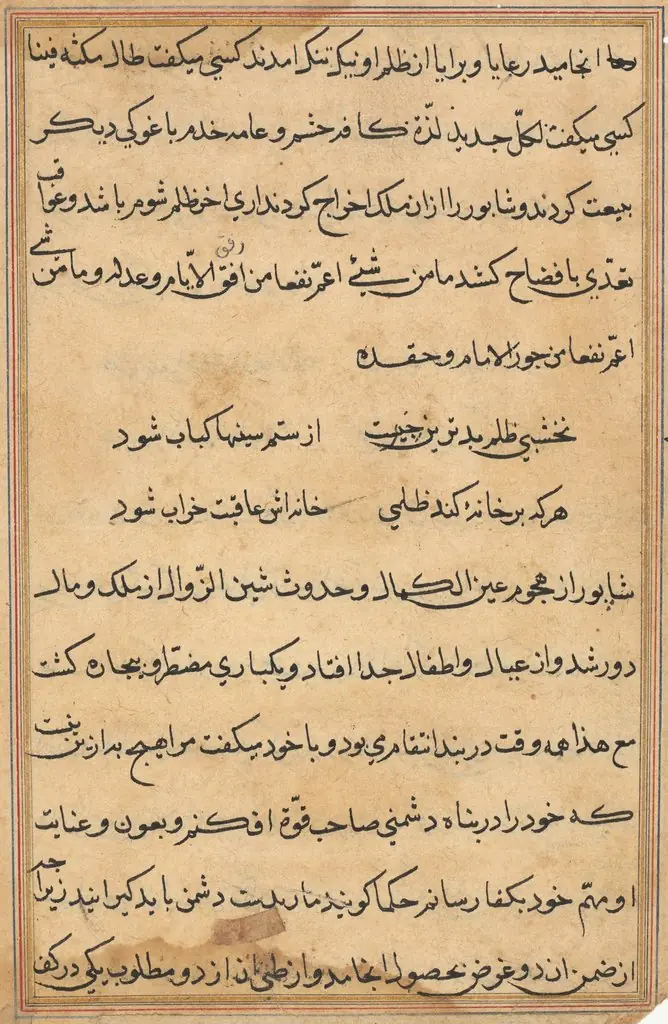
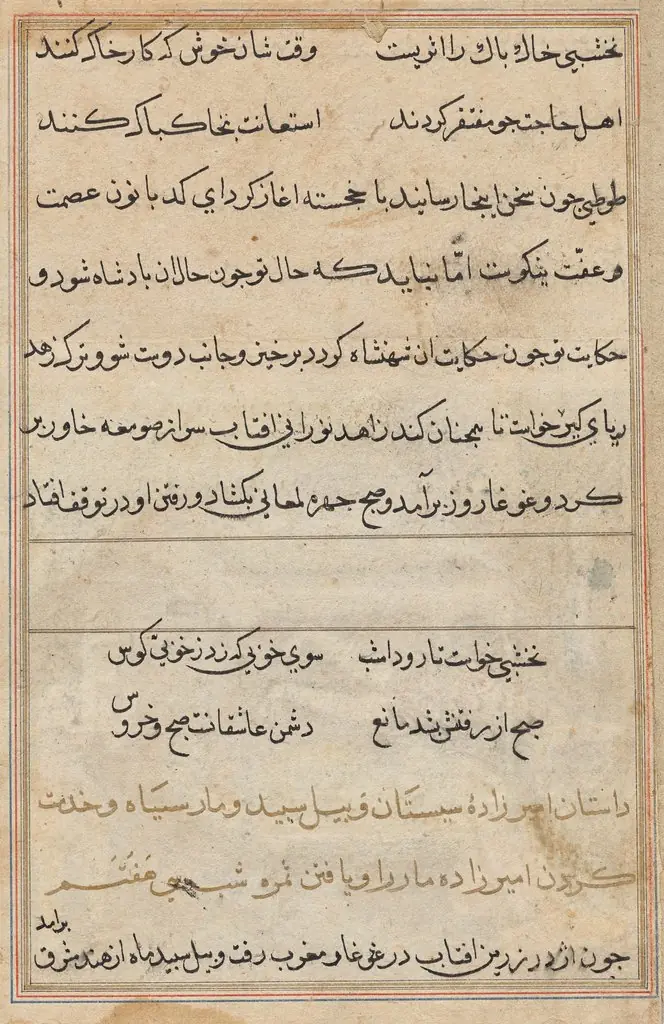
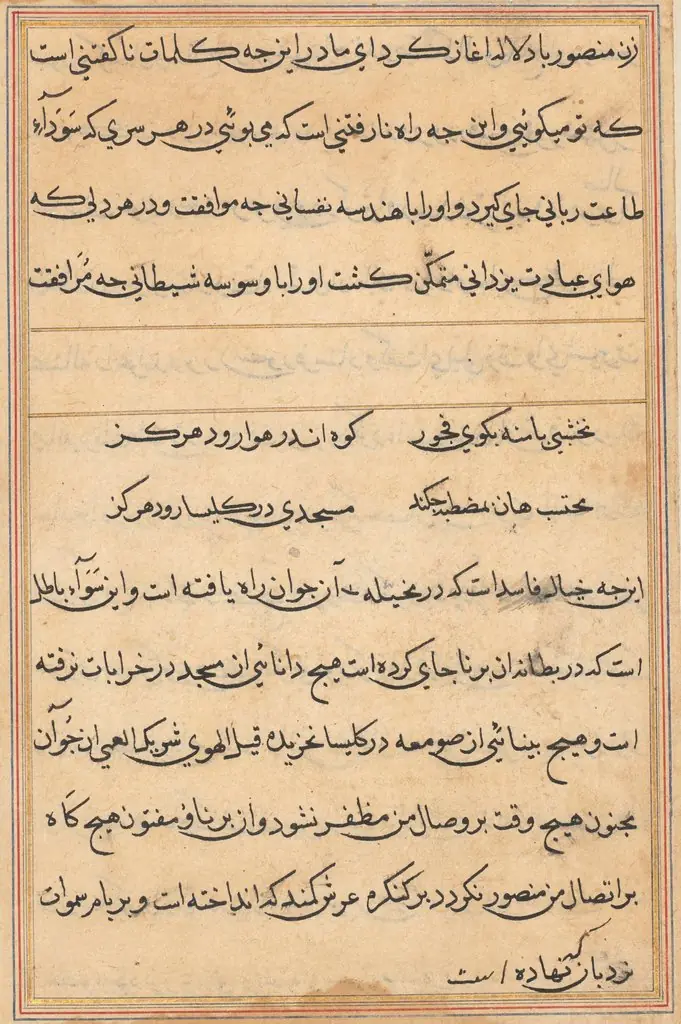
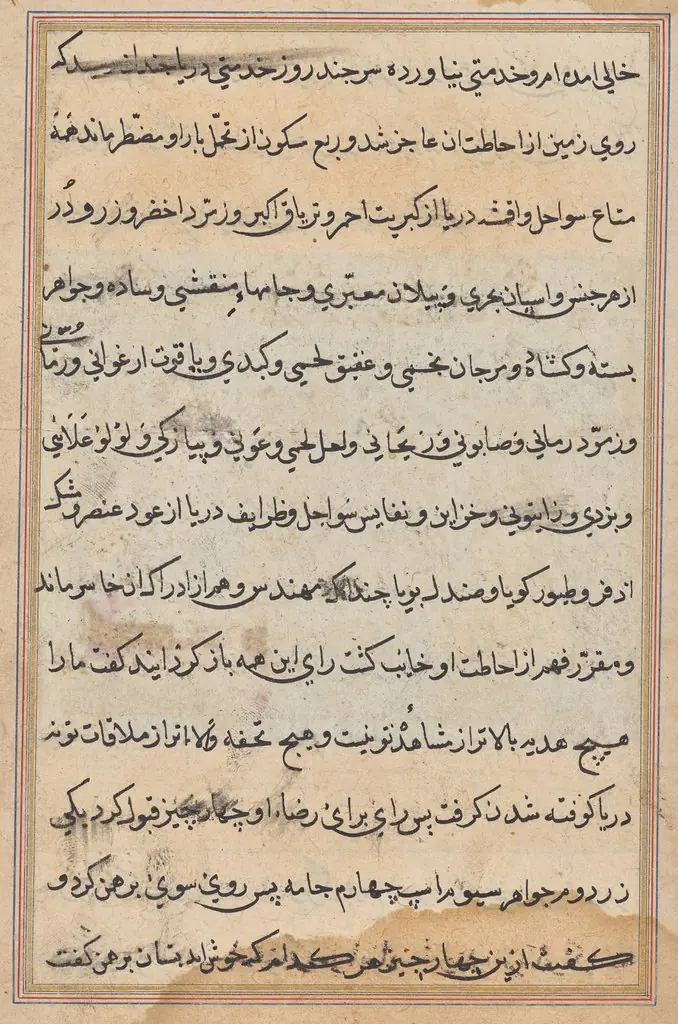
This object is a single leaf from the illustrated manuscript *Tales of a Parrot* (Tuti‑nama). Executed on light‑brown paper, the page is filled with black ink calligraphy arranged in orderly, flowing lines. A narrow red border outlines the sheet, and some areas show signs of fading or smudging, indicating age and handling.
Subject & Meaning
The manuscript recounts a collection of moral and romantic stories narrated by a parrot, a popular literary genre in Mughal court culture. This particular leaf contains a segment of the narrative intended for the entertainment and instruction of Prince Salim, the heir to the Mughal throne.
Technique & Style
The calligraphic text is rendered in a fine black ink using a reed pen, characteristic of Persian‑influenced scripts of the period. The uniform, curvilinear strokes reflect a disciplined hand, while the thin red line framing the page serves both decorative and protective functions, a common feature in high‑status books.
History & Provenance
Commissioned for Prince Salim in the early 17th century, the manuscript remained within the Mughal court before eventually entering private collections. The page now resides in the Cleveland Museum of Art, where it is displayed alongside other surviving leaves from the same codex.
Context
During the Mughal era, illustrated books combined literary content with lavish visual presentation to convey royal authority and cultural refinement. *Tales of a Parrot* exemplifies this tradition, merging Persian storytelling with Indian artistic conventions for a princely audience.
Artist & collection

 Page from Tales of a Parrot (Tuti-nama): text page
 Page from Tales of a Parrot (Tuti-nama): text page
 Page from Tales of a Parrot (Tuti-nama): text page
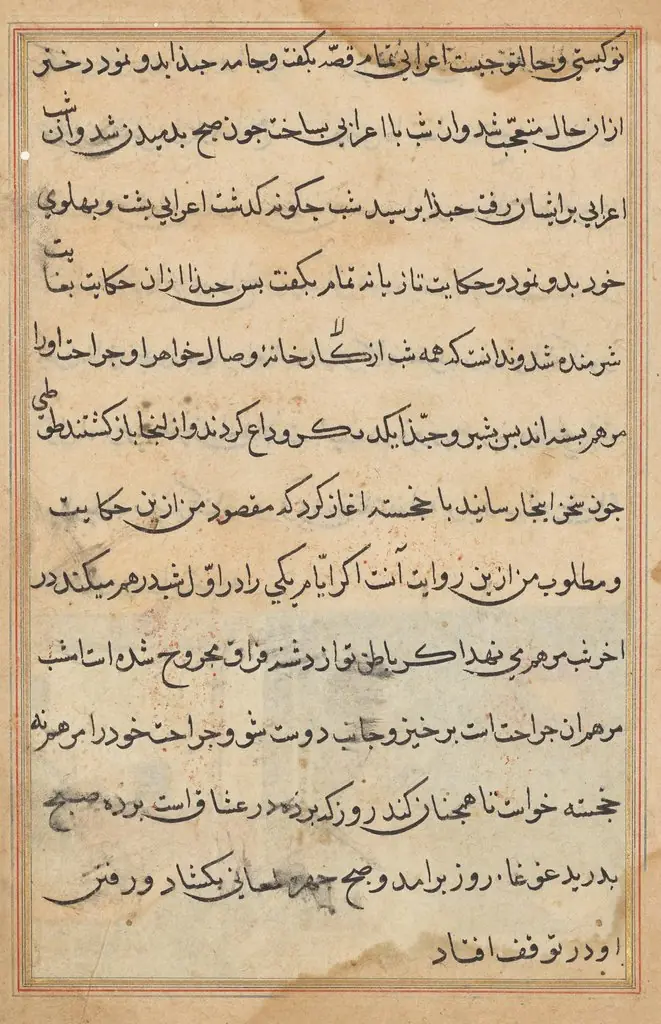 Page from Tales of a Parrot (Tuti-nama): text page
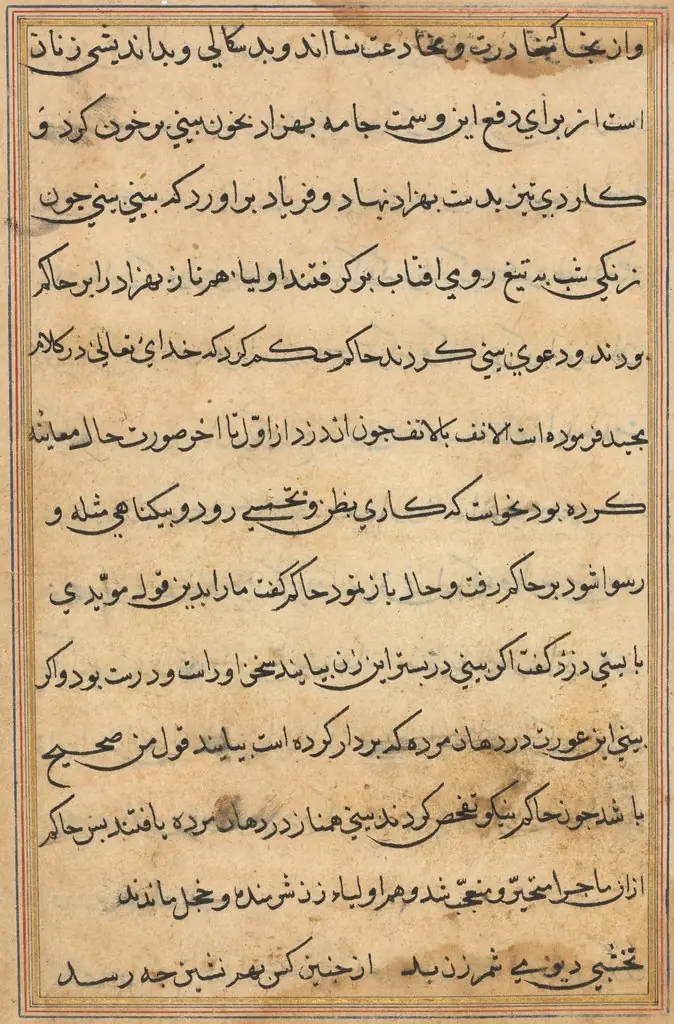 Page from Tales of a Parrot (Tuti-nama): text page
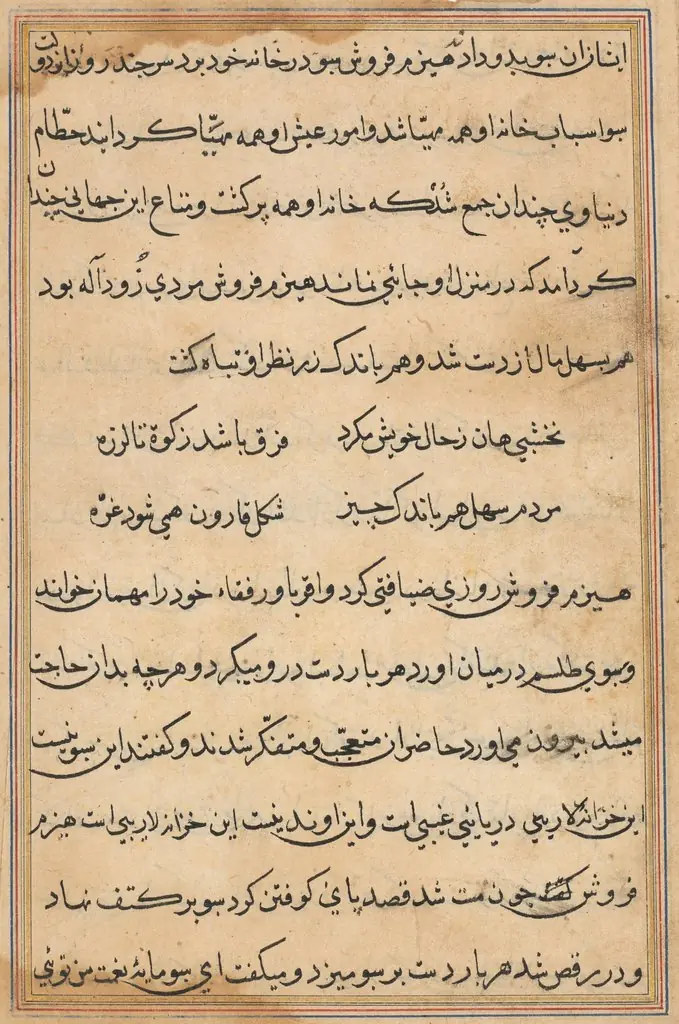 Page from Tales of a Parrot (Tuti-nama): text page
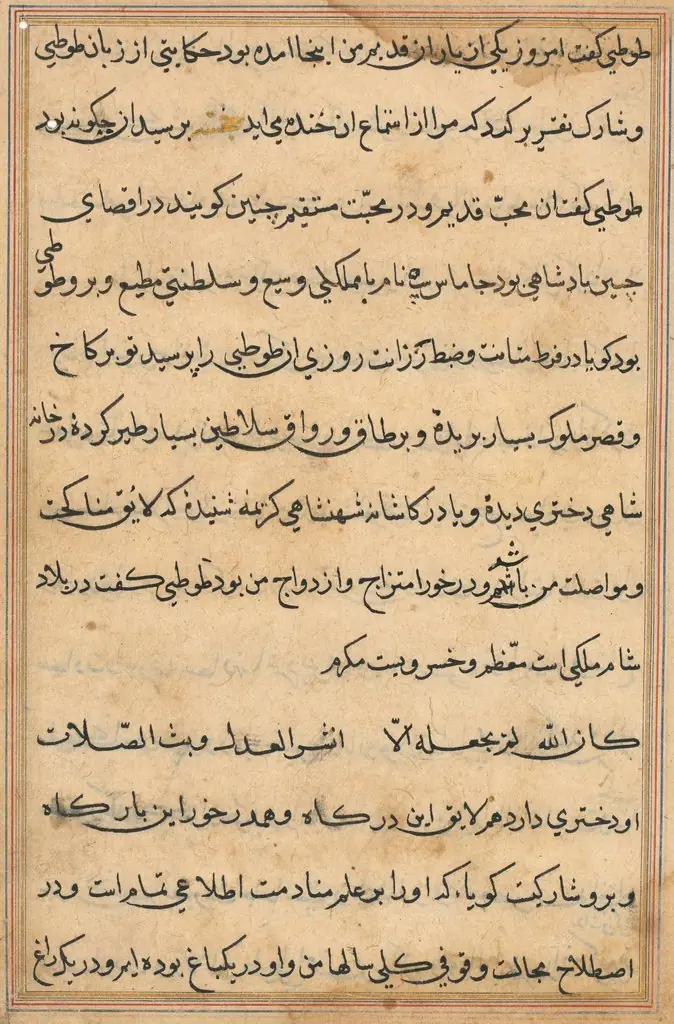 Page from Tales of a Parrot (Tuti-nama): text page
 Page from Tales of a Parrot (Tuti-nama): text page
 Page from Tales of a Parrot (Tuti-nama): text page
 Page from Tales of a Parrot (Tuti-nama): text page