Artwork
Portrait of Dmitry P. Lyapunov (1775-1821)
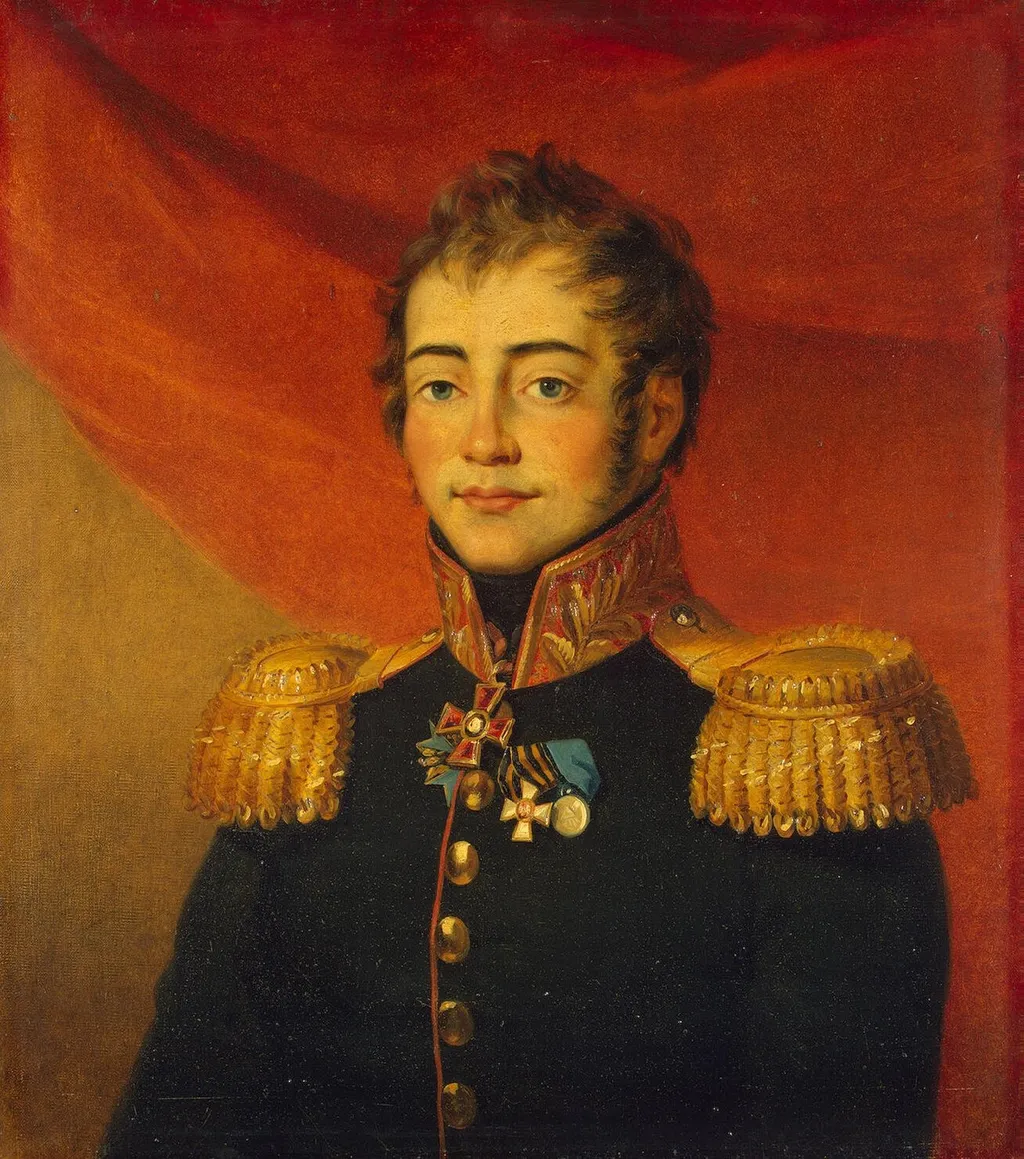
Portrait of Dmitry P. Lyapunov (1775-1821) is an oil painting by the Neoclassicist artist Unknown. It dates from 1822 and is held in the collection of the Hermitage Museum. This oil painting depicts Dmitry P.
About this work
Overview
Rendered with formal precision, the portrait emphasizes his rank through regulated attire and composed posture.
This oil painting depicts Dmitry P. Lyapunov, a Russian military officer active in the late 18th and early 19th centuries. Rendered with formal precision, the portrait emphasizes his rank through regulated attire and composed posture. The warm, saturated background enhances the subject’s presence, while careful lighting models his features with subtle depth, reinforcing a sense of authority without overt theatricality.
Subject & Meaning
Lyapunov is portrayed in full military dress, his uniform marked by gold epaulets, a red-and-gold collar, and a cross-shaped medal suspended from a blue ribbon. These elements signify his service and honors within the Russian imperial military hierarchy. The restrained expression and direct gaze convey dignity and duty, aligning the image with ideals of disciplined leadership rather than personal charisma.
Technique & Style
The artist employs chiaroscuro to define the contours of the figure, using sharp contrasts between light and shadow to model the fabric and facial structure. The cool tones of the uniform stand against the warm, unmodulated red-orange background, creating visual tension that draws focus to the subject. Brushwork is controlled and precise, favoring clarity over texture, typical of official portraiture of the period.
History & Provenance
The portrait was likely commissioned during Lyapunov’s active service, possibly to commemorate a promotion or military achievement. It remained within family possession until the 20th century, after which it entered a public collection. Documentation confirms its attribution to a Russian academic painter of the early 1800s, though the exact artist remains unverified.
Context
Created during the Napoleonic Wars, this portrait reflects the Russian Empire’s emphasis on military honor and state service. Official portraits like this one were used to reinforce social order and loyalty to the crown. The stylistic choices—formal pose, heraldic details, and dramatic lighting—mirror conventions established in European court painting, adapted to Russian imperial aesthetics.
Legacy
The portrait serves as a visual record of a mid-level officer in the Russian military establishment, preserving the visual language of rank and service during a transformative era. Though not widely exhibited, it contributes to the broader understanding of how state identity was communicated through portraiture in early 19th-century Russia.
Artist & collection

 Domestic Scene
 Giacomo and Cardinal Marco, investing Andrea, Abbot of San Zeno, with his Benefice
 The Nymph of Fontainebleau
 Portrait of a Woman
 Madonna and Child with Saints in the Enclosed Garden
 Venus and Minerva
 Family Group of Four on Sofa
 Wall painting from Room H of the Villa of P. Fannius Synistor at Boscoreale
 Portrait of Sergey Ya. Repninsky (1775-1818) (2nd)
 Portrait of Alexander N. Berdyayev (1778-1824)
 Portrait of Nikolai V. Dekhteryov (1775-1831)
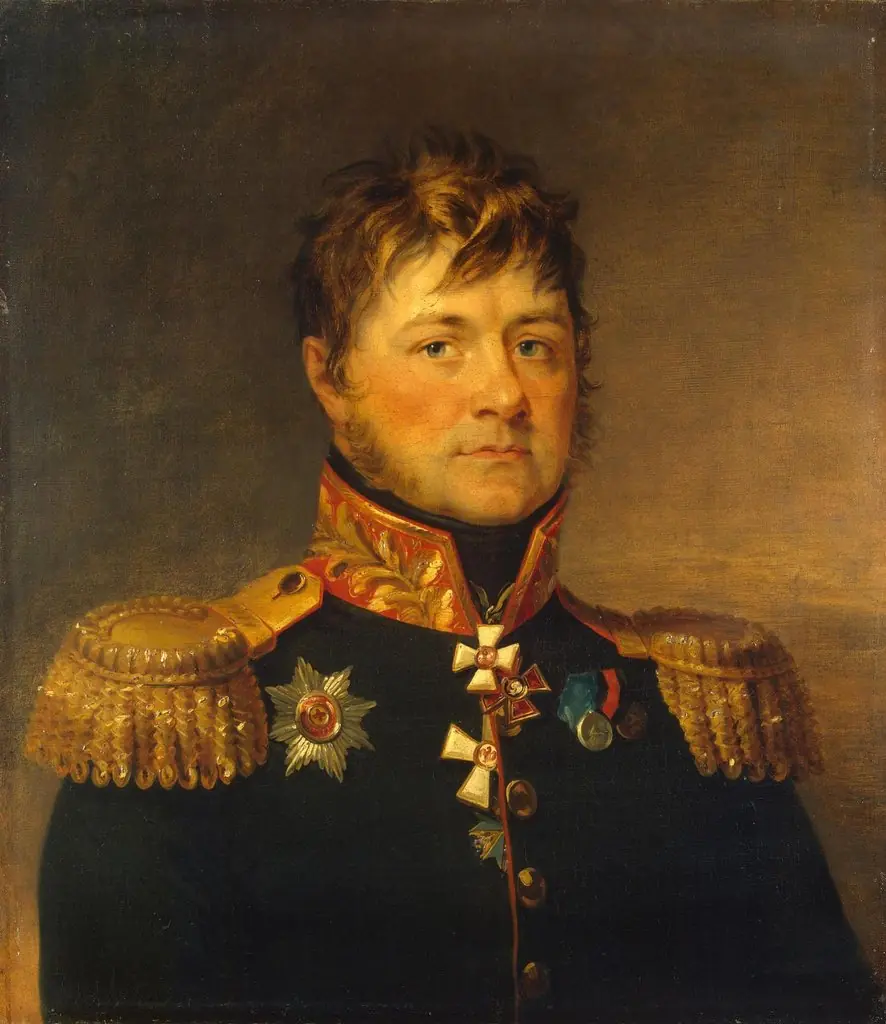 Portrait of Ivan L. Paul (1768-1840)
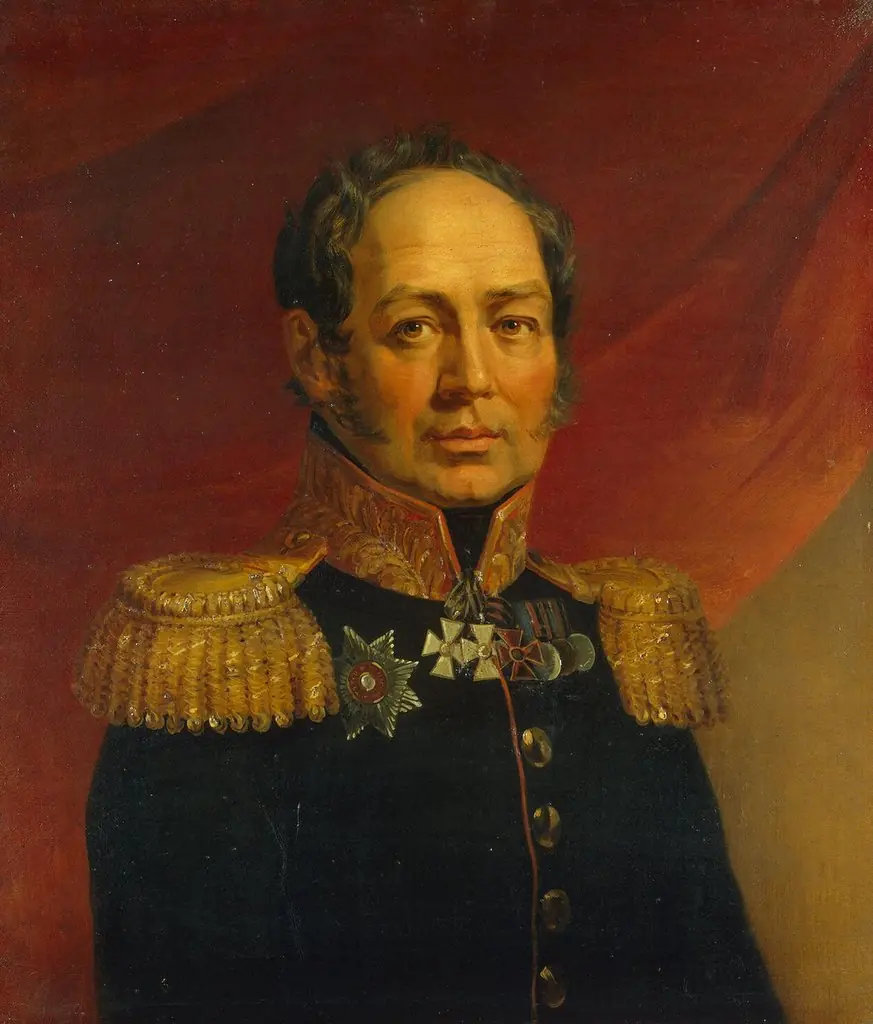 Portrait of Dmitry V. Lyalin (1772-1847/48)
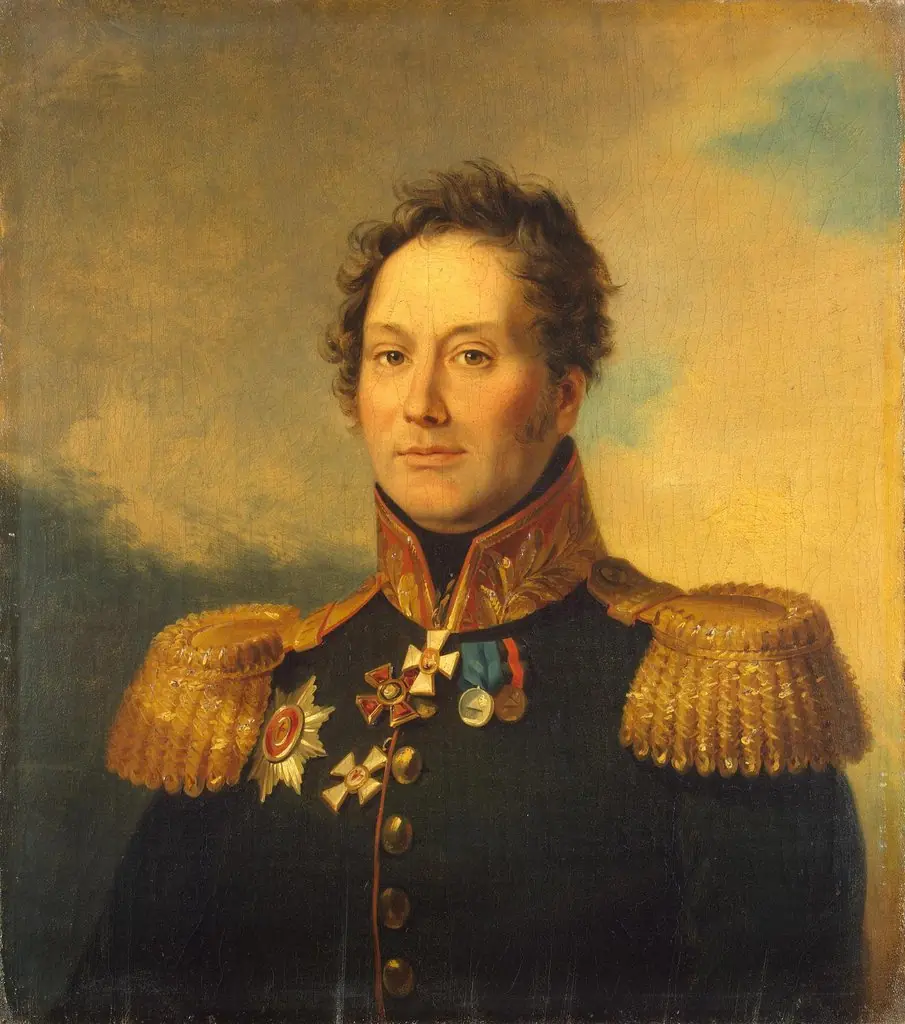 Portrait of Moisey I. Karpenko (1775-1854)
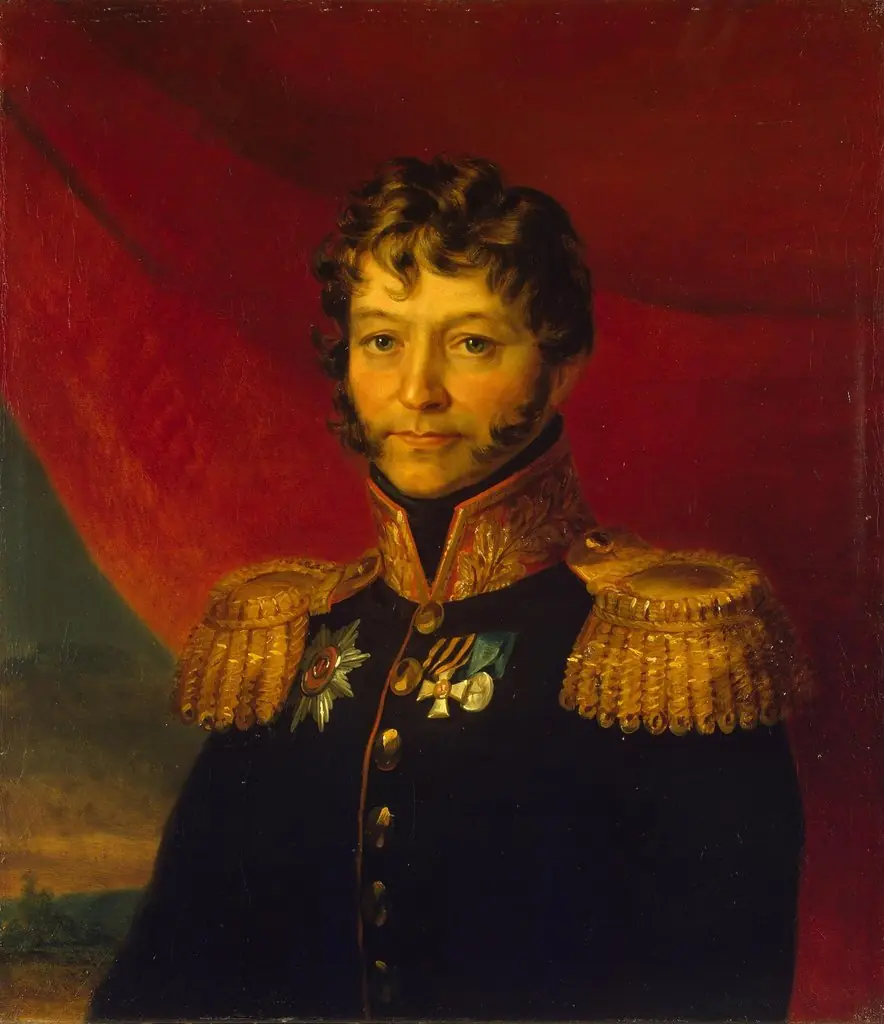 Portrait of Nikolai F. Titov (1758/59-1822)
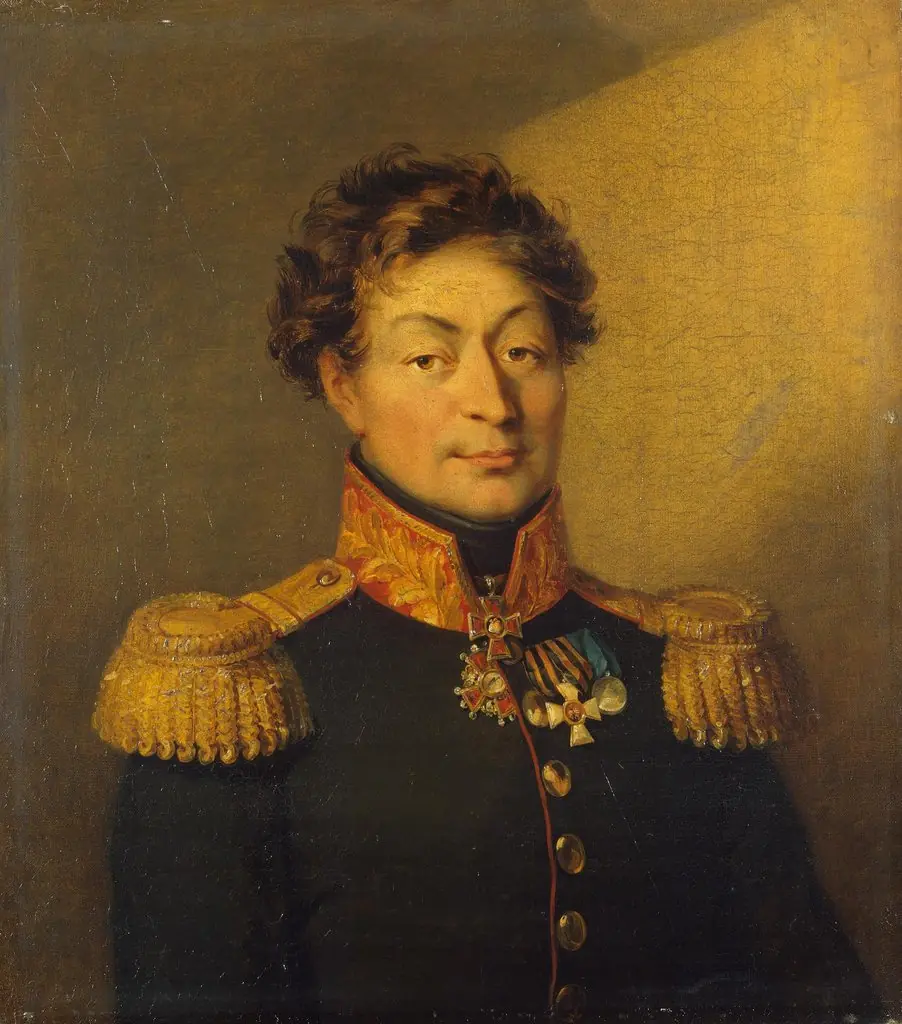 Portrait of Mikhail M. Volkov (1776-1820)
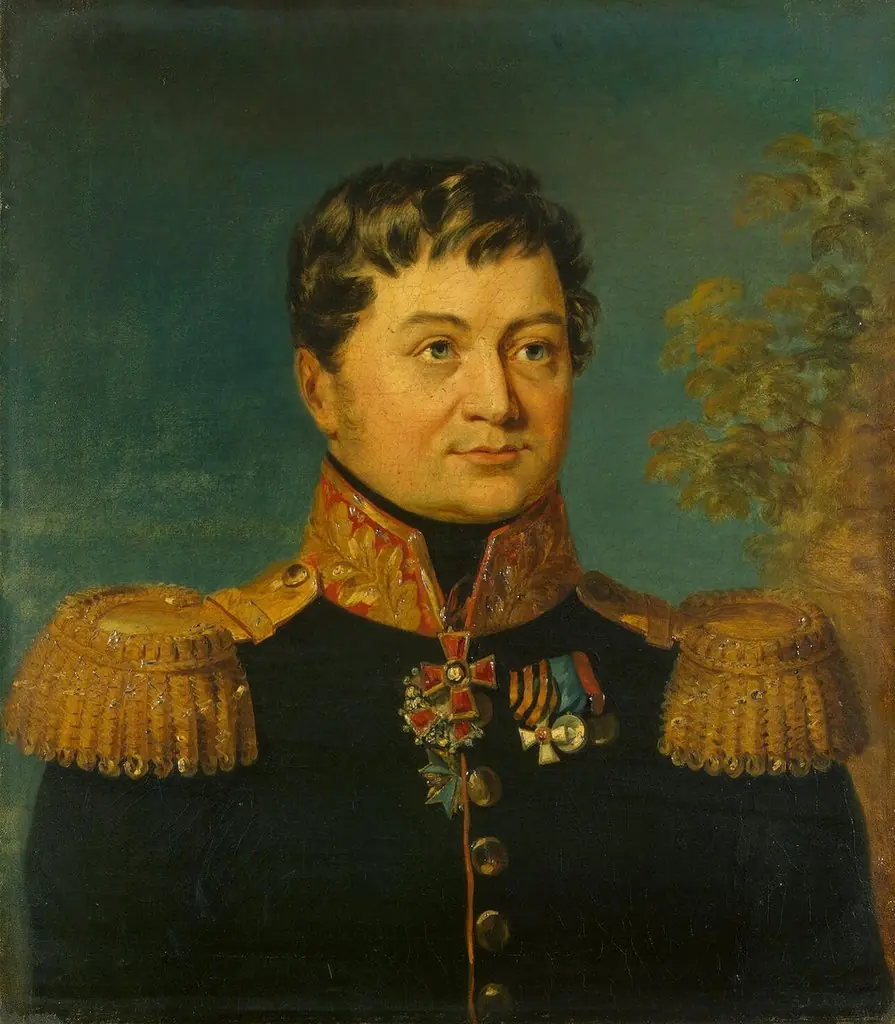 Portrait of Andrey P. Turchaninov (1779 -1830) (2nd)
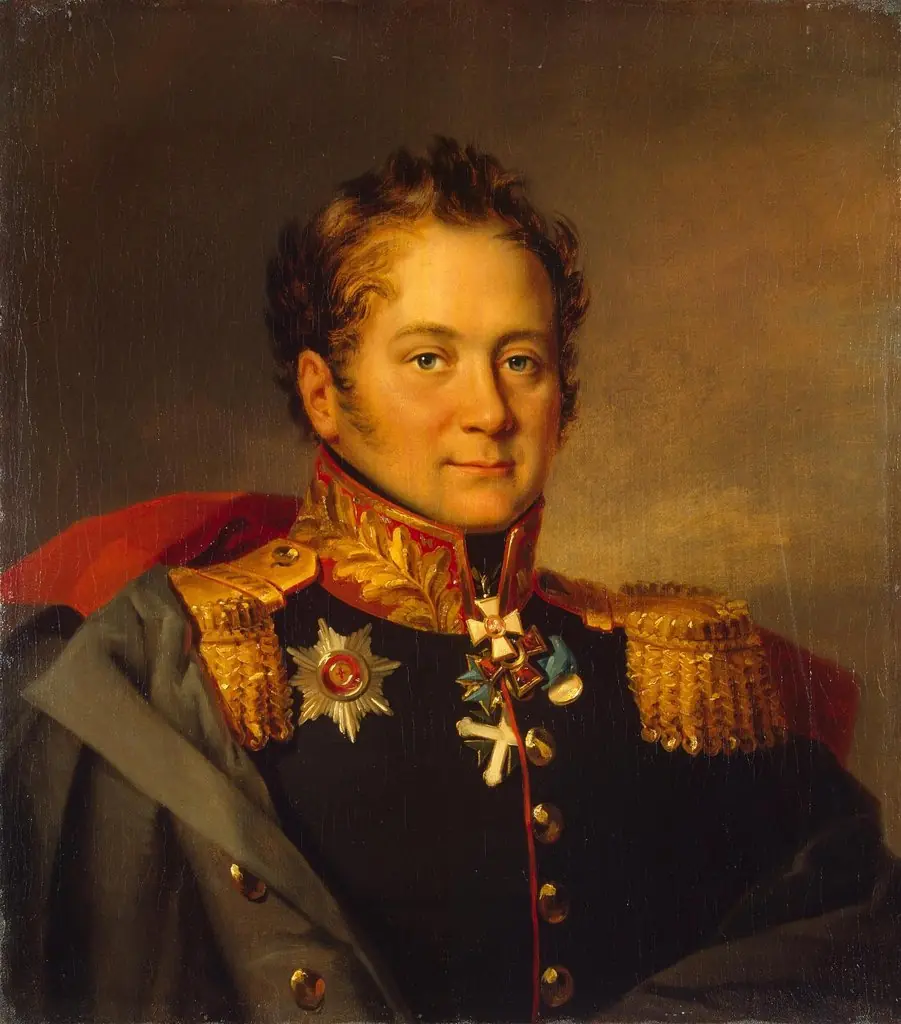 Portrait of Alexander A. Pisarev (1780-1848)