Artwork
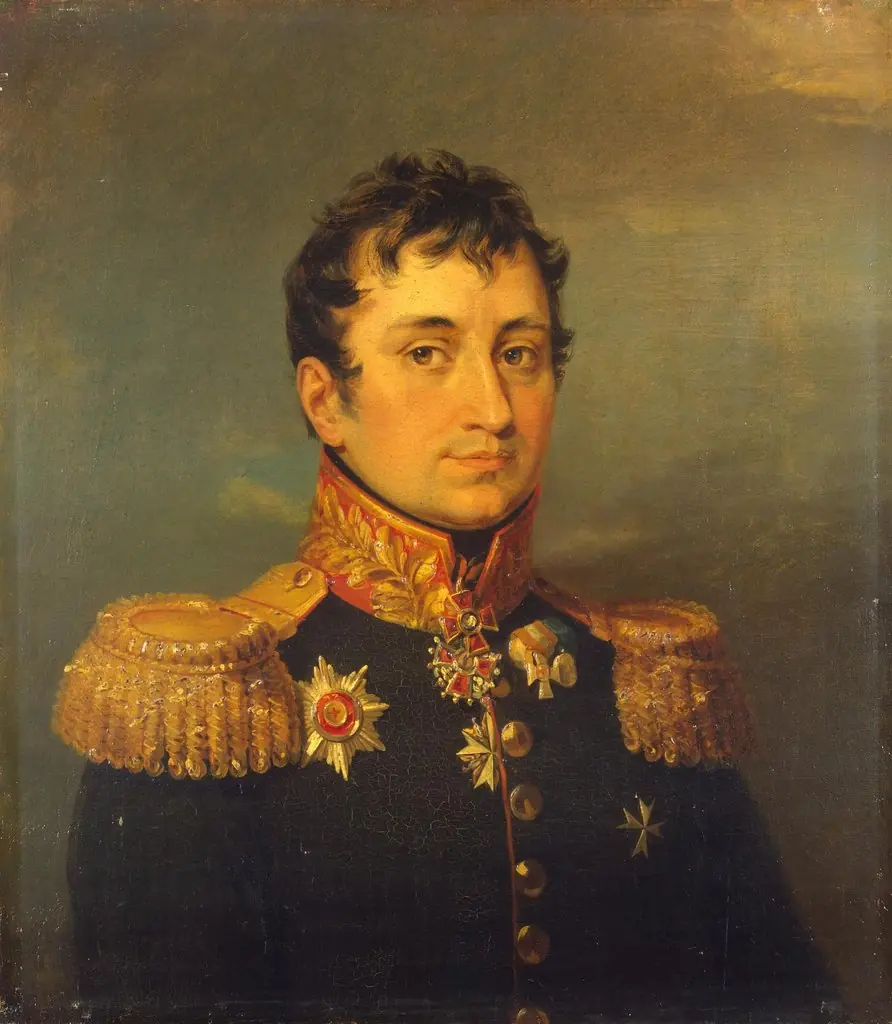
Portrait of Prince Tenishev
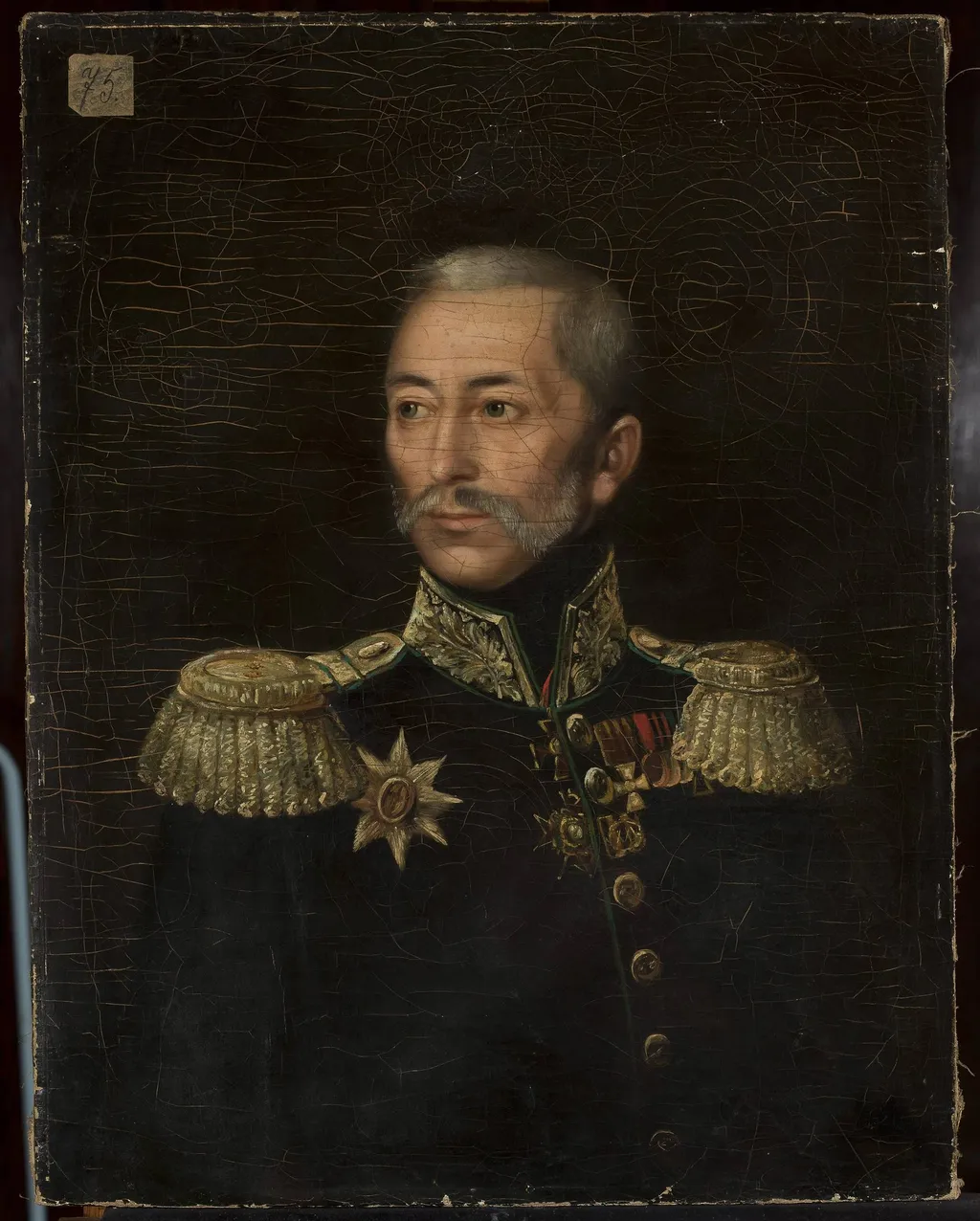
Portrait of Prince Tenishev is an oil painting by the Realist artist Unknown. It dates from 1858 and is held in the collection of the National Museum in Warsaw.
About this work
Overview
This oil painting depicts Prince Tenishev in full military regalia, rendered with a restrained composition that emphasizes his uniform and insignia.
This oil painting depicts Prince Tenishev in full military regalia, rendered with a restrained composition that emphasizes his uniform and insignia. Set against a flat black background, the figure is isolated to draw attention to his attire and facial expression. The work employs clear tonal contrasts and minimal detail beyond the essential elements of rank, reflecting a deliberate focus on authority and presence rather than environmental context.
Subject & Meaning
The subject is Prince Tenishev, a Russian nobleman and military figure, portrayed in the formal dress of a high-ranking officer. His chest is adorned with multiple orders and stars, indicating distinguished service and state recognition. His stern gaze and upright posture convey solemnity and gravitas, aligning with the expectations of military leadership in late imperial Russia. The absence of symbolic objects or landscape reinforces his identity as defined by rank and honor.
Technique & Style
The artist uses chiaroscuro to model the uniform’s metallic embellishments and the contours of the face, creating a sense of volume against the dark background. Brushwork is precise but not overly detailed, favoring clarity over ornamentation. Light falls sharply on the gold trim and medals, making them gleam against the muted tones of the uniform, while the face remains in controlled shadow, enhancing its introspective quality.
History & Provenance
Commissioned during the late 19th or early 20th century, the portrait likely originated as an official representation of Prince Tenishev’s public role. It remained within family or state collections until entering a museum’s holdings, where its provenance is documented through archival records. No significant alterations or repainting are recorded, preserving its original intent and condition.
Context
In the context of imperial Russia, formal military portraiture served as both personal commemoration and political statement. Officers of noble birth like Tenishev were expected to embody discipline and loyalty, and their images reinforced state ideology. This portrait aligns with a broader tradition of aristocratic military representation, where attire and insignia functioned as visual codes of power and duty.
Legacy
The portrait endures as a straightforward example of late imperial Russian portraiture, valued for its clarity and adherence to conventional symbols of rank. It contributes to the historical record of military elites during a period of transition, offering insight into how authority was visually constructed. Its restrained aesthetic distinguishes it from more flamboyant contemporary works, reflecting a preference for dignity over spectacle.
Artist & collection

 Domestic Scene
 Giacomo and Cardinal Marco, investing Andrea, Abbot of San Zeno, with his Benefice
 The Nymph of Fontainebleau
 Portrait of a Woman
 Madonna and Child with Saints in the Enclosed Garden
 Venus and Minerva
 Family Group of Four on Sofa
 Wall painting from Room H of the Villa of P. Fannius Synistor at Boscoreale
 Portrait of Geronimo Savoini (1766–1836)
 Alexandru Dimitrie Ghica
 Portrait of Ivan Ye. Shevich (1754-1813)
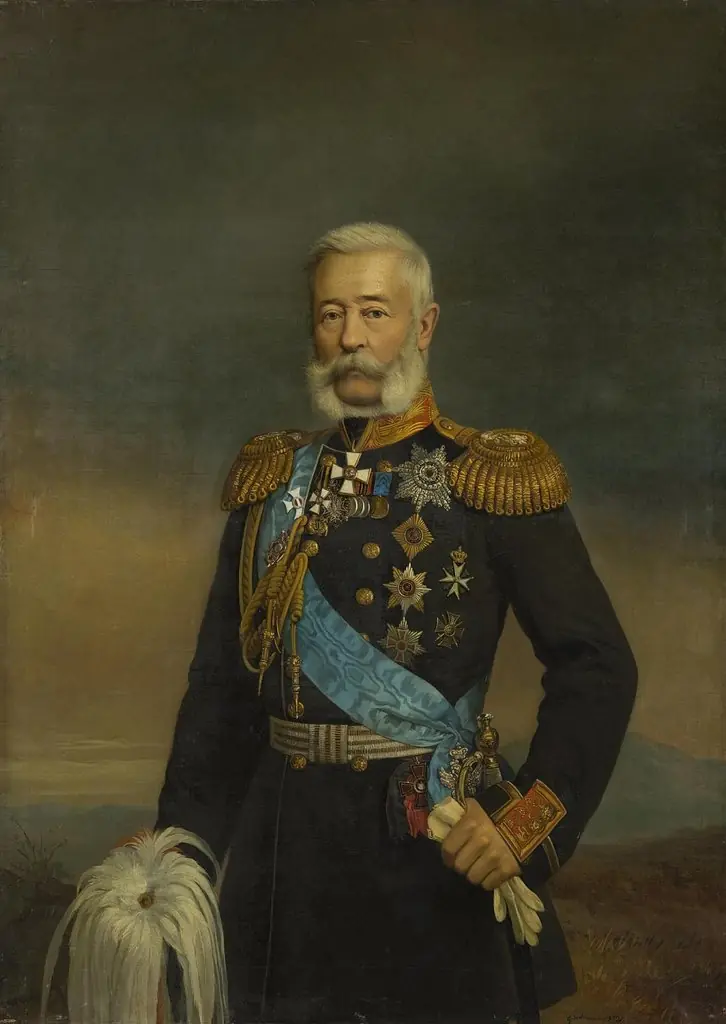 Portrait of Adjutant-General Alexander Liders
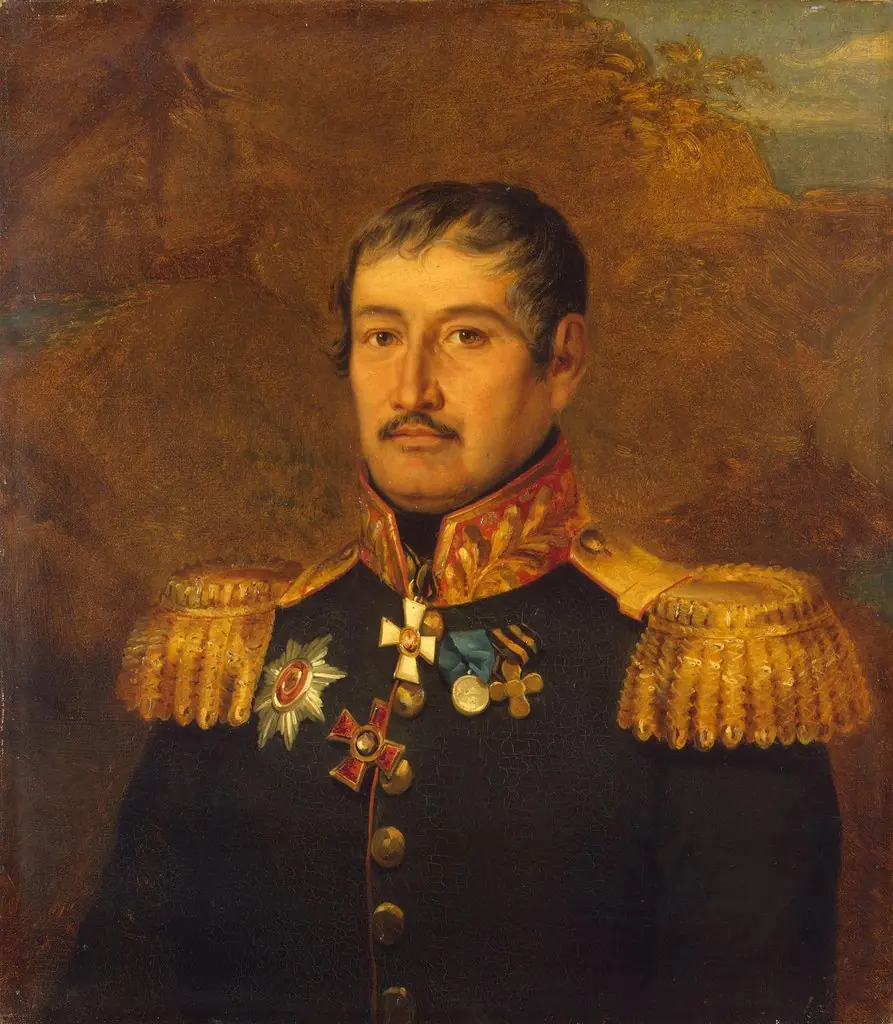 Portrait of Gerasim A. Shostakov (1756-1837)
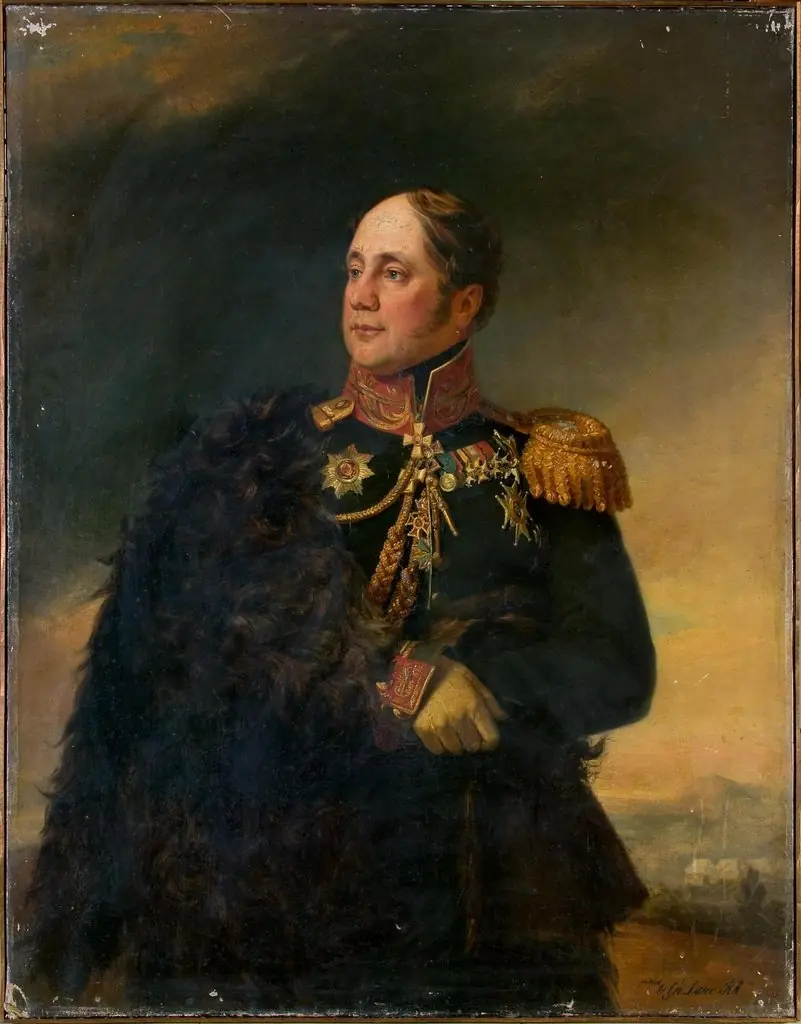 Portrait of Nikolai Sipyagin (1785-1828)
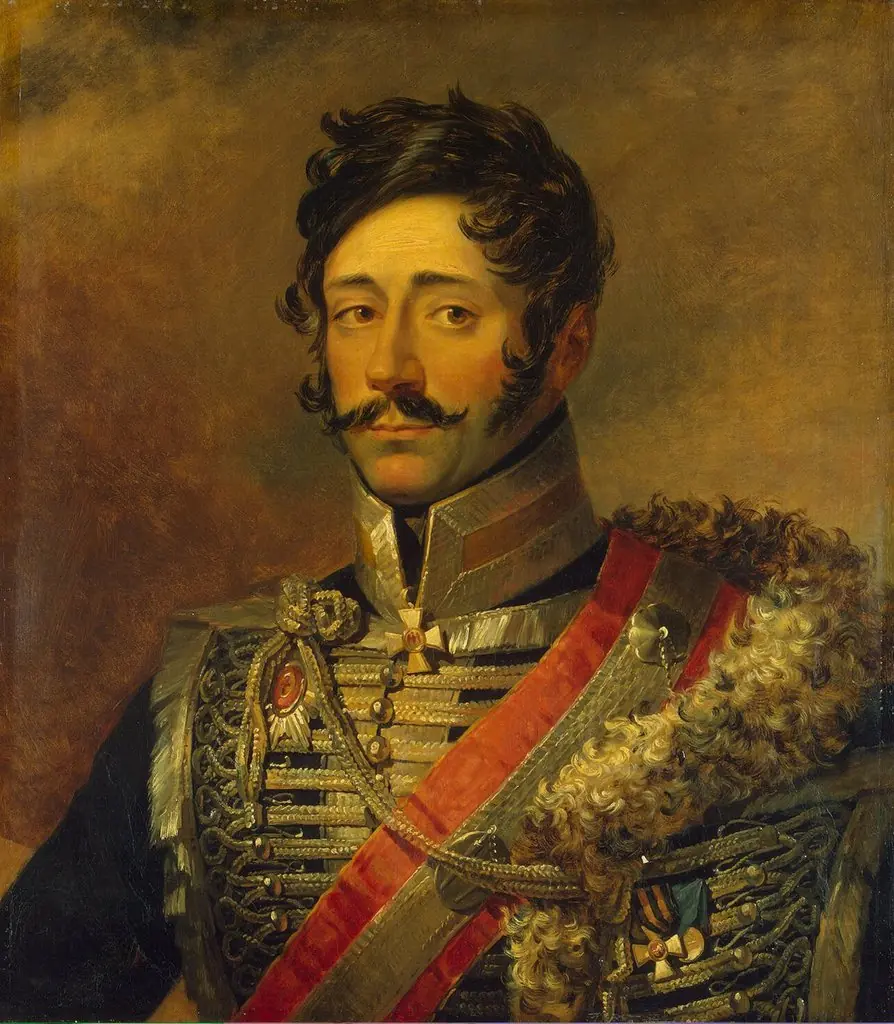 Portrait of Alexey P. Melissino (1759-1813)
 Portrait of a General
 Προσωπογραφία του Αθανασίου Μιαούλη
 Portrait of Yevstafy Ye. Udom (1760-1836) (2nd)
 Portrait of A.F. Klokachev
 Portrait of Pavel A. Filisov (1769-1821)