Artwork
Magdalena River, New Granada, Equador
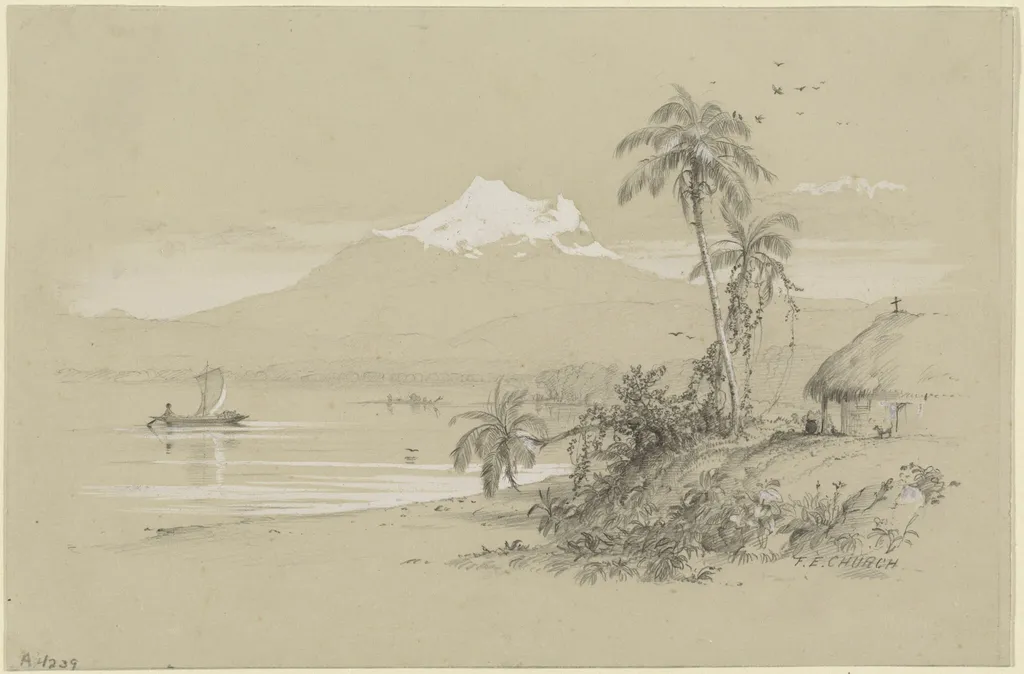
Magdalena River, New Granada, Equador is a graphite drawing by the Impressionist artist Frederic Edwin Church. It dates from 1853 and is held in the collection of the National Gallery of Art.
About this work
Overview
It is not a finished painting but a careful observational sketch, intended to record light, topography, and atmosphere for later studio use.
Created in 1853, this graphite drawing by Frederic Edwin Church captures a stretch of the Magdalena River in what was then New Granada. Executed on wove paper and enhanced with white pigment, the work reflects Church’s early field studies during his travels in South America. It is not a finished painting but a careful observational sketch, intended to record light, topography, and atmosphere for later studio use.
Subject & Meaning
The scene presents a quiet riverbank with a modest dwelling on the right and a solitary boat gliding along the water. Behind, a distant mountain rises, its summit lost in atmospheric haze. The composition conveys stillness and scale, emphasizing nature’s quiet dominance over human presence. There is no overt narrative—only a contemplative record of place, aligned with 19th-century ideals of natural observation.
Technique & Style
Church employed graphite for its flexibility in rendering subtle tonal shifts, then lifted highlights with white pigment to suggest reflected light on water and mist. The wove paper’s smooth surface allowed for fine gradations, enabling a sense of depth without heavy modeling. The technique avoids dramatic contrast, favoring atmospheric nuance over bold chiaroscuro, reflecting a preference for observed truth over theatrical effect.
History & Provenance
Church made this drawing during his 1853 expedition to South America, organized by Alexander von Humboldt’s writings. The sketch was likely part of a larger series of studies later used to inform his major landscape paintings. It remained in Church’s possession until his death, eventually entering a public collection through his estate, preserving its direct link to his travel journals and artistic process.
Context
This work emerged during a period when American artists sought to document uncharted territories as part of a broader scientific and cultural curiosity. Church’s travels aligned with the expansion of geographic knowledge and the rise of landscape as a serious subject. His sketches, like this one, contributed to a growing visual archive of the Americas, distinct from European traditions of idealized scenery.
Legacy
Though not widely exhibited in Church’s lifetime, this drawing exemplifies his method of translating direct observation into monumental works. It influenced later generations of American landscape artists who valued fieldwork over studio invention. Today, it stands as a quiet testament to the role of sketching in shaping 19th-century American art’s engagement with nature and place.
Artist & collection

Artist
Frederic Edwin Church was an American landscape painter born in Hartford, Connecticut.

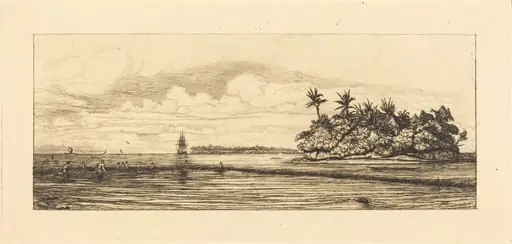 Océanie, ilots à Uvea (Wallis); Peche aux palmes, 1845 (Oceania: Fishing, Near Islands with Palms in the Uea or Wallis Group)
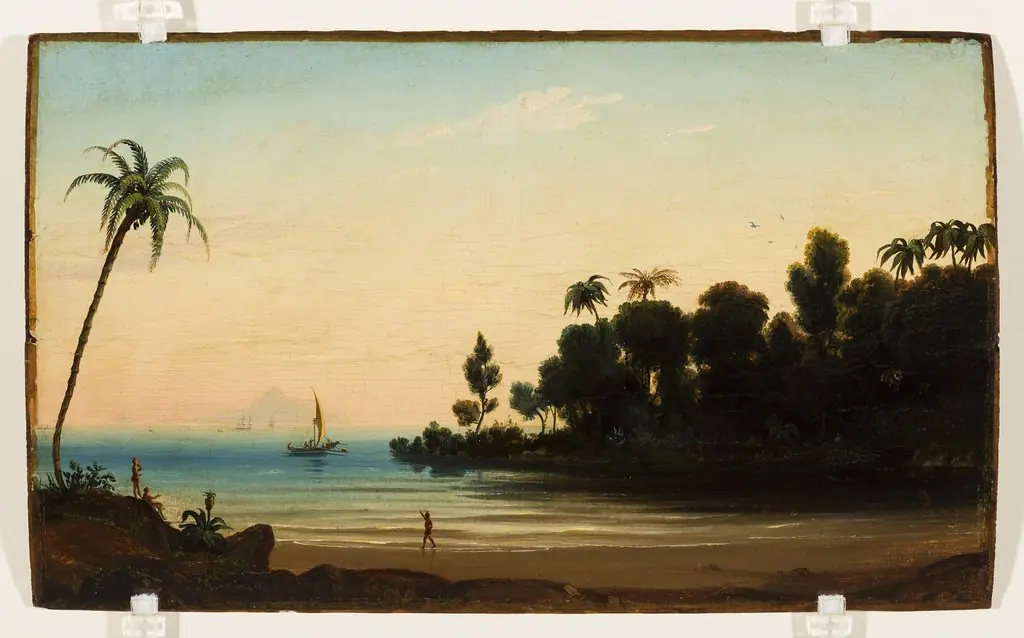 Praia com índios e veleiro (atribuído)
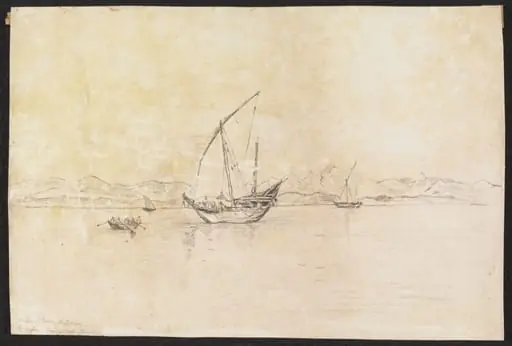 An Arab Dhow in the Red Sea
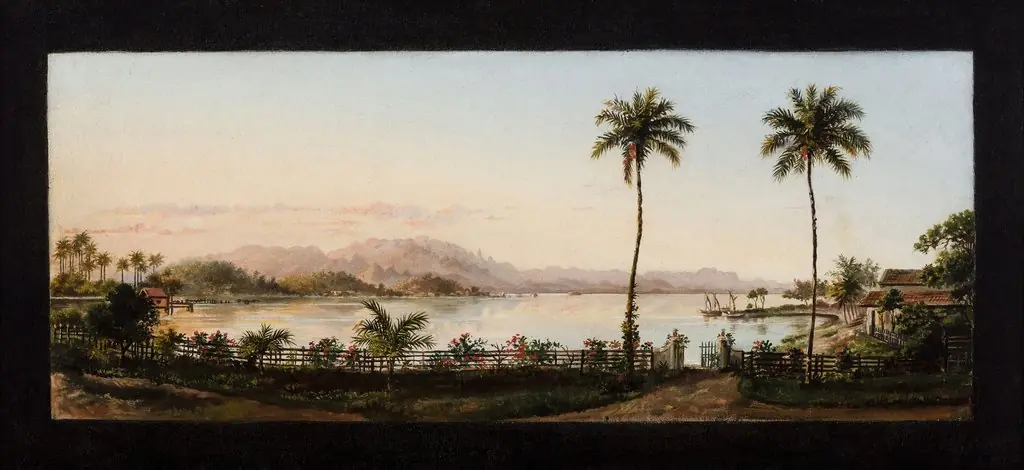 Enseada de Paquetá com Serra dos Órgãos ao fundo (atribuído)
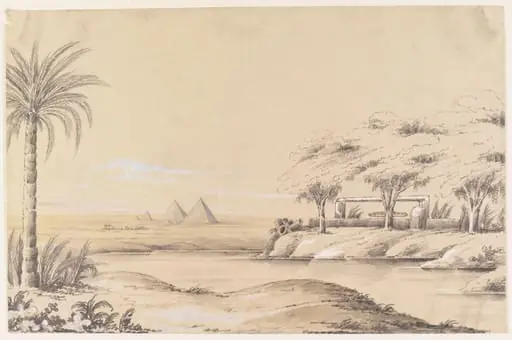 Pyramids of Geezeh. Egypt
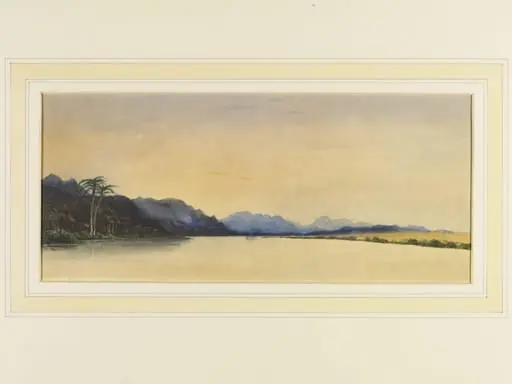 On the Nile, below Korusko
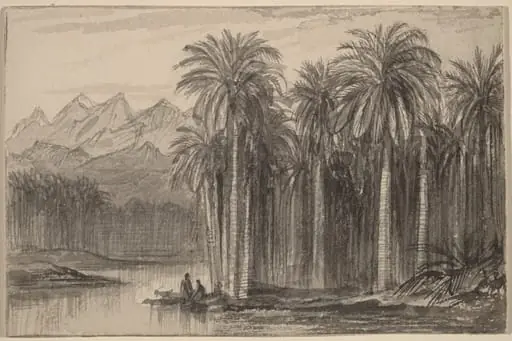 Figures Setting Out in Canoes from a Palm Grove (Wady Feiran)
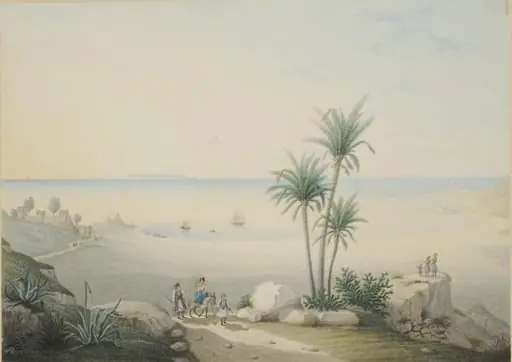 Λιμάνι της Πάρου
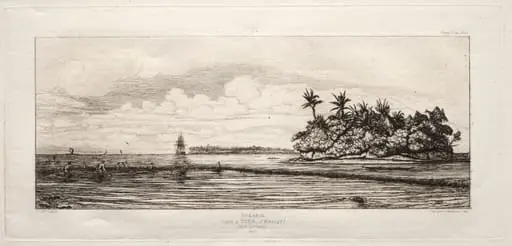 Oceanie
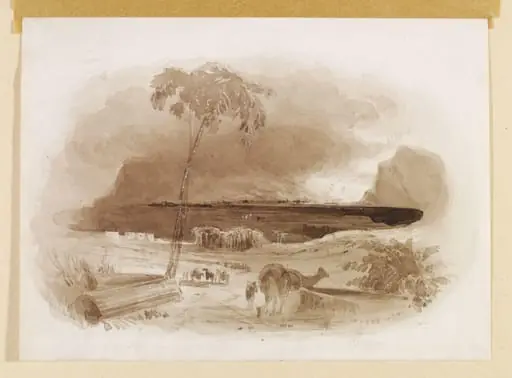 The Valley of Ajalon
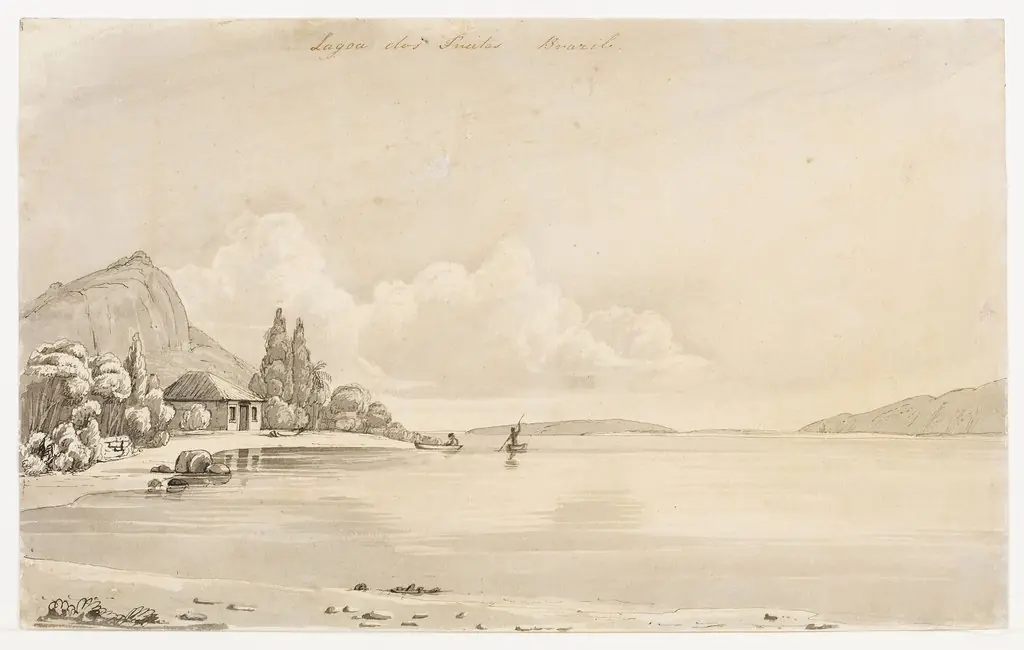 Lagoa dos Freitas. Brazil
![Lake Shore, Menaggio [recto], by John Singer Sargent](https://artifactworldgallery.com/img/john-singer-sargent--lake-shore-menaggio-recto--2cbfc8ee4d60729d-w320.webp) Lake Shore, Menaggio [recto]
Lake Shore, Menaggio [recto]