Artwork
Mountain landscape with staffage
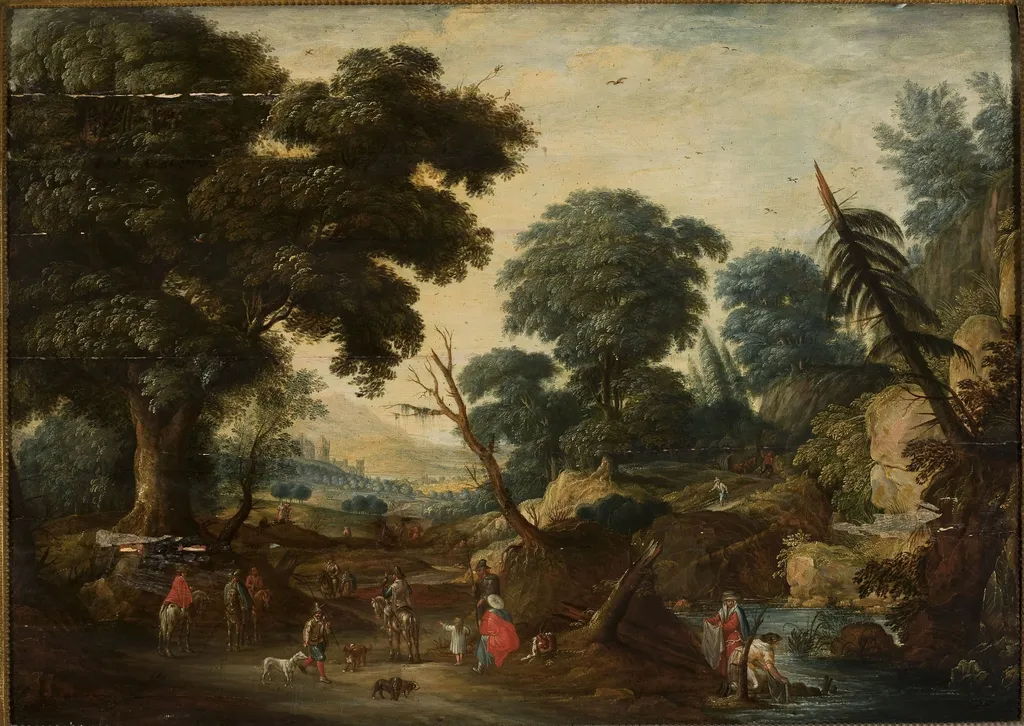
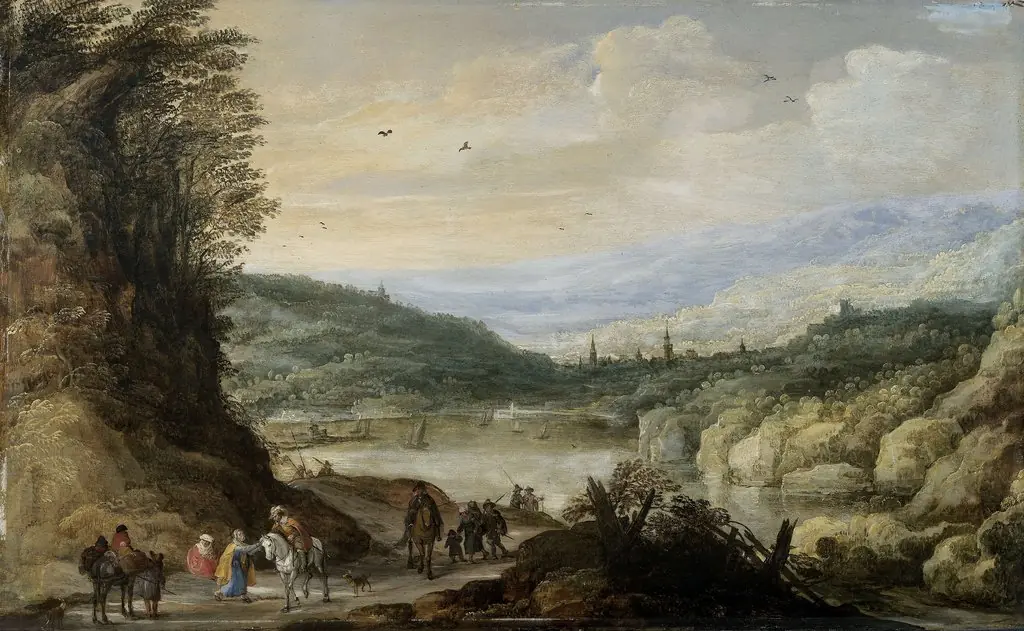
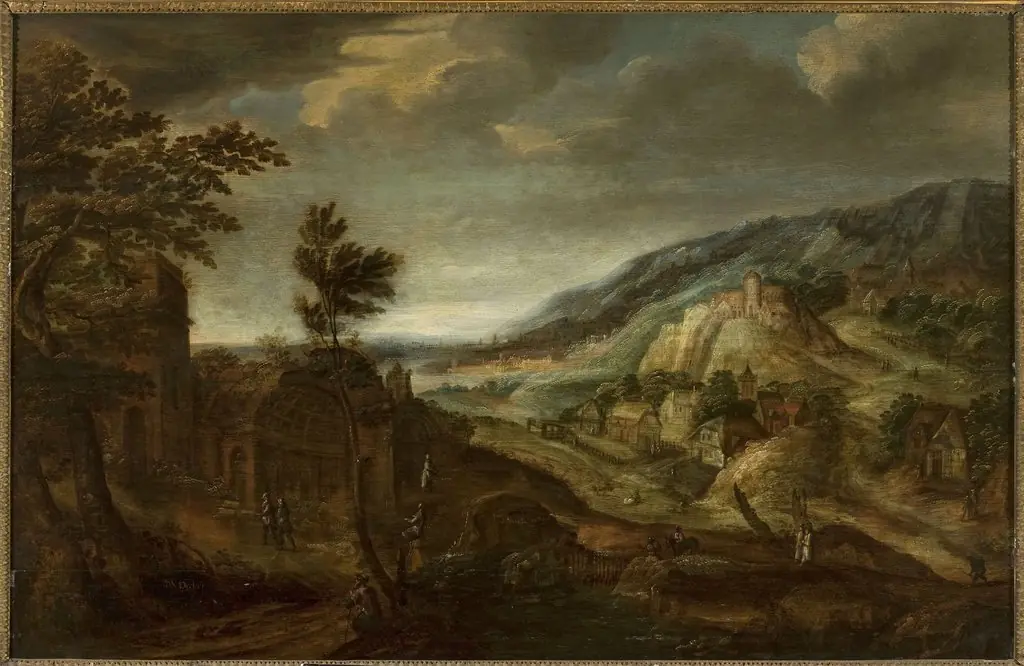
Mountain landscape with staffage is an oil painting by the Dutch Golden Age artist Unknown. It dates from 1620 and is held in the collection of the National Museum in Warsaw. This oil painting presents a tranquil mountainous scene populated by figures and livestock near a body of water.
About this work
Overview
This oil painting presents a tranquil mountainous scene populated by figures and livestock near a body of water. The composition balances natural elements—towering trees, undulating hills, and distant structures—with subtle human activity. A dynamic interplay of warm and cool tones establishes spatial depth, while expressive brushwork imparts motion and vitality to the landscape.
Subject & Meaning
The figures and animals appear engaged in quiet, everyday tasks, suggesting rural life rather than narrative drama. Their placement near water implies a moment of rest or transit, grounding the scene in observable reality. The absence of overt symbolism points to an emphasis on atmosphere and the quiet rhythm of nature, inviting contemplation rather than storytelling.
Technique & Style
The artist employs bold, visible brushstrokes to convey texture and movement, particularly in foliage and water. Chiaroscuro is used to model forms and enhance spatial recession, with strong contrasts between sunlit areas and shadowed valleys. Color temperature shifts—warm skies against cool water—reinforce atmospheric perspective and emotional tone without sentimentality.
History & Provenance
The painting’s origin and early ownership remain undocumented. No record links it to a specific exhibition or collector prior to its current location. Its style aligns with early 19th-century landscape traditions, though the artist’s identity has not been definitively established in surviving archives.
Context
Created during a period when landscape painting gained renewed interest across Europe, the work reflects a shift toward observing nature directly rather than idealizing it. Similar compositions appear in regional schools that valued atmospheric effects and rural life, though this piece stands apart in its loose handling and emphasis on light dynamics.
Legacy
Though not widely reproduced or cited in major art historical texts, the painting contributes to a broader understanding of lesser-known landscape practitioners who prioritized mood over grandeur. Its technique anticipates later developments in plein air painting, offering a quiet bridge between academic traditions and emerging naturalism.
Artist & collection

 Domestic Scene
 Giacomo and Cardinal Marco, investing Andrea, Abbot of San Zeno, with his Benefice
 The Nymph of Fontainebleau
 Portrait of a Woman
 Madonna and Child with Saints in the Enclosed Garden
 Venus and Minerva
 Family Group of Four on Sofa
 Wall painting from Room H of the Villa of P. Fannius Synistor at Boscoreale
 Hunter and Horsemen on a Wooded Road, with a Village in a Valley beyond
 Landscape with love couple
 Going to the Market
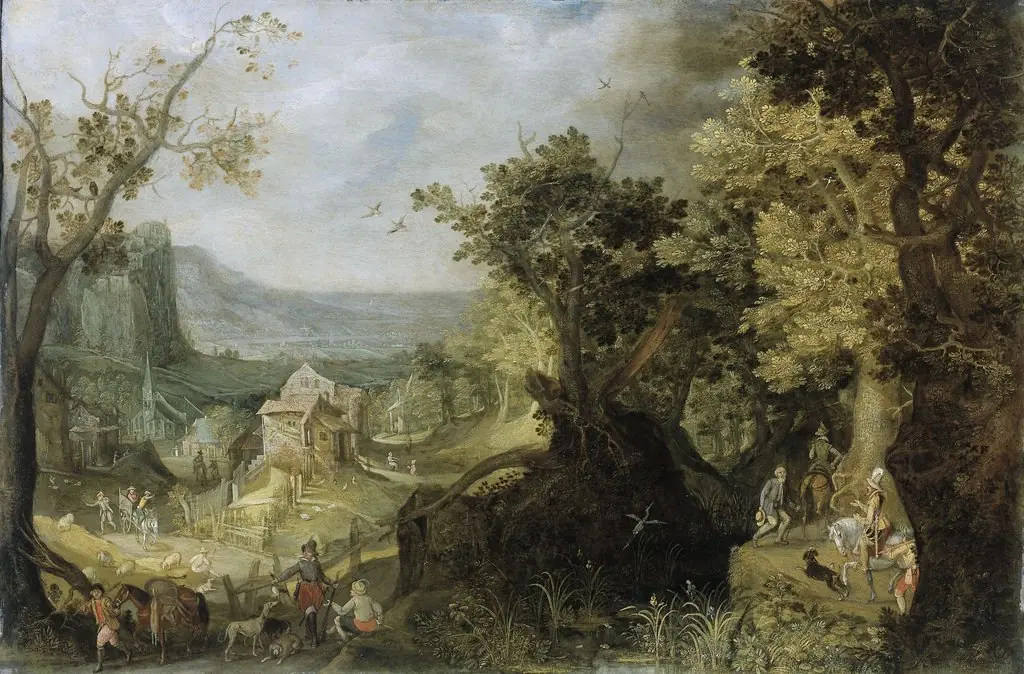 Wooded Landscape
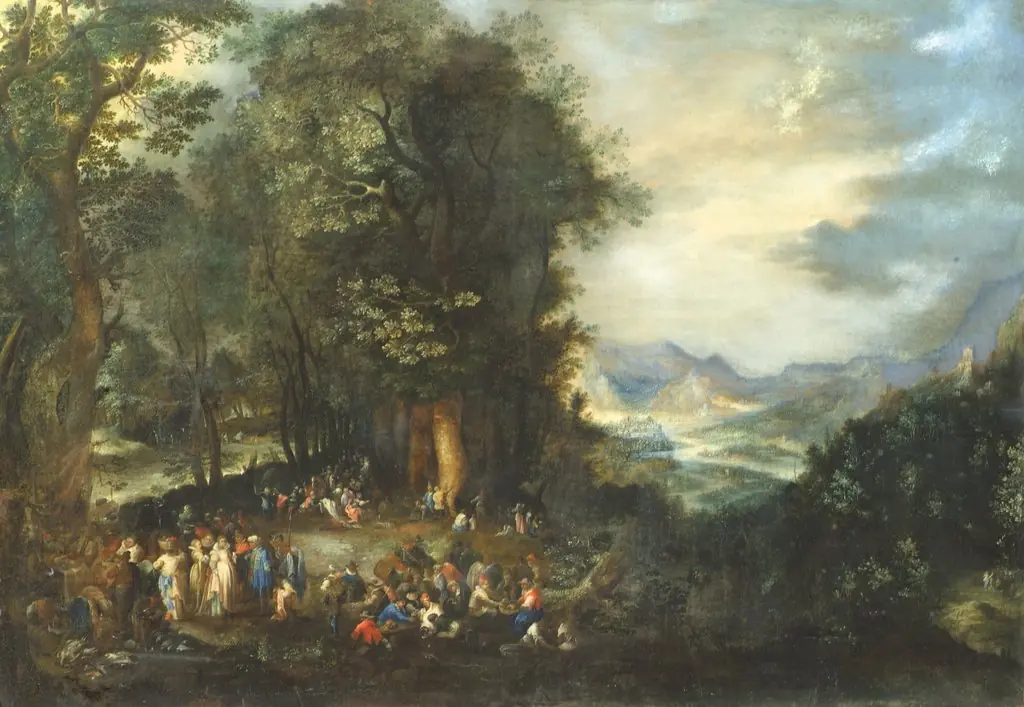 Sutler Camp at the Edge of the Forest
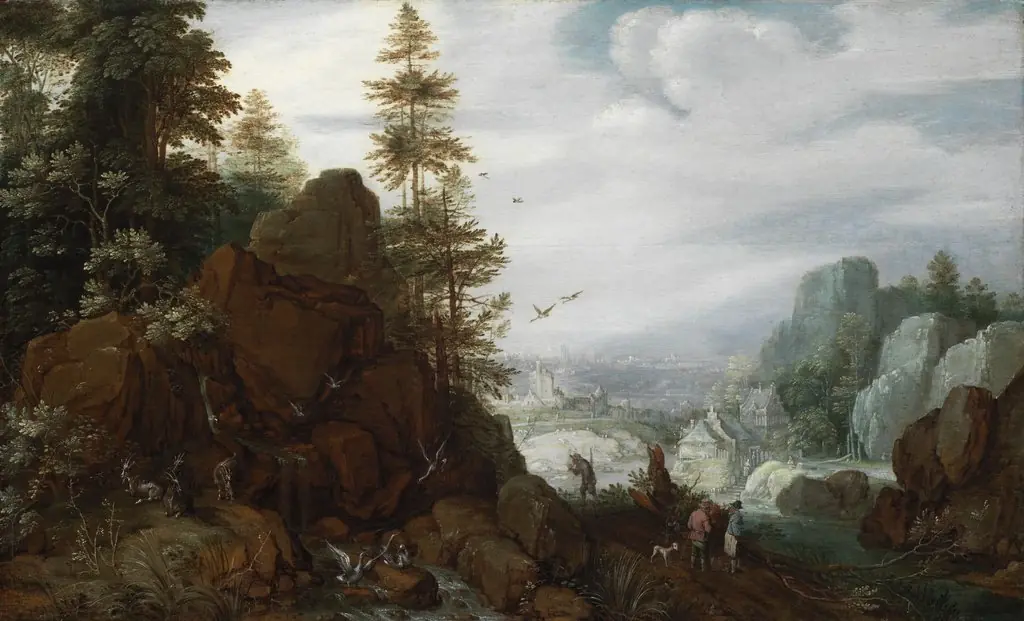 Rocky Landscape
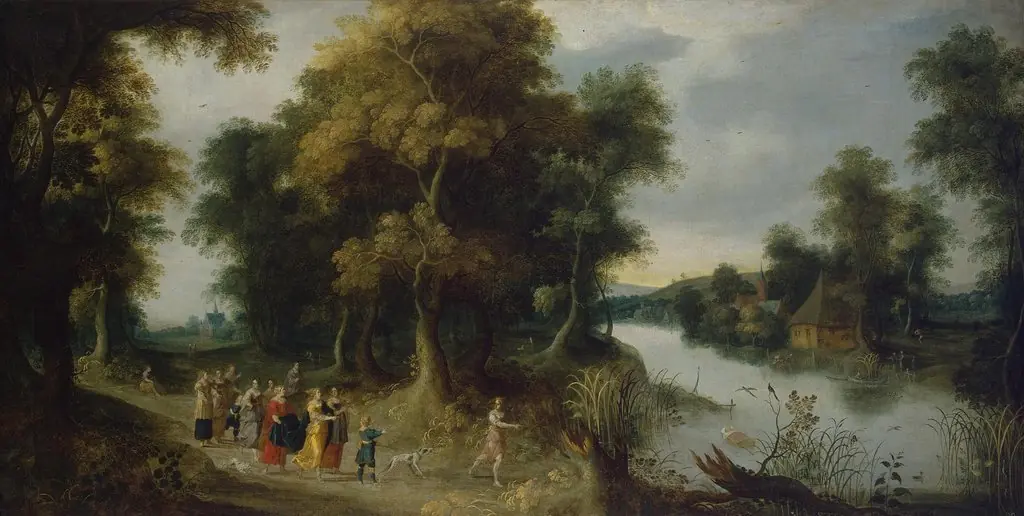 Finding of Moses
 Landscape with Pastures and Clusters of Trees
 Landscape
 Landscape
 Landscape with Gentlefolk and Gypsies
 Mountain landscape