Artwork
Small coffered ceiling panel with rampant lion
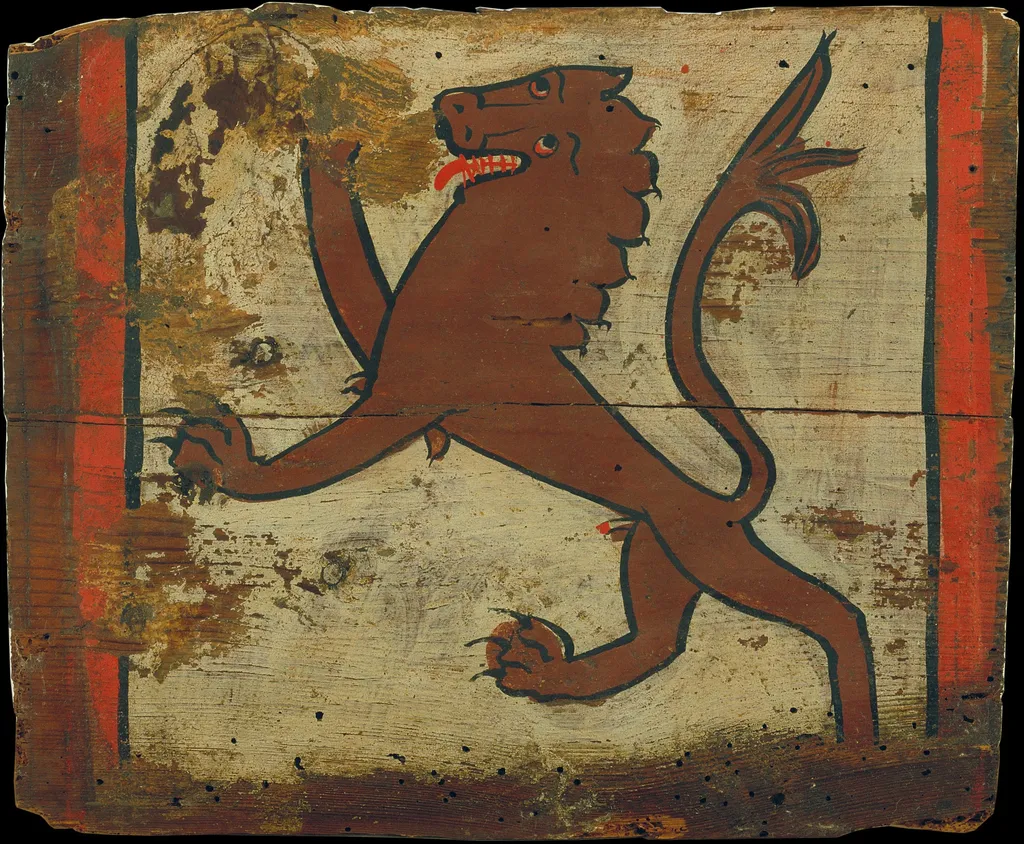
Small coffered ceiling panel with rampant lion is an unspecified painting by Unknown. It dates from 1350 and is held in the collection of the Museu Nacional d'Art de Catalunya. This wooden ceiling panel features a single, stylized lion rendered in pigment on a light beige ground.
About this work
Overview
The palette is restrained: brown fur, red accents on tongue and paws, and minimal background detail focus attention on the animal’s form.
This wooden ceiling panel features a single, stylized lion rendered in pigment on a light beige ground. The lion is framed by narrow red borders on either side, emphasizing its centrality. Its dynamic posture—front legs raised, head turned sharply left while body faces right—conveys arrested motion. The palette is restrained: brown fur, red accents on tongue and paws, and minimal background detail focus attention on the animal’s form.
Subject & Meaning
The rampant lion, a heraldic symbol associated with strength and sovereignty, appears here without contextual elements like crowns or landscapes. Its isolated presence suggests a decorative or emblematic function, possibly linked to noble or institutional identity. The tension in its pose may imply vigilance or readiness, aligning with symbolic uses of the lion in medieval and Renaissance heraldry.
Technique & Style
The lion is defined by bold, fluid outlines and flat areas of color with subtle tonal shifts to suggest volume. Red accents on the ears and paws contrast against the muted brown fur, enhancing visual rhythm. Chiaroscuro is used sparingly but effectively to model the limbs and torso, creating a sense of three-dimensionality within a shallow, panel-based space.
History & Provenance
The panel likely originated as part of a coffered ceiling in a domestic or civic building, possibly in southern Europe during the late medieval or early Renaissance period. Its survival suggests it was removed from its original architectural setting, perhaps during renovation or collection. No definitive provenance is recorded, but similar panels are found in regional collections from Italy or Spain.
Context
Ceiling panels with animal motifs were common in elite interiors of the 14th to 16th centuries, serving both decorative and symbolic roles. This piece reflects a tradition where heraldic imagery was adapted for architectural ornamentation, blending folk art sensibilities with formal iconography. Its compact scale and vivid coloring indicate it was intended for close viewing, not distant admiration.
Legacy
Though unsigned and unattributed, the panel exemplifies how symbolic animals were rendered in non-naturalistic, expressive styles during a period of transition from medieval to Renaissance aesthetics. Its preservation offers insight into the visual culture of lesser-documented artisan workshops, where heraldic motifs retained vitality beyond courtly manuscripts and monumental sculpture.
Artist & collection

 Domestic Scene
 Giacomo and Cardinal Marco, investing Andrea, Abbot of San Zeno, with his Benefice
 The Nymph of Fontainebleau
 Portrait of a Woman
 Madonna and Child with Saints in the Enclosed Garden
 Venus and Minerva
 Family Group of Four on Sofa
 Wall painting from Room H of the Villa of P. Fannius Synistor at Boscoreale
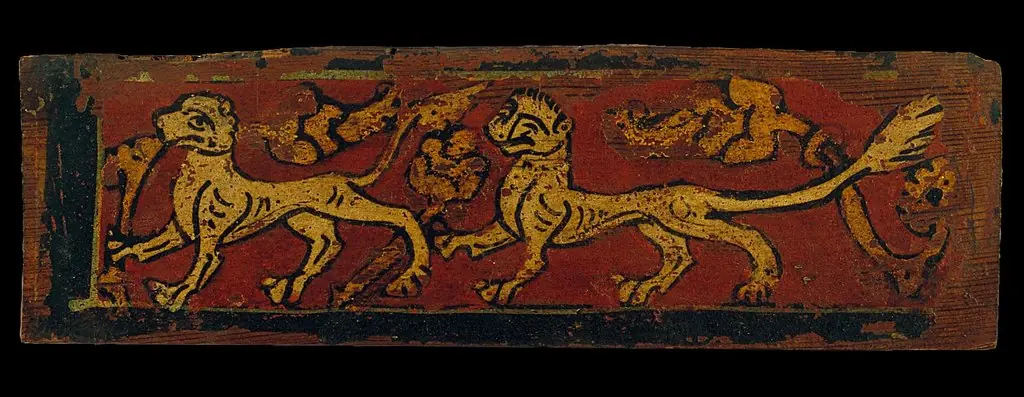 Small coffered ceiling panel with fantastic animals
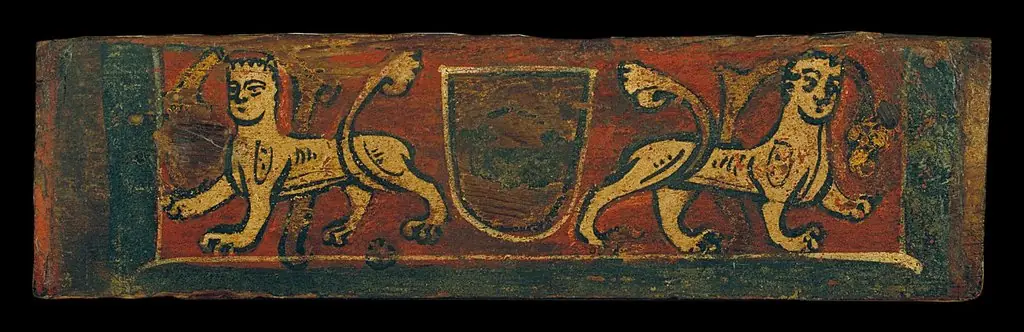 Small coffered ceiling panel with coat of arms and manticores
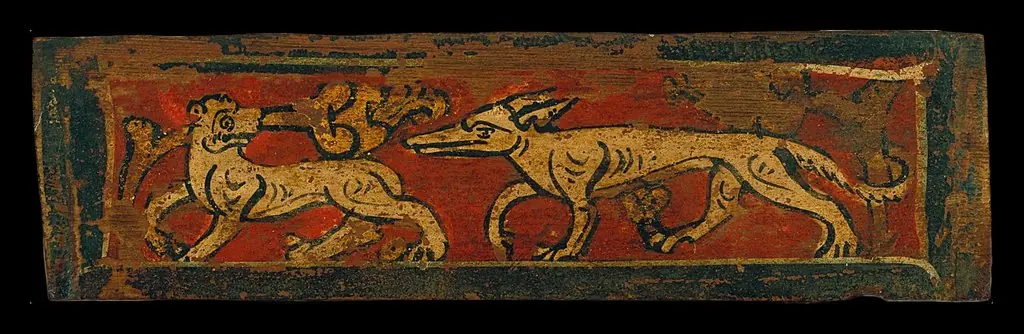 Small coffered ceiling panel with four-legged animals and plant motifs
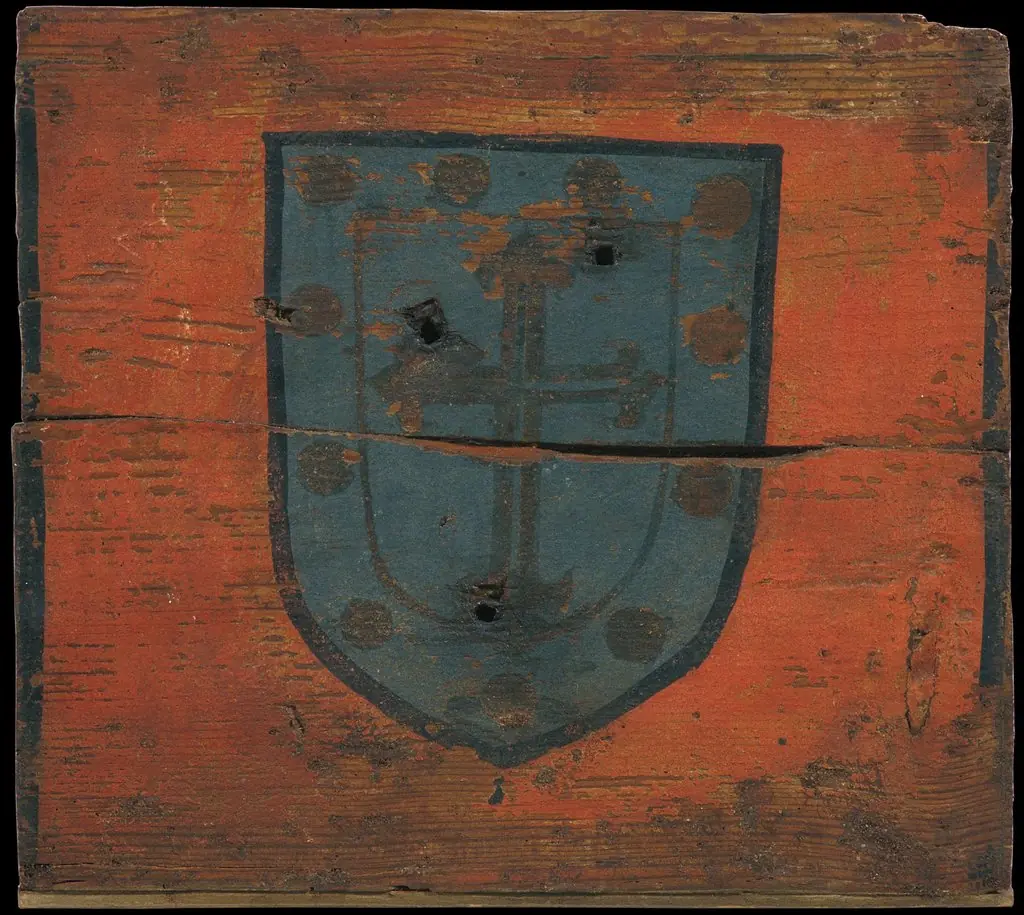 Small coffered ceiling panel with coat of arms
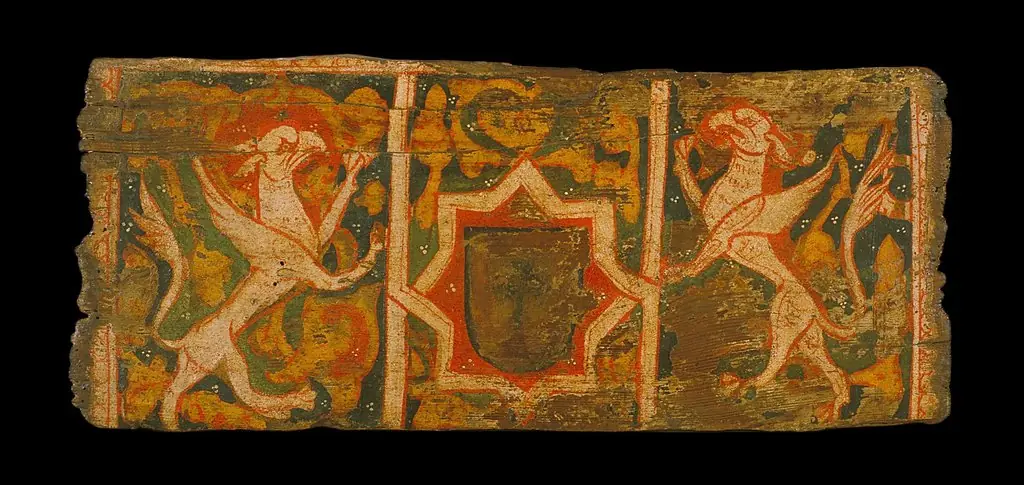 Coffered ceiling panel with coat of arms and griffins rampant
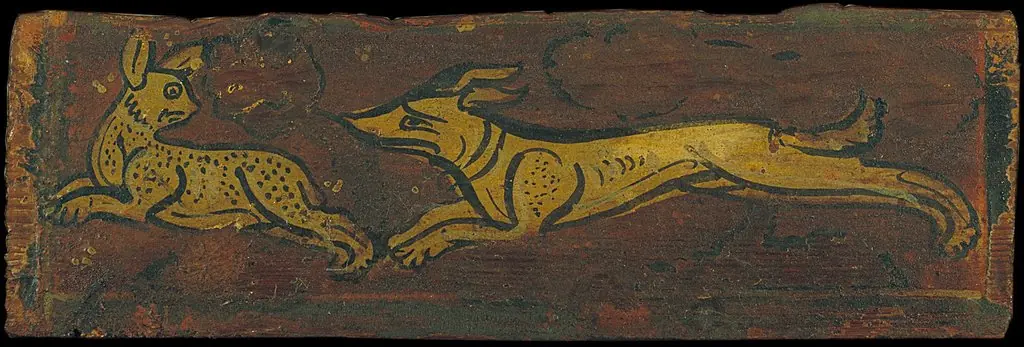 Small coffered ceiling panel with a dog pursuing a hare
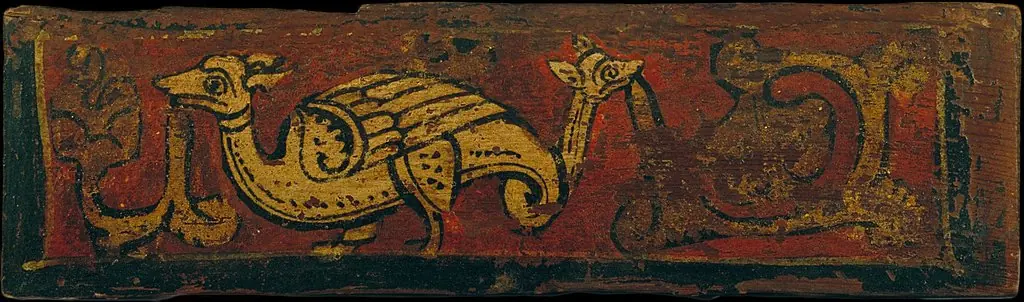 Small coffered ceiling panel with fantastic animal devouring plant motifs
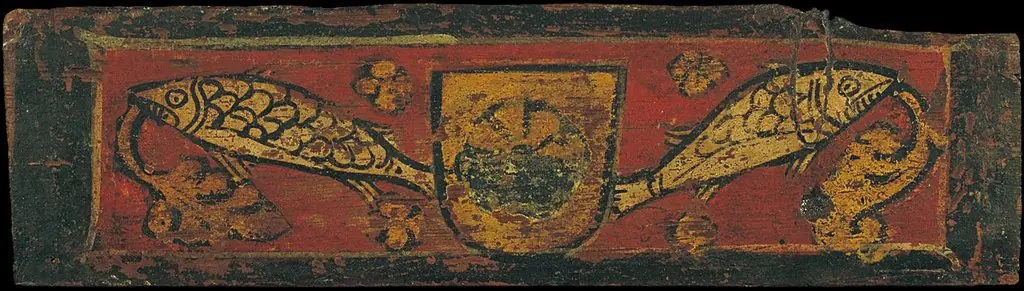 Small coffered ceiling panel with coat of arms and fishes devouring plant motifs
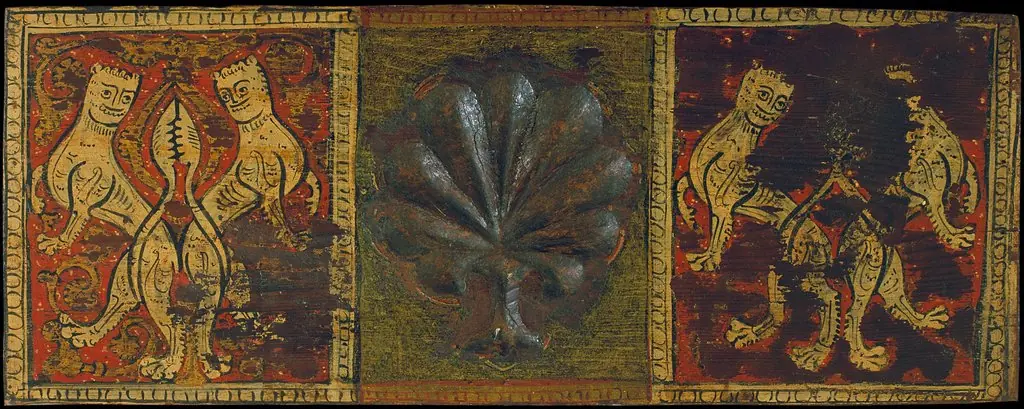 Coffered ceiling panel with palm leaf and fantastic animals
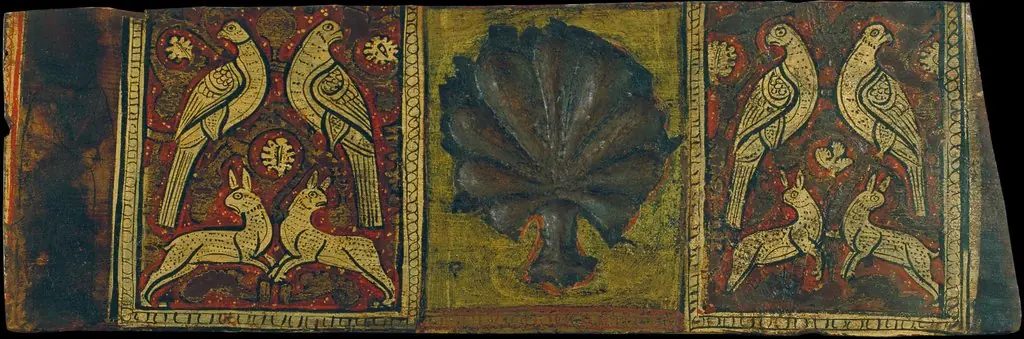 Ceiling panel with palm leaf, birds and four-legged animals
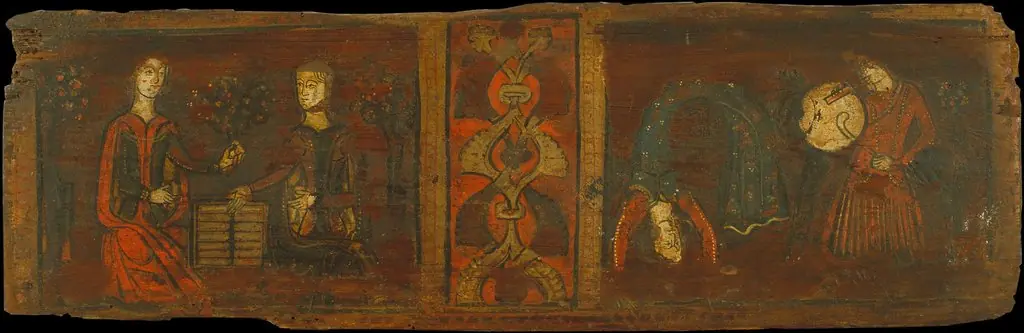 Small coffered ceiling panel with scenes of gallantry and dancing
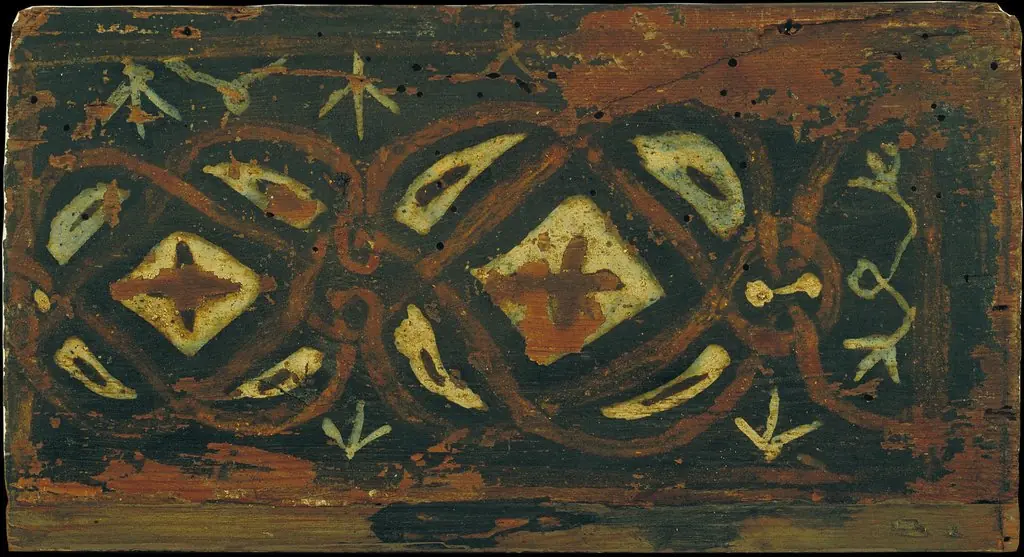 Small coffered ceiling panel with geometric motifs