Artwork
Small coffered ceiling panel with fantastic animals
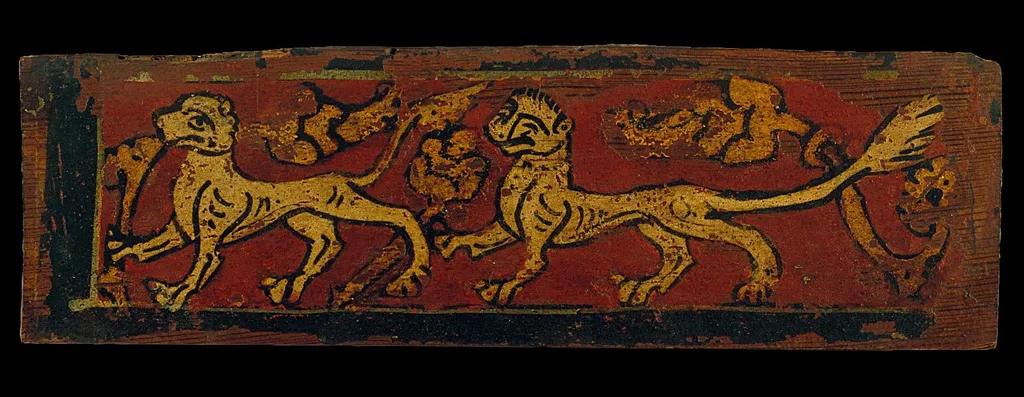
Small coffered ceiling panel with fantastic animals is an unspecified painting by Unknown. It is held in the collection of the Museu Nacional d'Art de Catalunya. This small wooden panel once formed part of a ceiling decoration, likely in a domestic or ceremonial space.
About this work
Overview
The use of black outlines and subtle tonal variations in the background adds depth without overwhelming the composition.
This small wooden panel once formed part of a ceiling decoration, likely in a domestic or ceremonial space. Its compact size and elevated placement suggest it was designed to be viewed from below. The imagery blends real and imagined forms, with two hybrid creatures rendered in gold against a rich red ground. The use of black outlines and subtle tonal variations in the background adds depth without overwhelming the composition.
Subject & Meaning
The panel depicts two chimeric beings, combining canine torsos with fish-like tails and elongated limbs. Their form evokes mythological hybrids common in medieval and Renaissance decorative arts, possibly symbolizing protection, transformation, or the liminal space between earth and water. The absence of narrative context leaves their specific meaning ambiguous, but their presence suggests a symbolic or apotropaic function within the architectural setting.
Technique & Style
The creatures are painted in metallic gold pigment, outlined sharply in black to enhance definition against the deep red background. The red surface shows irregular dark and light patches, possibly from aged varnish, pigment degradation, or intentional atmospheric effects suggesting mist or smoke. The brushwork is precise yet restrained, favoring clarity over detail, consistent with decorative panel painting of the period.
History & Provenance
The panel’s origin is undocumented, but its style and materials align with late medieval or early Renaissance Italian decorative arts. Its small scale and ceiling placement indicate it was part of a larger ensemble, now lost. No records of its early ownership or commission survive, though similar panels are known from ecclesiastical and aristocratic interiors in northern Italy.
Context
During the late Middle Ages and early Renaissance, ceilings in private and public buildings often featured fantastical motifs to convey power, mystery, or divine order. This panel fits within a tradition of ornamental painting that mixed naturalistic observation with imaginative forms, reflecting a cultural fascination with hybrid creatures as symbols of cosmic harmony or protective forces.
Legacy
Though isolated and unattributed, the panel exemplifies the enduring appeal of mythological imagery in decorative contexts. Its survival offers insight into how symbolic forms were adapted for intimate architectural spaces, preserving a visual language that bridged folk belief, classical tradition, and emerging Renaissance aesthetics without overt religious messaging.
Artist & collection

 Domestic Scene
 Giacomo and Cardinal Marco, investing Andrea, Abbot of San Zeno, with his Benefice
 The Nymph of Fontainebleau
 Portrait of a Woman
 Madonna and Child with Saints in the Enclosed Garden
 Venus and Minerva
 Family Group of Four on Sofa
 Wall painting from Room H of the Villa of P. Fannius Synistor at Boscoreale
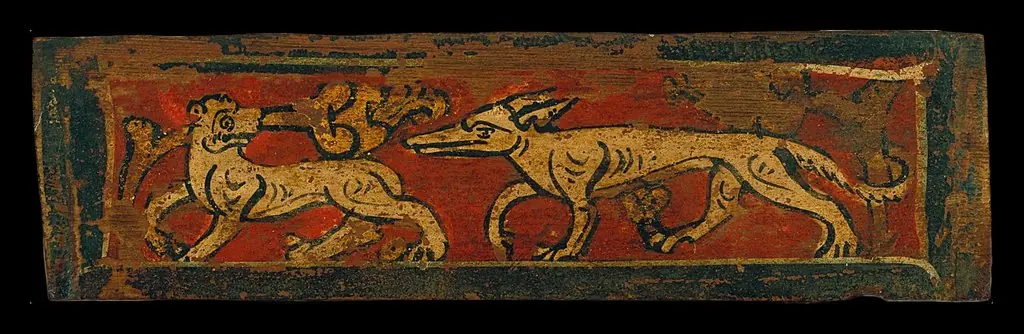 Small coffered ceiling panel with four-legged animals and plant motifs
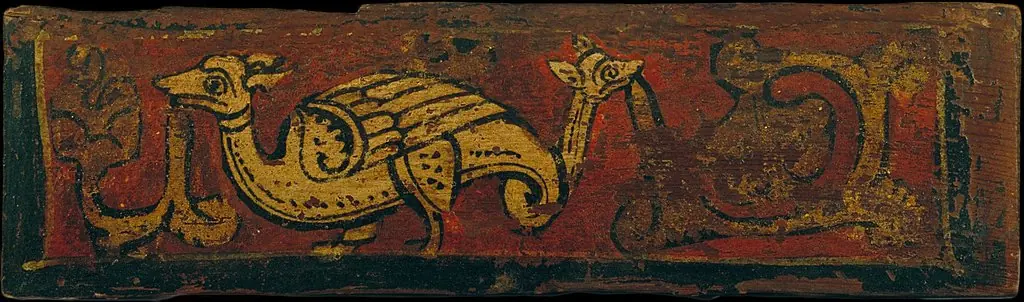 Small coffered ceiling panel with fantastic animal devouring plant motifs
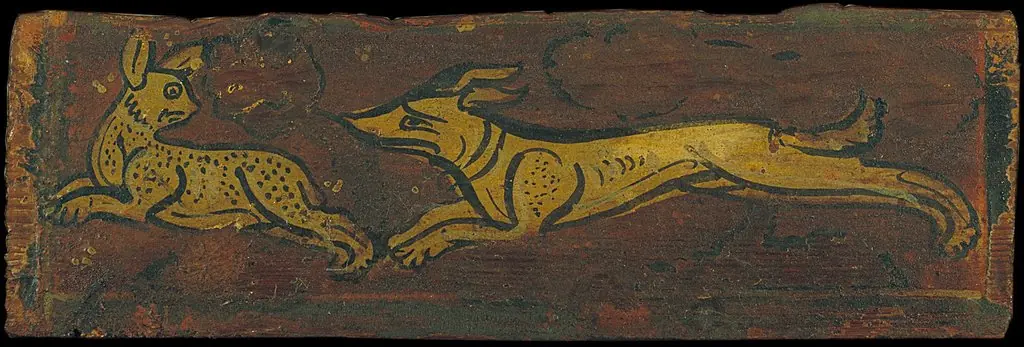 Small coffered ceiling panel with a dog pursuing a hare
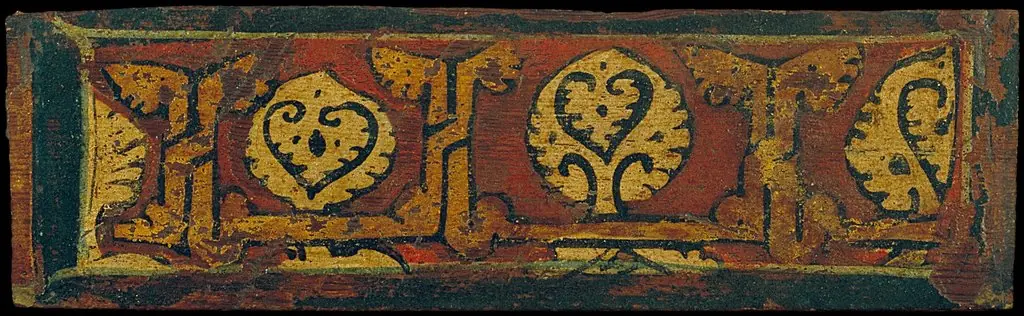 Small coffered ceiling panel with plant motifs
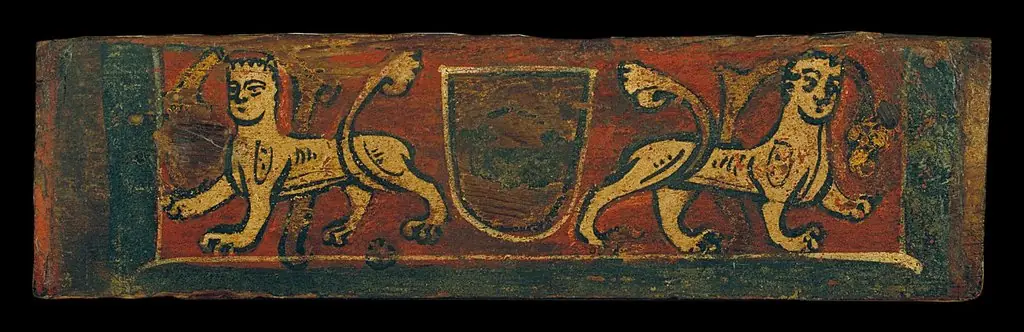 Small coffered ceiling panel with coat of arms and manticores
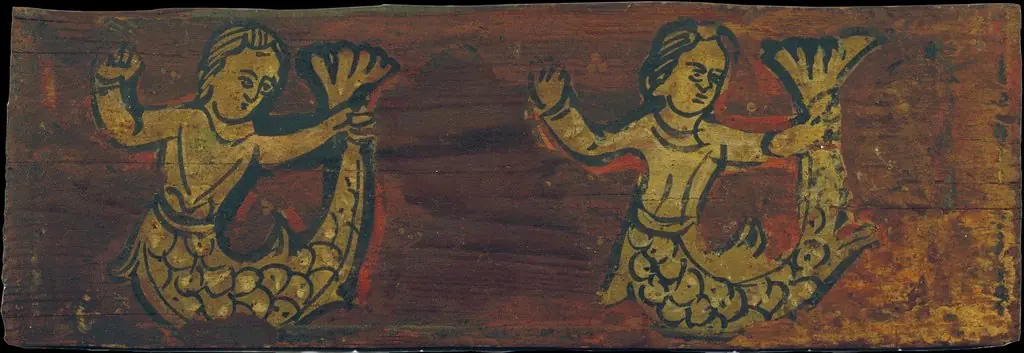 Small coffered ceiling panel with mermaids
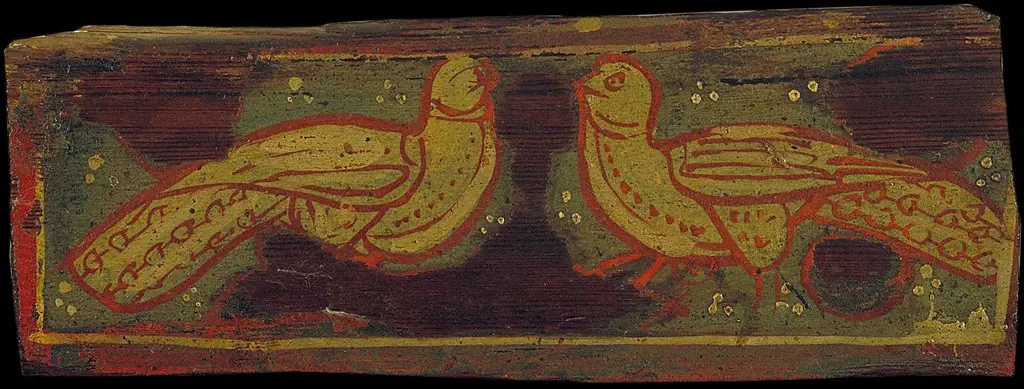 Small coffered ceiling panel with confronted birds
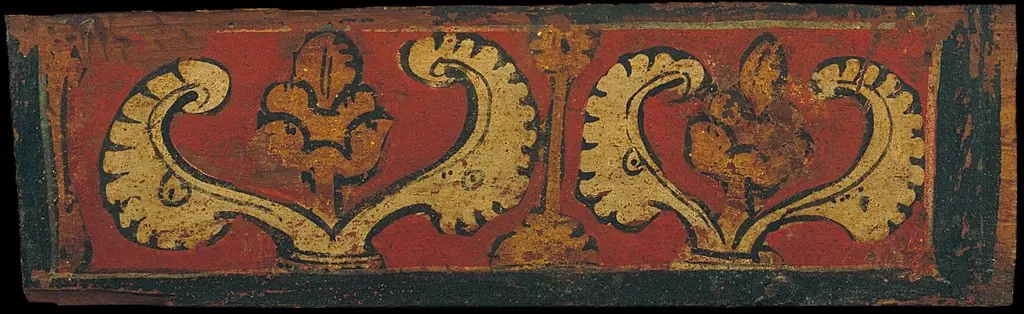 Small coffered ceiling panel with plant motifs
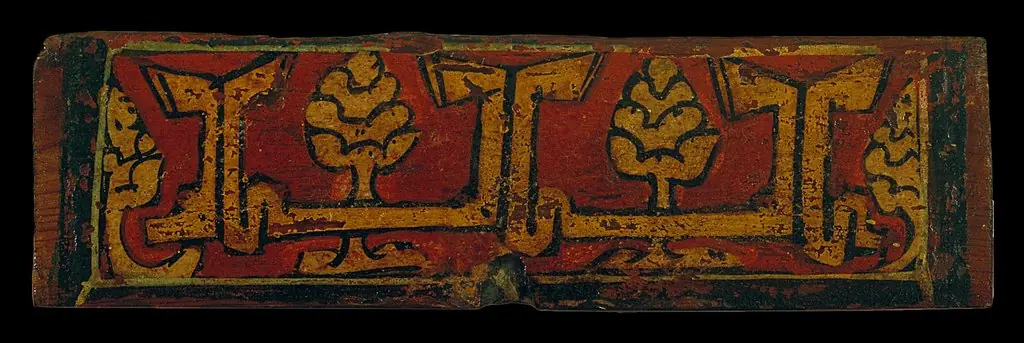 Small coffered ceiling panel with plant motifs
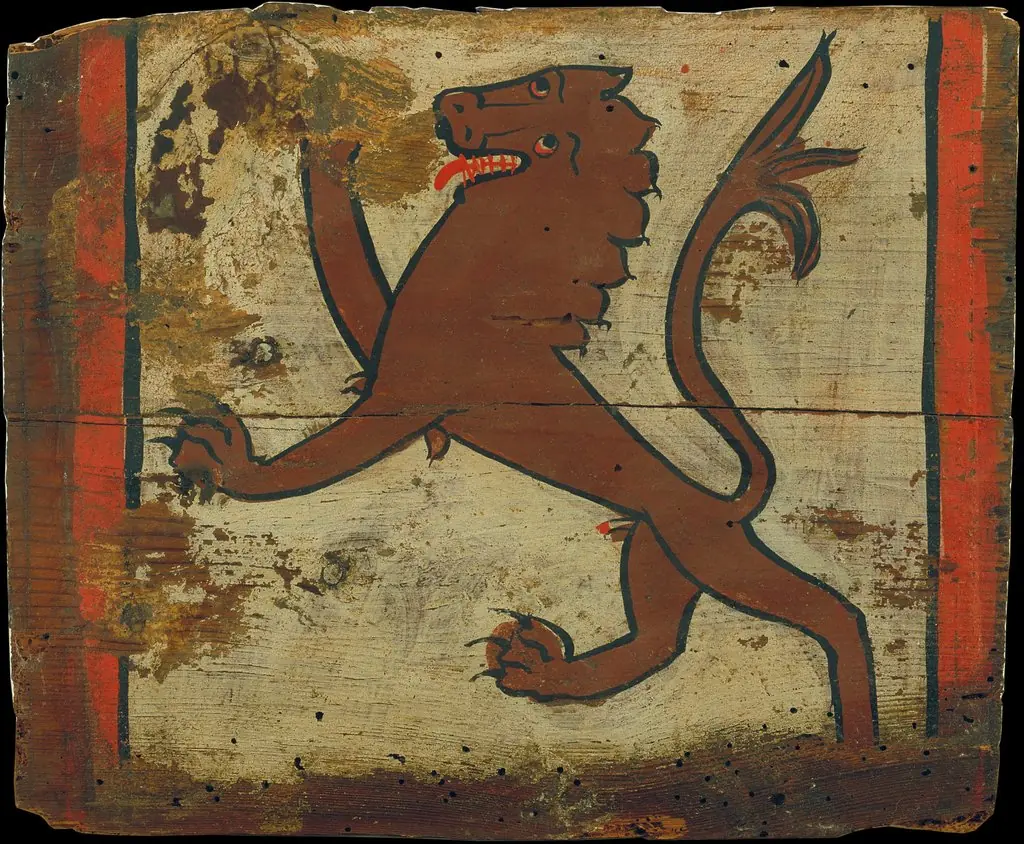 Small coffered ceiling panel with rampant lion
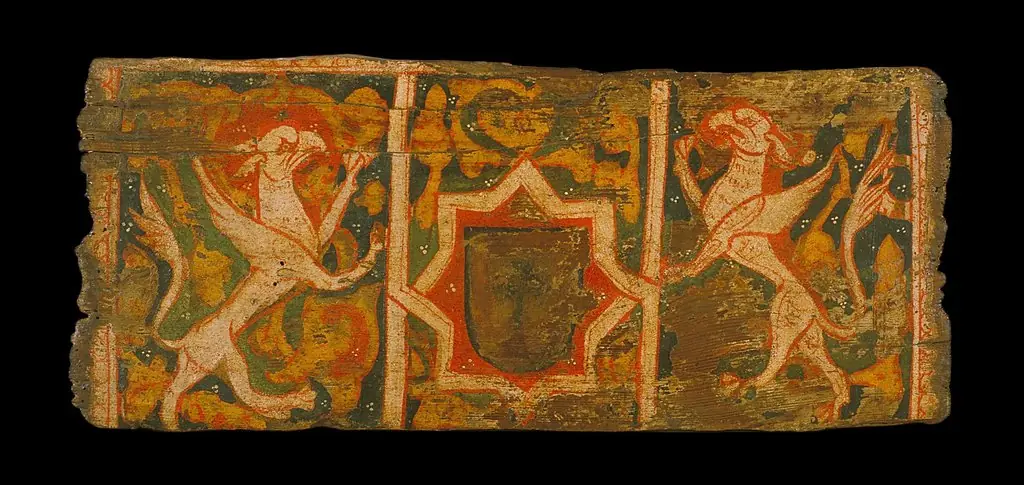 Coffered ceiling panel with coat of arms and griffins rampant
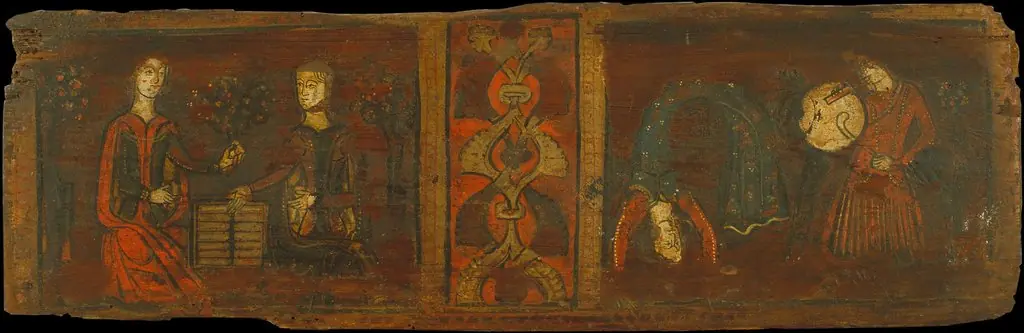 Small coffered ceiling panel with scenes of gallantry and dancing