Artwork
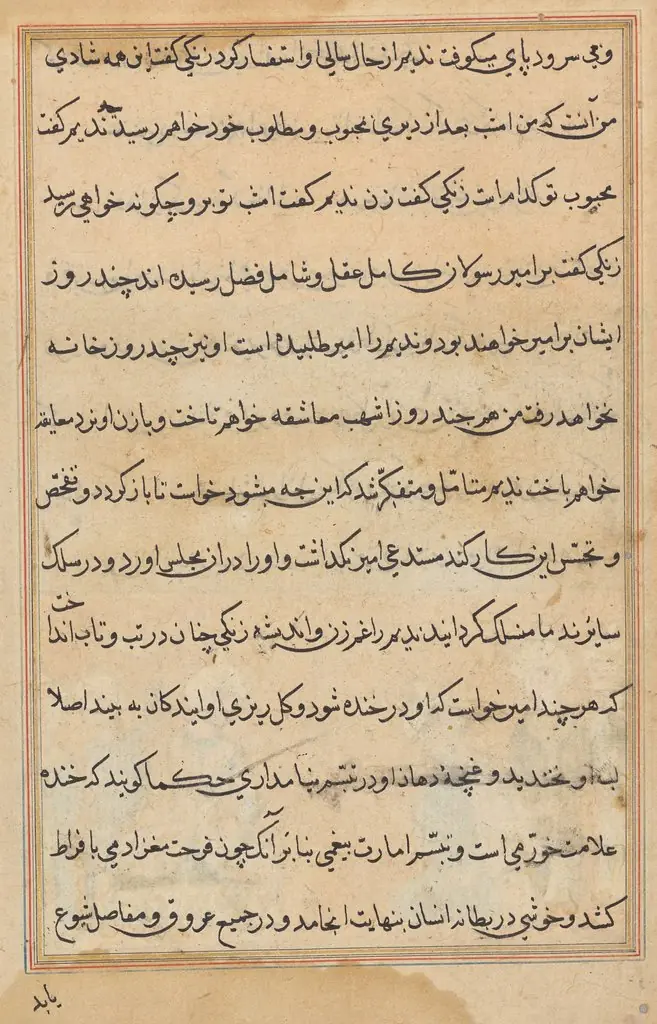
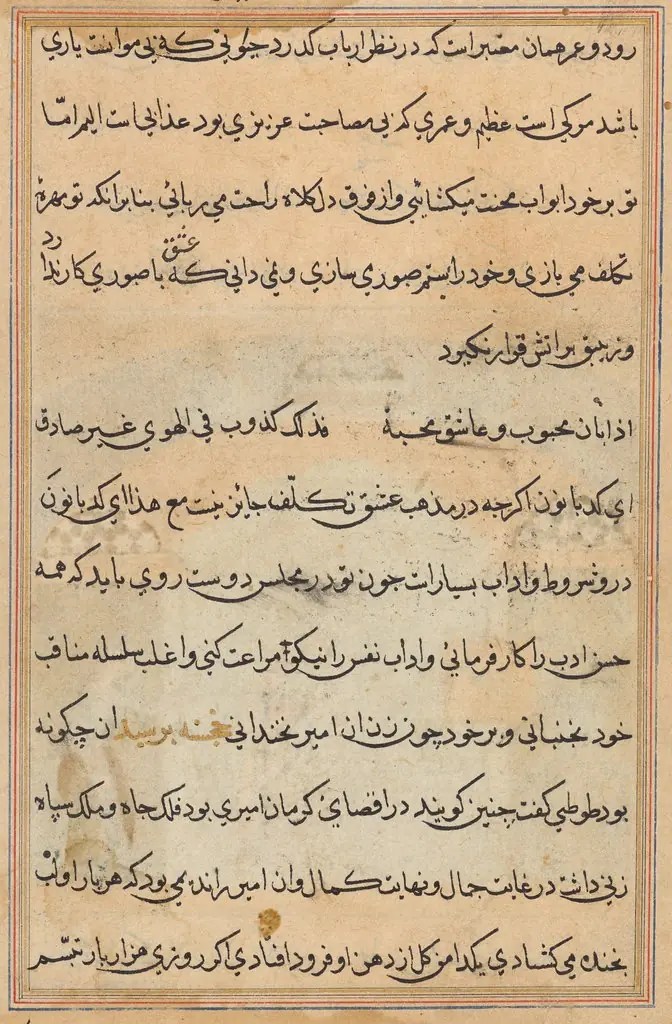
Page from Tales of a Parrot (Tuti-nama): text page
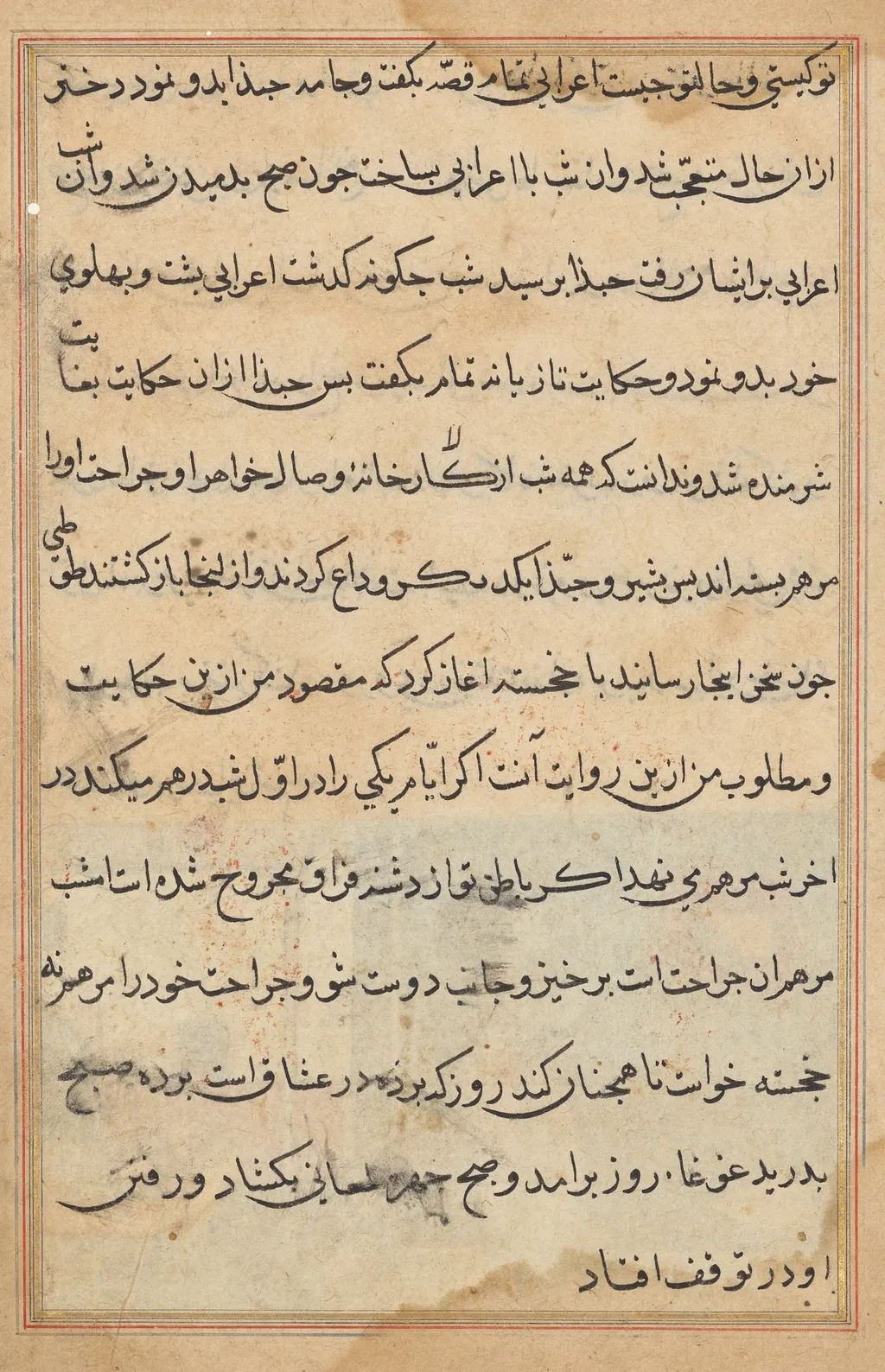
Page from Tales of a Parrot (Tuti-nama): text page is an unspecified painting. It dates from 1560 and is held in the collection of the Cleveland Museum of Art. This object is a single folio from the illustrated manuscript *Tales of a Parrot* (Tuti‑nama).
About this work
Overview
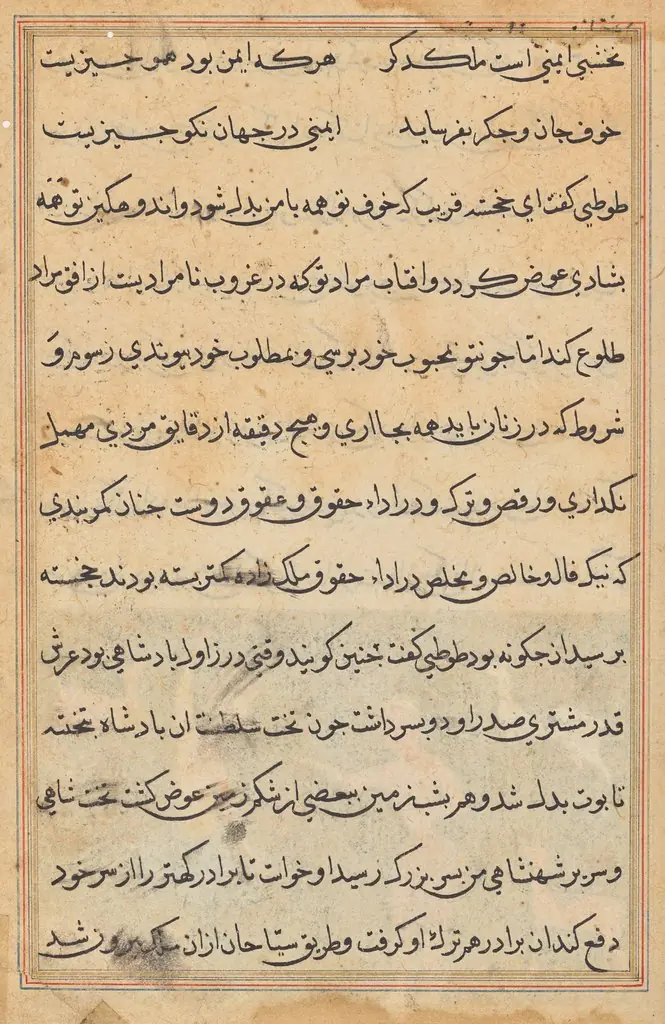
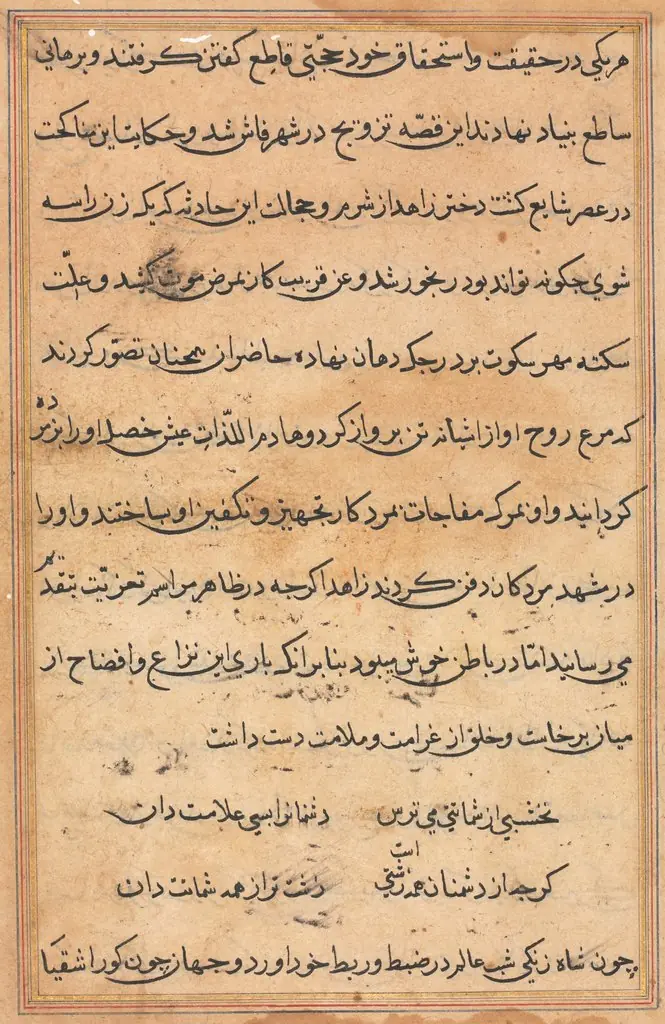
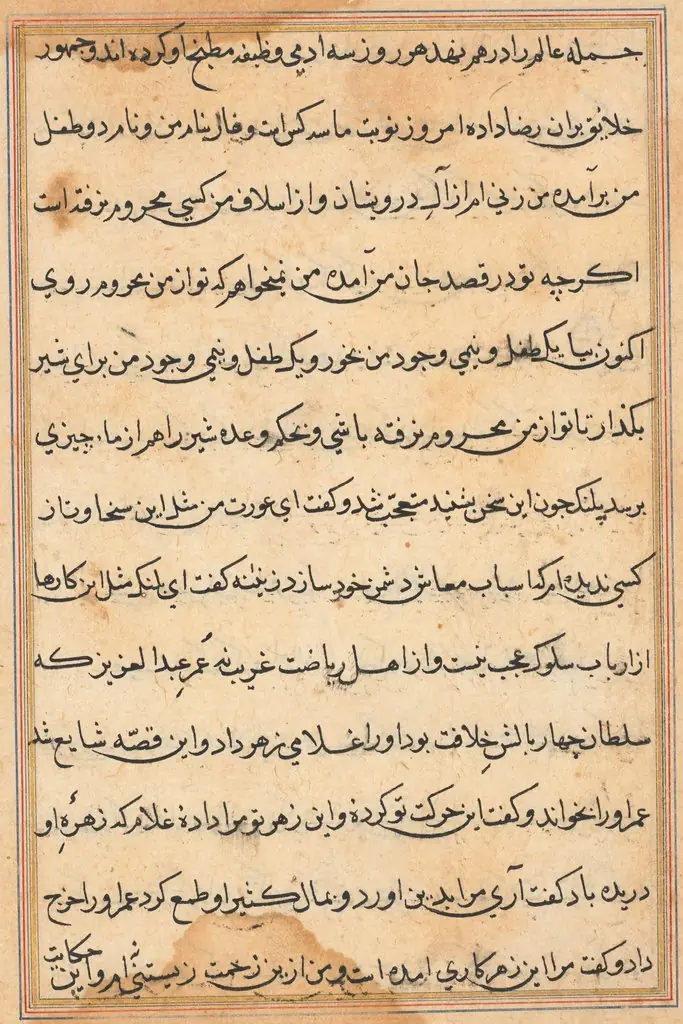
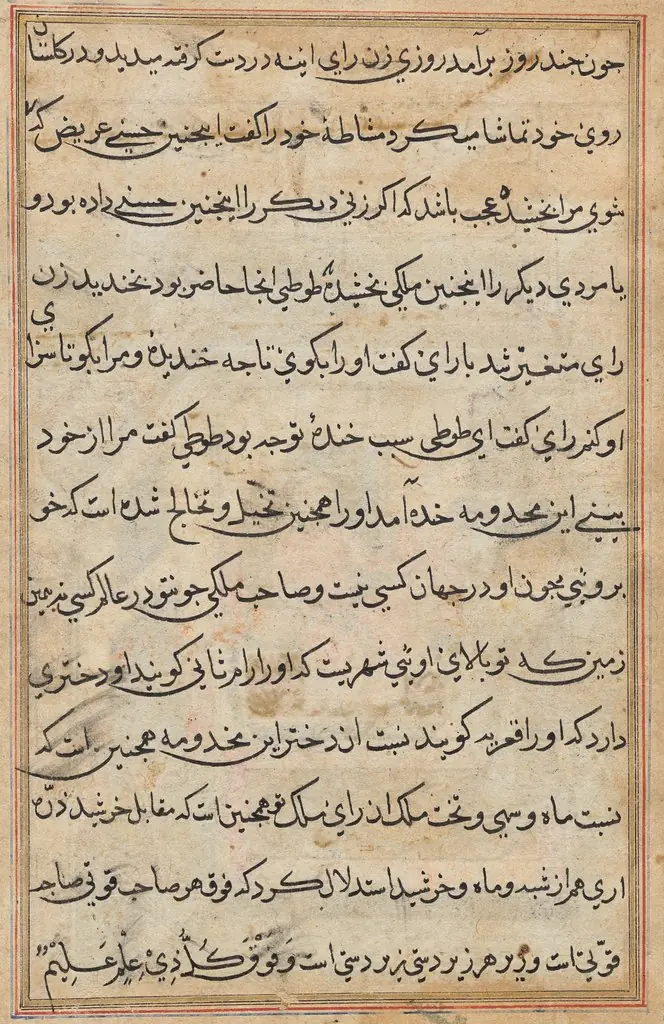
This object is a single folio from the illustrated manuscript *Tales of a Parrot* (Tuti‑nama). Executed as a painted page, it consists of dense black calligraphy set against a light brown ground, edged by a narrow red band. The paper shows signs of age, with subtle staining and wear that testify to its historic use.
Subject & Meaning
The script records a narrative addressed to Prince Salim, a member of the Mughal court. The tale, centered on a talking parrot, functions as both entertainment and moral instruction, reflecting the courtly tradition of using animal protagonists to convey ethical lessons to young aristocrats.
Technique & Style
The calligraphic hand is compact and highly controlled, with looping forms that interlace like vines, filling the surface without gaps. The black pigment, likely carbon‑based ink, is applied with a fine brush, while the thin red border—probably derived from vermilion—frames the composition, emphasizing the textual field.
History & Provenance
Commissioned for Prince Salim, son of Emperor Akbar, the manuscript was produced in the late 16th century within the Mughal imperial workshops. The folio entered the Cleveland Museum of Art’s collection through a 20th‑century acquisition, joining other pages from the same codex held by the museum.
Context
*Tales of a Parrot* belongs to a broader genre of Persianate courtly literature that blended prose, poetry, and illustration. Such works were often used for instruction and amusement among royal children, and their lavish production reflects the Mughal emphasis on artistic patronage and cultural synthesis.
Legacy
The folio exemplifies the high level of calligraphic skill and manuscript decoration characteristic of Mughal court culture. Its preservation allows scholars to study the interplay of text and visual framing in Persianate literary traditions and informs contemporary understandings of early modern South Asian book arts.
Artist & collection

 Page from Tales of a Parrot (Tuti-nama): text page
 Page from Tales of a Parrot (Tuti-nama): text page
 Page from Tales of a Parrot (Tuti-nama): text page
 Page from Tales of a Parrot (Tuti-nama): text page
 Page from Tales of a Parrot (Tuti-nama): text page
 Page from Tales of a Parrot (Tuti-nama): text page
 Page from Tales of a Parrot (Tuti-nama): text page
 Page from Tales of a Parrot (Tuti-nama): text page
 Page from Tales of a Parrot (Tuti-nama): text page