Artwork
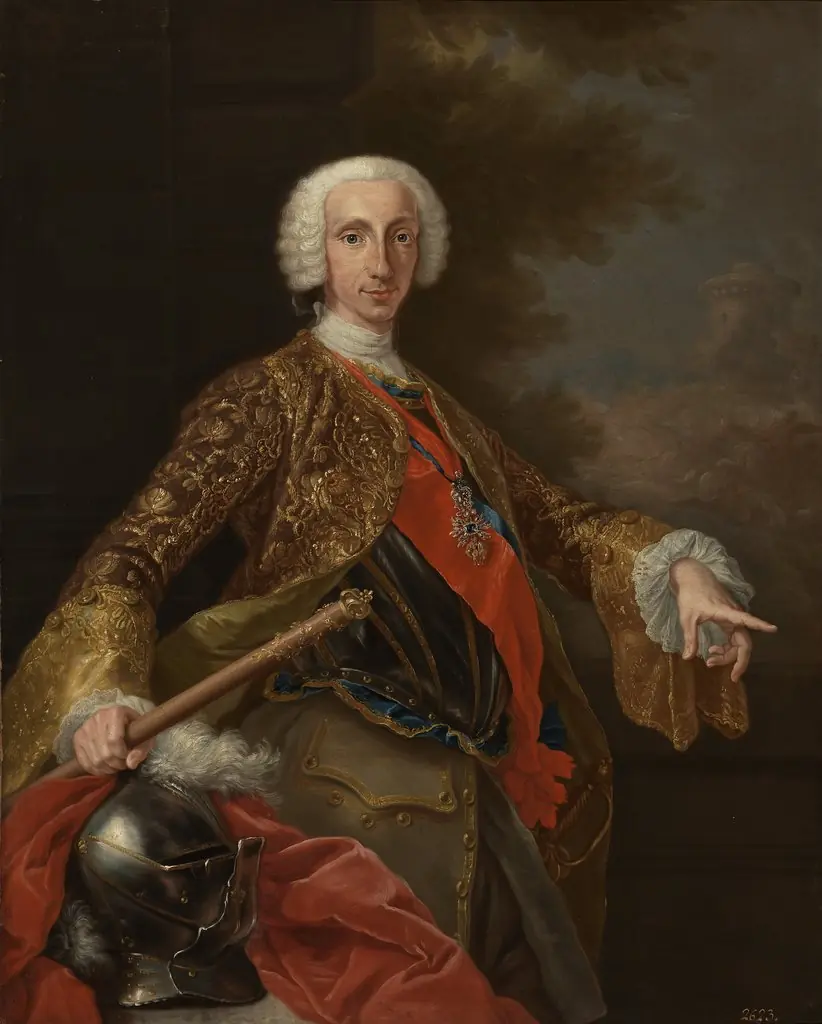
Portrait of king Stanisław August in armour
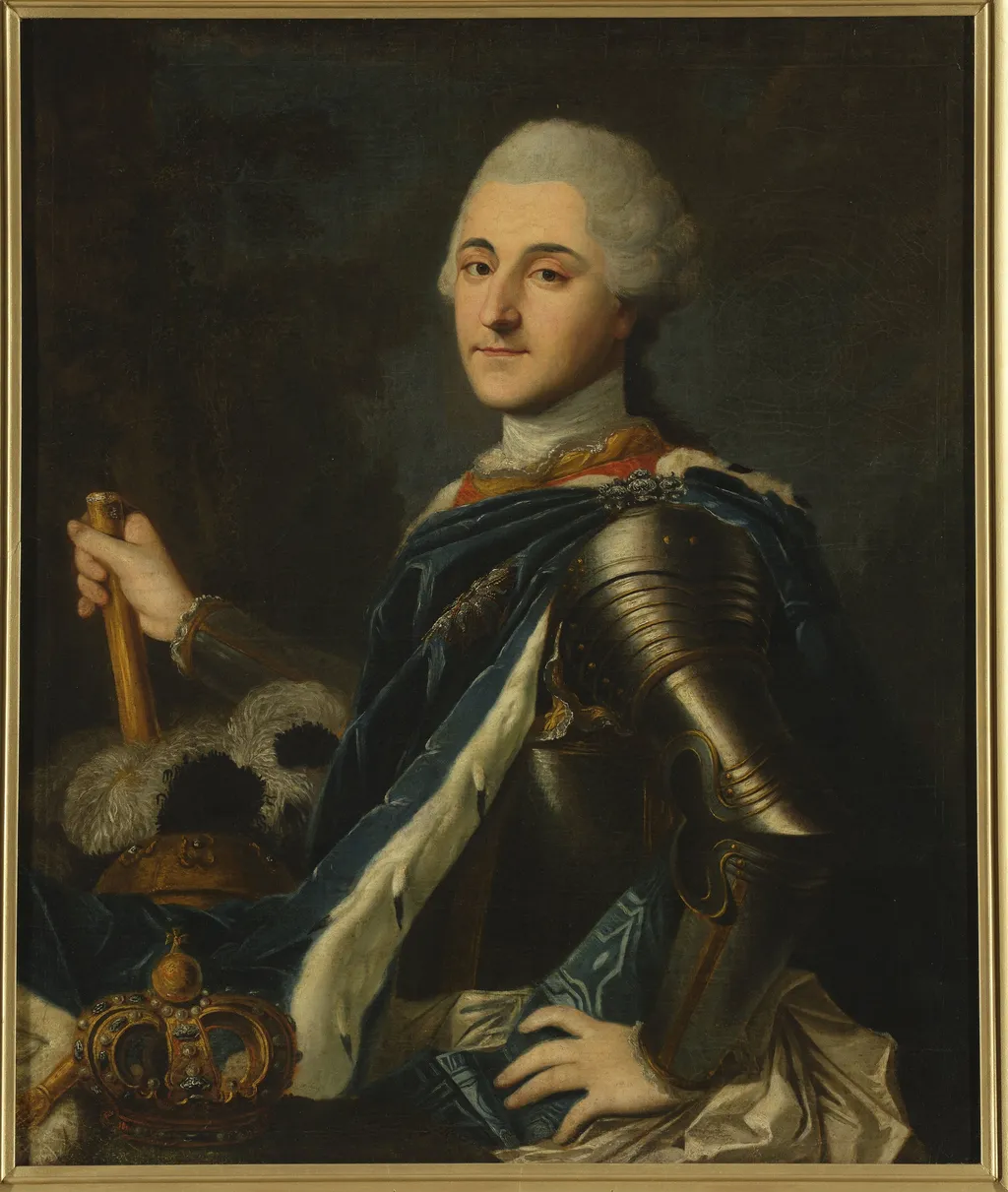
Portrait of king Stanisław August in armour is an unspecified painting by the Rococo painting artist Unknown. It dates from 1764 and is held in the collection of the National Museum in Warsaw. This portrait depicts King Stanisław August Poniatowski of Poland dressed in ornate armor, holding a ceremonial baton.
About this work
Overview
The lighting emphasizes the texture of the armor and the pallor of the powdered hair, creating a solemn, elevated presence.
This portrait depicts King Stanisław August Poniatowski of Poland dressed in ornate armor, holding a ceremonial baton. A blue robe drapes over the armor, and a crown rests nearby, accompanied by fur trim that signals royal status. The background is uniformly dark, eliminating distractions and directing attention to the figure. The lighting emphasizes the texture of the armor and the pallor of the powdered hair, creating a solemn, elevated presence.
Subject & Meaning
The king is portrayed not as a warrior but as a sovereign embodying authority through symbolic regalia. The armor suggests military leadership, while the crown and robe affirm his constitutional role. The baton, a sign of command, reinforces his position as head of state. The absence of battle or landscape implies a focus on dignity rather than action, presenting kingship as an institution rather than a personal triumph.
Technique & Style
The painting employs chiaroscuro to model the form of the figure with sharp contrasts between light and shadow, enhancing the three-dimensionality of the armor and fabric. Details like gold trim and fur are rendered with precision, yet the background remains flat and unadorned. The powdered white hair and smooth complexion reflect contemporary aristocratic ideals, while the restrained palette underscores formality and restraint.
History & Provenance
Commissioned during Stanisław August’s reign in the late 18th century, the portrait was likely intended for public display to reinforce royal legitimacy amid political instability. It was painted by a court artist, possibly Antoni Brodowski or another Polish painter of the period, and remained in royal collections until the partitions of Poland. Its survival reflects its importance as a state document in visual form.
Context
Created during the Enlightenment, the portrait aligns with European trends that depicted monarchs as rational, dignified figures rather than divine rulers. The armor references classical ideals of leadership, while the plain background echoes Neoclassical aesthetics. Poland’s fragile sovereignty at the time made such imagery a tool of political assertion, projecting stability to both domestic and foreign audiences.
Legacy
The portrait remains a key example of Polish royal iconography from the late Enlightenment. It illustrates how monarchs used visual culture to navigate political decline, blending traditional symbols with modern ideals. Though Poland ceased to exist as an independent state shortly after its creation, the image endures as a record of a ruler’s attempt to sustain national identity through representation.
Artist & collection

 Domestic Scene
 Giacomo and Cardinal Marco, investing Andrea, Abbot of San Zeno, with his Benefice
 The Nymph of Fontainebleau
 Portrait of a Woman
 Madonna and Child with Saints in the Enclosed Garden
 Venus and Minerva
 Family Group of Four on Sofa
 Wall painting from Room H of the Villa of P. Fannius Synistor at Boscoreale
 Portrait of King Stanislaus Augustus Poniatowski
 Felipe de Borbón duque de Parma
 Bildnis von Christian IV., Herzog von Pfalz-Zweibrücken (1722-1775)
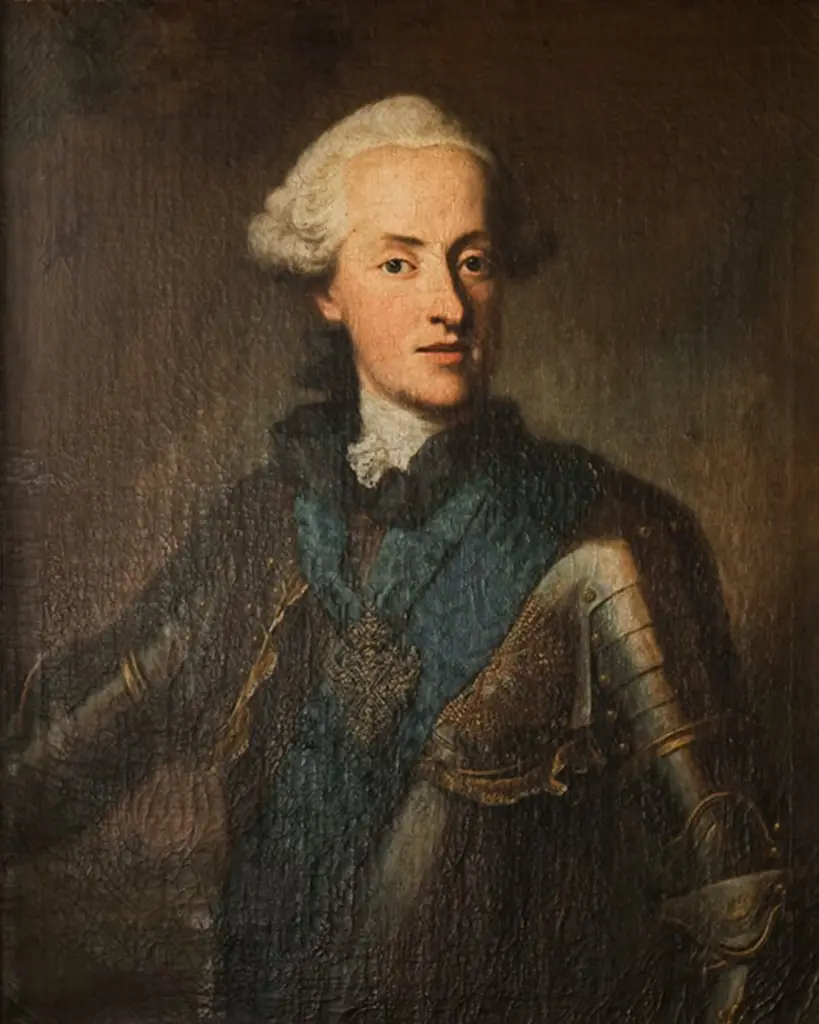 Herzog Clemens Franz de Paula von Bayern
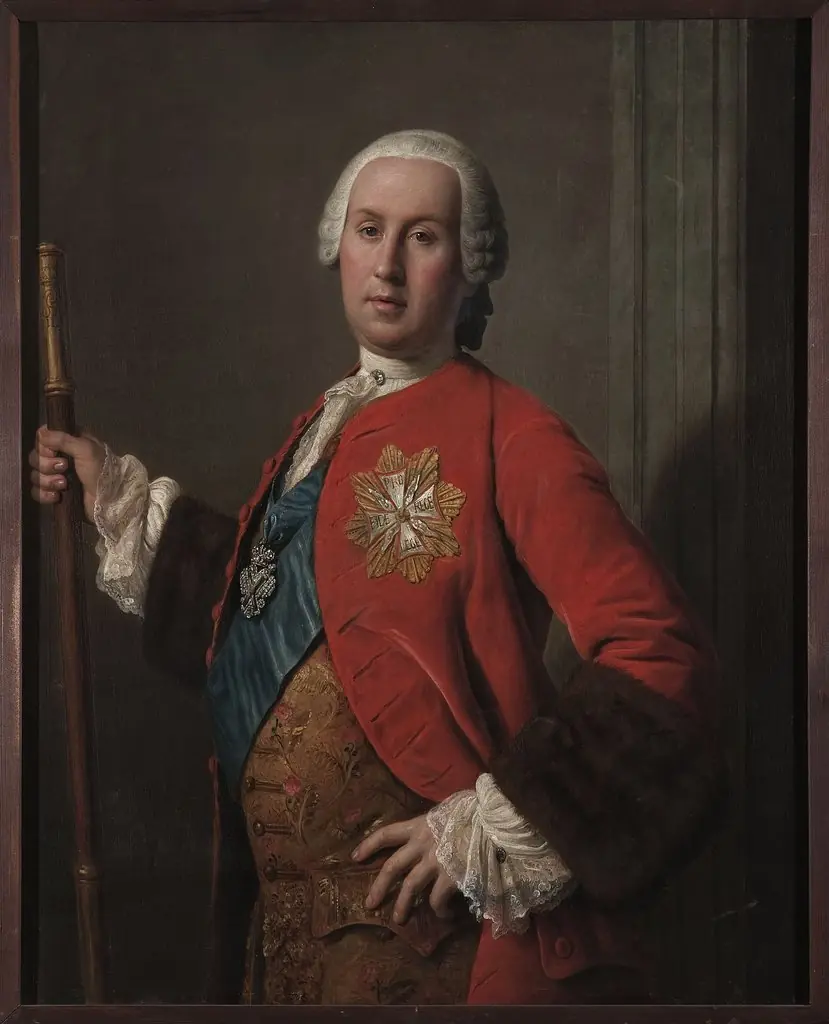 Portrait of Jerzy August Mniszech (1715–1778), his own coat of arms
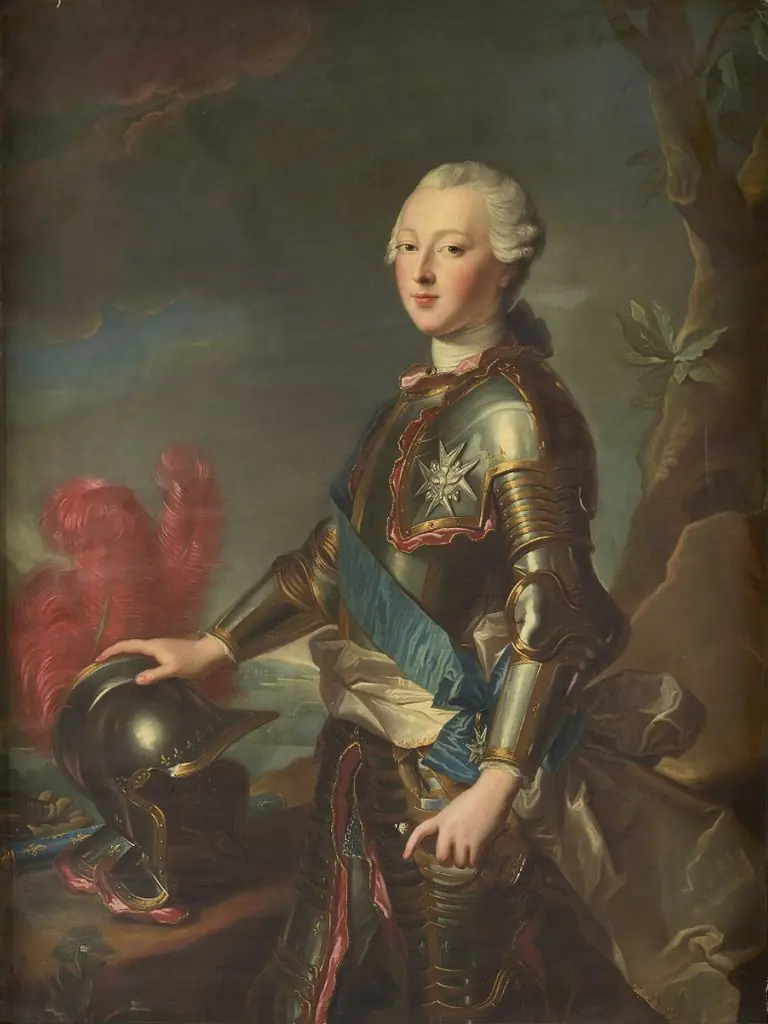 Louis V-Joseph de Bourbon, VIIIe prince de Condé
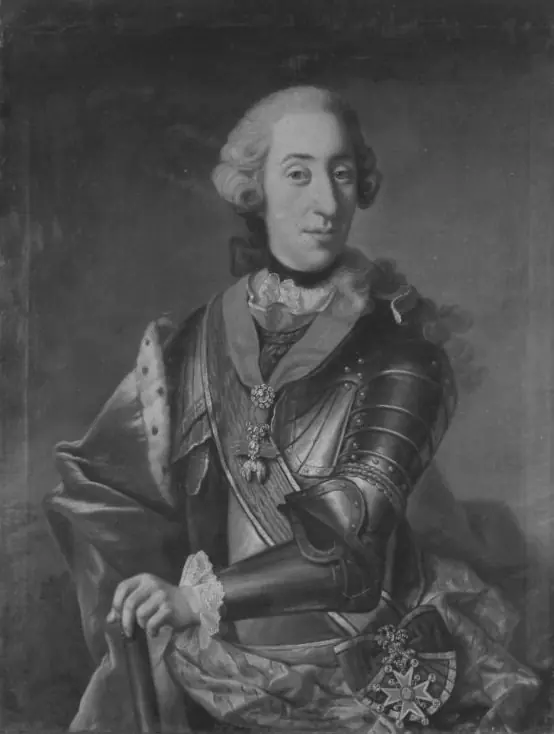 Clement Francis of Bavaria
 Carlos de Borbón rey de las Dos Sicilias