Artwork
Page from Tales of a Parrot (Tuti-nama): text page
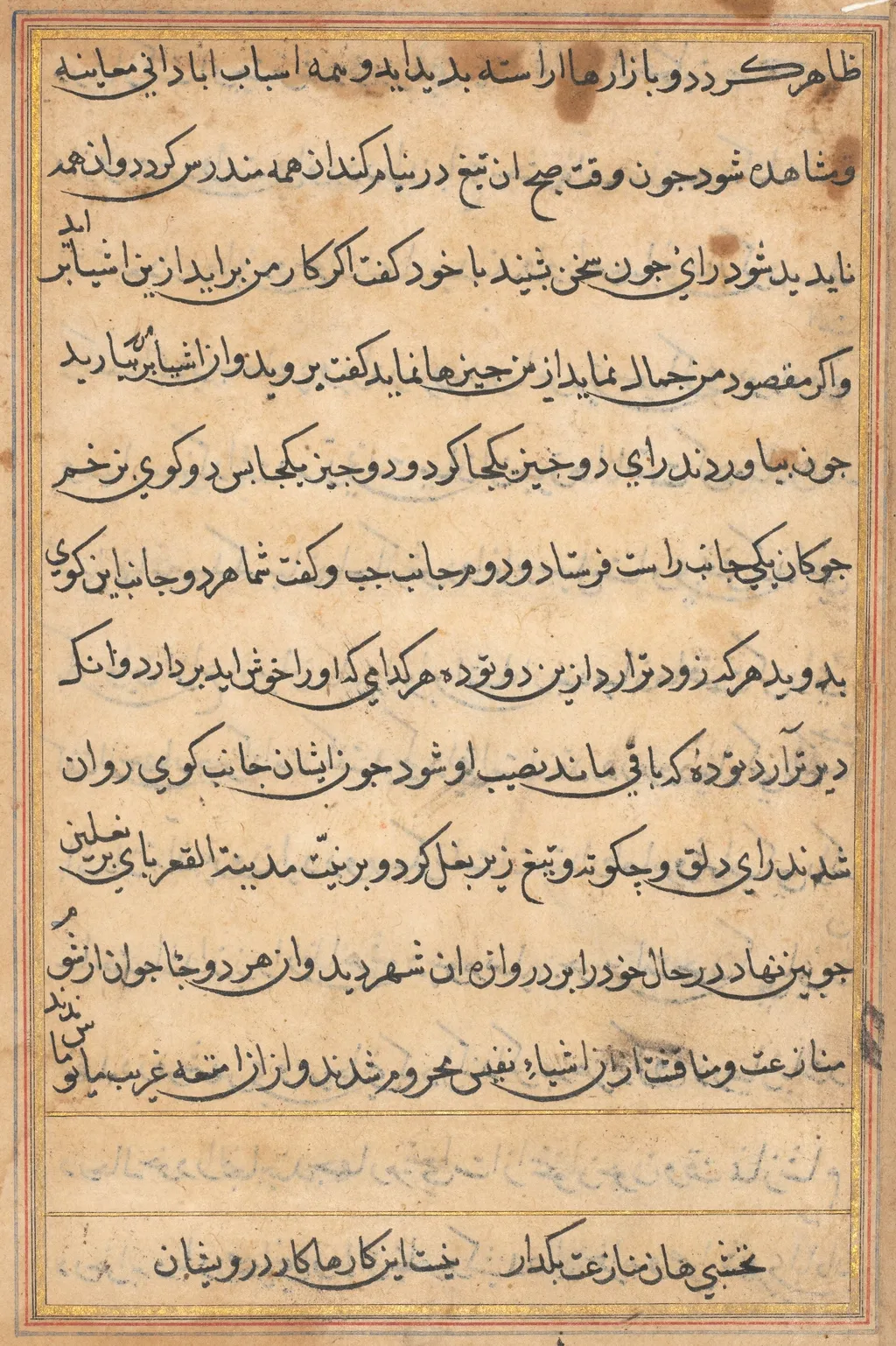
Page from Tales of a Parrot (Tuti-nama): text page is an unspecified painting. It dates from 1560 and is held in the collection of the Cleveland Museum of Art. The object is a painted page from the Persian manuscript *Tales of a Parrot* (Tuti‑nama), created as a personalized gift for Prince Salim.
About this work
Overview
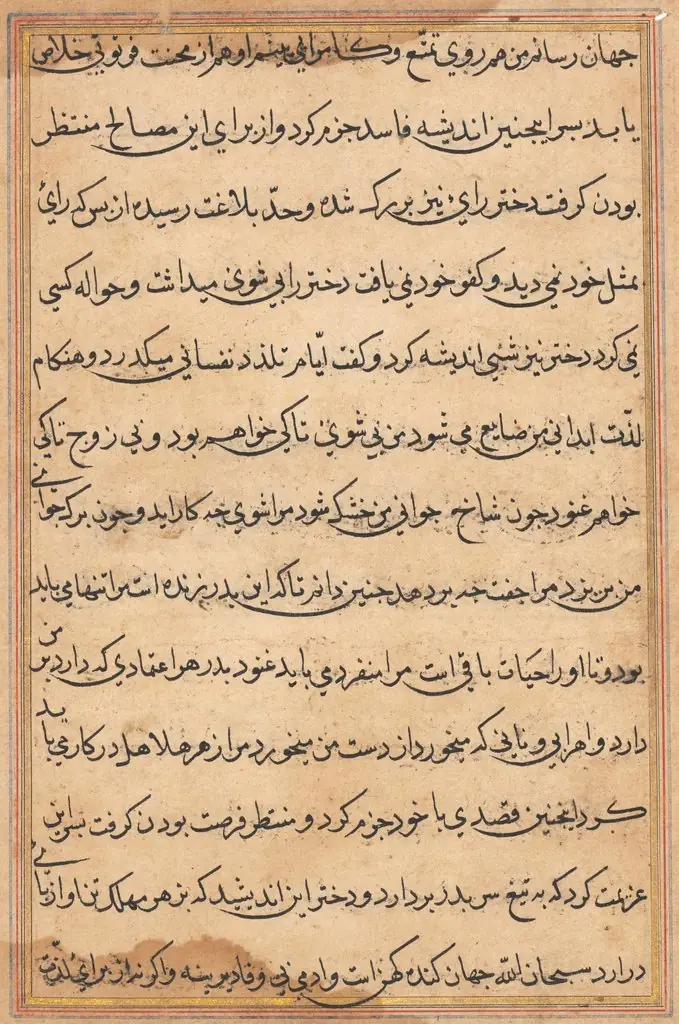
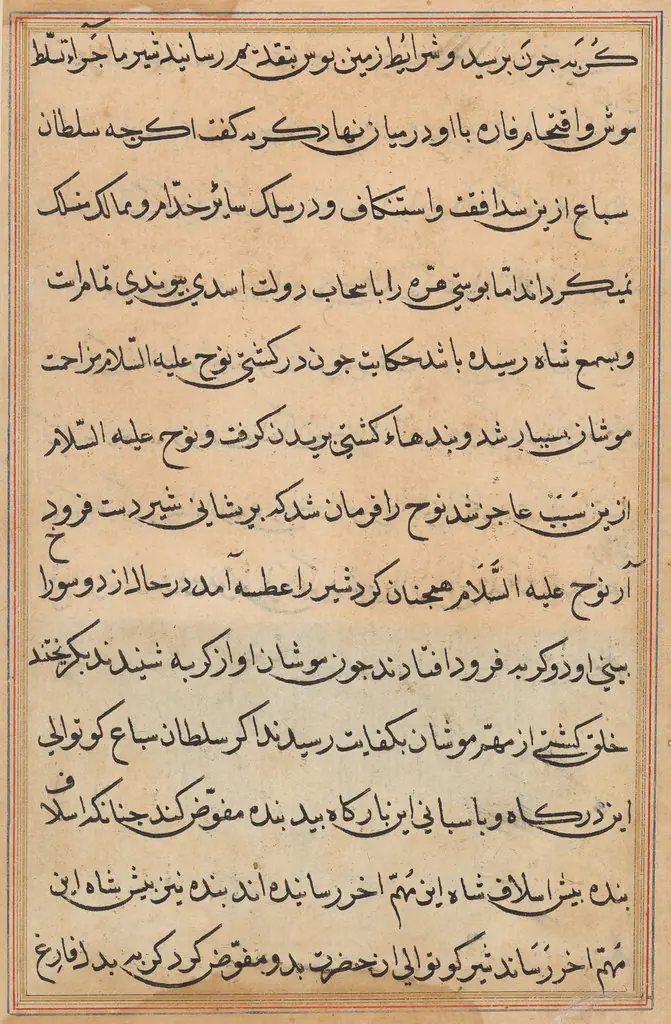
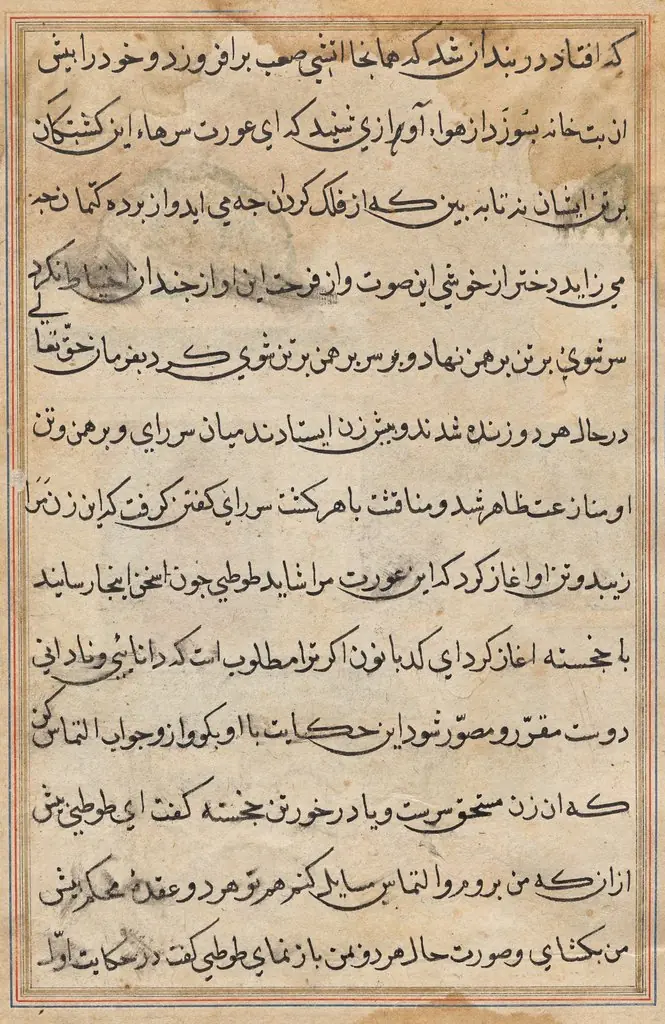
The sheet is composed of dense black calligraphy arranged in orderly rows, set against a yellowed paper substrate that suggests considerable age.
The object is a painted page from the Persian manuscript *Tales of a Parrot* (Tuti‑nama), created as a personalized gift for Prince Salim. The sheet is composed of dense black calligraphy arranged in orderly rows, set against a yellowed paper substrate that suggests considerable age. A narrow red border outlines the margins, and a subtle blue line runs along the lower edge, possibly indicating a scribe’s mark or annotation.
Subject & Meaning
The text on the page forms part of the *Tuti‑nama*, a literary work that recounts moral and romantic episodes featuring a talking parrot. Commissioned for a royal patron, the narrative was intended to entertain and instruct, reflecting the courtly taste for allegorical storytelling and the prince’s personal interests.
Technique & Style
The calligraphic script is executed in a precise, slightly slanted hand that imparts a sense of movement within the strict orthogonal layout. The ink appears freshly applied, contrasting with the aged paper, while the thin red border and faint blue line demonstrate the use of complementary pigments to frame and annotate the text without overwhelming the script.
History & Provenance
Originally produced in a Persian workshop for Prince Salim, the page later entered the collection of the Cleveland Museum of Art, where it is currently held. Its provenance traces a path from a royal manuscript to a museum setting, illustrating the transition of courtly objects into public institutions.
Context
The *Tuti‑nama* belongs to a broader tradition of illustrated Persian books that combined poetry, prose, and visual ornamentation for elite audiences. Such manuscripts were often lavishly produced, employing skilled calligraphers and painters to create objects that signified both cultural refinement and political prestige.
Artist & collection

 Page from Tales of a Parrot (Tuti-nama): text page
 Page from Tales of a Parrot (Tuti-nama): text page
 Page from Tales of a Parrot (Tuti-nama): text page
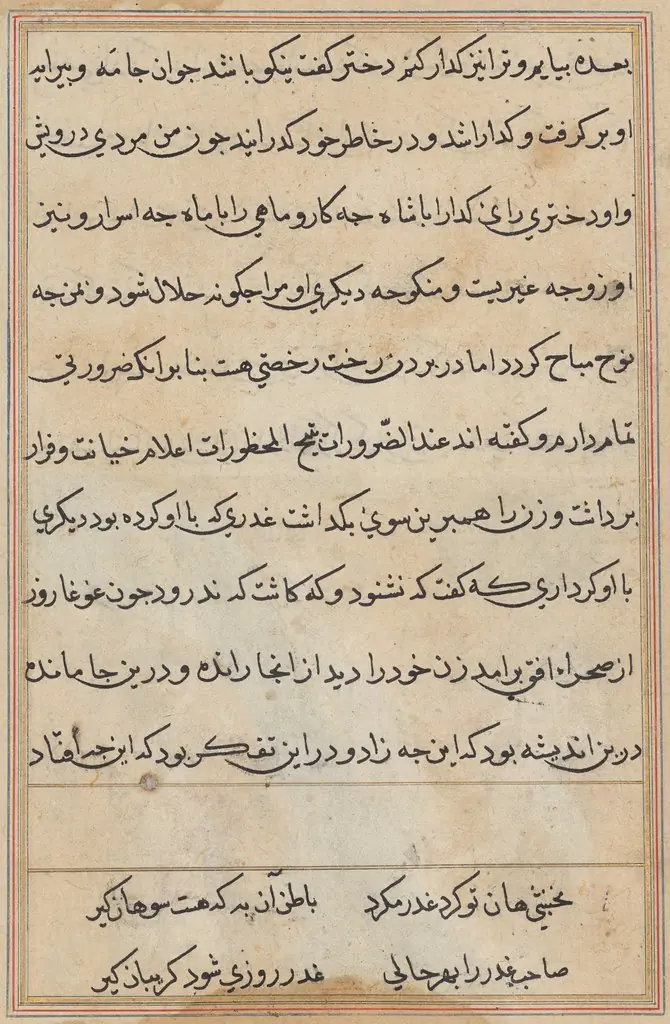 Page from Tales of a Parrot (Tuti-nama): text page
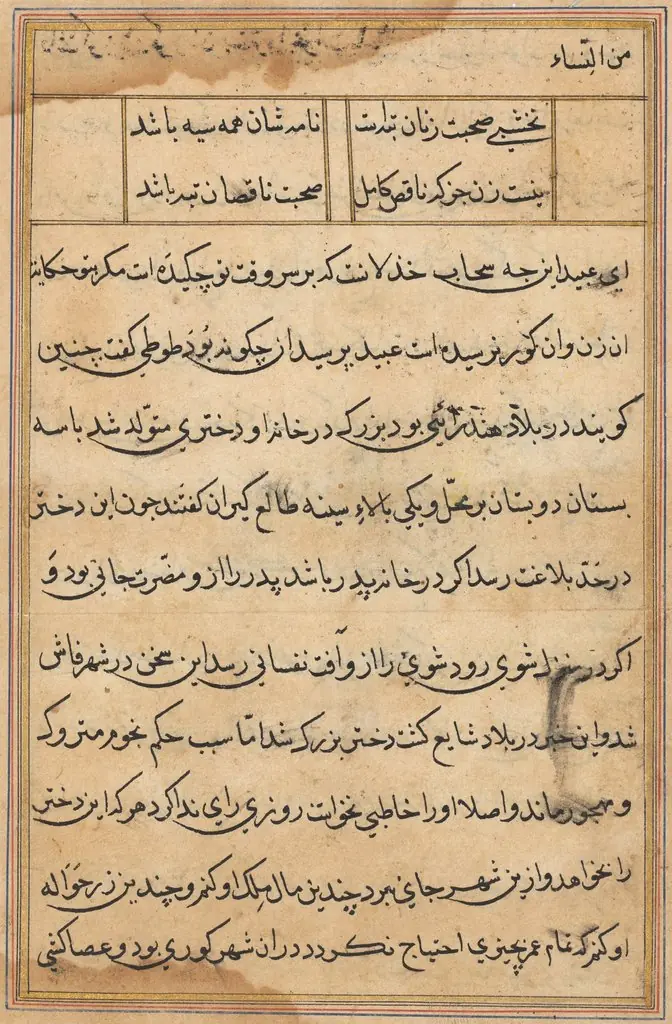 Page from Tales of a Parrot (Tuti-nama): text page
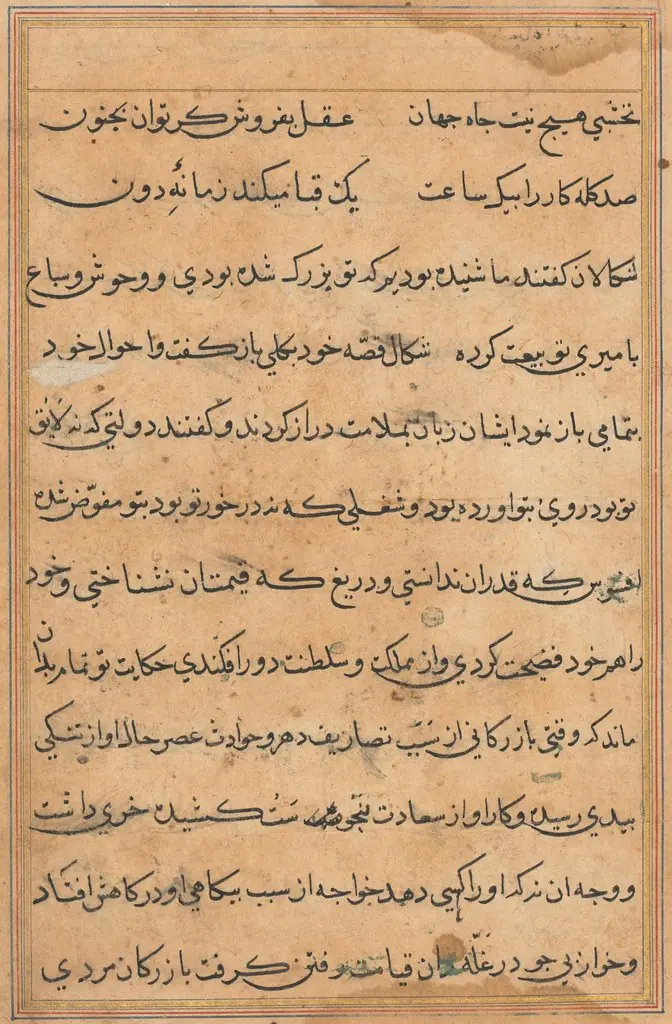 Page from Tales of a Parrot (Tuti-nama): text page
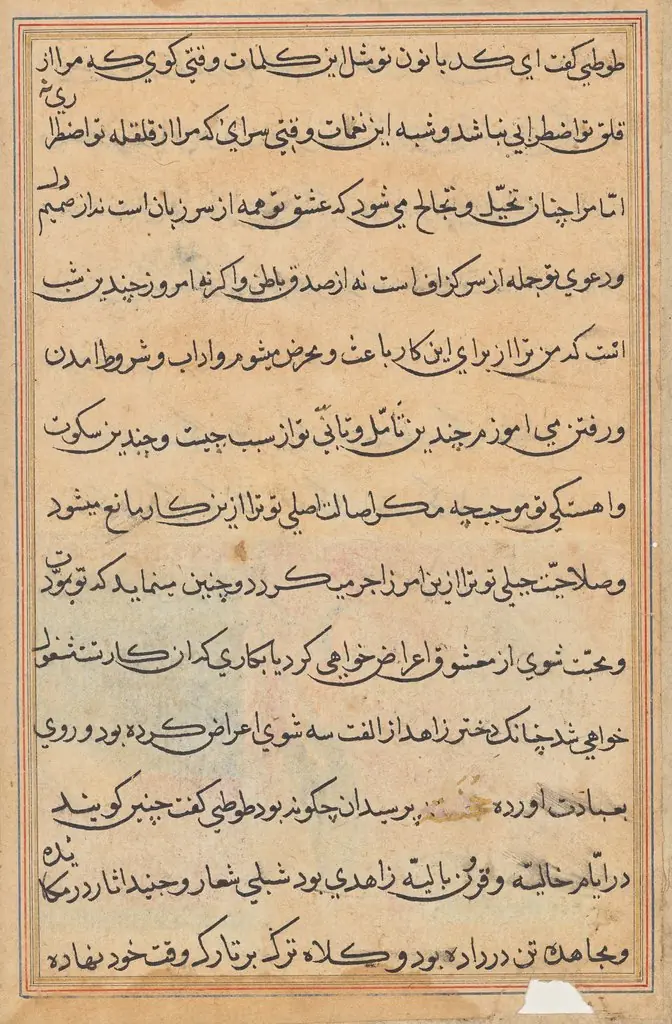 Page from Tales of a Parrot (Tuti-nama): text page
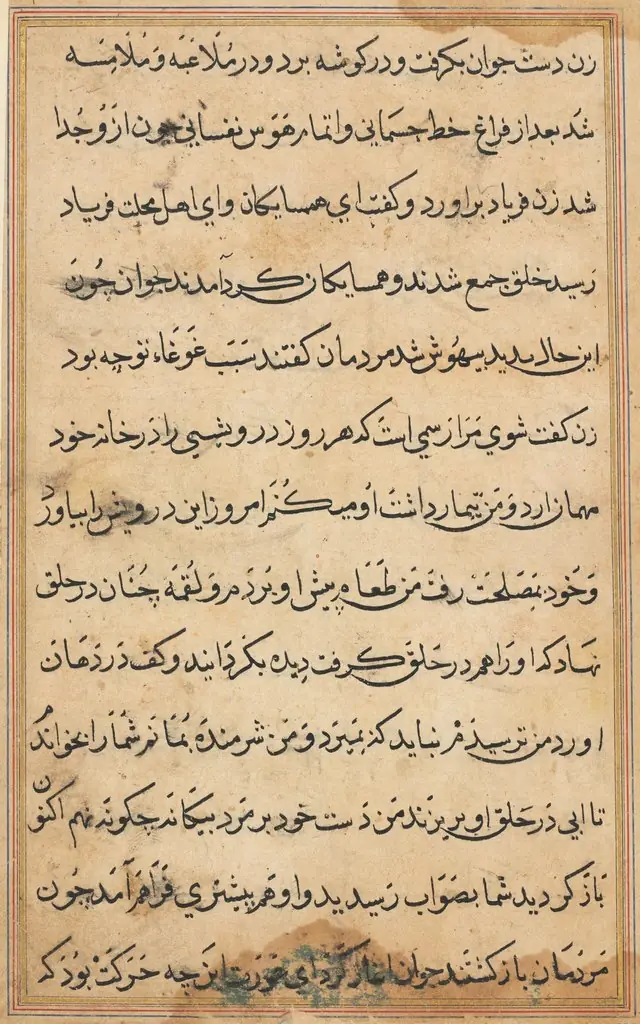 Page from Tales of a Parrot (Tuti-nama): text page
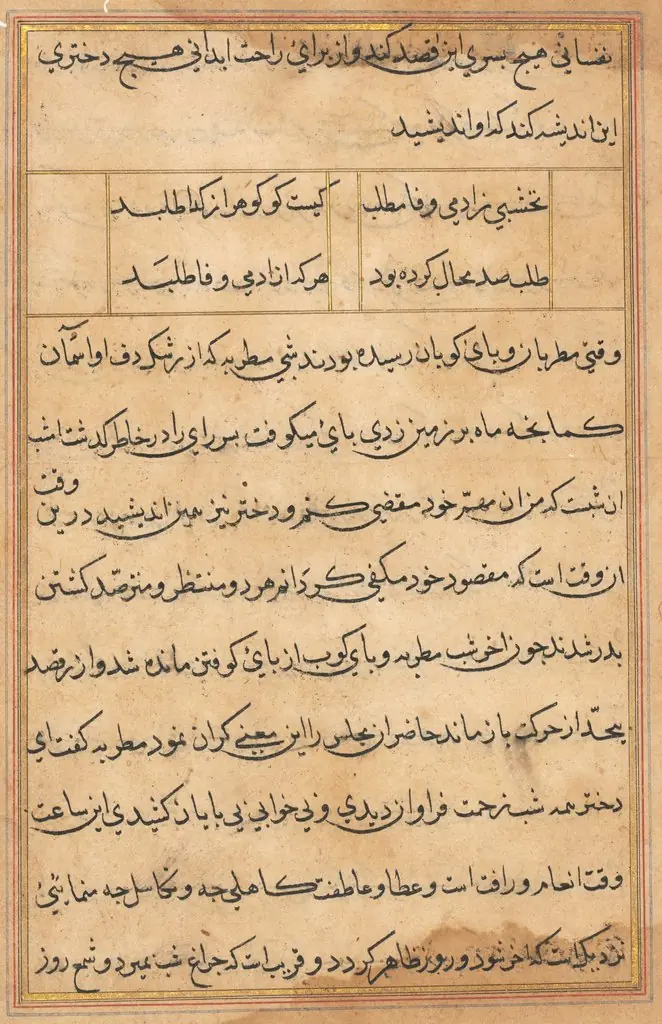 Page from Tales of a Parrot (Tuti-nama): text page
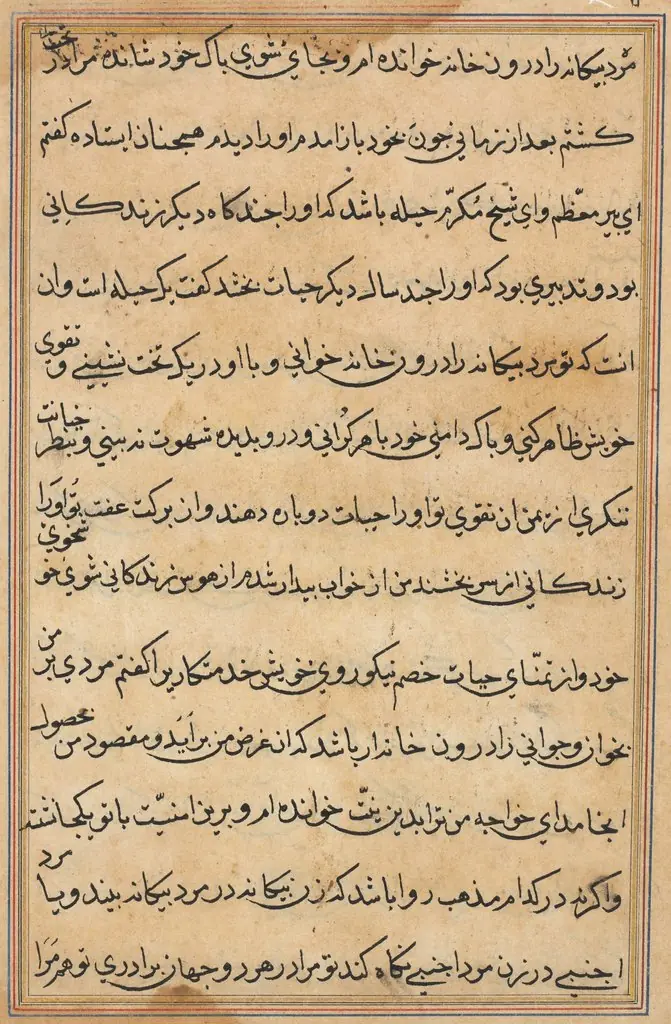 Page from Tales of a Parrot (Tuti-nama): text page
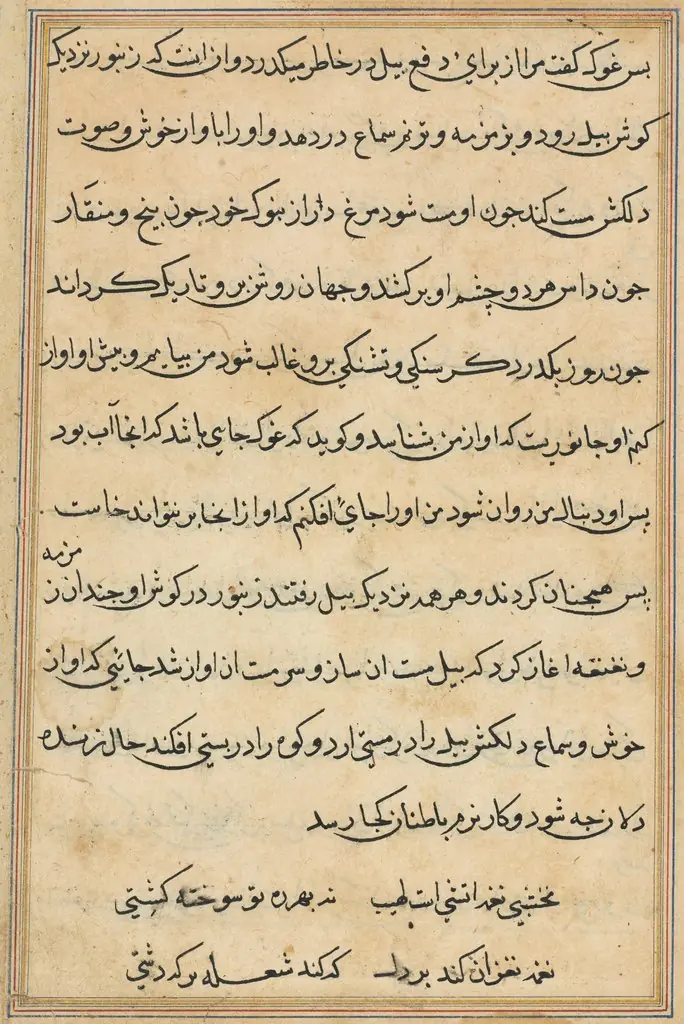 Page from Tales of a Parrot (Tuti-nama): text page