Artwork
Page from Tales of a Parrot (Tuti-nama): text page
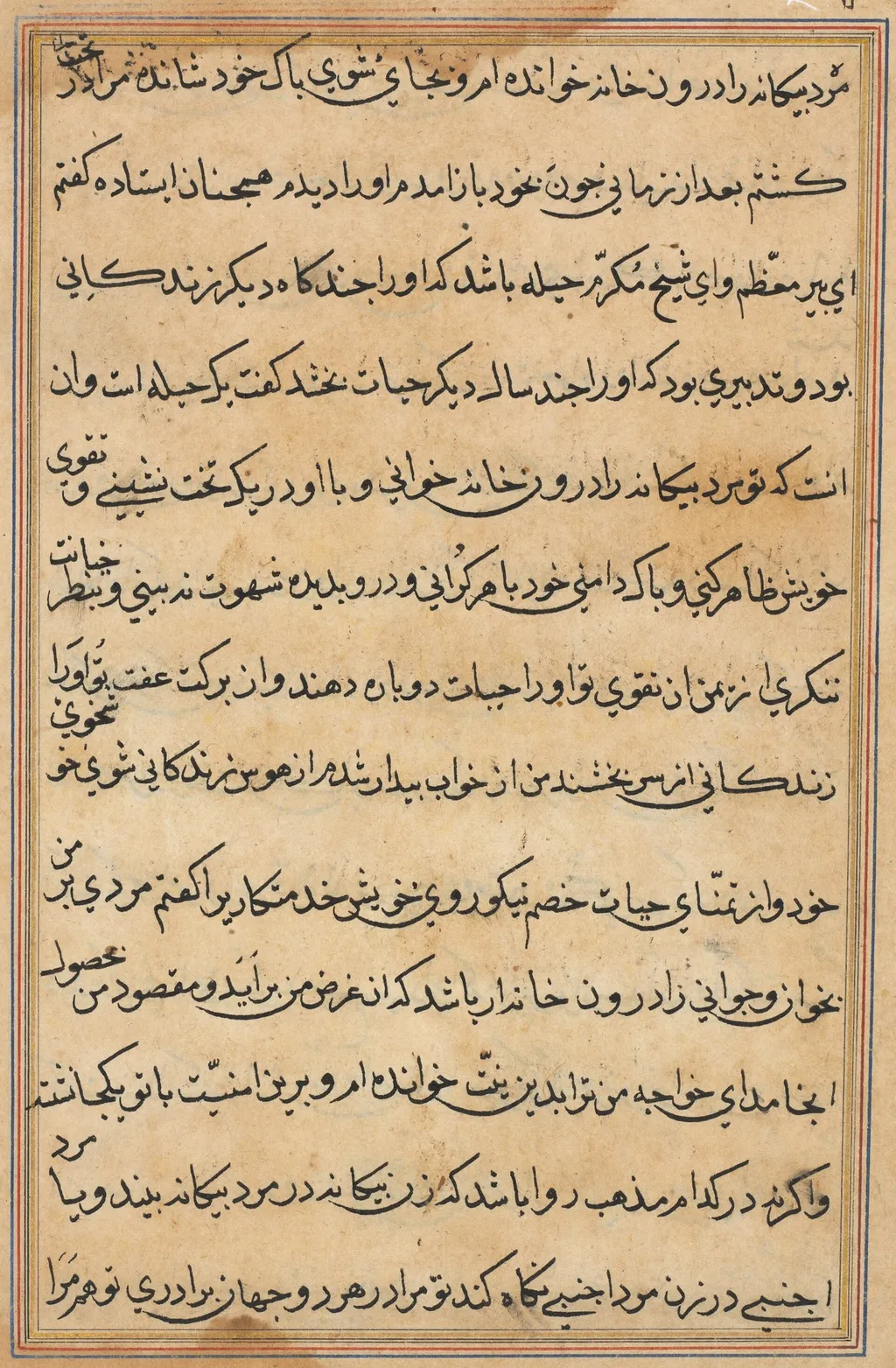
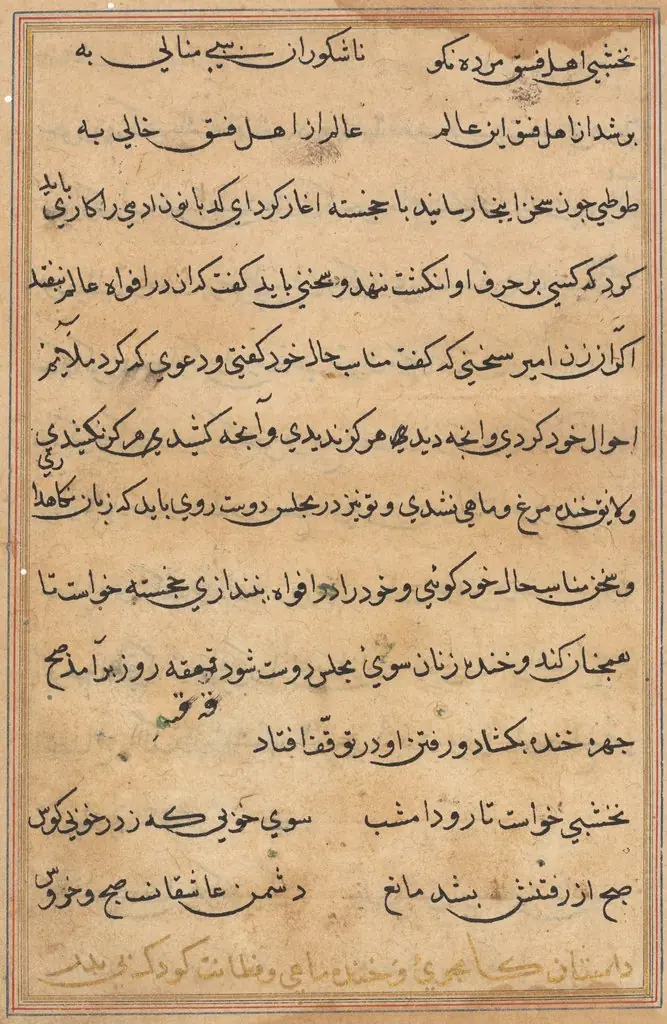
Page from Tales of a Parrot (Tuti-nama): text page is an unspecified painting. It dates from 1560 and is held in the collection of the Cleveland Museum of Art. This object is a single folio from the illustrated manuscript *Tales of a Parrot* (Tuti‑nama).
About this work
Overview
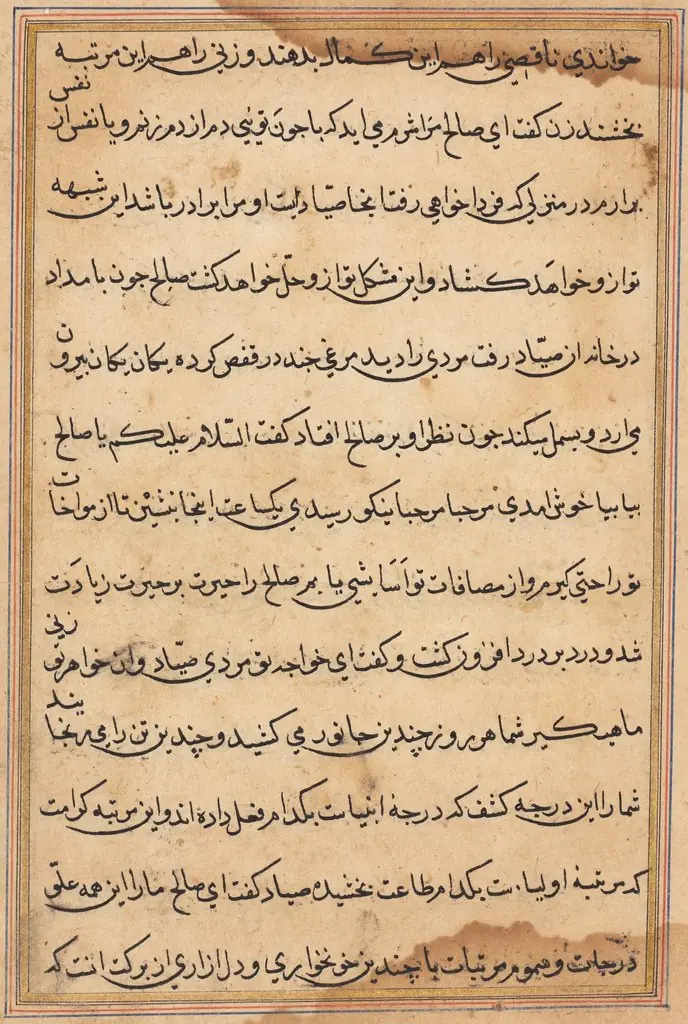
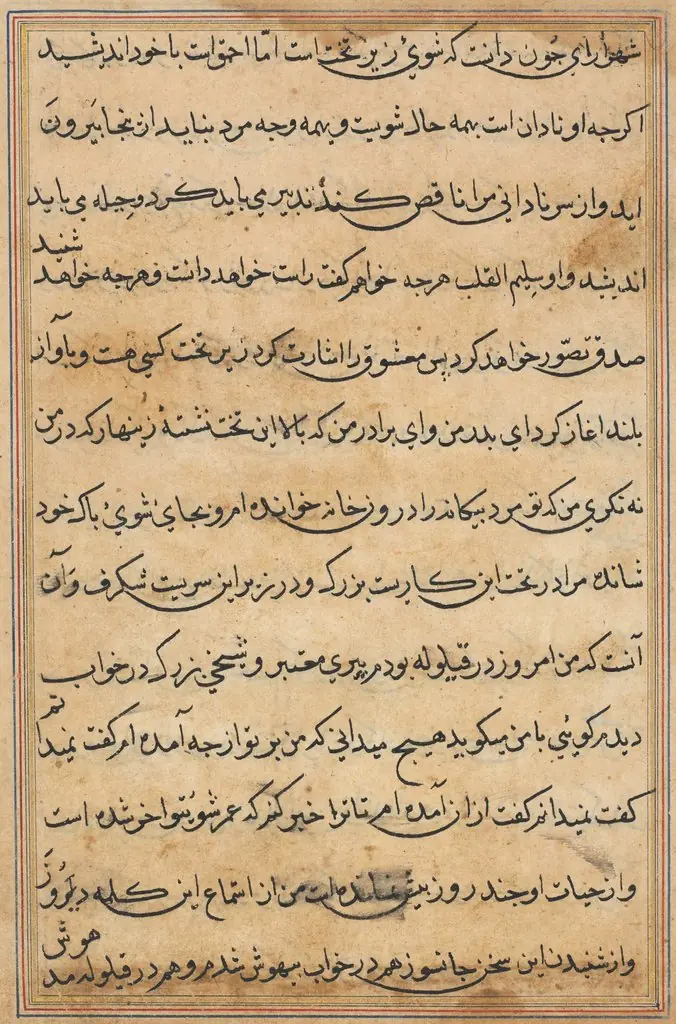
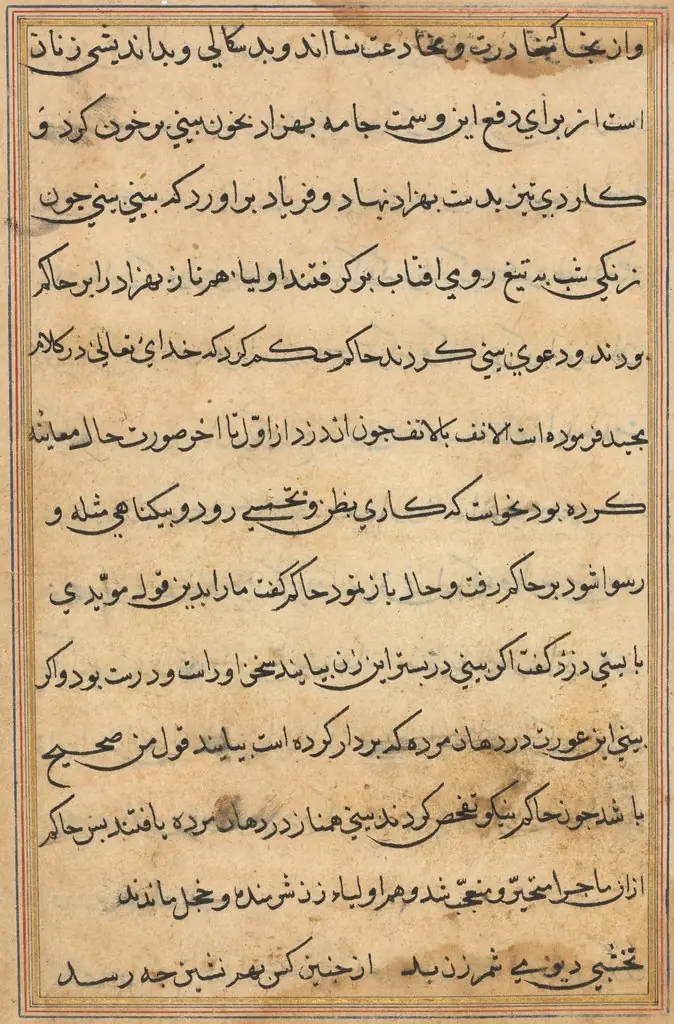
This object is a single folio from the illustrated manuscript *Tales of a Parrot* (Tuti‑nama). The page consists of dense black calligraphy arranged in tight, orderly rows on a warm‑toned paper, bordered by a slender red and gold frame. The script is legible and meticulously executed, reflecting the care of its production.
Subject & Meaning
The written passage forms part of a narrative composed for Prince Salim, a member of the Mughal court. The tale, conveyed through the voice of a parrot, was intended as moral instruction and entertainment, illustrating courtly values and the prince's cultural education.
Technique & Style
The calligrapher employed a fine black ink on paper that has acquired a slight yellowish patina with age. Letters are rendered with a blend of connected and isolated forms, characteristic of Persianate scripts of the period. The decorative red‑gold border frames the text, adding a subtle visual emphasis without overwhelming the script.
History & Provenance
The manuscript originates from the Mughal Empire of the early 17th century, a time when Persian literary traditions were flourishing at the imperial court. The folio entered the collection of the Cleveland Museum of Art through acquisition in the 20th century, where it is preserved as part of the museum’s South Asian holdings.
Context
*Tales of a Parrot* belongs to a broader genre of illustrated books created for royal patrons, combining literary content with ornamental manuscript art. Such works served both as pedagogical tools for young princes and as displays of the court’s artistic sophistication, integrating Persian literary motifs with local artistic conventions.
Artist & collection

 Page from Tales of a Parrot (Tuti-nama): text page
 Page from Tales of a Parrot (Tuti-nama): text page
 Page from Tales of a Parrot (Tuti-nama): text page
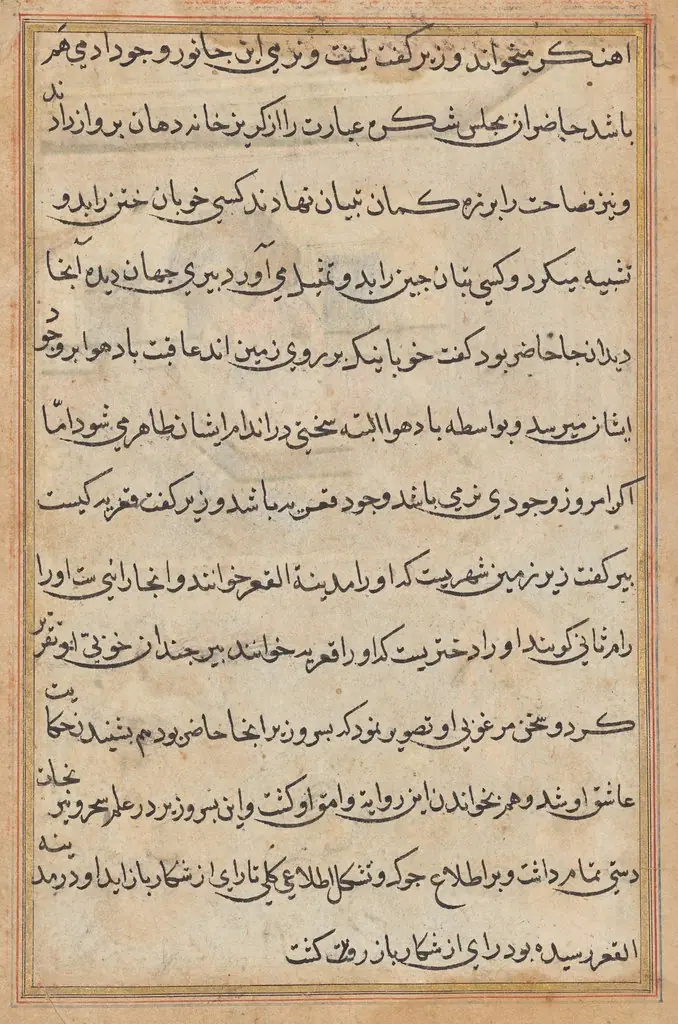 Page from Tales of a Parrot (Tuti-nama): text page
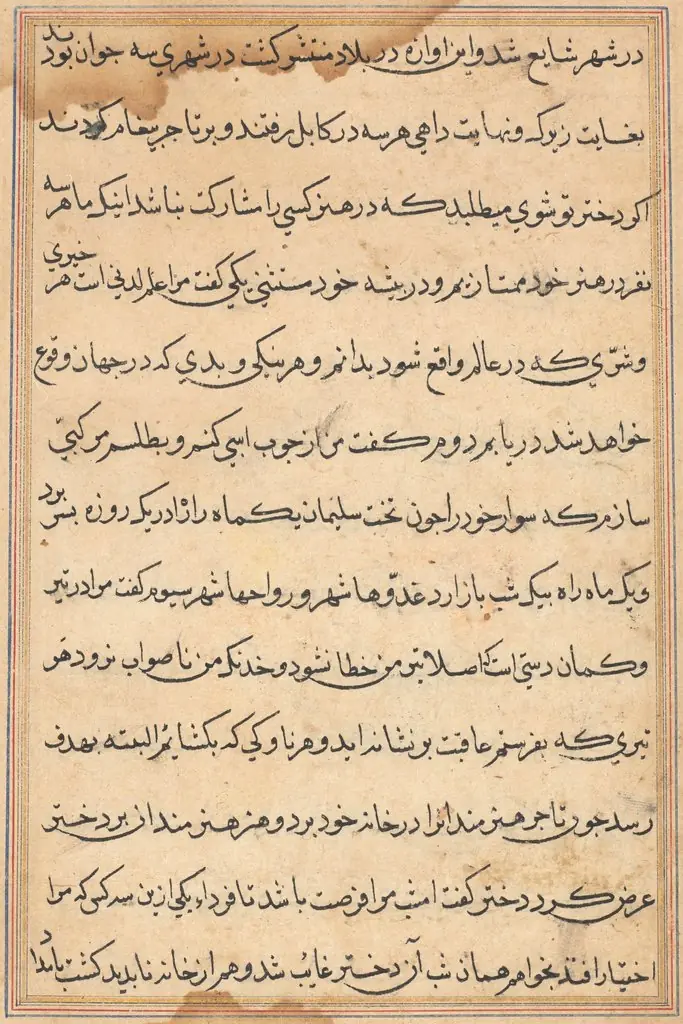 Page from Tales of a Parrot (Tuti-nama): text page
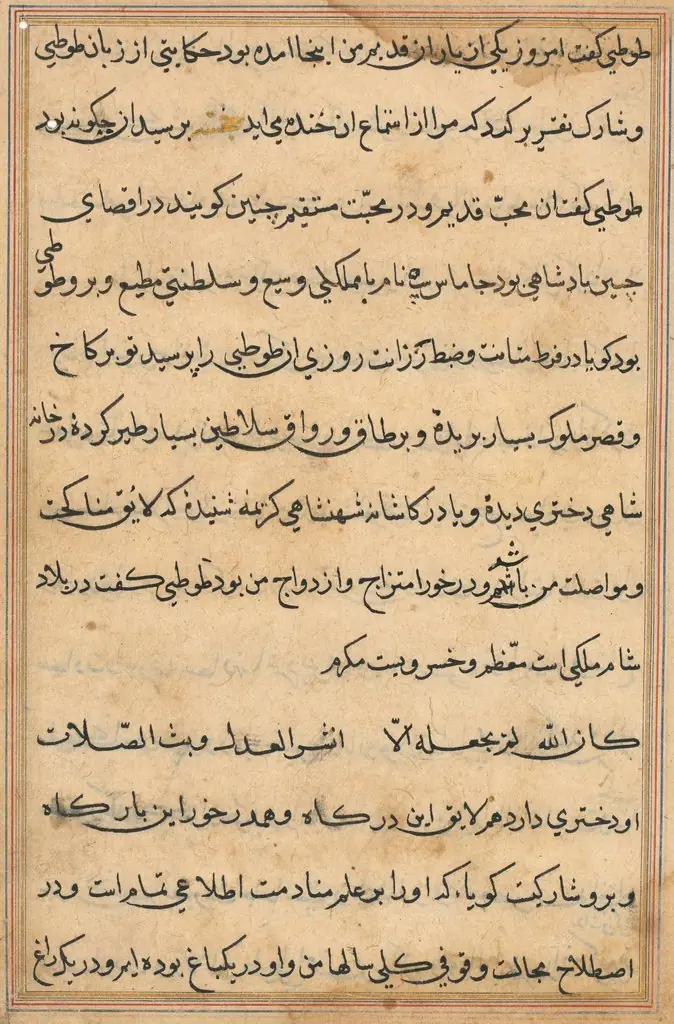 Page from Tales of a Parrot (Tuti-nama): text page
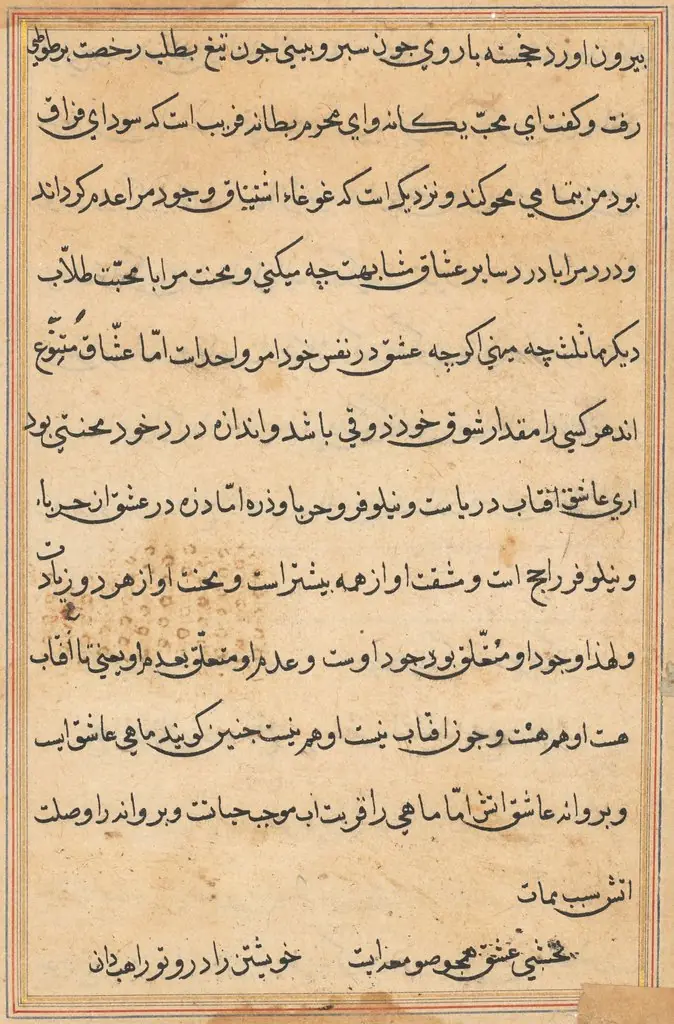 Page from Tales of a Parrot (Tuti-nama): text page
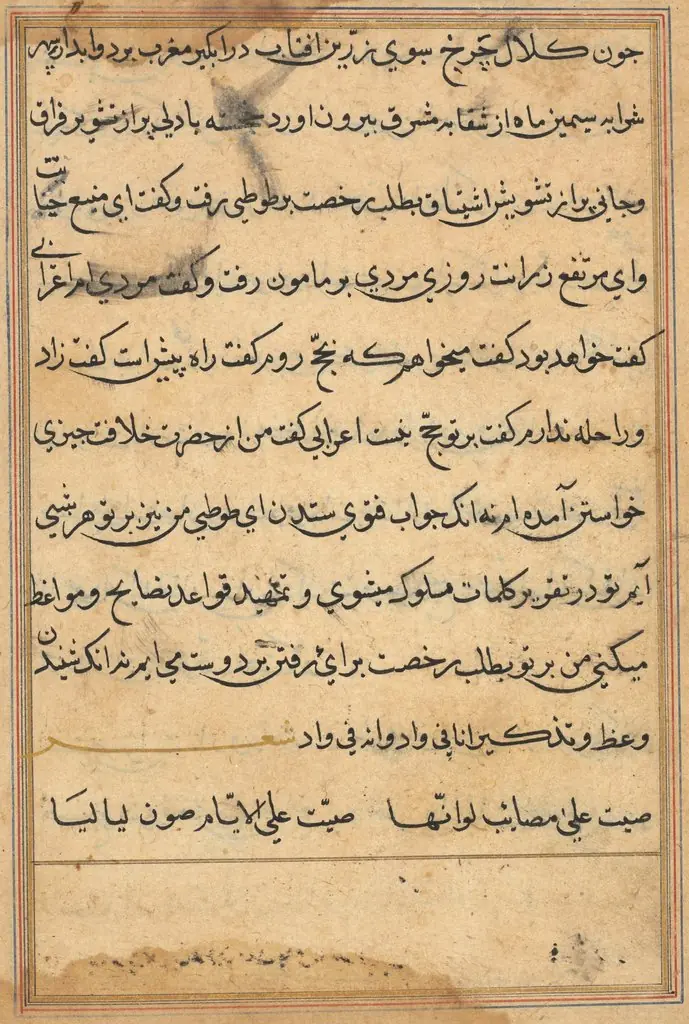 Page from Tales of a Parrot (Tuti-nama): text page
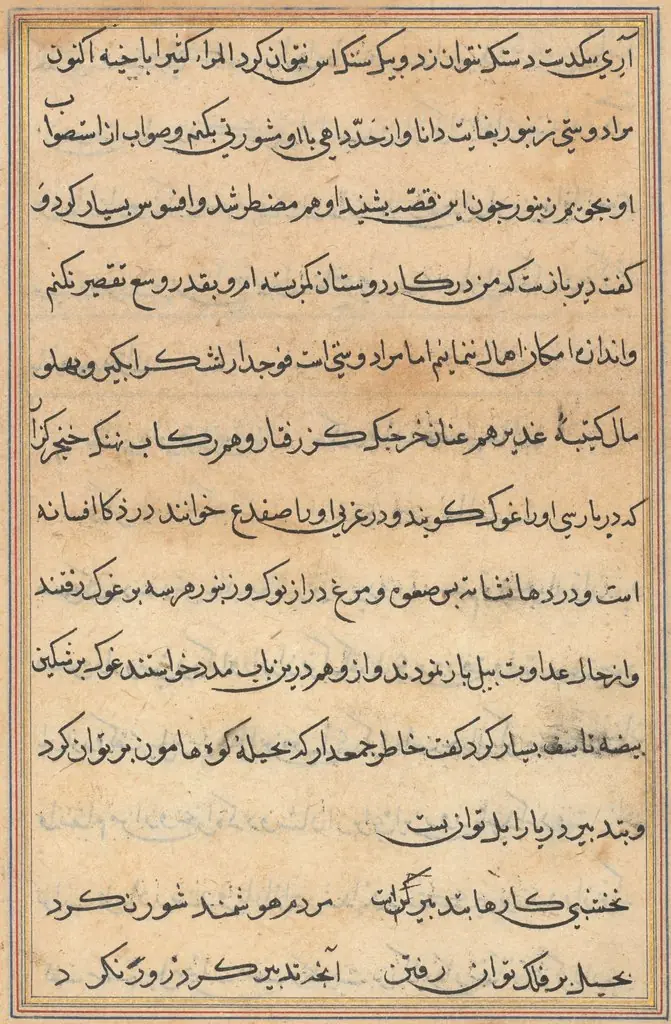 Page from Tales of a Parrot (Tuti-nama): text page
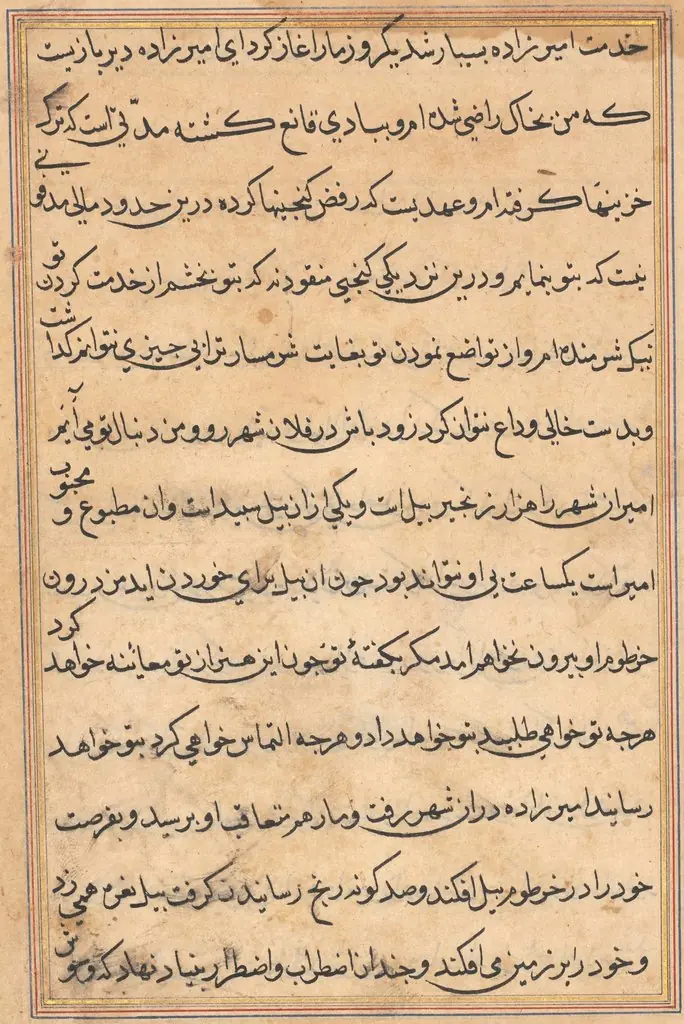 Page from Tales of a Parrot (Tuti-nama): text page
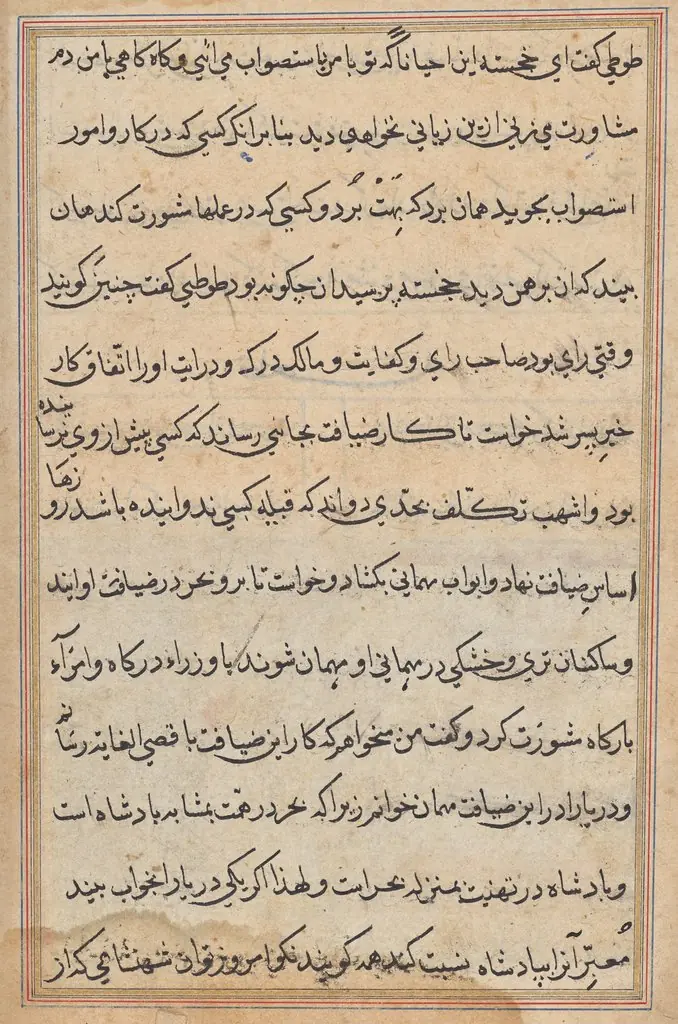 Page from Tales of a Parrot (Tuti-nama): text page
 Page from Tales of a Parrot (Tuti-nama): text page