Artwork
Page from Tales of a Parrot (Tuti-nama): text page
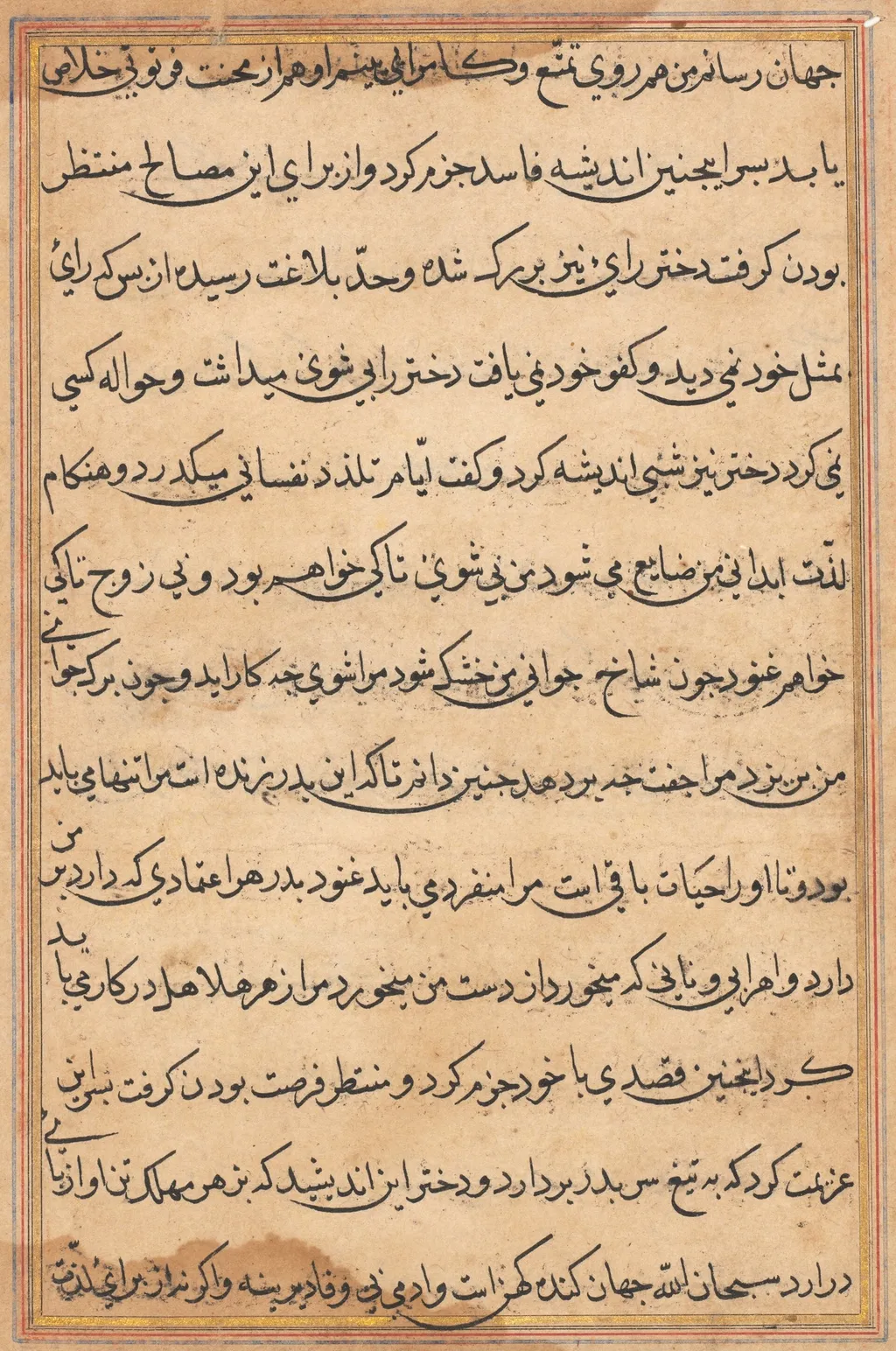
Page from Tales of a Parrot (Tuti-nama): text page is an unspecified painting. It dates from 1560 and is held in the collection of the Cleveland Museum of Art. The object is a single folio from the illustrated manuscript known as the *Tuti‑nama* or *Tales of a Parrot*.
About this work
Overview
The page consists of black ink calligraphy on a light‑colored paper, framed by ornamental borders that echo the aesthetic of Persianate book production.
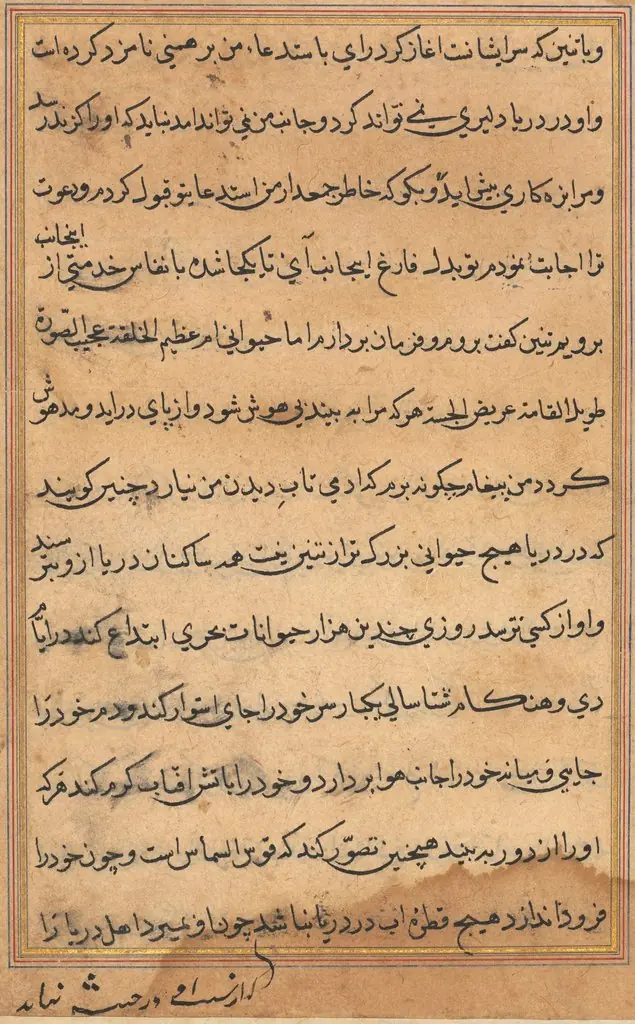
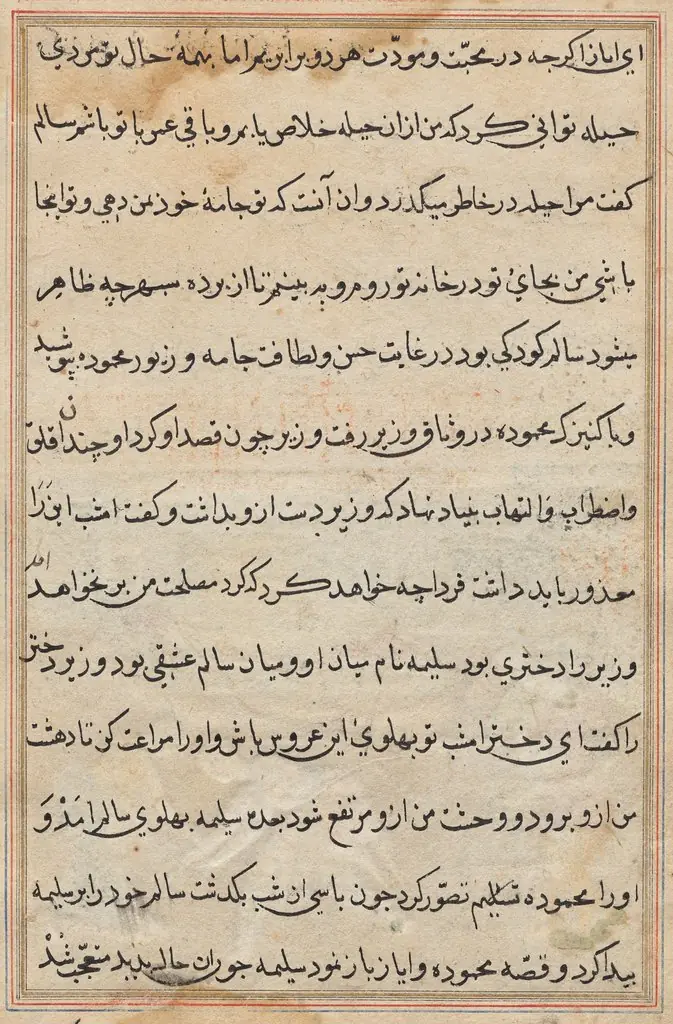
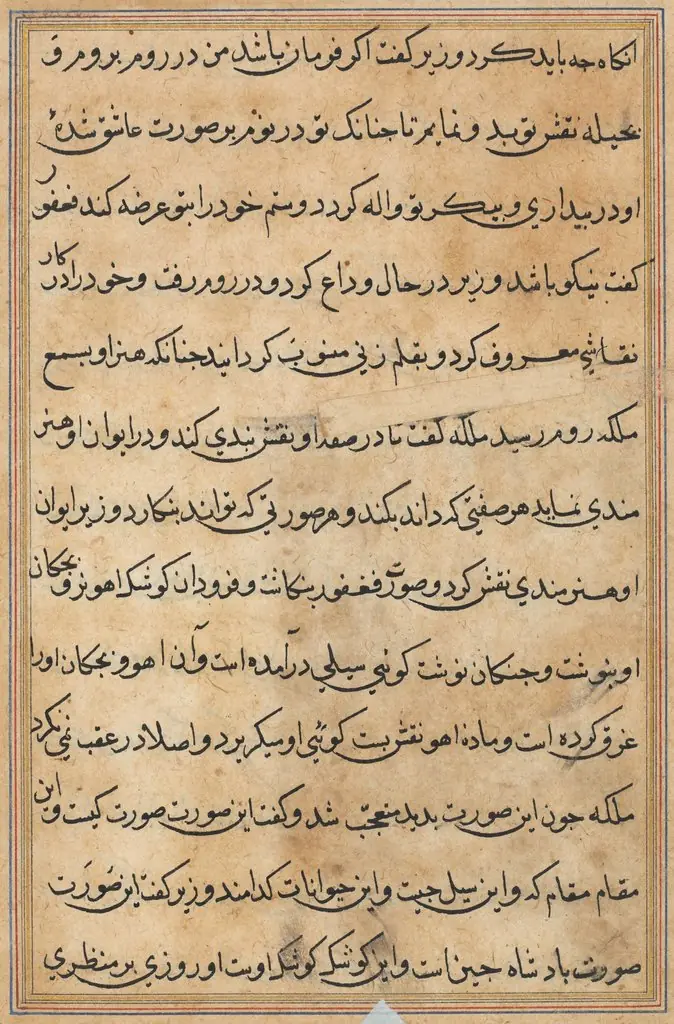
The object is a single folio from the illustrated manuscript known as the *Tuti‑nama* or *Tales of a Parrot*. The page consists of black ink calligraphy on a light‑colored paper, framed by ornamental borders that echo the aesthetic of Persianate book production. The text is composed in a flowing script typical of Arabic‑derived writing systems, suggesting a literary work intended for an elite audience.
Subject & Meaning
The verses on the page form part of a narrative poem or story, a common genre in courtly literature where a parrot recounts moral or romantic tales. While the precise content of this fragment is not transcribed here, the *Tuti‑nama* traditionally served as an entertaining and didactic collection for royal patrons, blending allegory with courtly values.
Technique & Style
The calligrapher employed a fine, uniform black ink applied with a reed pen, producing a graceful, cursive hand that balances legibility with ornamental flourish. The surrounding decorative elements consist of linear motifs and geometric shapes, executed in a restrained palette that emphasizes the textual content without overwhelming it.
History & Provenance
The manuscript was commissioned for Prince Salim, the heir apparent of the Mughal empire in the early 17th century. As a royal commission, the *Tuti‑nama* reflects the patronage practices of the Mughal court, where illuminated books were produced by skilled scribes and artists to demonstrate both piety and cultural sophistication.
Context
Produced within the Mughal artistic milieu, the folio illustrates the synthesis of Persian literary tradition and Indian courtly culture. The use of Arabic‑style script and Persian decorative motifs aligns the work with the broader Persianate world, while its creation for a Mughal prince situates it within the empire’s efforts to forge a distinct yet cosmopolitan identity.
Artist & collection

 Page from Tales of a Parrot (Tuti-nama): text page
 Page from Tales of a Parrot (Tuti-nama): text page
 Page from Tales of a Parrot (Tuti-nama): text page
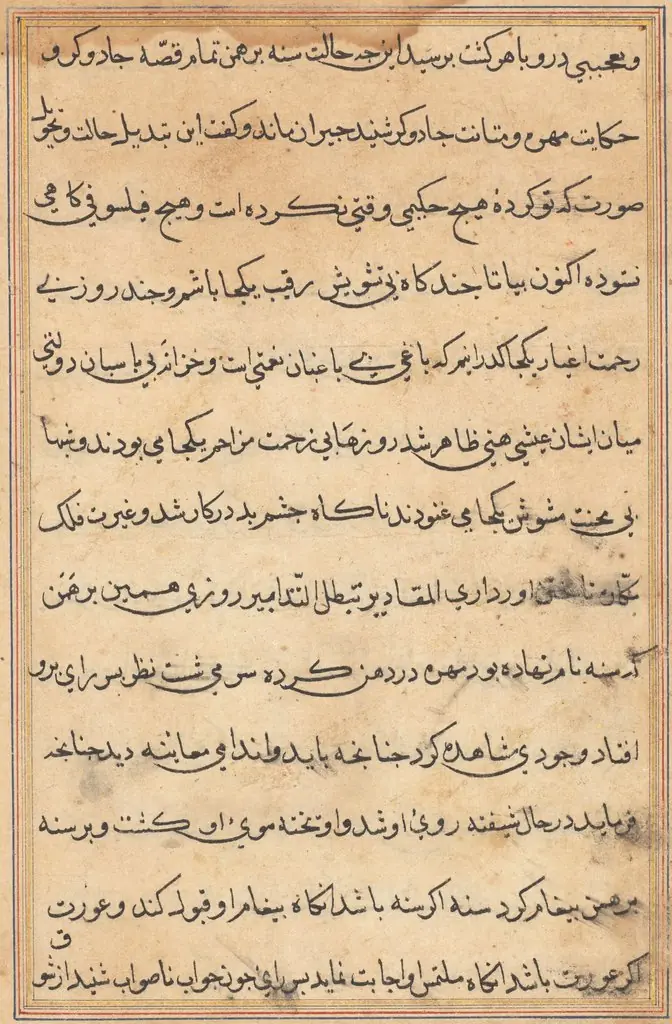 Page from Tales of a Parrot (Tuti-nama): text page
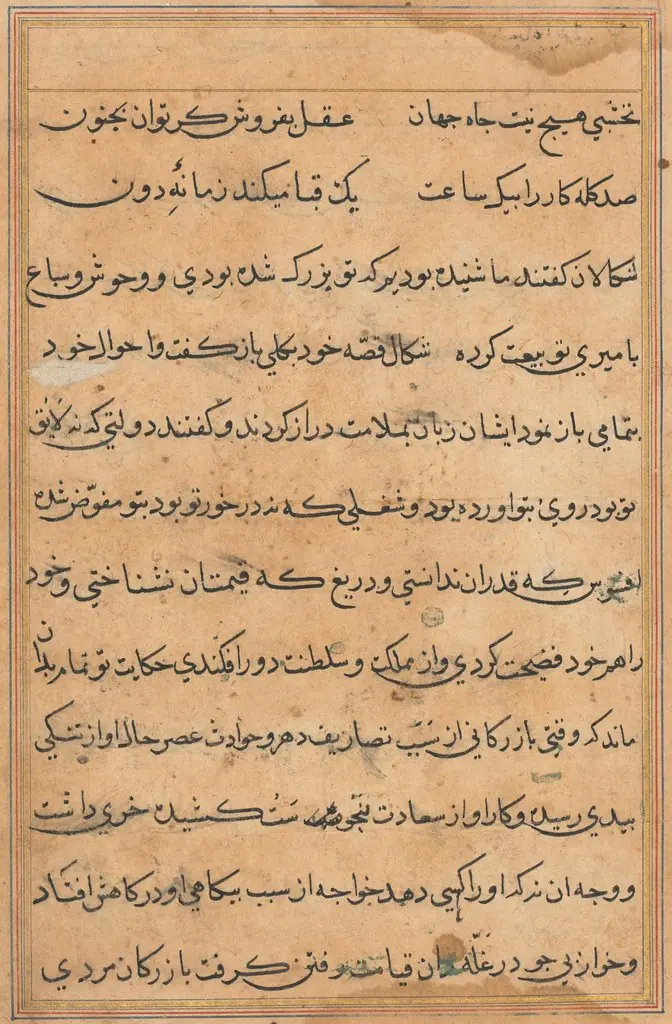 Page from Tales of a Parrot (Tuti-nama): text page
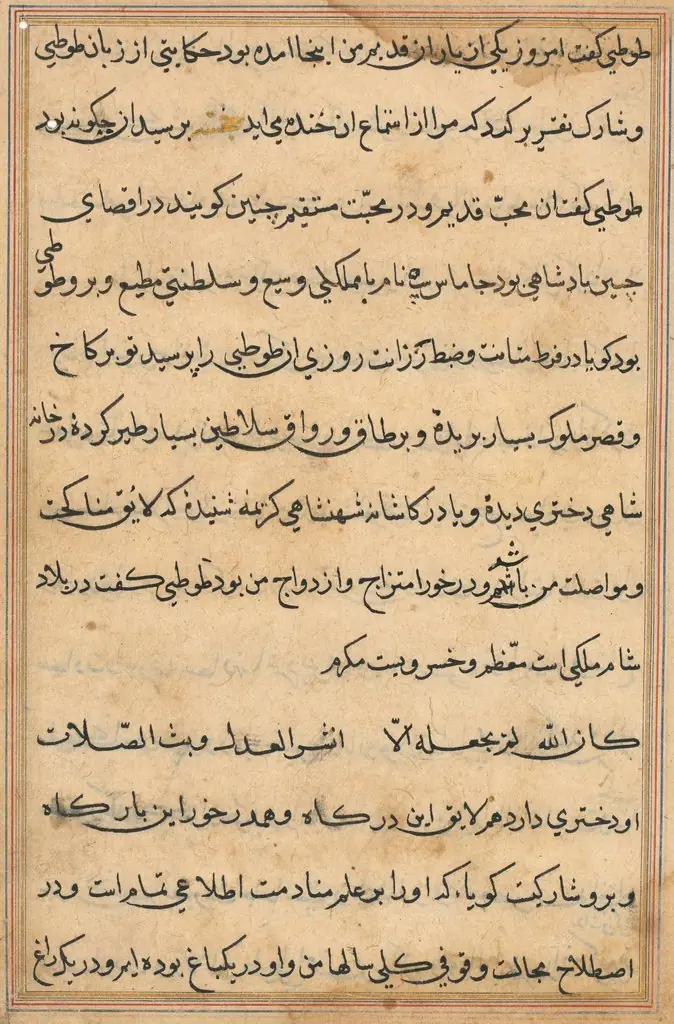 Page from Tales of a Parrot (Tuti-nama): text page
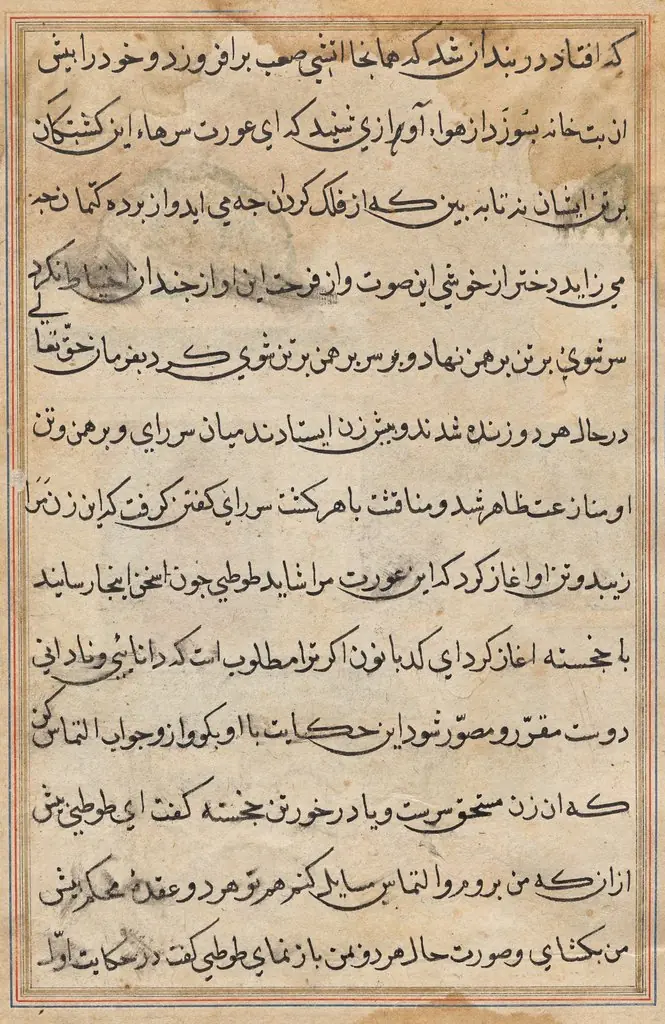 Page from Tales of a Parrot (Tuti-nama): text page
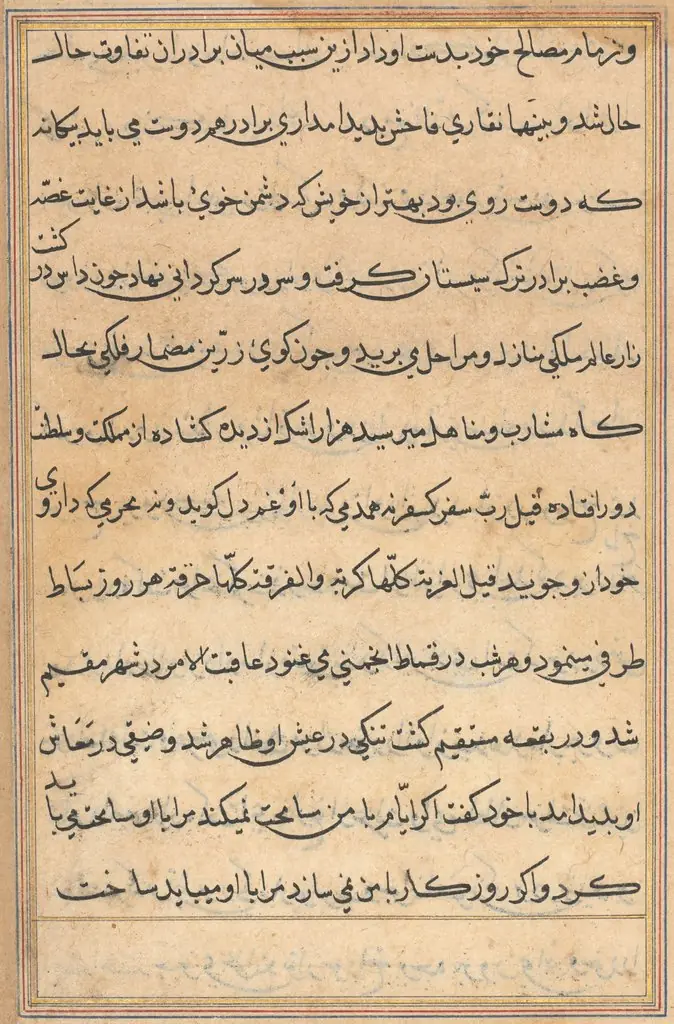 Page from Tales of a Parrot (Tuti-nama): text page
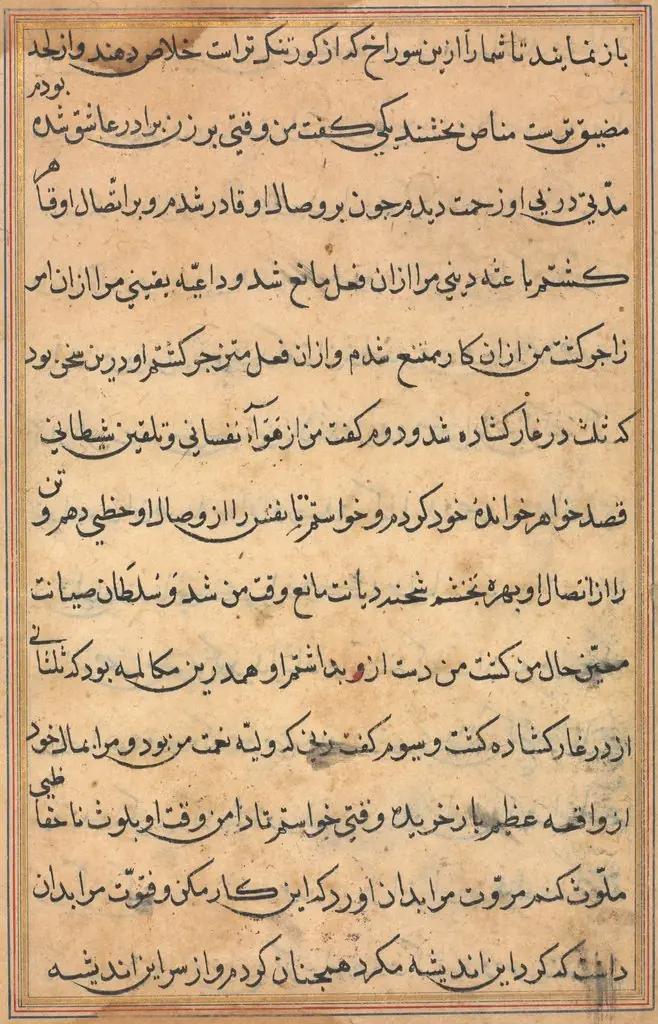 Page from Tales of a Parrot (Tuti-nama): text page
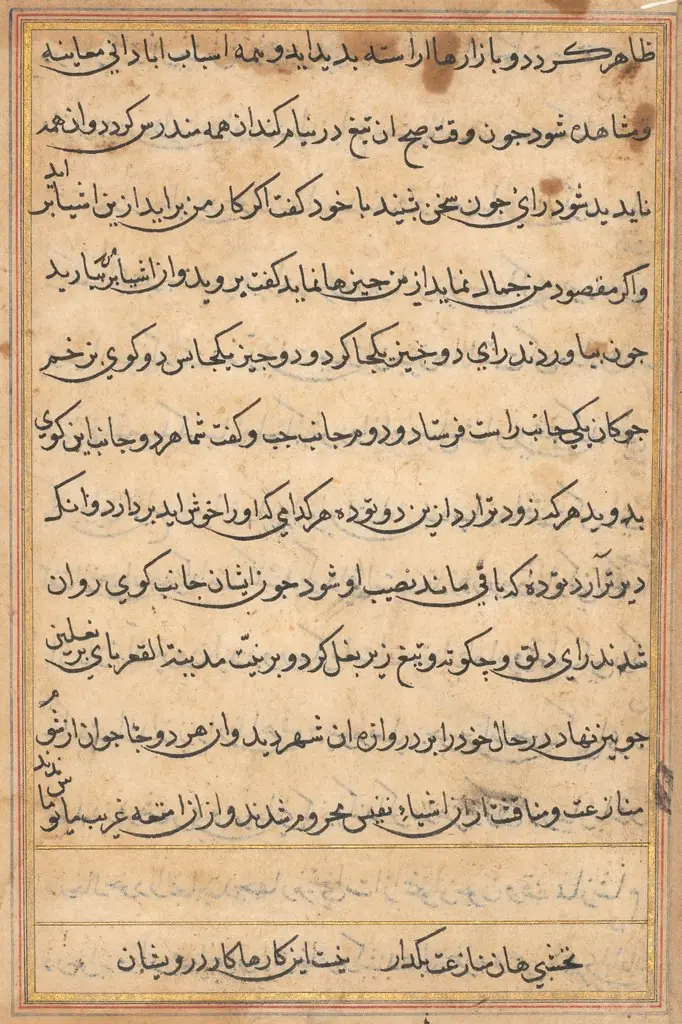 Page from Tales of a Parrot (Tuti-nama): text page