Artwork
Profane paintings from Sigena: Retinue of pilgrims and assault on a castle (Saint John of Acre?)
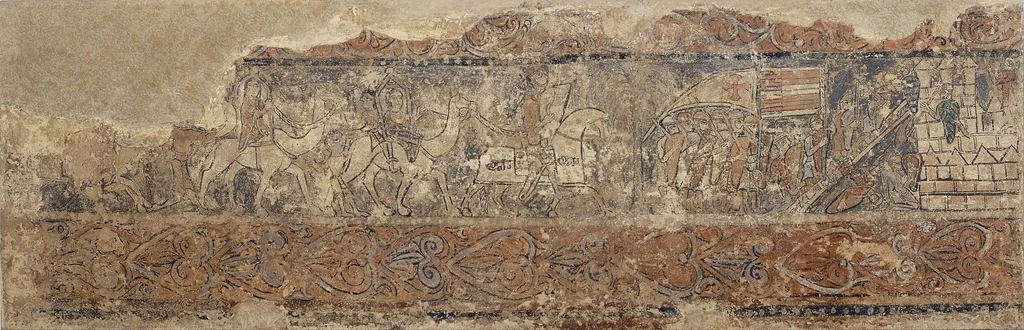
Profane paintings from Sigena: Retinue of pilgrims and assault on a castle (Saint John of Acre?) is an unspecified painting by Unknown. It dates from 1200 and is held in the collection of the Museu Nacional d'Art de Catalunya. The work, titled *Profane paintings from Sigena: Retinue of pilgrims and assault on a castle (Saint John of Acre?
About this work
Overview
The upper register depicts a procession of mounted figures, while the lower register presents a fortified wall under attack.
The work, titled *Profane paintings from Sigena: Retinue of pilgrims and assault on a castle (Saint John of Acre?)*, is a medieval panel that juxtaposes two narrative scenes. The upper register depicts a procession of mounted figures, while the lower register presents a fortified wall under attack. The composition is divided horizontally, creating a visual contrast between peaceful travel and violent conflict.
Subject & Meaning
The upper scene likely represents a pilgrimage entourage, possibly linked to the cult of Saint John of Acre, a figure associated with crusading journeys. The lower scene shows a siege or assault on a castle, suggesting themes of warfare, protection, or the perils faced by travelers. Together, the panels may comment on the dual nature of medieval life, intertwining devotion and martial reality.
Technique & Style
Executed in tempera on wood, the painting displays the linear precision and flat modeling typical of late medieval Iberian art. Figures are rendered with limited shading, and the use of bright, albeit faded, pigments emphasizes the narrative over naturalistic space. The composition relies on clear outlines and hierarchical scaling to identify key characters.
History & Provenance
The panels originate from the monastic complex of Sigena, a former Cistercian foundation in Spain, where they served a decorative or didactic function. Their exact date is uncertain, but stylistic analysis places them in the 13th‑14th century. The work entered museum collections after the dissolution of the monastery in the 19th century.
Context
During the medieval period, itinerant pilgrimages to holy sites such as Jerusalem were common, and the depiction of both pilgrimage and siege reflects contemporary concerns about safe passage and the threat of conflict. The reference to Saint John of Acre connects the imagery to the crusader presence in the Holy Land, a subject of interest in Iberian religious art.
Artist & collection

 Domestic Scene
 Giacomo and Cardinal Marco, investing Andrea, Abbot of San Zeno, with his Benefice
 The Nymph of Fontainebleau
 Portrait of a Woman
 Madonna and Child with Saints in the Enclosed Garden
 Venus and Minerva
 Family Group of Four on Sofa
 Wall painting from Room H of the Villa of P. Fannius Synistor at Boscoreale
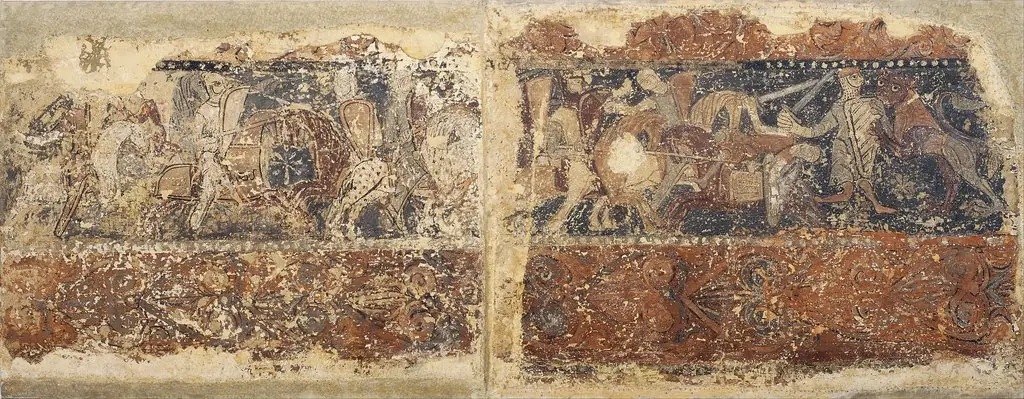 Profane paintings from Sigena: Knights in battle and soldier attacked by a lion
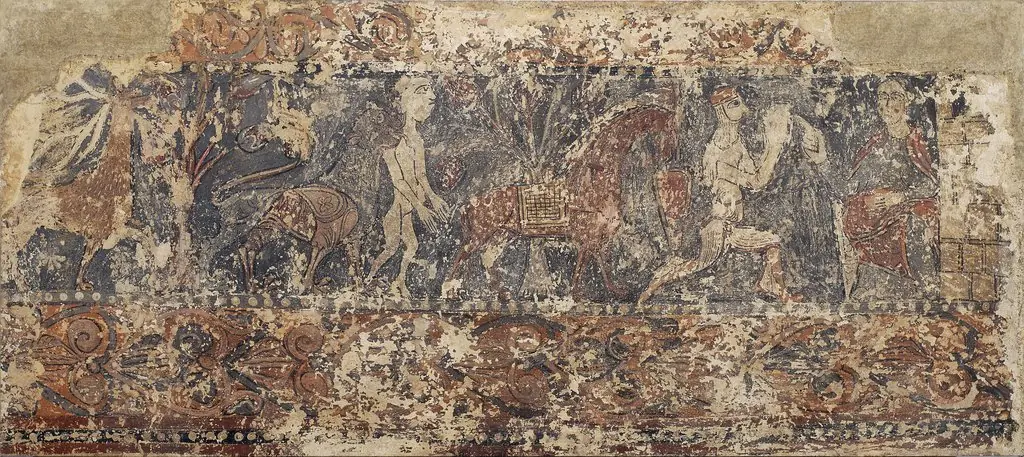 Profane paintings from Sigena: Deer eating fruit from a tree, lion holding a naked man and dismounted knight kneeling before a lady on a throne
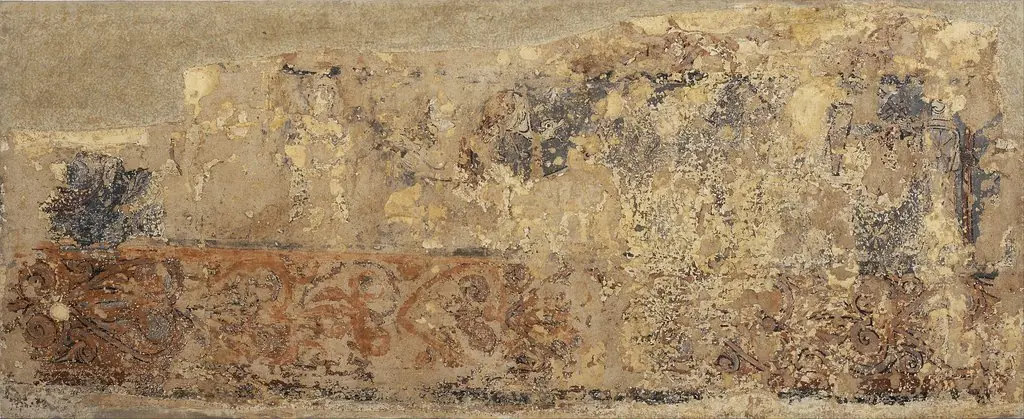 Profane paintings from Sigena: Courtly and battle scenes
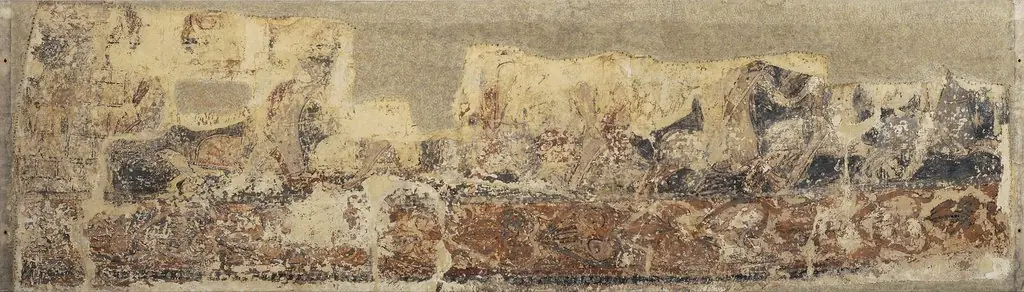 Profane paintings from Sigena: Knights leaving a castle for battle
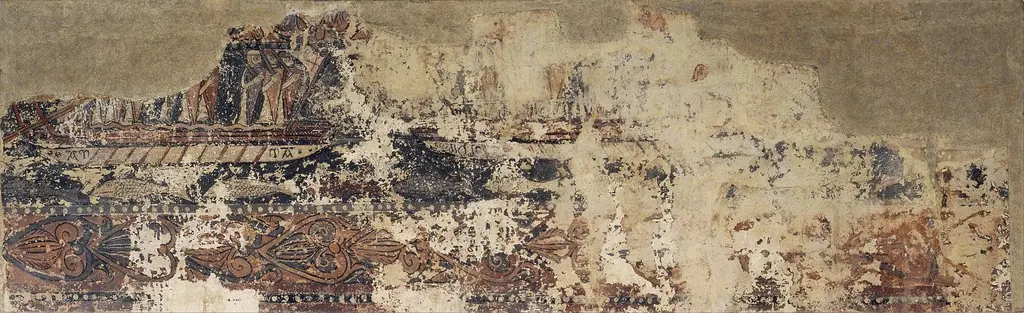 Naval battle between a Christian galley and a Saracen galley, profane paintings from Sigena
 Facsimile painting from the tomb of Rekhmire