Artwork
Page from Tales of a Parrot (Tuti-nama): text page
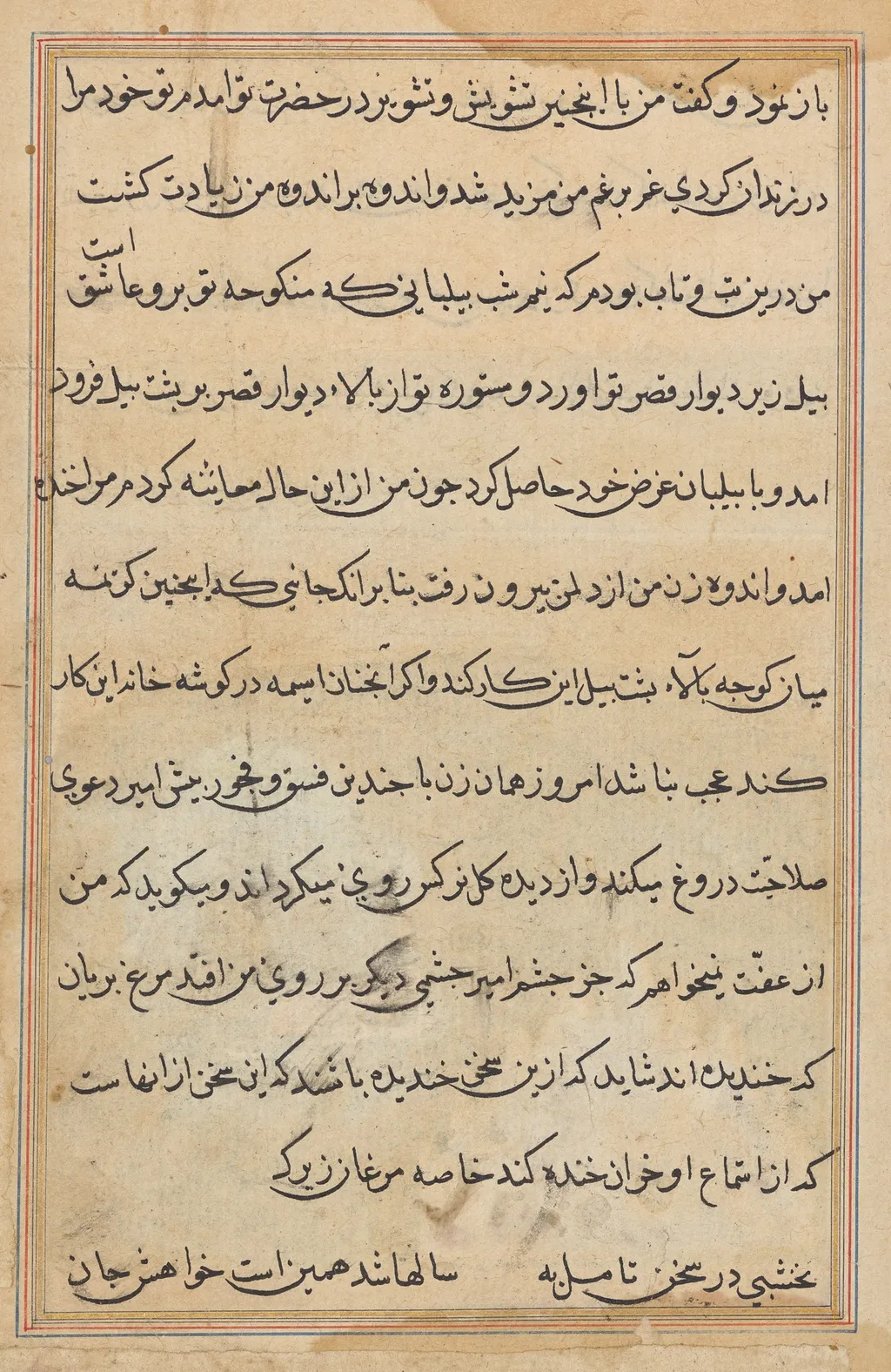
Page from Tales of a Parrot (Tuti-nama): text page is an unspecified painting. It dates from 1560 and is held in the collection of the Cleveland Museum of Art. The object is a single folio from the illustrated manuscript *Tales of a Parrot* (Tuti‑nama).
About this work
Overview
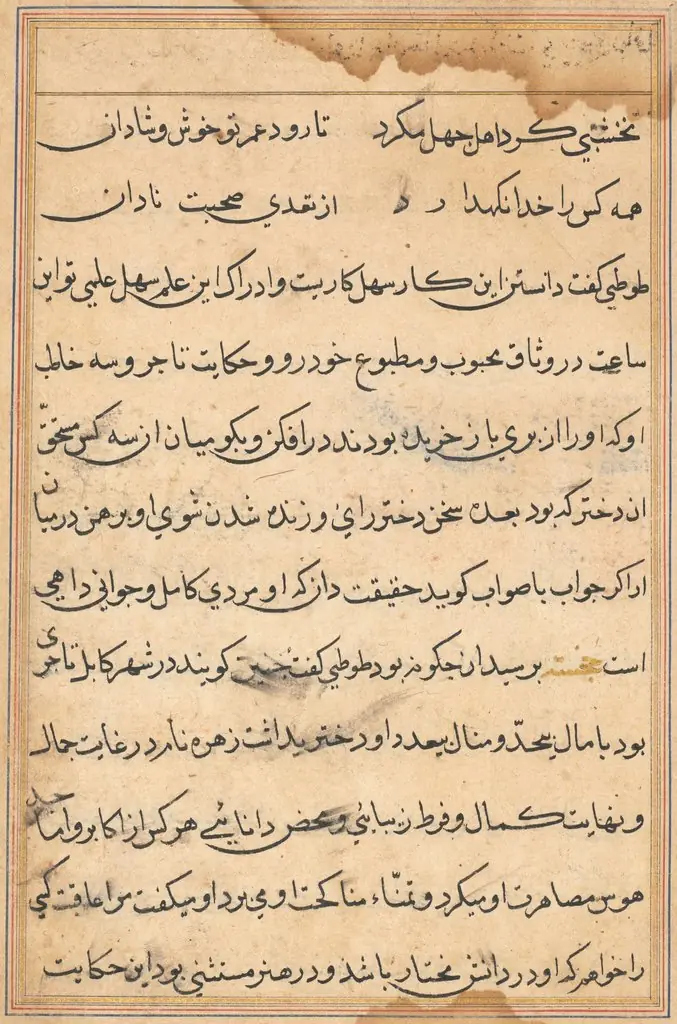
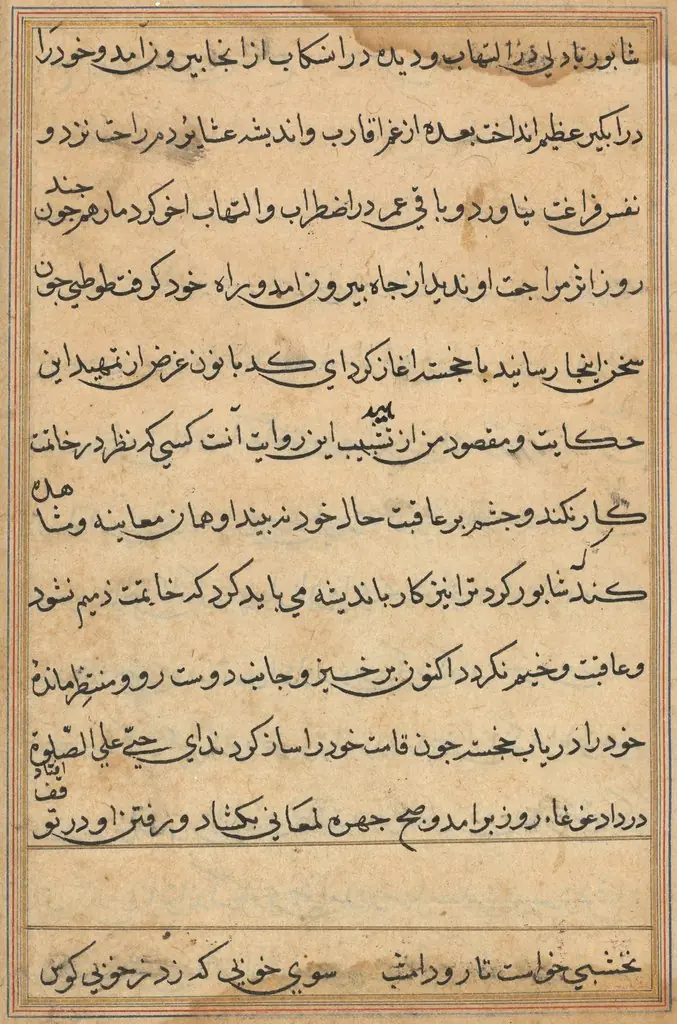
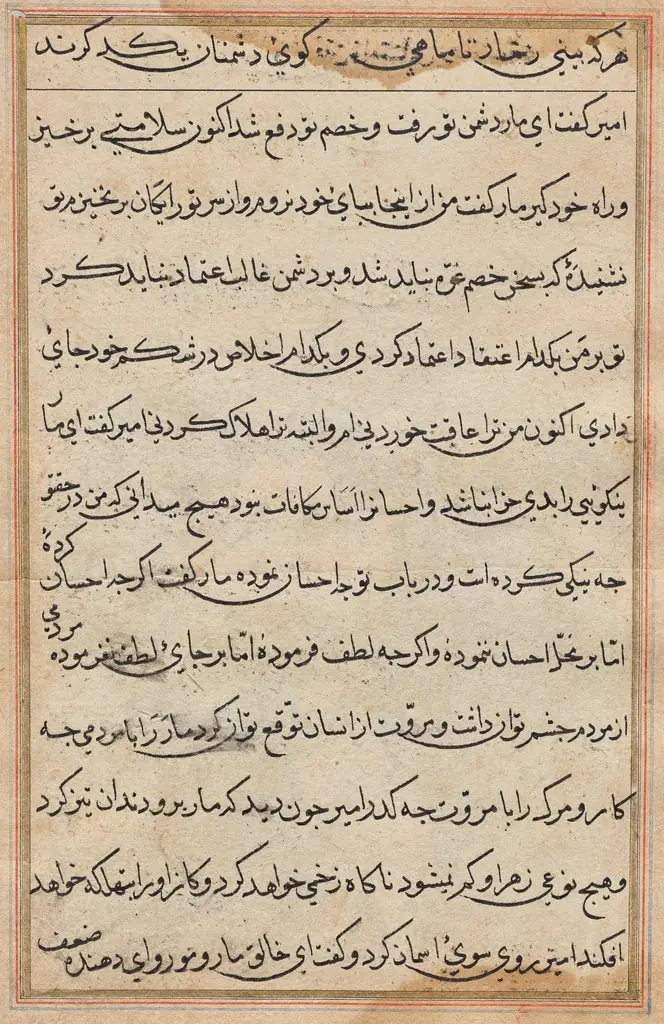
The object is a single folio from the illustrated manuscript *Tales of a Parrot* (Tuti‑nama). It consists of a paper page densely covered with black calligraphic script arranged in orderly rows, bordered on all sides by a thin decorative strip of red and blue pigment. The paper shows signs of age, including faded or missing ink in places, indicating its historic nature.
Subject & Meaning
The text on the page forms part of a narrative composed for Prince Salim, a royal patron. The story, known as *Tales of a Parrot*, was intended as both entertainment and moral instruction, reflecting the courtly culture that valued literary refinement and the didactic role of storytelling in elite circles.
Technique & Style
The script is executed in a meticulous hand, each character rendered with uniform pressure and spacing, demonstrating the high level of training of the scribe. The thin red‑blue border frames the text, employing a simple geometric motif typical of Persian manuscript decoration, while the overall layout emphasizes readability and visual order.
History & Provenance
The folio originates from a Persian manuscript tradition and was produced for a princely patron, likely in the early modern period. It has survived in a condition that reveals wear and occasional ink loss, suggesting long use or storage. The page now forms part of a museum collection, where it is displayed alongside related works of Persian book art.
Context
*Tales of a Parrot* belongs to a genre of illustrated literary works that combined prose, poetry, and moral lessons, often commissioned by royalty to showcase cultural sophistication. The manuscript reflects the broader artistic milieu of Persian courts, where calligraphy, miniature painting, and decorative borders were integrated to create cohesive, luxurious objects.
Artist & collection

 Page from Tales of a Parrot (Tuti-nama): text page
 Page from Tales of a Parrot (Tuti-nama): text page
 Page from Tales of a Parrot (Tuti-nama): text page
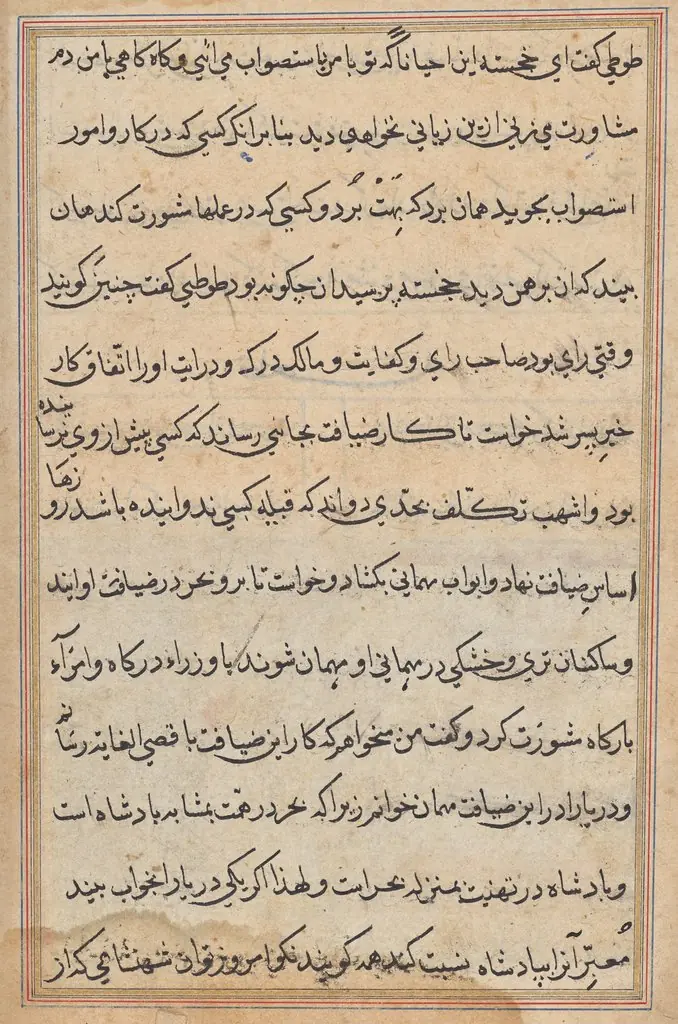 Page from Tales of a Parrot (Tuti-nama): text page
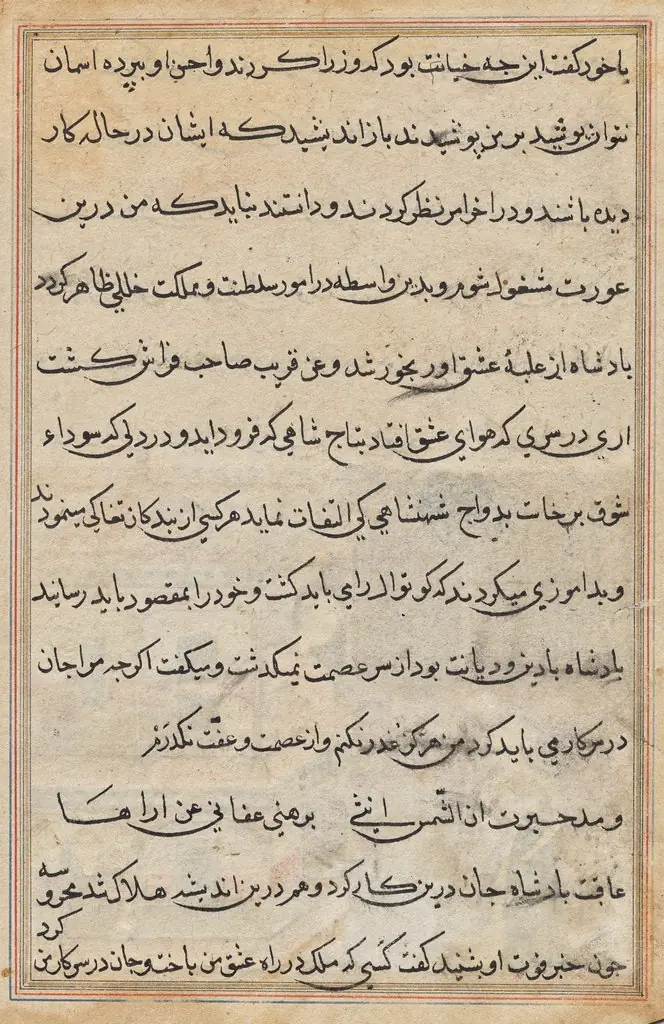 Page from Tales of a Parrot (Tuti-nama): text page
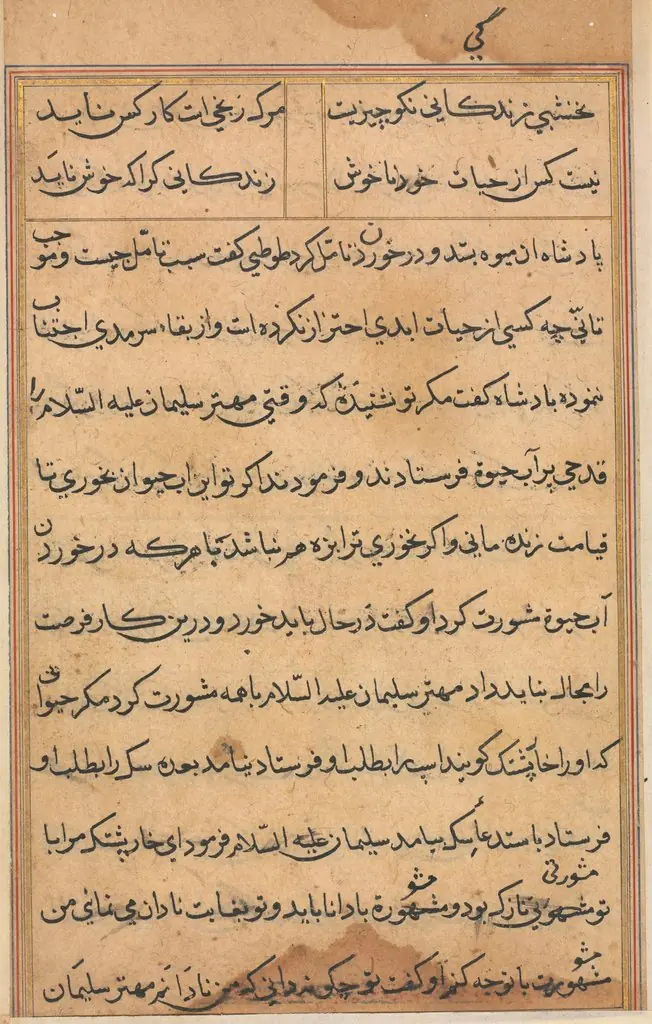 Page from Tales of a Parrot (Tuti-nama): text page
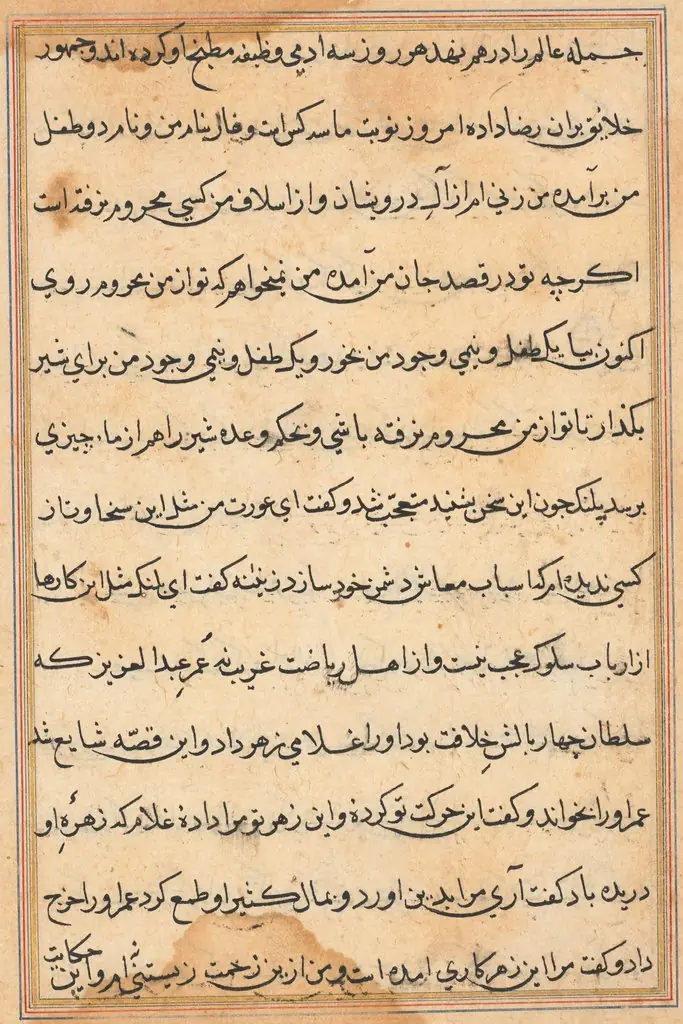 Page from Tales of a Parrot (Tuti-nama): text page
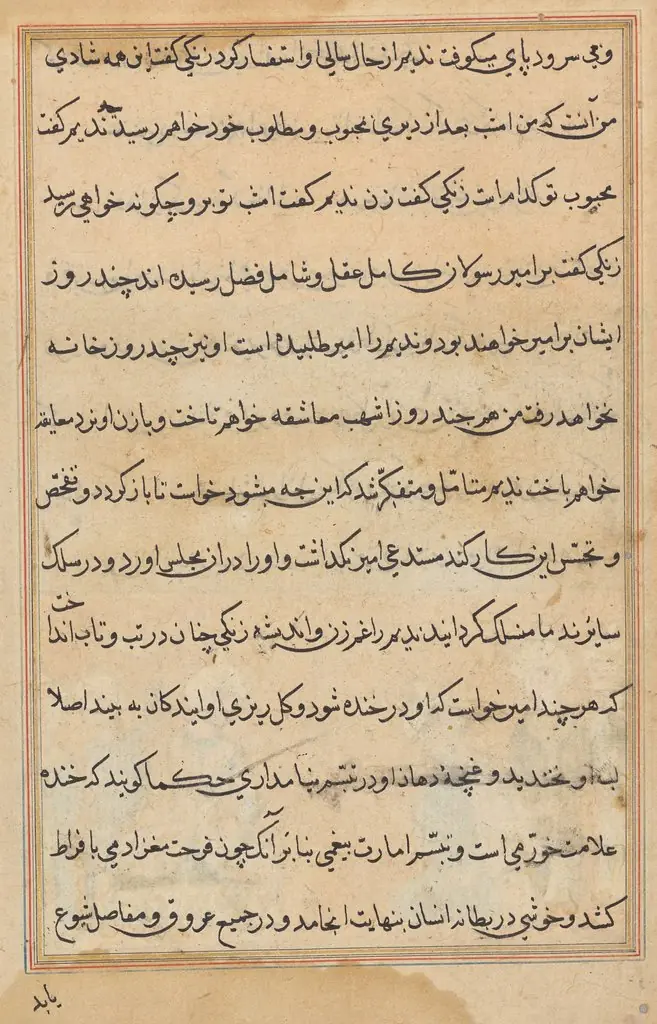 Page from Tales of a Parrot (Tuti-nama): text page
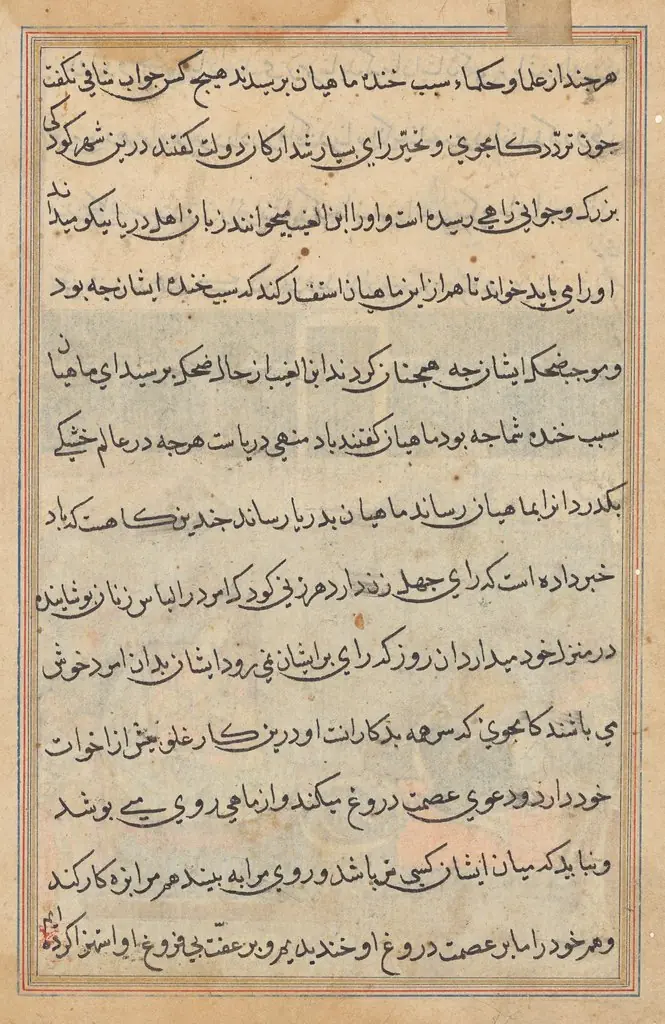 Page from Tales of a Parrot (Tuti-nama): text page
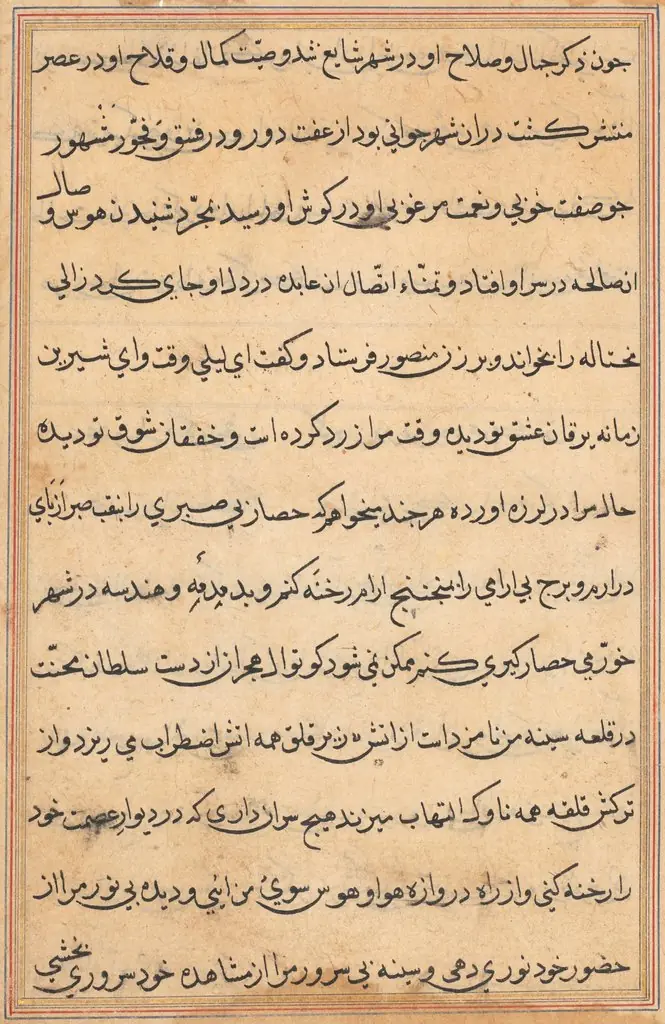 Page from Tales of a Parrot (Tuti-nama): text page
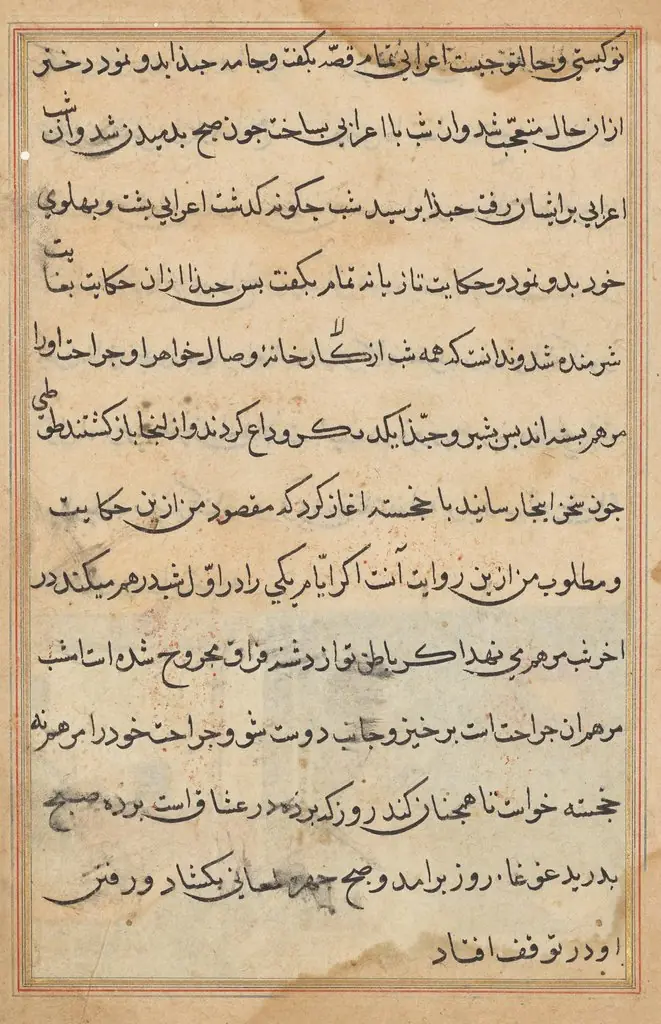 Page from Tales of a Parrot (Tuti-nama): text page