Artwork
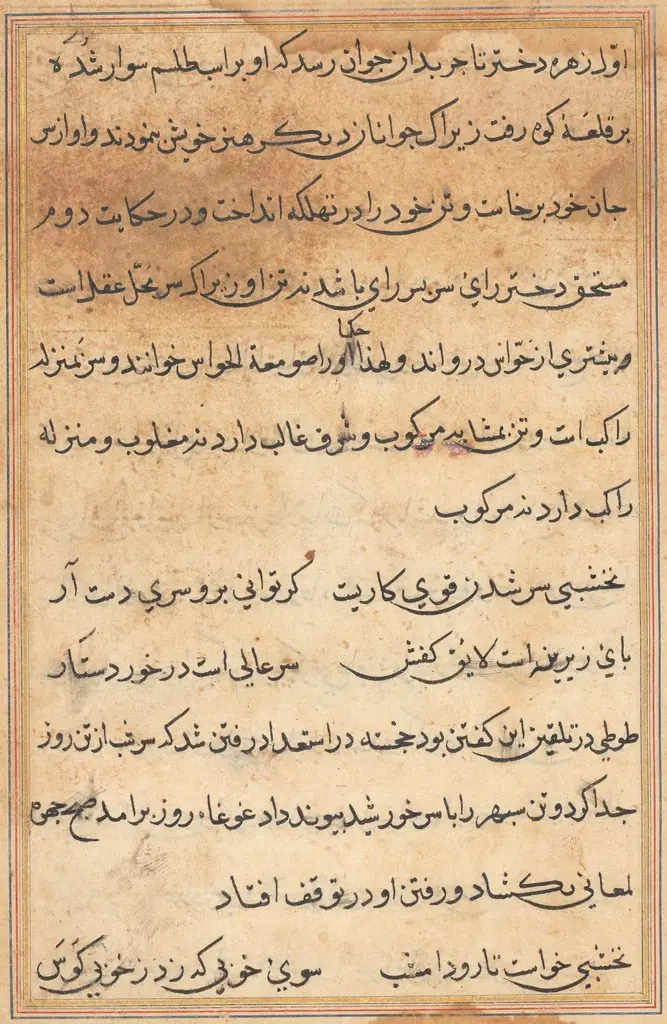
Page from Tales of a Parrot (Tuti-nama): text page
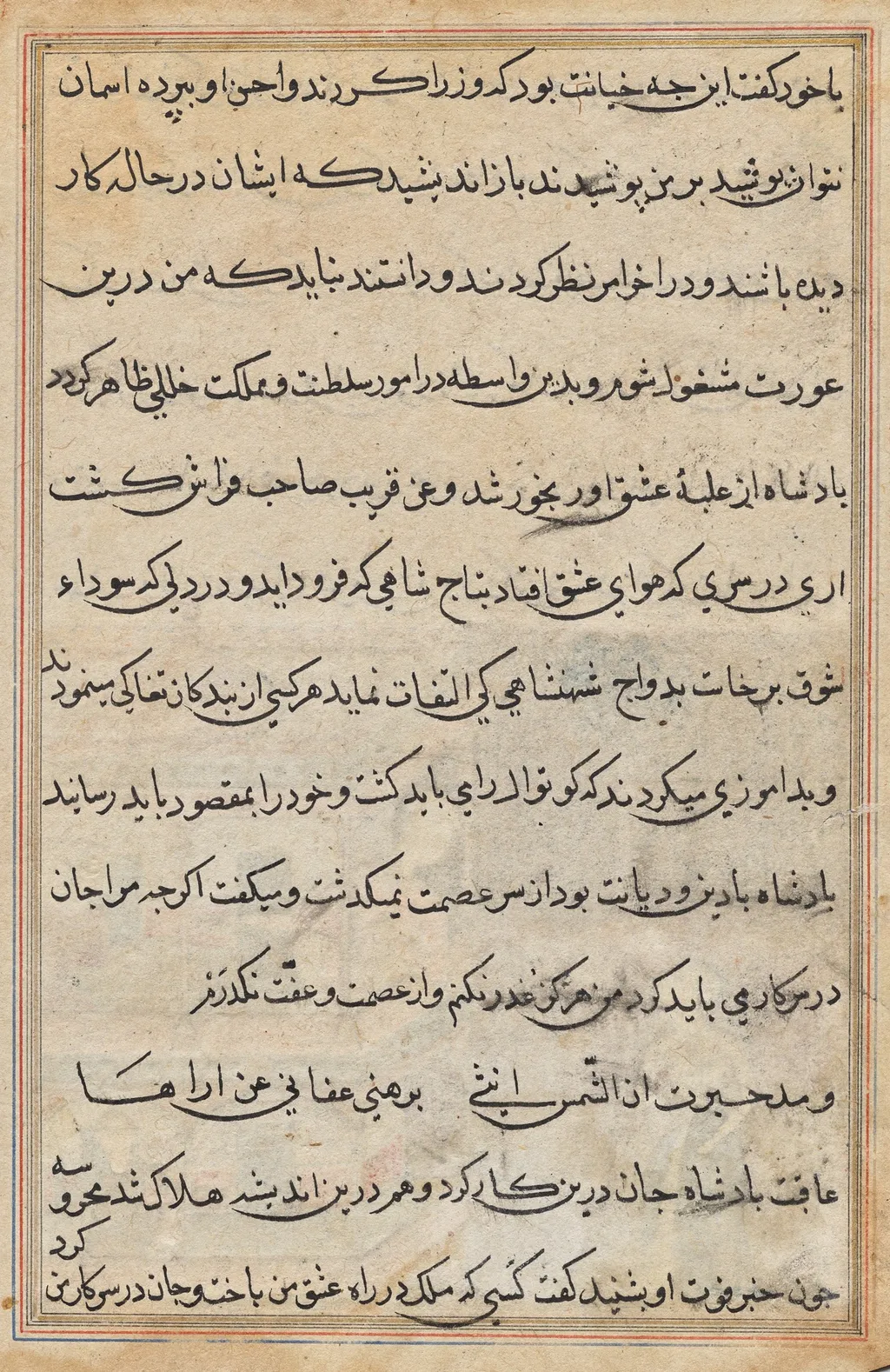
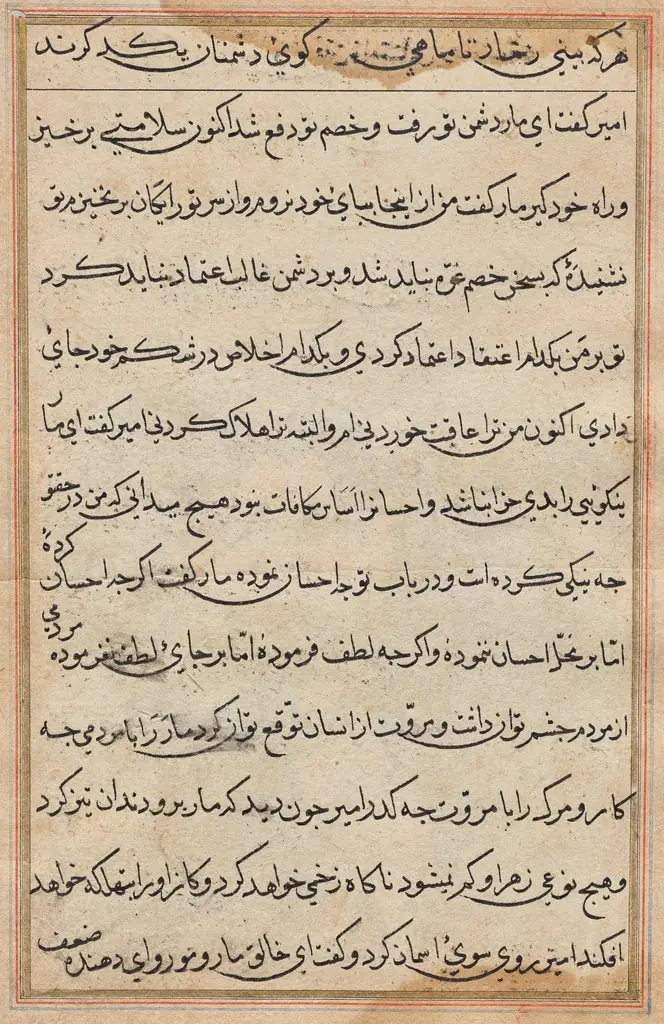
Page from Tales of a Parrot (Tuti-nama): text page is an unspecified painting. It dates from 1560 and is held in the collection of the Cleveland Museum of Art. This object is a single folio from the illustrated manuscript known as *Tuti‑nama* (Tales of a Parrot).
About this work
Overview
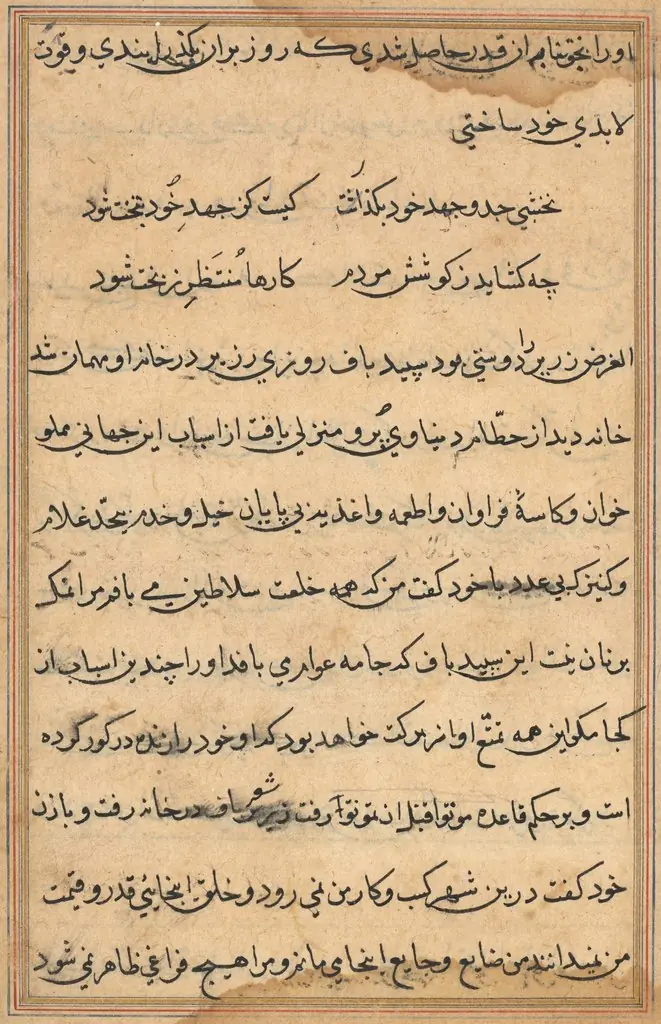
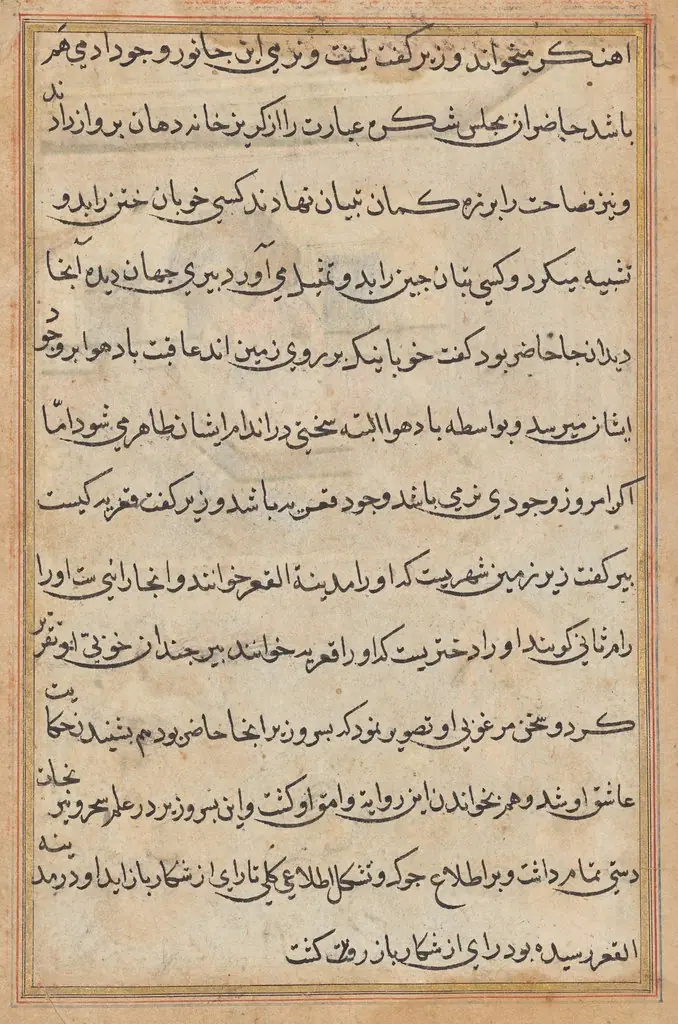
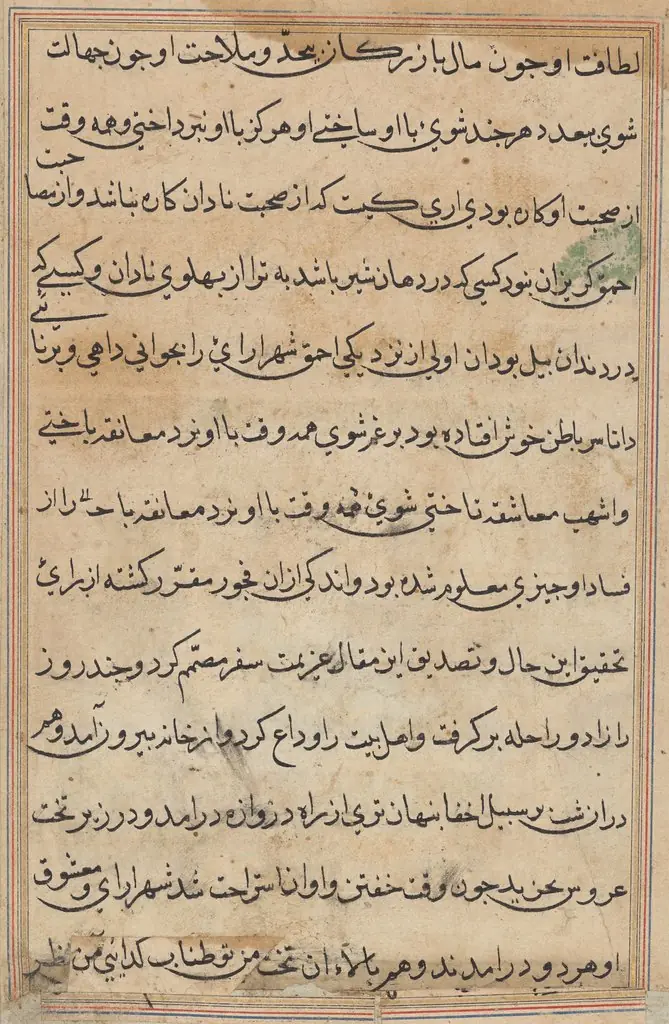
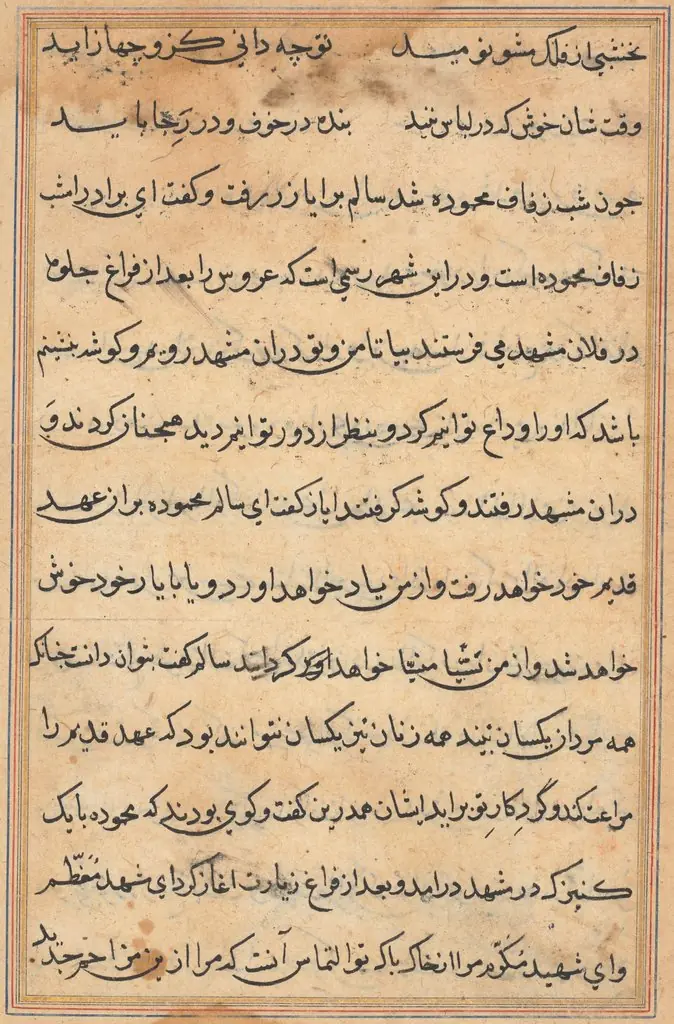
The page consists of handwritten text rendered in black ink on a light‑colored parchment, framed by thin red and blue decorative bands along its margins.
This object is a single folio from the illustrated manuscript known as *Tuti‑nama* (Tales of a Parrot). The page consists of handwritten text rendered in black ink on a light‑colored parchment, framed by thin red and blue decorative bands along its margins. The script is highly ornamental, featuring elaborate letterforms and flourishes that suggest a formal, possibly courtly, context. The leaf shows signs of age, including tears, stains, and surface wear.
Subject & Meaning
The manuscript’s title indicates a collection of stories told by a parrot, a narrative device common in Persian and South Asian literary traditions. While the specific passage on this leaf cannot be read without specialist knowledge, the elaborate calligraphy implies that the content was considered significant, perhaps a moral tale or a courtly anecdote intended for an educated audience.
Technique & Style
The page exemplifies traditional manuscript production, employing a fine-point reed or quill pen for the black ink script and pigment brushes for the colored marginal bands. The decorative borders in red and blue are applied in a linear, geometric pattern that frames the text without overwhelming it, reflecting a balance between readability and visual ornamentation typical of medieval Persian book art.
History & Provenance
The folio originates from an older codex whose precise date and place of creation remain uncertain, though its stylistic features align with manuscript traditions of the Indian subcontinent or Persia between the 14th and 16th centuries. It entered the collection of the Cleveland Museum of Art through acquisition in the 20th century, where it has been conserved and displayed as part of the museum’s Asian art holdings.
Context
Manuscript culture in the medieval Islamic world placed great emphasis on the visual presentation of text, integrating calligraphy, illumination, and border decoration. Works like *Tuti‑nama* served both literary and didactic functions, often circulated among elite patrons. The use of a parrot as narrator reflects a broader motif in Persian storytelling, where talking animals convey moral or philosophical lessons.
Artist & collection

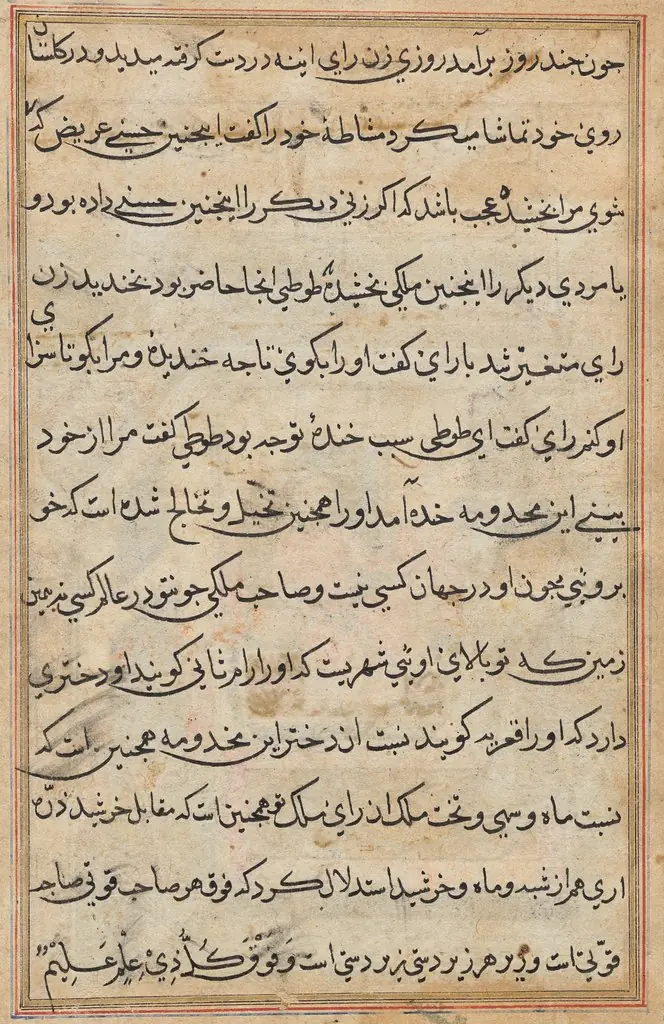 Page from Tales of a Parrot (Tuti-nama): text page
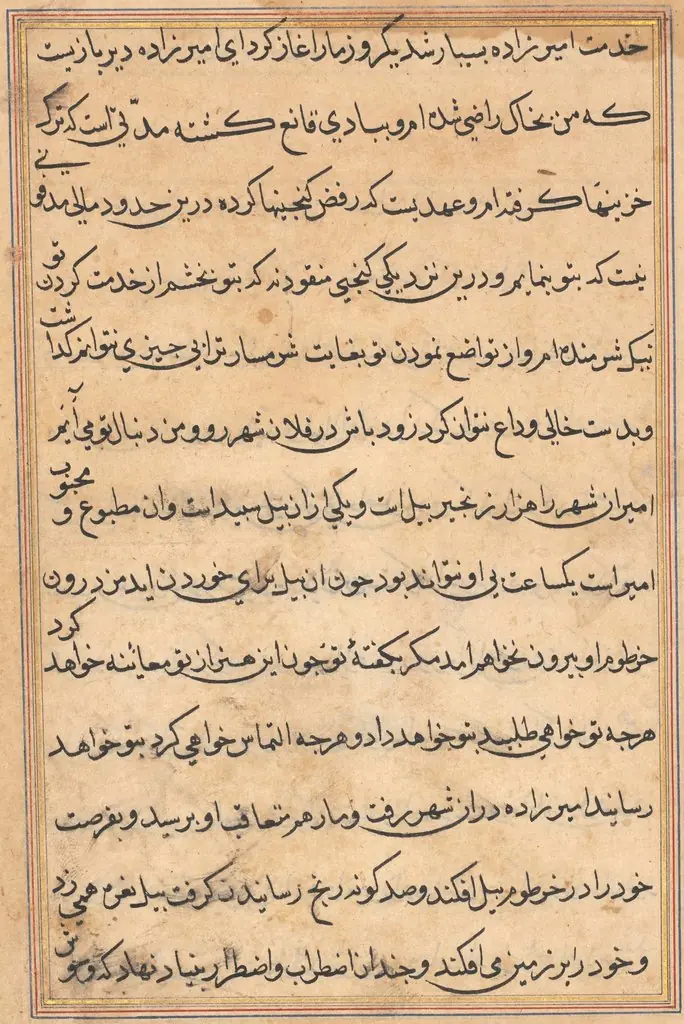 Page from Tales of a Parrot (Tuti-nama): text page
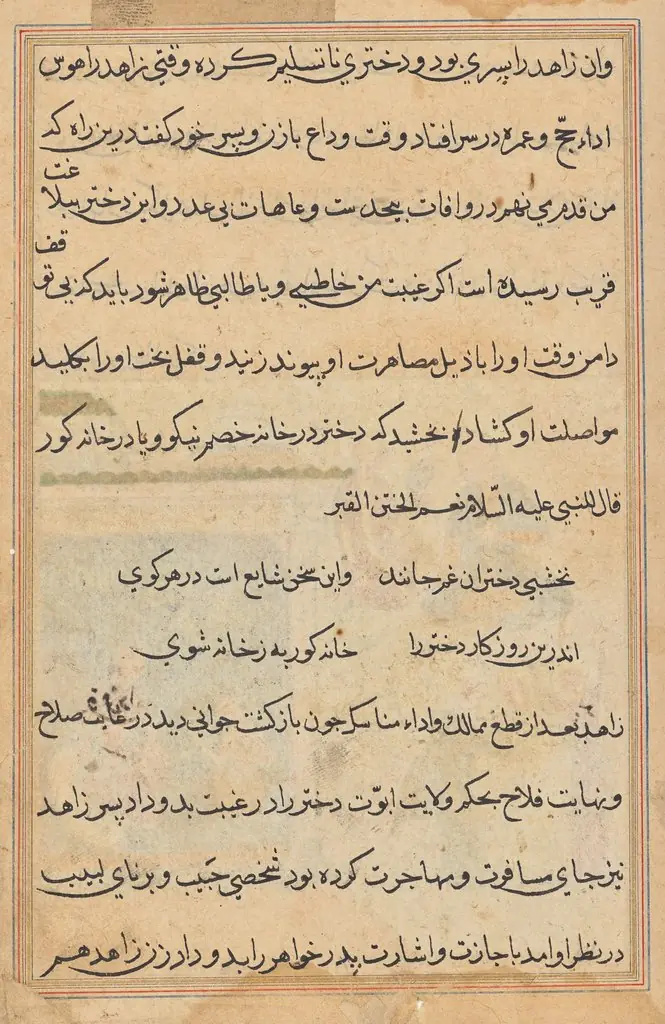 Page from Tales of a Parrot (Tuti-nama): text page
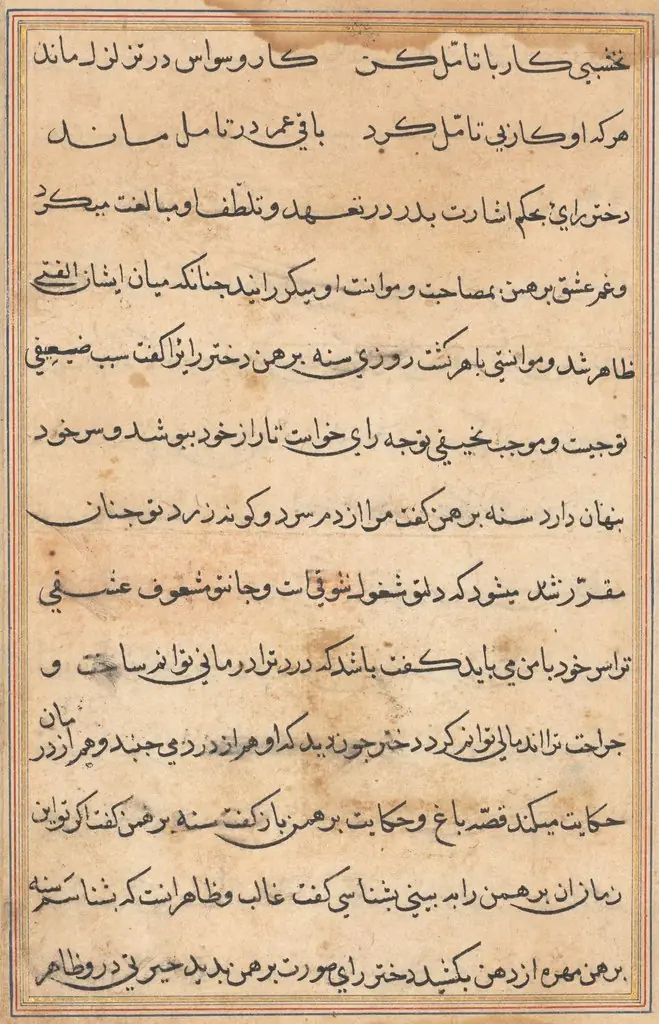 Page from Tales of a Parrot (Tuti-nama): text page
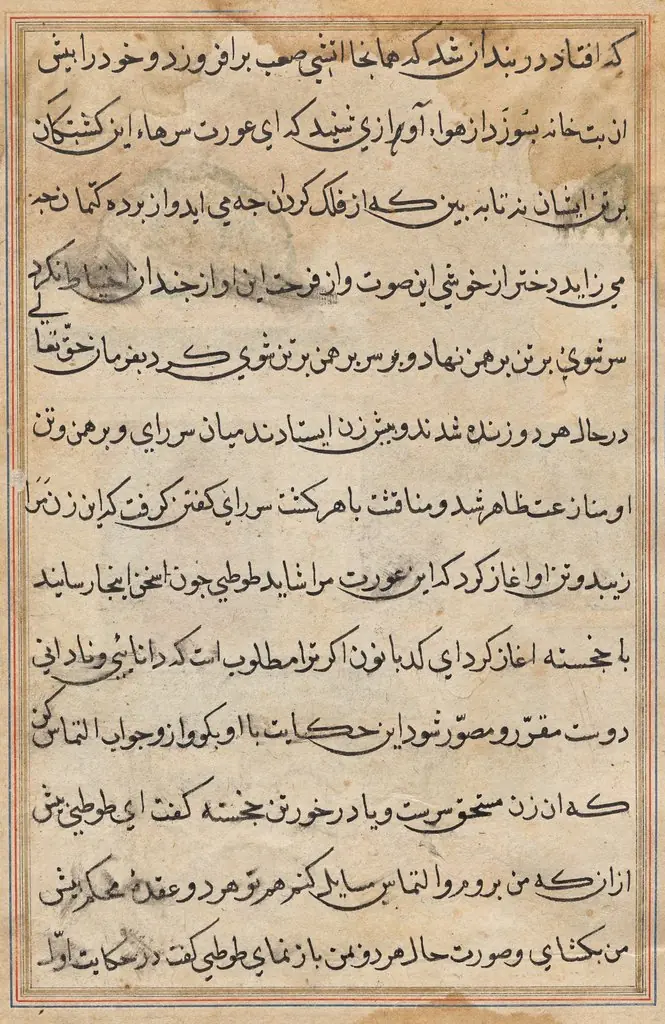 Page from Tales of a Parrot (Tuti-nama): text page
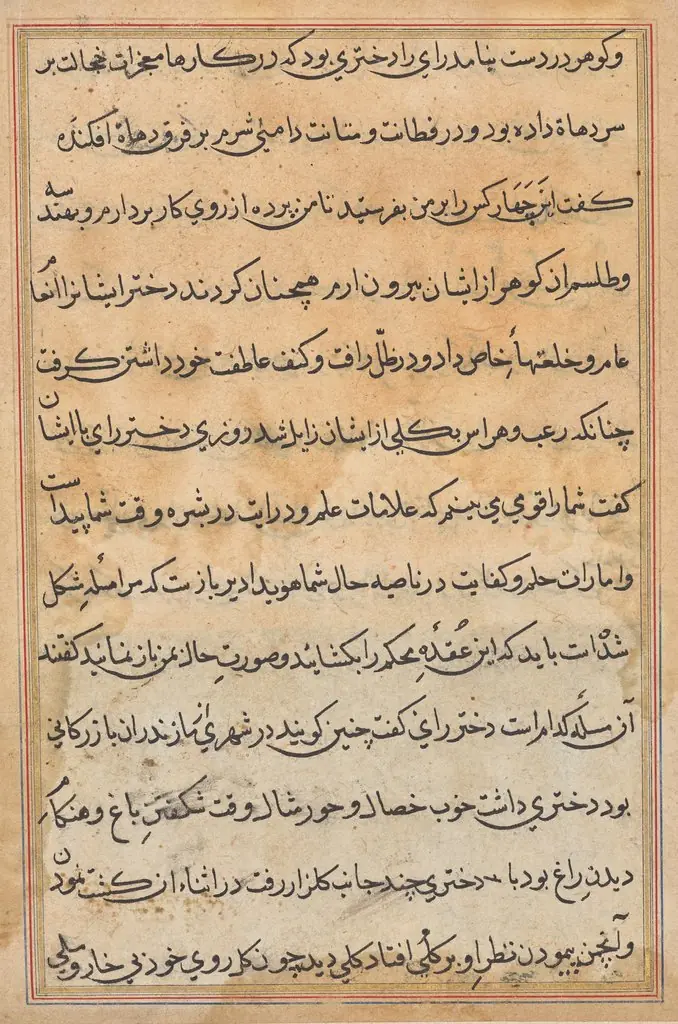 Page from Tales of a Parrot (Tuti-nama): text page
 Page from Tales of a Parrot (Tuti-nama): text page