Artwork
Scene from the Ramayana
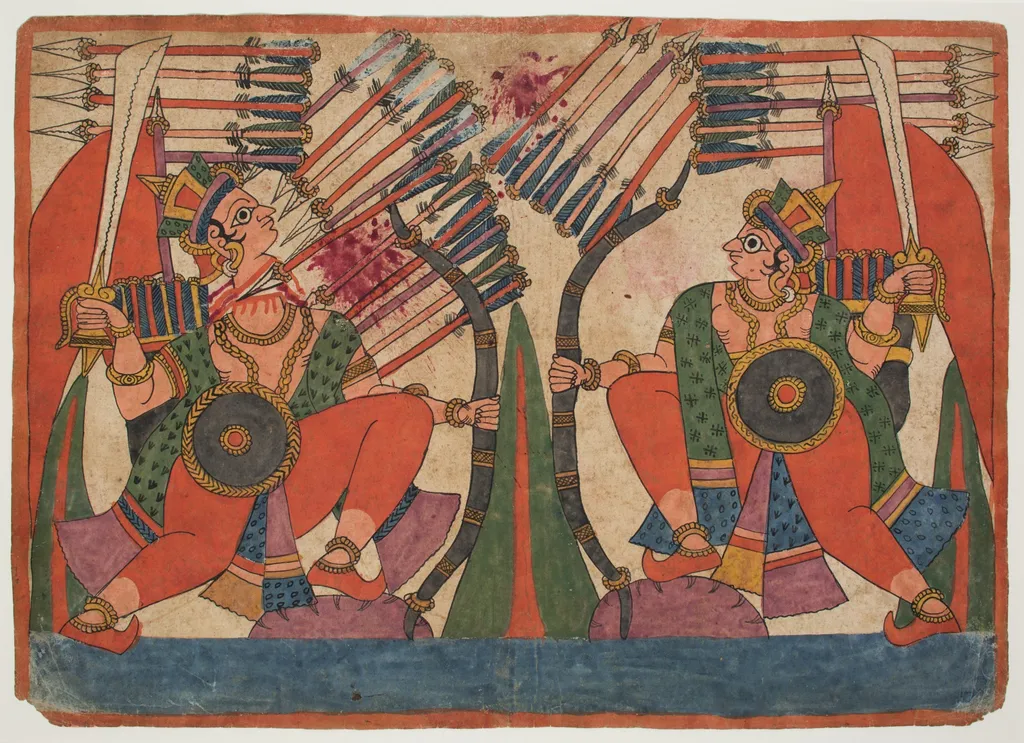
Scene from the Ramayana is an unspecified painting by Unknown. It dates from 1800 and is held in the collection of the Detroit Institute of Arts.
About this work
Overview
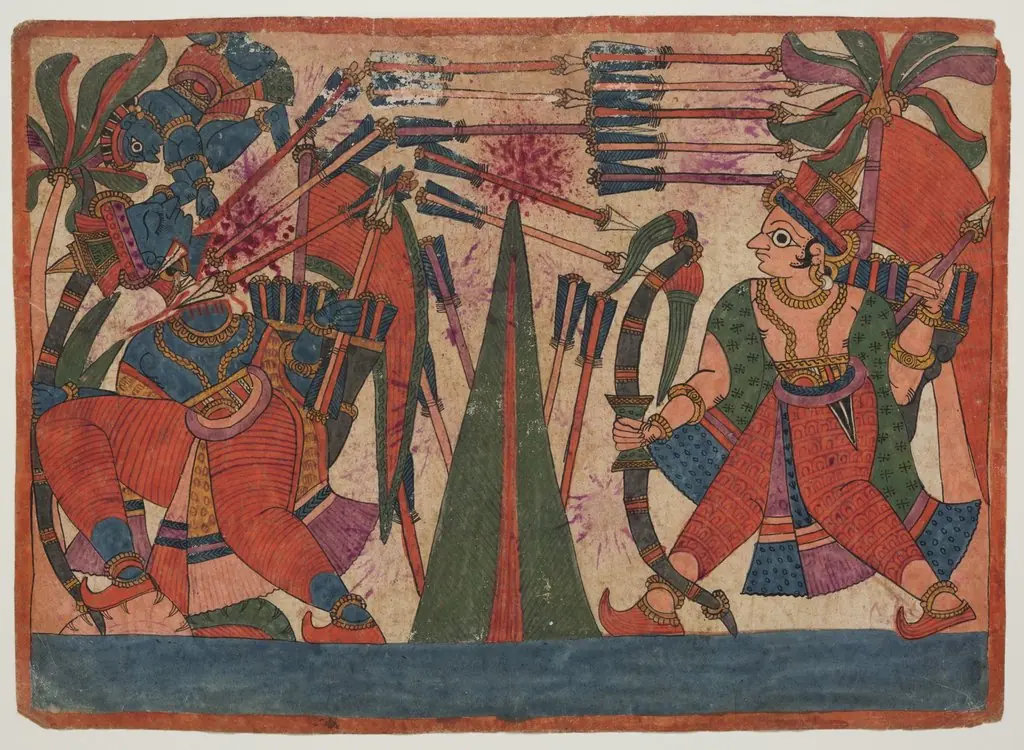
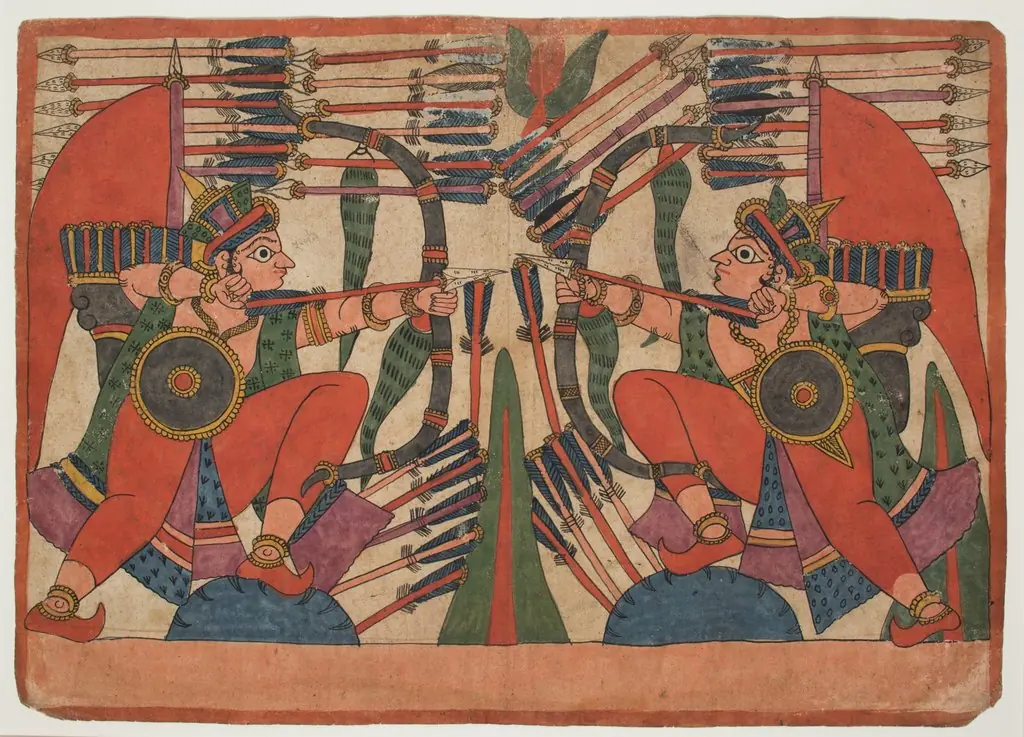
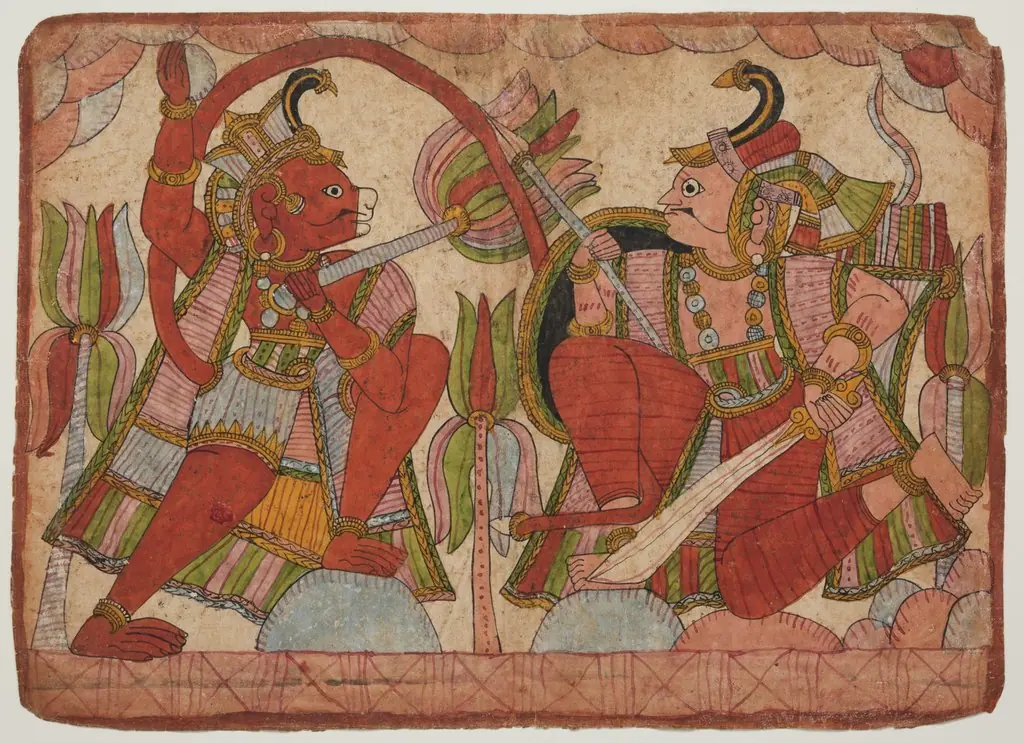
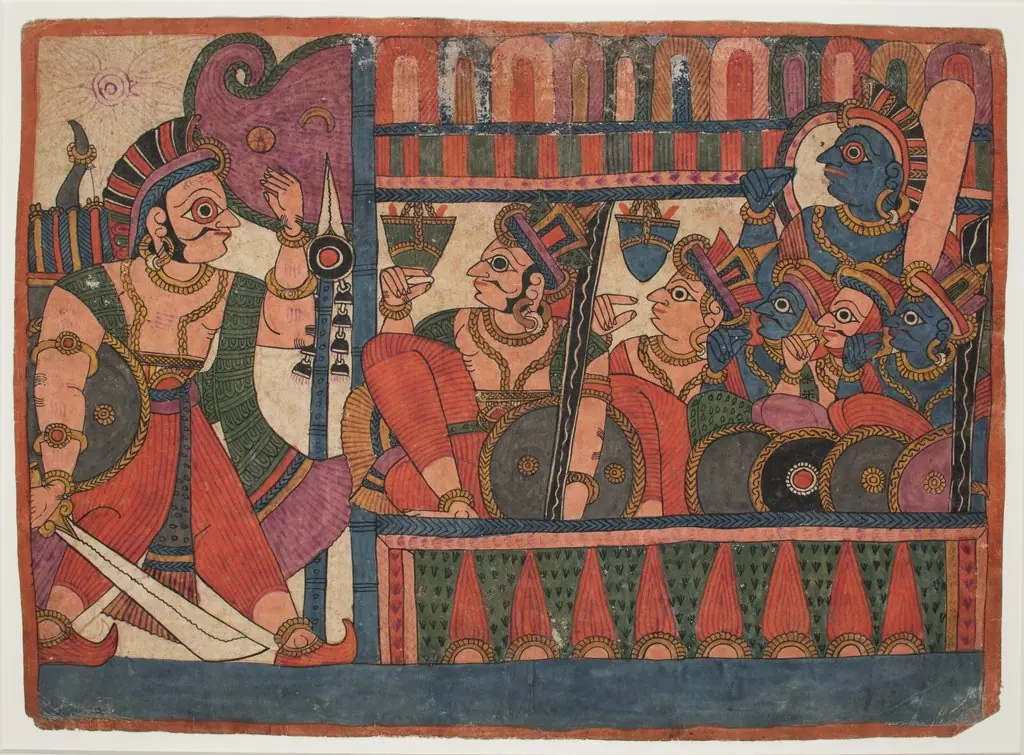
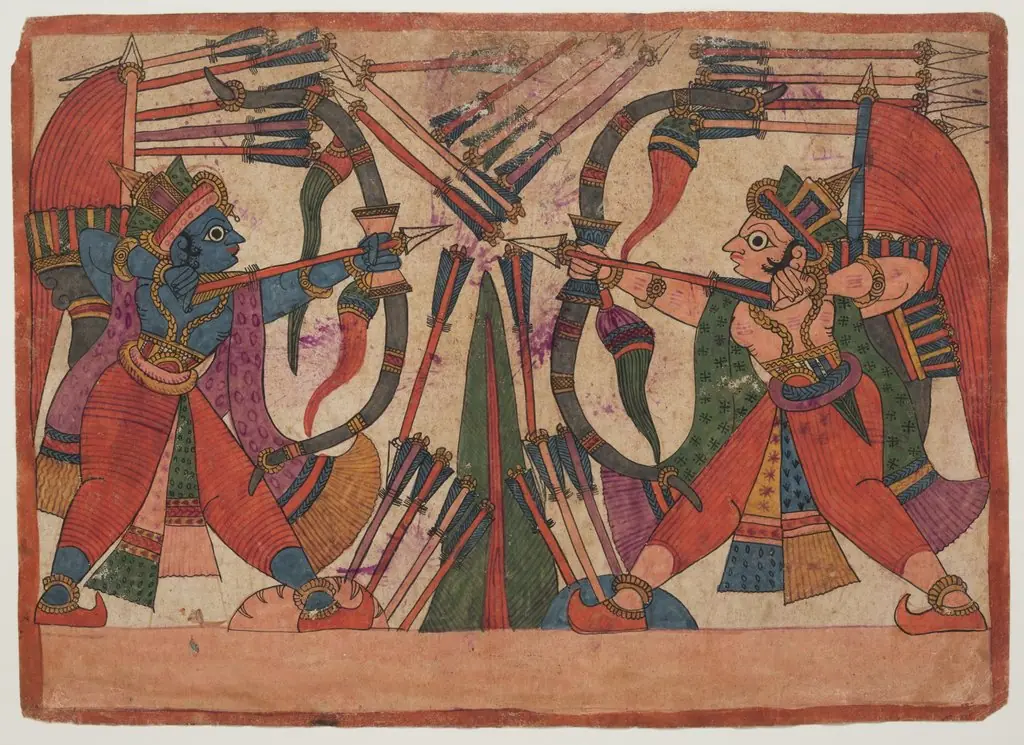
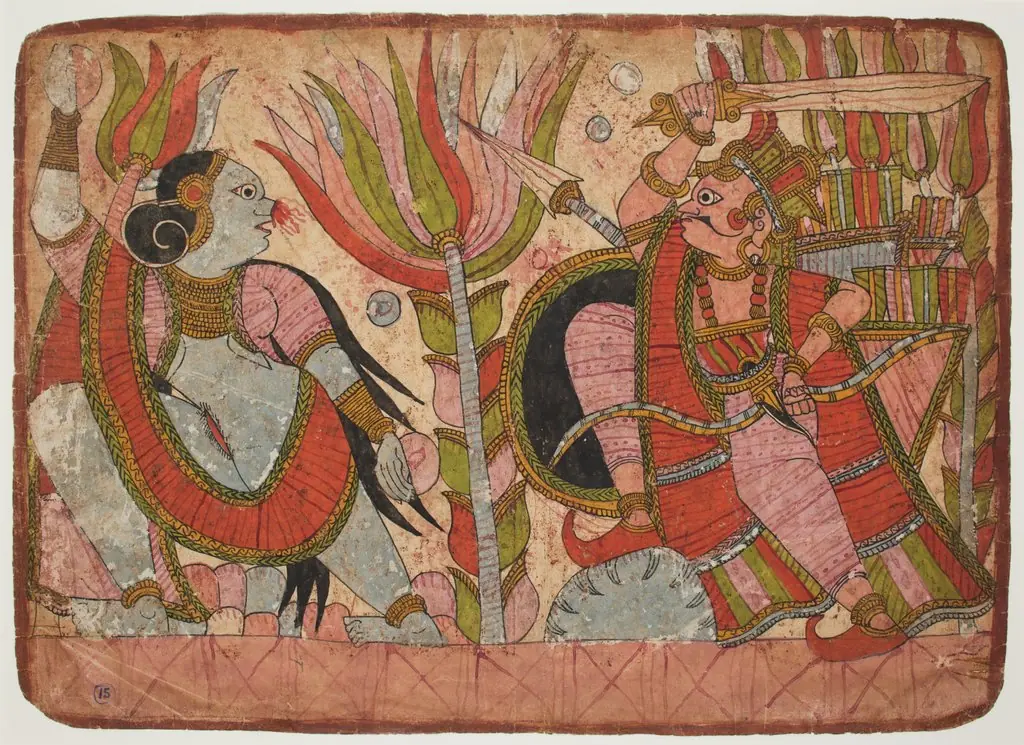
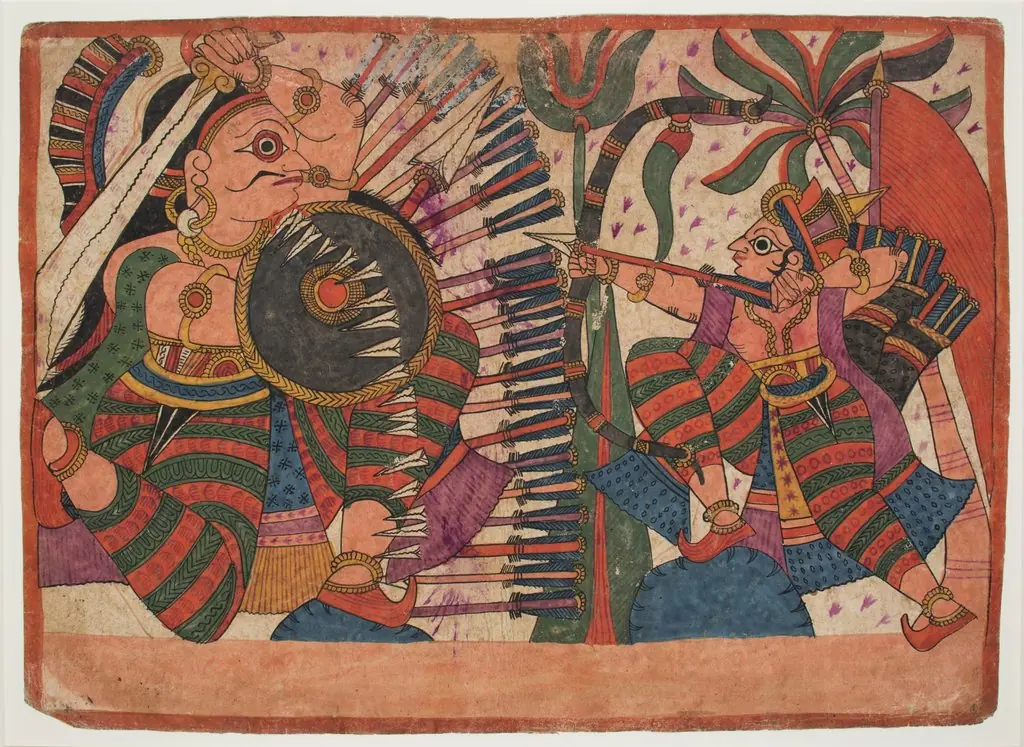
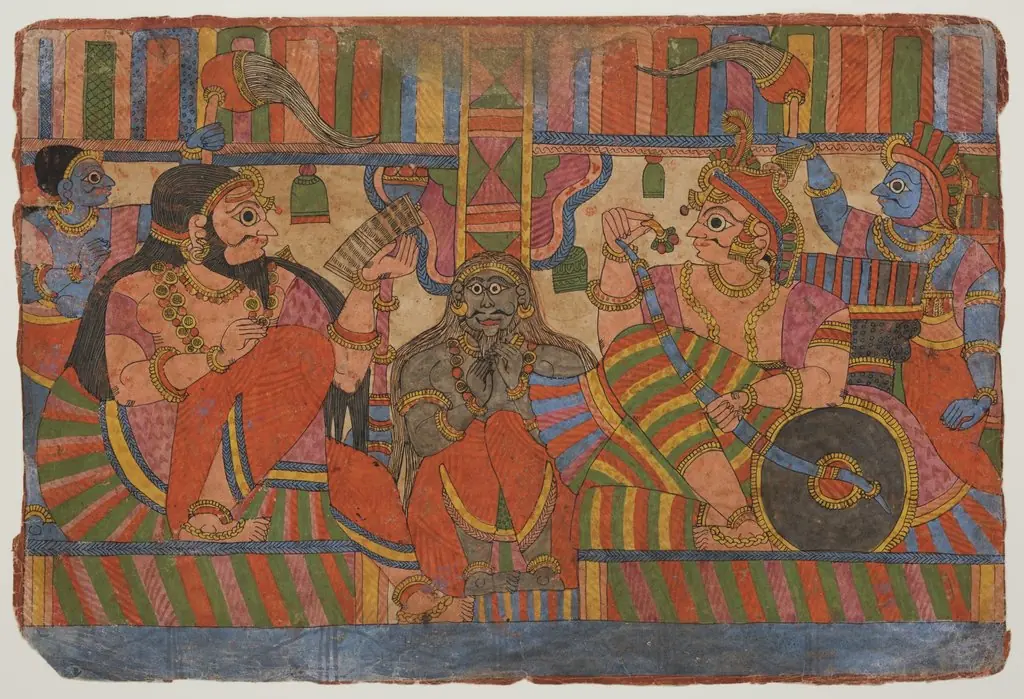
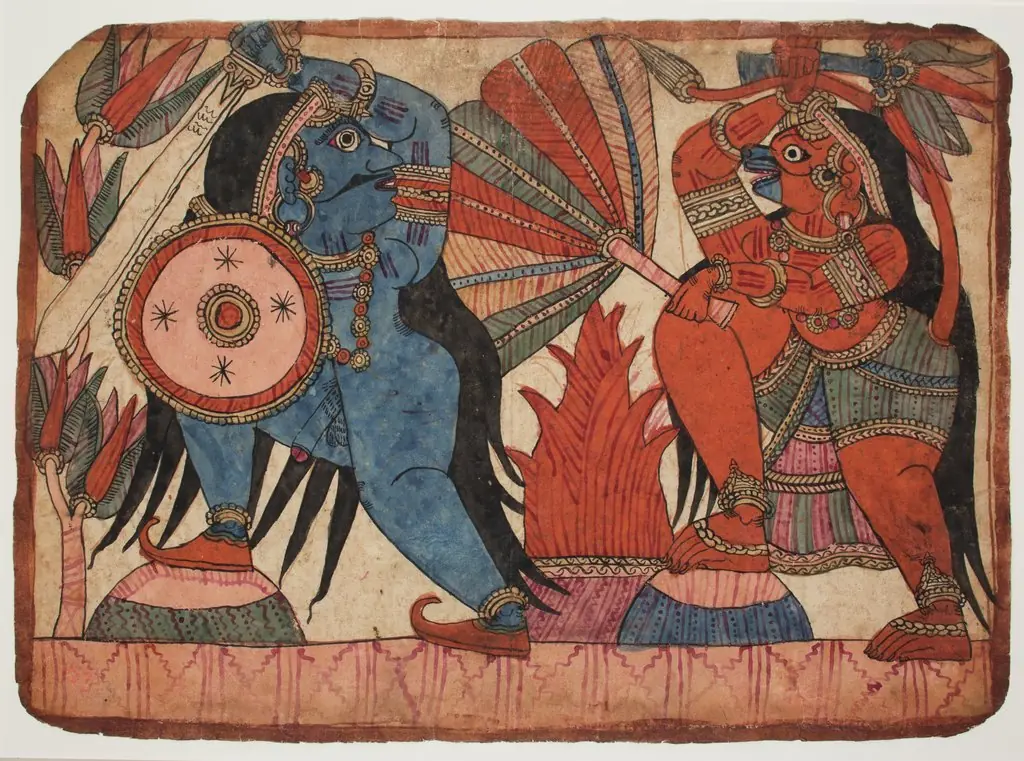
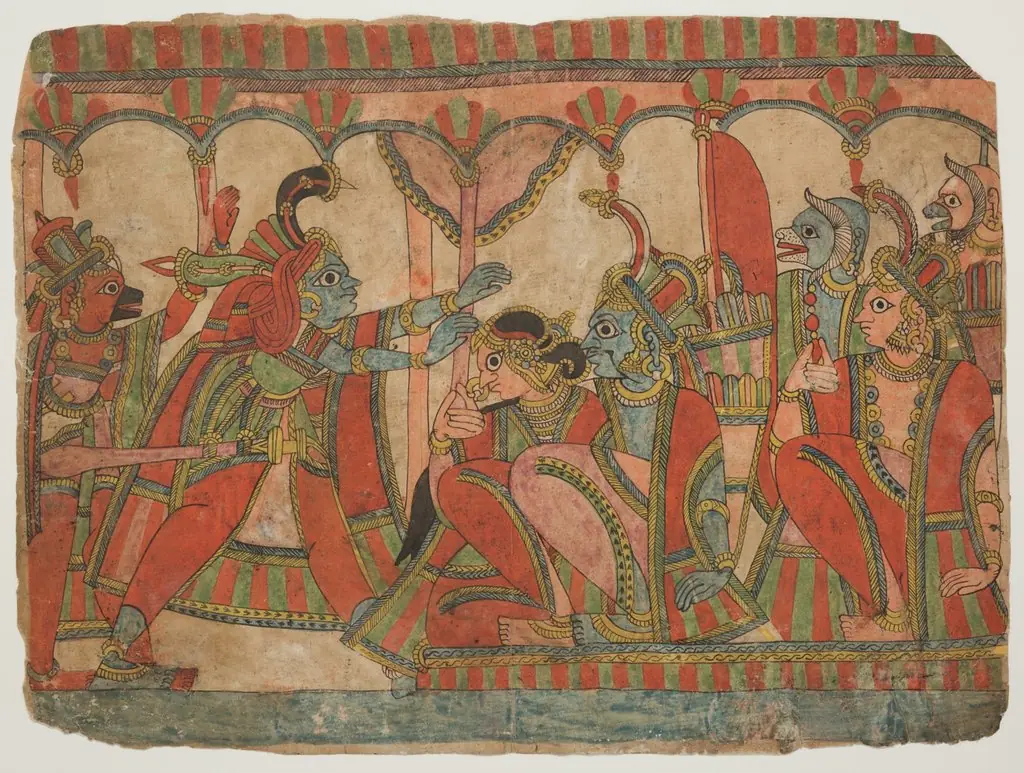
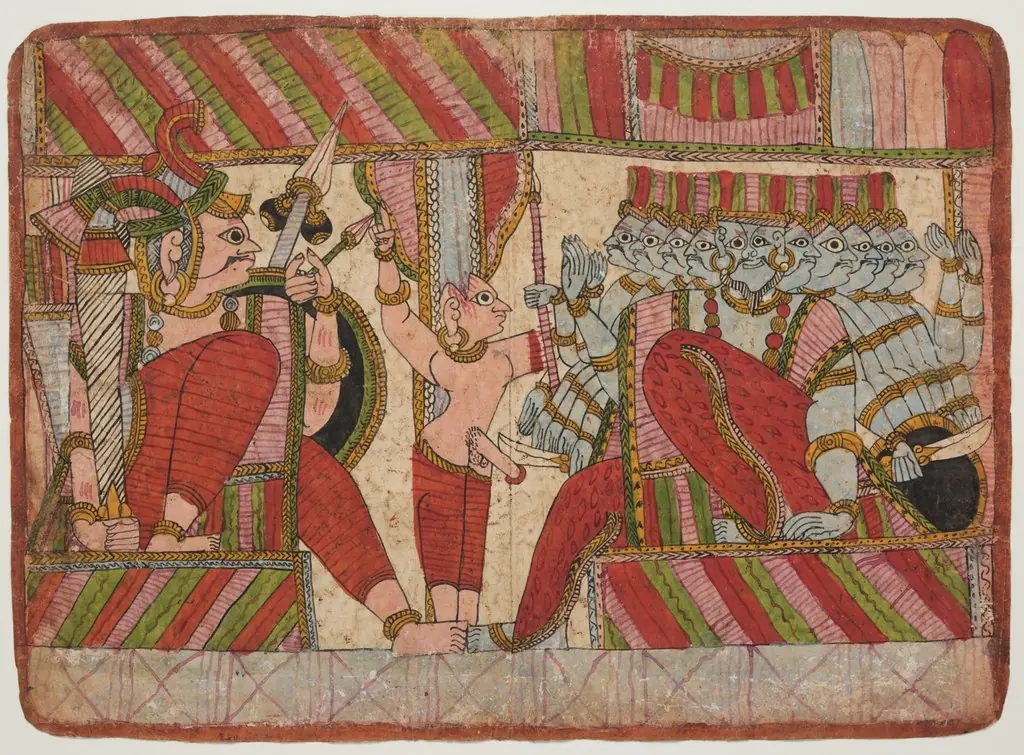
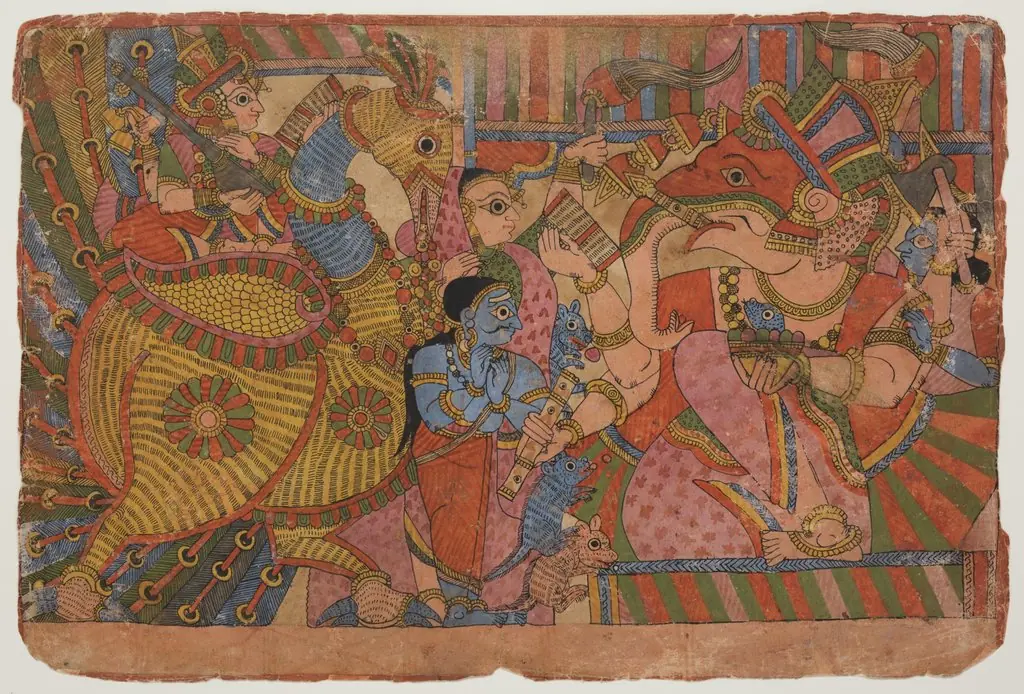
This traditional Indian folk painting illustrates a moment from the Ramayana, an ancient Hindu epic centered on moral conflict and divine duty.
This traditional Indian folk painting illustrates a moment from the Ramayana, an ancient Hindu epic centered on moral conflict and divine duty. Two armed figures, clad in vivid green and red garments adorned with gold jewelry, are depicted mid-action—one kneeling, the other standing—both gazing rightward as if aiming their bows. The warm beige background, accented with red, frames the scene without distraction, emphasizing the figures and their poised readiness.
Subject & Meaning
The scene captures a pivotal confrontation from the Ramayana, likely depicting Rama and Lakshmana or another pair of heroes in battle against adversaries. Their postures suggest preparation for a decisive strike, embodying the epic’s theme of righteous struggle. The absence of overt violence focuses attention on resolve and discipline, aligning with the narrative’s emphasis on dharma—duty upheld through controlled action rather than aggression.
Technique & Style
Executed in the bold, flat-color tradition of Indian folk painting, the work uses strong outlines and saturated hues to define form and movement. Gold detailing on jewelry and headpieces adds ceremonial weight, while the simplified background avoids spatial depth, directing focus to the figures. The stylized anatomy and lack of perspective reflect regional conventions, prioritizing symbolic clarity over naturalism.
History & Provenance
The painting likely originated in a North Indian or Central Indian atelier known for illustrating Hindu epics, possibly from the 18th or 19th century. Such works were often commissioned for devotional use or courtly display, accompanying oral recitations of the Ramayana. Its preservation suggests it was valued within a religious or aristocratic household, though its specific provenance remains undocumented.
Context
During the period when this painting was made, illustrated manuscripts and standalone scenes from the Ramayana were widely produced across India, serving both spiritual and educational roles. Artists adapted regional styles to convey familiar stories to diverse audiences. This piece reflects a continuity of visual storytelling, where mythic events were rendered with symbolic precision to reinforce cultural and religious values.
Legacy
Works like this contributed to the enduring visual language of Hindu epics in South Asia. Though not attributed to a known master, such paintings preserved narrative traditions through generations, influencing later regional art forms. Today, they remain important artifacts for understanding how religious texts were interpreted and transmitted visually in pre-modern India.
Artist & collection

 Domestic Scene
 Giacomo and Cardinal Marco, investing Andrea, Abbot of San Zeno, with his Benefice
 The Nymph of Fontainebleau
 Portrait of a Woman
 Madonna and Child with Saints in the Enclosed Garden
 Venus and Minerva
 Family Group of Four on Sofa
 Wall painting from Room H of the Villa of P. Fannius Synistor at Boscoreale