Artwork
Scene from the Ramayana
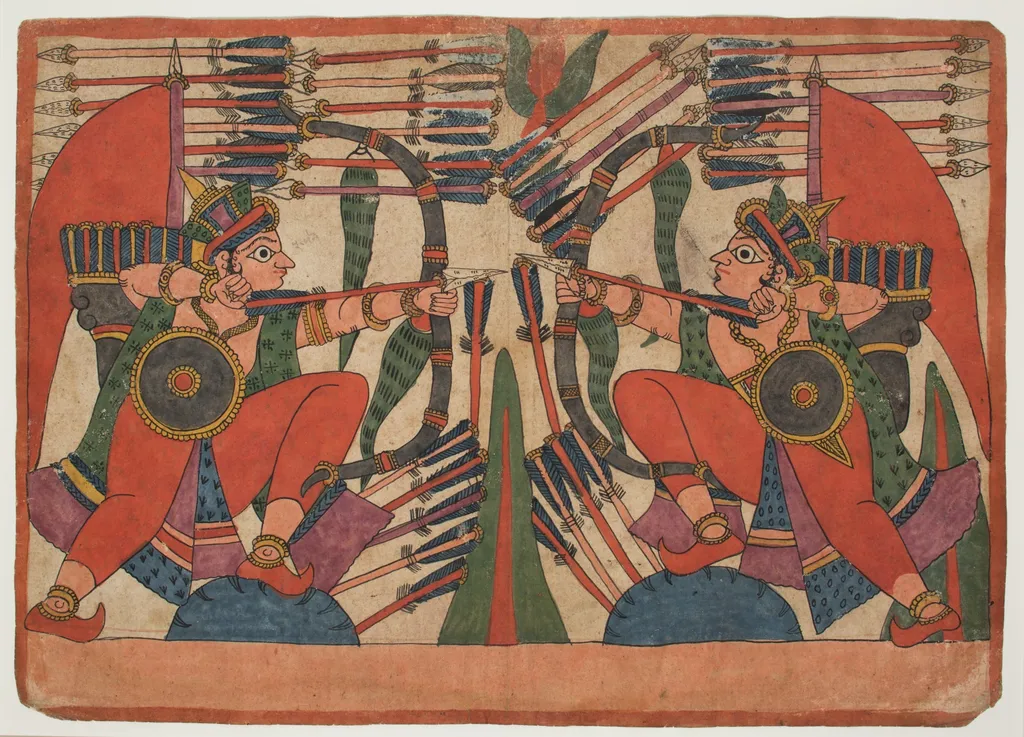
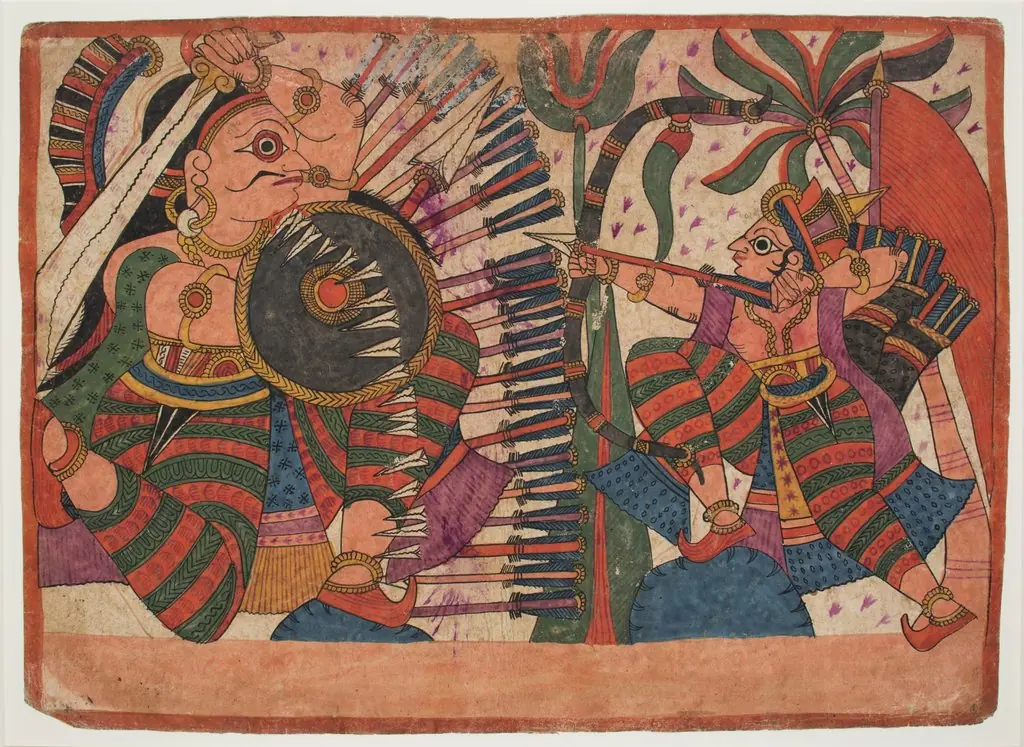
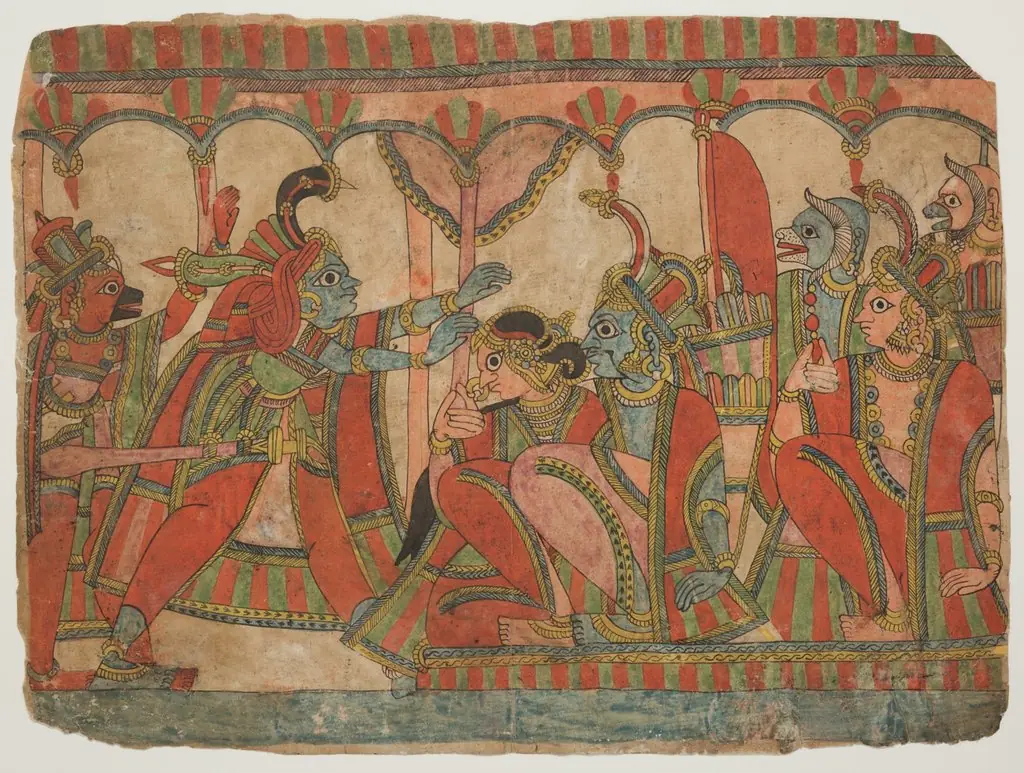
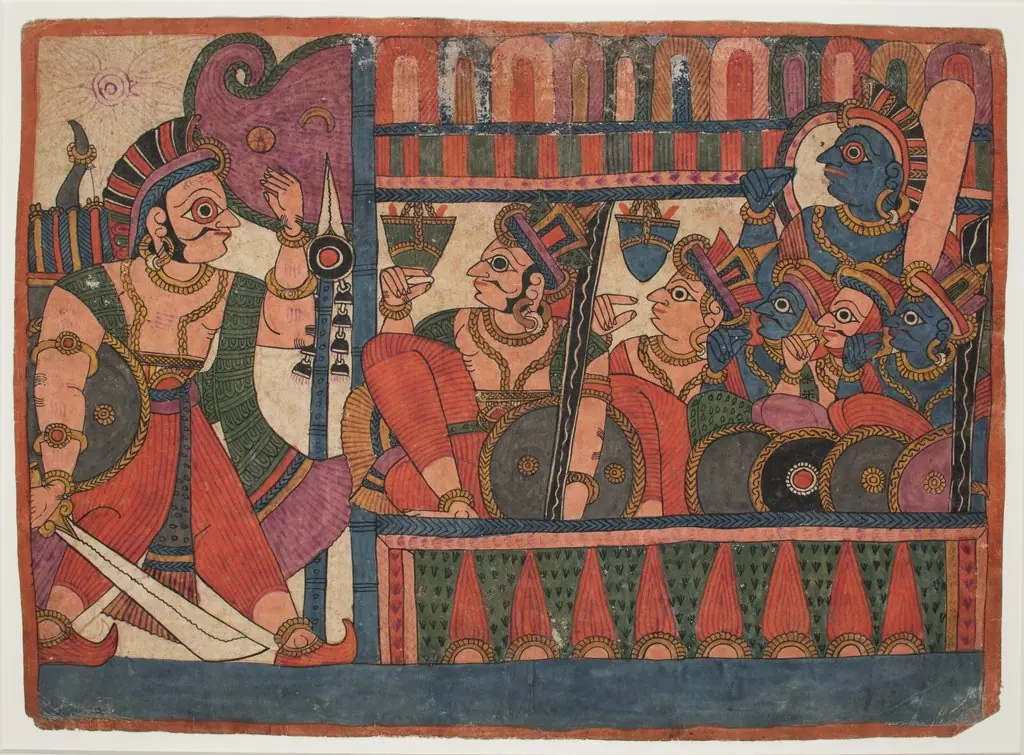
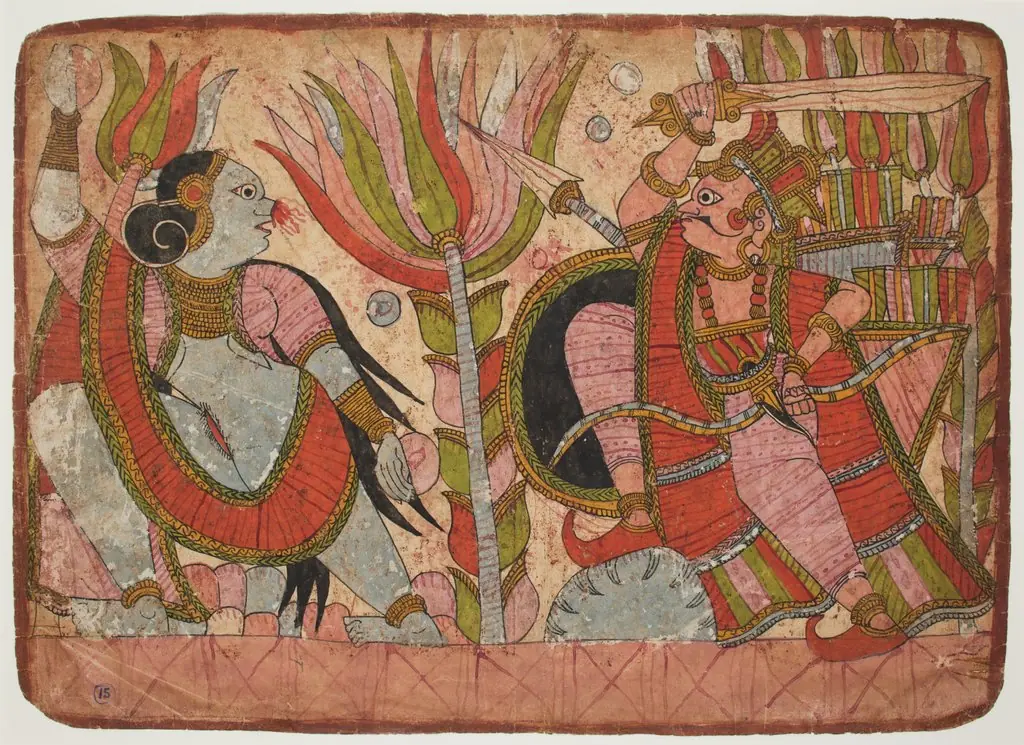
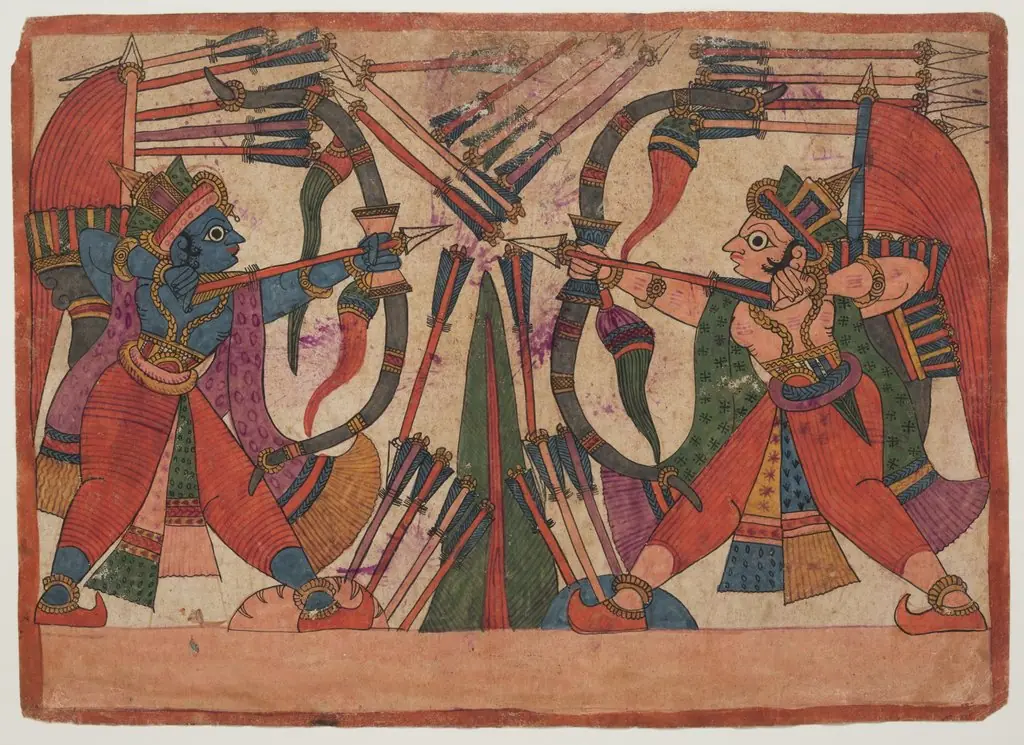
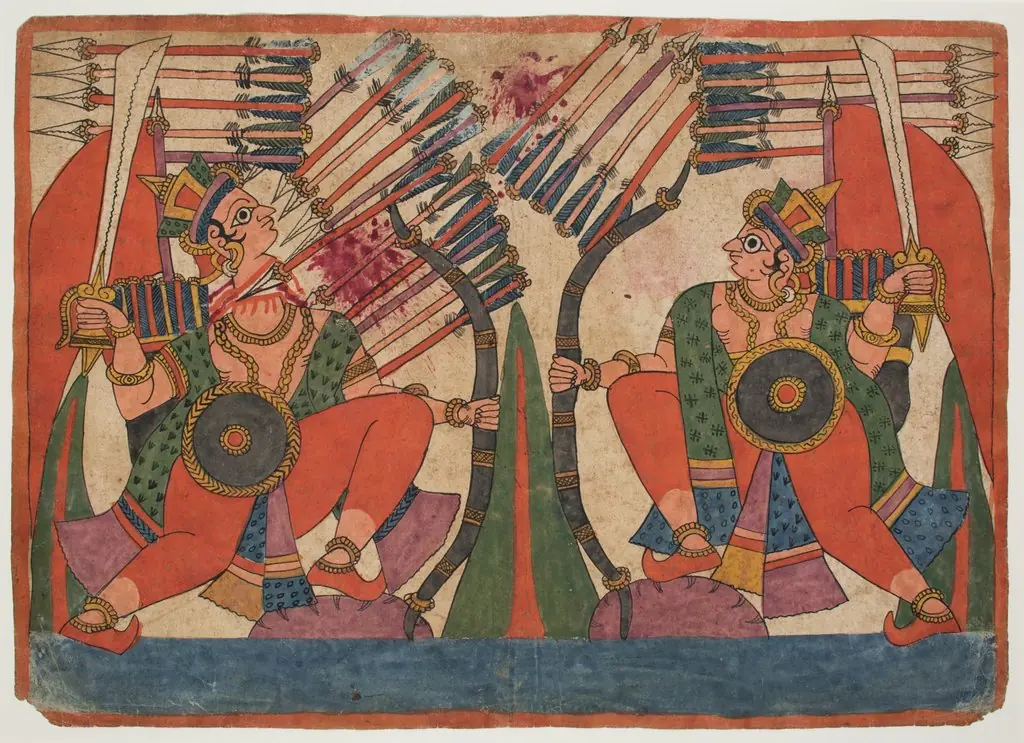
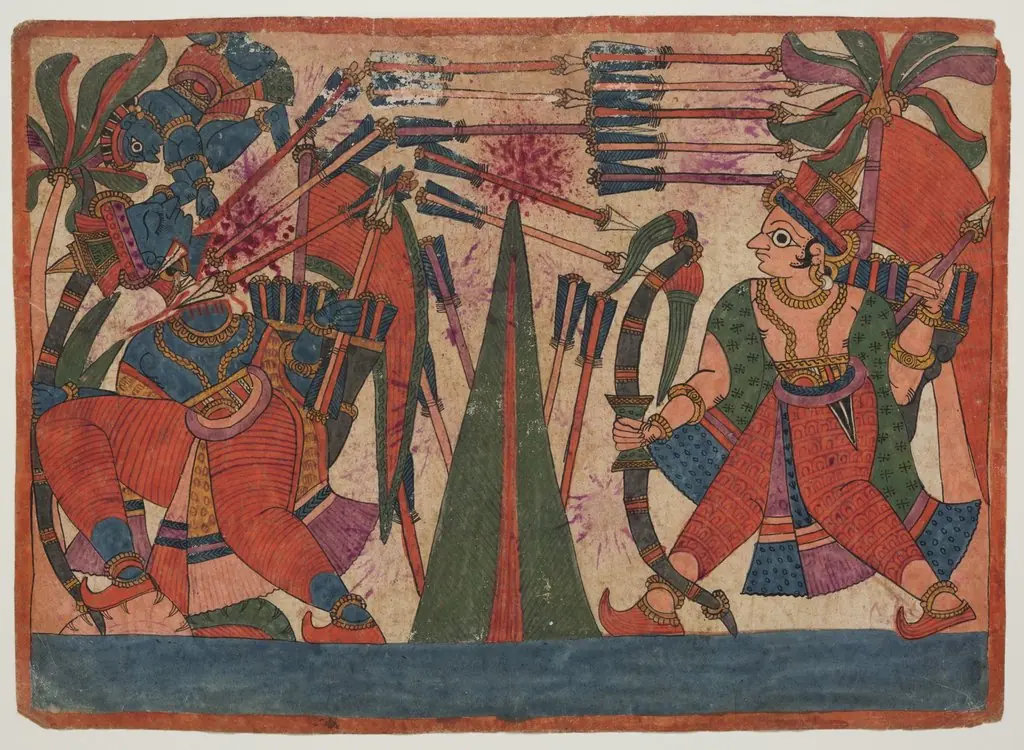
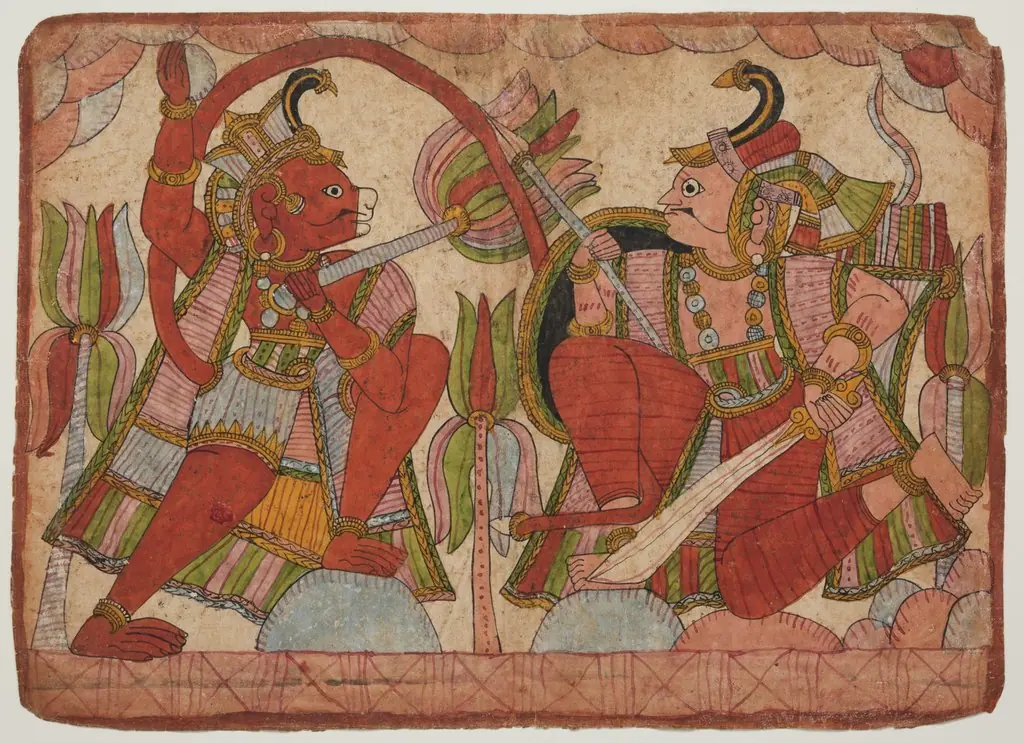
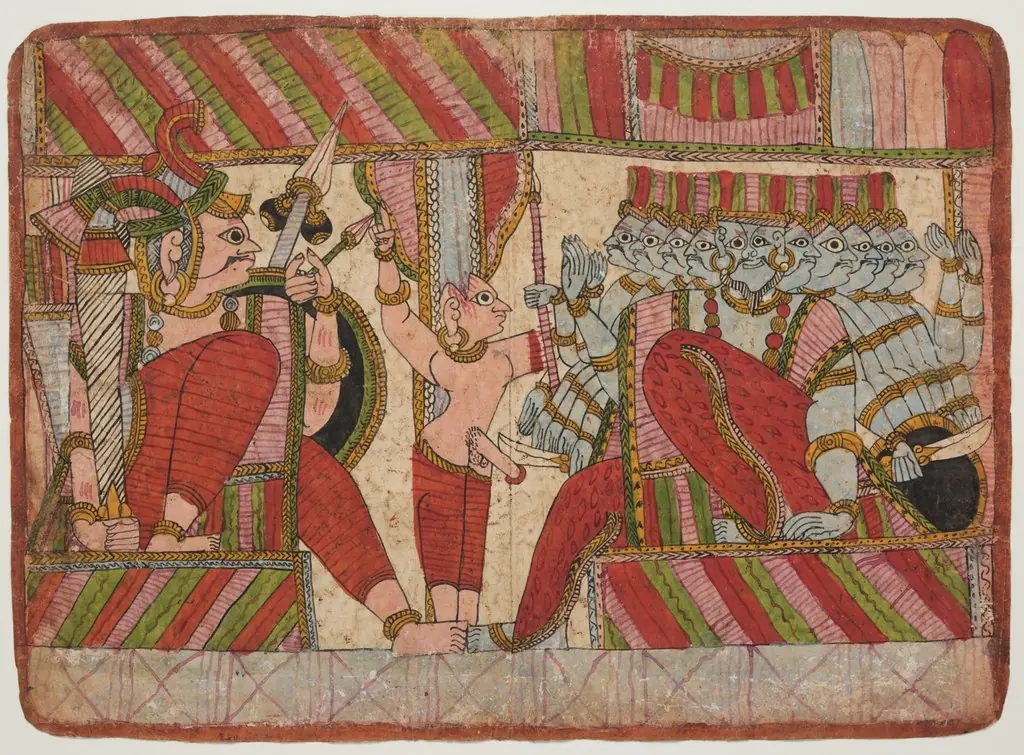
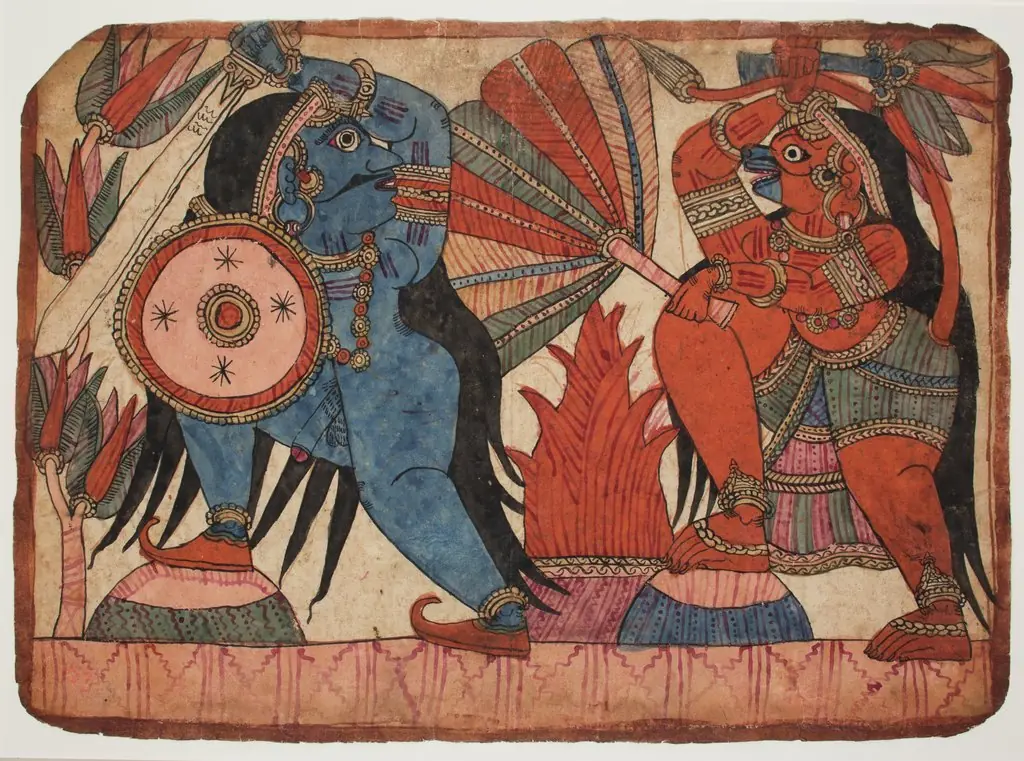
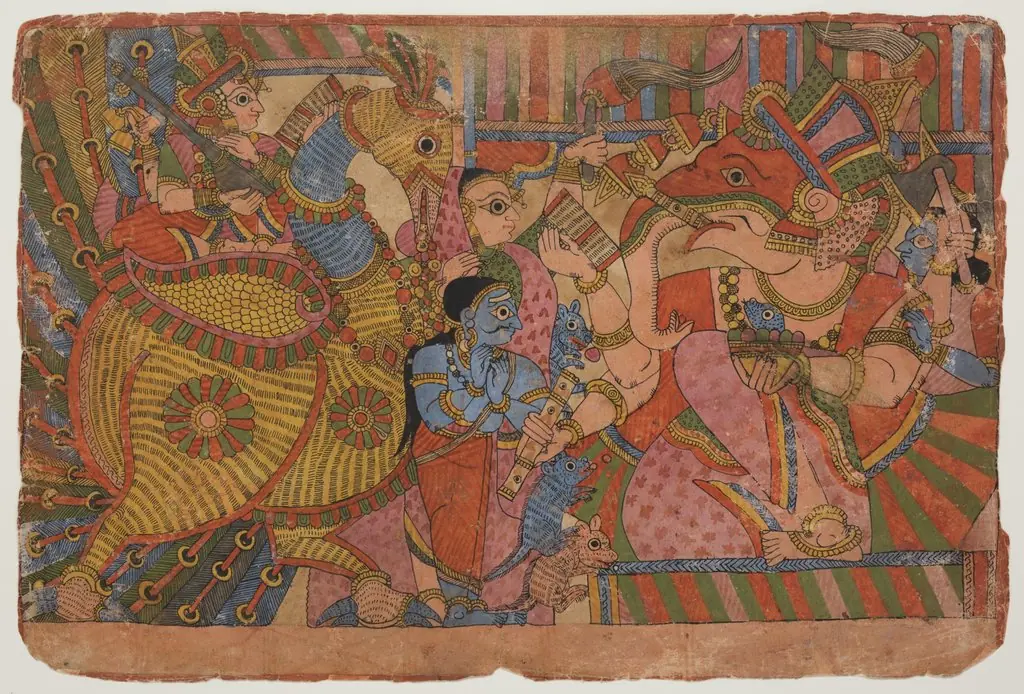
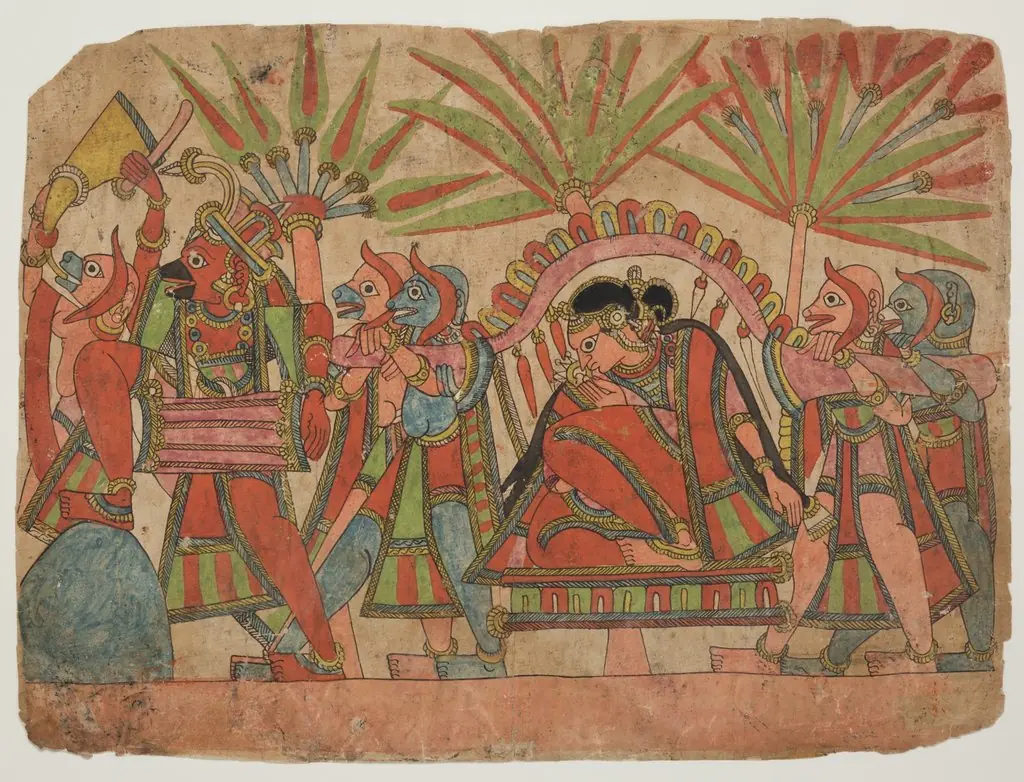
Scene from the Ramayana is an unspecified painting by Unknown. It dates from 1800 and is held in the collection of the Detroit Institute of Arts. This painting illustrates a moment from the Ramayana, an ancient Indian epic, depicting two warriors in mid-combat.
About this work
Overview
The figures are framed against a pale, minimal background, drawing focus to their elaborate attire and dynamic postures.
This painting illustrates a moment from the Ramayana, an ancient Indian epic, depicting two warriors in mid-combat. Rendered with vibrant pigments and fine brushwork, the scene emphasizes motion and tension through the proliferation of arrows in flight and embedded in the ground. The figures are framed against a pale, minimal background, drawing focus to their elaborate attire and dynamic postures.
Subject & Meaning
The two figures represent rival warriors from the Ramayana, likely Rama and Ravana, engaged in a pivotal battle. Their opposing stances and weaponry symbolize the cosmic struggle between dharma and adharma. The abundance of arrows suggests the intensity and scale of their conflict, reinforcing the narrative’s themes of duty, righteousness, and divine retribution.
Technique & Style
The artist employed detailed line work and layered mineral pigments to render intricate textiles, jewelry, and armor. The figures’ garments display fine patterns, while the arrows are rendered with precision, creating a sense of chaotic movement. The flat, decorative background contrasts with the three-dimensionality of the figures, a hallmark of regional Indian miniature traditions.
History & Provenance
This work belongs to a series of illustrated episodes from the Ramayana, likely produced in a royal atelier in North India during the 17th or 18th century. Such manuscripts were commissioned by patrons to commemorate religious narratives and display artistic refinement. The painting’s current location at the Detroit Institute of Arts reflects its acquisition through early 20th-century collections of South Asian art.
Context
Paintings like this were created as part of illustrated manuscripts, intended for private contemplation or courtly display. They drew from oral and textual traditions, blending religious devotion with courtly aesthetics. The emphasis on costume and weaponry reflects contemporary ideals of heroism and royal identity, while the stylized landscape evokes mythic rather than earthly space.
Legacy
These illustrated scenes preserved the Ramayana’s visual language across generations, influencing later regional styles and modern interpretations of Hindu epics. Their meticulous detail and symbolic composition continue to inform scholarly study of Indian painting, offering insight into the interplay of religion, narrative, and artistic practice in pre-colonial India.
Artist & collection

 Domestic Scene
 Giacomo and Cardinal Marco, investing Andrea, Abbot of San Zeno, with his Benefice
 The Nymph of Fontainebleau
 Portrait of a Woman
 Madonna and Child with Saints in the Enclosed Garden
 Venus and Minerva
 Family Group of Four on Sofa
 Wall painting from Room H of the Villa of P. Fannius Synistor at Boscoreale