Artwork
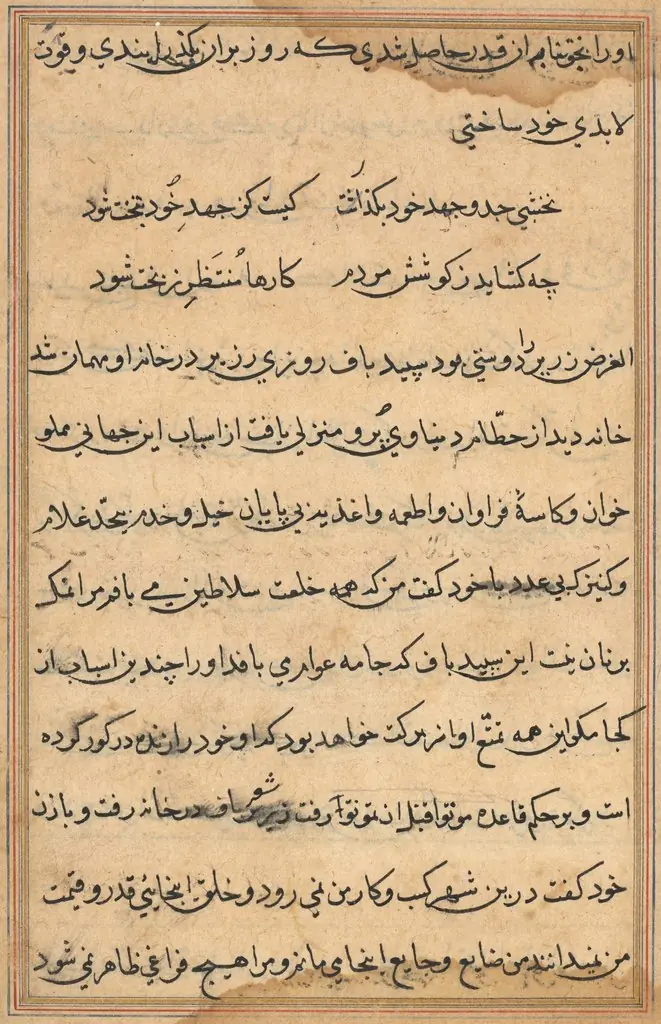
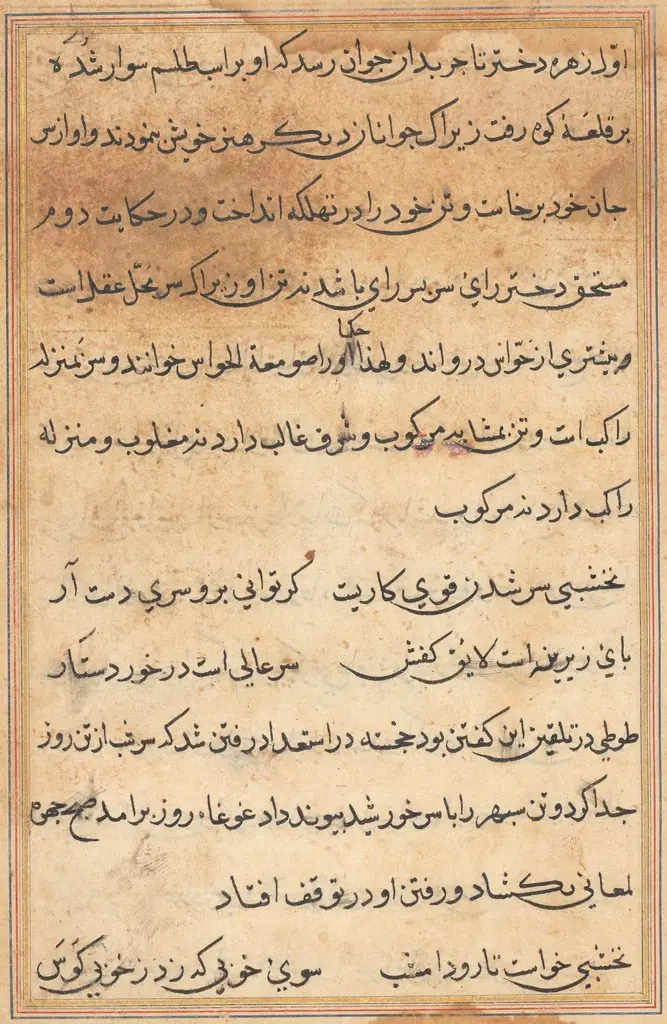
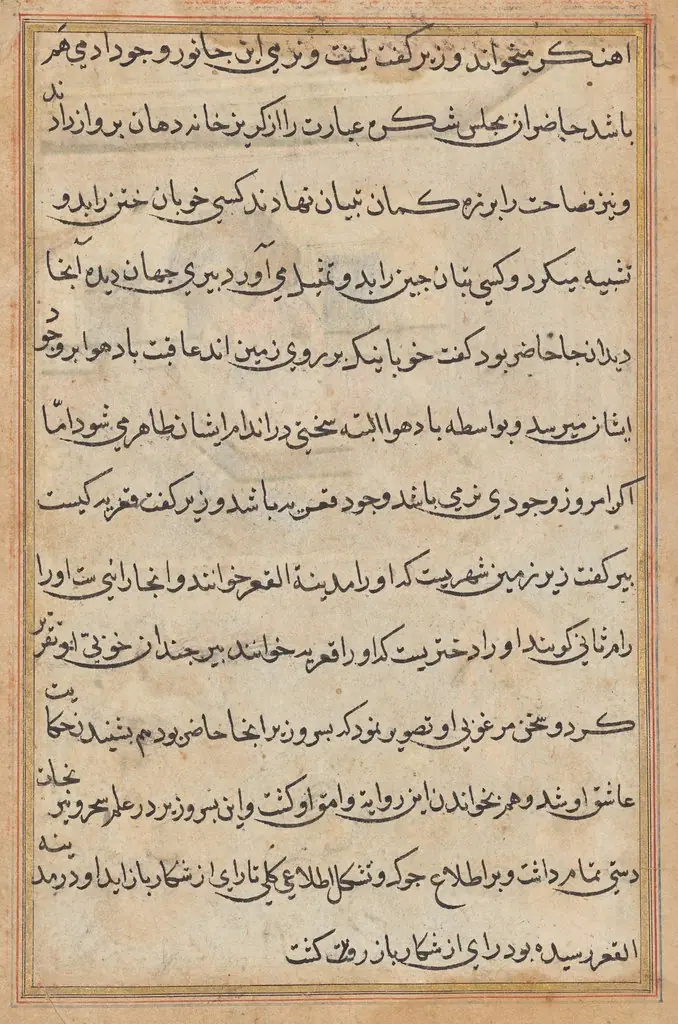
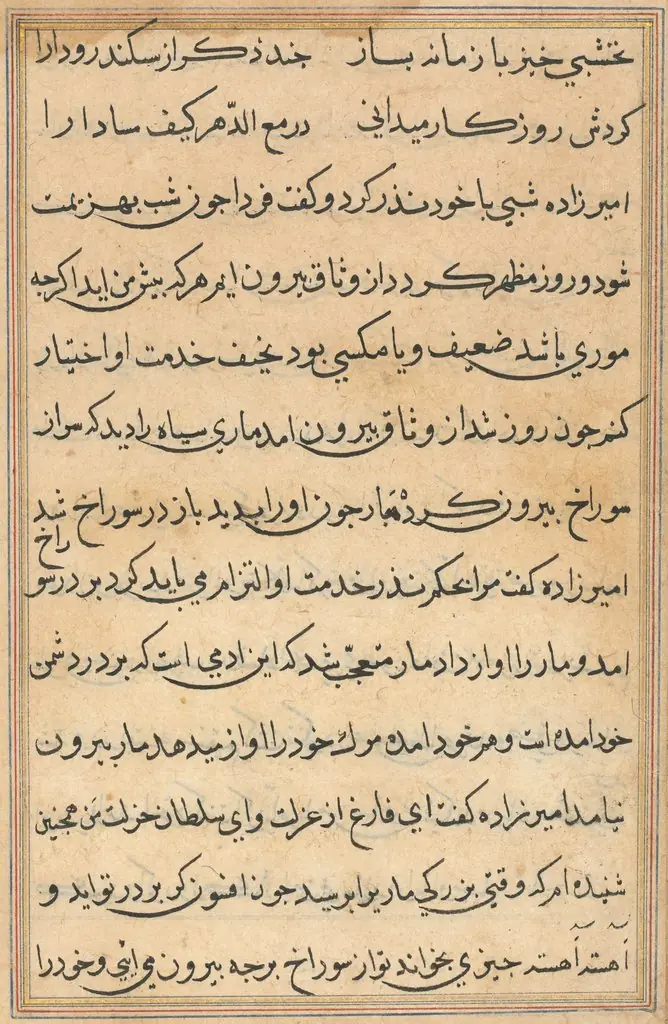
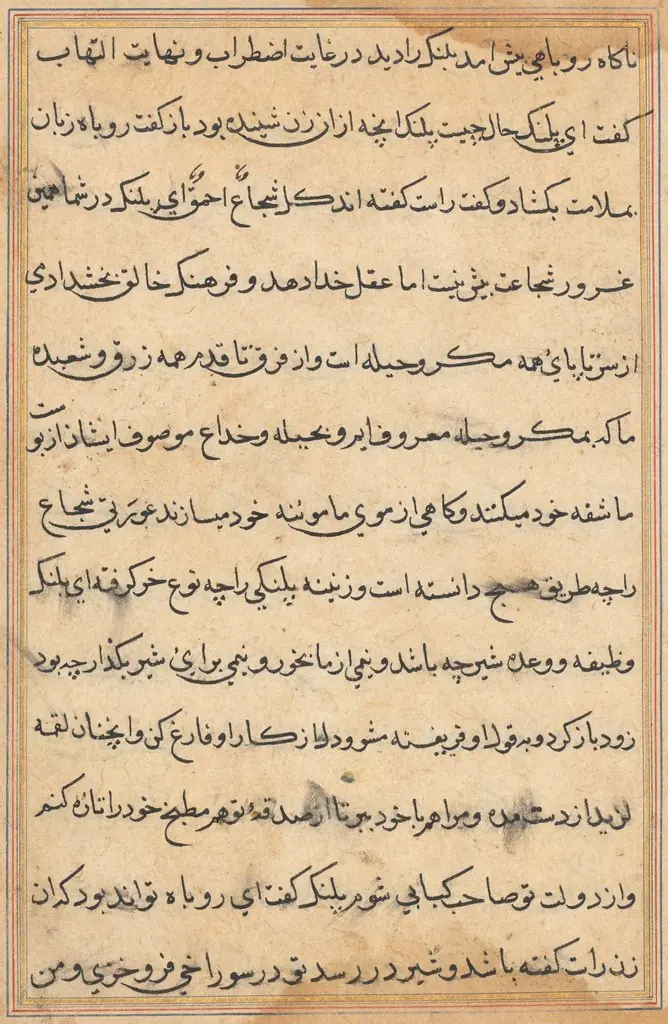
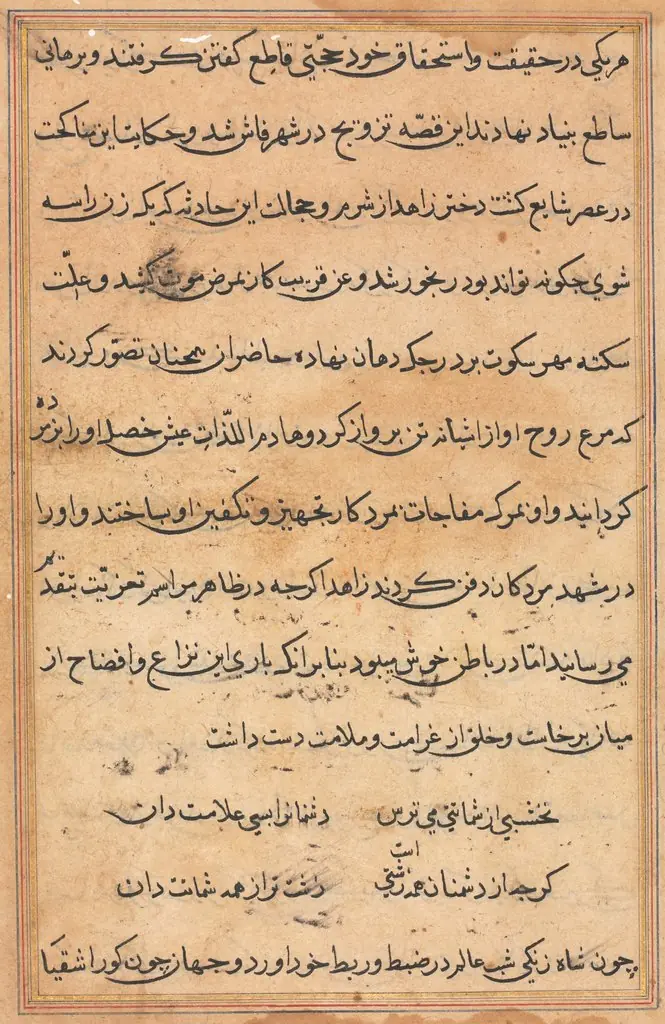
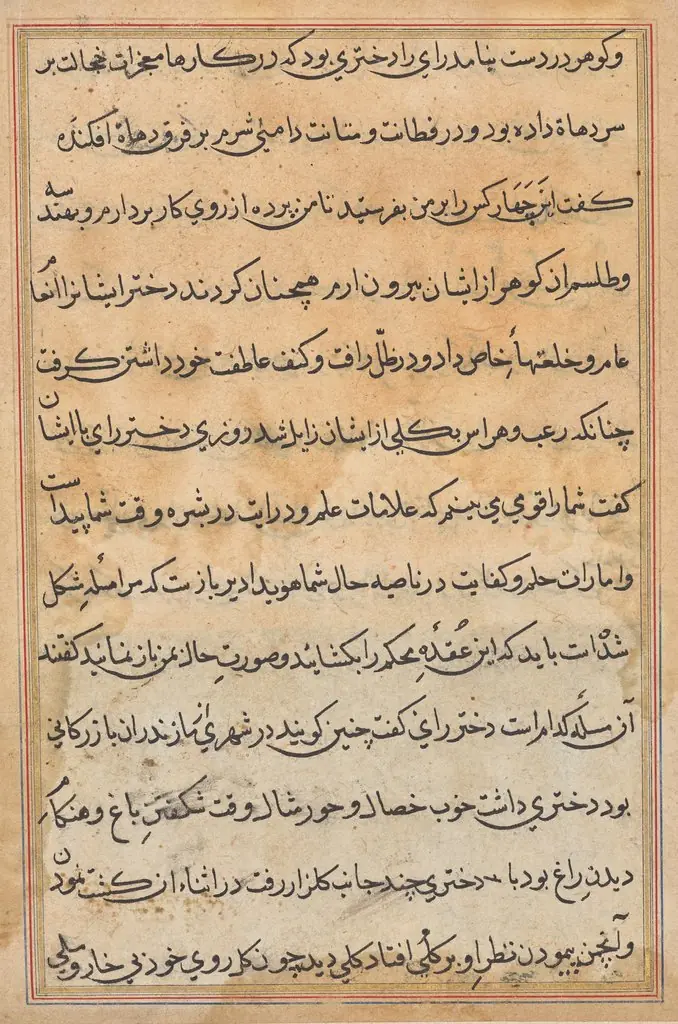
Page from Tales of a Parrot (Tuti-nama): text page
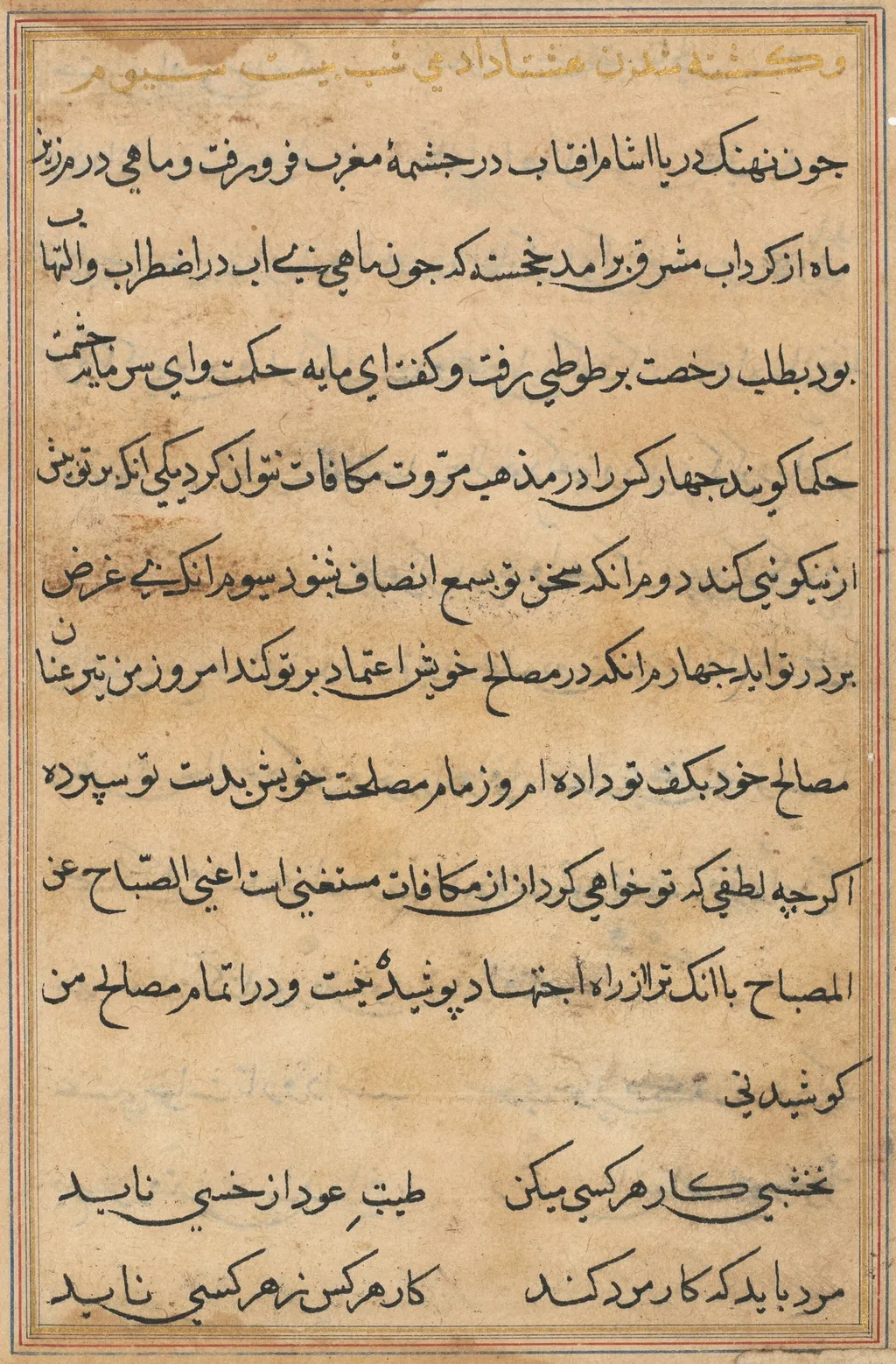
Page from Tales of a Parrot (Tuti-nama): text page is an unspecified painting. It dates from 1560 and is held in the collection of the Cleveland Museum of Art. This object is a painted page from the Persian narrative collection known as the Tales of a Parrot (Tuti‑nama).
About this work
Overview
This object is a painted page from the Persian narrative collection known as the Tales of a Parrot (Tuti‑nama). Executed as a text page rather than an illustrated miniature, it consists of dense black calligraphic lines set against a light, aged‑looking ground, framed by a thin red border. The paper shows signs of age, with faint stains and a worn surface.
Subject & Meaning
The script contains a poetic narrative intended for oral recitation, a common practice in courtly literature. The composition was addressed to a patron named Prince Salim, suggesting a personalized dedication and possibly a didactic or entertainment function within a royal household.
Technique & Style
The artist employed ink on paper, using a flowing hand that packs the verses tightly together, with slight irregularities that convey a hand‑written quality. The red marginal line, applied in a thin wash, delineates the page’s edge, while the background’s light tone imitates aged parchment, enhancing the manuscript’s antiquarian appearance.
History & Provenance
The page is part of a larger manuscript tradition that circulated in Persian courts during the early modern period. It entered the collection of the Cleveland Museum of Art, where it is currently conserved and displayed as an example of literary art rather than visual illustration.
Context
Tuti‑nama, meaning “Parrot’s Tale,” comprises a series of moral and romantic stories that were popular in Persian literary culture. Text‑only pages such as this one illustrate the manuscript’s dual function as both a literary work and a decorative object within elite patronage.
Artist & collection

 Page from Tales of a Parrot (Tuti-nama): text page
 Page from Tales of a Parrot (Tuti-nama): text page
 Page from Tales of a Parrot (Tuti-nama): text page
 Page from Tales of a Parrot (Tuti-nama): text page
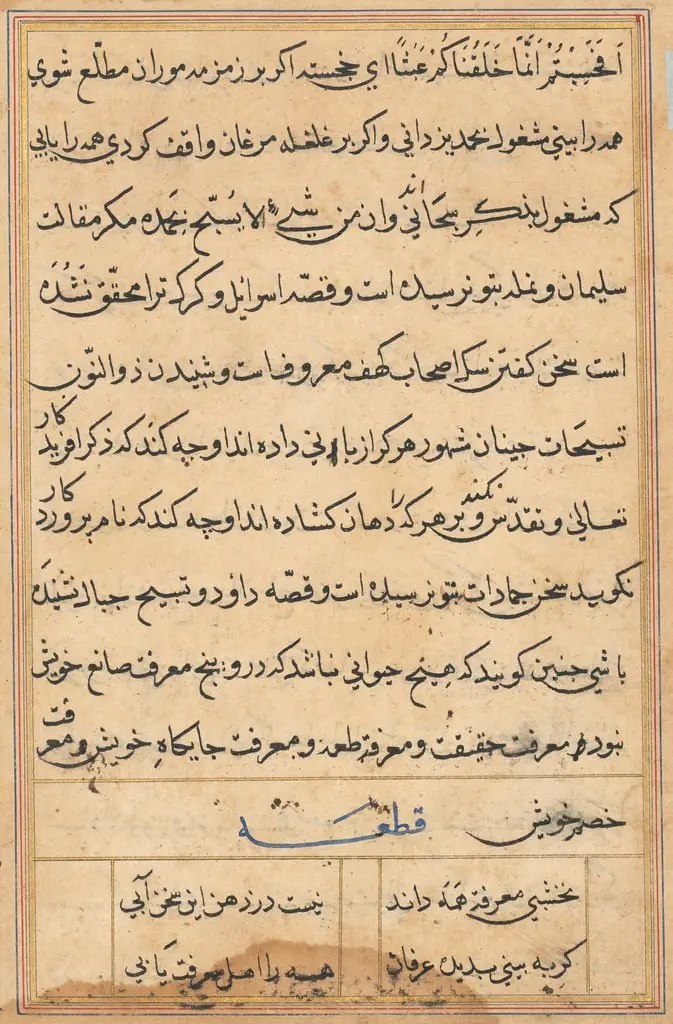 Page from Tales of a Parrot (Tuti-nama): text page
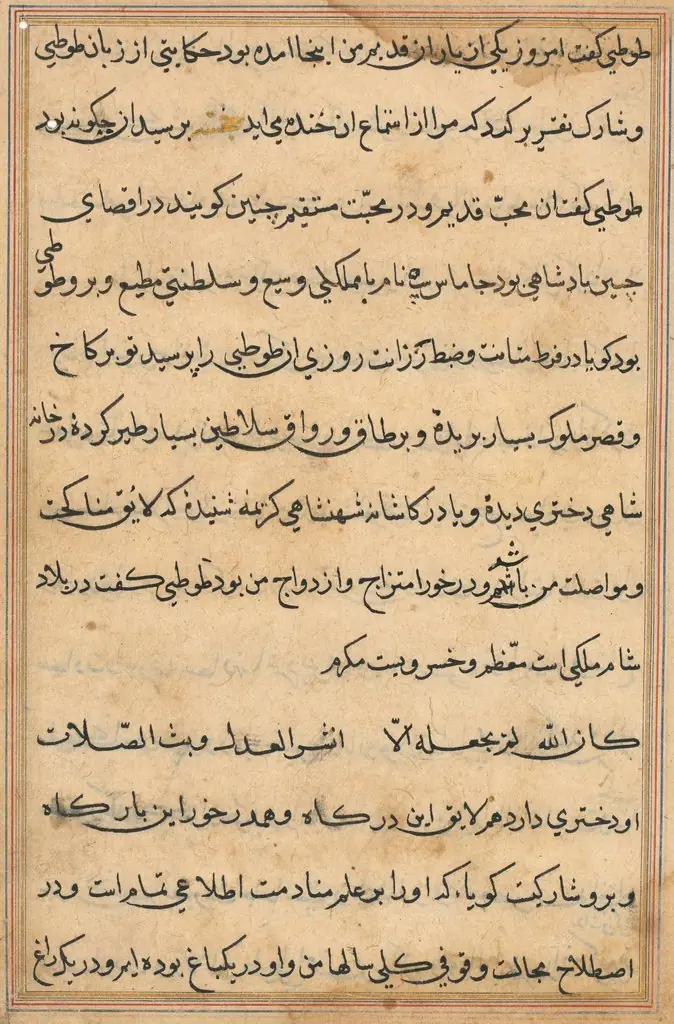 Page from Tales of a Parrot (Tuti-nama): text page
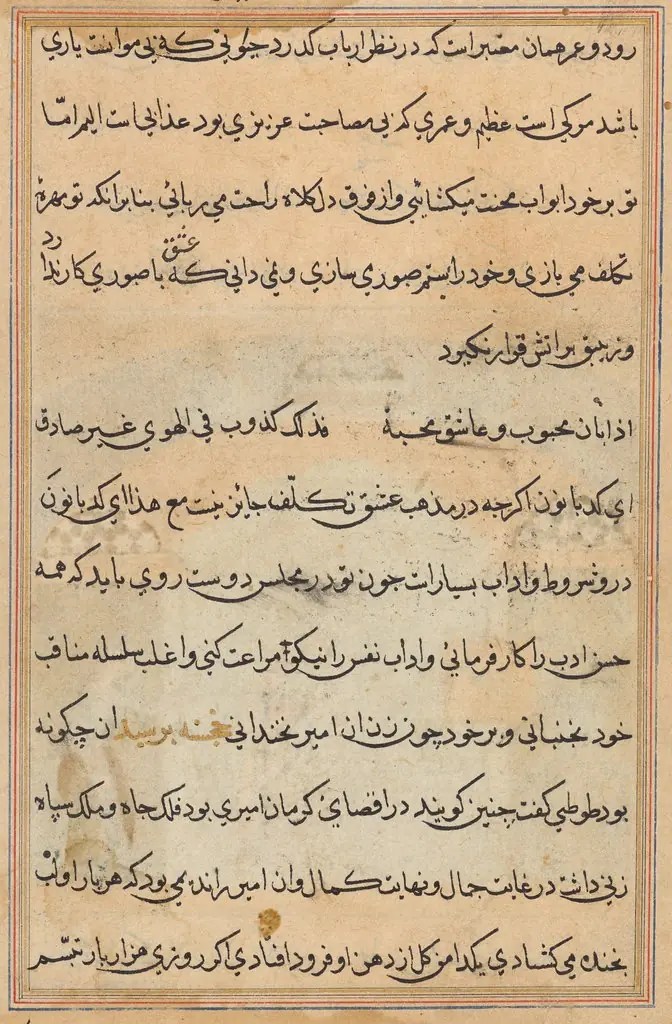 Page from Tales of a Parrot (Tuti-nama): text page
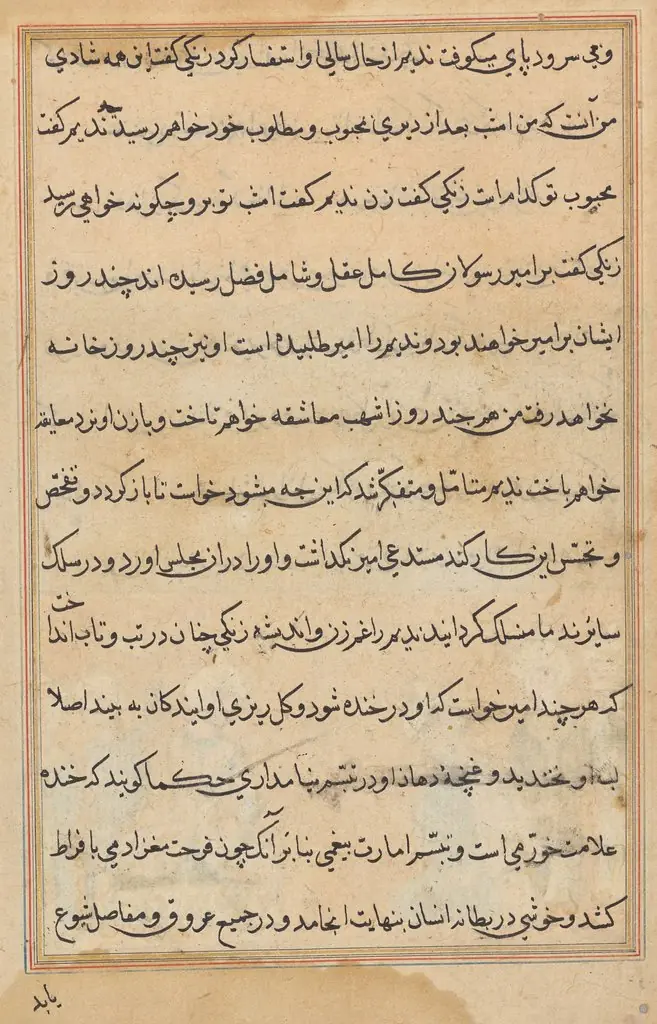 Page from Tales of a Parrot (Tuti-nama): text page