Artwork
Karl III., Herzog von Lothringen
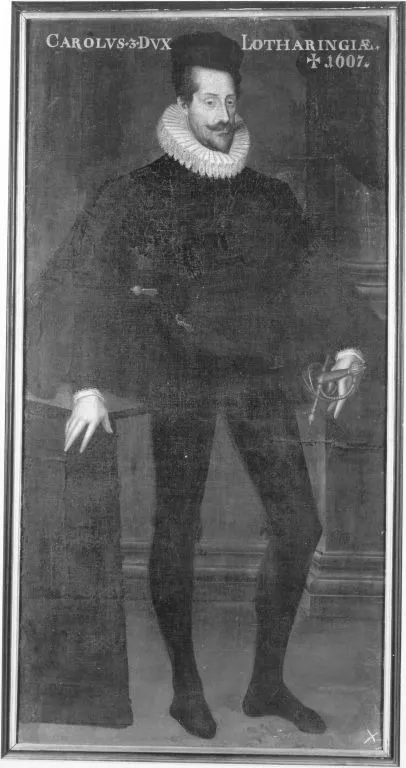
Karl III., Herzog von Lothringen is an unspecified painting by the Mannerist artist Unknown. It dates from 1590 and is held in the collection of the Bavarian State Painting Collections. The work is a monochrome portrait of Karl III, Duke of Lorraine, rendered in a formal, upright stance.
About this work
His hands are tucked into his sleeves, and he leans slightly on a ledge with one foot forward.
This black-and-white portrait shows a man in a dark, fitted jacket with a ruff collar. His hands are tucked into his sleeves, and he leans slightly on a ledge with one foot forward. A small object, maybe a glove or a hat, rests on the ledge beside him.
The text at the top reads *"Carolus... Dux Lotharingiae"* and *"1607"*—though that date doesn’t match the painting’s actual year. The man’s pose is stiff but confident, typical of formal portraits from this time.
Look up Alte Pinakothek to see more paintings from the same collection.
Overview
The work is a monochrome portrait of Karl III, Duke of Lorraine, rendered in a formal, upright stance. He is shown wearing a dark, fitted jacket with a ruff collar, his hands concealed within the sleeves, and one foot placed forward as he leans against a low ledge. A small object, possibly a glove or hat, rests on the ledge beside him, adding a subtle compositional element.
Subject & Meaning
Karl III, a 17th‑century ruler of Lorraine, is presented with the dignity typical of aristocratic portraiture. The stiff yet confident posture underscores his status and authority, while the inclusion of personal items hints at his refined courtly identity.
Technique & Style
Executed in black and white, the painting employs chiaroscuro to model the figure’s features and clothing, emphasizing texture over color. The tight brushwork on the ruff and jacket reflects the meticulous attention to detail characteristic of early Baroque portraiture.
History & Provenance
Although the inscription on the canvas bears the date 1607, scholars note that this does not correspond to the painting’s actual creation date, suggesting a later addition or misdating. The portrait now belongs to the collection of the Alte Pinakothek in Munich, where it is displayed alongside other works of the period.
Context
The portrait fits within a broader tradition of European court portraiture that sought to convey power through formal composition and restrained elegance. Such images were often commissioned to affirm dynastic legitimacy and to circulate the ruler’s likeness among allies and subjects.
Artist & collection

 Domestic Scene
 Giacomo and Cardinal Marco, investing Andrea, Abbot of San Zeno, with his Benefice
 The Nymph of Fontainebleau
 Portrait of a Woman
 Madonna and Child with Saints in the Enclosed Garden
 Venus and Minerva
 Family Group of Four on Sofa
 Wall painting from Room H of the Villa of P. Fannius Synistor at Boscoreale
 Portrait of Carl XII of Sweden
 Boy with a Lace Collar (dummy board)
 Portrait of Carl XII of Sweden
 Erzherzogin Eleonore von Österreich (1582-1620) als Stiftsdame des Königlichen Damenstifts in Hall/Tirol
 Franz II., Herzog von Lothringen
 Erzherzog Wenzeslaus von Österreich (Kopie nach)
 Portrait of Wolfgang Wilhelm van Wittelsbach
 Prinz Johann I.
 Bildnis des Alexander Sigismund von Pfalz-Neuburg, Fürstbischof von Augsburg (1663-1737)
 Portrait of Filippo Spinola
 Portrait of a Knight of the Order of Santiago
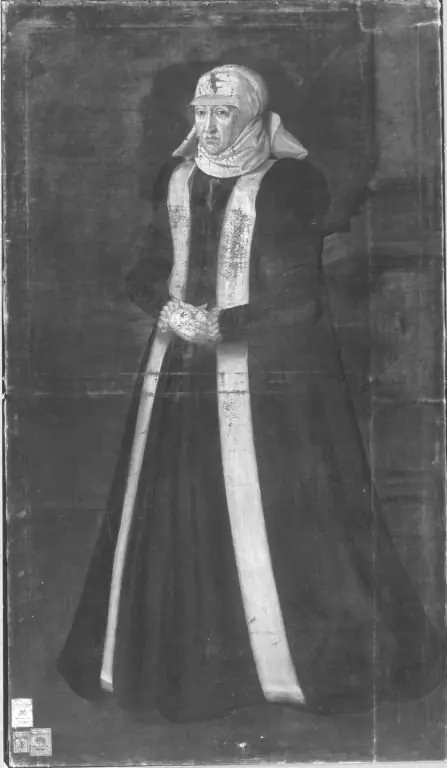 Alte Dame