Artwork
Malavagaudi Ragini, Page from a Jaipur Ragamala Set
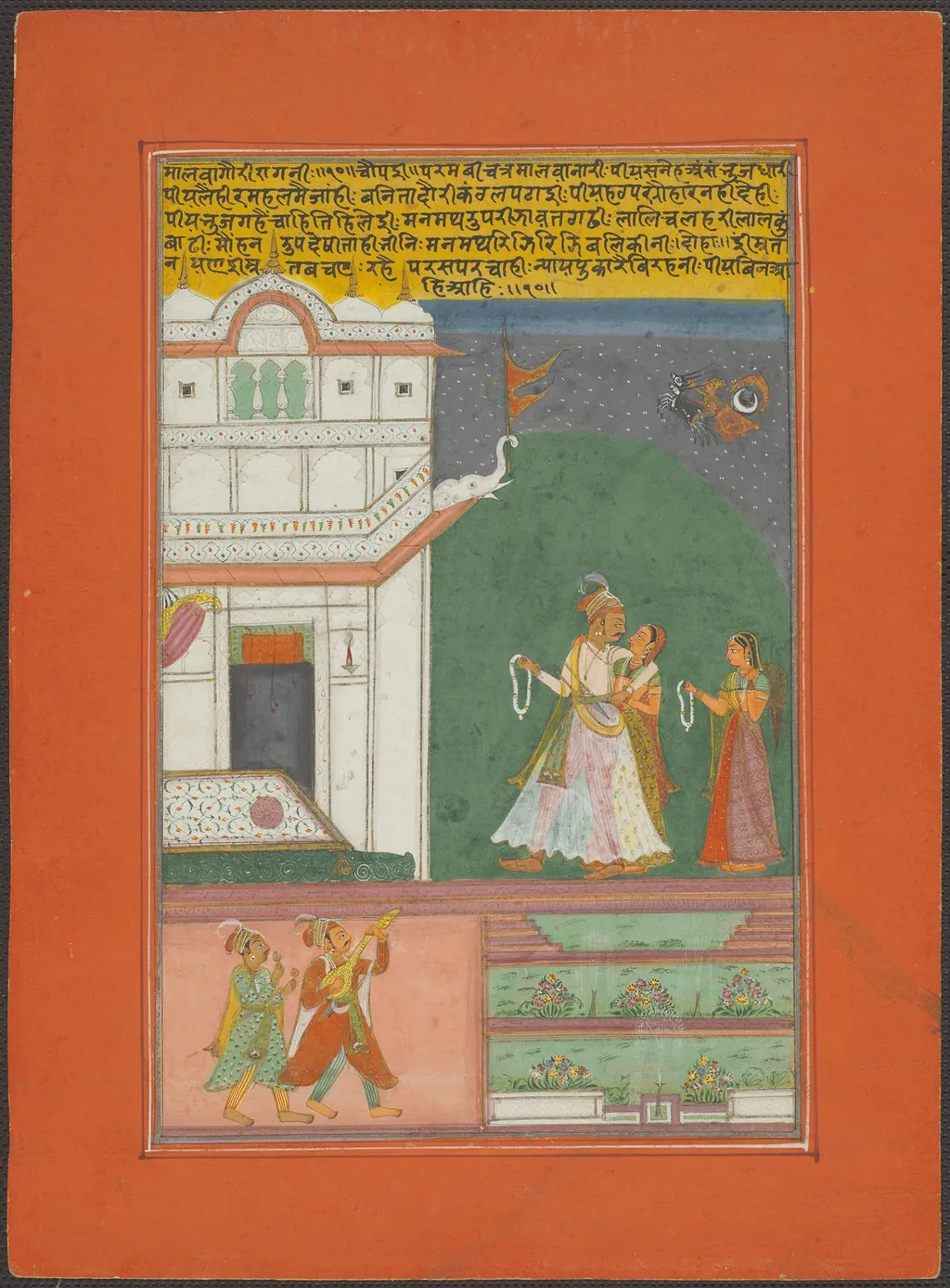
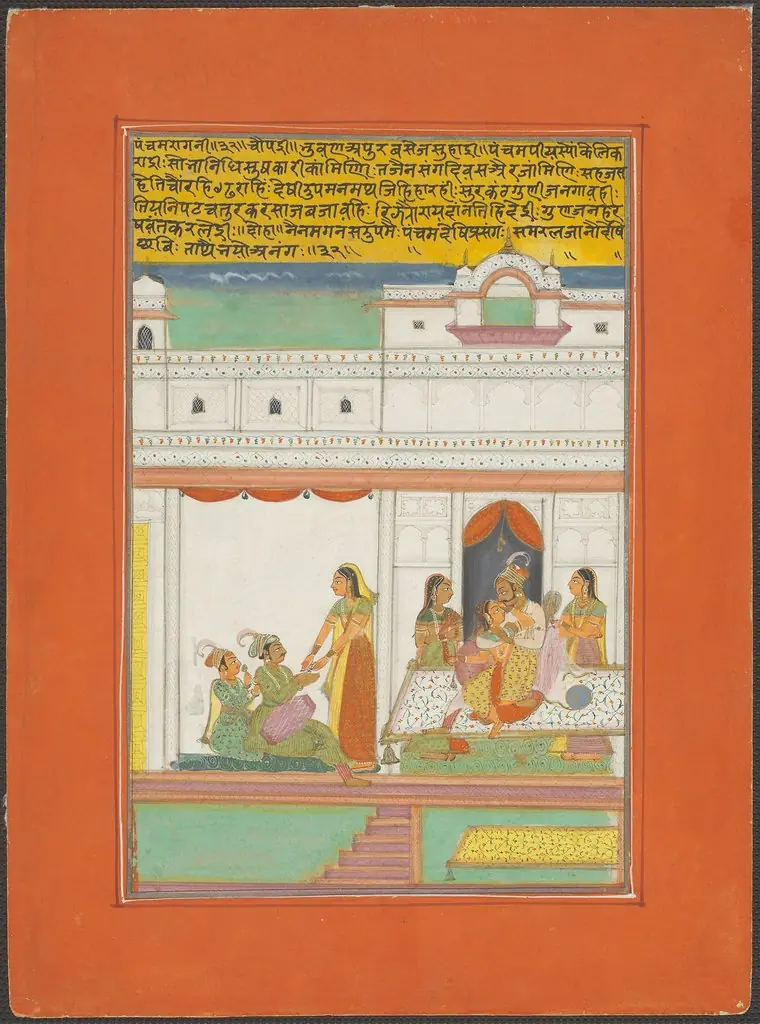
Malavagaudi Ragini, Page from a Jaipur Ragamala Set is an unspecified painting by the Rococo painting artist Unknown. It dates from 1757 and is held in the collection of the Art Institute of Chicago. Malavagaudi Ragini is a miniature painting from a Jaipur Ragamala series, illustrating a nocturnal courtyard scene.
About this work
Overview
Malavagaudi Ragini is a miniature painting from a Jaipur Ragamala series, illustrating a nocturnal courtyard scene. A male figure in a white‑pink robe stands between two women in bright saris, holding pearls and a sword. The composition is framed by an elaborately carved building with a balcony, a garden of flowers, and a dark blue sky speckled with stars, conveying a tranquil atmosphere.
Subject & Meaning
The work portrays a courtly gathering, suggesting themes of romance or ceremonial exchange, as indicated by the pearls and sword. The presence of the night sky and decorative architecture evokes a lyrical mood, aligning with the ragamala tradition of visualizing musical modes through poetic and emotive scenes.
Technique & Style
Executed in the Jaipur school of miniature painting, the piece employs fine brushwork and vibrant pigments to delineate intricate architectural details and textile patterns. The use of delicate line and subtle shading creates depth in the courtyard, while the starry background is rendered with small white dots against a deep blue field.
History & Provenance
Part of a larger ragamala set originating in Jaipur, the painting reflects the regional adaptation of the ragamala genre during the 18th‑19th centuries. The specific provenance of this leaf is not documented, but such sets were traditionally commissioned by royal patrons for private enjoyment and scholarly study of music and art.
Context
Ragamala paintings translate Indian classical ragas into visual narratives, each scene embodying the emotional character of a musical mode. Malavagaudi Ragini corresponds to a particular raga associated with the night, hence the celestial setting and serene ambience typical of nocturnal ragas in this artistic tradition.
Artist & collection

 Domestic Scene
 Giacomo and Cardinal Marco, investing Andrea, Abbot of San Zeno, with his Benefice
 The Nymph of Fontainebleau
 Portrait of a Woman
 Madonna and Child with Saints in the Enclosed Garden
 Venus and Minerva
 Family Group of Four on Sofa
 Wall painting from Room H of the Villa of P. Fannius Synistor at Boscoreale
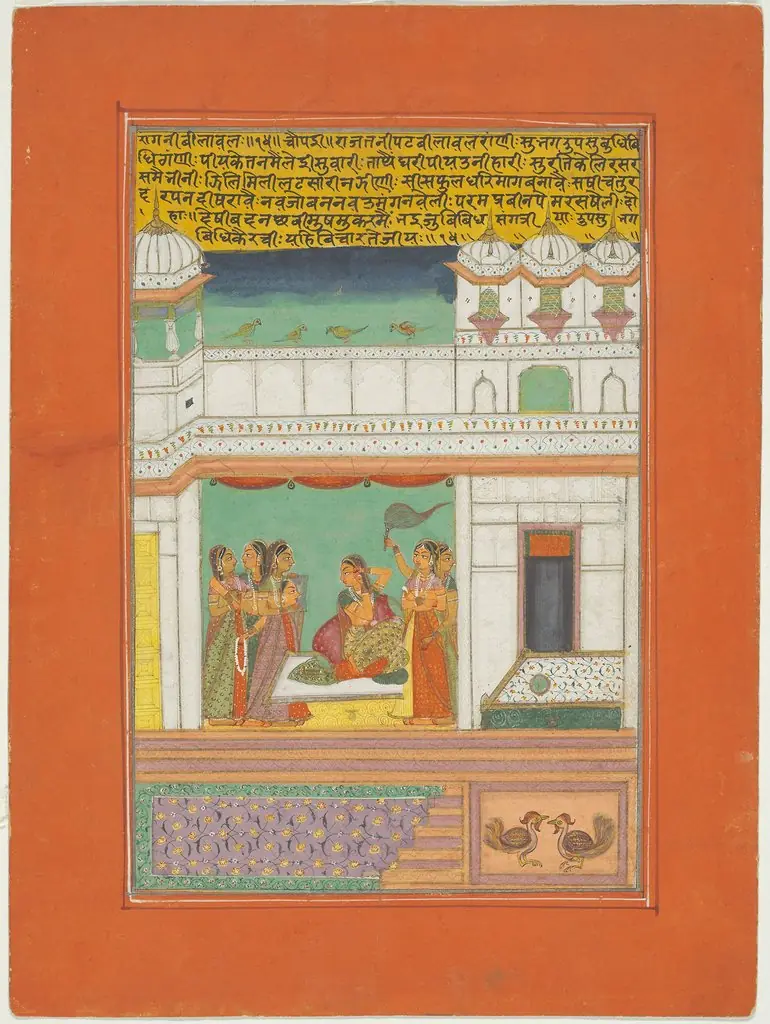 Ragini Bilaval, Page from a Jaipur Ragamala Set
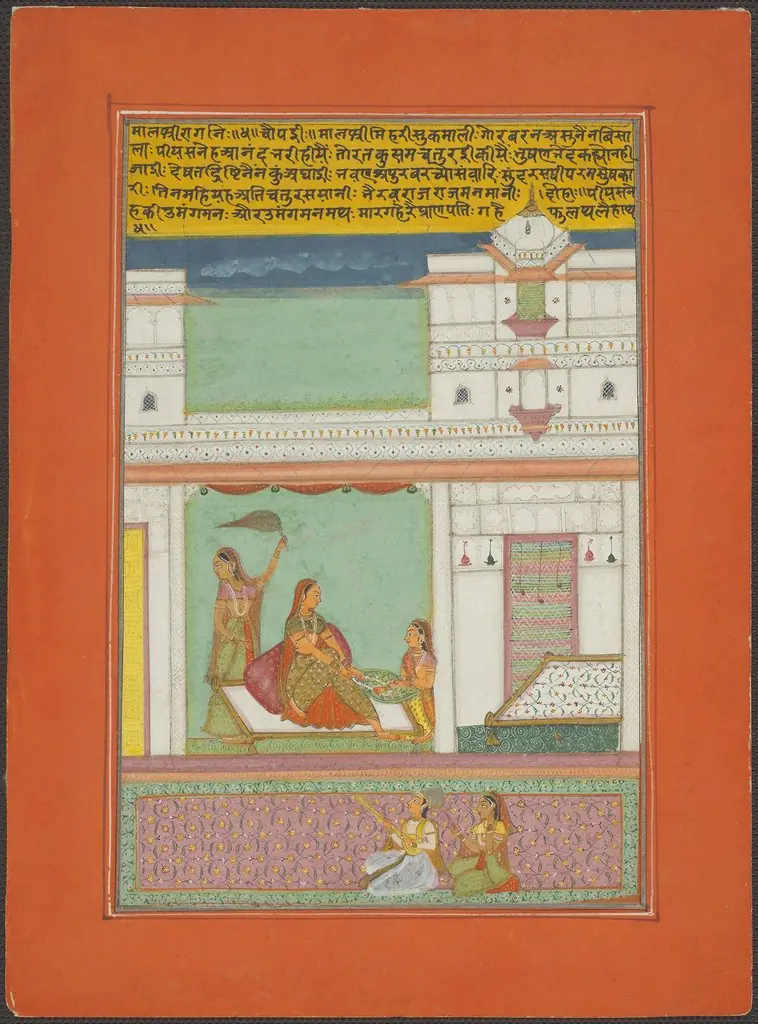 Malashri Ragini, Page from a Jaipur Ragamala Set
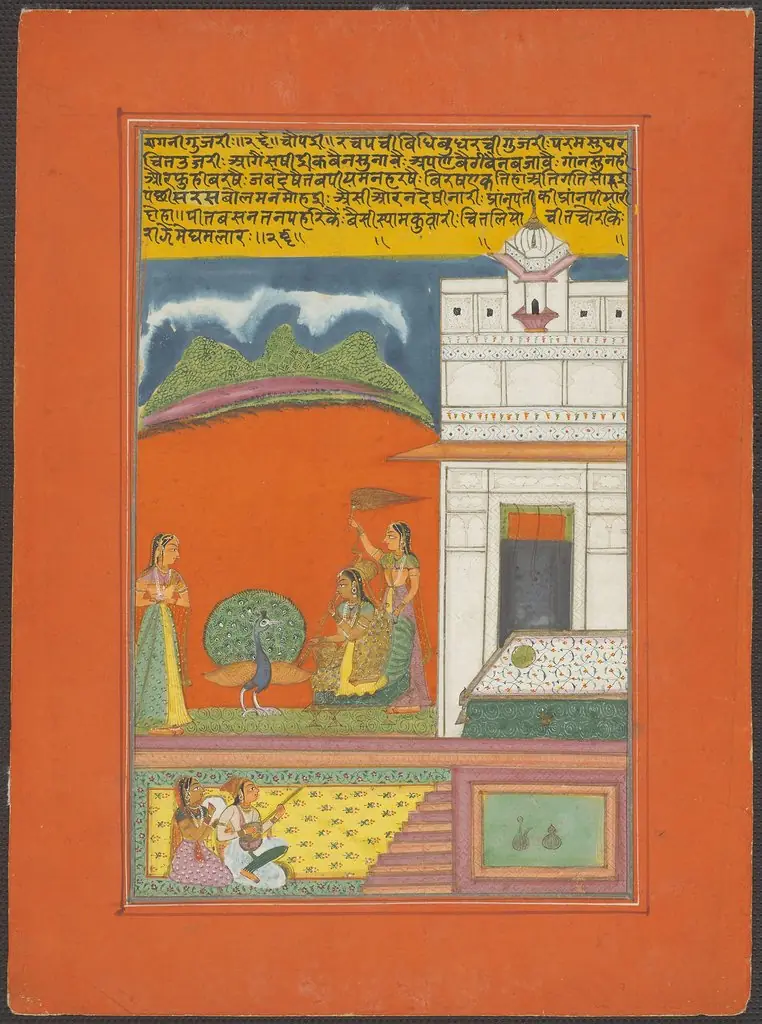 Ragini Gujari, Page from a Jaipur Ragamala Set
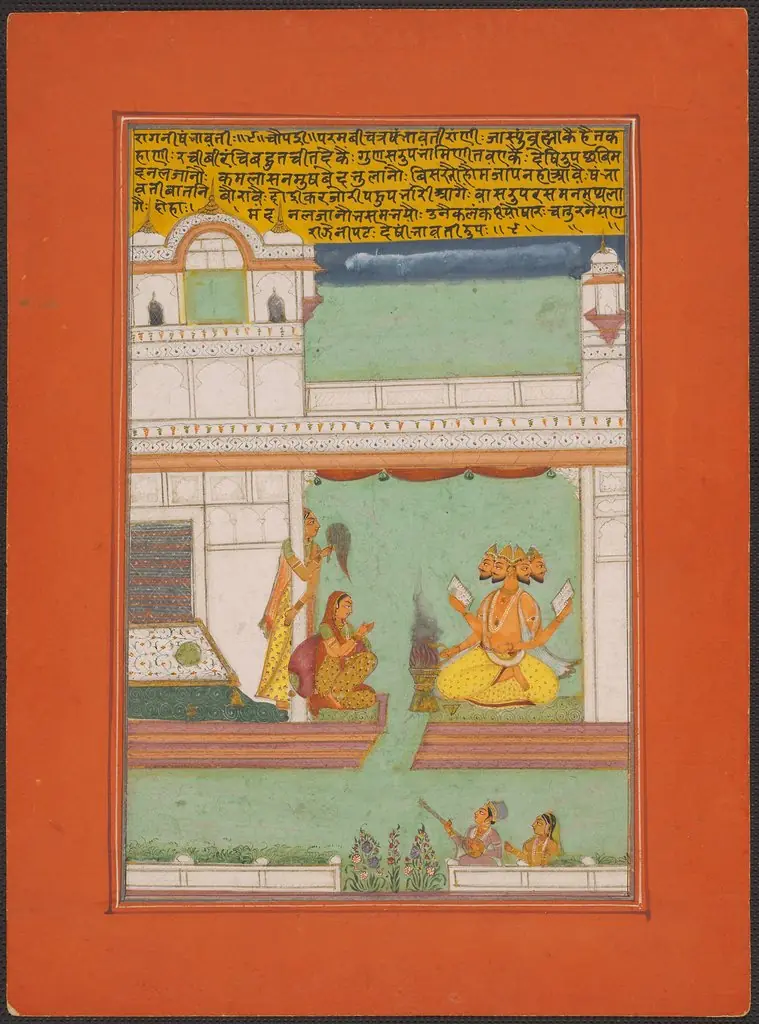 Ragini Khambavati, Page from a Jaipur Ragamala Set
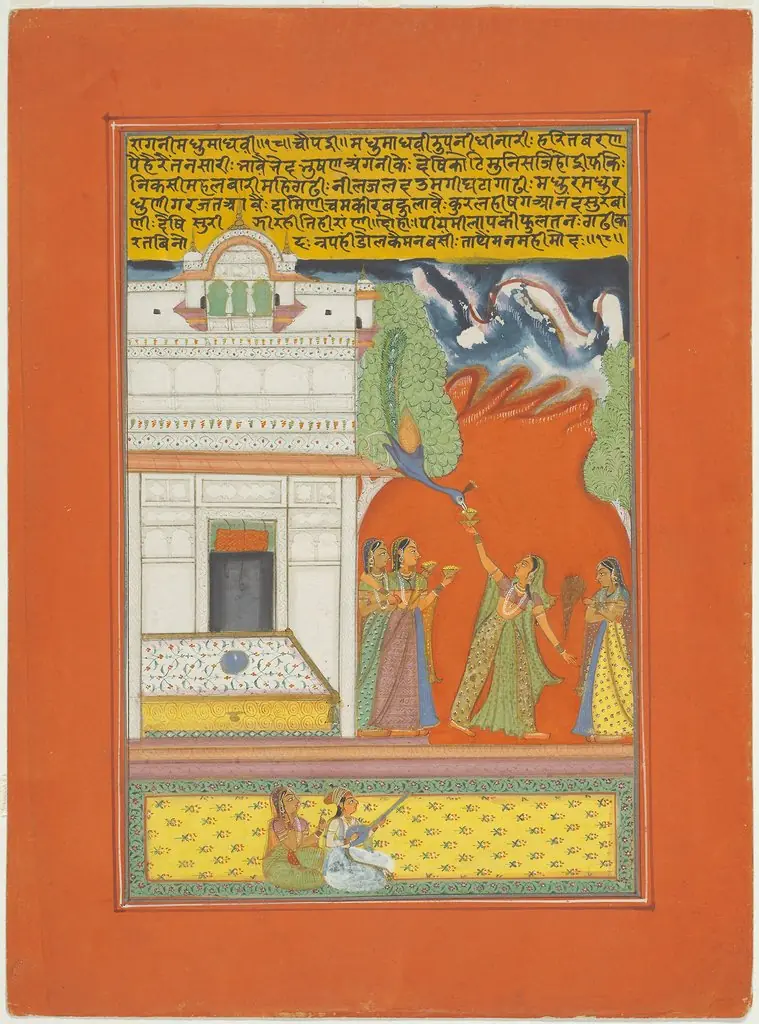 Ragini Madhumadhavi, Page from a Jaipur Ragamala Set
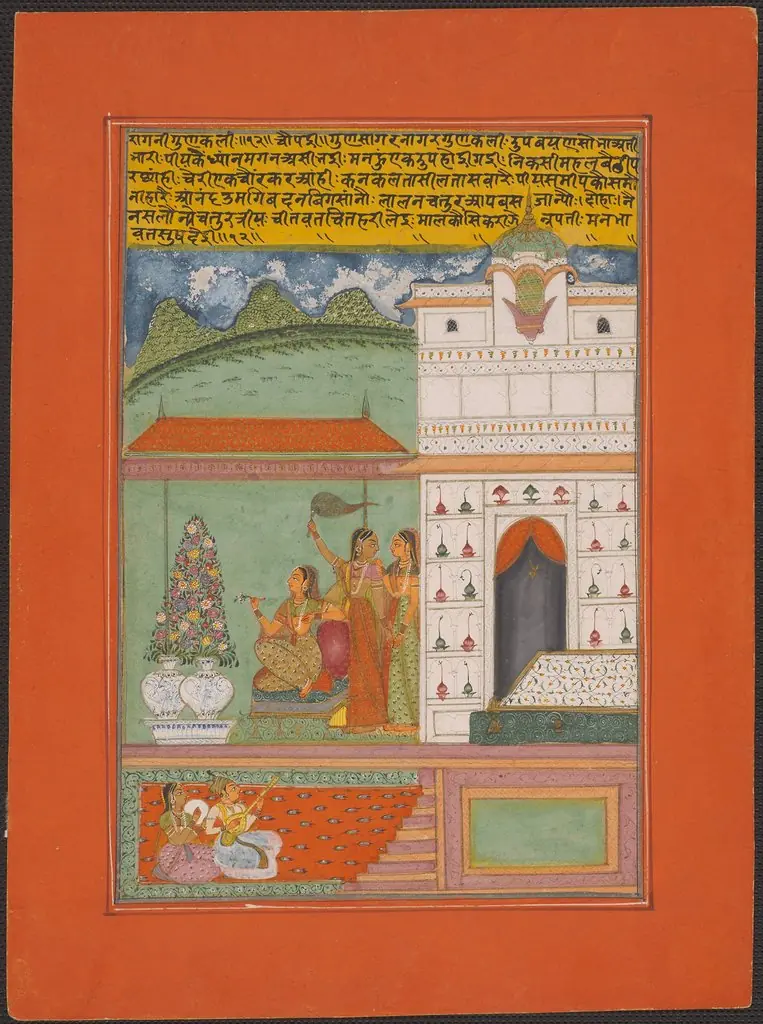 Ragini Gunakali, Page from a Jaipur Ragamala Set
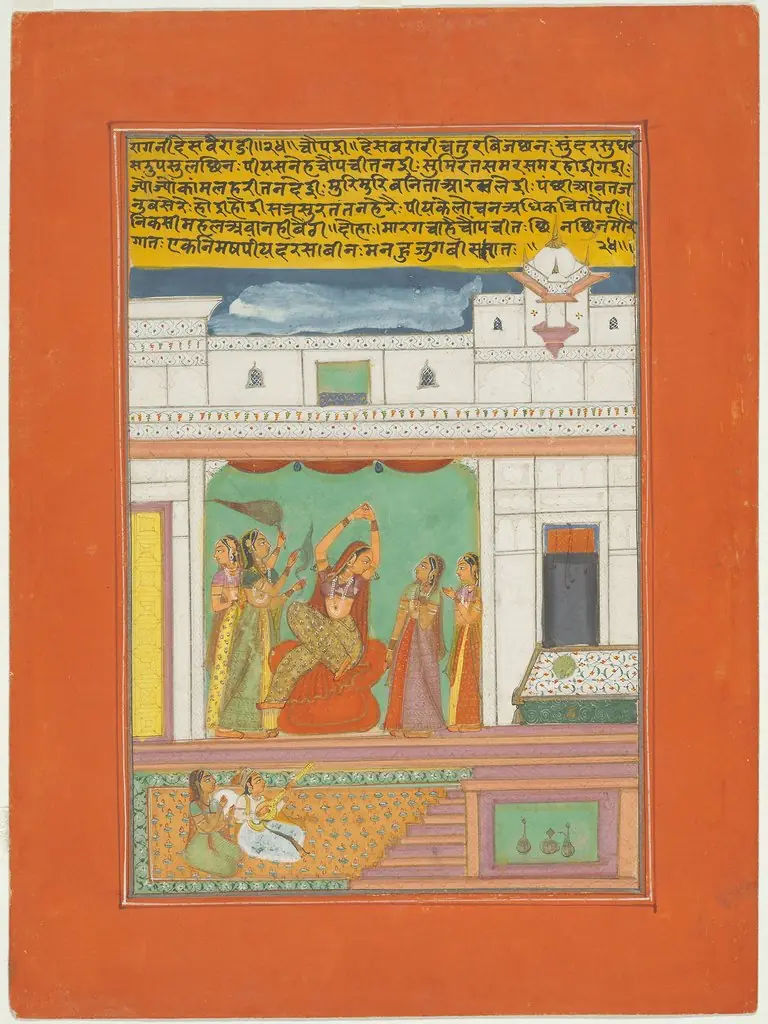 Ragini Desavaradi, Page from a Jaipur Ragamala Set
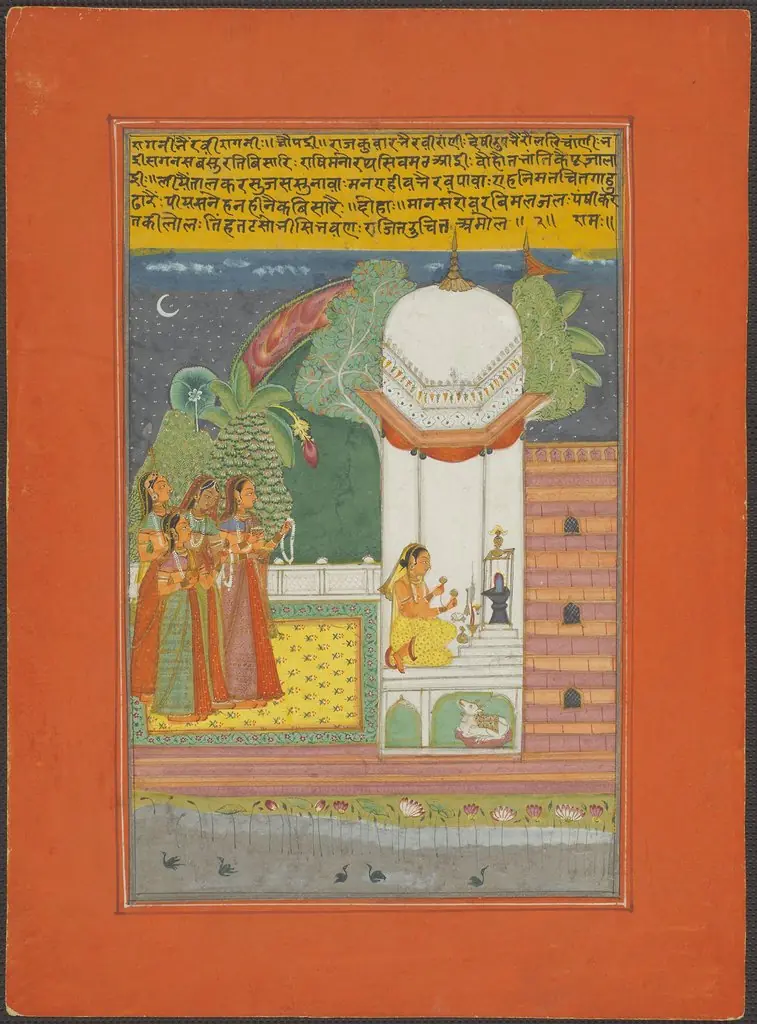 Ragini Bhairavi, Page from a Jaipur Ragamala Set
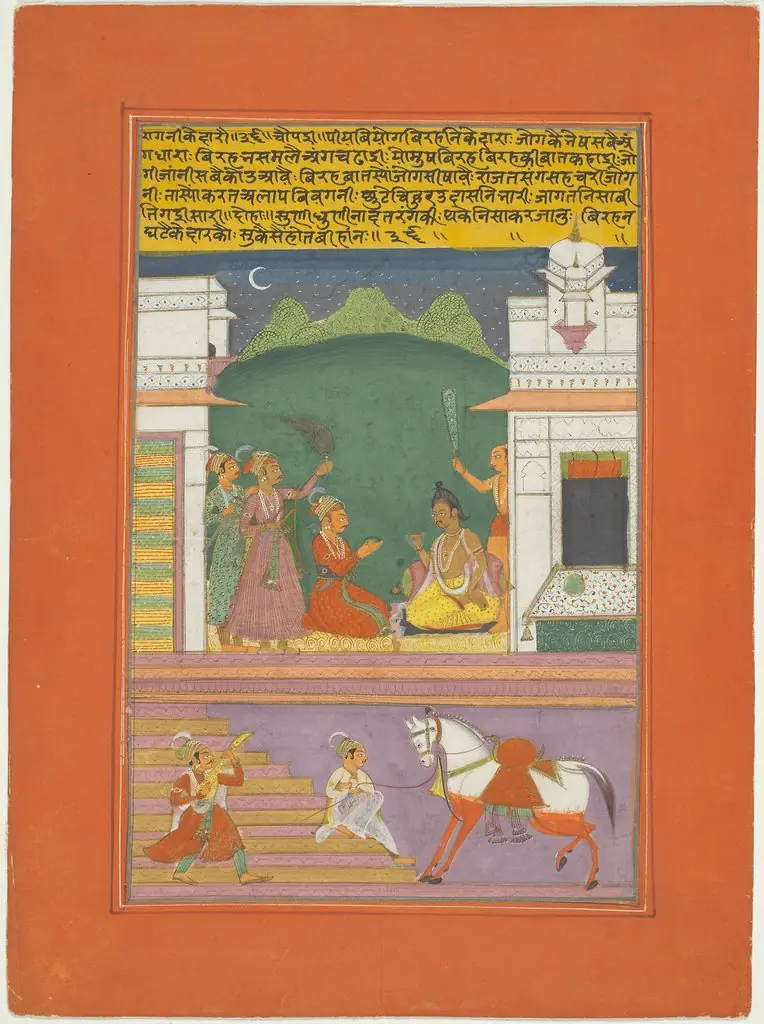 Ragini Kedara, Page from a Jaipur Ragamala Set
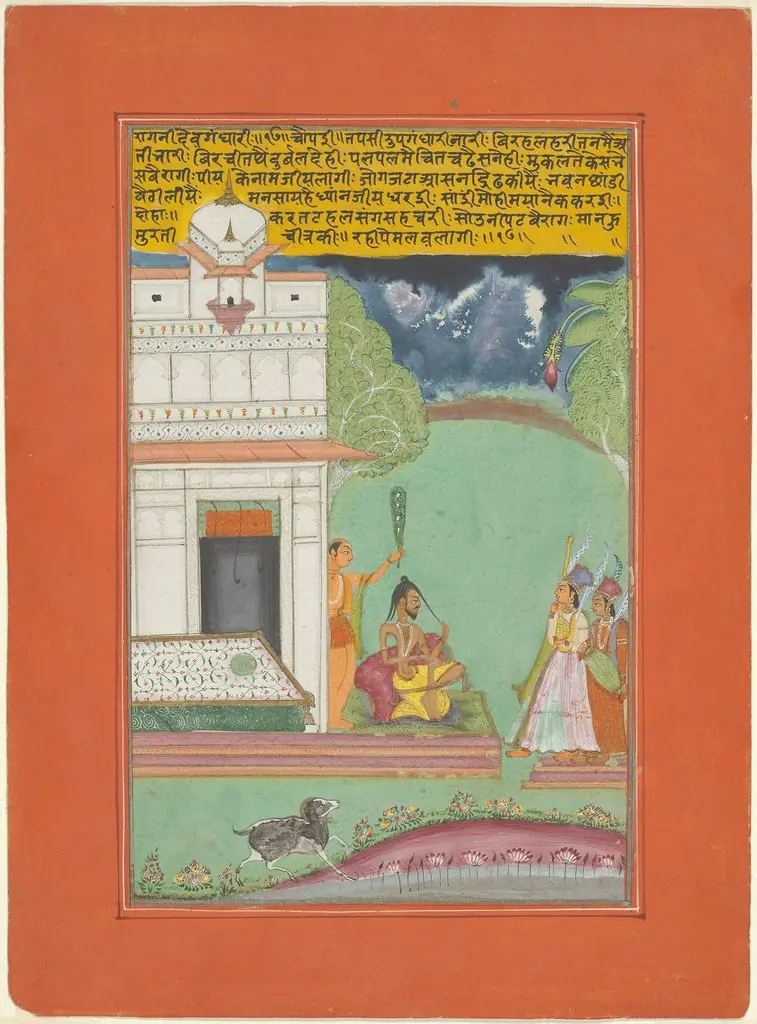 Ragini Devagandhari, Page from a Jaipur Ragamala Set
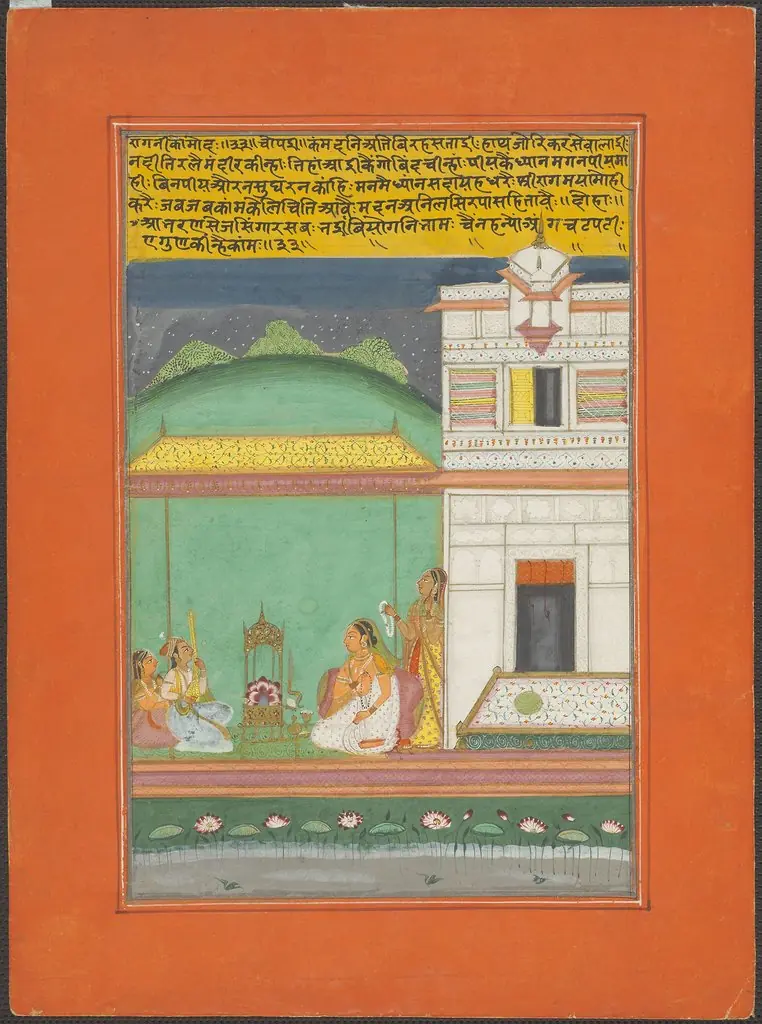 Ragini Kamod, Page from a Jaipur Ragamala Set
 Panchama Ragini, Page from a Jaipur Ragamala Set