Artwork
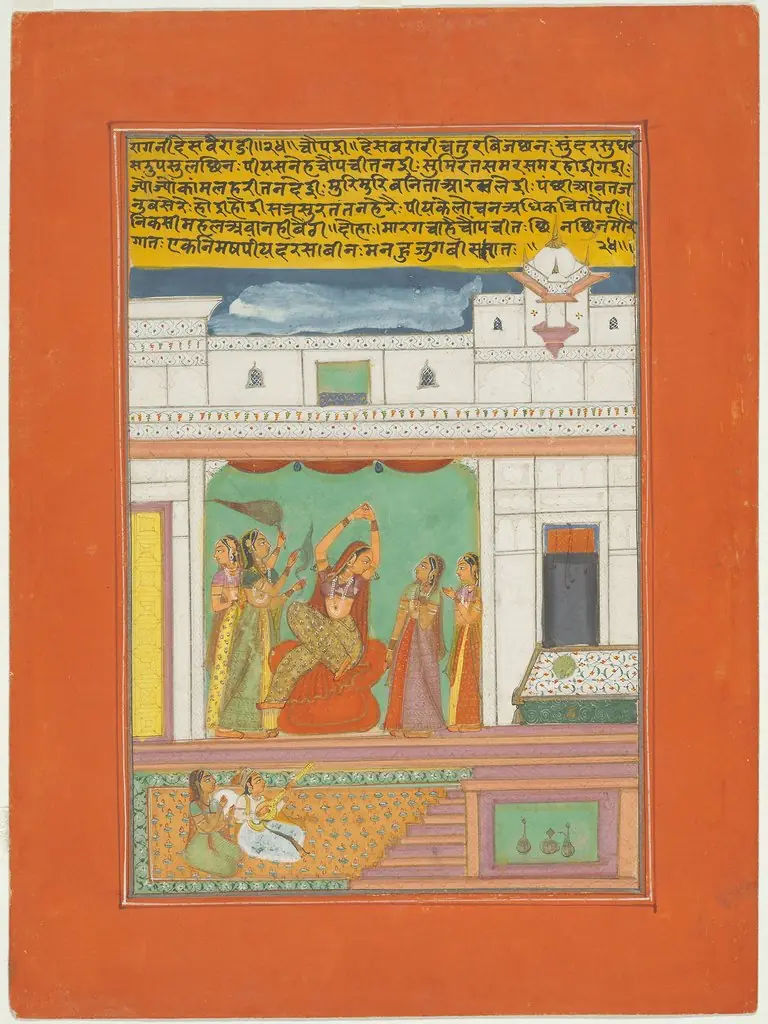
Malashri Ragini, Page from a Jaipur Ragamala Set
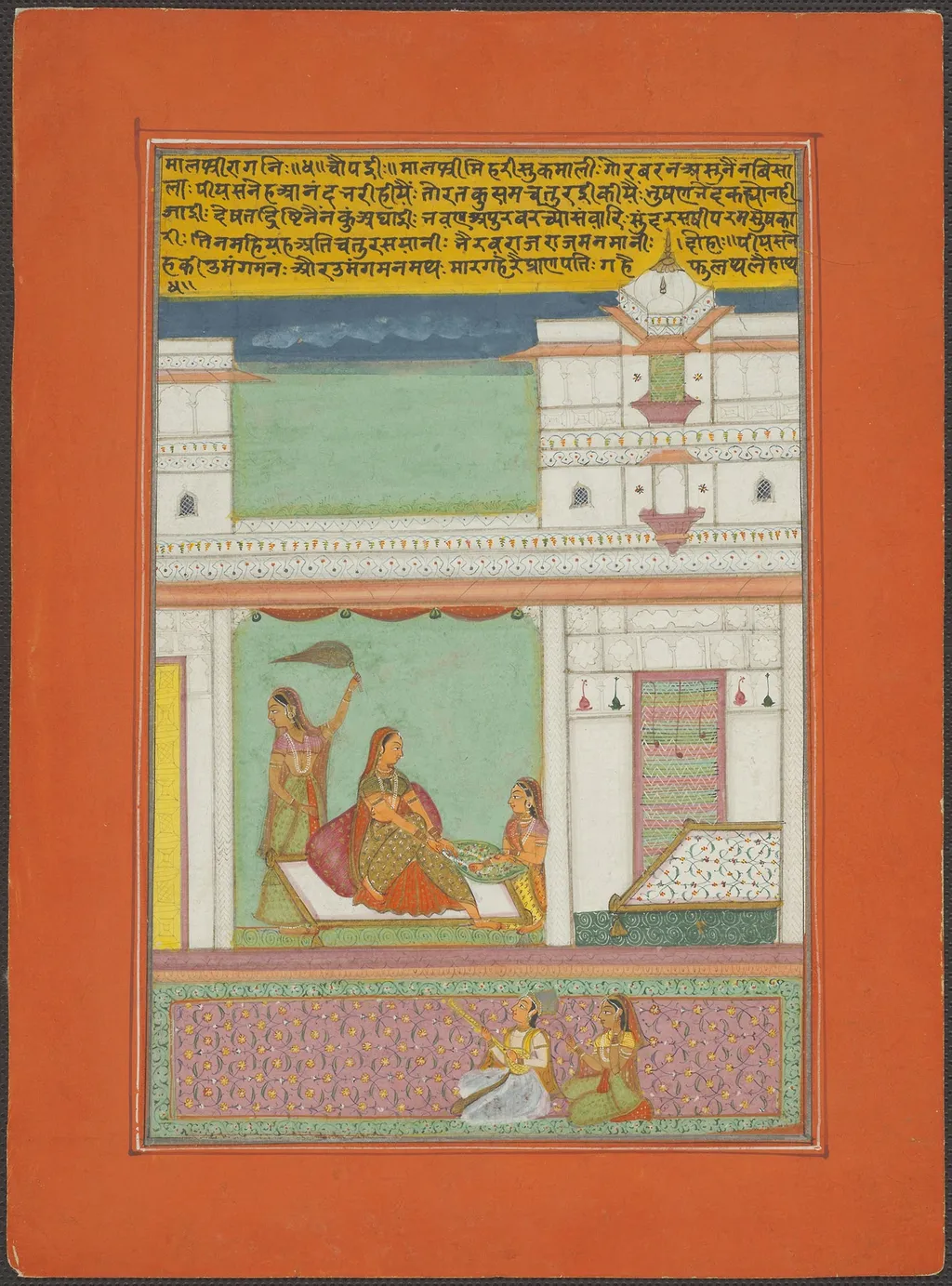
Malashri Ragini, Page from a Jaipur Ragamala Set is an unspecified painting by the Rococo painting artist Unknown. It dates from 1757 and is held in the collection of the Art Institute of Chicago. This painting is one folio from a Jaipur Ragamala series created in the 18th century, illustrating a specific raga through a lyrical scene.
About this work
The overall atmosphere of the painting is one of luxury and comfort, with the woman and her attendants enjoying a peaceful moment together.
This painting shows a woman sitting on a bed in a room with a large window. She is wearing a long dress and has a cloth wrapped around her head. Two other women are standing next to her, one holding a fan and the other holding a plate of food. The room is decorated with colorful patterns and designs on the walls and floor. In the background, there is a large window that looks out onto a garden or courtyard. The sky is dark, and it looks like it might be raining. The overall atmosphere of the painting is one of luxury and comfort, with the woman and her attendants enjoying a peaceful moment together. The painting is a beautiful example of Indian art from the 18th century.
Overview
This painting is one folio from a Jaipur Ragamala series created in the 18th century, illustrating a specific raga through a lyrical scene. It depicts a woman of elevated status in an interior space, surrounded by attendants, evoking the emotional tone associated with Malashri Ragini. The composition balances domestic intimacy with ornamental detail, characteristic of Rajput courtly painting traditions.
Subject & Meaning
The central figure represents the raga Malashri, traditionally linked to longing and quiet contemplation. Her seated posture, the presence of attendants offering food and fanning her, and the enclosed yet open space suggest a moment of suspended stillness. The dark, rain-laden sky reinforces the mood of melancholy and introspection, aligning the visual narrative with the raga’s prescribed emotional character.
Technique & Style
Executed in opaque watercolor on paper, the painting features fine brushwork and rich, layered pigments. Decorative motifs on walls and floors are rendered with precision, while the figures are stylized with elongated eyes and delicate features typical of Jaipur’s court style. The use of atmospheric perspective and muted tones in the background enhances the sense of enclosure and impending weather.
History & Provenance
The painting originates from a commissioned Ragamala set produced in the Jaipur royal atelier during the late 1700s. Such sets were created for aristocratic patrons who valued the fusion of music, poetry, and visual art. Its survival in relatively intact condition suggests it was carefully preserved within the royal collection, likely passed through generations of Rajput nobility.
Context
Ragamala paintings emerged as a distinct genre in North Indian courts, translating musical modes into visual form. In Jaipur, artists blended Mughal naturalism with local traditions, emphasizing decorative detail and symbolic interiors. This work reflects a broader cultural practice where music was not merely heard but visually imagined, reinforcing the spiritual and emotional dimensions of daily courtly life.
Legacy
The Jaipur Ragamala series, including this folio, remains a key reference for understanding how Indian musical traditions were encoded in visual art. While later generations shifted toward more secular or narrative subjects, these works preserved a sophisticated system of symbolic representation. Today, they are studied for their interdisciplinary synthesis of sound, emotion, and aesthetics in pre-colonial India.
Artist & collection

 Domestic Scene
 Giacomo and Cardinal Marco, investing Andrea, Abbot of San Zeno, with his Benefice
 The Nymph of Fontainebleau
 Portrait of a Woman
 Madonna and Child with Saints in the Enclosed Garden
 Venus and Minerva
 Family Group of Four on Sofa
 Wall painting from Room H of the Villa of P. Fannius Synistor at Boscoreale
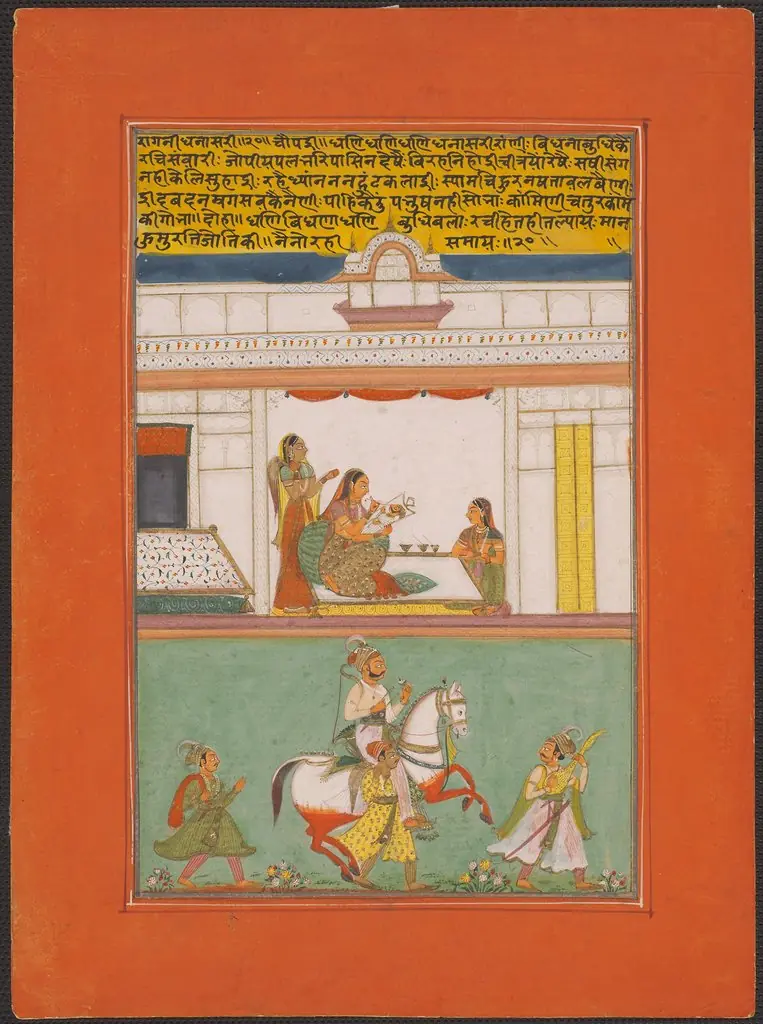 Ragini Dhanashri, Page from a Jaipur Ragamala Set
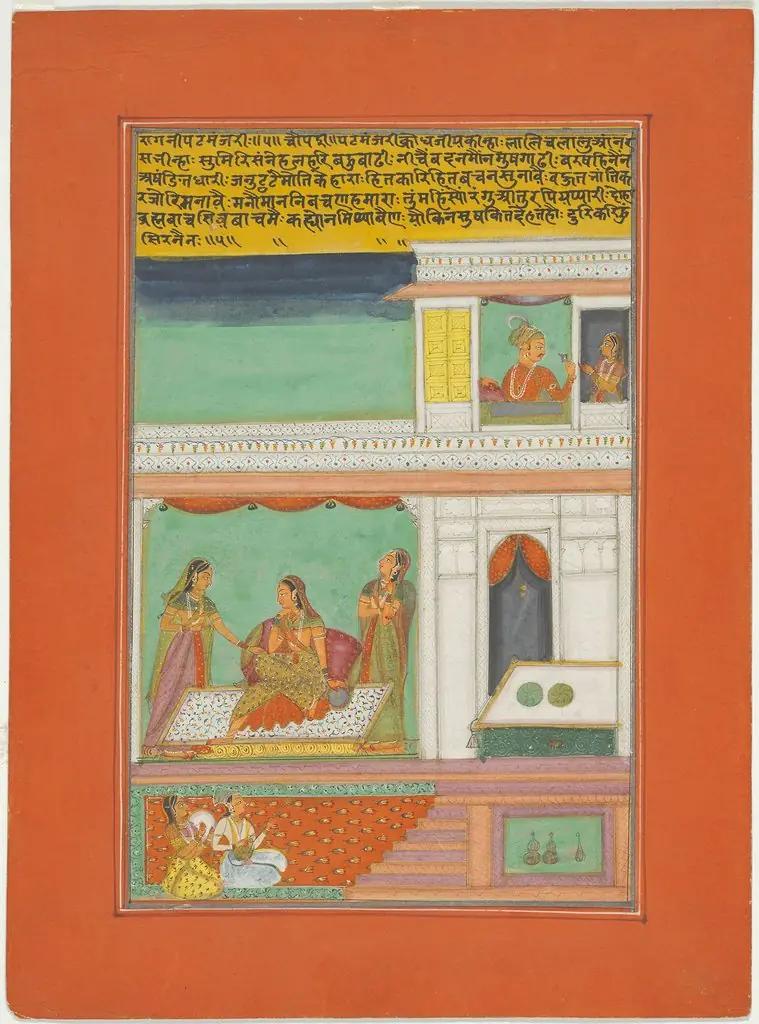 Ragini Patmanjari, Page from a Jaipur Ragamala Set
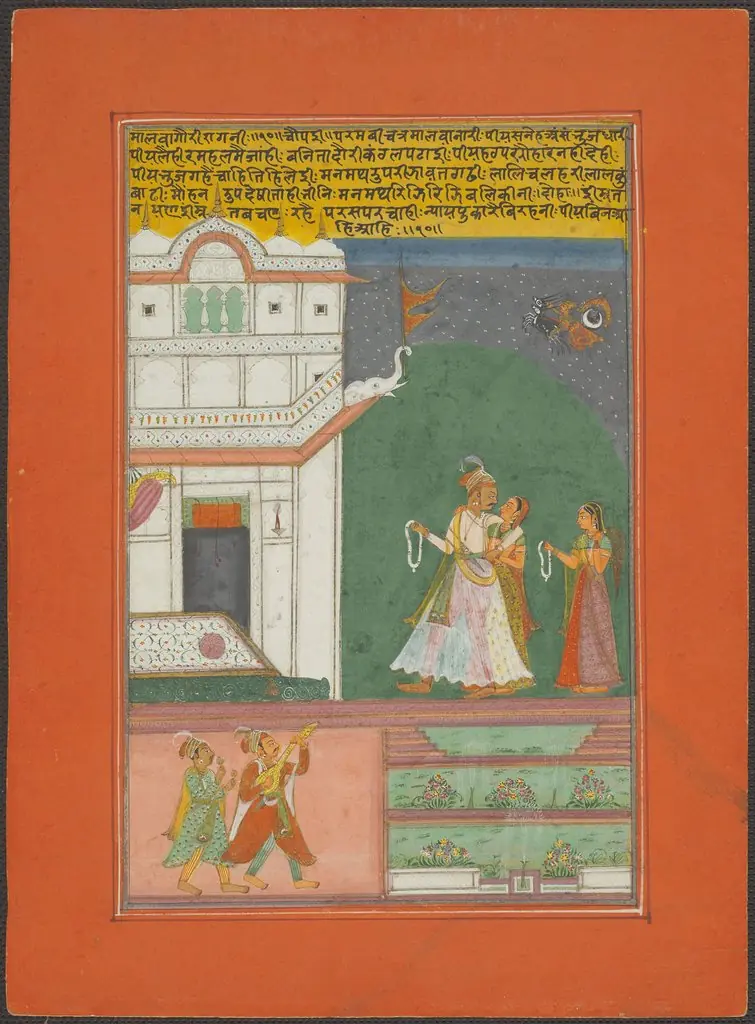 Malavagaudi Ragini, Page from a Jaipur Ragamala Set
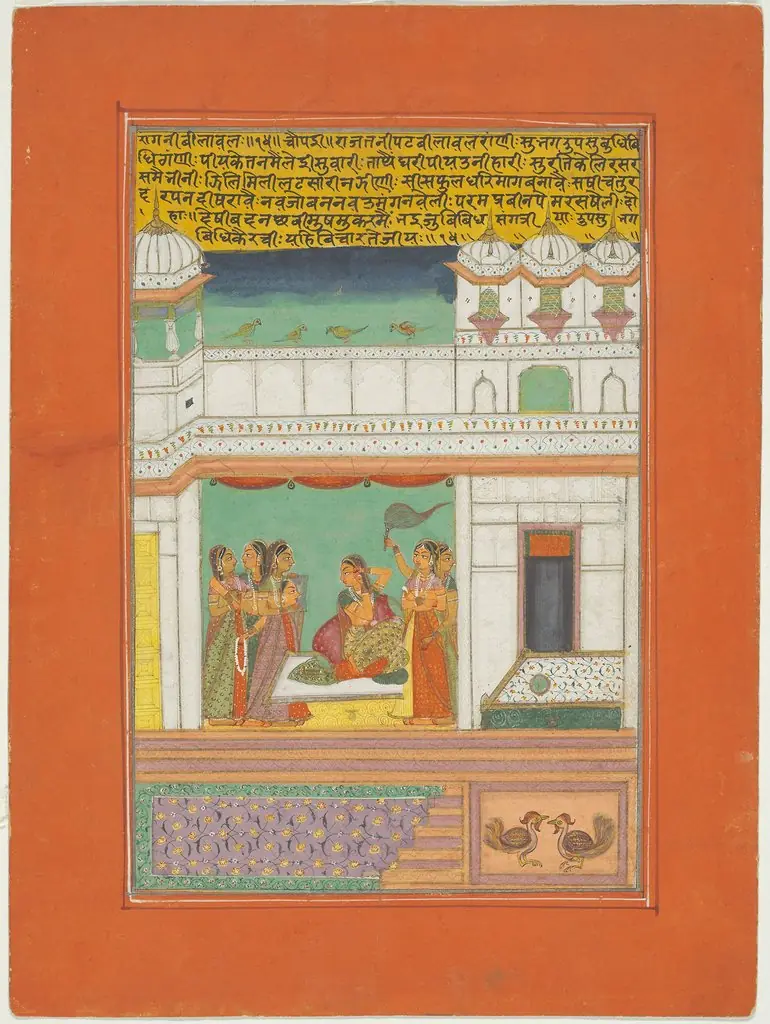 Ragini Bilaval, Page from a Jaipur Ragamala Set
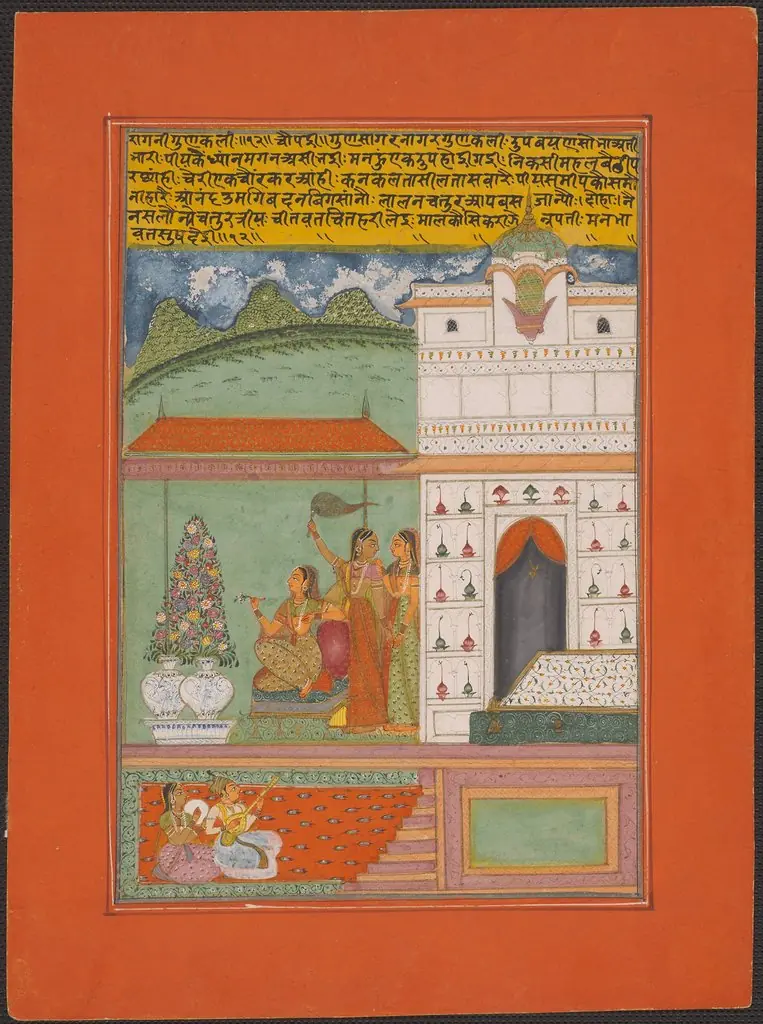 Ragini Gunakali, Page from a Jaipur Ragamala Set
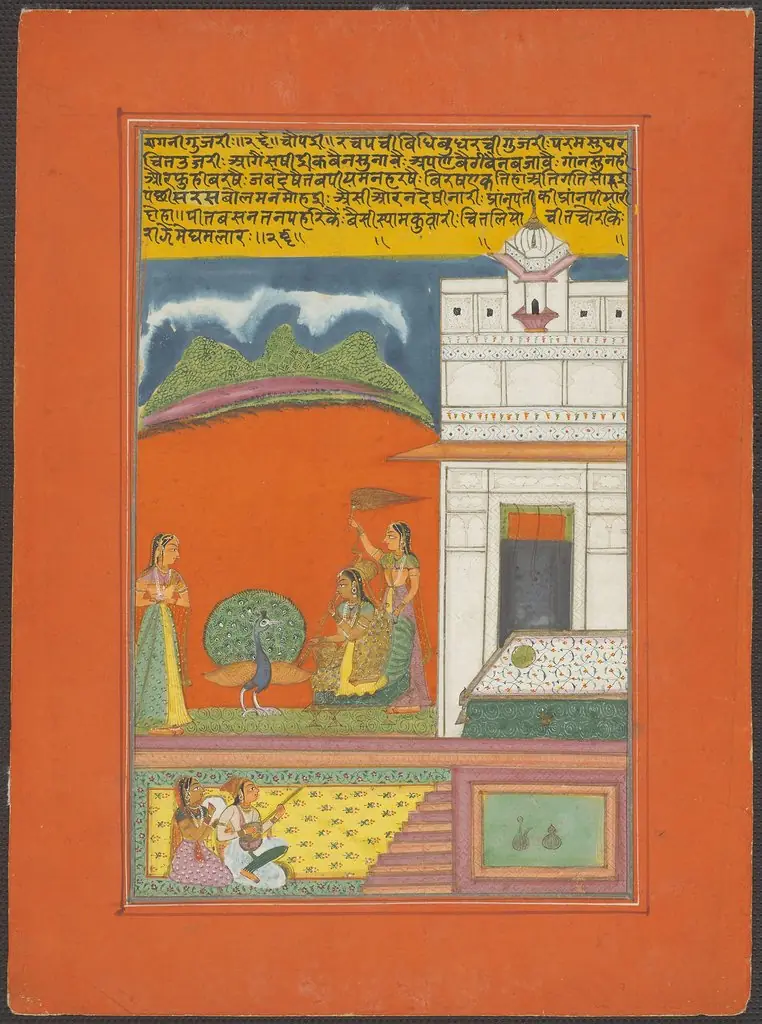 Ragini Gujari, Page from a Jaipur Ragamala Set
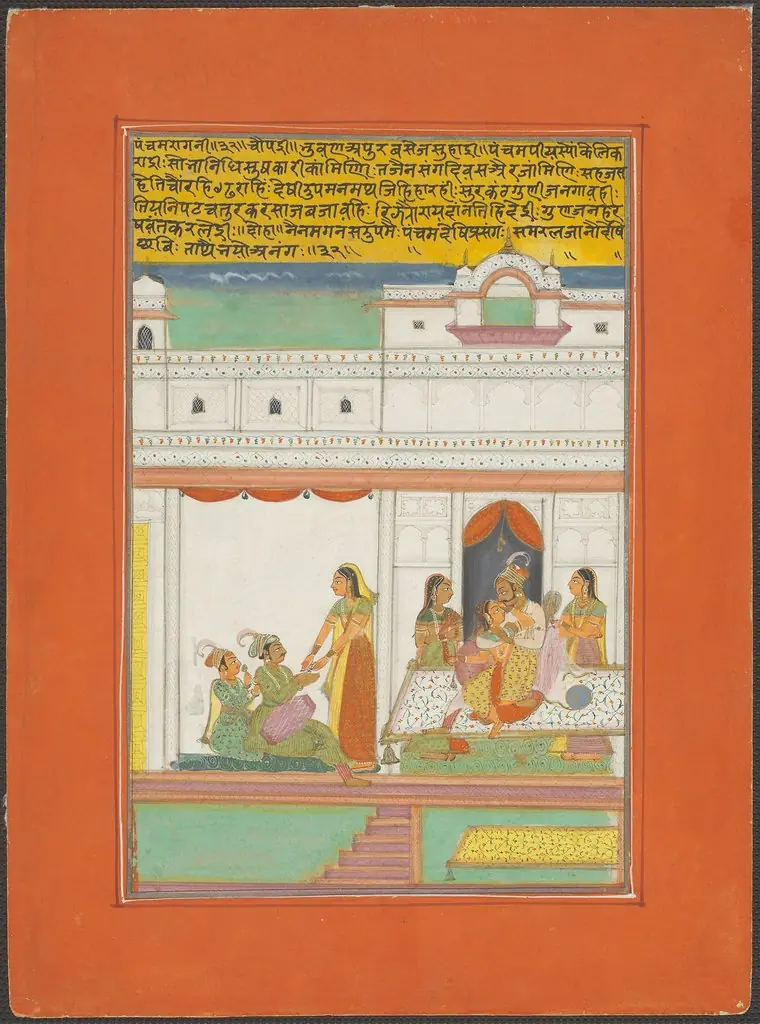 Panchama Ragini, Page from a Jaipur Ragamala Set
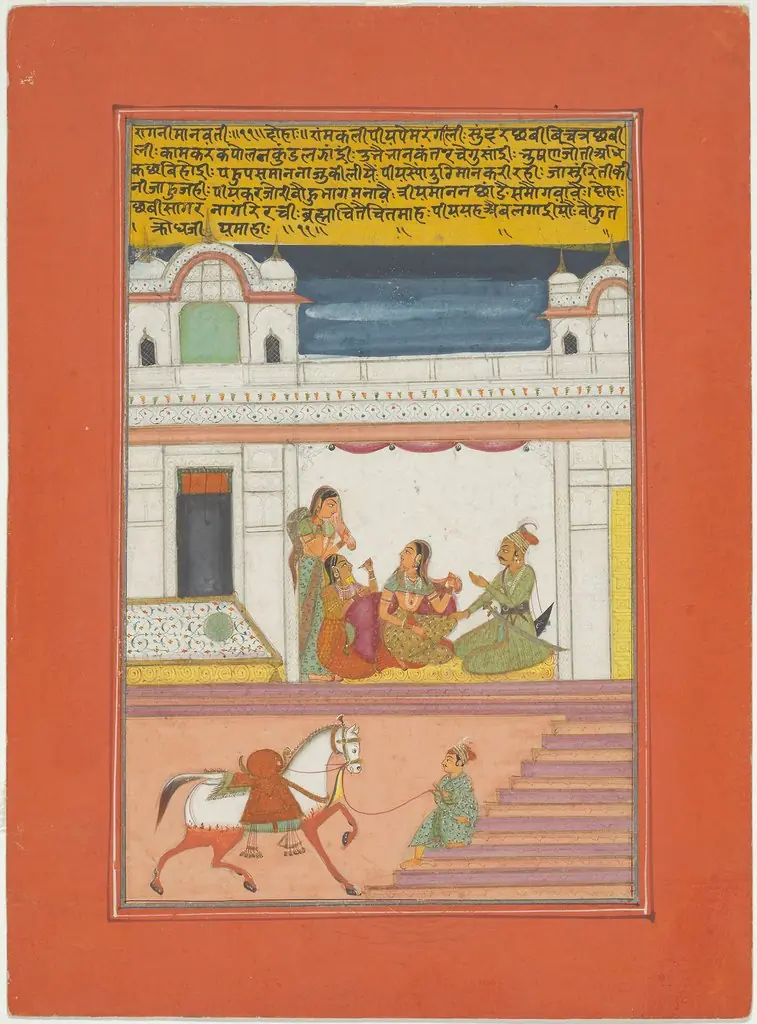 Ragini Manavati, Page from a Jaipur Ragamala Set
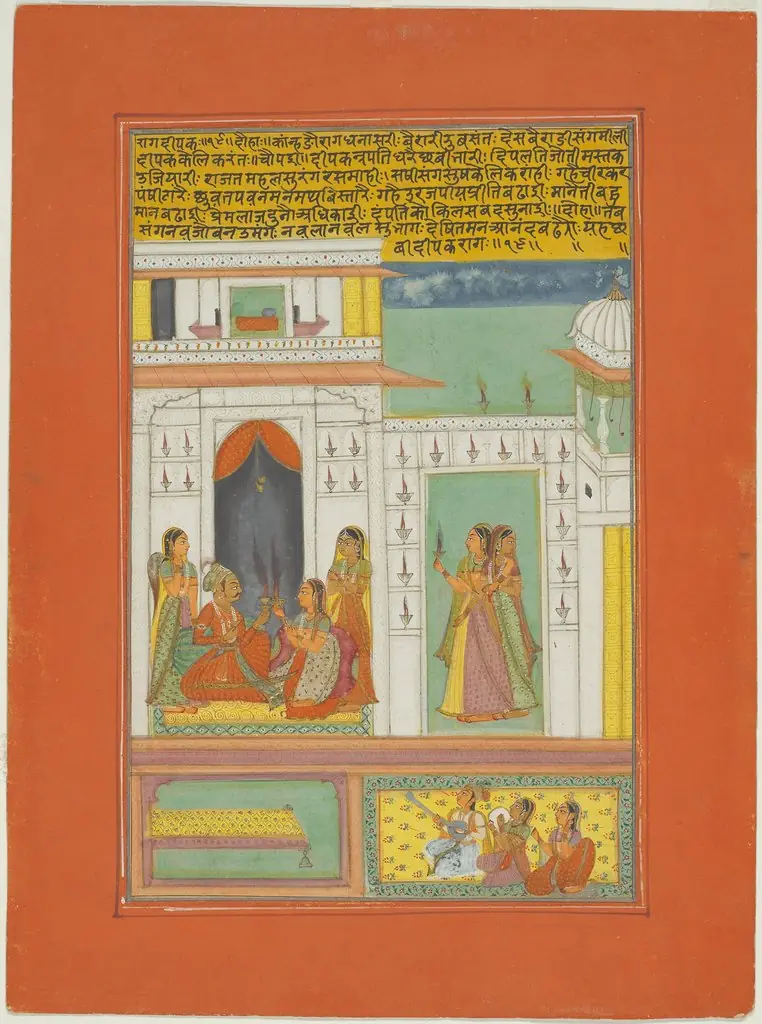 Raga Dipak, Page from a Jaipur Ragamala Set
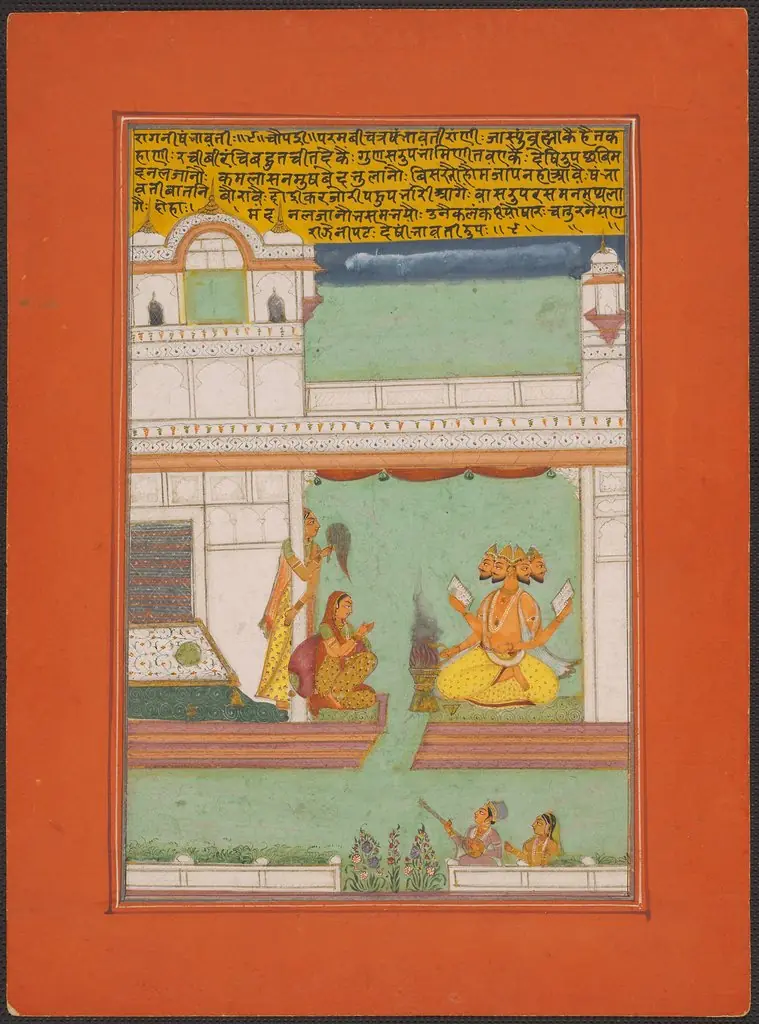 Ragini Khambavati, Page from a Jaipur Ragamala Set
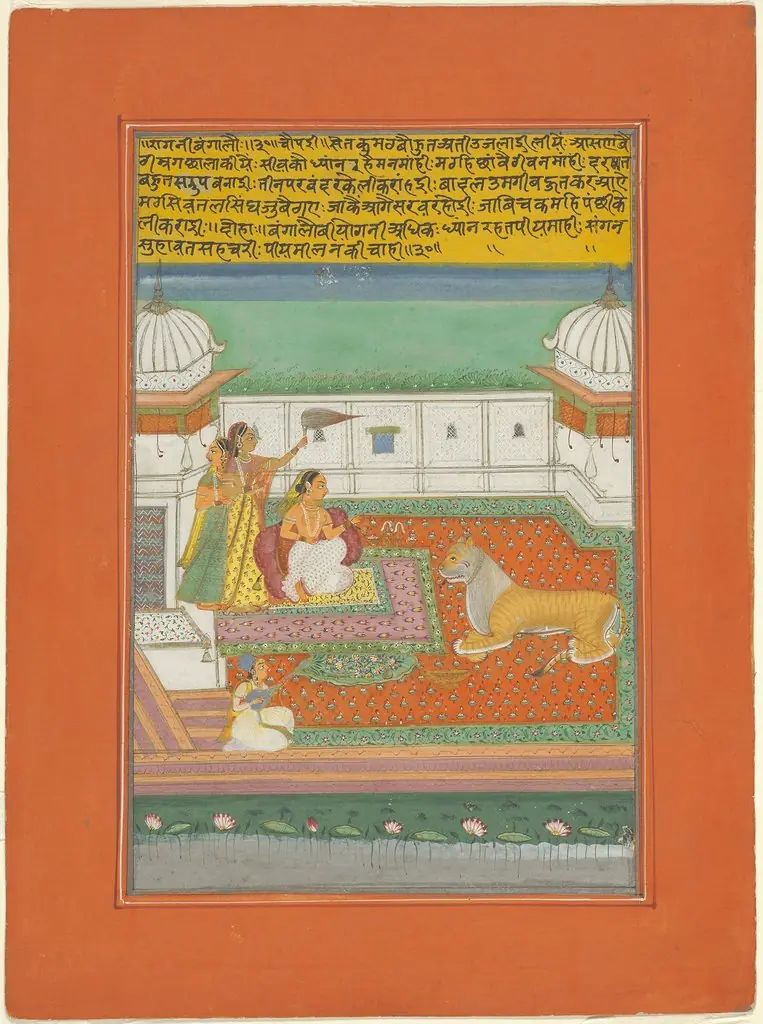 Ragini Bangali, Page from a Jaipur Ragamala Set
 Ragini Desavaradi, Page from a Jaipur Ragamala Set