Artwork
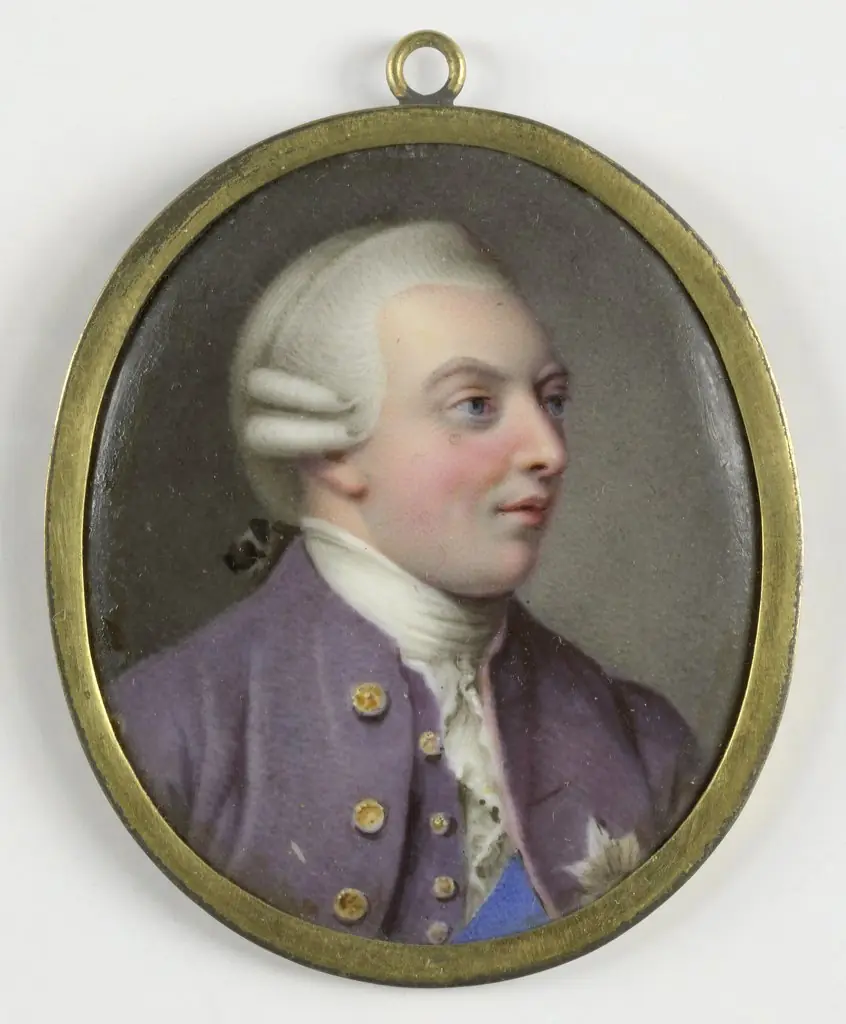
George III (1738-1820), koning van Engeland
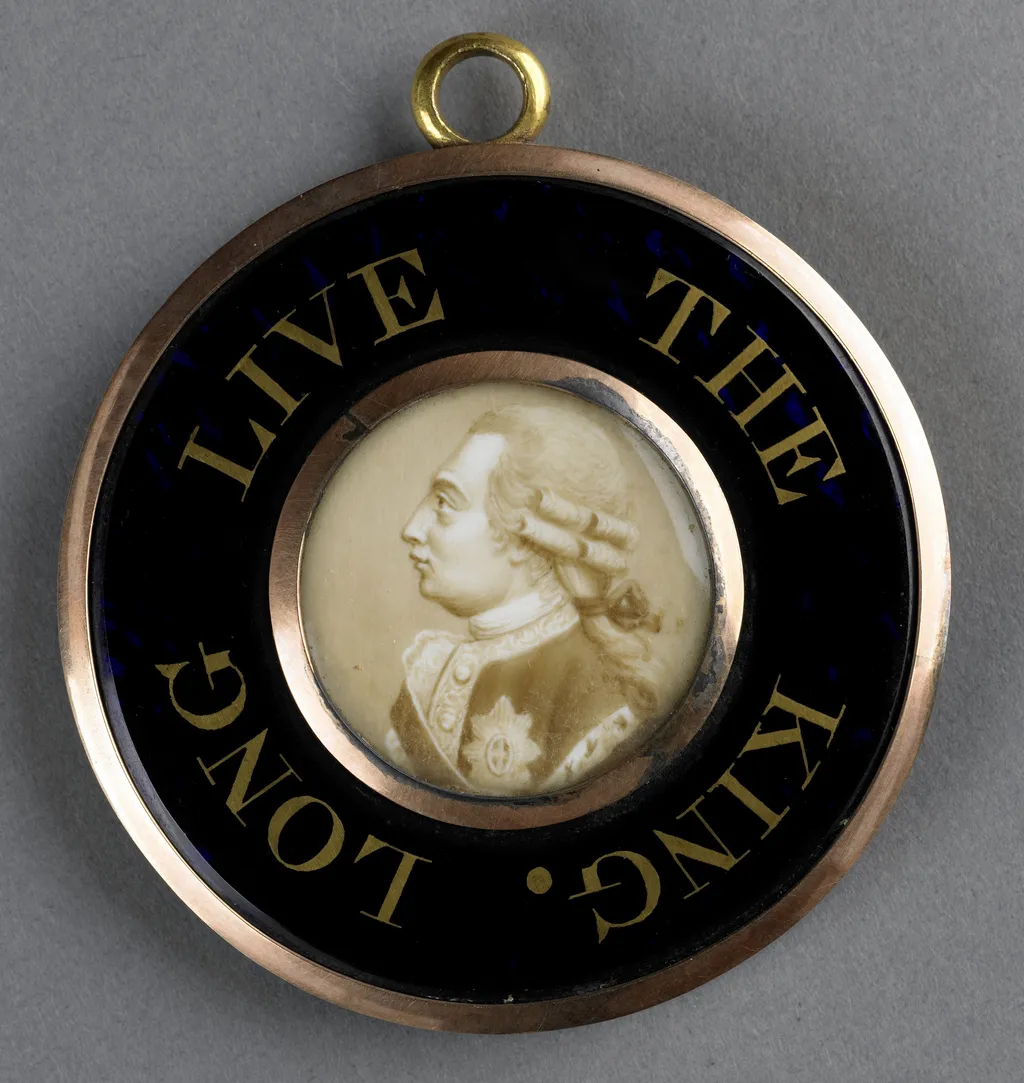
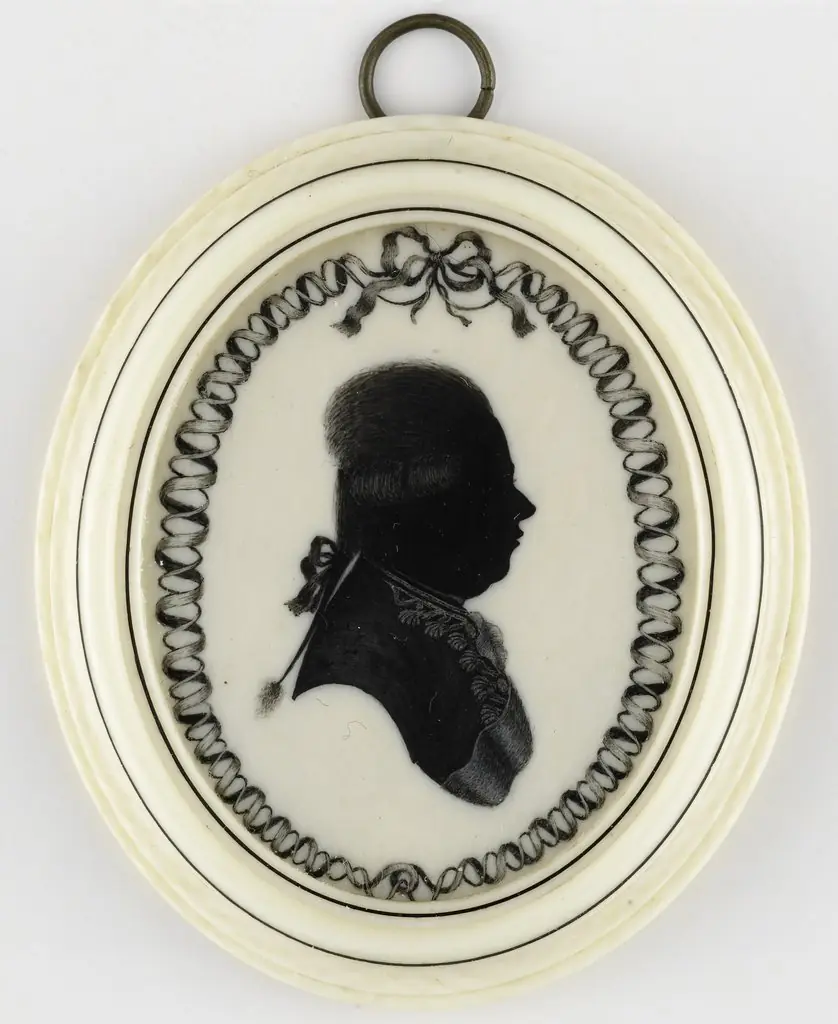
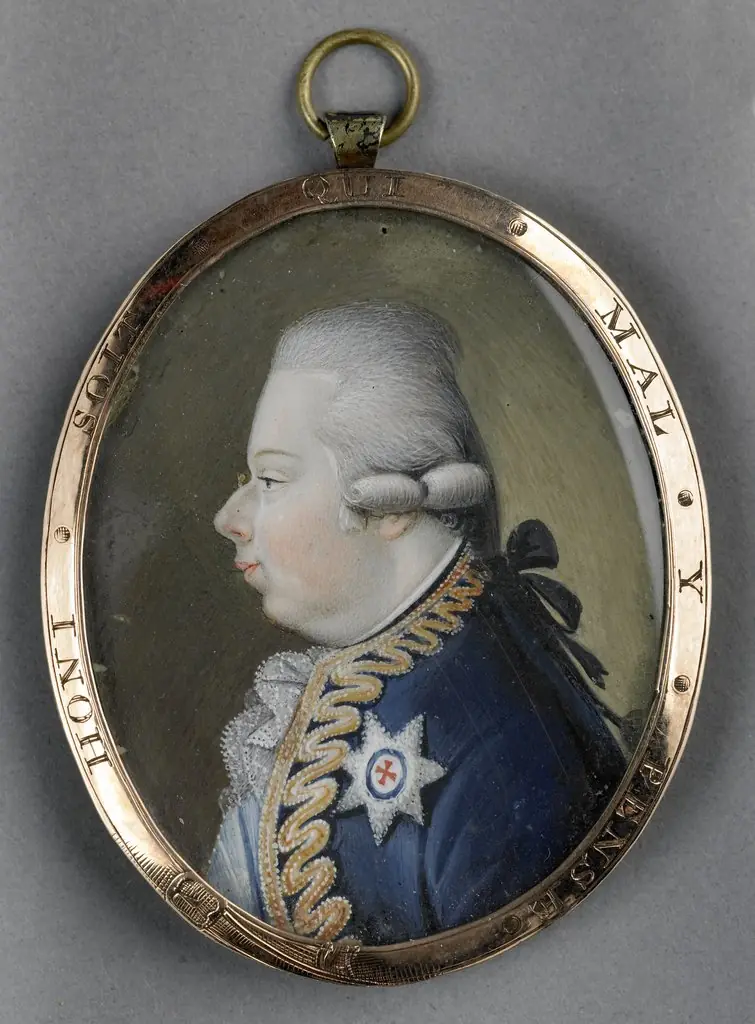
George III (1738-1820), koning van Engeland is an ivory painting. It dates from 1770 and is held in the collection of the Rijksmuseum. This small, circular work is carved on a piece of ivory and presents a profile portrait of a man wearing a dark coat and a white collar.
About this work
The portrait is surrounded by a black ring with gold text that reads "LIVE THE KING" in an arc.
This circular ivory piece features a central portrait of a man in profile, facing left. He has curly hair and is adorned with a dark jacket and a white collar. The portrait is surrounded by a black ring with gold text that reads "LIVE THE KING" in an arc. The man's attire suggests a formal or ceremonial setting, possibly from the 18th century. The use of ivory as the medium adds a sense of luxury and refinement to the piece.
Overview
This small, circular work is carved on a piece of ivory and presents a profile portrait of a man wearing a dark coat and a white collar. The figure is set against a black border that carries a gold inscription in an arched line. The composition is simple, focusing attention on the sitter’s facial features and attire.
Subject & Meaning
The portrait depicts a male figure identified as George III, who reigned as king of England from 1760 to 1820. The inscription surrounding the image, rendered in gold, reads “LIVE THE KING,” a phrase that emphasizes loyalty and the monarch’s authority. The formal dress and dignified pose reinforce his status as a sovereign.
Technique & Style
Carved from ivory, the piece employs relief carving to render the portrait in low relief, allowing subtle modeling of hair, clothing, and facial expression. The black rim provides contrast, while the gold lettering is likely applied as a separate inlay or gilded paint. The style reflects 18th‑century portrait conventions, favoring profile views and restrained ornamentation.
History & Provenance
Created during the lifetime of George III (1738–1820), the work was probably commissioned as a commemorative object or diplomatic gift. Its precise origin and subsequent ownership are not documented, but ivory portrait miniatures were commonly exchanged among aristocratic circles in the late 1700s and early 1800s.
Context
In the late eighteenth century, portrait miniatures on ivory served both as personal mementos and as symbols of political allegiance. The use of a profile format echoes earlier European coinage and medallion portraiture, linking the king’s image to notions of continuity and legitimacy within the broader visual culture of the era.
Artist & collection