Artwork
Hannah Gwynne
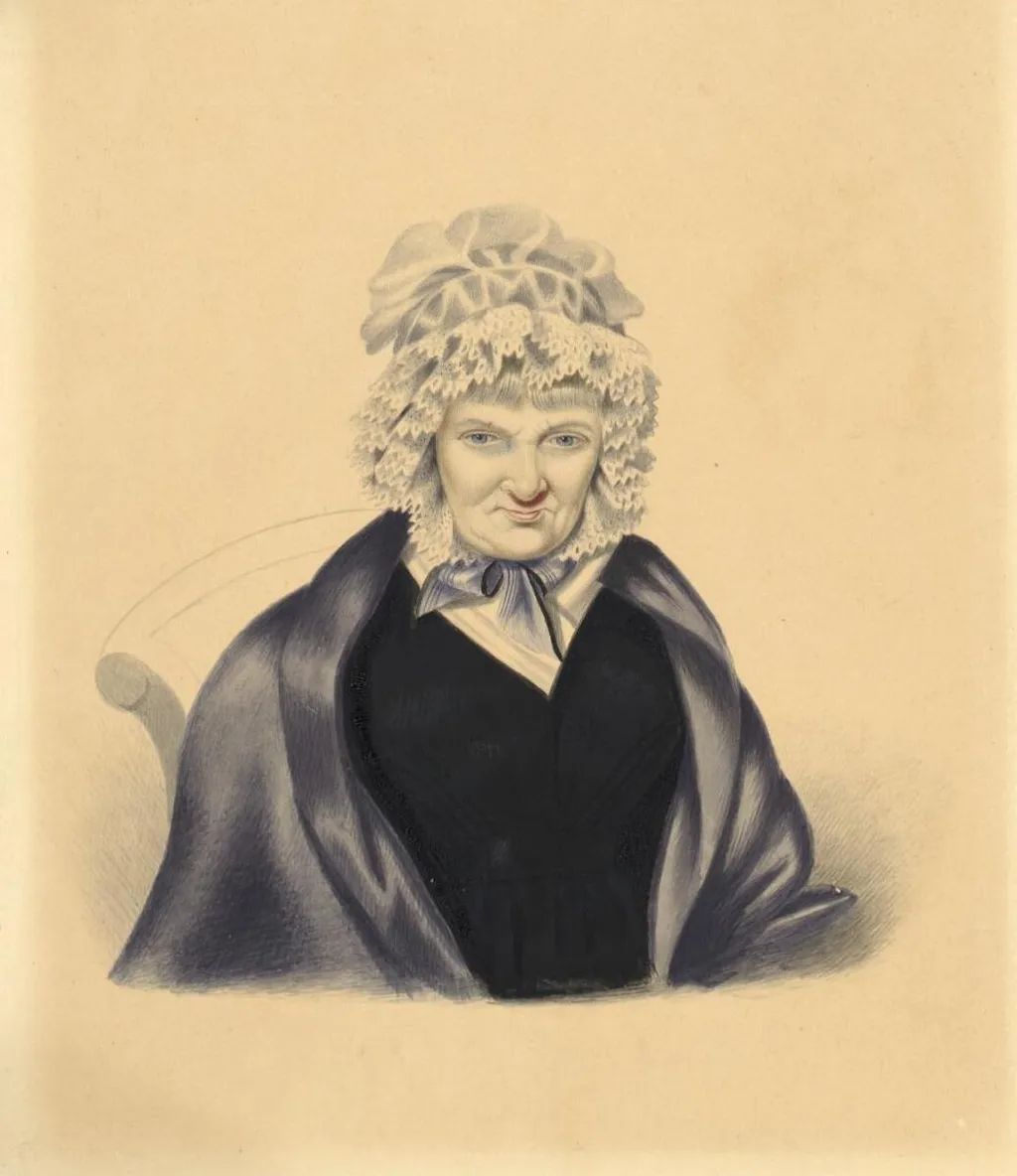
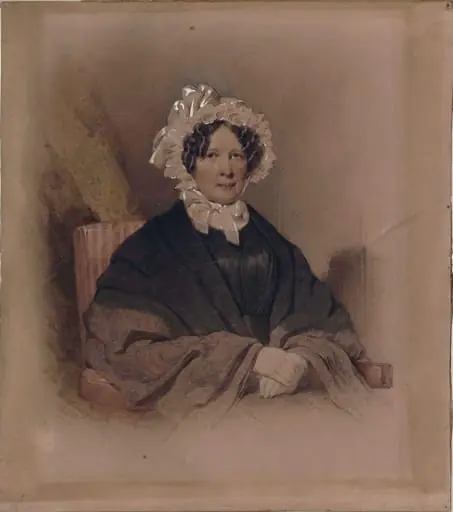
Hannah Gwynne is a paint painting by Unknown. It dates from 1832 and is held in the collection of the National Library of Wales. This oil painting presents a seated elderly woman in quiet repose, rendered with the formal conventions of early 19th-century portraiture.
About this work
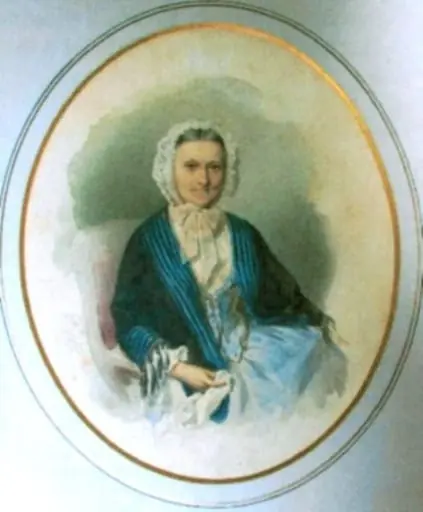
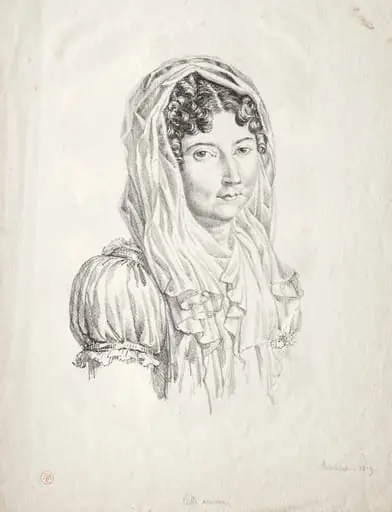
This portrait painting depicts an elderly woman with a kind face, wearing a lace bonnet and a dark dress with a white collar.
This portrait painting depicts an elderly woman with a kind face, wearing a lace bonnet and a dark dress with a white collar. Her eyes are cast downward, and her mouth is slightly pursed. She is seated in a chair with a curved back, which is visible behind her. The woman's attire and hairstyle suggest that she is from the early 19th century. The painting's style and technique are reminiscent of traditional portraiture from that era. The artist's use of chiaroscuro creates a sense of depth and dimensionality in the painting.
Overview
This oil painting presents a seated elderly woman in quiet repose, rendered with the formal conventions of early 19th-century portraiture. The subject, identified as Hannah Gwynne, is depicted in modest dress and a lace bonnet, her posture restrained and introspective. The composition emphasizes stillness, with soft lighting modeling her features and the chair behind her, grounding the figure in a quiet, intimate space.
Subject & Meaning
Hannah Gwynne is portrayed with a gentle, contemplative expression—eyes lowered, lips slightly parted—as if caught in private thought. Her attire, typical of rural or middle-class women of the period, suggests dignity rather than status. The absence of symbolic objects or elaborate setting directs focus to her presence, inviting reflection on aging, inner life, and the quiet resilience of ordinary individuals.
Technique & Style
The artist employs chiaroscuro to define form with subtle gradations of light and shadow, lending volume to the face, hands, and fabric folds. Brushwork is restrained, favoring smooth transitions over texture, consistent with academic portraiture of the time. The background remains muted, allowing the figure to emerge with quiet clarity, reinforcing the painting’s introspective tone.
History & Provenance
The painting’s origins are tied to private collections in early 19th-century Britain, though its full provenance remains incomplete. It was likely commissioned by family members, as was common for portraits of non-noble individuals. No record of exhibition or public display during the artist’s lifetime exists, suggesting it was intended for domestic rather than public consumption.
Context
Created during a period when portraiture was expanding beyond aristocracy to include the middle class, this work reflects a growing cultural interest in individual identity. While formal conventions persisted, artists increasingly sought to capture personal character. Hannah Gwynne’s portrait aligns with this shift, valuing quiet dignity over grandeur.
Legacy
Though not widely known, the painting contributes to a broader archive of non-elite portraiture from the period. Its preservation offers insight into how ordinary lives were visually honored in an era before photography. It remains a quiet testament to the dignity afforded to individuals outside the public spotlight.
Artist & collection

 Domestic Scene
 Giacomo and Cardinal Marco, investing Andrea, Abbot of San Zeno, with his Benefice
 The Nymph of Fontainebleau
 Portrait of a Woman
 Madonna and Child with Saints in the Enclosed Garden
 Venus and Minerva
 Family Group of Four on Sofa
 Wall painting from Room H of the Villa of P. Fannius Synistor at Boscoreale