Artwork
Page from Tales of a Parrot (Tuti-nama): text page
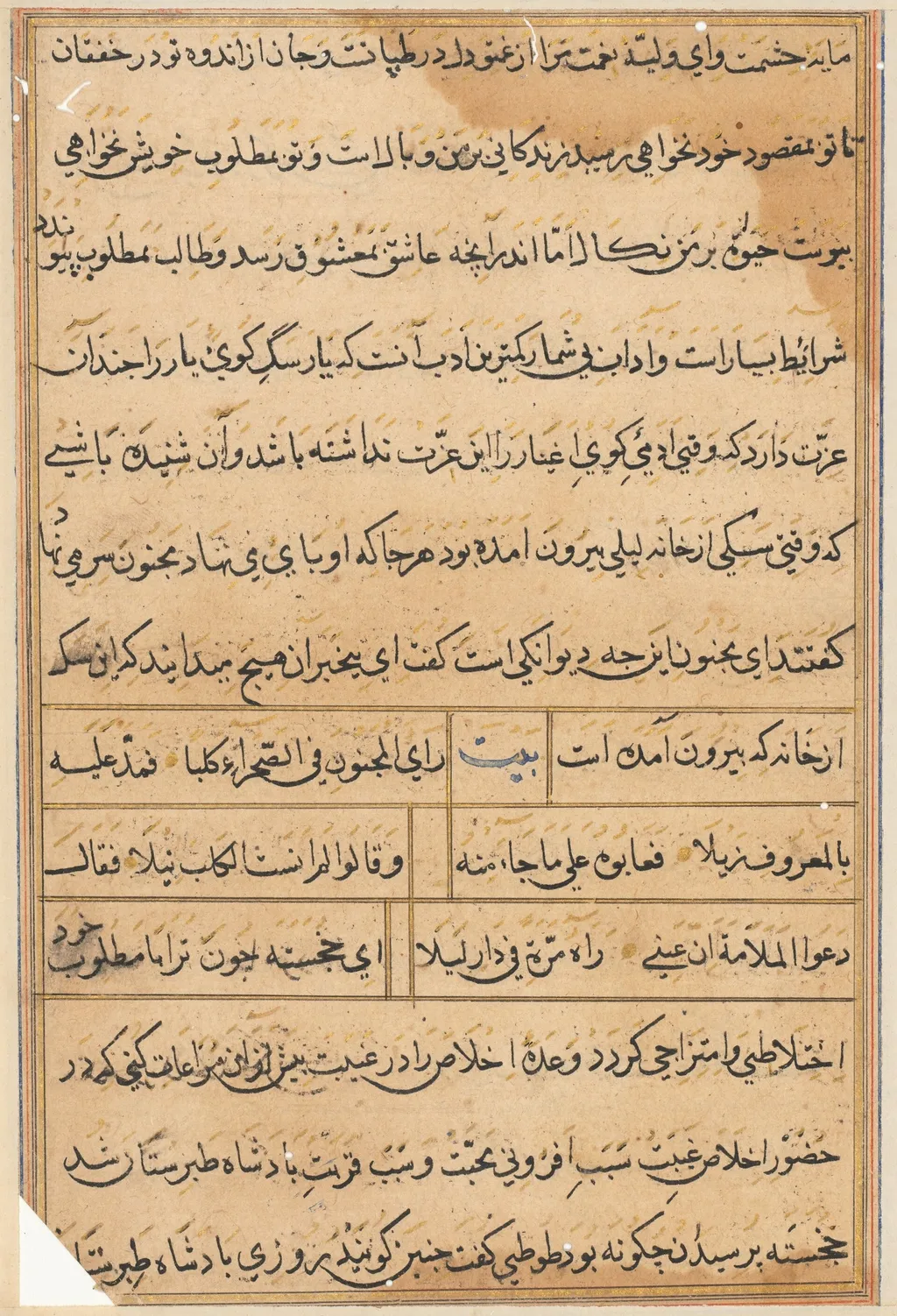
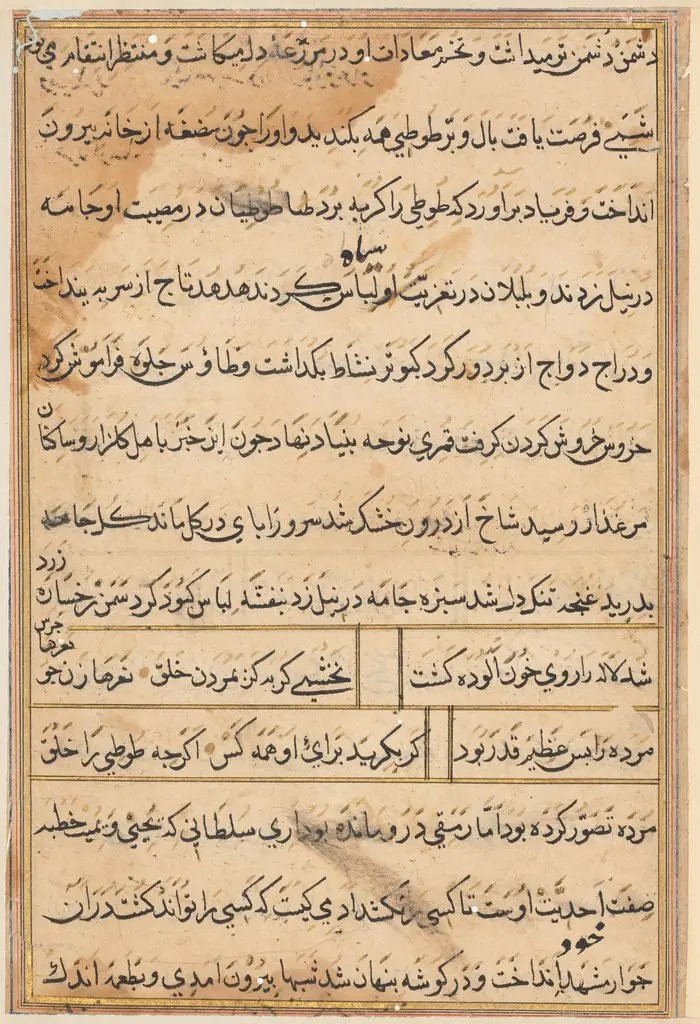
Page from Tales of a Parrot (Tuti-nama): text page is an unspecified painting. It dates from 1560 and is held in the collection of the Cleveland Museum of Art. The object is a single painted page from the illustrated manuscript *Tales of a Parrot* (Tuti‑nama).
About this work
Overview
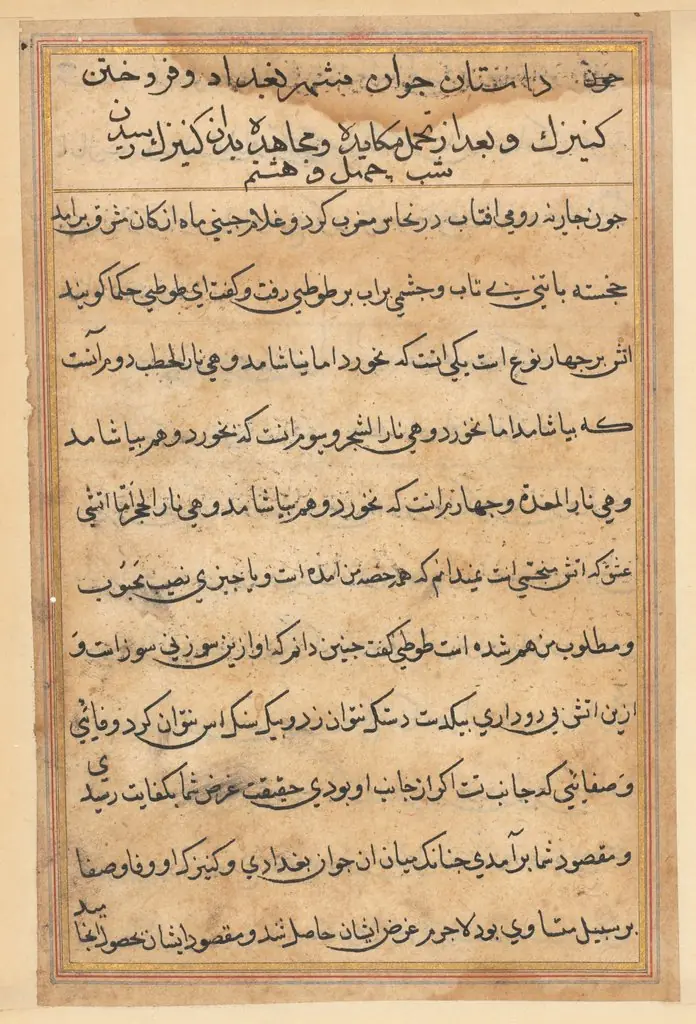
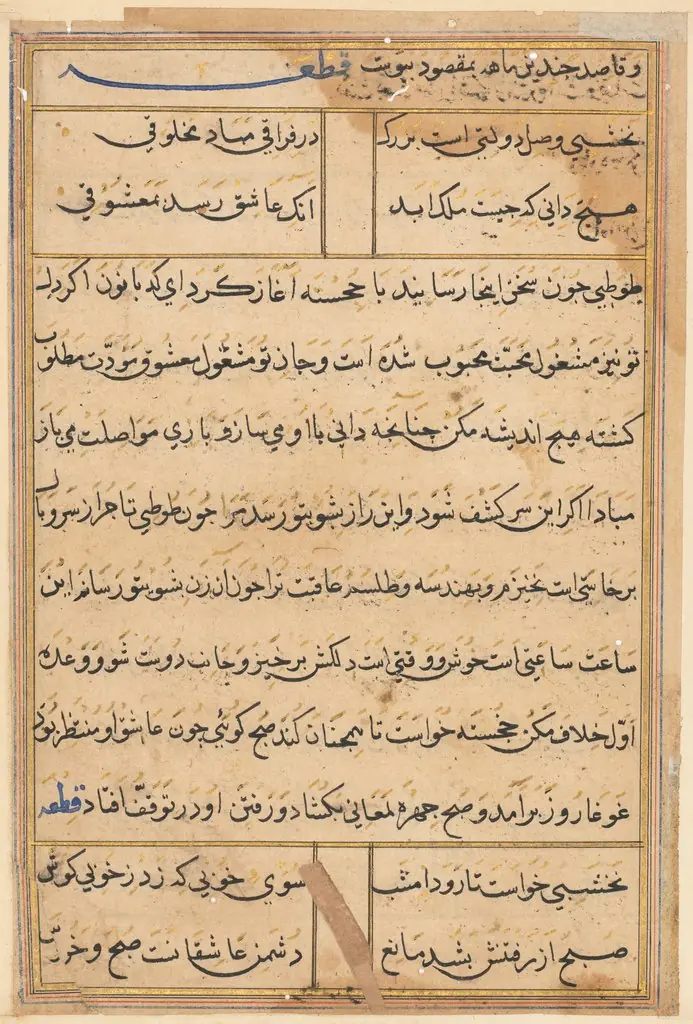
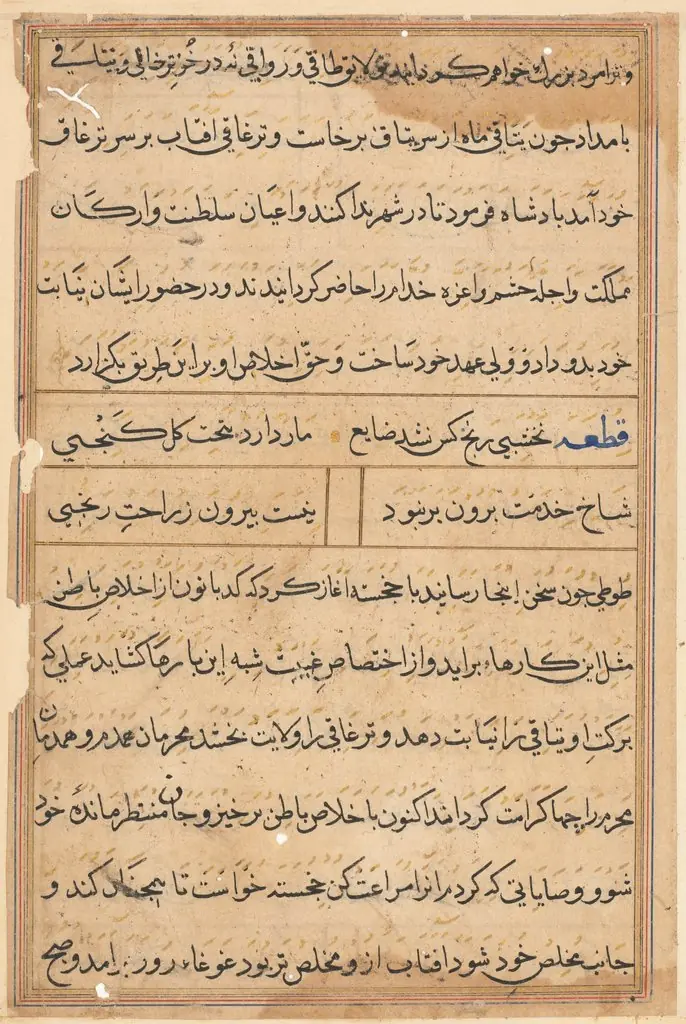
The object is a single painted page from the illustrated manuscript *Tales of a Parrot* (Tuti‑nama). Rendered in black ink on a warm, golden‑brown ground, the page is densely filled with tightly arranged script, punctuated by small framed text blocks and occasional blue dots that serve as decorative accents.
Subject & Meaning
The text presents a narrative from the *Tuti‑nama*, a collection of moral stories traditionally recited to entertain and instruct. This particular leaf was produced for Prince Salim, indicating its role as a personalized literary gift, intended to convey both literary refinement and courtly patronage.
Technique & Style
The calligraphy is executed in a flowing black script, each line rendered with consistent pressure, resulting in slightly faded ink that contrasts with the warm background. Small ornamental boxes enclose sections of the text, while minute blue pigment dots add visual interest, reflecting a careful balance between readability and decorative embellishment.
History & Provenance
Created for the Mughal prince Salim, the page originates from a courtly manuscript tradition that flourished in the early modern Indian subcontinent. The work later entered a Western collection, now housed at the Cleveland Museum of Art, where it is displayed among comparable examples of Mughal book art.
Context
During the Mughal era, illustrated manuscripts such as the *Tuti‑nama* served as vehicles for cultural exchange, blending Persian literary themes with Indian artistic sensibilities. The inclusion of decorative elements like blue dots and framed text reflects contemporary aesthetic preferences for richly detailed, yet legible, courtly productions.
Artist & collection

 Page from Tales of a Parrot (Tuti-nama): text page
 Page from Tales of a Parrot (Tuti-nama): text page
 Page from Tales of a Parrot (Tuti-nama): text page
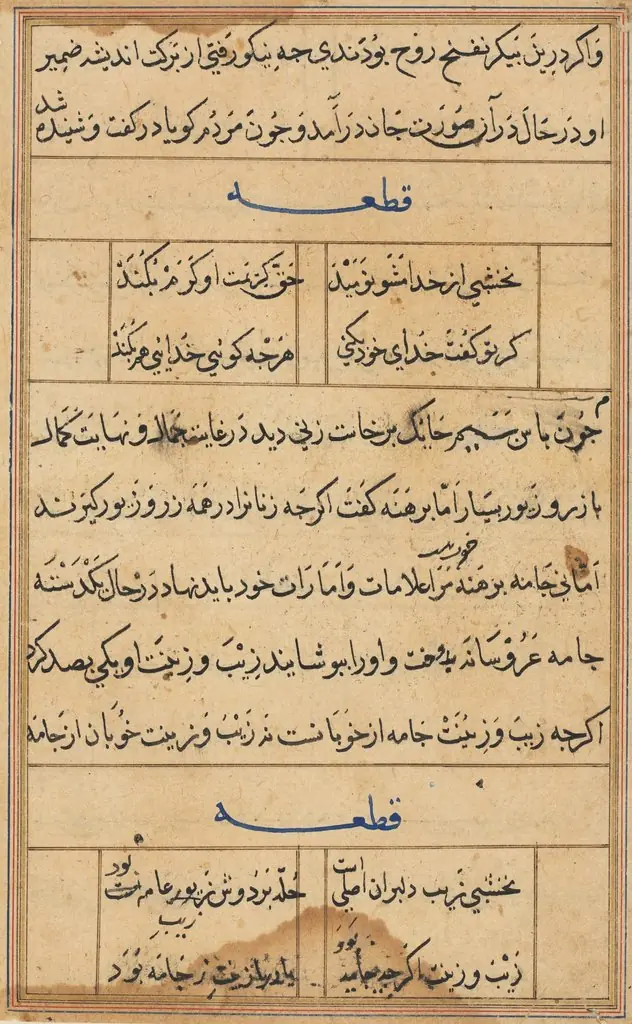 Page from Tales of a Parrot (Tuti-nama): text page
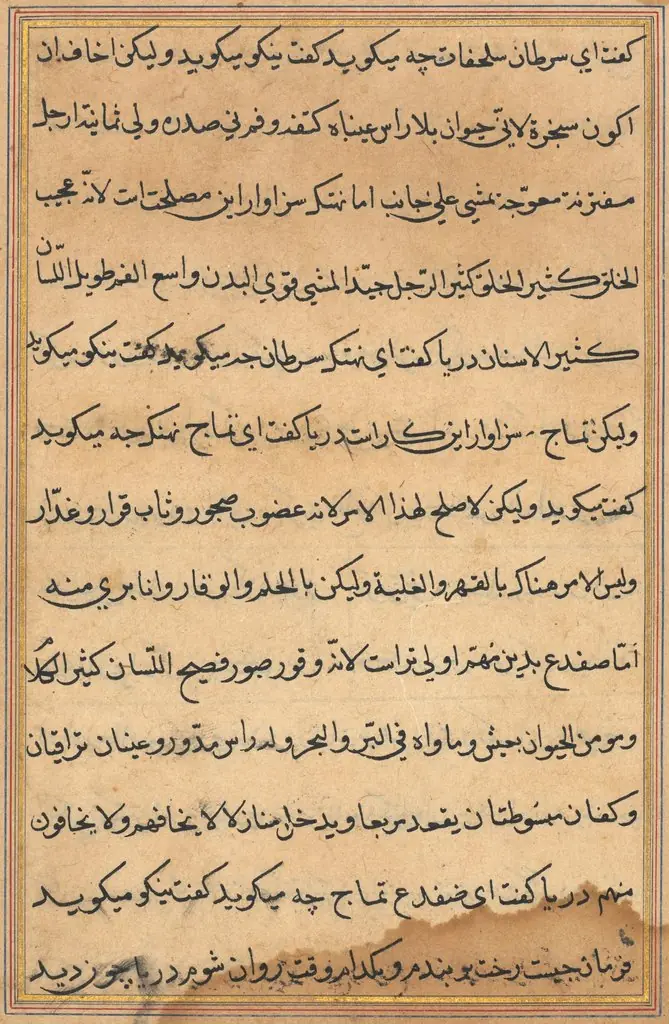 Page from Tales of a Parrot (Tuti-nama): text page
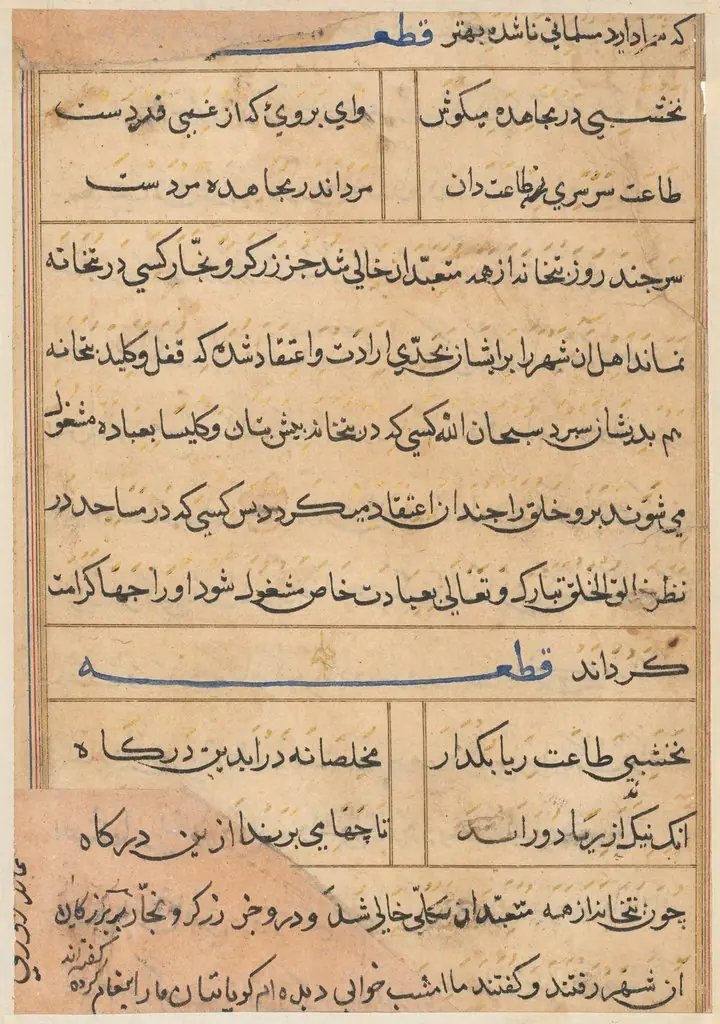 Page from Tales of a Parrot (Tuti-nama): text page
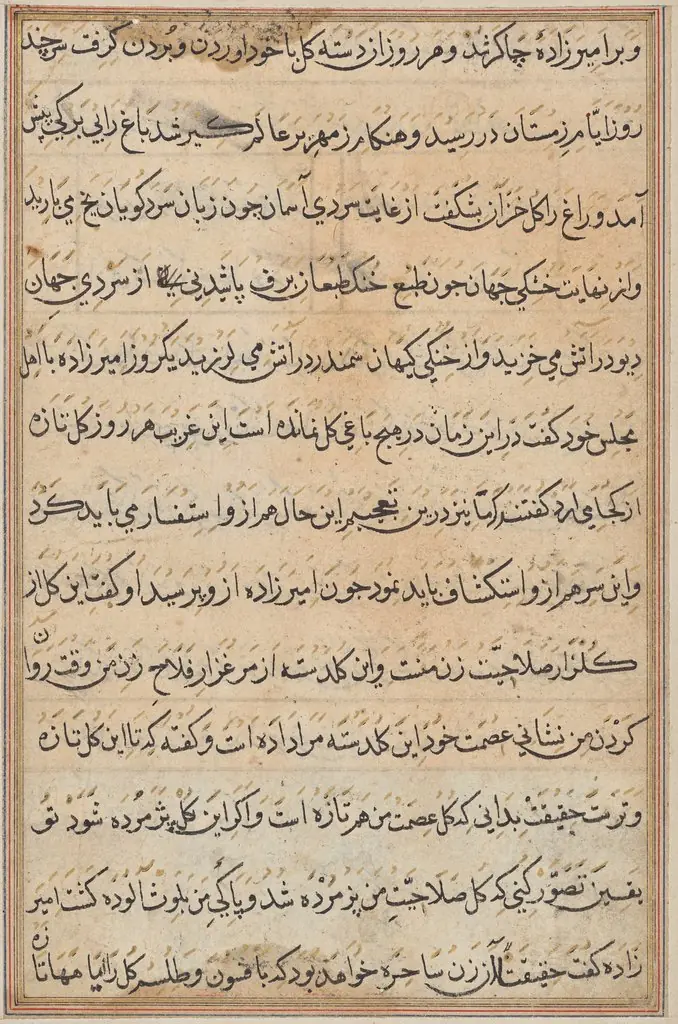 Page from Tales of a Parrot (Tuti-nama): text page
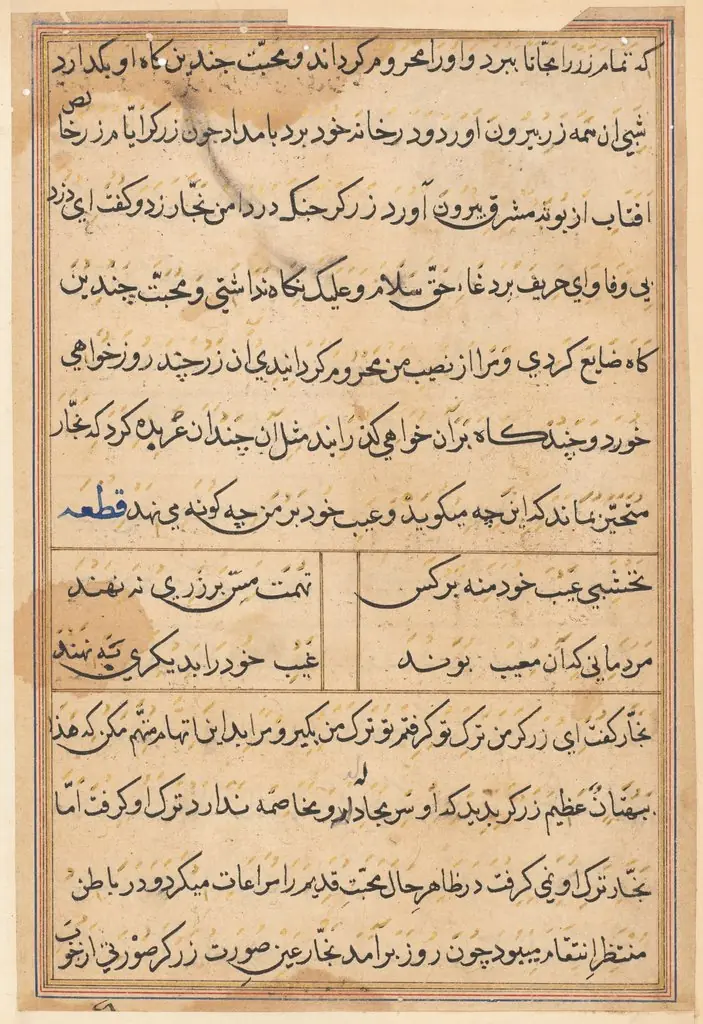 Page from Tales of a Parrot (Tuti-nama): text page
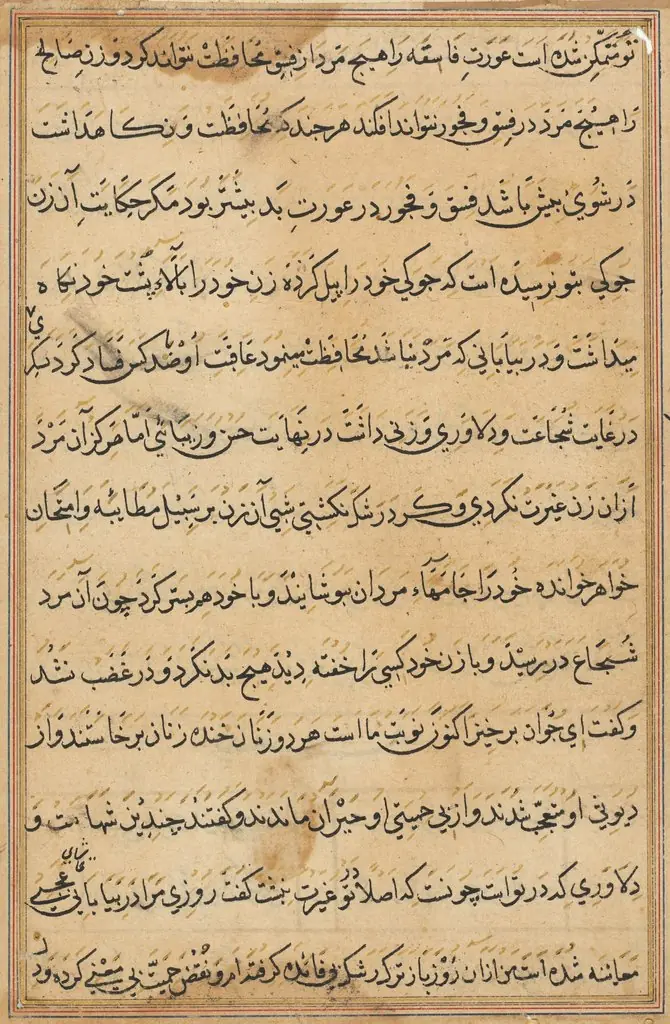 Page from Tales of a Parrot (Tuti-nama): text page
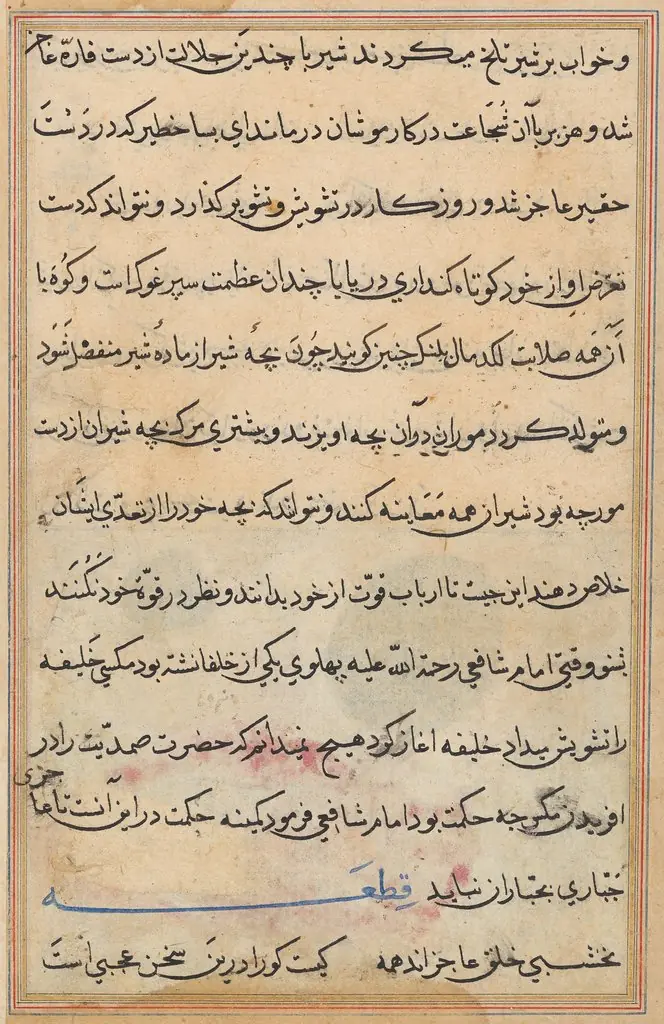 Page from Tales of a Parrot (Tuti-nama): text page
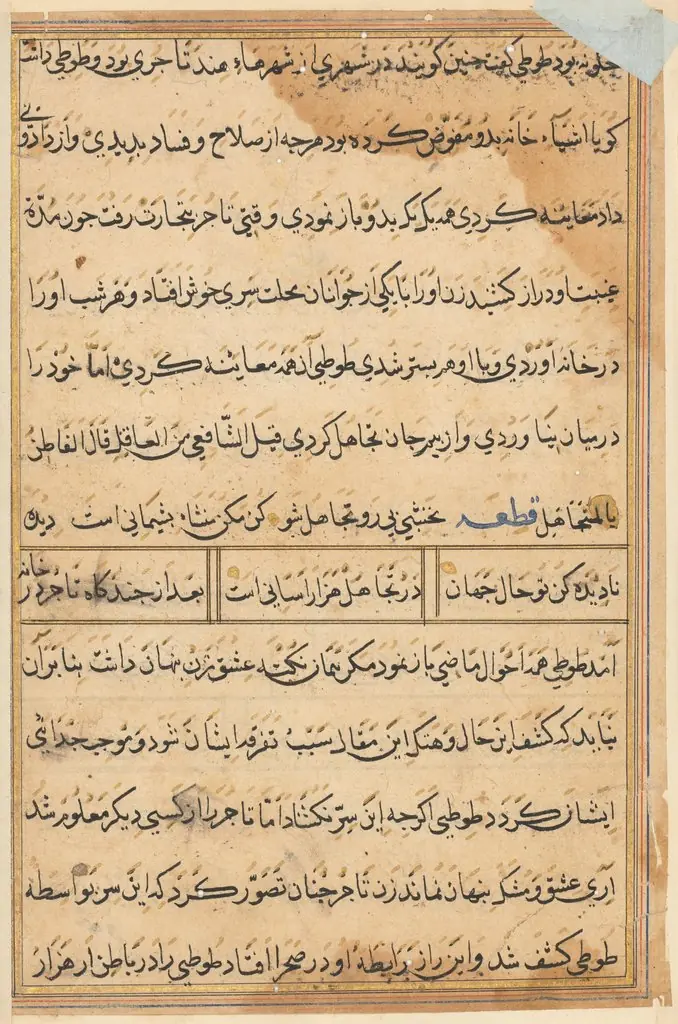 Page from Tales of a Parrot (Tuti-nama): text page
 Tuti-Nama (Tales of a Parrot)