Artwork
Page from Tales of a Parrot (Tuti-nama): text page
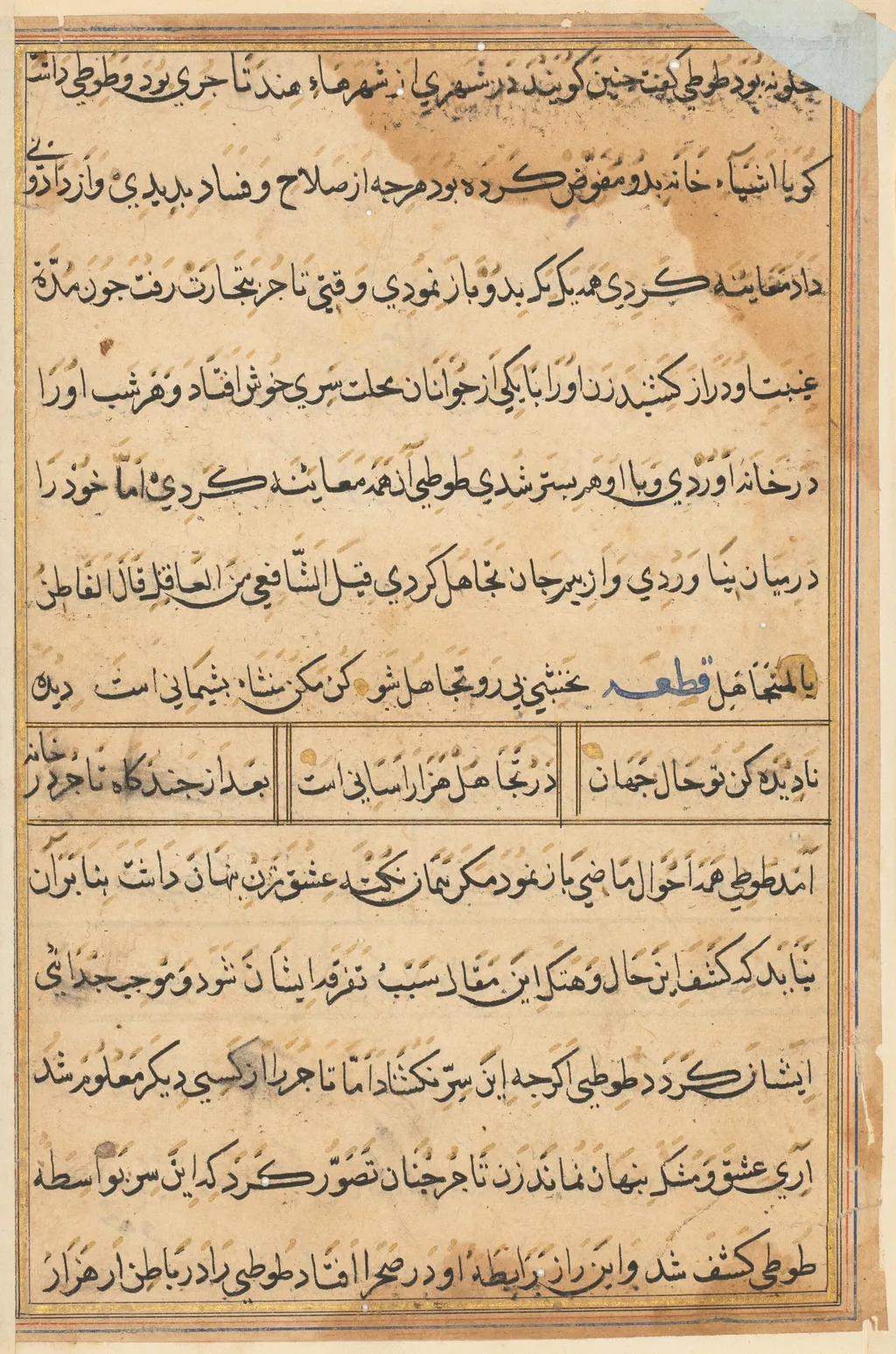
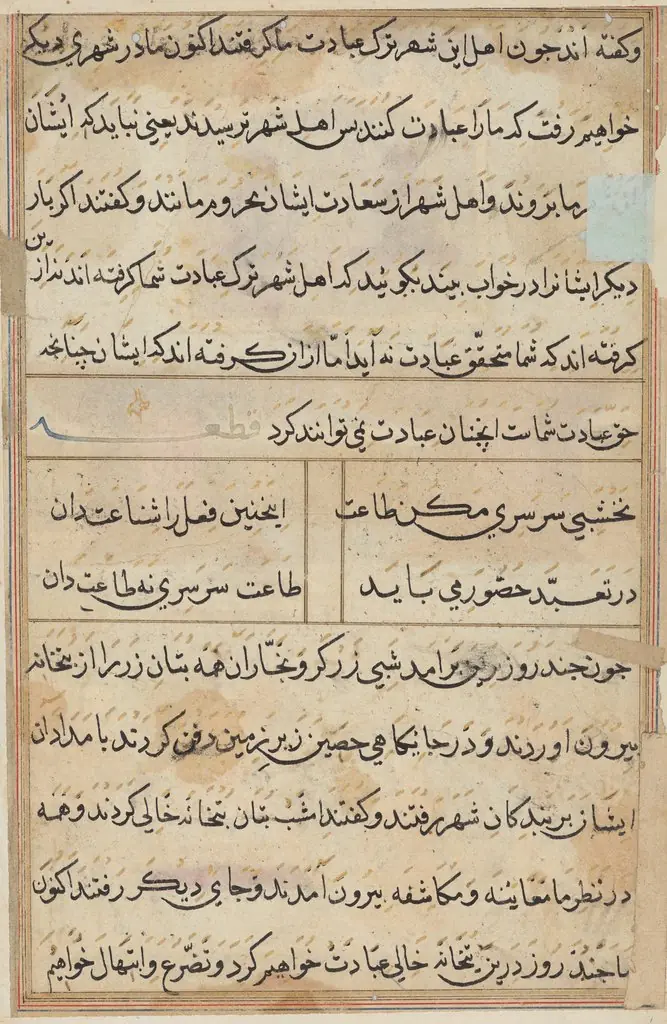
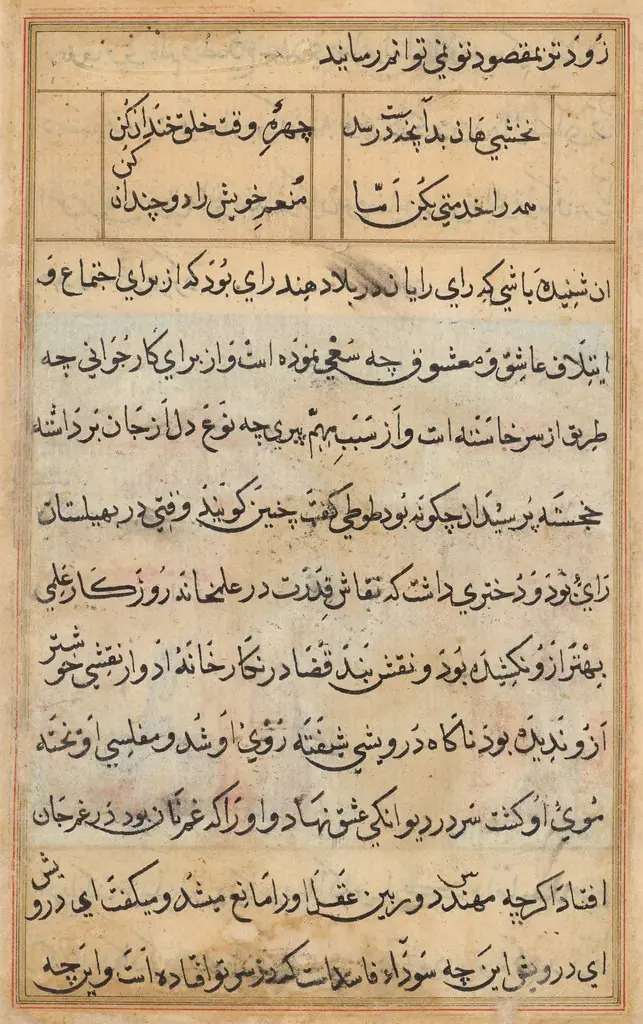
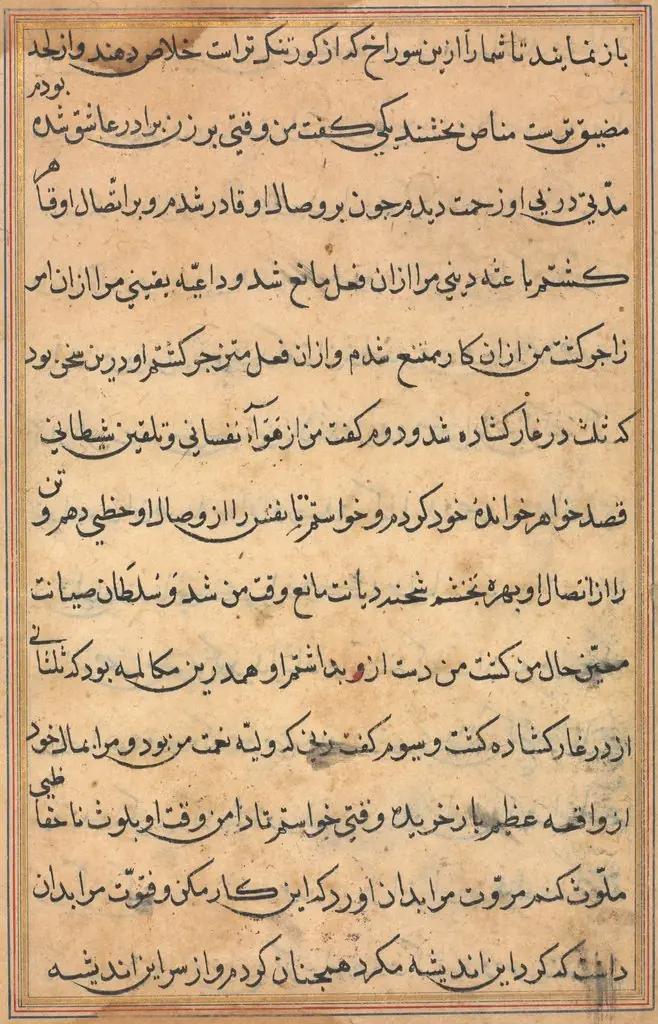
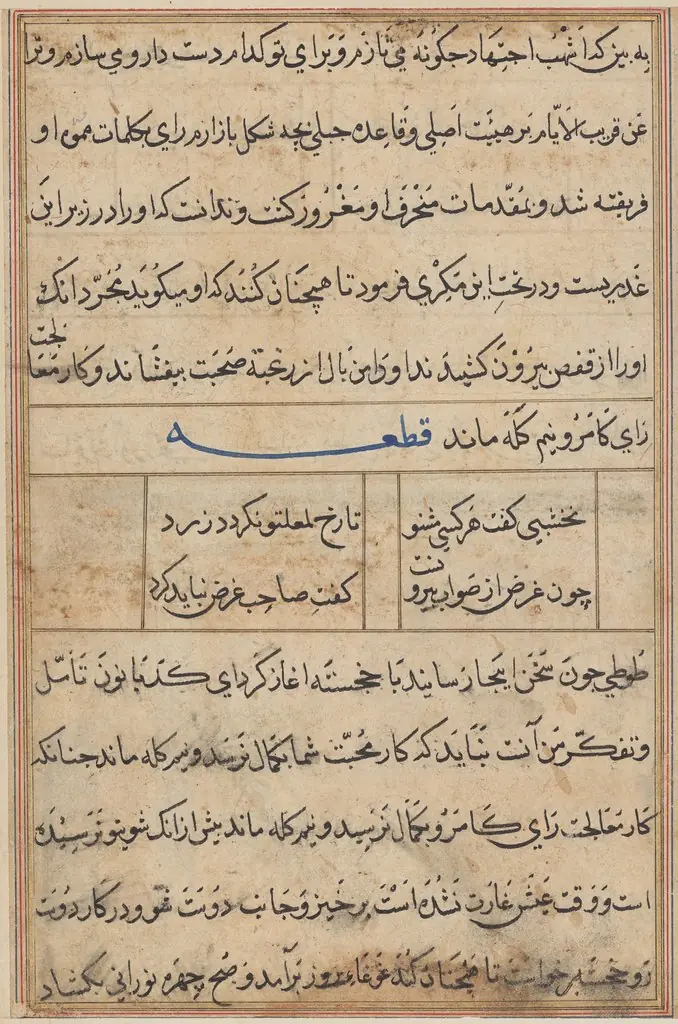
Page from Tales of a Parrot (Tuti-nama): text page is an unspecified painting. It dates from 1560 and is held in the collection of the Cleveland Museum of Art. This object is a painted page from the Persian manuscript known as the Tales of a Parrot, or Tuti‑nama.
About this work
Overview
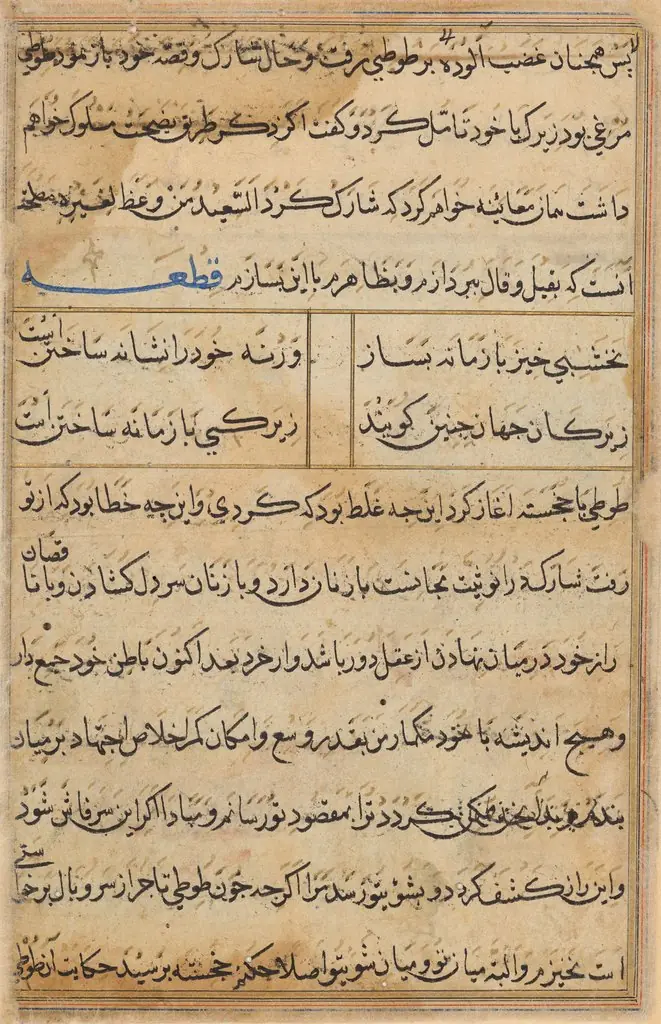
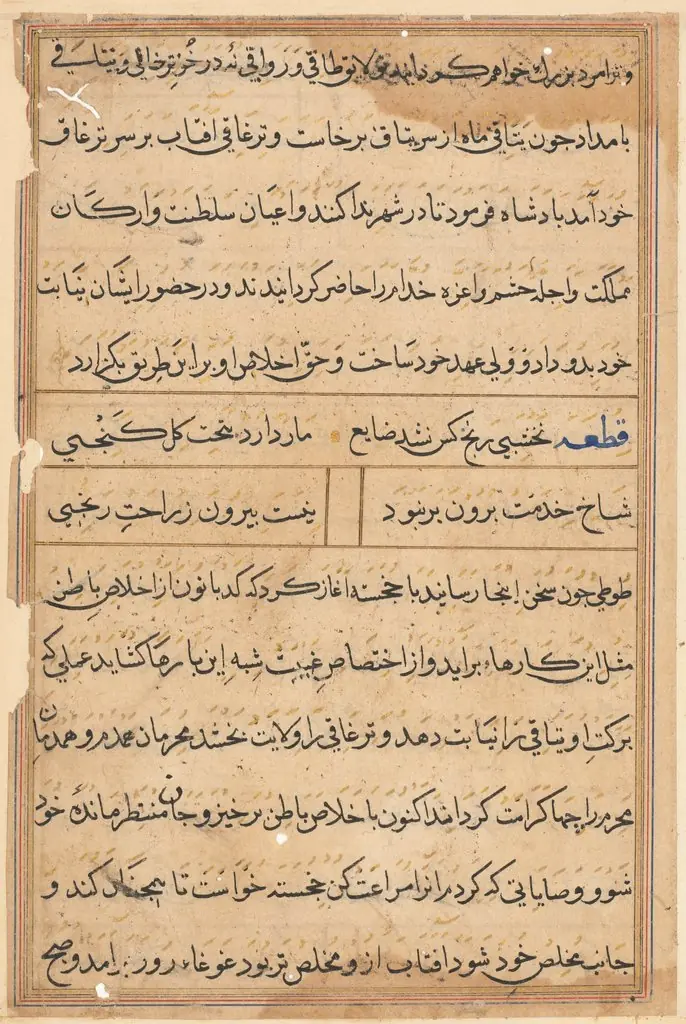
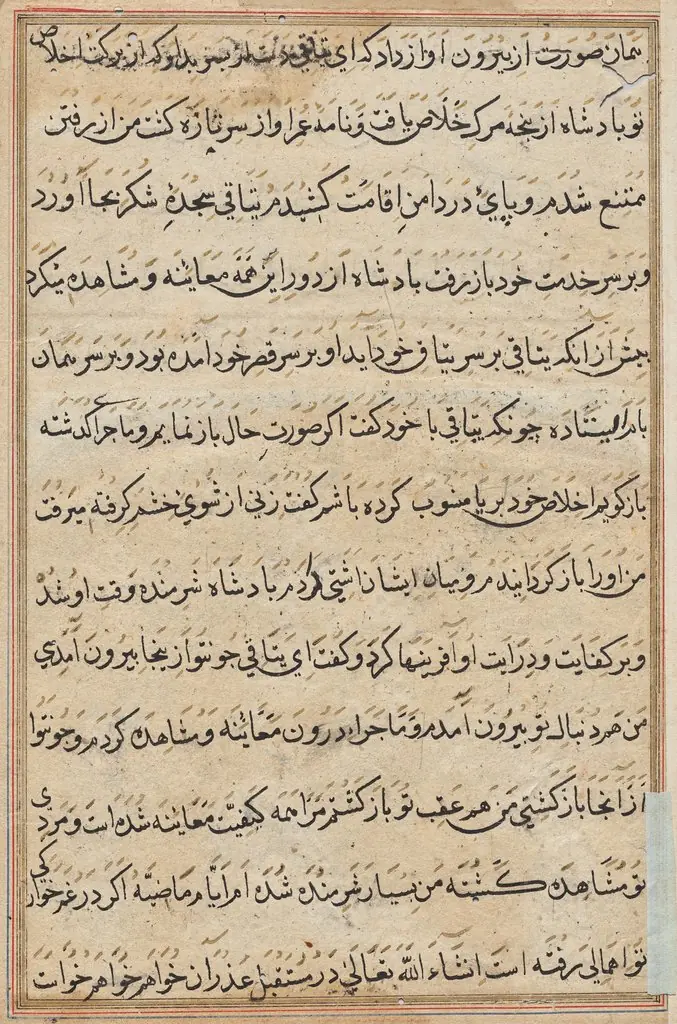
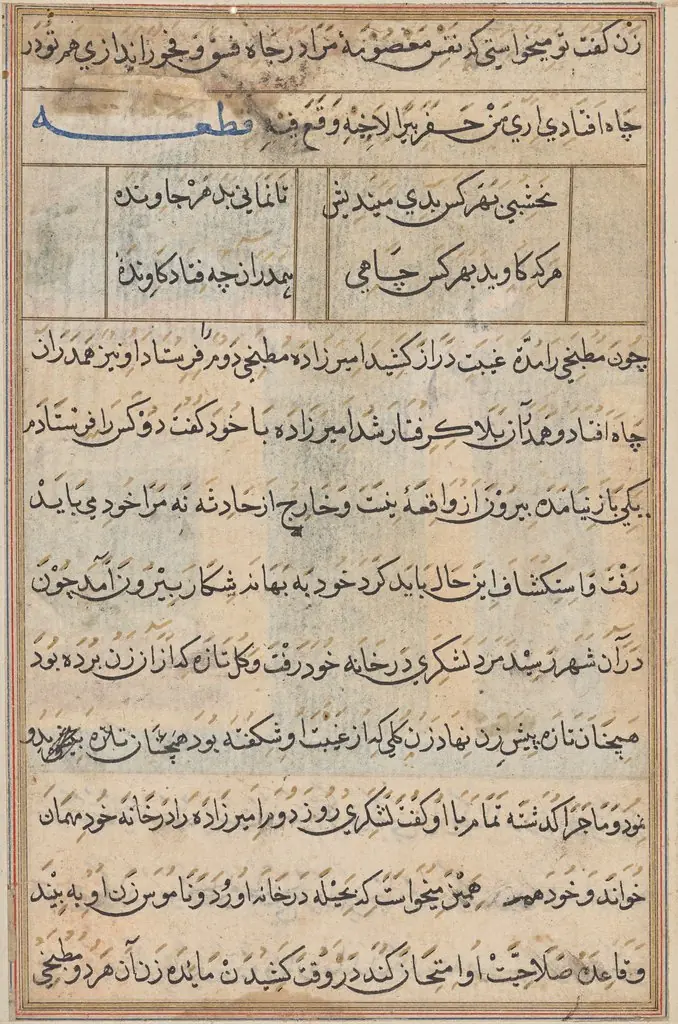
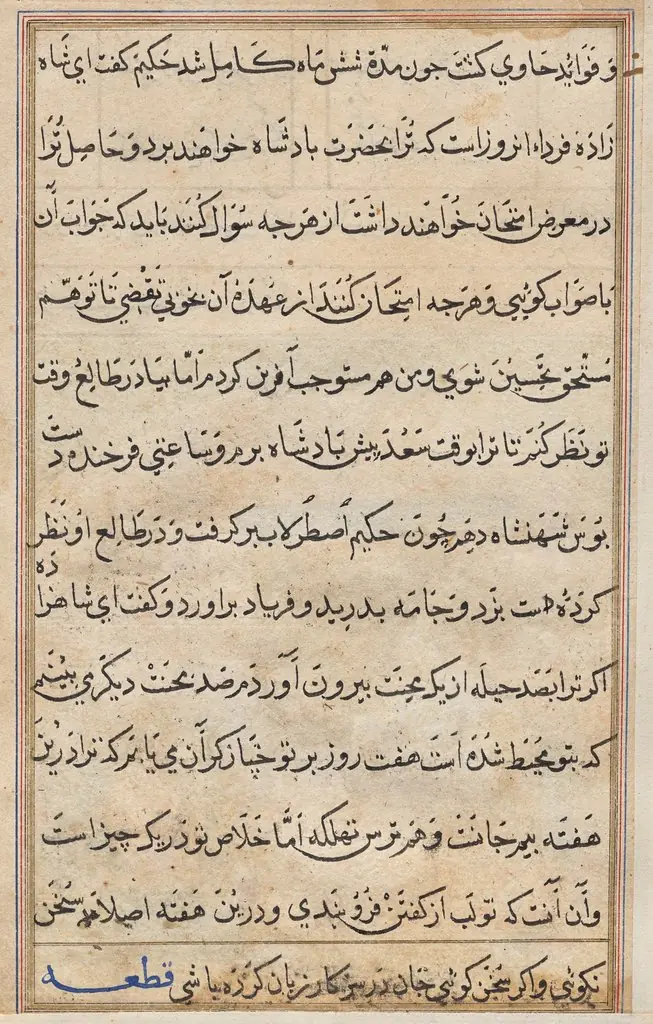
This object is a painted page from the Persian manuscript known as the Tales of a Parrot, or Tuti‑nama. Executed as a miniature illustration, the sheet presents a block of black calligraphy set against a warm, slightly yellowed paper surface, with a narrow decorative border framing the text.
Subject & Meaning
The page contains a narrative passage written in an elegant hand, suggesting it was intended for a distinguished reader. A brief segment of the text is rendered in blue ink, a visual cue that traditionally highlights a pivotal moment or moral within the story.
Technique & Style
The artist employed fine brushwork to produce flowing black script, arranging the lines in orderly rows. The use of a single accent color—blue—demonstrates a restrained palette typical of Persian manuscript illumination, while the paper’s speckled texture and aged tone indicate an intentional simulation of antiquity.
History & Provenance
The sheet is part of a larger collection of Tuti‑nama pages held by the Cleveland Museum of Art. Its acquisition history reflects the museum’s ongoing effort to preserve examples of Persian miniature painting and literary art from the early modern period.
Context
The Tales of a Parrot is a didactic work that blends fable and moral instruction, popular in Persian literary circles. Miniature pages such as this one were often produced for elite patrons, serving both as decorative objects and as carriers of ethical teachings.
Artist & collection

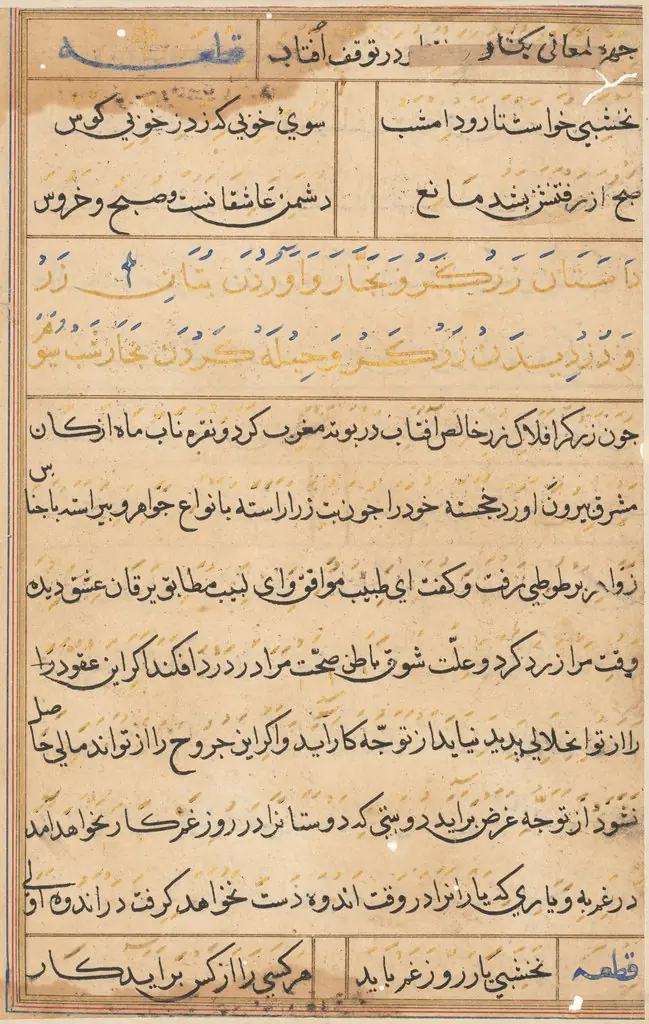 Page from Tales of a Parrot (Tuti-nama): text page
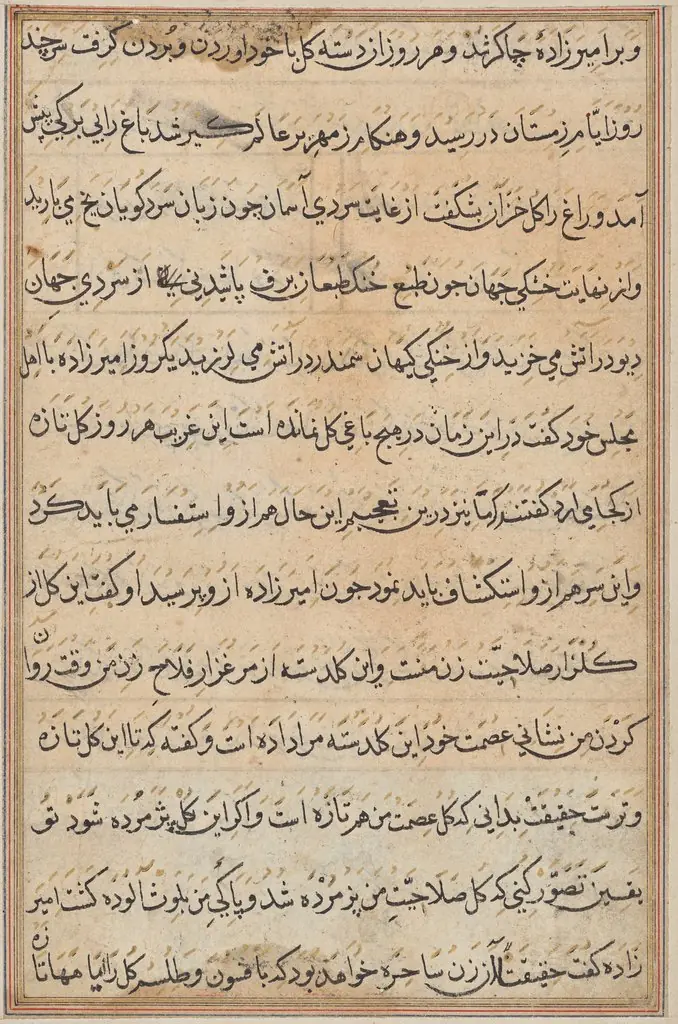 Page from Tales of a Parrot (Tuti-nama): text page
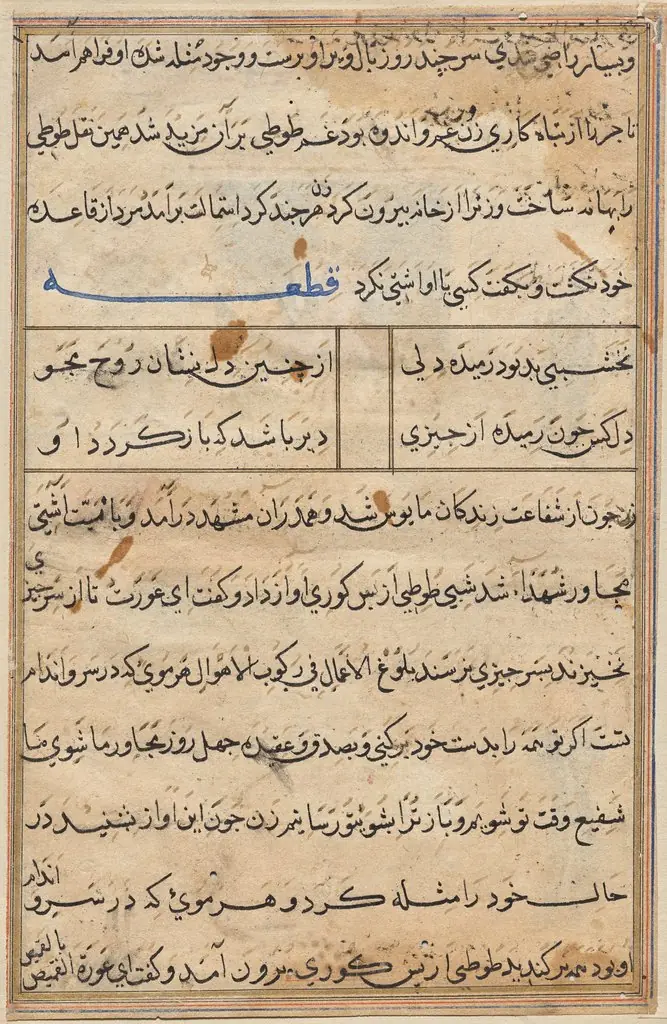 Page from Tales of a Parrot (Tuti-nama): text page
 Page from Tales of a Parrot (Tuti-nama): text page
 Page from Tales of a Parrot (Tuti-nama): text page
 Page from Tales of a Parrot (Tuti-nama): text page
 Page from Tales of a Parrot (Tuti-nama): text page
 Page from Tales of a Parrot (Tuti-nama): text page
 Page from Tales of a Parrot (Tuti-nama): text page
 Page from Tales of a Parrot (Tuti-nama): text page
 Page from Tales of a Parrot (Tuti-nama): text page
 Page from Tales of a Parrot (Tuti-nama): text page