Artwork
The Emperor Charles V with a Dog
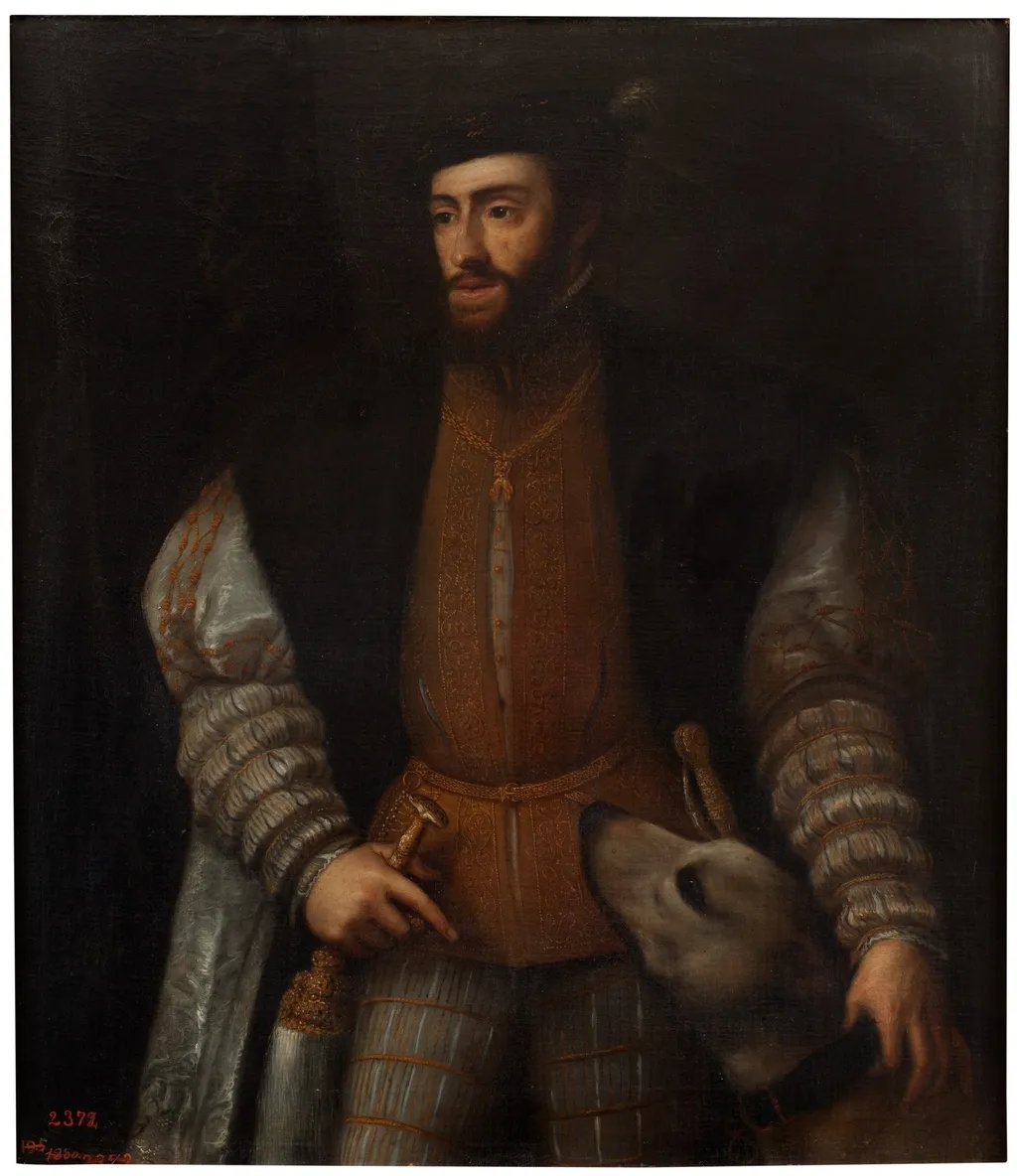
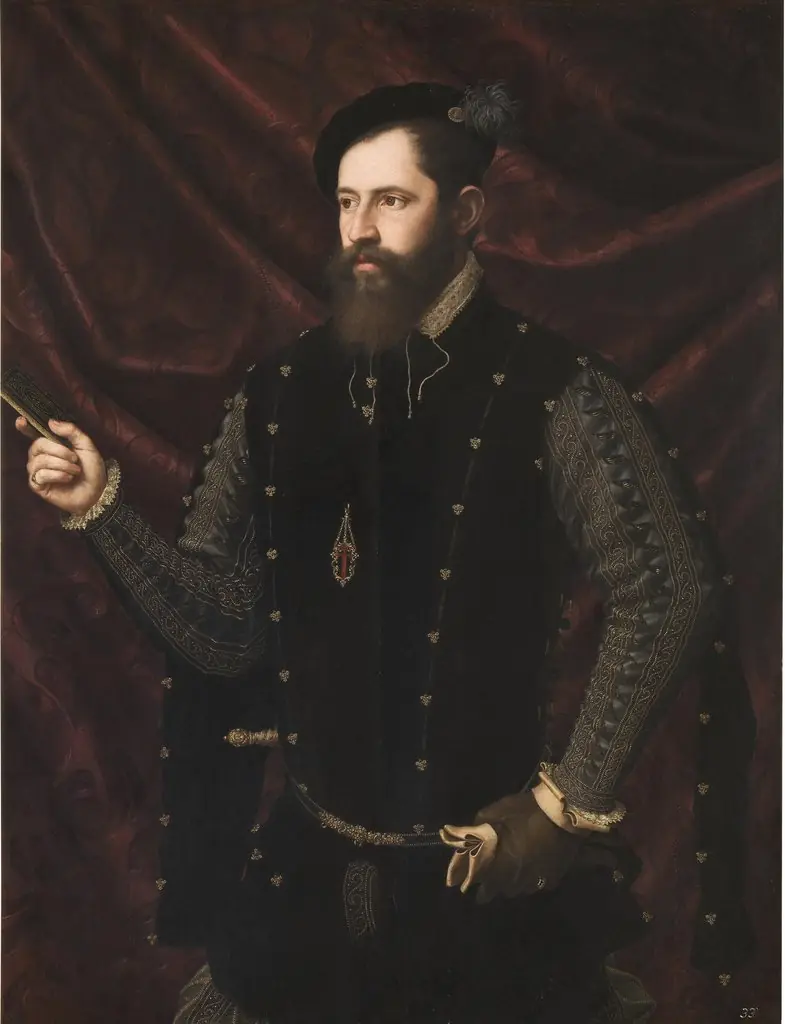
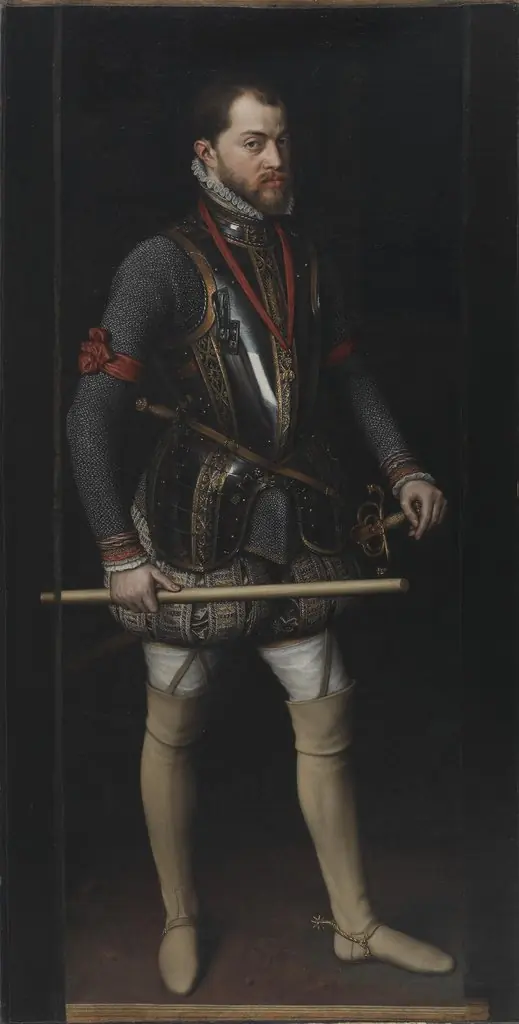
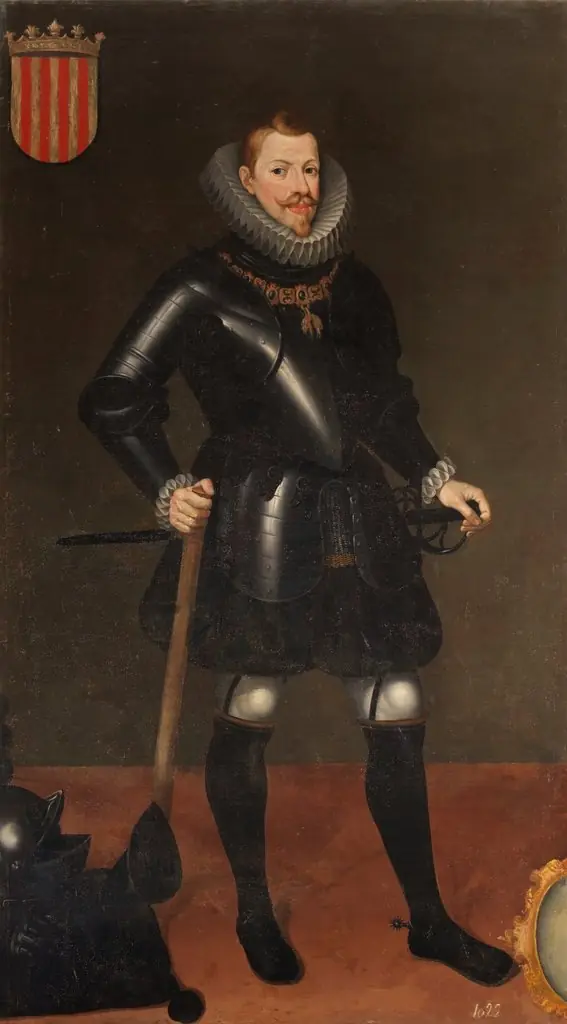
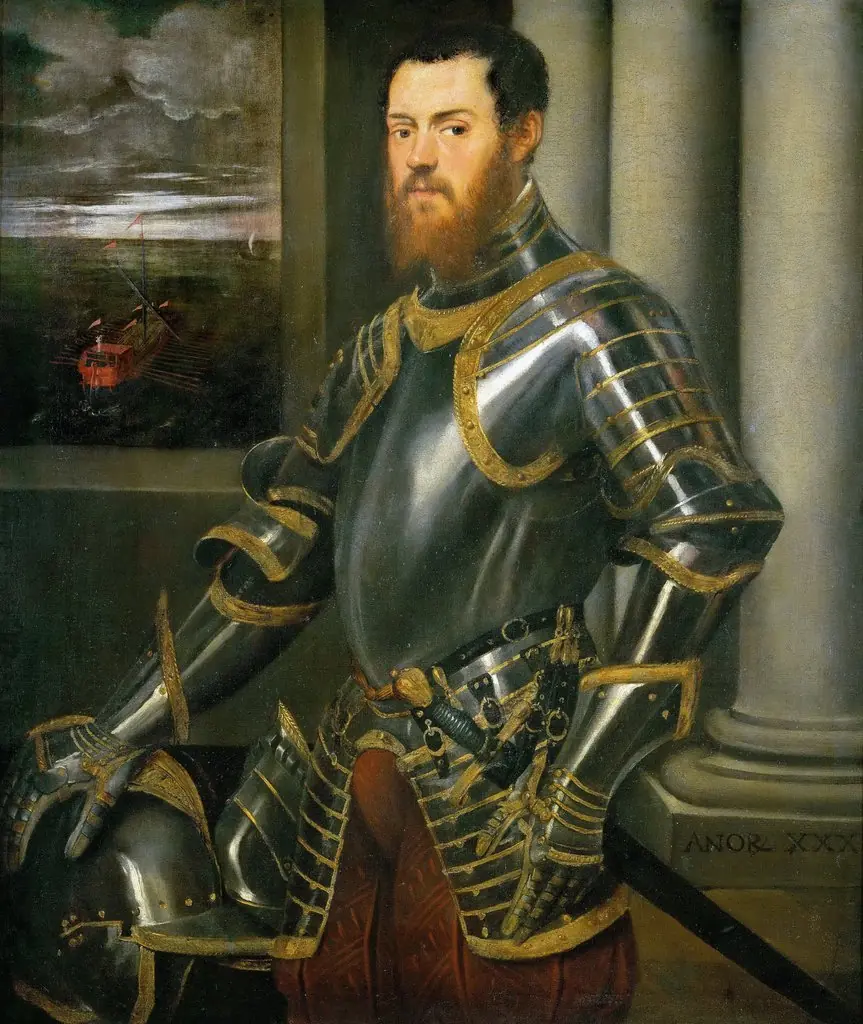
The Emperor Charles V with a Dog is an oil painting by the Mannerist artist Unknown. It dates from 1551 and is held in the collection of the Museo del Prado. The work presents a solitary figure in elaborate dress, accompanied by a light‑coloured dog with a dark nose.
About this work
Overview
The work presents a solitary figure in elaborate dress, accompanied by a light‑coloured dog with a dark nose. The subject stands upright, sword at his side, and holds a small object in his right hand, suggesting a formal pose. The composition is rendered in oil on canvas, employing strong contrasts of light and shadow to model the figures.
Subject & Meaning
The gentleman’s sumptuous attire—brown vest embroidered with gold, white shirt, striped breeches—indicates high rank or ceremonial function, while the presence of the dog, a traditional symbol of loyalty, reinforces his status. The small object he grasps may be an emblem of authority, though its precise identity remains unclear.
Technique & Style
The painter utilizes chiaroscuro to separate the illuminated forms from a darker background, creating a three‑dimensional effect. Thick impasto in the clothing’s folds and delicate glazing on the flesh and fur give texture and depth, while the overall handling reflects a refined, academic approach to portraiture.
Context
The attire and accessories correspond to early‑modern European court dress, pointing to a possible depiction of a ruler or high noble, such as Charles V. The inclusion of a dog aligns with contemporary portrait conventions that linked the sitter to virtues of fidelity and power.
Legacy
Although the identity of the sitter is not definitively established, the painting serves as an example of the period’s portrait tradition, illustrating how clothing, objects, and animal companions were employed to convey rank and character within a single, carefully composed image.
Artist & collection

 Domestic Scene
 Giacomo and Cardinal Marco, investing Andrea, Abbot of San Zeno, with his Benefice
 The Nymph of Fontainebleau
 Portrait of a Woman
 Madonna and Child with Saints in the Enclosed Garden
 Venus and Minerva
 Family Group of Four on Sofa
 Wall painting from Room H of the Villa of P. Fannius Synistor at Boscoreale