Artwork
The Wedding in Cana
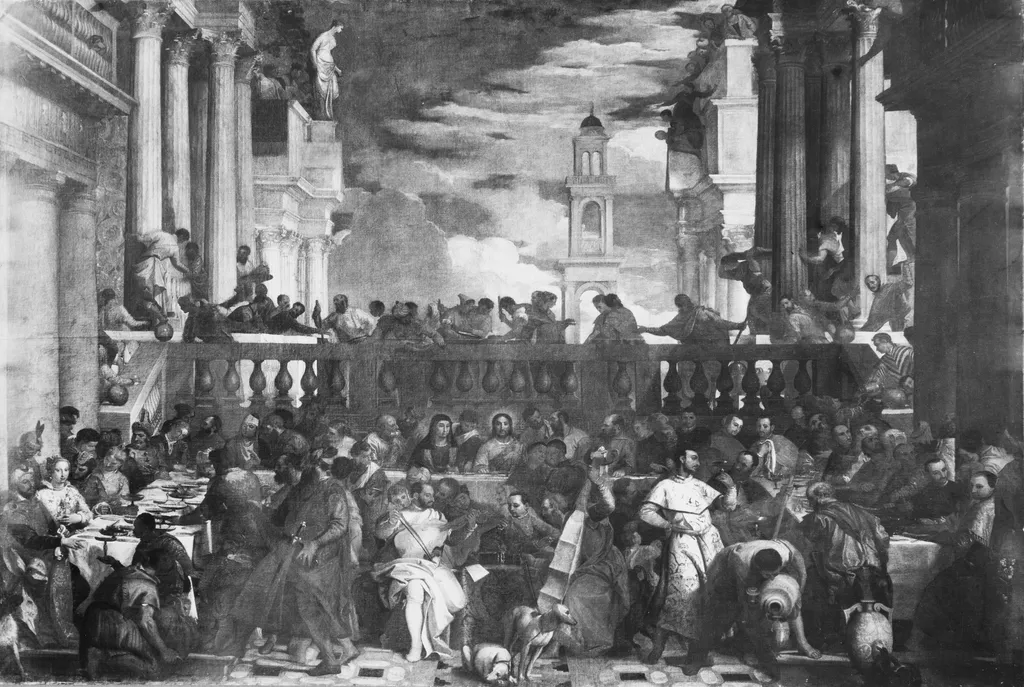
The Wedding in Cana is an oil painting by Unknown. It is held in the collection of the Nationalmuseum.
About this work
Overview
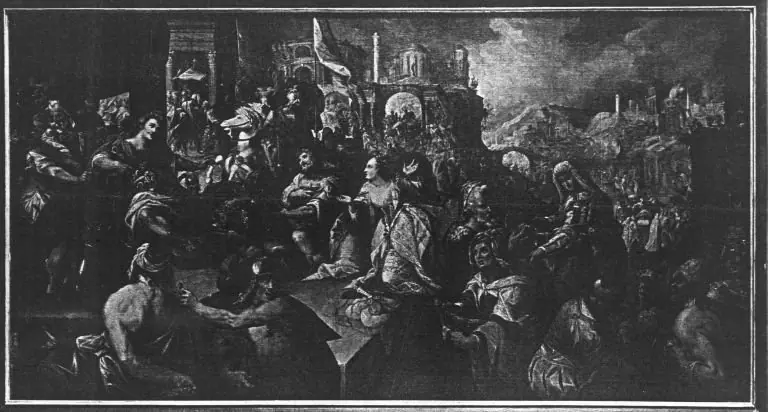
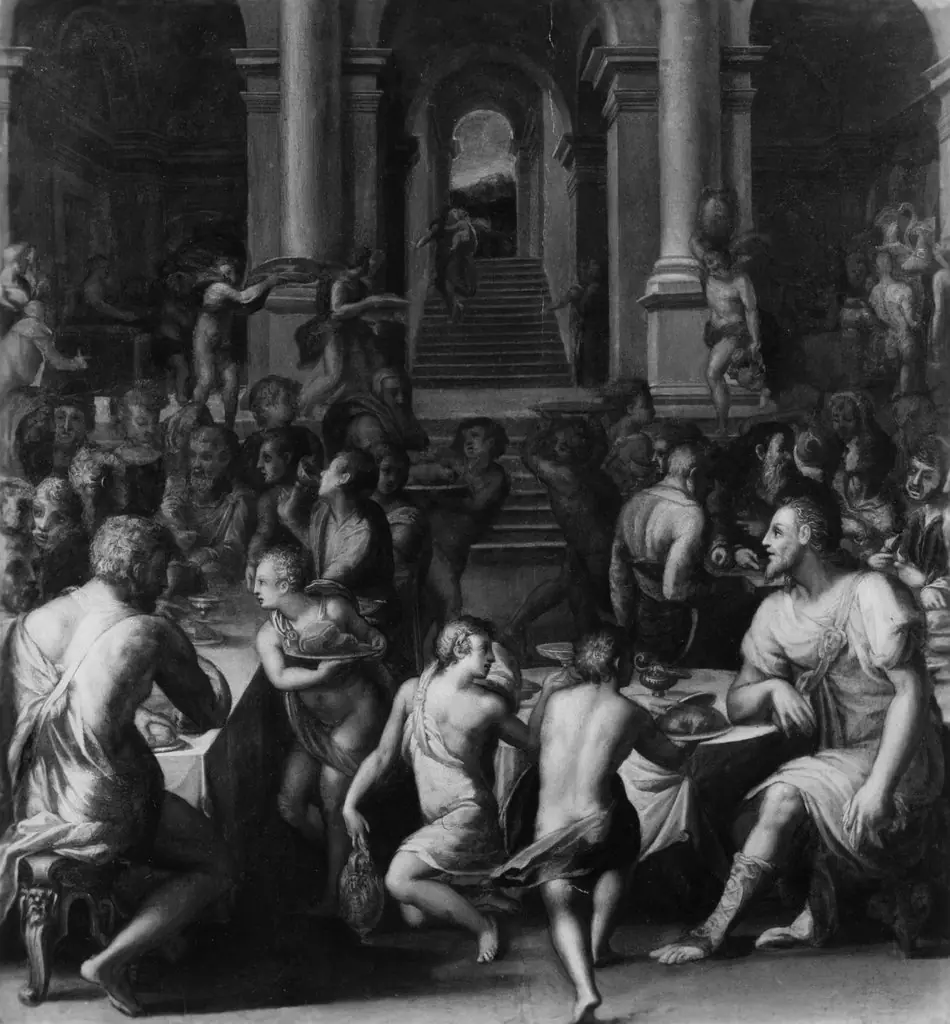
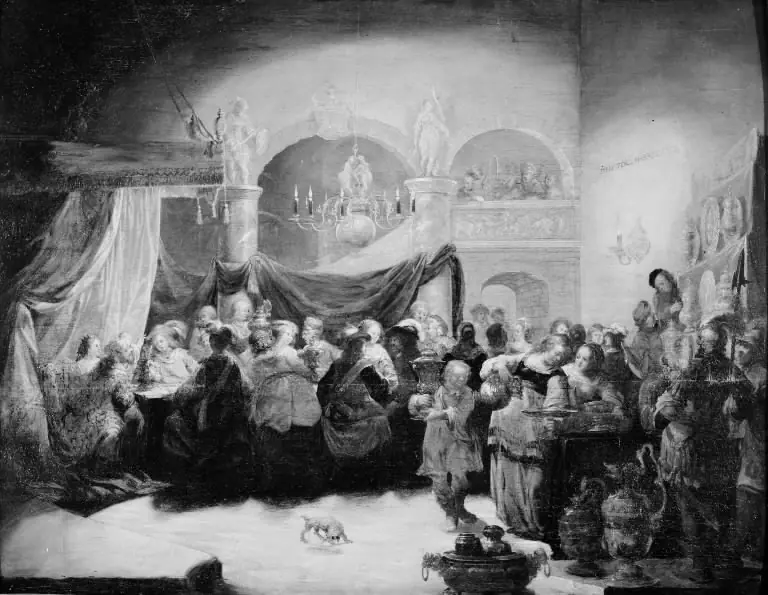
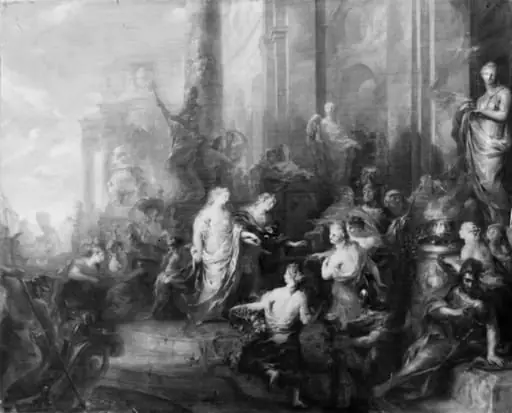
The work titled “The Wedding in Cana” is an oil painting that portrays a bustling banquet scene. Figures in period dress occupy numerous tables, partaking in food and drink within an interior framed by columns and statuary. The composition conveys a festive atmosphere, with careful attention to the varied textures of garments, tableware, and provisions.
Subject & Meaning
The painting depicts the biblical episode of the wedding at Cana, traditionally associated with the first miracle of turning water into wine. By populating the canvas with a multitude of revelers, the artist emphasizes communal celebration and the social significance of feasting rituals, while the inclusion of classical architectural elements suggests a timeless, idealized setting.
Technique & Style
Executed in oil on canvas, the artist employs fine brushwork to render the intricate details of fabric folds, reflective surfaces, and culinary items. Light is modeled to highlight the richness of textures, and a balanced arrangement of figures creates depth within the interior space. The overall style reflects a realistic yet slightly idealized approach typical of academic banquet scenes.
History & Provenance
The painting is catalogued simply as an oil work titled “The Wedding in Cana,” with no further documented ownership or exhibition history provided in the source material. Consequently, its creation date, artist identity, and subsequent collection trajectory remain unspecified.
Context
Banquet paintings have long served as a genre for displaying technical skill and social commentary. By situating a biblical narrative within an opulent, historically ambiguous setting, the work aligns with a tradition of merging religious subject matter with secular, courtly visual culture, inviting viewers to contemplate both sacred story and worldly festivity.
Artist & collection

 Domestic Scene
 Giacomo and Cardinal Marco, investing Andrea, Abbot of San Zeno, with his Benefice
 The Nymph of Fontainebleau
 Portrait of a Woman
 Madonna and Child with Saints in the Enclosed Garden
 Venus and Minerva
 Family Group of Four on Sofa
 Wall painting from Room H of the Villa of P. Fannius Synistor at Boscoreale