Artwork
Family in a Room
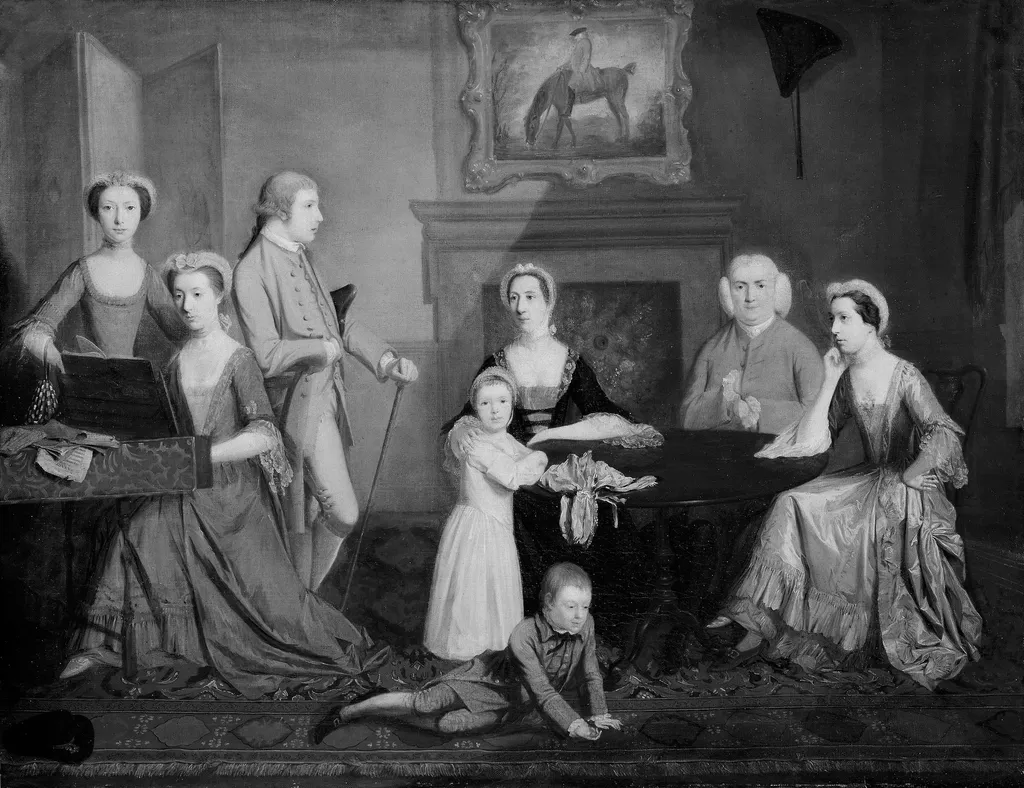
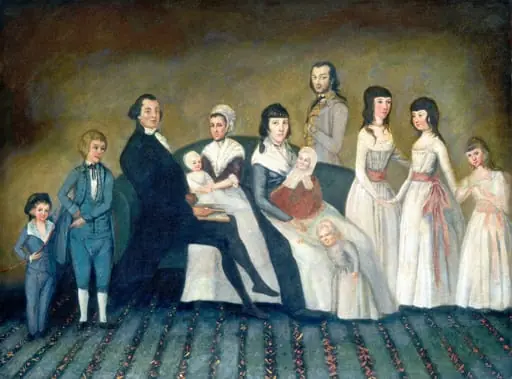
Family in a Room is an oil painting by the Rococo painting artist Unknown. It dates from 1765 and is held in the collection of the Art Institute of Chicago. Painted in 1765, this oil-on-canvas work depicts a domestic interior with eight family members engaged in quiet, everyday activities.
About this work
The people in the painting are looking at each other or at things in the room, and they seem to be in the middle of doing something.
This painting shows a family in a room, with eight people and a child. They are all dressed in old-fashioned clothing, and some of them are holding things like books or canes. The room has a fireplace and a picture on the wall, and there's a table in the middle with some objects on it. The people in the painting are looking at each other or at things in the room, and they seem to be in the middle of doing something. The painting is done in a realistic style, with lots of detail and texture. You can see the folds in the clothes and the expressions on the people's faces. The painting is called "Family in a Room" and it's from 1765. It's held at the Art Institute of Chicago.
Overview
Painted in 1765, this oil-on-canvas work depicts a domestic interior with eight family members engaged in quiet, everyday activities. The scene is rendered with careful attention to detail, capturing the textures of fabric, wood, and skin. The composition centers on a table laden with objects, flanked by a fireplace and a wall-mounted image, suggesting a private, lived-in space rather than a formal portrait setting.
Subject & Meaning
The figures, dressed in 18th-century attire, are arranged in a loose, naturalistic grouping. Some hold books or canes, hinting at literacy or social status, while others gaze at one another or at objects in the room. The absence of overt narrative or gesture suggests an emphasis on familial presence and routine, reflecting values of domestic stability and quiet companionship common in middle- and upper-class households of the period.
Technique & Style
The artist employs a realistic approach with refined brushwork to render fabric folds, facial expressions, and surface textures. Light falls subtly across the scene, modeling forms without dramatic contrast. The palette is restrained, dominated by muted earth tones, enhancing the sense of intimacy. Details like the grain of wood and the sheen of metal objects reinforce the painting’s observational rigor.
History & Provenance
The painting entered the collection of the Art Institute of Chicago in the early 20th century, though its earlier ownership remains undocumented. Its date of 1765 places it within a period when domestic scenes were gaining traction among European painters, though the artist’s identity has not been definitively established. The work’s survival and preservation suggest it was valued by private collectors prior to institutional acquisition.
Context
In mid-18th-century Europe, depictions of family life in interiors became more common, moving beyond aristocratic portraiture to include middle-class domesticity. This painting aligns with that trend, reflecting a growing interest in private moments and the moral significance of home life. Unlike grand historical or mythological subjects, it elevates ordinary interaction as worthy of artistic attention.
Legacy
Though not widely exhibited or studied, the painting contributes to a broader understanding of how ordinary families were represented in art during the Enlightenment. Its quiet realism offers a counterpoint to more theatrical or idealized works of the era, preserving a glimpse of daily life that few other sources capture with such tactile immediacy.
Artist & collection

 Domestic Scene
 Giacomo and Cardinal Marco, investing Andrea, Abbot of San Zeno, with his Benefice
 The Nymph of Fontainebleau
 Portrait of a Woman
 Madonna and Child with Saints in the Enclosed Garden
 Venus and Minerva
 Family Group of Four on Sofa
 Wall painting from Room H of the Villa of P. Fannius Synistor at Boscoreale
 Family Group on a Terrace
 Portrait of Carolina Wilhelmina of Orange (1743-1787) and her Children
 Assembly at Wanstead House
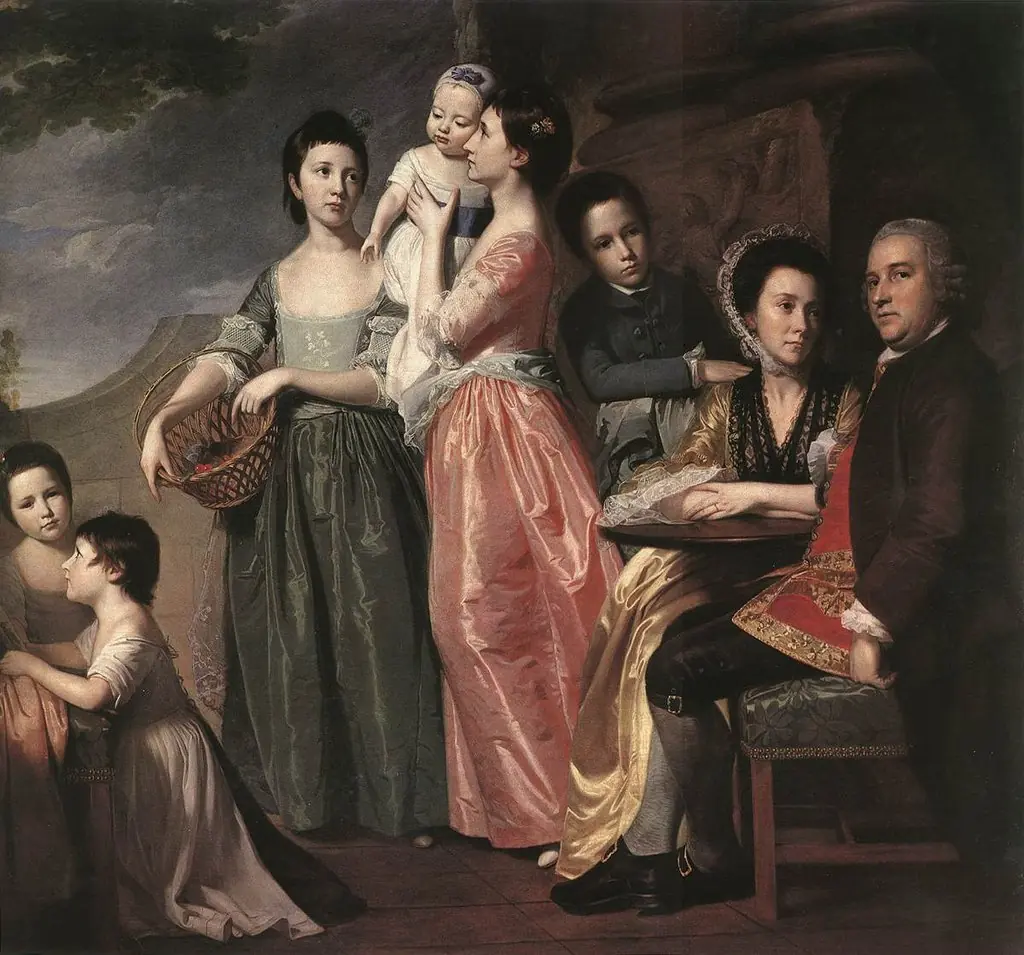 A large family piece
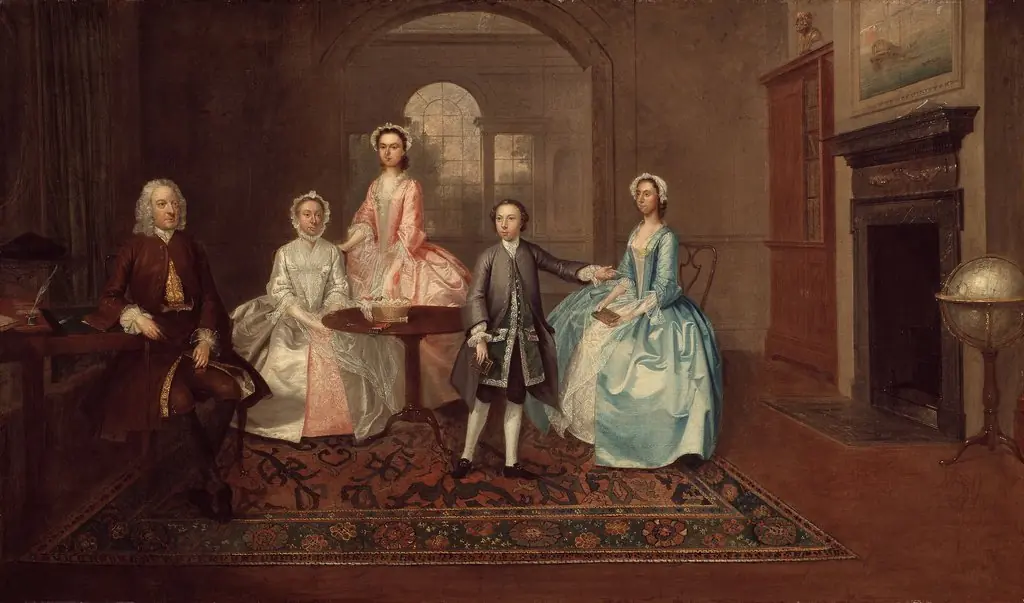 John Thomlinson and His Family
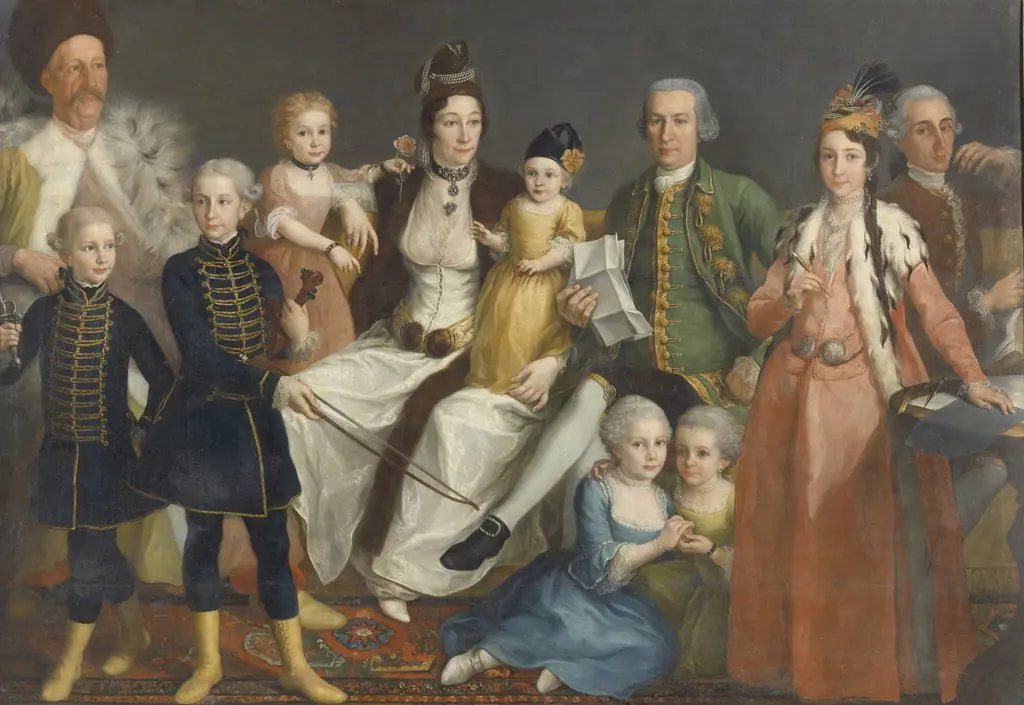 Portrait of David George van Lennep, Chief Merchant of the Dutch Factory at Smyrna (Izmir) and his Wife and Children
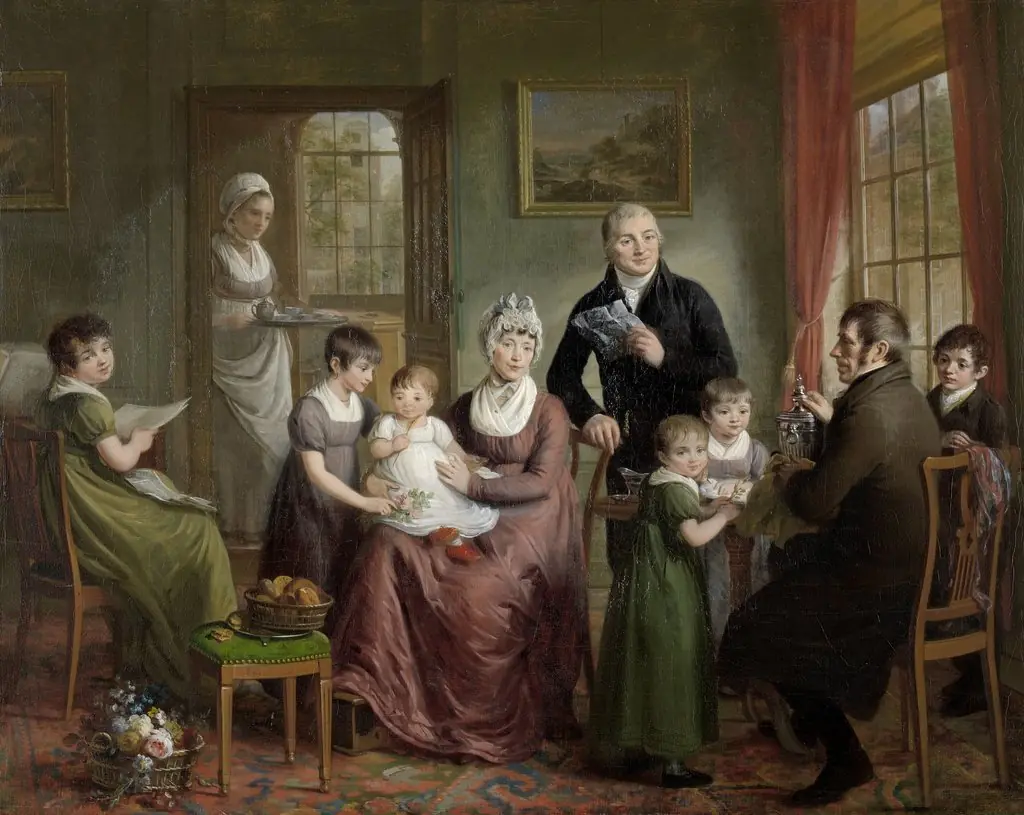 Portrait of the Family of Adrianus Bonebakker with Dirk L. Bennewitz
 The Cheney Family
 Family Group on a Garden Terrace
 John Thomlinson and His Family