Artwork
Kalpa Sutra
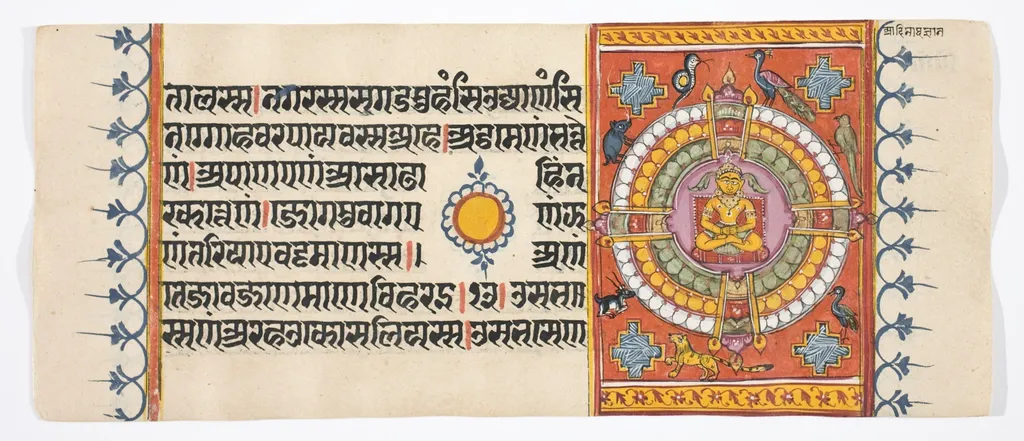
Kalpa Sutra is an unspecified painting by Unknown. It is held in the collection of the Detroit Institute of Arts.
About this work
Overview
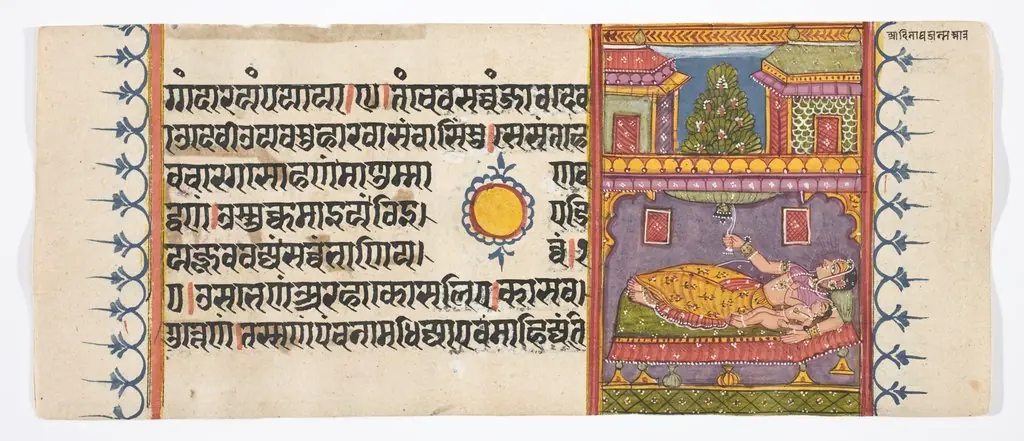
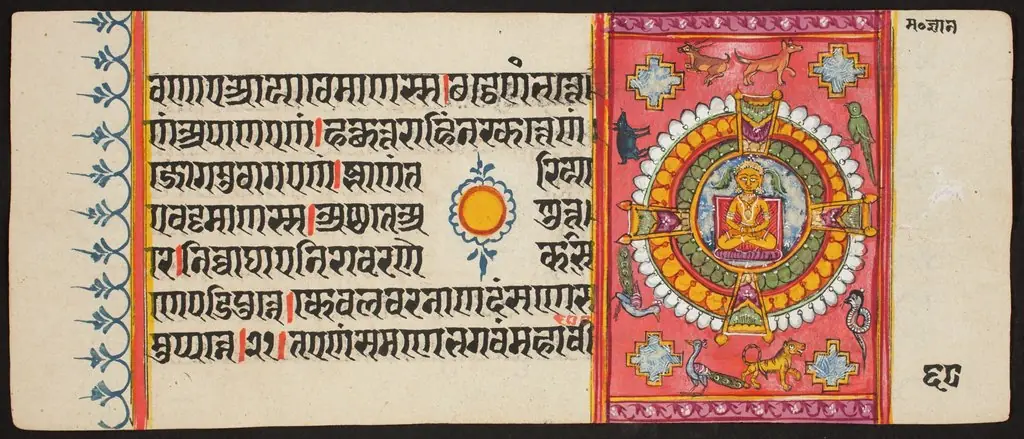
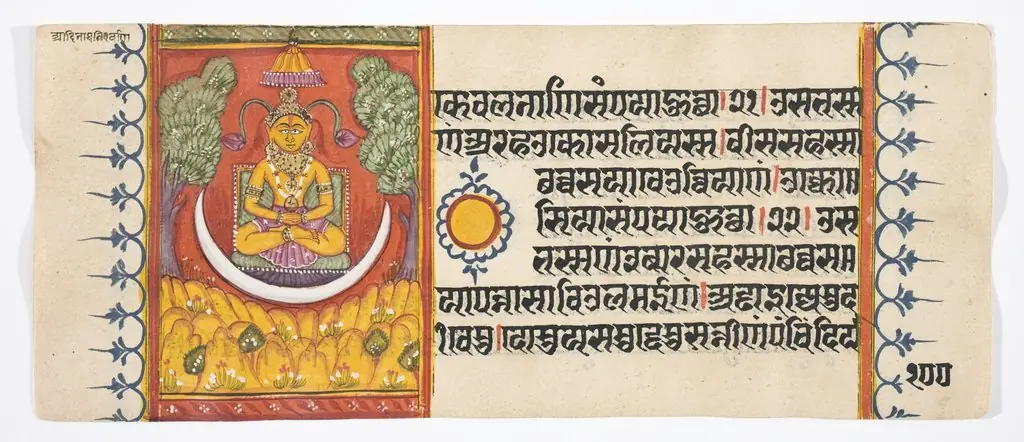
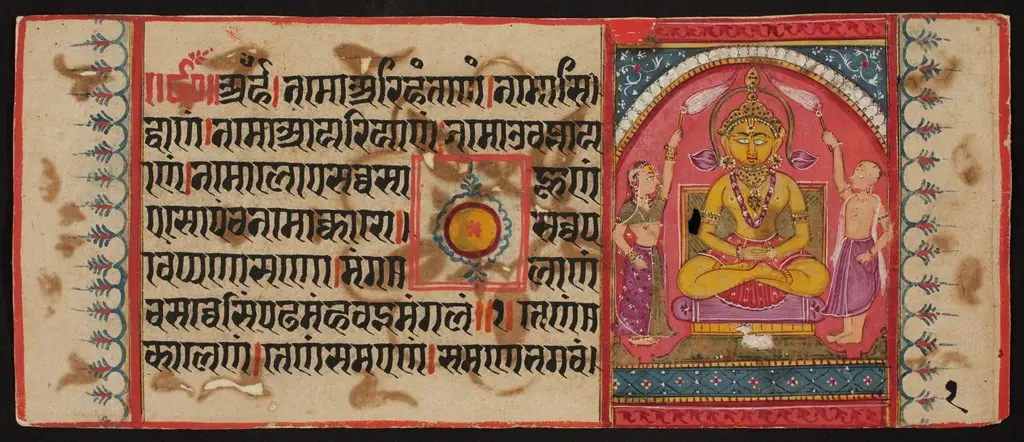
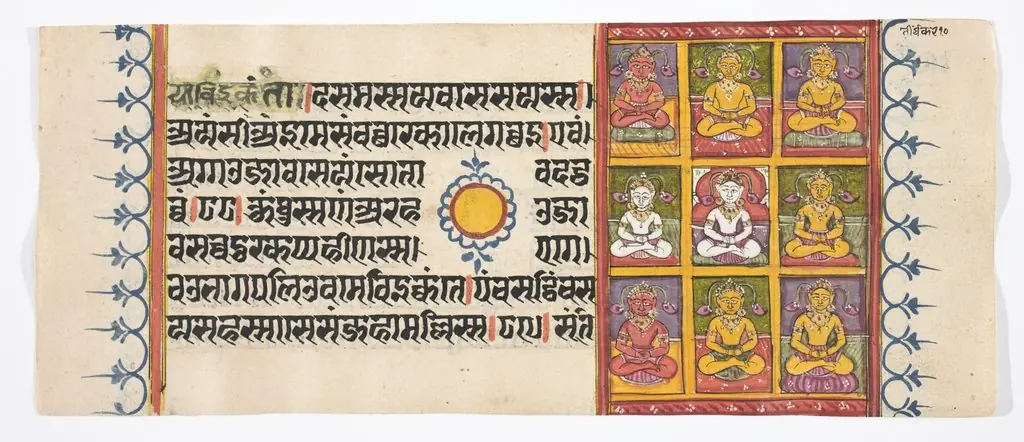
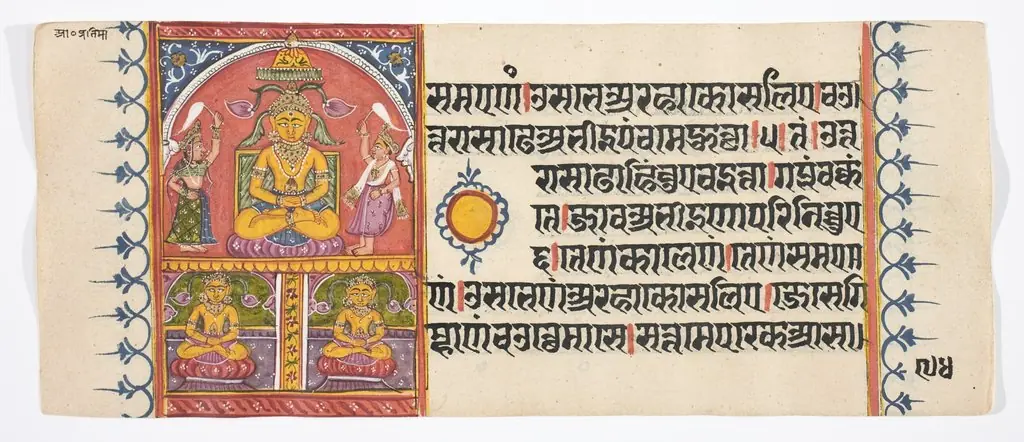
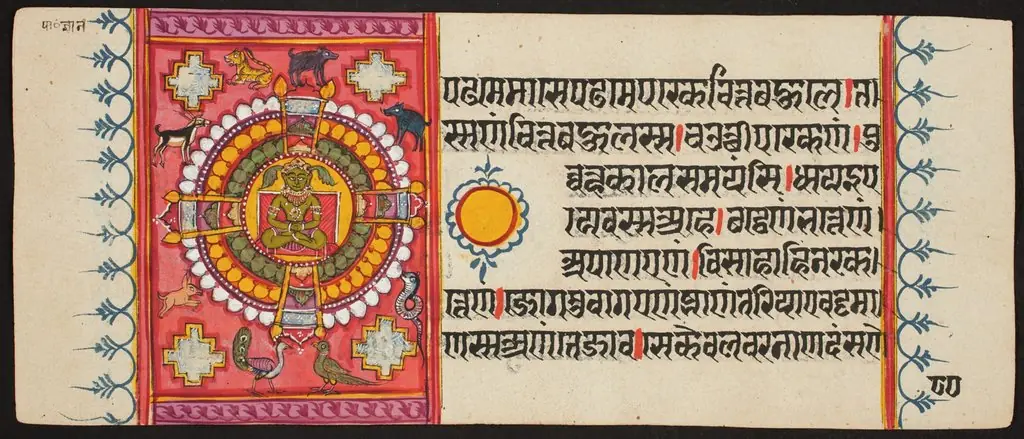
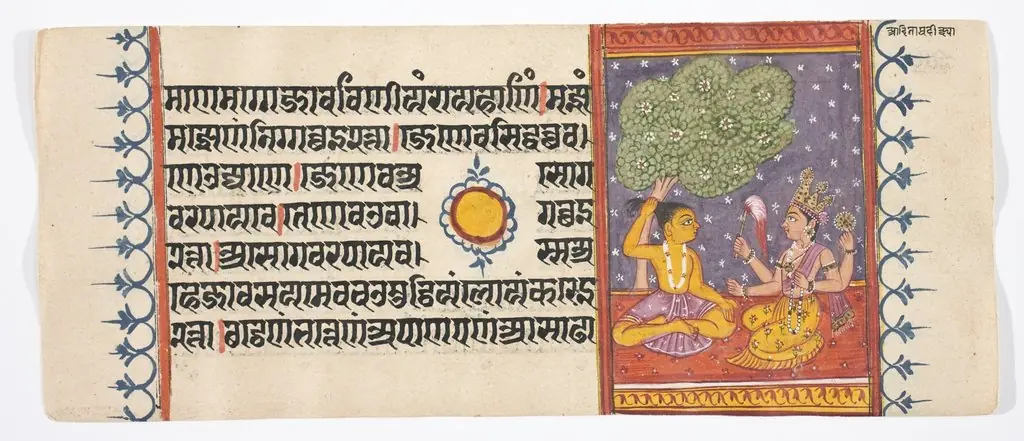
These works were created as devotional aids, accompanying recitations of the sacred scripture that details the lives of the Tirthankaras, particularly Mahavira.
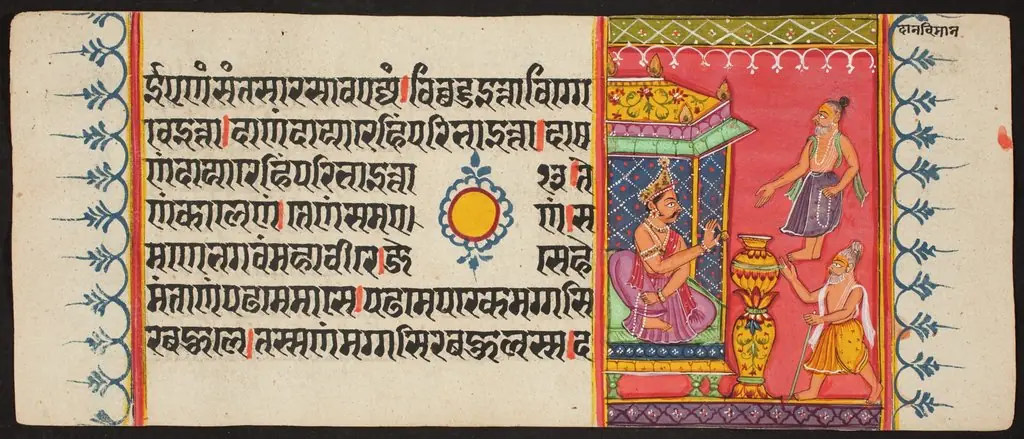
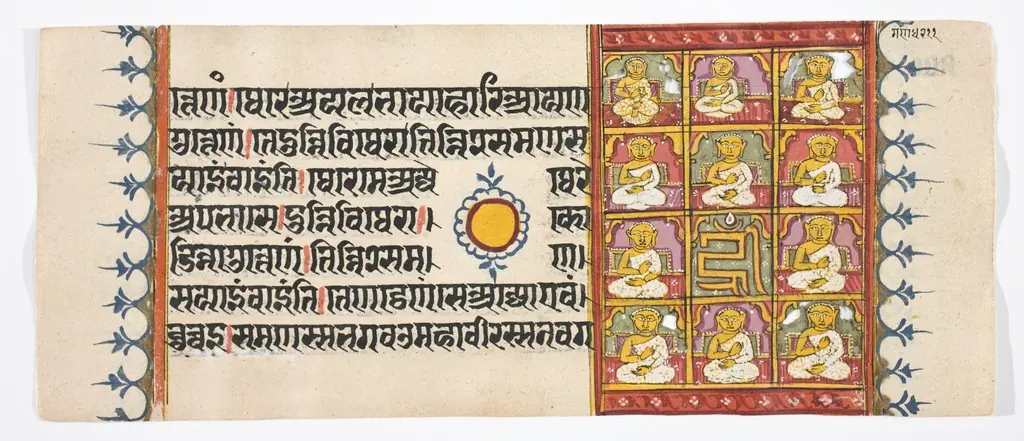
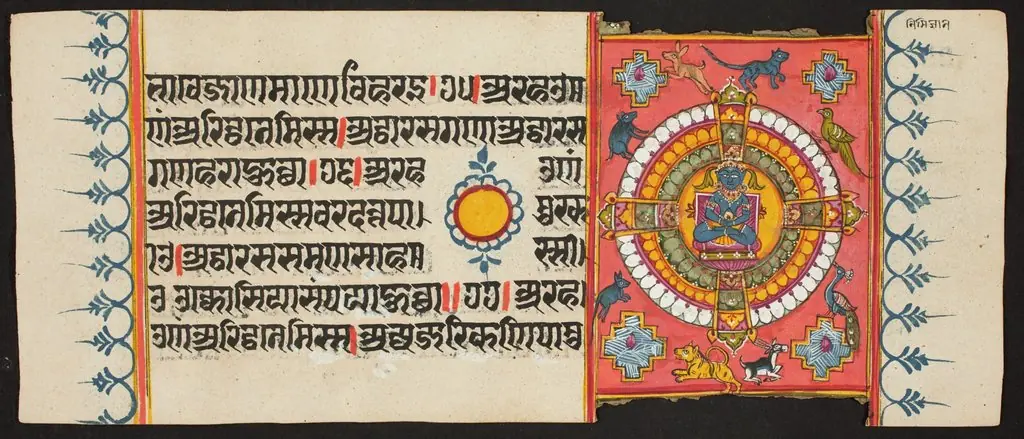
The Kalpa Sutra is a Jain religious text illustrated in a series of miniature paintings, produced in western India during the 15th century. These works were created as devotional aids, accompanying recitations of the sacred scripture that details the lives of the Tirthankaras, particularly Mahavira. The paintings are executed in tempera on paper, reflecting the regional style of Gujarat and Rajasthan.
Subject & Meaning
Each illustration depicts episodes from the lives of Jain spiritual teachers, emphasizing ascetic discipline, enlightenment, and nonviolence. Scenes include birth, renunciation, meditation, and final liberation. The figures are rendered with serene expressions and minimal background detail, directing focus to spiritual states rather than earthly settings. The imagery serves to reinforce doctrinal teachings through visual narrative.
Technique & Style
The paintings use fine brushwork and flat, opaque pigments derived from minerals and plants. Figures are stylized with elongated eyes, slender limbs, and ornate jewelry, adhering to regional conventions. Gold leaf accents highlight sacred elements, while rhythmic lines define drapery and architecture. Composition is tightly framed, with figures arranged in hierarchical scale to denote spiritual importance.
History & Provenance
These manuscripts were commissioned by wealthy Jain patrons and maintained in temple libraries or private collections. Many were copied and illuminated over generations, with some surviving examples dated to the 14th and 15th centuries. Portions of the Kalpa Sutra manuscripts are now held in institutions across India and Europe, often fragmented from their original bindings.
Context
Produced during a period of flourishing Jain patronage in western India, these paintings reflect a broader tradition of manuscript illumination shared with Hindu and Buddhist communities. The emphasis on textual fidelity and symbolic representation aligns with Jain principles of non-attachment and reverence for sacred words. Artistic choices avoided naturalism, favoring spiritual clarity over realism.
Legacy
The Kalpa Sutra illustrations influenced later Jain and Rajasthani painting traditions, establishing conventions for figure representation and narrative sequencing. Their preservation has provided scholars with insights into medieval Jain liturgy and visual culture. Though no longer used in active worship, they remain vital historical documents of religious practice and artistic continuity.
Artist & collection

 Domestic Scene
 Giacomo and Cardinal Marco, investing Andrea, Abbot of San Zeno, with his Benefice
 The Nymph of Fontainebleau
 Portrait of a Woman
 Madonna and Child with Saints in the Enclosed Garden
 Venus and Minerva
 Family Group of Four on Sofa
 Wall painting from Room H of the Villa of P. Fannius Synistor at Boscoreale