Artwork
Morgan Pryse Lloyd Esq
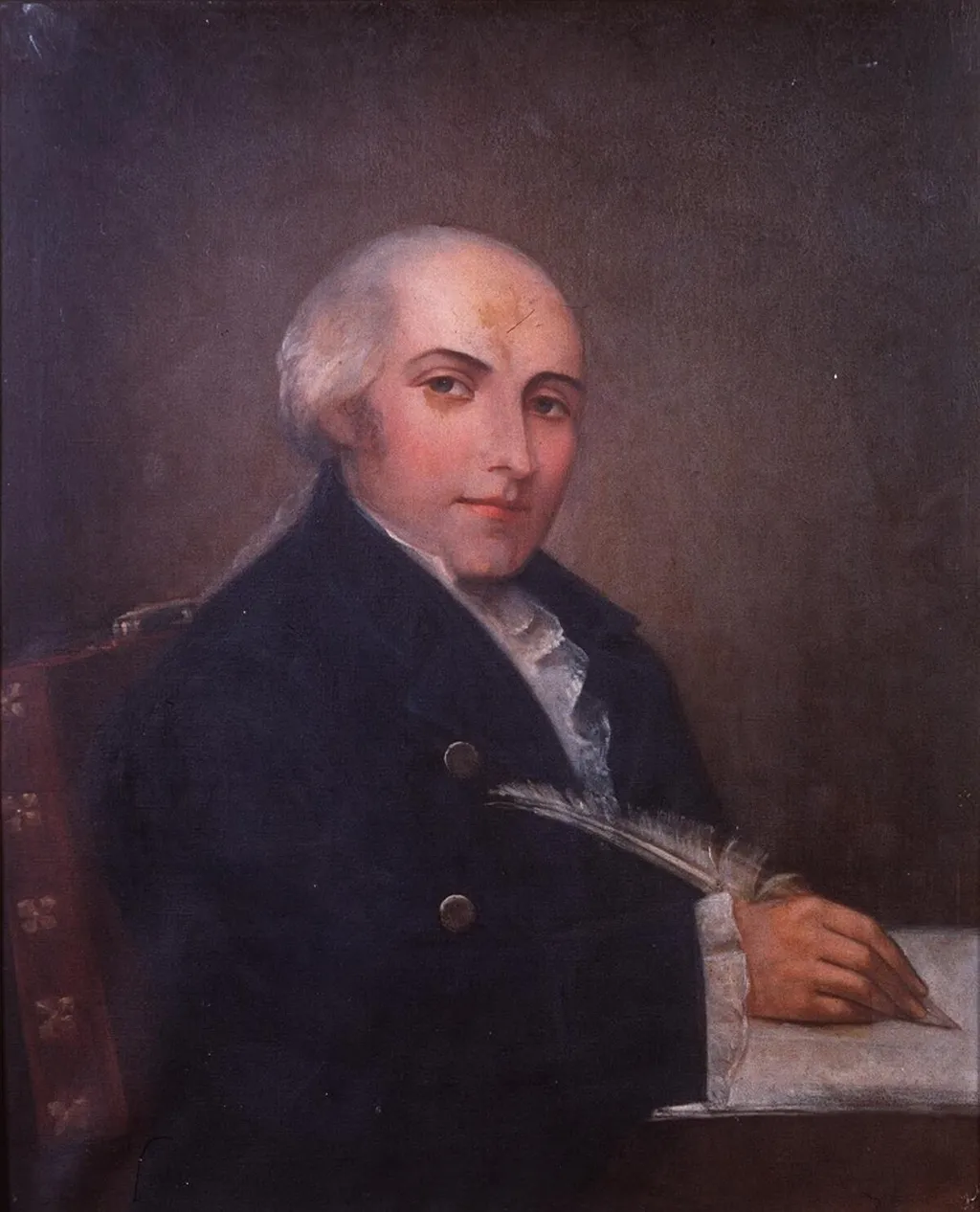
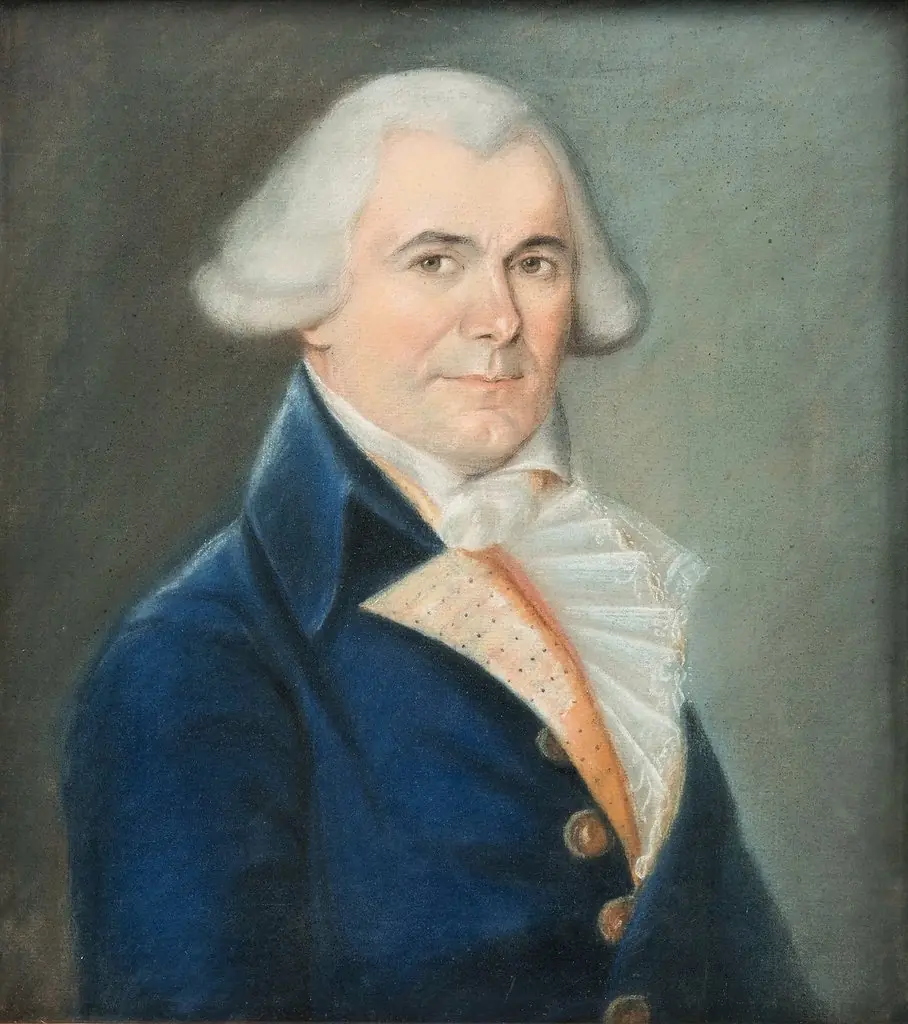
Morgan Pryse Lloyd Esq is an oil painting by Unknown. It dates from 1810 and is held in the collection of the National Library of Wales. This oil painting portrays Morgan Pryse Lloyd, Esq.
About this work
Overview
The composition is tightly framed, with no distracting elements, emphasizing the sitter’s presence and introspective demeanor.
This oil painting portrays Morgan Pryse Lloyd, Esq., a gentleman depicted in mid-action, seemingly engaged in writing. Dressed in a dark jacket adorned with gold buttons, he is seated at a table with a sheet of paper and a feather quill. His posture and expression convey quiet concentration. The composition is tightly framed, with no distracting elements, emphasizing the sitter’s presence and introspective demeanor.
Subject & Meaning
Morgan Pryse Lloyd is shown as a man of letters, engaged in the act of writing—a gesture associated with intellect, authority, and civic responsibility in the 18th century. His white hair suggests age and experience, while his serious expression reinforces a sense of gravitas. The absence of symbols like books or seals keeps the focus on personal demeanor rather than status markers, suggesting an emphasis on character over title.
Technique & Style
The artist employs chiaroscuro to model the sitter’s form, using sharp contrasts between light and shadow to define the contours of the face, hands, and clothing. The muted brown background recedes, enhancing the three-dimensionality of the figure. Brushwork is precise in rendering textures—fabric, paper, and hair—while maintaining a restrained, almost formal tone consistent with portraiture of the period.
History & Provenance
The painting’s origins are tied to the Lloyd family of Wales, likely commissioned during the late 18th century. It remained within private collections for generations before entering institutional care. Documentation is limited, but its style and attire align with regional portraiture practices of the time, suggesting a local artist familiar with British conventions of gentlemanly representation.
Context
In late 18th-century Britain, portraits of landowners and professionals often emphasized sobriety and intellectual labor over grandeur. This work reflects a shift toward introspective representation, where personal dignity and quiet competence were valued. The absence of elaborate settings or allegorical elements signals a preference for realism and individuality over aristocratic display.
Legacy
The painting endures as a quiet example of provincial British portraiture, capturing the ethos of a class that valued restraint and diligence. Though not widely exhibited, it contributes to the understanding of how non-noble individuals were visually represented in an era dominated by elite imagery. Its preservation offers insight into the visual culture of lesser-known gentry families.
Artist & collection

 Domestic Scene
 Giacomo and Cardinal Marco, investing Andrea, Abbot of San Zeno, with his Benefice
 The Nymph of Fontainebleau
 Portrait of a Woman
 Madonna and Child with Saints in the Enclosed Garden
 Venus and Minerva
 Family Group of Four on Sofa
 Wall painting from Room H of the Villa of P. Fannius Synistor at Boscoreale
 Self-Portrait
 Portrait of Pieter Gerardus van Overstraten, Governor-General of the Dutch East Indies
 Portrait of Johannes Siberg, Governor-General of the Dutch East Indies
 Portrait of Albertus Henricus Wiese, Governor-General of the Dutch East Indies
 Man in a Great Coat
 Portrait of Willem Arnold Alting, Governor-General of the Dutch East India Company
 Tâmplarul Wolf
 Portrait of David C. de Forest
 Johann Jacob Frølich d.æ.
 Johann Jacob Frølich d.æ.
 Colonel Wynne (Garthewin)
 Pierre Berthelet